ARK Bitcoin Monthly Report: Unstable Macroeconomic Situation, Bitcoin Moves Against the Trend

 Short-term BTC holders are realizing profits, and a sustained bull market may be on the way. However, the macro market shows uncertainty.
Original Title: THE BITCOIN MONTHLY
Author: ARK Invest
Compiled by: Qianwen, ChainCatcher
I. Summary
Cryptocurrency Assets Show Strong Resilience
In March, Bitcoin settled $650 billion, facilitating approximately 9 million transactions, with an inflation rate of about 1.8%, stable and predictable, approximately 26,000 new BTC were issued, attracting about 13 million new addresses, and creating about $700 million for miners protecting the network.
Despite the temporary decoupling of USDC, the DeFi ecosystem remains resilient, with the Maker protocol using USDC as collateral still operating effectively.
Macro Market Shows Uncertainty
In March, bank savings fell by 4.1%, the largest decline since 1948.
The Federal Reserve decided to raise the federal funds rate a record 20 times in less than a year, indirectly leading to the bankruptcy of Silicon Valley Bank and crises in other regional banks.
The Federal Reserve increased its balance sheet by $300 billion, initiated a loan relief program for banks, and reversed its quantitative tightening policy after six months.
Bitcoin and Other Cryptocurrencies Remain Stable
During the bankruptcy of Silicon Valley Bank, Bitcoin appreciated by 49%, from a low of $19,500 on March 10 to $29,150 on March 30.
As the centralized and opaque traditional financial system faces a crisis, the demand for more transparent, auditable, and decentralized financial services has surged.
Regulators should not blame the banking crisis on cryptocurrencies, nor should they hinder decentralized, transparent, auditable financial platforms without centralized points of failure. Instead, regulators should focus on the failures brought by the centralization of the traditional banking system.
II. Assessment of Cryptocurrency Trends
Bitcoin Remains a Safe Investment : Bullish
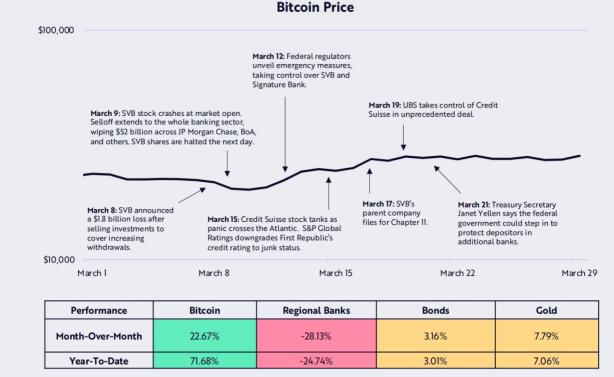
Data as of March 29, 2023
- Despite regulatory tightening and frequent bank failures, Bitcoin remains unaffected and continues to grow, with a (monthly) increase of 22.67%, even surpassing bonds (3.16%) and gold (7.79%).
- In March, Bitcoin's price increased by 22%, inversely related to the regional bank index.
- The demand for more transparent, auditable, and decentralized financial services has skyrocketed. Cryptocurrencies can serve as a solution to address the failures, opacity, and regulatory missteps of centralization.
USDC and DAI : Neutral
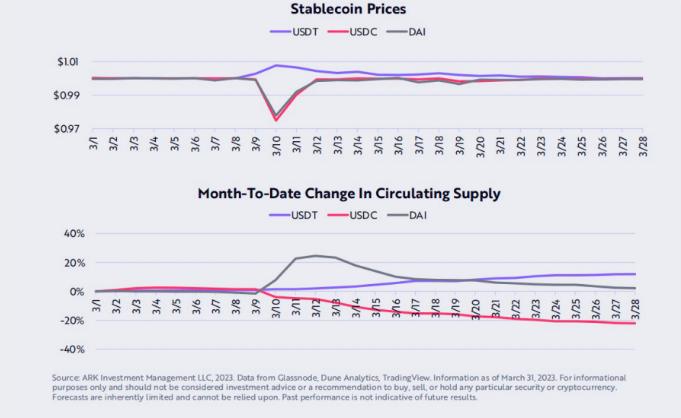
- Banking panic led to the decoupling of USDC and DAI, but Tether and DAI still achieved some gains.
- Circle disclosed that about 8% of the assets backing USDC were held in unsecured accounts at Silicon Valley Bank, causing the stablecoin's price to drop to $88 during the day. The decentralized stablecoin DAI's price fell below $1, as part of its supply is backed by USDC.
- Circle successfully redeemed USDC at $1 (during banking hours), processing about $15 billion in redemptions and about $7 billion in minting requests.
- Amid market instability, DAI's supply increased as holders sought decentralized alternatives, including public creation and redemption outside of U.S. banking hours, which differs from USDC.
III. Strengthening Bitcoin Fundamentals
Bitcoin Closes Above the 200-Week Moving Average
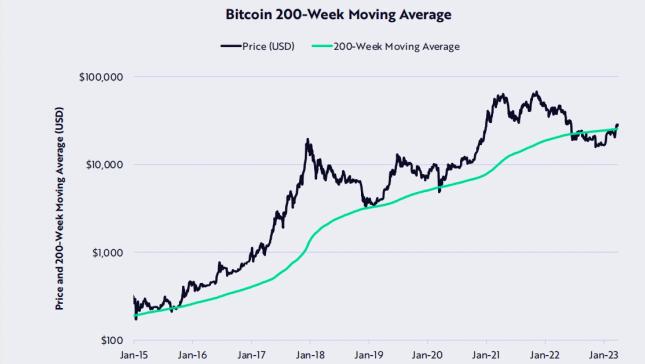
- Despite bank runs and regulatory crackdowns, Bitcoin still achieved gains.
- Bitcoin closed above the 200-week moving average ($25,400) for two consecutive weeks, the first time since August 2022.
- This marks the longest period in history that Bitcoin has remained below a critical support line.
Bitcoin Transaction Volume Indicates Active Network Activity
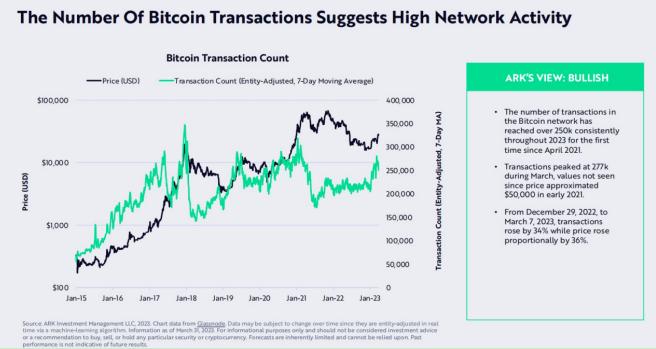
- The number of transactions on the Bitcoin network has remained above 250,000 in 2023, the first time since April 2021.
- Bitcoin transaction volume peaked at 277,000 in March, the first time since early 2021 when prices approached $50,000.
- From December 29, 2022, to March 7, 2023, transaction volume increased by 34%, and prices rose by 36%.
Bitcoin One-Year Holding Volume Reaches New Highs
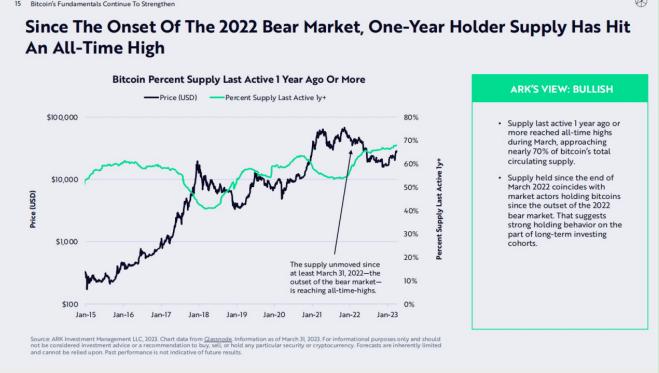
- Since the beginning of the bear market in 2022, the one-year holder volume has reached new highs. The volume of holders who acted only one year or longer ago reached a historical high in March, approaching 70% of Bitcoin's total circulating supply.
- The supply held since the end of March coincides with the period that market participants have held Bitcoin since the 2022 bear market.
- This indicates the presence of a long-term investment group focused on holding Bitcoin.
Short-Term Holders Realize Profits , Sustained Bull Market May Be Coming
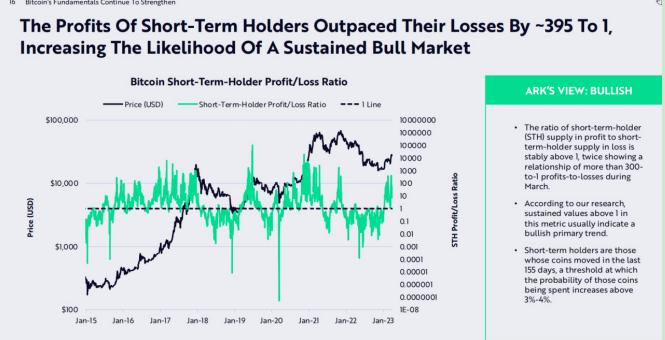
- The supply of profitable short-term holders (STH) has maintained a ratio above 1 compared to the supply of loss-making short-term holders, with this data showing over 300 to 1 on two occasions in March.
- According to our research, a sustained ratio above 1 typically indicates the arrival of a bull market.
- Short-term holders refer to those who bought or sold tokens in the past 155 days. The longer the holding period based on 155 days, the greater the likelihood that these tokens will be sold.
IV. Macro Market Shows Uncertainty
Bank Savings Decline
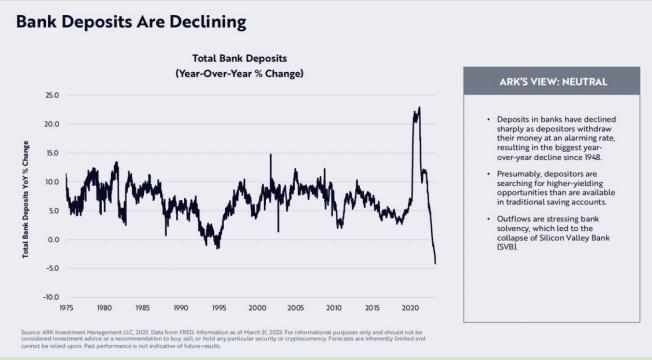
- Savers are withdrawing large amounts, leading to a sharp decline in bank deposits, the largest year-on-year decline since 1948.
- Savers are seeking higher yield opportunities than traditional savings accounts.
- The outflow of funds has put pressure on banks' solvency, indirectly leading to the collapse of Silicon Valley Bank.
Federal Reserve Takes Swift Action to Address Financial Turmoil
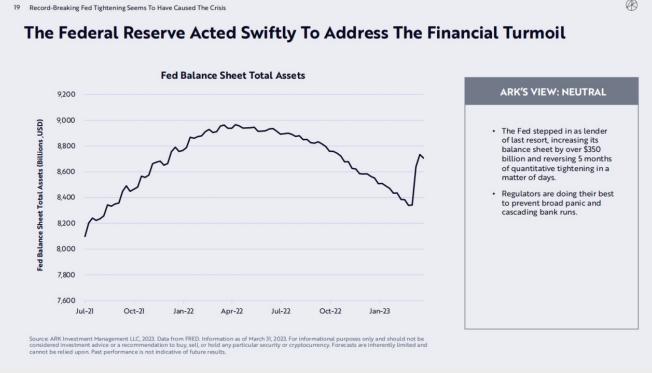
- The Federal Reserve intervened as the lender of last resort, increasing its balance sheet by over $350 billion and reversing five months of quantitative tightening policy.
- Regulators are doing everything possible to prevent panic from spreading and cascading bank runs.
Consumer Confidence Hits Low Point : Bearish
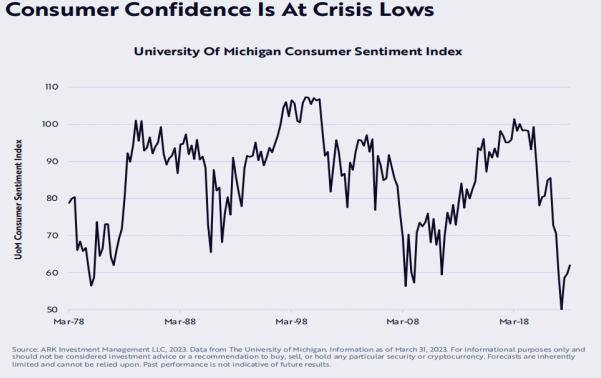
- Consumer confidence is at a crisis low, the last time such a low point occurred was during the global financial crisis and the early 1980s, when the U.S. faced two financial crises.
- Affected by the recent banking crisis and low savings rates, consumers seem to lack the willingness and means to achieve significant consumption growth.
Real Estate Market Issues Emerge : Bearish
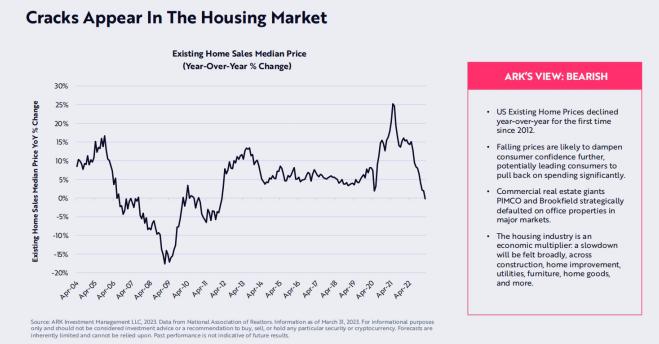
- U.S. existing home prices have seen their first year-on-year decline since 2012.
- The price drop may further dampen consumer confidence, potentially leading to significant reductions in consumer spending.
- Commercial real estate giants PIMCO and Brookfield are strategically defaulting on office properties in major markets.
- The real estate sector is an economic multiplier: an economic slowdown will transmit to other sectors, including construction, home renovation, utilities, furniture, and home goods, etc.
 Risk warning
 Risk warning