Tron Industry Weekly Report: US Stocks Highly Sensitive, BTC May Test $73,000, Detailed Explanation of AI Native Infrastructure Octra+Cluster

 Octra Network and Cluster Protocol promote the development of AI-native infrastructure from the dimensions of underlying computing and upper-layer intelligent collaboration, respectively.
I. Outlook
1. Macroeconomic Summary and Future Predictions
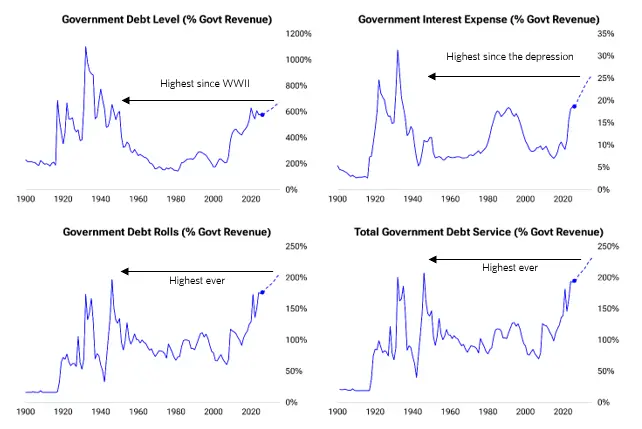
This week, the global market continues to revolve around the dynamics of U.S. Treasury yields, oil prices, and geopolitical situations. As expectations for easing tensions between the U.S. and Iran rise, oil prices have retreated from their highs, and the yield on the 10-year U.S. Treasury bond has also fallen from a previous peak of nearly 4.7% to around 4.4%, alleviating concerns about uncontrolled inflation. Meanwhile, the U.S. stock market remains in a high-level fluctuation, with technology stocks performing relatively strongly, but worries about high debt, high fiscal deficits, and the upward shift of long-term interest rates have not dissipated. Overall, market sentiment has improved compared to previous periods, but the macroeconomic environment remains in a sensitive phase of "high interest rates + high debt + high uncertainty."
In the coming week, the market will continue to focus on the trends in U.S. Treasury yields, U.S. inflation data, and changes in the Middle East situation. If oil prices continue to decline and U.S. Treasury yields keep falling, risk assets are expected to gain some breathing space, including U.S. stocks and the crypto market; however, if oil prices rise again or long-term Treasury yields spike, the market may re-engage with the logic of "re-inflation" and fiscal risks.
2. Market Changes and Warnings in the Crypto Industry
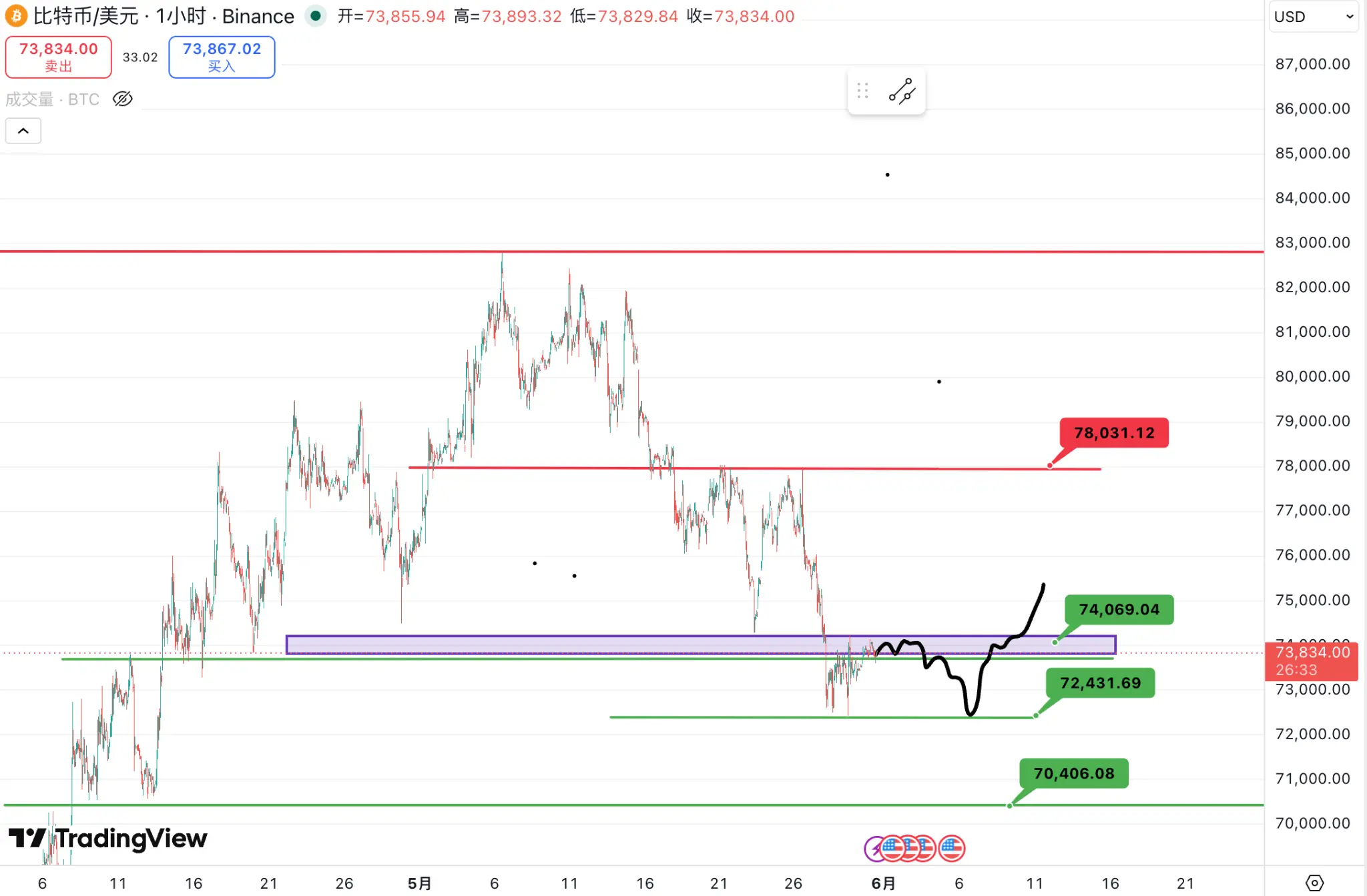
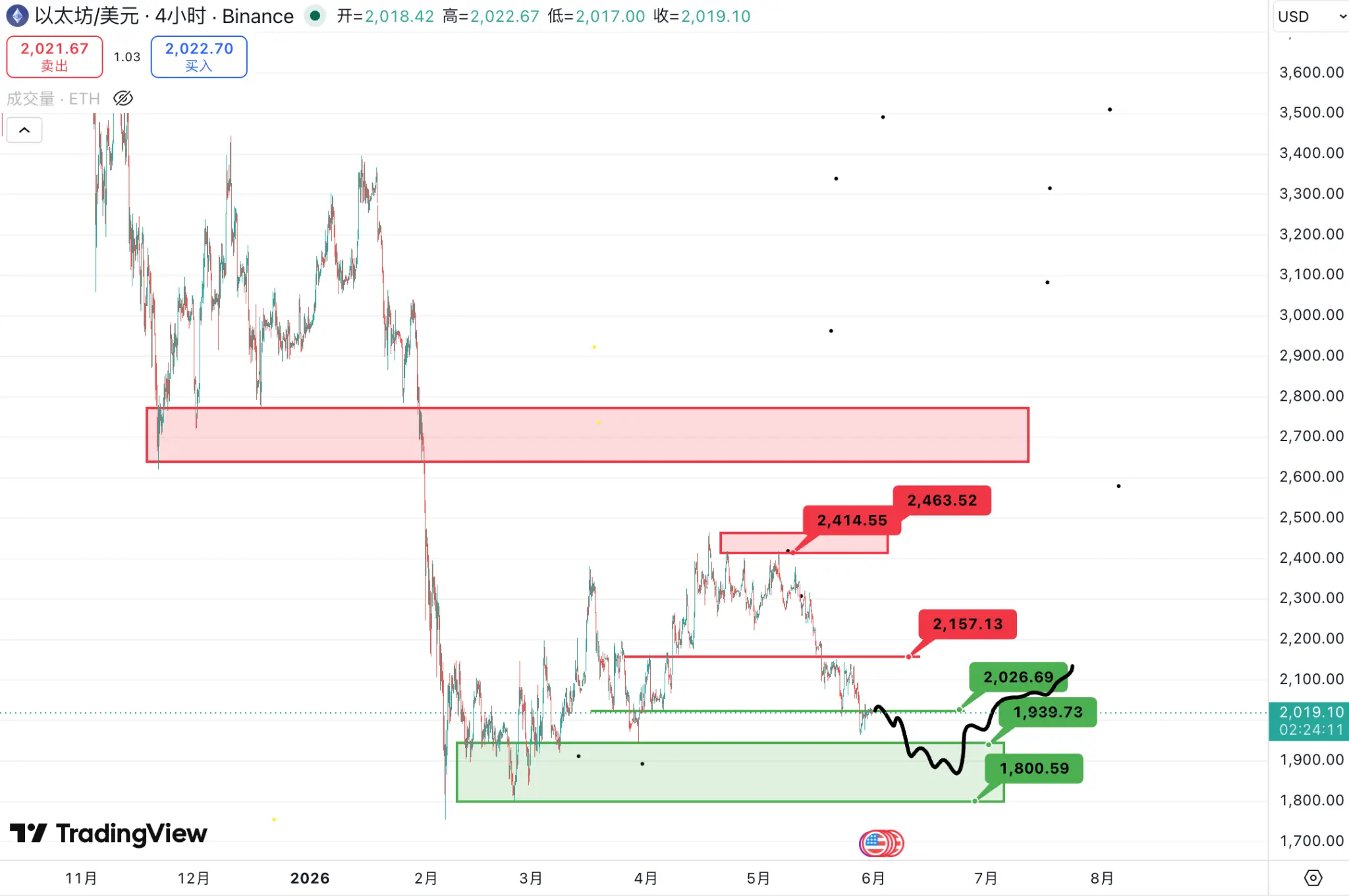
This week, the global market has been under pressure due to fluctuations in U.S. Treasury yields and geopolitical risks in the Middle East. Bitcoin has oscillated between $73,000 and $77,000 after a previous surge, with market risk appetite clearly cooling. ETF fund flows have shown divergence, with Ethereum continuing to face pressure while Bitcoin remains relatively strong. Meanwhile, the U.S. CFTC has approved Bitcoin perpetual contracts to enter the compliant market, and Coinbase and Kalshi have been approved to conduct related businesses, indicating that crypto derivatives are further being incorporated into the U.S. regulatory framework.
In the coming week, it is crucial to pay attention to the impact of U.S. economic data and fluctuations in the Treasury market on risk assets. If U.S. Treasury yields continue to rise, BTC and the crypto market may face further pressure; however, from a medium to long-term perspective, ETF funds, institutional allocations, and the compliance process of the U.S. crypto market continue to provide support. Additionally, the AI + Crypto direction is heating up, with AI payments (AEON), AI finance and governance (Nava, DAOKraft), and AI infrastructure tracks likely to become focal points for funding.
3. Industry and Track Hotspots
Octra Network and Cluster Protocol are promoting the development of AI-native infrastructure from two dimensions: underlying computation and upper-layer intelligent collaboration. The former focuses on building a modular on-chain execution network for high-concurrency and low-latency scenarios, providing secure and efficient computing power and execution environments for complex AI applications through high-performance architecture and privacy computing capabilities; the latter aims to create infrastructure for AI Agent collaboration and automated orchestration, integrating AI model inference, data, computing power, and workflow management capabilities, enabling developers to quickly build, deploy, and operate autonomous intelligent applications. Together, they point to the development direction of deep integration of AI and blockchain, constructing a complete AI-native infrastructure stack from underlying computing execution to upper-layer intelligent collaboration.
II. Market Hotspot Tracks and Potential Projects of the Week
1. Overview of Potential Projects
1.1. Analysis of Total Financing of $8.8 Million, led by Finality, with participation from Karatage, Presto, and Zero Dao — Modular on-chain execution infrastructure Octra Network for high concurrency and low latency scenarios
- Introduction
Octra is a decentralized general-purpose peer-to-peer network that allows anyone to securely store and process data under Fully Homomorphic Encryption (FHE) technology.
The core problem it addresses is providing an open and neutral platform that enables anyone to build a decentralized application ecosystem while achieving "confidential and isolated" computation when processing numerical data, retaining access control over the data itself.
Like other blockchains, Octra ensures security through cryptography and processes transactions in a distributed manner without centralized institutions.
Its biggest difference is that Octra does not require decrypting the original data when executing complex logic, computations, or data processing. This is because Fully Homomorphic Encryption (FHE) allows the system to perform operations directly on data in an "encrypted state," thus achieving genuinely privacy-protecting computation.
- Brief Description of the Protocol Framework
Octra is a decentralized network composed of multiple components, modules, and layers that can operate independently or work together to meet different scenario needs. The overall architecture allows developers to build fully isolated applications with complex logic in Circles (isolated execution environments) and deploy complete backends within them. Transactions and applications themselves can choose to be encrypted, and access permissions can be managed through mnemonic addresses or CLI.
Its underlying data can also be continuously distributed and stored in random nodes like BT/Torrent, preventing data leakage and attacks. Additionally, Octra can provide FHE (Fully Homomorphic Encryption) computing capabilities for other blockchains, smart contracts, or external services, effectively acting as a decentralized co-processor. Most importantly, all computations are completed on-chain, while the underlying data remains encrypted, sharded, and distributed, thus avoiding data being sent to centralized servers for processing and ensuring complete composability.
2.1 Octra Network
Octra Network is a theoretically infinitely scalable Layer 1 blockchain that supports Turing-complete decentralized applications, including exchanges, quantitative trading bot networks, and on-chain AI Agents that are crypto-based and compliant with GDPR data. Its block generation and reward mechanisms no longer rely on traditional PoW but are related to complex computing tasks within the network. Octra Token is one of the core foundational elements of the network.
2.2 Octra Protocol
Octra Protocol is a peer-to-peer communication protocol based on the Actor Model, supporting message communication between nodes, external services, and other blockchains, with cross-chain compatibility. The network will also support data exchange across various blockchain ecosystems and centralized services in the future. Users can even view the P2P network status in real-time through a regular browser and provide a dedicated Explorer API.
2.3 Circles
Circles are the isolated execution environments within the network and serve as the core interaction entry point for developers and users. They are interconnected but isolated from each other, allowing users to borrow computing, memory, and storage resources from the network for:
- Storing personal files and media
- Deploying and running applications
- Decentralized chat systems
- Email services
- Blogs, forums, stores, etc.
Circles support high customization and provide templates and presets similar to an app store, and since the network is permissionless, anyone can create their own templates.
2.4 Parallel FHE Computer
One of Octra's core technologies is HFHE (Hypergraph-based Fully Homomorphic Encryption). This technology allows the system to perform arbitrary logical operations directly on encrypted data without decrypting the original data.
Unlike traditional FHE, HFHE maps each bit to nodes in a hypergraph and utilizes the independence of hyperedges to achieve large-scale parallel computation, significantly enhancing throughput. This mechanism supports not only logical gate operations but also integer and modular operations.
Moreover, the system continuously tracks noise and performs rebasing to extend computable depth without compromising security. In each epoch, keys are split, shuffled, and regenerated, making it impossible for malicious nodes to decrypt user data even if they collaborate.
HFHE makes Octra a privacy-preserving computing network: developers can write arbitrary logic, the network executes operations on ciphertext, and users always maintain complete control over their data.
2.5 Available Operations
HFHE supports various hypergraph-based logical operations, including:
- AND
- OR
- XOR
- NOT
- NAND
- NOR
- XNOR
These hypergraphs naturally support parallel computation, as different nodes and hyperedges can process independently.
2.6 Decentralized Storage
Octra uses its own Decentralized Storage Network (DSN) instead of relying on Filecoin or IPFS. The system replicates any type of data 24 times and distributes it across random nodes to balance availability and performance.
All data can be fully or partially encrypted and can be used by Octra mainnet applications or external users.
2.7 Scalability
Traditional blockchains typically require all nodes to validate all transactions, while Octra adopts a partial validation node mechanism: only a subset of validators needs to confirm transactions, while the remaining nodes only need to validate state consistency.
This approach reduces redundant computations and increases throughput, while achieving theoretically infinite scalability through a scoring mechanism and rapid event judgment. The current assessed vector size is approximately 16KB.
2.8 Performance
Currently, the Octra testnet can achieve a peak TPS of about 800 in a 24-node environment. The test environment configuration includes:
- 64GB RAM
- 8 AMD vCPUs
- 10TB Disk
As more external validation nodes join, throughput is expected to continue improving.
2.9 Data Security Guarantees
Octra uses Transciphering technology to ensure data security. This technology allows for decryption and re-encryption of data without exposing the original data.
Additionally, the system employs a Proxy Re-Encryption mechanism to complete data sharing and transformation without accessing plaintext.
Data in Circles remains unreadable in the main network, but validation nodes can still perform verification and computation on ciphertext, as the ciphertext retains the same algebraic structure as the main network.
- Nodes
Anyone can run Octra nodes on personal computers, servers, or cloud environments. Nodes are rewarded for maintaining network security and operational stability, with rewards assessed based on the nodes' actual contributions to the network. Octra's node system is not simply "accounting nodes," but rather an infrastructure deeply integrated with its FHE computation, key sharding, and consensus system.
3.1 Types of Nodes
3.1.1 Bootstrap Node
The Bootstrap Node is the core of the entire network synchronization system, responsible for maintaining the main state of the blockchain while serving as a decentralized network state repository.
Its main responsibilities include:
- Managing critical network states
- Coordinating data distribution
- Keeping the entire network synchronized
Due to its role in controlling the main state, it requires:
- Independent IP
- High-capacity, high-speed storage
- Continuous stable online presence
It is typically deployed on high-performance physical servers or VDS clusters.
3.1.2 Standard Node
Standard Nodes are responsible for data services, validation, and storage in certain areas of the network.
The network dynamically determines the types of tasks they undertake based on:
- Node scoring
- Performance parameters
- Historical performance
These nodes are usually long-term online servers or high-performance PCs and can also be composed of clusters of multiple light nodes.
3.1.3 Light Node
Light Nodes are extremely lightweight nodes that can even run on a Raspberry Pi.
Features include:
- Simple deployment
- Low resource consumption
- Can run in the background
- No complex configuration required
Their purpose is to lower the participation threshold for the network.
3.2 Scalability
Currently, each Epoch contains approximately:
- 24 shard participant nodes
- A total of about 120 different nodes
However, there is theoretically no upper limit on the number of validators, and not all nodes participate in key sharding.
Octra's scaling logic does not require all nodes to perform all tasks but achieves horizontal scaling through a dynamic participation mechanism.
3.3 Key Sharding
Octra regenerates new key sharding mappings at each Epoch reset:
- Old mappings are destroyed
- New mappings are automatically generated for the new Epoch
- Shard addresses are determined through state transitions
Keys themselves do not exist in full on a single node but are distributed in the form of "vector fragments."
Essentially, it is a dynamic, random, continuously changing distributed key system.
3.4 Key Security
Keys are updated in each Epoch.
Currently, an Epoch lasts for a few minutes, and it is expected to shorten to a few seconds after the mainnet goes live.
Due to:
- Extremely short key lifecycles
- Continuous changes in sharding
- Dynamic node allocation
Attackers can hardly reconstruct the complete key within an Epoch lifecycle.
3.5 Node Selection Mechanism
When nodes participate in sharding, they do not know which key fragments other nodes hold, making it impossible to recover the complete key through collusion.
The network also enhances the difficulty of cracking through:
- Graph homomorphism problems
- Hidden subgraph recovery challenges
- Third-order noise disturbances
The core idea is that even if a majority of malicious nodes exist, it is still difficult to complete data decryption.
3.6 Proof of Useful Work (PoUW)
Octra has proposed the PoUW (Proof of Useful Work) mechanism to replace the "meaningless power consumption" of traditional PoW.
Unlike ordinary PoW, Octra's computational tasks are directly related to:
- FHE computations
- Network validation
- Node performance evaluation
It also combines:
- ABFT consensus
- Node scoring system
- SVM classification model
to dynamically determine node weights and task allocations.
If a node is suspected of dishonest behavior by the system:
- Task allocation will decrease
- Rewards will decline
Thus forming a dynamic reputation mechanism.
Consensus Flow
Octra's consensus mechanism combines:
- Graph structure validator selection
- Distributed signatures
- Merkle Proof
- Actor Model
The overall process includes:
- User submits a transaction
- Current Epoch validators receive verification requests
- The system filters validators based on scoring
- Constructs a verification graph structure
- Executes distributed signatures
- Verifies Merkle Proof
- Reaches consensus and generates a new block
- Updates the synchronization state across the network
Its goal is to enhance throughput and scalability while maintaining security.
4. Ecosystem
4.1 Explorer
Since Octra supports on-chain data encryption, the Explorer does not default to publicly displaying all data.
Data visibility is controlled by the "Agreement Actor," which verifies:
- Message hashes
- Epoch legitimacy
- Access permissions
before deciding whether to display data.
Thus, the Explorer itself also possesses privacy access control capabilities.
4.2 Circles
Circles are the core execution environments of Octra.
Unlike ordinary smart contracts, Circles not only contain contract logic but also include:
- Backend systems
- Network interface layers
- Permission control modules
Each Circle can run:
- Private logic
- Public logic
- Web applications
- Smart contracts of any complexity
and supports:
- Rust
- C++
- OCaml
- WASM
and other languages for development.
Currently, a single on-chain application state supports a maximum of about 32MB, while multiple Circles can form a cluster.
Tron Commentary
Octra's advantage lies in its attempt to build a "truly privacy-preserving computing blockchain infrastructure," achieving on-chain storage, logical execution, and complex computation of data in an always encrypted state through Fully Homomorphic Encryption (FHE) and hypergraph parallel computing (HFHE), while combining Circles isolated execution environments, dynamic key sharding, and PoUW consensus mechanisms, balancing privacy, composability, and theoretical scalability, and further supporting scenarios such as AI Agents, complex Web3 applications, and cross-chain co-processing.
However, its disadvantages are also apparent, including an extremely complex system architecture, high engineering requirements for FHE, parallel computing, and dynamic key systems, with significant uncertainty regarding current performance and practical large-scale implementation. Additionally, the highly customized protocols and execution environments imply relatively high development thresholds, audit difficulties, and ecological compatibility costs.
2. Detailed Explanation of Key Projects of the Week
2.1. Detailed Analysis of Total Financing of $5 Million, led by DAO5, with participation from Pivot, JPEG Trading, Paper, and Maven — Decentralized infrastructure network Cluster Protocol for AI Agent collaboration and automated execution
Introduction
Cluster Protocol is a unified AI infrastructure layer for decentralized networks (Web3) and also serves as an orchestration layer for autonomous workflows.
It integrates three core capabilities: AI model inference, data tokenization, and computing power into a single orchestration platform, building a unified API, unified settlement layer, and unified AI economic system based on Base (Ethereum L2).
Core Element Analysis
Cluster Protocol is a unified AI infrastructure network designed by experts from the fields of AI, blockchain, and high-performance computing. Its overall architecture adopts a "four-layer horizontal stack" design, where each layer can operate independently while also being able to combine and collaborate, with all activities ultimately settled on Base (Ethereum L2) chain.
- Inference Engine
This is the topmost and core AI service interface layer of Cluster Protocol, responsible for handling all AI model requests within the platform.
Core capabilities include:
- Access to 500+ open-source models through a single OpenAI-compatible API
- Support for multimodal capabilities:
- Chat generation
- Embeddings
- Image generation
- Text-to-speech (TTS)
- Speech-to-text (STT)
- Document re-ranking
- Multi-vendor routing and automatic failover
When a model service provider is unavailable, the system automatically switches to another provider - Token-based billing
No subscription, no minimum consumption, no platform lock-in
Essentially, the Inference Engine serves as the unified AI Gateway for the entire Cluster AI economy.
- Tokenized Data Marketplace + AI Services
This is the middle layer, composed of two interlinked modules.
2.1 Tokenized Data Marketplace
This layer is used to manage the on-chain and circulation of data assets.
Core mechanisms include:
- Datasets stored on IPFS
Achieving decentralized persistent storage - Data ownership represented by ERC-721 NFTs
Deployed on the Base chain - Automatic revenue distribution
Each time data is purchased, revenue is automatically shared through the PaymentRouter smart contract - Data quality mechanisms
Including community ratings, comments, and access preview permission control
Its essence is:
Turning AI datasets into tradable, verifiable, and revenue-distributing on-chain assets.
2.2 AI Services
This layer provides model training and workflow capabilities.
Core functions include:
- Fine-tuning
Users provide base models and training data, and Cluster automatically completes training and deployment - Pre-configured AI workflow templates
Including: - RAG Pipeline
- Classification tasks
- Reasoning Chains
- Direct linkage with the data marketplace
Tokenized Datasets in the data marketplace can be directly used for model training without leaving the platform
The overall logic forms a closed loop:
Dataset → Model Training → Inference Service → Revenue Flow
thus constructing a complete AI value cycle system.
- Settlement Layer — Base
This layer is the on-chain core infrastructure of the entire protocol.
Main responsibilities include:
- Payments
- Ownership management
- Smart contract execution
- Revenue distribution
Core contracts include:
- DatasetNFT
- DatasetRegistry
- PaymentRouter
- ClusterToken
All deployed and verified on the Base mainnet.
x402 Payment Protocol
Cluster introduces the x402 payment protocol to achieve:
- HTTP native micropayments
- AI Agents pay per request
- No need for API keys
- No need for account systems
It also supports traditional balance recharge modes.
Python SDK
The protocol also provides a unified SDK, supporting:
- AI inference
- Data access
- On-chain queries
All through a single client.
- CodeXero — Application Layer
This is the final user-facing application layer.
CodeXero is built on top of the previous three layers of infrastructure.
Its core capability is:
Prompt-to-dApp
Users only need to input natural language:
The system can automatically generate, compile, deploy, and tokenize an on-chain application.
Browser-native Runtime
Based on WebContainer:
- No local environment required
- No CLI required
- No dependencies need to be installed
It can run directly.
Full-stack dependency on Cluster infrastructure
Each deployment will automatically invoke:
- Cluster Inference (code generation)
- Cluster Compute (compilation)
- Cluster Hosting (hosting)
and settle through the underlying infrastructure.
Final Output Capabilities
CodeXero can ultimately generate:
- Real-time running dApps
- Autonomous AI Agents
- Protocol-level integrated applications
All running on the Cluster Protocol infrastructure.
Cluster Hub Analysis
Cluster Hub (hub.clusterprotocol.ai) is the unified web entry interface for the entire Cluster Protocol ecosystem, providing users with a unified entry point to access all infrastructure services.
Main functions include:
- AI model browsing
- Dataset discovery and access
- API key management
- Usage analysis
- Billing and payment management
Essentially, Cluster Hub is a consumer-grade operational platform connecting users with Cluster AI infrastructure.
Authentication
Cluster Hub uses Privy as a unified authentication system, compatible with both Web2 and Web3 login methods. Users can log in using traditional accounts like email or Google, or directly connect using crypto wallets, achieving a unified identity access experience for traditional internet users and on-chain users.
Developer Dashboard & API Keys
After completing authentication, users can enter the Developer Dashboard to manage various services and resources of the Cluster Protocol.
Main functions include:
- API Key management
Supporting the creation, revocation, and configuration of different permissions (read, write, admin), and setting the validity period of API keys - Usage analysis
Providing statistics on API call counts and token consumption segmented by model and date - Balance management
Viewing account balances, recharging funds, and tracking spending - Creator console
Viewing dataset sales revenue and purchase history - Dataset management
Viewing, editing, and managing uploaded datasets
Overall, this Dashboard serves as a unified developer backend for the Cluster AI infrastructure.
Technical Architecture Analysis
Cluster Protocol adopts a Gateway Pattern architecture, where all client requests — whether from the web frontend, Python SDK, CodeXero, or external AI Agents — are unified into an API Gateway built on Fastify.
This gateway is responsible for:
- Authentication
- Billing and payments
- Rate limiting
- Request routing
Essentially, it serves as the unified traffic entry and scheduling center for the entire Cluster AI infrastructure.
Smart Contract System on Base Chain
Cluster Protocol has deployed four core smart contracts on the Base mainnet, collectively forming its on-chain settlement and asset management layer for AI infrastructure.
Tron Commentary
The advantage of Cluster Protocol lies in its attempt to build a "unified AI infrastructure layer," achieving a complete closed loop from data, model training to inference services by integrating AI inference, data tokenization, computing power supply, payment settlement, and AI Agent workflows into a single platform. It builds a unified API, unified settlement layer, and unified AI economic system based on Base, lowering the access threshold for developers and strengthening the composability of AI and Web3.
However, its disadvantages include a highly complex overall architecture, high dependence on the stability of AI services, on-chain payment efficiency, multi-module collaboration, and data quality governance. Additionally, the competition in the AI infrastructure track is fierce, and its long-term value still depends on the real developer ecosystem, the scale of model supply, and whether AI Agent scenarios can form sustained network effects.
III. Industry Data Analysis
1. Overall Market Performance
1.1. Spot BTC vs ETH Price Trends
BTC
ETH
2. Summary of Hot Sectors
This week, the three most prominent technical directions are:
- ZK Interoperability
- ZKsync and ZK Stack continue to advance cross-chain communication and unified liquidity.
- AI Agent Infrastructure
- AI Wallet, AI Payment, and Agent Identity are beginning to become the core of new narratives.
- RWA + Stablecoin Infrastructure
- Institutions continue to promote on-chain finance, stablecoin settlement, and asset tokenization.
Overall, the industry focus this week has gradually shifted from pure public chain competition to three major technical directions: AI Agent + ZK interoperability + RWA financial infrastructure.
IV. Macroeconomic Data Review and Key Data Release Nodes for Next Week
Macroeconomic Data Review for This Week (May 25 — May 31)
- U.S. PCE inflation rebounded: April PCE year-on-year rose to 3.8%, higher than the previous value of 3.5%; core PCE year-on-year rose to 3.3%, indicating persistent inflationary pressures.
- U.S. consumer confidence weakened: The Conference Board Consumer Confidence Index fell to 93.1, with rising market concerns about inflation and economic outlook.
- U.S. Treasury yields continued to fluctuate: Influenced by PCE data and the Middle East situation, U.S. Treasury yields maintained high-level oscillations, with the market reassessing the interest rate cut path for the year.
- Oil prices fell, and risk assets recovered: The market bets on easing tensions in the Middle East, leading to a decline in oil prices, and risk appetite in global stock and crypto markets has somewhat recovered.
Key Data and Events for Next Week (June 1 — June 5)
- June 2 (Tuesday): U.S. JOLTS job openings data
- June 3 (Wednesday): U.S. ADP employment data, ISM services PMI, Federal Reserve Beige Book
- June 4 (Thursday): U.S. initial jobless claims, non-farm preview employment data
- June 5 (Friday): U.S. May non-farm payrolls (NFP), unemployment rate, wage data — the most important macro event of the week. The market expects about 100,000 new non-farm jobs, with the unemployment rate remaining around 4.3%.
V. Regulatory Policies
United States
- The U.S. Congress continues to advance the review of the CLARITY Act market structure bill, focusing on discussions around the regulatory boundaries of the SEC and CFTC, stablecoin rules, and institutional compliance frameworks.
- The political influence of the crypto industry continues to rise, with the crypto lobbying organization Fairshake, supported by Coinbase, participating in promoting pro-crypto candidates, raising market attention on the legislative process of crypto regulation.
Hong Kong, China
- Hong Kong continues to promote the implementation of stablecoin regulation, with the market focusing on the follow-up implementation details of the Stablecoins Ordinance and the progress of the first batch of compliant issuers. Hong Kong is accelerating its consolidation of its position as a compliant crypto center in Asia.
South Korea
- South Korea continues to advance discussions related to the Digital Asset Basic Act, focusing on stablecoin reserve regulation, exchange compliance, and user asset protection mechanisms.
 Risk warning

Popular articles