Financing data has plummeted to a freezing point. Is the crypto market disconnected from Bitcoin?

 Bitcoin stands alone, giving the market no chance at all.
Source: OdailyNews
Recently, the surge in Bitcoin has ignited FOMO points in the crypto community, with its price breaking the $60,000 mark for the first time in 829 days and showing no signs of a pullback, continuing to rise to $68,000. According to TradingView data, as of the time of writing, the Bitcoin price remains above $66,000.
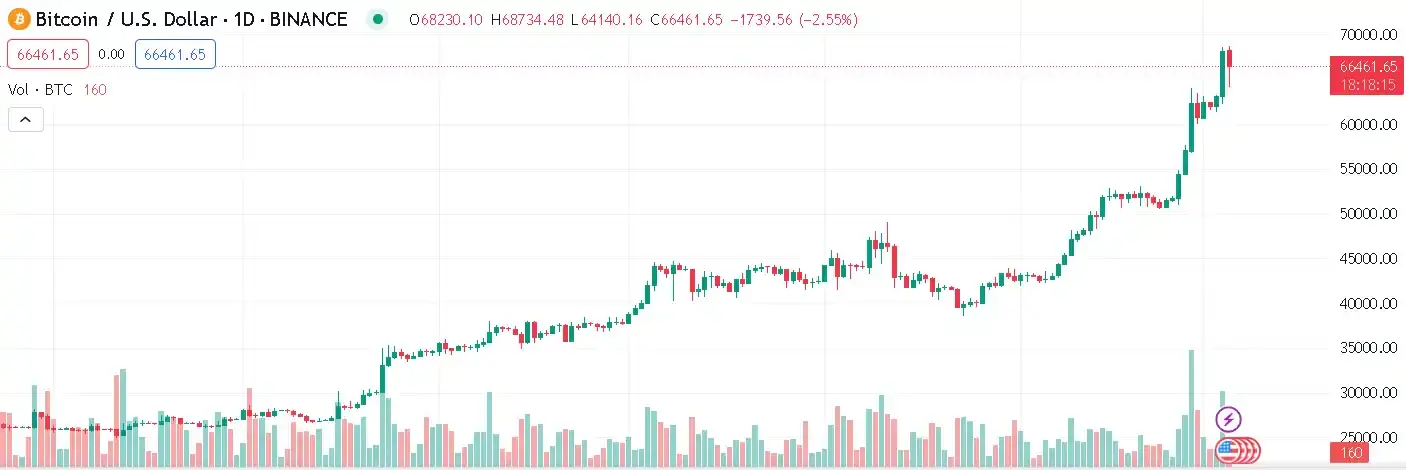
At $68,000, Bitcoin only needs to rise another 1.2% to set a new historical high since 2021. The strong rise of Bitcoin has led to rampant FOMO in the community. According to Alternative data, the Fear and Greed Index is also on the rise, reaching 90 for the first time since February 2021, indicating that the market has fallen into extreme greed.
Funding Amounts Decline to 2020 Lows
Focusing on venture capital during Bitcoin's price rise may be one method many choose to select their targets in a bull market, as they are often seen as market leaders.
In fact, venture capital firms have indeed followed the price rise of Bitcoin by investing in more projects, especially during the first two bull markets, where there was a clear positive correlation between BTC prices and the fundraising amounts of venture capital firms.
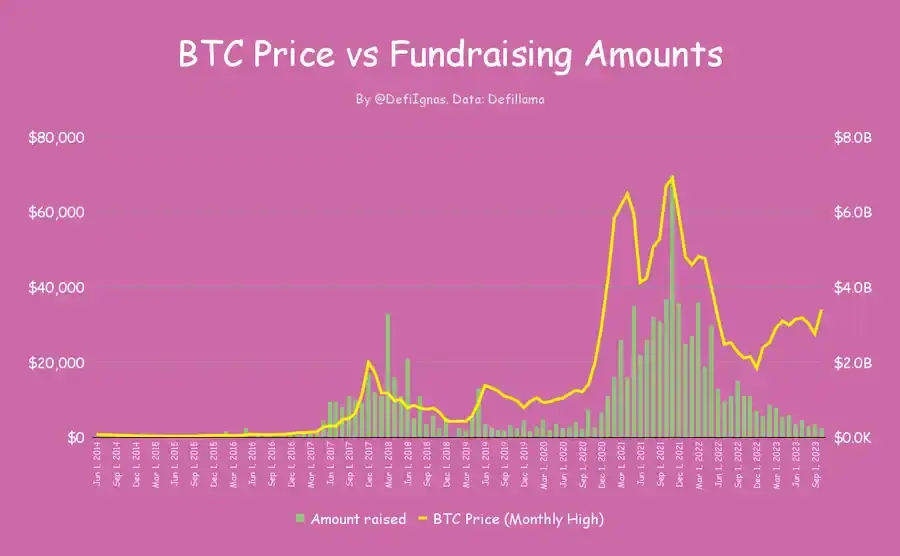
BTC and fundraising amount chart, source: @DefiIgnas
However, interestingly, even though BTC has rebounded from its 2022 lows and is even higher than the peak of the 2018 bull market, the amount of fundraising has been continuously declining, returning to levels seen before 2020.
According to community members, the total amount of crypto fundraising announced in February 2024 reached $726.8 million, coming from 134 companies and 497 independent investors. Among these fundraising projects, DeFi accounted for the highest proportion of investments, with 31 investments making up 23.1% of the total raised amount. Infrastructure performed best in terms of funding, attracting a total of $294.4 million, accounting for 40.5% of the total raised funds.
In such a hot market, the funding amount announced last month was only $486 million, which, although a 20.4% increase from January, represents a 28.7% decrease from February of last year.
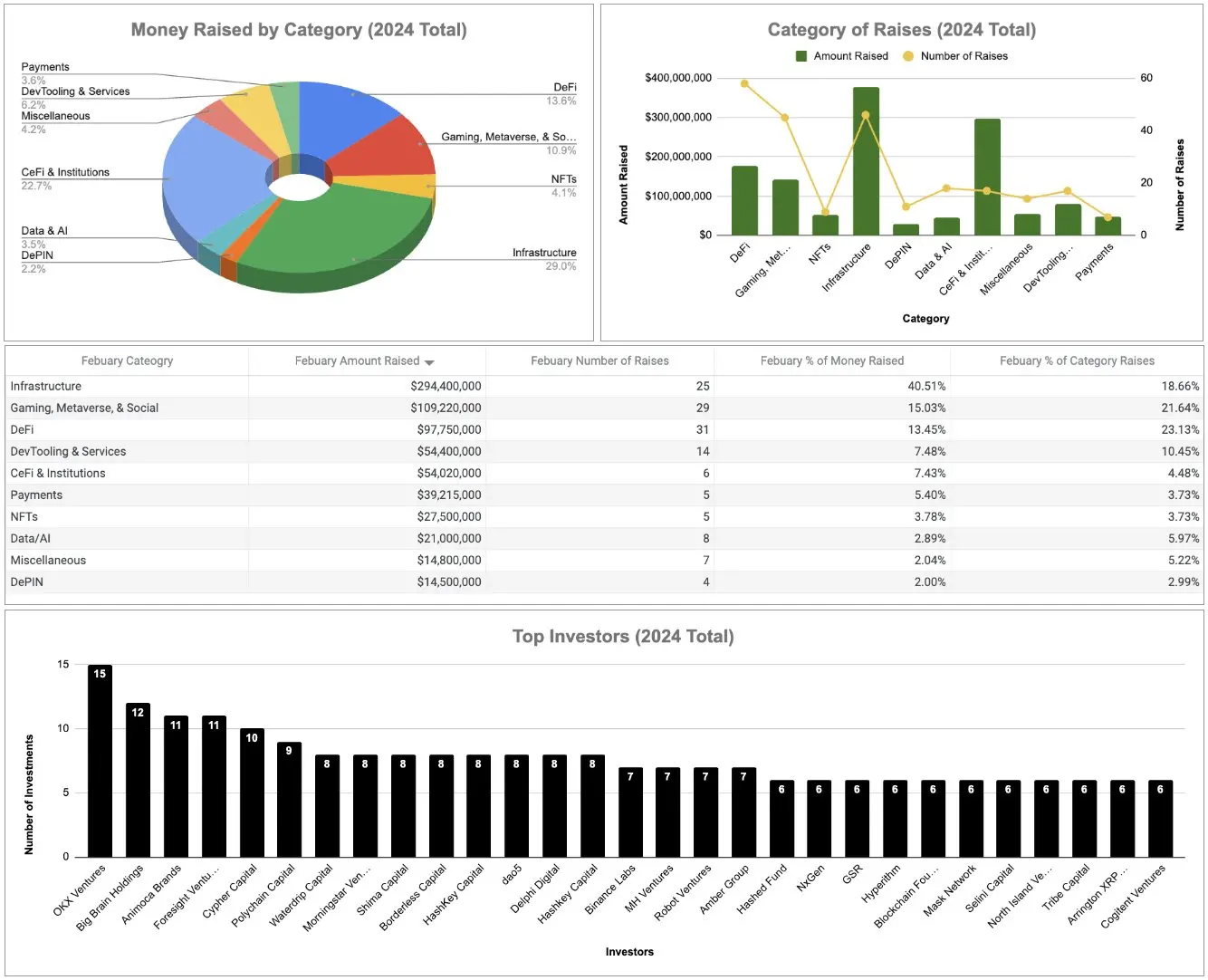
Source: @DS_Blockchain
Why is this happening?
From the development of the previous two bull markets, although many Asian venture capital firms value opportunities in bear markets and prefer to invest during bear cycles, overall, venture capital firms tend to invest based on market trends.
Now, the investment amounts show a clear inverse development compared to Bitcoin's rise. The reason for this is that this bull market is triggered by Bitcoin ETFs, a bull market specifically for Bitcoin.
ETF Funds Disrupt Project Promotion Rhythm
From the perspective of venture capital investment logic, since missing out on the inscription market, venture capital and private equity firms have not been researching and investing in strong fundamentals with significant future cash flow potential, but rather following trends and FOMO in their investment approach to seek future funding rounds.
For teams, projects that raise funds during a bear market do not immediately announce their fundraising status. Therefore, if viewed solely from the data, it may not be the latest. Normally, project parties choose a time that is more meaningful to them to release announcements.
So, what is a more meaningful time?
Since last year, the approval of Bitcoin ETFs has been a catalyst for the crypto market, especially since January 11, when the approval of ETFs undoubtedly brought Bitcoin and cryptocurrencies to a new historical starting point. As the most anticipated development in the global cryptocurrency market, every move of the spot Bitcoin ETF is extremely controlling over this already fragile market.
For a project, there is a certain process for promotion. Now, two months have passed since the ETF approval, and Bitcoin's price seems to give the market no opportunity to react.
According to TradingView, as early as late September last year, the Bitcoin price curve began to rise, and the announced fundraising amounts were still within expectations. However, after Bitcoin started to rise, the fundraising amounts did not show significant changes, and even in January, after the ETF approval, there was still no major improvement. It can even be said that since January, the upward trend of Bitcoin has become more intense, while the fundraising amounts have started to decline instead of rise.
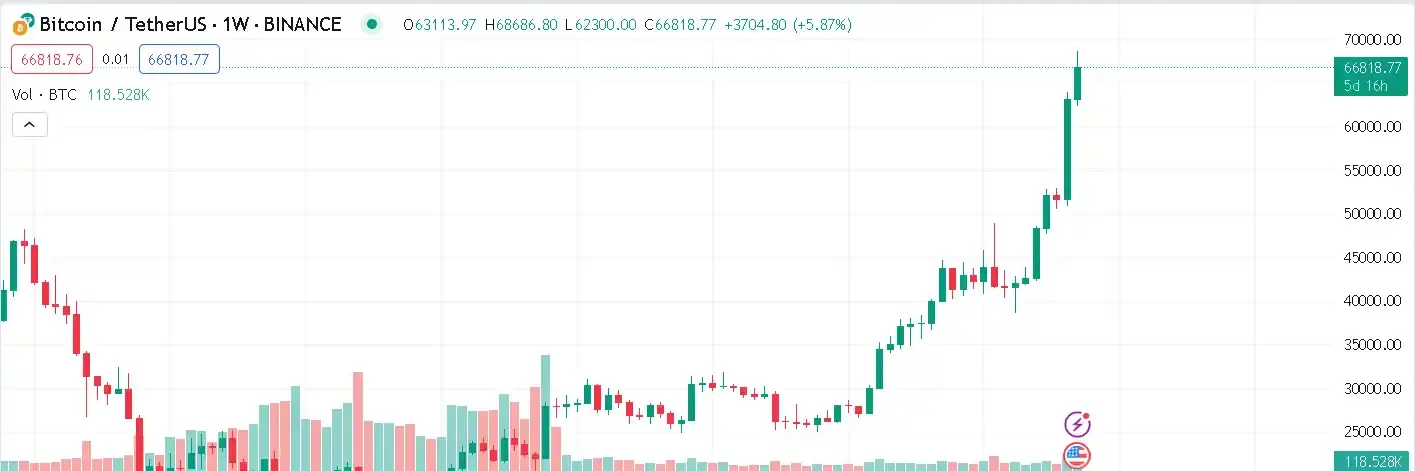
Whether it is venture capital missing out or project promotion lagging, it can be said that Bitcoin ETFs have indeed disrupted the pace of all participants. For project parties, this "more meaningful time" seems difficult to grasp accurately.
ETF Funds Not Flowing into the Crypto Industry?
On February 29, the daily trading volume of Bitcoin spot ETFs reached $7.69 billion, setting a new historical record since its launch, and in the following days, it remained at levels between $4 billion and $5 billion. The strong inflow of Bitcoin spot ETF trading volume within less than two weeks has pushed Bitcoin's price close to historical highs.
From a funding perspective, the overall capital flow in the crypto market has undoubtedly increased. The approval of Bitcoin ETFs has not only stirred the crypto industry but also attracted traditional money, contributing to the surge in Bitcoin prices. However, most of the funds have actually only flowed into Bitcoin.
According to CoinMarket data, the total market capitalization of cryptocurrencies currently stands at $2.38 trillion, with a 24-hour increase of 2.79%. Among them, Bitcoin's price is $66,557, with a 24-hour increase of 1.46%, and its market capitalization reaches $1.3 trillion, accounting for over half of the total crypto market capitalization at 51.17%.
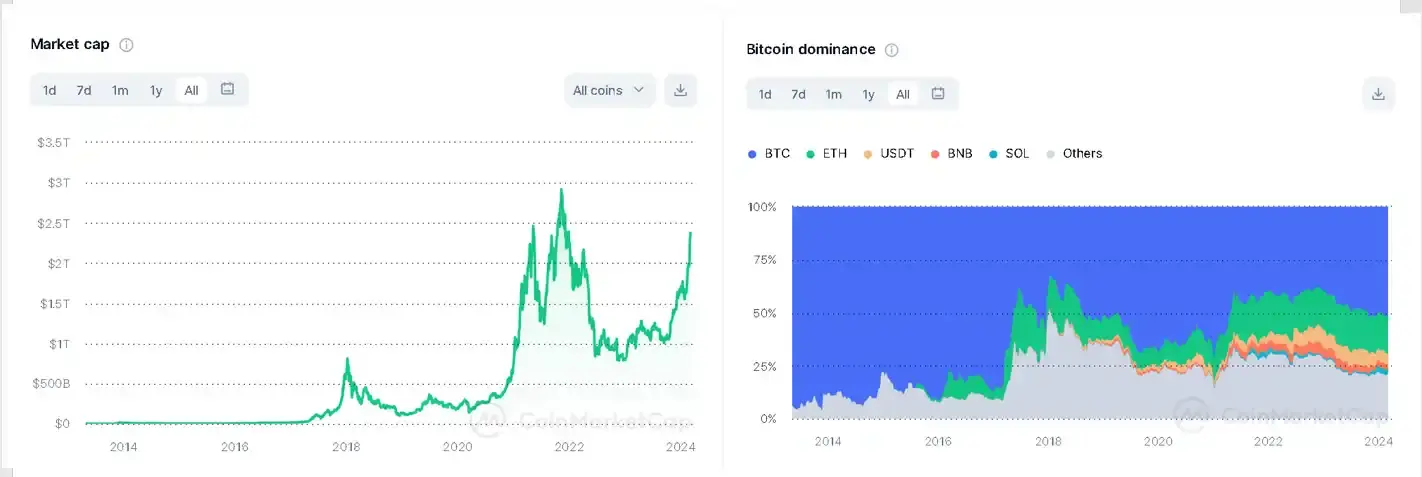
While Bitcoin's price continues to rise, altcoin prices remain stagnant or even decline. Many believe that the funds flowing into Bitcoin spot ETFs will not flow into altcoins in the market but will be converted into USD, leading to the absence of an altcoin bull market in this cycle.
In such a capital-absorbing situation, it is difficult for the rest of the crypto market to stand out. Even the favorable developments in Cancun are insufficient to attract funds to the Ethereum ecosystem. Currently, the only projects that can be compared to this cycle are the meme coins, and the Solana ecosystem has indeed attracted some traffic due to memes. But looking at the entire crypto market, how many of the new crypto projects emerging in this bull market can share in the funds flowing from Bitcoin?
 Risk warning Risk warning




Popular articles