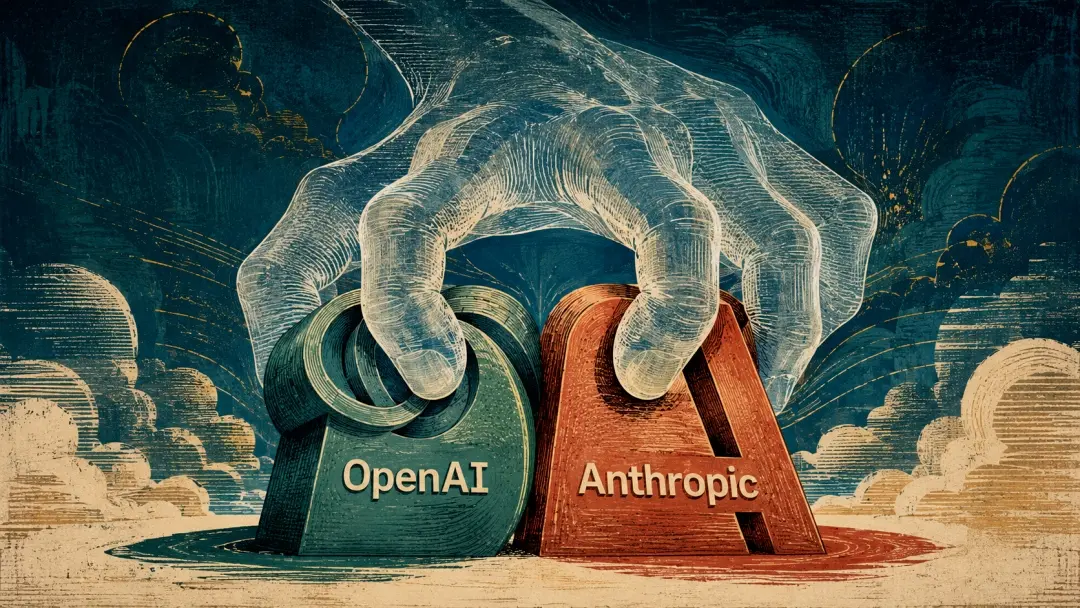
Lonely Mountain Bank Erebor: Stablecoin Version of Silicon Valley Bank 2.0?

 If stablecoins suddenly decouple and drop, and a significant proportion of Erebor's assets happen to be its reserves or related rights, it would still face an "on-chain run"; moreover, depositors wouldn't need to queue, they just need to click the mouse frantically to withdraw. In such a situation, there is no FDIC takeover, no central bank rescue, can Erebor withstand it?
Author: Xiao Xiaopao

Over the years, while focusing on my main business, I’ve also been slacking off by writing articles and making podcasts. Although I haven't made a dime, this behavior has brought me a convenience:
Whenever you see a hot topic starting to spin wildly, and GPUs are burning out, just search through the articles you've written, the questions you've pondered, and the podcasts you've made------I bet a rabbit that there’s a 90% chance you'll find relevant content------there’s nothing new under the sun; you’ve actually thought about these things long ago and already have some ideas and connections (of course, the premise is that you’ve been slacking off for at least a complete cycle of 5-8 years).
For example, the recent resurgence of stablecoins. As an old-timer, I can confidently say that I’ve seen this game before. But it always pops up with new terms and new looks. To be fair, it is indeed different from before; you can't say it hasn't progressed at all; but as soon as you change a term, all the concepts in the value chain will don new clothes, and the cost of re-understanding it will inevitably increase, requiring some tokens to discover that 80%-90% of the content is something you’ve already thought about.
Today, I want to talk about Erebor Bank.
Yesterday, Teacher Will threw out an article, excitedly wanting to record a follow-up on stablecoins------the reason being "Peter Thiel is getting into banking again------stablecoin banking."
The people-pleasing personality got excited for 5 minutes and eagerly agreed. Then I entered a state of emptiness: yes, it’s that old-timer feeling of "I feel like I’ve seen this plot somewhere before"------this person, widely regarded as influencing the current U.S. government, the "new deep state," the godfather of Silicon Valley, who last advised everyone to withdraw from Silicon Valley Bank (SVB), directly leading to its bank run and collapse, is getting into banking again?
This time, he and Anduril's co-founder Palmer Luckey are set to create a new crypto bank called "Erebor."
First, let’s shake off that old-timer feeling; without investigation, there’s no right to speak, so let’s gather some information first.
01 | The Legend of Erebor
To be fair, this name is quite interesting. As a fan of The Lord of the Rings, I’ll give it some bonus points.
Erebor, the "Lonely Mountain" in The Lord of the Rings, is where Smaug sleeps. Smaug is an evil dragon that lives by stealing gold and jewels from dwarves, elves, and humans, then burning everyone alive. He resides in a massive cave filled with gold and jewels, where he sleeps.
Hmm, this IP image seems a bit off, giving a sense of "the dragon-slaying youth eventually becomes the evil dragon"; but let’s not dwell on that; perhaps this brand image fits the taste of the core customers of a crypto bank. Anyway, the naming conventions in Silicon Valley are either Greek mythology, Middle-earth, or Latin words read backward. At least Erebor has some literary taste.
Putting the name aside, what’s truly worth pondering is: why is Silicon Valley opening a new bank at a time when stablecoins are (once again) hot?
02 | The Fall of SVB: 48 Hours
Almost all media reports mention: "to fill the huge gap left by the collapse of SVB" + "to support the wave of stablecoins."
Since SVB has been mentioned, let me help everyone review:
In March 2023, Silicon Valley Bank (SVB) set a record in financial history: it went from "Forbes' Best Bank of the Year" to "regulatory takeover" in 48 hours. At that time, I recorded two podcast episodes to join the excitement (one from the old-timer's perspective, and one from the veteran's perspective), characterizing it as a "storm in a teacup"------SVB, as the 16th largest bank in the U.S. (at the time), was far smaller than Lehman Brothers during the subprime mortgage crisis and did not shake the global financial market, but it was indeed a deep wound for the tech circle.

The trigger for the incident wasn’t particularly explosive: on March 9, SVB announced the sale of $21 billion in securities, incurring an $1.8 billion loss, while needing to raise $2.25 billion to avoid a liquidity crisis. Once the news broke, a bank run occurred the next day, with depositors attempting to withdraw $42 billion, and the stock price plummeted over 60%. SVB's held-to-maturity securities incurred a market value loss of $15.9 billion, while its tangible common equity was only $11.5 billion. The result was that the government backed all depositors, but shareholders and bondholders lost everything, management was fired, and the stock price went from over $200 to zero. This bank, which had been established for 40 years and had just issued year-end bonuses a few days prior, collapsed in an instant.
The fall of SVB exposed the fundamental mismatch between "traditional banking" and "innovative economy." SVB served over half of Silicon Valley's startups, but its business model was essentially from the 19th century------taking deposits with one hand and issuing loans with the other, earning the interest spread.
The problem is that tech companies had just received truckloads of cash from VCs and had no demand for loans at all. SVB could only invest these funds in long-term bonds, ultimately succumbing to duration mismatch and interest rate risk.
Of course, any bank could face this possibility. Duration mismatch is a core business model of commercial banks------the risk of a bank run is always present. The fall of SVB was an event that required the right timing, location, and people to mess up: (1) an extremely unique and singular customer structure; (2) extremely poor asset-liability management; (3) and precisely stepping on the cyclical reversal point of a 40-year low interest rate era.
First, let’s discuss (1):
SVB's customer base was uniquely special. If you had attended any VC meetings or startup events in the U.S. in recent years, you would have seen SVB setting up shop at the entrance------the customer base consisted solely of startups that had just secured funding, with no need for segmentation.
Now, let’s look at (2):
During the quantitative easing period from 2020 to 2021, financing for tech companies peaked, and SVB's deposits surged from $61 billion in 2019 to $189 billion in 2021, tripling in three years. With interest rates extremely low, these deposits were almost free funds.
The problem lay in the deposit structure: demand deposits and transaction accounts accounted for $132.8 billion, while savings and time deposits were only $6.7 billion, with demand deposits making up a staggering 76.72%. This was an extremely poor liability structure------corporate demand deposits are the most unstable, and SVB's corporate clients were all tech companies, completely lacking diversification and highly homogeneous.
With the liability side already dangerous, the asset side was even more distorted: don’t forget that these clients only deposited money and did not take loans. Startups have no fixed assets and no stable cash flow, so banks cannot lend. Thus, they bought a lot of bonds, initially short-term government bonds, but later, to increase yields, they shifted to long-term government bonds and (yes) agency mortgage-backed securities (various ABS).
In this way, the main risk of a bank shifted from credit risk to interest rate risk.
Then came (3): interest rates rose.
Under normal circumstances, rising interest rates are beneficial for banks------as deposit rates rise, loan rates also increase, and the interest spread remains basically unchanged or even increases. However, SVB was heavily invested in long-term bonds (56% of assets, while the average for U.S. banks is only 28%), and as interest rates rose, the market value of those bonds fell.
Thus, a double whammy: asset side bond depreciation, liability side high interest rates, and a decrease in the supply of cheap deposits (does this plot sound familiar? There’s a similar situation in China, called small and medium-sized banks).
Finally, a spoonful of hot oil: all the tech companies in Silicon Valley are in the same WhatsApp group, and when Peter Thiel's Founders Fund led the withdrawal, the stampede happened in the blink of an eye------there’s no creature more conformist than a VC on this planet, after all, FOMO and FUD are the cultural genes of this circle.
03 | Fall Down, Get Back Up
It’s okay to fall. The wind will rise again, this time landing on the stablecoin hill. The same team decided to solve the problem themselves.
I searched for a long time and found the application for a national bank charter submitted by Erebor Bank to the Office of the Comptroller of the Currency (OCC) ("Erebor Bank, NA, Columbus, OH (2025)").

This application reads like an emotionally charged declaration------clearly positioning itself as "the most regulated stablecoin trading service provider," vowing to "fully integrate stablecoins into the regulatory framework."
Perhaps due to the lessons learned from SVB, from the information available, Erebor claims that its risk control strategy is conservatively extreme: keeping more cash on hand, lending less, with loans only up to half of deposits (1:1 reserve ratio, loan-to-deposit ratio controlled at 50%); capital exceeding regulatory levels within three years; all startup funds coming from shareholders' real cash, no borrowing, and no dividends for three years.
The target customers are very clear: focusing on tech companies in virtual currency, artificial intelligence, defense, and high-end manufacturing, as well as high-net-worth individuals working for or investing in these companies (aka those considered by traditional banks as "either lacking stable cash flow or too risky to understand"); and "international clients" (aka overseas companies wanting to enter the U.S. financial system but struggling to find a way in; especially those relying on the dollar or wanting to use stablecoins to reduce cross-border transaction risks and costs, aka some clients using U.S. dollars and underground banks), Erebor plans to establish "agency banking relationships" to become a "super interface" for accessing the dollar system.
The business is also clear: providing deposits and loans, but the collateral is not houses or cars, but Bitcoin and Ethereum.
Stablecoin business is the focus: helping companies "compliantly mint, redeem, and settle stablecoins"; and planning to hold a small amount of virtual currency on its balance sheet------but purely for operational needs (paying gas fees), not for speculation.
At the same time, they drew a red line: not providing statutory custodial activities that require a trust license (aka only transfer settlement, not asset custody).
It looks like an upgraded version of Silicon Valley Bank 2.0. SVB's logic was: take deposits → issue loans → earn interest spread. Erebor's logic is: build a bridge between the fiat world and the stablecoin ecosystem, then on that bridge take deposits → issue loans → earn interest spread.
04 | Is This Time Different?
That’s all the information available. No conclusions can be drawn, only deductions can be made.
First, let’s look at the stablecoin business part.
I couldn’t find documents indicating whether the deposits are in stablecoins or fiat, but since they are "helping companies compliantly mint, redeem, and settle stablecoins," then assuming they are taking in fiat, part of it will be used to issue stablecoins, and part will be directly lent out. This is equivalent to layering other commercial banking functions on top of Circle. In other words, they are starting to create credit.
If Erebor Bank can truly maintain such a conservative loan-to-deposit ratio and capital adequacy ratio, and completely isolate the stablecoin part of the business------only doing payment settlements, not lending or custody; and only serving dollar stablecoins, specifically regulated USDC, it seems somewhat reliable. The remaining fiat part of the business can learn from SVB's previous lessons.
I know you want to ask: why can’t stablecoin deposits be lent out?
Because "one dollar of stablecoin" and "one dollar of bank deposit" are two different things. "One dollar in the bank" and "one dollar in stablecoin" have completely different functions. Let’s understand the deposit multiplier:
If a company deposits $10 million in a bank, the bank only needs to keep 20% as reserves, and the remaining $8 million can be lent out. When a second company borrows that $8 million and deposits $6 million back into the same bank, that bank now has $16 million in deposits. This process can be repeated indefinitely.
This is the "alchemy" of the banking system------through the deposit multiplier effect, $10 million in deposits can ultimately create more liquidity.
But stablecoins do not have this "alchemy." In the world of stablecoins, one dollar is one dollar, and it must be backed by an equivalent dollar; it cannot be amplified out of thin air, which is precisely the definition of stablecoins. There’s no arguing against it; the GENIUS Act has made it clear.
This is the cost of being a stablecoin bank: as a bank, the most profitable activity (lending) cannot be done, and embracing "stability" requires sacrificing the lending capacity of the banking system.
At this point, I’m reminded of Professor Bessen's comments on X: stablecoins are expected to absorb $3.7 trillion in U.S. Treasury bonds.

If half of that comes from demand or savings accounts, it would be about 10% of the total bank deposits in the U.S. According to the logic above, this brings a huge trade-off:
- The benefit is: it creates a new massive source of demand for U.S. Treasury bonds (increasing public credit).
- The cost is: sacrificing the lending capacity of the banking system (weakening private credit).
When everyone withdraws money from banks to buy stablecoins, the banks' ability to create credit through the "deposit multiplier" diminishes. This is essentially an inevitable result of the government's long-term fiscal deficit (there are plenty of historical exercises: you can review the impact of money market funds on the banking industry in the 1970s).
05 | Liquidity: A Place Where Ghost Stories Easily Occur
We’ve only just touched on basic deposits, and we haven’t even reached the liquidity ghost stories yet.
If stablecoins become the main character on Erebor's balance sheet, although they are pegged to the dollar and other assets, currently, stablecoins do not have federal deposit insurance backing them, nor do they have off-chain liquidity support from the Federal Reserve's discount window.
If stablecoins suddenly decouple and drop, and a significant proportion of Erebor's assets are precisely its reserves or related rights, it could still face an "on-chain bank run"; and depositors wouldn’t even need to queue, just frantically click the mouse to withdraw. At such times, without FDIC takeover and without central bank rescue, can Erebor hold up?
Looking at the loan part, this time they didn’t buy government bonds, but are doing crypto-collateralized loans. But this problem isn’t hard to calculate:
Given:
- Loan-to-deposit ratio of 50%
- Bitcoin collateralization ratio of 60-70%
- Bitcoin's daily volatility often exceeds 10%, and in extreme cases can reach 20-30%
Question: how to avoid a death spiral?
Now, let’s combine these two things and continue to deduce: if the right side of the balance sheet is stablecoins, and the left side is crypto-collateralized loans (liability side (stablecoins) + asset side (crypto loans)), wow, this combination sounds thrilling.
Let’s do a stress test:
- A macro event (the former president causing trouble) triggers panic in the crypto market.
- Bitcoin plummets by 30%, and Erebor's collateralized loans start to see a large number of defaults.
- At the same time, the market begins to question the stability of stablecoins, leading to decoupling.
- The value of the stablecoin reserves held by Erebor drops, while loan losses expand.
- Depositors begin to panic and withdraw.
- Erebor is forced to sell assets at the worst possible time to meet withdrawal demands.
In summary: it’s basically adding a layer of leverage and an on-chain bank run accelerator on top of SVB's duration mismatch.
Once the above scenario is triggered, the traditional banking industry's buffer mechanisms do not exist here:
- No deposit insurance to stabilize depositor sentiment.
- No central bank providing liquidity support.
- No interbank lending market to disperse risk.
- 24/7 digital transactions make it impossible to "pause" a bank run.
This indeed resembles a "regulated version of Terra."
06 | Be a Little Optimistic
I couldn’t help but channel the old-timer again. But to be fair, cryptocurrencies and digital assets have become an objective reality. Only three countries in the world completely ban cryptocurrencies. Whether I like it or not, (dollar) stablecoins will develop rapidly in the foreseeable future.
Erebor aims to create a "hybrid banking model" that aligns with web3 logic while meeting regulatory requirements------enjoying the robust reserves of traditional banks while leveraging all the conveniences and efficiencies of the on-chain world.
From this perspective, Erebor represents an inevitable trend: regardless of who actively embraces whom, traditional finance and the digital asset ecosystem will attempt to merge.
The question is: who should lead this integration?
Returning to the name Erebor. In Tolkien's story, Smaug was ultimately killed, and the treasures of the Lonely Mountain returned to the dwarves, elves, and humans.
 Risk warning
 Risk warning