Exclusive Interview with AnchorX Founder Hill Wang: The Billion-Dollar Ambition of Offshore RMB Stablecoins

 AxCHN is not only a commercial innovation but also a strategic bet on the diversification of the global monetary system.
Author: Lesley, MetaEra
The global monetary system is at a historical turning point. A new payment revolution centered around sovereignty, compliance, and efficiency is quietly unfolding.
On July 19, at the "Shanghai-Hong Kong Web3 Complementary Cooperation Development Conference," Hill Wang, the founder of AnchorX, detailed the practices and development trends of offshore RMB stablecoins. With the rising demand for cross-border payments and the gradual clarification of regulatory frameworks in various countries, offshore RMB stablecoins are entering an important development window.
From Hong Kong to Kazakhstan, from the five Central Asian countries to the Belt and Road Initiative, AnchorX is laying down a digital new Silk Road. This is not only a commercial innovation but also a strategic bet on the diversification of the global monetary system.

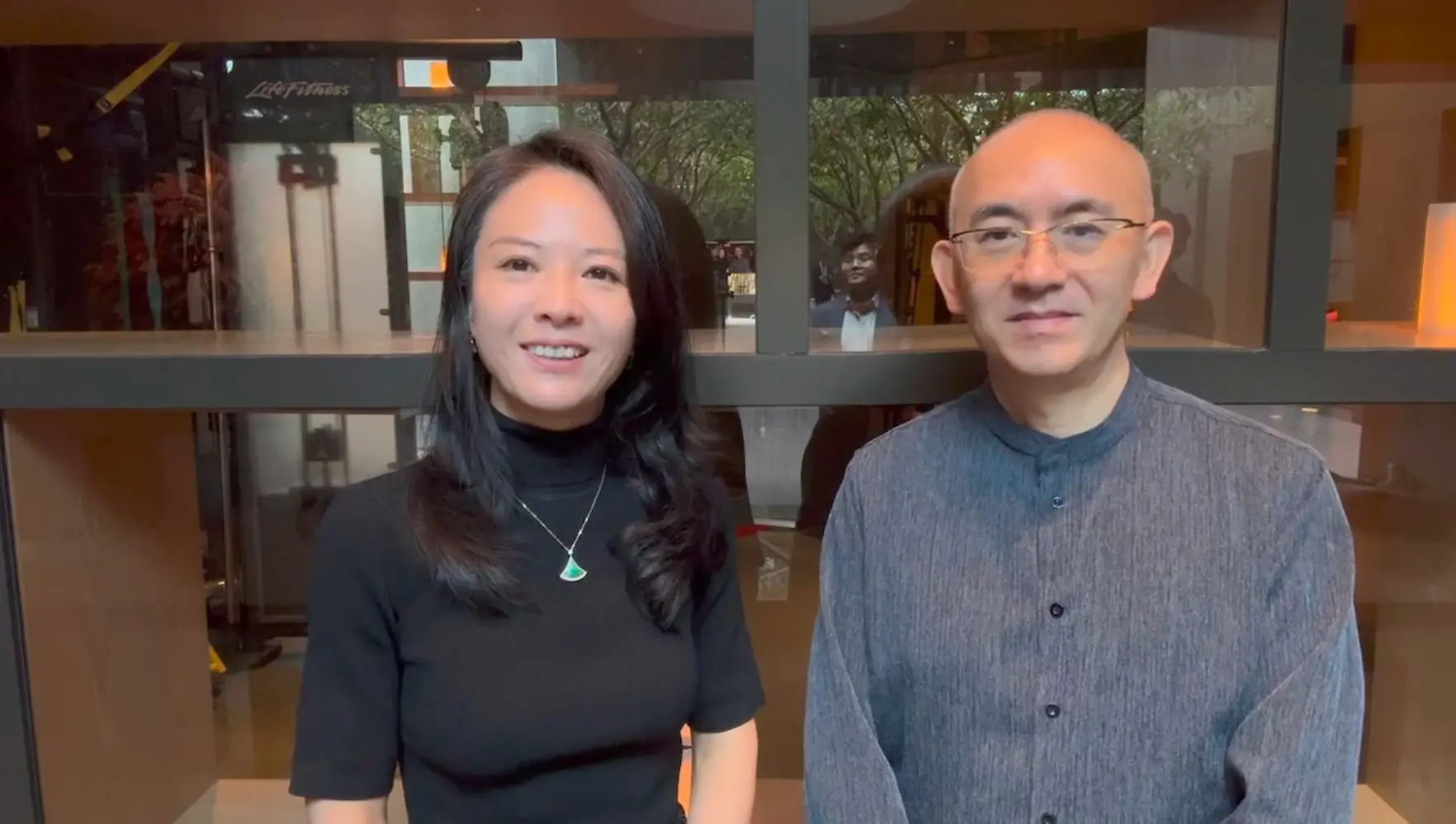
AnchorX Founder Hill Wang
I. Reflections on Crypto in the Context of Traditional Finance: The Journey of AnchorX
"I first came into contact with cryptocurrencies when I was doing VC at Hongyi, where I often researched cutting-edge technology projects, so I gained some understanding of the crypto industry," Hill Wang, the founder of AnchorX, recalled in an interview. Previously, he served as a senior analyst at Morgan Stanley and as a managing partner at Hongyi Investment, with nearly twenty years of experience in finance and investment.
"By the end of 2022 and early 2023, we judged that exchanges are currently the most profitable track in the crypto industry, and the next opportunity is likely to be stablecoins." As an "infrastructure" connecting traditional finance and the crypto world, stablecoins can improve cross-border payment efficiency and reduce settlement costs. However, before they can truly take off, "compliance" will determine how far stablecoins can go.
In this context, the policy direction of Hong Kong has become a key factor. As an international financial center, Hong Kong has a highly recognized regulatory environment while retaining more operational space for financial innovation. "Hong Kong's support in this regard is crucial. We see that Hong Kong started public consultations on stablecoins early on, placing it at the forefront globally," Hill Wang said.

Hong Kong Monetary Authority
At the end of 2023, the Hong Kong Financial Services and the Treasury Bureau and the Hong Kong Monetary Authority (HKMA) jointly released a consultation document on stablecoin regulation, widely soliciting opinions on issuance mechanisms, reserve management, and licensing requirements, laying the foundation for the next steps in policy advancement. Seizing this opportunity, Hill Wang established AnchorX in Hong Kong in 2023 to focus on the stablecoin sector.
The rapid development of AnchorX is also attributed to the "dual support" of traditional finance and the blockchain industry. As two strategic partners, Hongyi Investment (Hony Capital) provides resources and business synergy for AnchorX, while Conflux Network offers technical support for AnchorX's stablecoin practices with its high-performance, low-cost underlying architecture.
In the interview, Hill Wang specifically mentioned the conference organizer Conflux Network: "Conflux is one of the few Chinese infrastructure projects that possesses both public chain capabilities and government endorsement, aligning closely with our direction. Technically, it is also very mature, with fast transaction speeds and low costs, representing many characteristics of Chinese enterprises such as 'fast, good, and economical,' and it has a high level of government recognition."

AnchorX is actively exploring offshore RMB stablecoin solutions
II. From Kazakhstan to Hong Kong: The Real Path of Stablecoins
In the context of rapidly changing global regulatory environments, AnchorX has chosen a pragmatic compliance path. "We see that the regulation of stablecoins is advancing rapidly in various countries, and the entire virtual asset industry is developing towards a more compliant and healthy direction," Hill Wang stated. "It is precisely because of these regulatory frameworks that we have the opportunity to make this endeavor more standardized and scalable."
Starting in Kazakhstan, Obtaining the First Stablecoin License
At the beginning of 2025, facing an incomplete regulatory framework in Hong Kong, AnchorX took the lead in laying out overseas. In May, Kazakhstan's financial regulatory authority—the Astana Financial Services Authority (AFSA)—officially approved AnchorX to conduct operations related to the offshore RMB stablecoin. This is the first official license related to stablecoins issued by the country.

AnchorX Obtains the First Stablecoin License Issued by ASFA
AnchorX's layout is highly aligned with China's Belt and Road Initiative. Kazakhstan is one of China's most important economic and trade partners in Central Asia. Last June, the second China-Central Asia Summit was held in Kazakhstan's capital, Astana, highlighting Kazakhstan's importance to China's trade along the Belt and Road. AnchorX's layout has since expanded to the five Central Asian countries, providing stablecoin solutions for cross-border settlement scenarios in the region.
"In the past two to three years, the annual growth of bilateral trade between China and Kazakhstan has been around 20%-30%, which provides a real and continuous application scenario for the AxCNH stablecoin," Hill Wang noted.
Rooted in Hong Kong, Exploring Offshore RMB Stablecoins
As the world's largest offshore RMB trading center, Hong Kong will be the focus of AnchorX's long-term strategy.
"We have been in communication with the Hong Kong Monetary Authority for some time and plan to submit a formal application for a stablecoin license," Hill Wang stated.
In Hill Wang's view, Hong Kong is a highland of global financial regulation, with rigorous regulatory policies. However, as an international financial center, Hong Kong has shown a relatively open attitude towards Web 3.0, placing it at the forefront globally. "For entrepreneurs, such an environment is itself a benefit."
However, he also admitted that the industry's development still relies on the continuous evolution of regulation: "As entrepreneurs, we certainly hope that the regulatory attitude can be more open, and that the implemented regulatory details can provide companies with some space at the execution level. Only in this way can companies explore more market-oriented possibilities within a compliant framework."
III. Farewell to the T+3 Era: How Offshore RMB Stablecoins Reshape Cross-Border Payments
AnchorX aims to provide compliant and efficient cross-border payment options for enterprises going abroad through a stablecoin payment system, challenging the long-standing dominance of traditional financial systems and USD stablecoins.
Instant Arrival, Breaking the SWIFT Dilemma
Compared to the traditional SWIFT system, stablecoins demonstrate overwhelming advantages in cross-border settlement efficiency. "As everyone knows, SWIFT is essentially an information flow system (Messaging System), where information flow and capital flow are separate," Hill Wang explained. "In other words, it is not 'what you see is what you get'; a fund transfer often takes about T+3 days. We have a company in Kazakhstan and have personally experienced that a cross-border transfer often takes five to six days, and it can take even longer if it falls on a weekend."

SWIFT System Principle, Source: Cambridge Currencies
With a blockchain-based technical architecture, AxCNH directly connects information flow and capital flow, achieving near-instant fund arrival. "Our solution can achieve near real-time settlement across the cross-border chain," he stated. "The settlement speed is in seconds, generally confirmed within a minute, and the efficiency improvement is very significant."
He further summarized: "Blockchain technology is expected to replace traditional structures like SWIFT, truly achieving synchronization of transactions and settlements."
Eliminating Exchange Losses, More Suitable for Enterprises Going Abroad
Compared to USD stablecoins, AxCNH will better fit the real usage scenarios of Chinese enterprises during their global expansion.
"Many Chinese enterprises still have their cost centers in China when promoting overseas business, and using USD means they ultimately need to convert back to offshore RMB," Hill Wang pointed out. "This is equivalent to an additional currency exchange."
AxCNH explores simplifying the path by directly anchoring to offshore RMB. This process reduces one round of exchange rate loss, bringing substantial savings to enterprises.
IV. The Era of Multipolar Stablecoins: The Next Stop in the Global Landscape
Hill Wang has a clear understanding of the global stablecoin landscape: "The stablecoin market is closely related to the traditional currency system. Currently, USD stablecoins dominate absolutely." However, Hill Wang firmly believes that this singular pattern will not last long.
"In the future, if sovereign currencies are mapped to stablecoins in some form, the international monetary system is likely to evolve into a structure centered around several important sovereign currencies, moving towards multipolar balance." He pointed out that the proportion of the euro, RMB, and especially offshore RMB in the stablecoin market will gradually increase.
This trend has already been reflected at the regulatory level. On August 1, Hong Kong's "Stablecoin Regulation" will officially take effect; former U.S. President Trump also signed the "GENIUS Act"; economies such as the EU, UK, and Singapore are also incorporating digital currencies into their regulatory frameworks. "The improvement of regulatory frameworks has cleared obstacles for the growth of non-USD stablecoins," Hill Wang said.
He further cited data to illustrate: "For example, the current proportion of offshore RMB in the SWIFT payment system is about 5%. If the future stablecoin market reaches a scale of $2 trillion, the potential space for offshore RMB stablecoins could be several hundred billion dollars."
AnchorX's goal is not only to become a stablecoin issuer but also to build an international payment network based on offshore RMB. "We hope to use Hong Kong, the world's largest offshore RMB settlement center, as a base to support enterprises going abroad to connect more efficiently with countries along the Belt and Road."
Conclusion: The Eastern Narrative of the New Order of Digital Currency
The power map of digital currency is being restructured. The seemingly scattered regulatory actions around the world actually outline the underlying logic of the reshuffling of the global monetary system. Hill Wang's judgment is also very firm: it is not about disruption, but about diversity. A "hundred billion dollar-level" market space is sufficient to accommodate multiple independent ecosystems that do not rely on the USD system.
In this global landscape competition centered on technology, regulation, and currency, enterprises targeting international markets are transitioning from being rule adapters to practitioners, participants, and co-builders leveraging innovative technological solutions like AxCNH. The curtain on the era of multipolar stablecoins may be quietly drawn in the morning mist of Victoria Harbor in Hong Kong.
 Risk warning Risk warning