Morning Report | Digital bank Fasset completes $51 million Series B financing; Jane Street increases holdings in Ethereum ETF and Galaxy Digital in Q1; SATA will distribute cash dividends starting from June 16
 Overview of Important Market Events on May 14
整理:ChainCatcher
Important News:
- Jane Street significantly reduced its holdings in Bitcoin ETF in the first quarter, while increasing its holdings in Ethereum ETF and Galaxy Digital
- Consensys has postponed its potential IPO plan to the fall due to unfavorable market conditions
- The bipartisan negotiations on the "CLARITY Act" have not reached an agreement, with Democrats still divided over the BRCA provisions
- Stablecoin-driven digital bank Fasset completes $51 million Series B financing, with participation from SBI and others
- CME Group to launch Nasdaq cryptocurrency index futures
- JPMorgan significantly increased its holdings in Bitcoin ETF in the first quarter, with IBIT holdings surging 174%
- Strive perpetual preferred stock SATA will start paying daily cash dividends from June 16, setting a precedent in U.S. stock history
What important events happened in the past 24 hours?
According to ChainCatcher, as reported by CoinDesk, Bitcoin treasury company Strive announced that its perpetual preferred stock SATA will pay cash dividends on each trading day starting June 16, becoming the first publicly traded security in U.S. capital markets to implement daily dividend payments.
Strive CEO Matthew Cole called this move "an innovation from zero to one." The annualized dividend yield for SATA is 13%, and after switching to daily payments, the effective annualized yield increases to approximately 13.88%. Strive has currently eliminated all debts and holds 15,009 Bitcoins, ranking ninth in global publicly traded companies' Bitcoin reserves.
According to ChainCatcher, as reported by Cointelegraph, 13F filings show that JPMorgan significantly increased its Bitcoin ETF holdings in the first quarter, with its position in BlackRock iShares Bitcoin Trust (IBIT) rising from approximately 3 million shares to 8.3 million shares, an increase of 174%.
Additionally, JPMorgan also significantly increased its holdings in other Bitcoin spot ETFs such as Fidelity FBTC and Bitwise BITB, while slightly increasing its position in Strategy (MSTR).
In terms of altcoin ETFs, JPMorgan's actions were mixed: it made its first purchase of Bitwise Solana Staking ETF (BSOL), increased its holdings in Ethereum-related ETFs, while completely liquidating its XRP ETF.
CME Group to launch Nasdaq cryptocurrency index futures
According to ChainCatcher, the Chicago Mercantile Exchange Group (CME Group) announced plans to launch Nasdaq CME cryptocurrency index futures on June 8, currently awaiting regulatory review. The Nasdaq CME cryptocurrency index futures will be the company's first market capitalization-weighted futures contract, offering both micro and standard contract sizes.
These contracts will provide market participants with an efficient way to utilize capital, allowing investment in top-ranked cryptocurrencies through a financially settled futures contract. Upon expiration, the Nasdaq CME cryptocurrency index futures will settle at the value of the Nasdaq CME cryptocurrency settlement price index, which measures the performance of the most traded and active cryptocurrencies, currently including Bitcoin, Ethereum, SOL, XRP, ADA, LINK, and lumens (XLM) as of May 14.
According to ChainCatcher, as reported by CoinDesk, Los Angeles-based stablecoin-driven digital bank Fasset announced the completion of $51 million in Series B financing, with investors including Japan's SBI Group, Investcorp, and Turkish asset management company Arz Portföy. The valuation for this round has not been disclosed.
Fasset covers over 50 payment channels across Asia, Africa, and the Middle East through stablecoin technology, serving over 1,000 SMEs in 125 countries, with an annual transaction volume exceeding $32 billion. The company plans to use the funds from this round to expand into new markets, develop loan and trade financing products, and expand its proprietary stablecoin payment and custody infrastructure "Own Network." Additionally, Fasset has recently partnered with Tether, the issuer of USDT, to launch a gold-backed digital debit card.
Fintech company Stitch completes $25 million Series A financing, led by a16z
According to ChainCatcher, the fintech company Stitch has completed $25 million in Series A financing, led by a16z, with participation from Arbor Ventures, COTU Ventures, RAED Ventures, and SVC.
Jane Street significantly reduced its holdings in Bitcoin ETF in the first quarter, while increasing its holdings in Ethereum ETF and Galaxy Digital
According to ChainCatcher, the latest 13F filings show that Wall Street quantitative trading giant Jane Street significantly reduced its holdings in various Bitcoin-related assets in the first quarter of 2026, while increasing its positions in Ethereum ETFs and some crypto stocks. Specifically, Jane Street's holdings in BlackRock IBIT decreased by approximately 71% to 5.9 million shares, valued at about $225 million; Fidelity FBTC holdings decreased by about 60% to approximately 2 million shares, valued at about $115 million. Additionally, its Strategy holdings dropped from approximately 968,000 shares in Q4 2025 to about 210,000 shares, with the value dropping from approximately $146 million to about $27 million, while also reducing its holdings in Bitcoin mining stocks such as IREN, Cipher Mining, TeraWulf, and Core Scientific.
On the other hand, Jane Street significantly increased its holdings in Ethereum ETFs, with a combined new position of approximately $82 million in BlackRock ETHA and Fidelity ETH funds. Meanwhile, its holdings in Riot Platforms, Coinbase, and Galaxy Digital also increased, with Galaxy Digital holdings rising dramatically from about 17,000 shares to approximately 1.5 million shares.
According to ChainCatcher, as revealed by crypto journalist Eleanor Terrett, sources say that a bipartisan group of minority senators in the U.S. Senate held discussions last night on the "CLARITY Act," attempting to push Democrats to compromise on at least two outstanding issues, but ultimately failed to reach an agreement.
Senator Cynthia Lummis stated that both sides had reached consensus on "99% of the content" of the bill and hoped that Democrats would continue to address the remaining issues after the bill passes committee review; otherwise, if a similar incident to FTX occurs in the future, "they can only blame themselves."
Reports indicate that Democratic Senators Adam Schiff and Ruben Gallego have been pushing for a compromise on ethical standards and conflict of interest provisions involving the president's family before committee review, making it one of the conditions for supporting the bill.
Additionally, some Democratic senators have expressed concerns over provisions related to the Blockchain Regulatory Clarity Act (BRCA), which aims to prohibit lawsuits against non-custodial software developers based on remittance business laws.
Sources say that both sides have made substantial progress on ethical and conflict of interest issues, but disagreements over amendments to the BRCA ultimately led to the breakdown of negotiations. The market generally expects that this committee review will be clearly partisan.
Consensys has postponed its potential IPO plan to the fall due to unfavorable market conditions
According to ChainCatcher, as reported by CoinDesk, Ethereum application developer Consensys has postponed its potential IPO plan to as early as the fall due to unfavorable market conditions. Consensys had planned to confidentially submit an S-1 registration statement to the SEC by the end of February this year and had hired JPMorgan and Goldman Sachs as lead underwriters.
The cryptocurrency market saw a significant decline in February 2026 due to macroeconomic uncertainties, tariff concerns, and outflows from Bitcoin ETFs, leading several crypto companies to suspend their IPO plans. BitGo was the only crypto-native company to go public in 2026, but its stock price fell about 36% from its IPO price. A Consensys spokesperson stated that they do not comment on market speculation. Consensys completed a $450 million Series D financing round in early 2022, with a valuation of $7 billion.
Metaplanet delays preferred stock listing plan due to structural issues in the Japanese market
According to ChainCatcher, Metaplanet CEO Simon Gerovich stated that due to the immaturity of the Japanese preferred stock market and restrictions from exchange rules, the company has postponed its plans to launch Mars and Mercury preferred stocks. He mentioned that Japanese exchanges require preferred stock dividends to be supported by sustainable, recurring cash flows, while Metaplanet still needs to prove that its Bitcoin revenue business can generate stable returns under different market conditions.
Additionally, the company plans to pay dividends monthly, but the Japanese market typically operates on annual or semi-annual dividends, and the relevant infrastructure still needs improvement. Metaplanet currently holds 40,177 BTC, with its stock price down 25% year-to-date.
The Bank of England will accept stablecoin applications, viewing them as a new form of currency
According to ChainCatcher, as reported by Decrypt, Bank of England executive director Sasha Mills stated that the Bank of England views stablecoins as "a new form of currency" and will not "pick winners" between tokenized deposits and stablecoins. Mills mentioned that the Bank of England will open applications for "systemic stablecoins" by the end of the year, which are widely used for payments and may pose risks to financial stability, and will be regulated by the central bank.
Matthew Long, director of payments and digital assets at the Financial Conduct Authority, stated that other stablecoins are regulated by the FCA, and there is still room for pound-denominated stablecoins to play a role. Mills also pointed out that 99% of stablecoins globally are dollar-denominated and do not comply with the U.S. GENIUS Act, and the UK is synchronized with the U.S. on the timeline.
Microsoft executive: Total investment in OpenAI will exceed $100 billion next month
According to ChainCatcher, on the last day of the evidence-gathering phase of Elon Musk's lawsuit against OpenAI, a Microsoft executive revealed in court that by June 2026, Microsoft's total investment in OpenAI (including investment commitments, infrastructure, and computing power hosting costs) will exceed $100 billion.
Reports indicate that this figure is far higher than the previously commonly understood $13 billion cash investment scale, marking the first disclosure of Microsoft's overall costs in supporting OpenAI in underlying computing power and infrastructure. Microsoft CTO Kevin Scott also confirmed that when building the first supercomputer together, they deployed tens of thousands of GPUs in one go.
Additionally, after Microsoft and OpenAI concluded their evidence presentation, Musk's team chose to forgo the rebuttal phase, officially ending the three-week evidence-gathering phase, with the court expected to enter the closing arguments phase on Thursday.
According to ChainCatcher, Anthropic announced that starting June 15, 2026, it will implement a new billing policy for the Agent SDK. Under the new rules, third-party Agent tools like OpenClaw will be allowed to reconnect to the Claude subscription version, but must use a separate "exclusive monthly quota," which will no longer be shared with regular chat quotas.
Previously, Anthropic had restricted third-party tools from accessing Claude subscription quotas in April this year to prevent abuse. This adjustment is seen as the final solution to the related controversy, reopening third-party access while completely isolating Agent calls from regular chat quotas.
Specifically, Pro users will receive a $20 exclusive quota per month; Max 5x and advanced Team versions will receive $100; Max 20x and advanced enterprise versions can receive up to $200. The relevant quotas can only be used for third-party applications, self-built Agent projects, and claude-p backend command calls, with quotas refreshing monthly, and excess usage charged at standard API rates.
According to ChainCatcher, Solana treasury company DeFi Development Corp reported that despite an expanded loss in the first quarter, its per share SOL holdings increased from 0.0322 to 0.0670 over the past year, a growth of 108%. As of May 13, the company holds approximately 2.2946 million SOL and equivalents.
CEO Joseph Onorati stated that the company achieved growth through strategies such as internal staking, operating joint validation nodes in collaboration with Bonk, and deploying over 25% of its treasury on-chain, believing that the Strategy is a starting point rather than a ceiling. The company reported revenue of $2.66 million in the first quarter, a year-on-year increase of 827%; net loss was $83.4 million, compared to $778,000 in the same period last year, mainly affected by the decline in SOL prices.
Meme Popularity Rankings
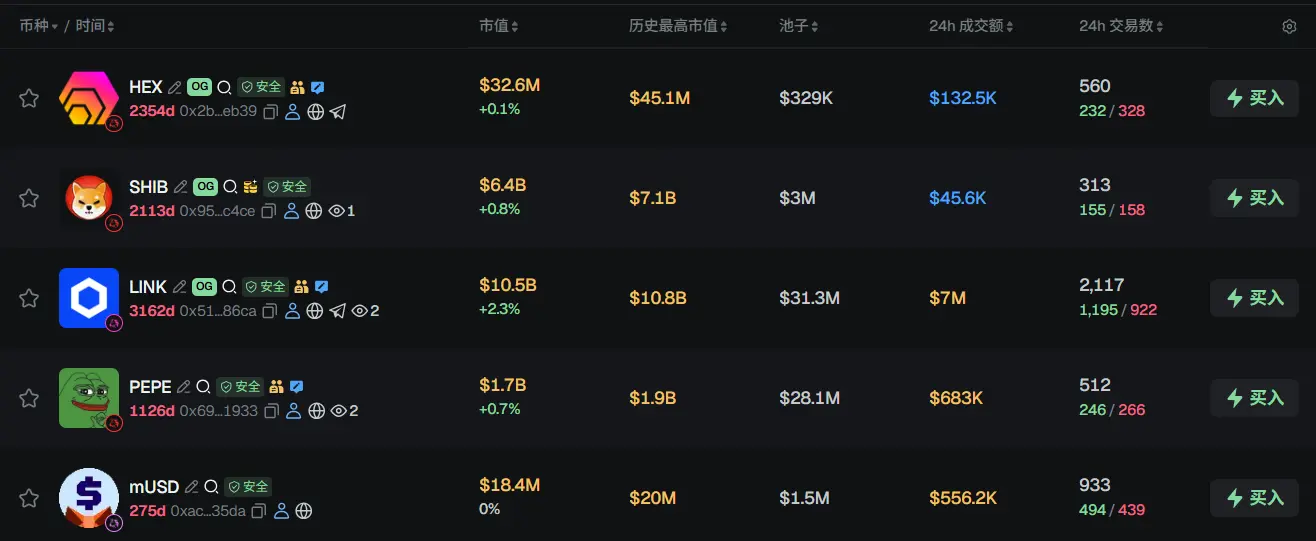
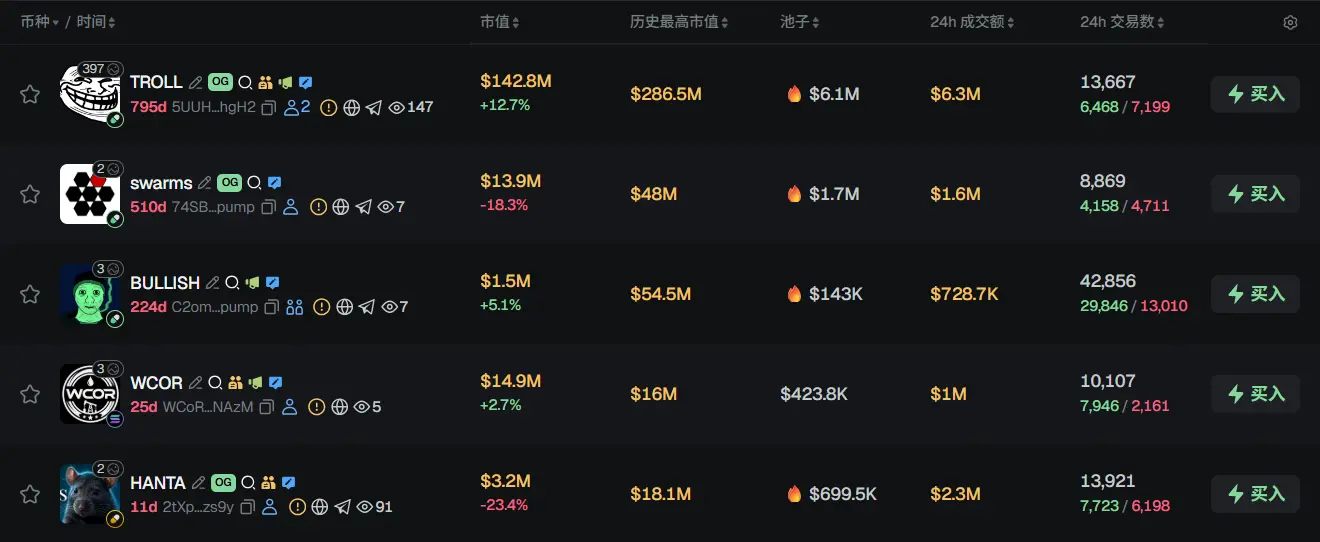
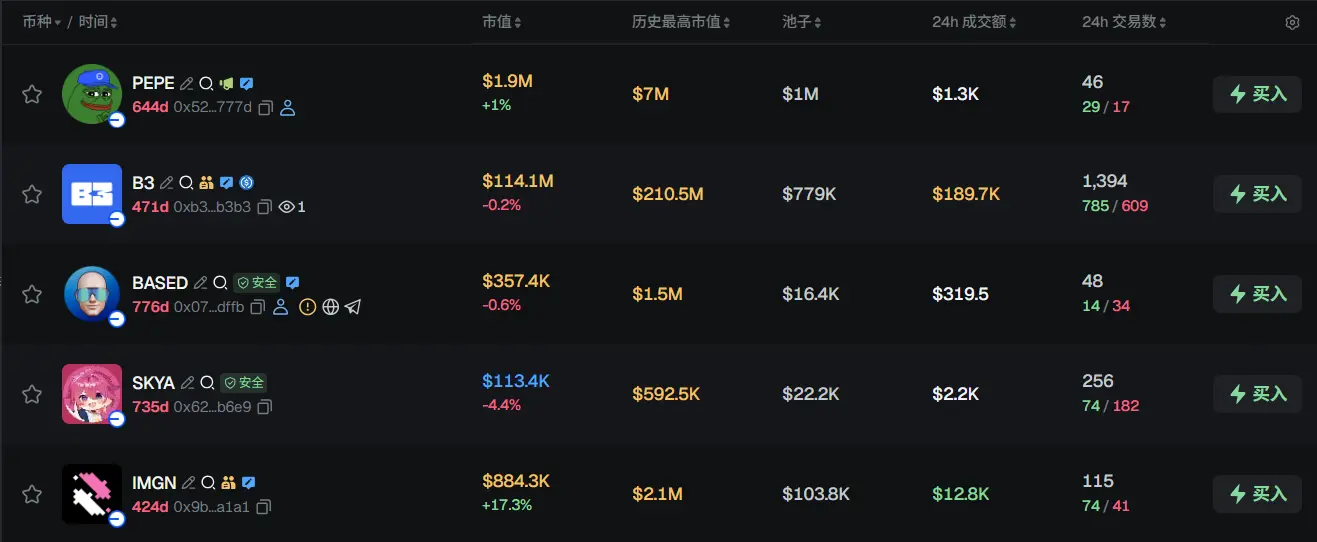
According to the meme token tracking and analysis platform GMGN, as of May 15, 09:00,
The top five popular ETH tokens in the past 24 hours are: HEX, SHIB, LINK, PEPE, mUSD
The top five popular Solana tokens in the past 24 hours are: TROLL, swarms, BULLISH, WOCR, HANTA
The top five popular Base tokens in the past 24 hours are: PEPE, B3, BASED, SKYA, IMGA
What are some interesting articles worth reading in the past 24 hours?
Why did Kraken buy Reap instead of buying a U card?
Kraken's parent company Payward plans to acquire Reap for up to $600 million, which serves as a good entry point for understanding stablecoin payments. According to the official announcement from Payward and Reap, Reap is defined as a stablecoin-native, card issuing and payments infrastructure company. After the transaction is completed, Reap's capabilities will be integrated into Payward Services to support card issuance, cross-border payments, and stablecoin treasury services.
The "CLARITY Act" is out: Why can Ethereum become the biggest winner?
The Senate Banking Committee released the full revised text of the "Digital Asset Market Clarity Act" on May 12, spanning 309 pages.
Most reports will focus on which tokens failed to pass the new decentralized tests, which issuers will face new disclosure burdens, and which projects need to restructure during the four-year transition certification window. These reports are not wrong, but they are not comprehensive.
The more important story is how this bill impacts the only asset that has passed every single standard test and happens to be the only asset with a programmable smart contract platform.
Once this framework becomes law, Ethereum will occupy a regulatory category in the U.S. legal system that has only one member—Ethereum itself. The two dominant bearish logics on ETH that have prevailed in the market over the past five years will simultaneously collapse, while the market has yet to price this in.
Valued at $900 billion, how was Anthropic's founder forged?
Anthropic's latest round of financing is in negotiations, with rumors of a valuation nearing $900 billion—surpassing OpenAI.
In the secondary market, the implied valuation of Anthropic's equity has approached $1 trillion, with some tokenized platforms quoting even higher.
Nine months ago, this figure was still $61 billion.
Around the same time, the company's founder and CEO Dario Amodei stated at the Code with Claude developer conference on May 6 that the company's revenue in Q1 2026 increased 80 times year-on-year.
"We originally planned for a 10 times increase," he said, "but the result was 80 times."
Circle's second growth curve: After raising $222 million for Arc, is CRCL still ARC?
On May 11, Circle announced its Q1 2026 financial report while revealing that its public chain Arc's native token ARC completed a $222 million presale, with a fully diluted valuation of $3 billion.
Among them, a16z crypto led with $75 million, with top-tier institutions like BlackRock, Apollo, the parent company of the New York Stock Exchange ICE, SBI Group, Standard Chartered Ventures, and ARK Invest participating.
CRCL's stock price surged nearly 16% on that day, bringing its market capitalization back above $30 billion.
This raised a core question in the market: Circle is already a public company, and if one is optimistic about its future, they can directly hold CRCL stock; why issue ARC tokens? Both are capturing the value of the Arc network, but what is each worth?
 Risk warning