Nearly 10 billion in selling pressure, the market remains unmoved, is Bitcoin heading for 140,000?

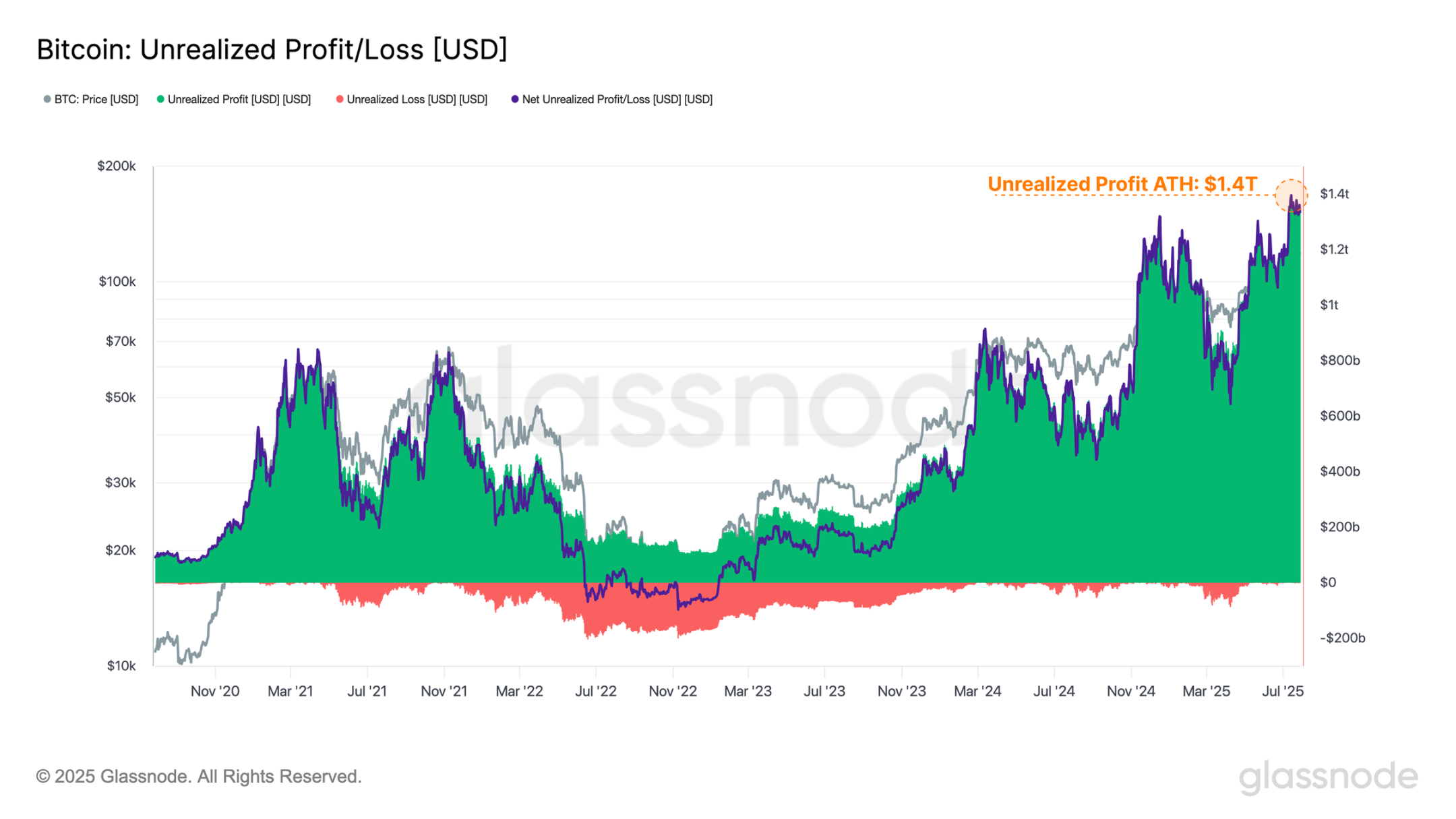
 The unrealized profits of Bitcoin holders recently reached a historical peak of $1.4 trillion, with $140,000 potentially being a key price for whales to take profits.
Authors: UkuriaOC, CryptoVizArt, Glassnode
Compiled by: AididiaoJP, Foresight News
Last weekend, Bitcoin's liquidity faced a significant test as an early investor sold over 80,000 BTC through Galaxy Digital's OTC trading service. Despite this, the market demonstrated strong resilience, with the vast majority of investors choosing to hold rather than realize profits.
Executive Summary
Last weekend, Bitcoin's liquidity faced a severe challenge when an early large investor sold over 80,000 BTC through Galaxy Digital's OTC trading service. Although this sell-off, amounting to $9.6 billion, put pressure on the market, it quickly absorbed the massive selling pressure, with prices briefly dropping to $115,000 before stabilizing around $119,000, slightly below the historical high.
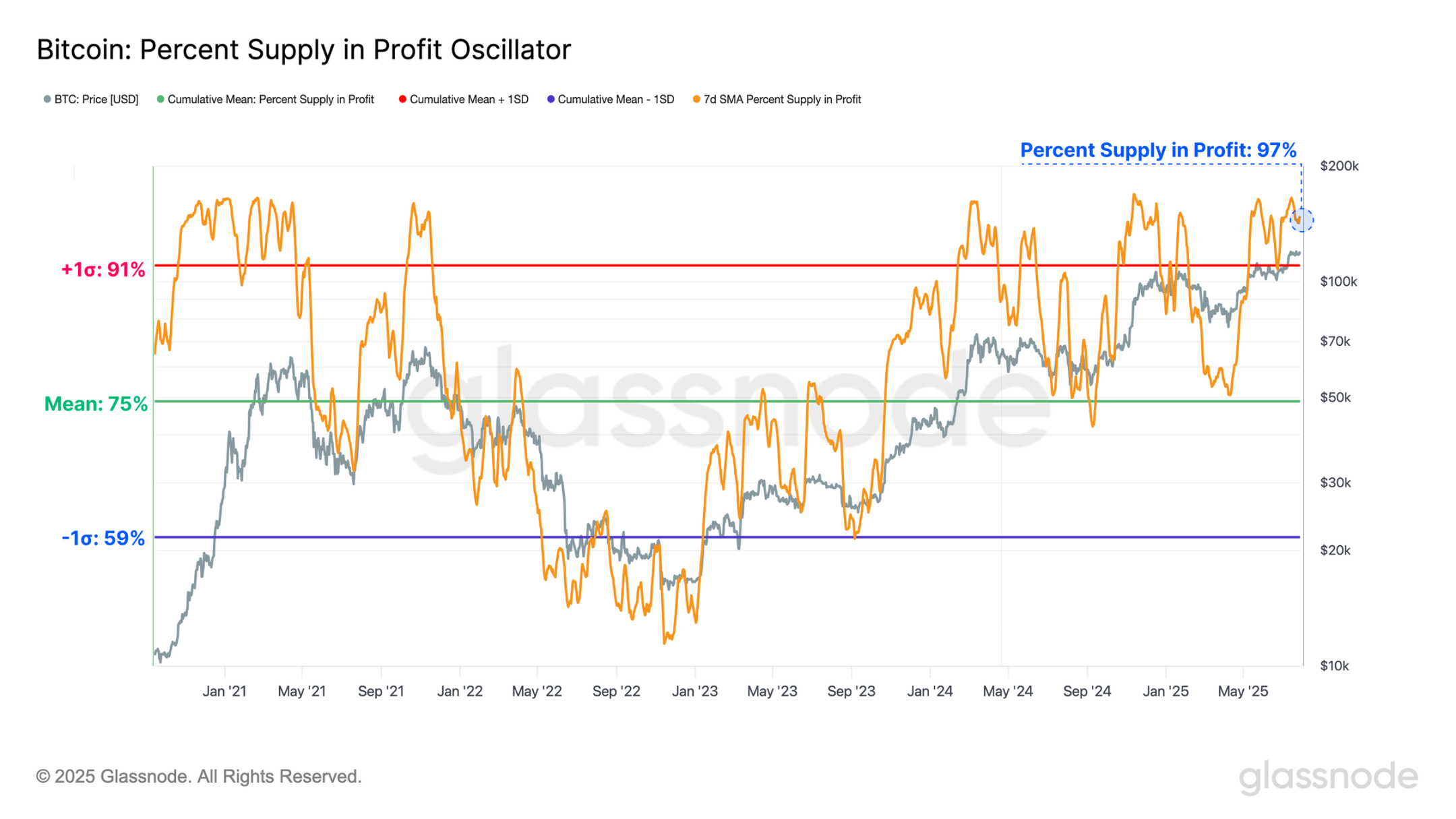
Even after such a large-scale sell-off, the unrealized profits held by market participants remain substantial. Currently, the total unrealized profit amounts to $1.4 trillion, with 97% of the circulating supply still in profit.
According to various on-chain valuation models, Bitcoin's price is currently oscillating in the range of $105,000 to $125,000. If an effective breakout occurs, the price may further test $141,000, where significant unrealized profit realization is expected, potentially facing substantial selling pressure.
Depth of Liquidity
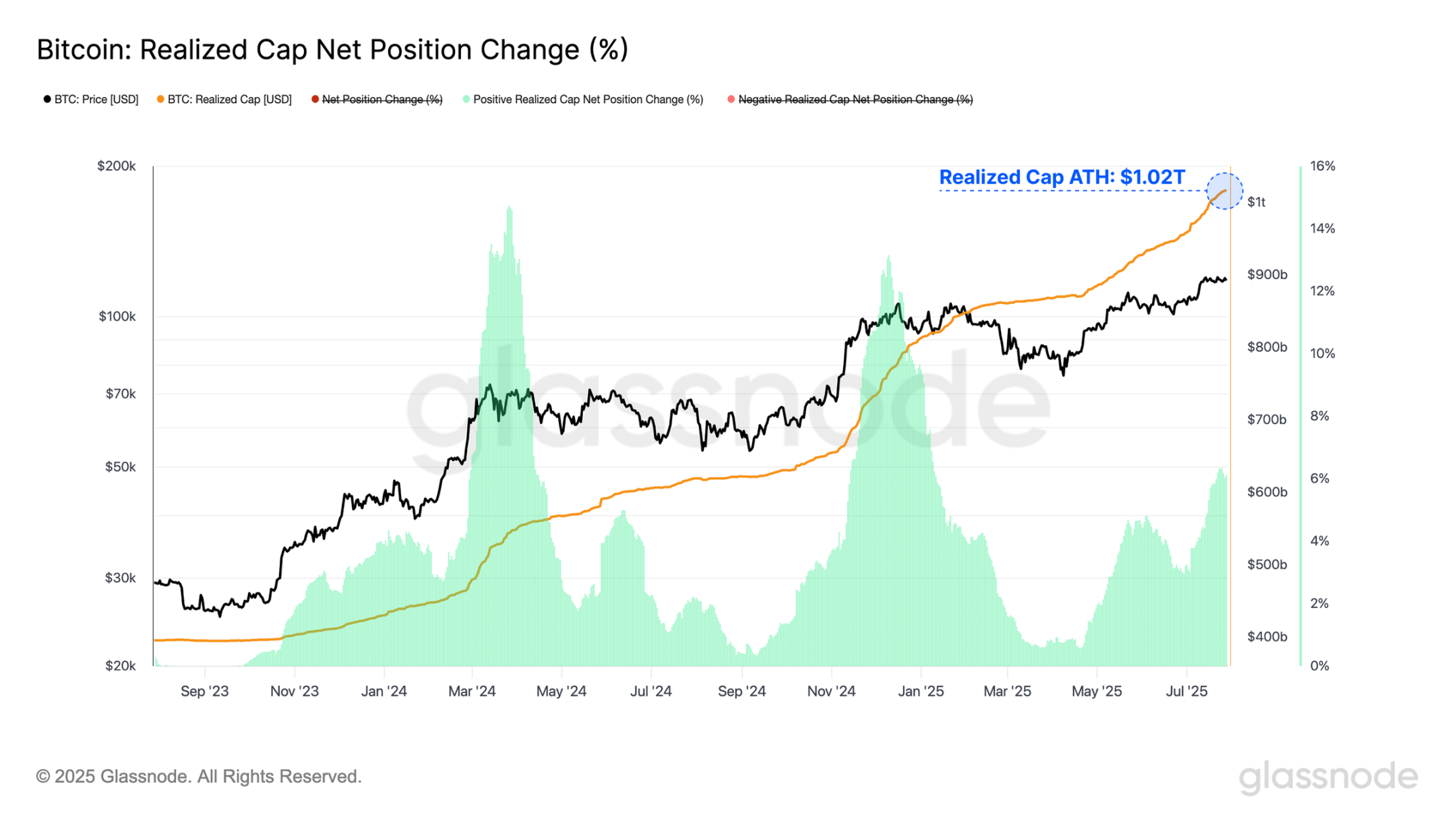
Realized Cap is a fundamental metric in on-chain analysis used to quantify the total liquidity in the Bitcoin network measured in USD. This metric has now surpassed $1.02 trillion, highlighting the growing depth and thickness of liquidity in this asset.
Last weekend, this liquidity was put to the test. An early Bitcoin investor sold 80,000 BTC (approximately $9.6 billion) through Galaxy Digital's service, possibly through a mix of market selling and OTC trading. The resulting selling pressure pushed the price down to $115,000, which then stabilized at $119,000.
This event demonstrates Bitcoin's ability to absorb large sell orders even during typically thin liquidity weekend trading periods, confirming the robustness of the market structure.
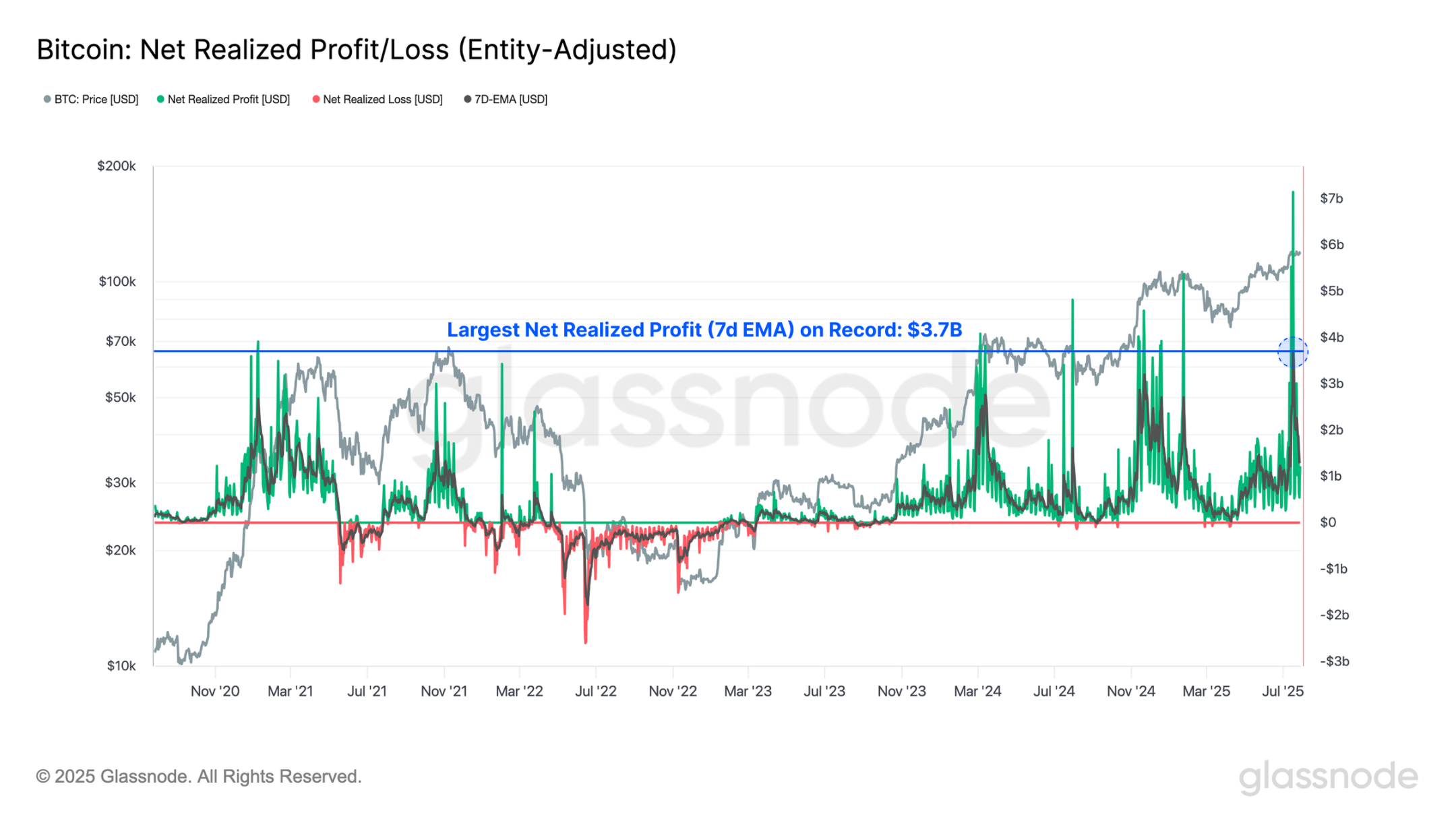
This event also propelled the Net Realized Profit/Loss metric to a historical peak of $3.7 billion. Notably, the surge in this metric occurred prior to the weekend sell-off, reflecting the movement of funds before final allocation.
Since this batch of tokens was initially marked as internal transfers by the entity-adjusted algorithm, subsequent address changes recorded through Galaxy Digital were noted as economically meaningful transactions, indicating a change of ownership.
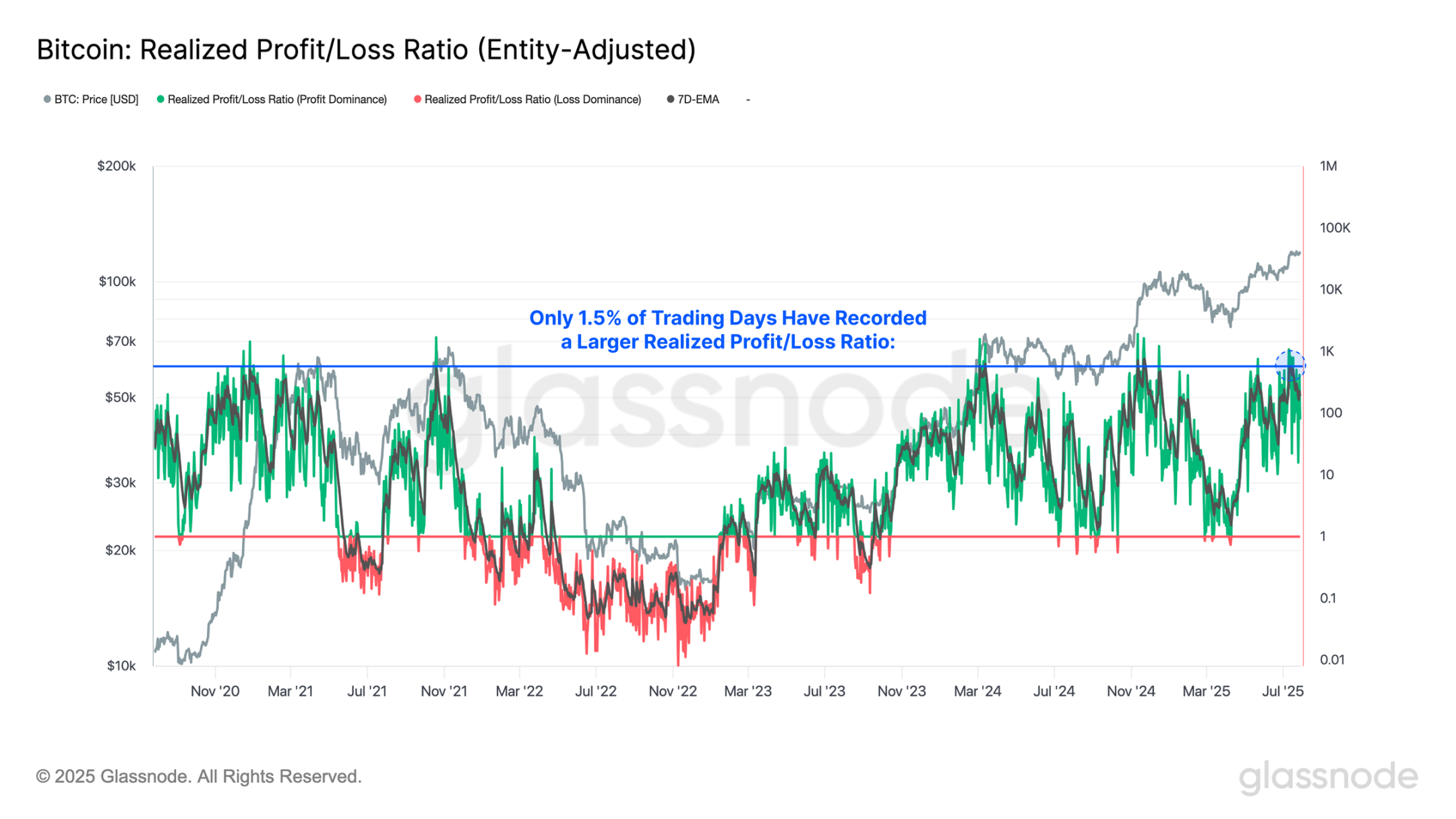
The recent surge in profit-taking behavior has driven the Realized Profit/Loss Ratio to accelerate sharply, with current realized profits reaching 571 times the losses. This figure is at an extreme high, with only 1.5% of trading days historically exceeding this level.
However, interpreting this signal requires caution. While extreme profit-taking behavior may accompany price tops (as seen during the historical high of $73,000 on March 7, 2024), it does not result in an immediate reaction. For example, when the price broke above $100,000 at the end of 2024, the peak of profit-taking occurred at $98,000, but the market continued to rise by 10% to $107,000 before peaking.
This lag indicates that significantly increased profit-taking often signals (but does not immediately lead to) market exhaustion. It creates supply pressure that requires time to digest, and market reactions may exhibit delays.
Holding Duration Analysis
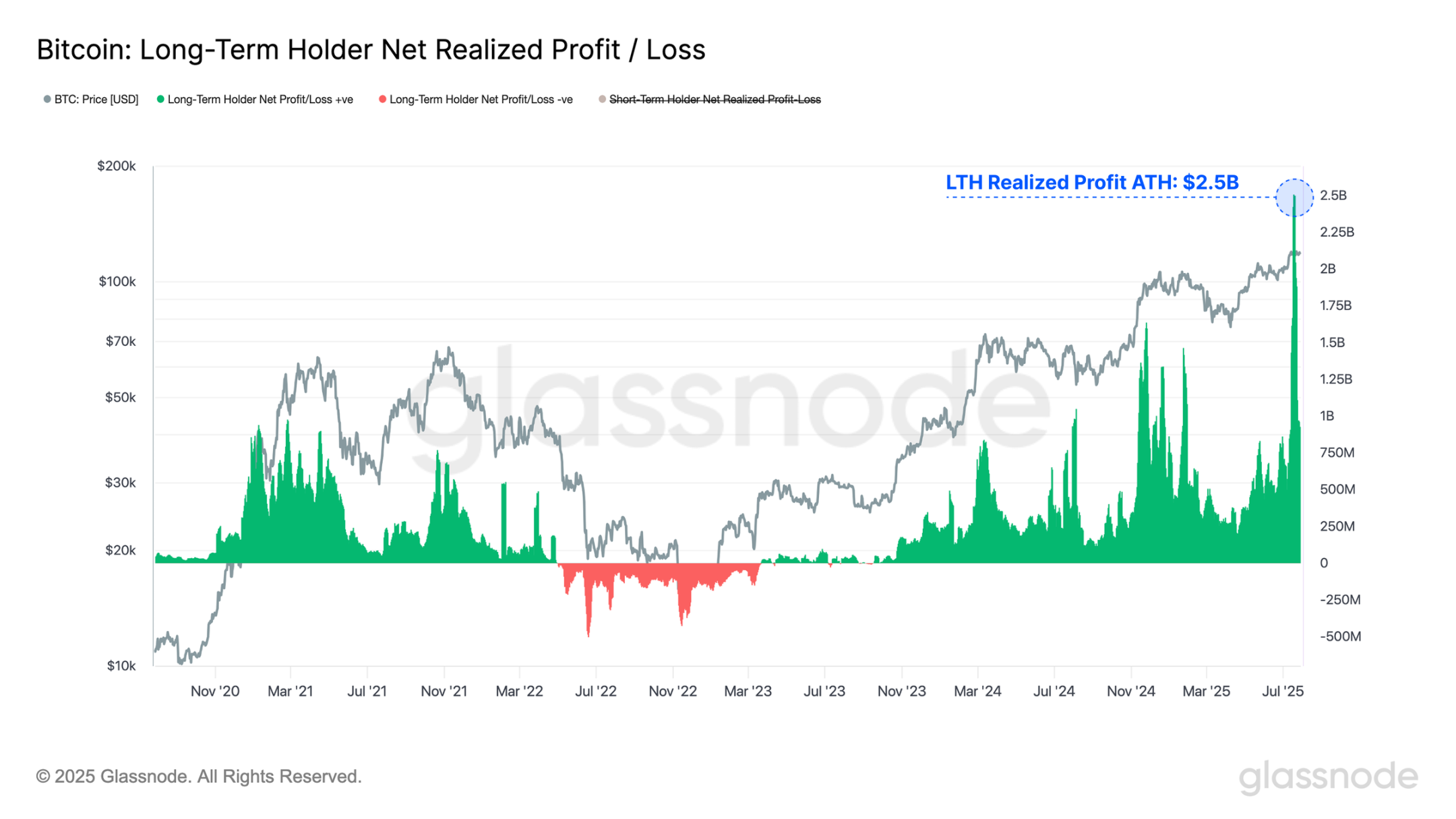
After digesting a large number of long-term dormant tokens, the Long-Term Holder Net Realized Profit/Loss reached a historical high of $2.5 billion, surpassing the previous peak of $1.6 billion. This marks the largest single sell-off event in Bitcoin's history, an extreme liquidity stress test, yet the market has shown remarkable resilience, with prices remaining near historical highs.
This further confirms Bitcoin's extraordinary capacity to withstand pressure during significant distribution events, having previously witnessed tests such as the Mt. Gox compensation and the German government's sell-off within this cycle.
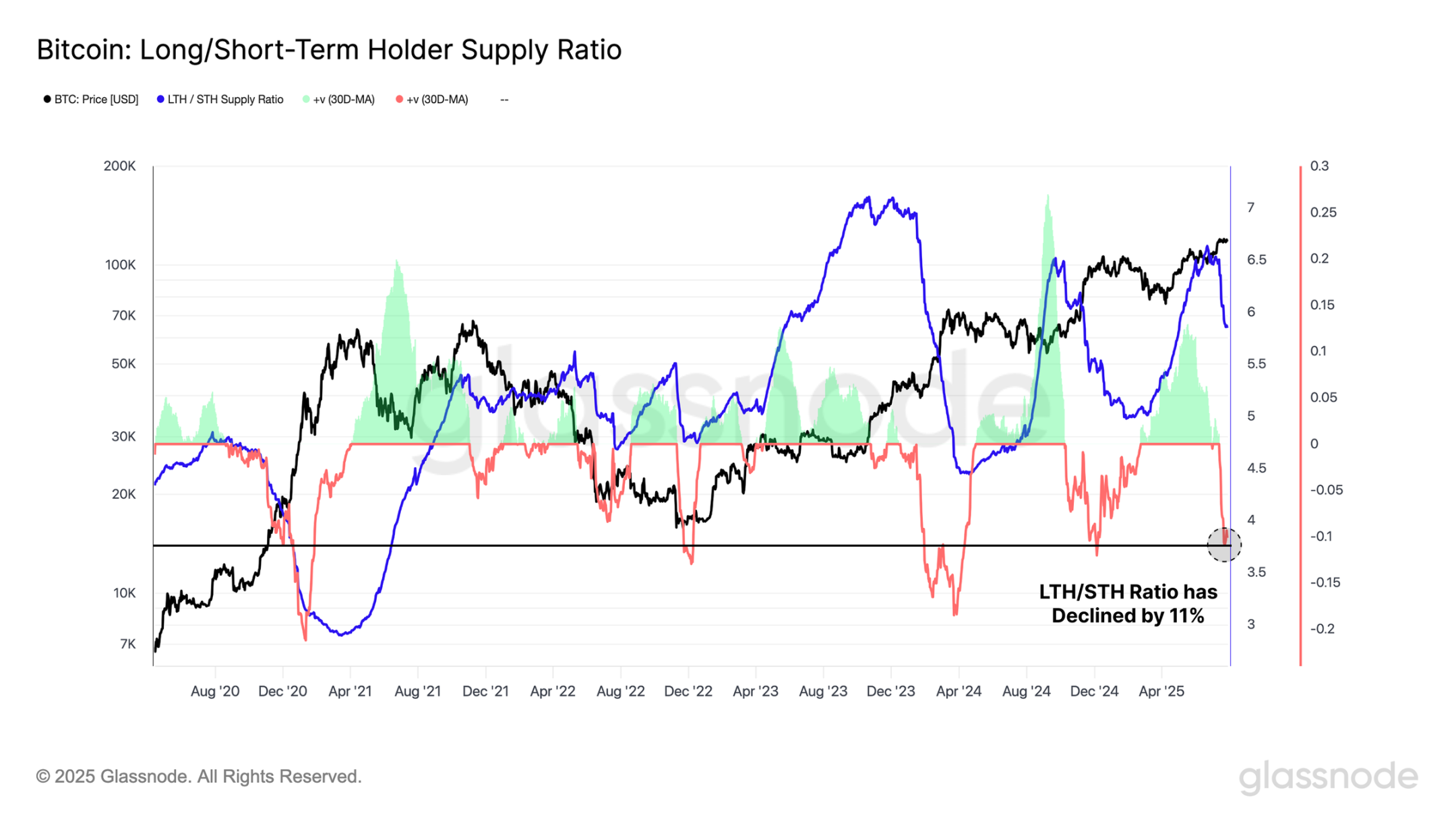
By comparing the supply ratio of long-term to short-term holders, it is evident that the formation of three historical peaks in this cycle has followed the same pattern: after an initial accumulation phase, there is always a sharp shift towards aggressive distribution.
The current distribution phase is still ongoing, with the LTH/STH supply ratio continuing to contract. Over the past 30 days, this ratio has decreased by 11%, with only 8.6% of trading days experiencing a more severe decline, highlighting the intensity of the shift in investor behavior.
Unrealized Profit Analysis
Despite facing significant selling pressure, including large-scale profit-taking by long-term investors last weekend, the Bitcoin market remained unusually stable. Therefore, the vast majority of participants still hold considerable unrealized profits, with 97% of the circulating supply currently having a cost basis below the spot price.
The total unrealized profits held by market participants recently reached a historical peak of $1.4 trillion. This indicates that most investors are sitting on substantial floating profits, which could trigger potential selling pressure if prices continue to rise.
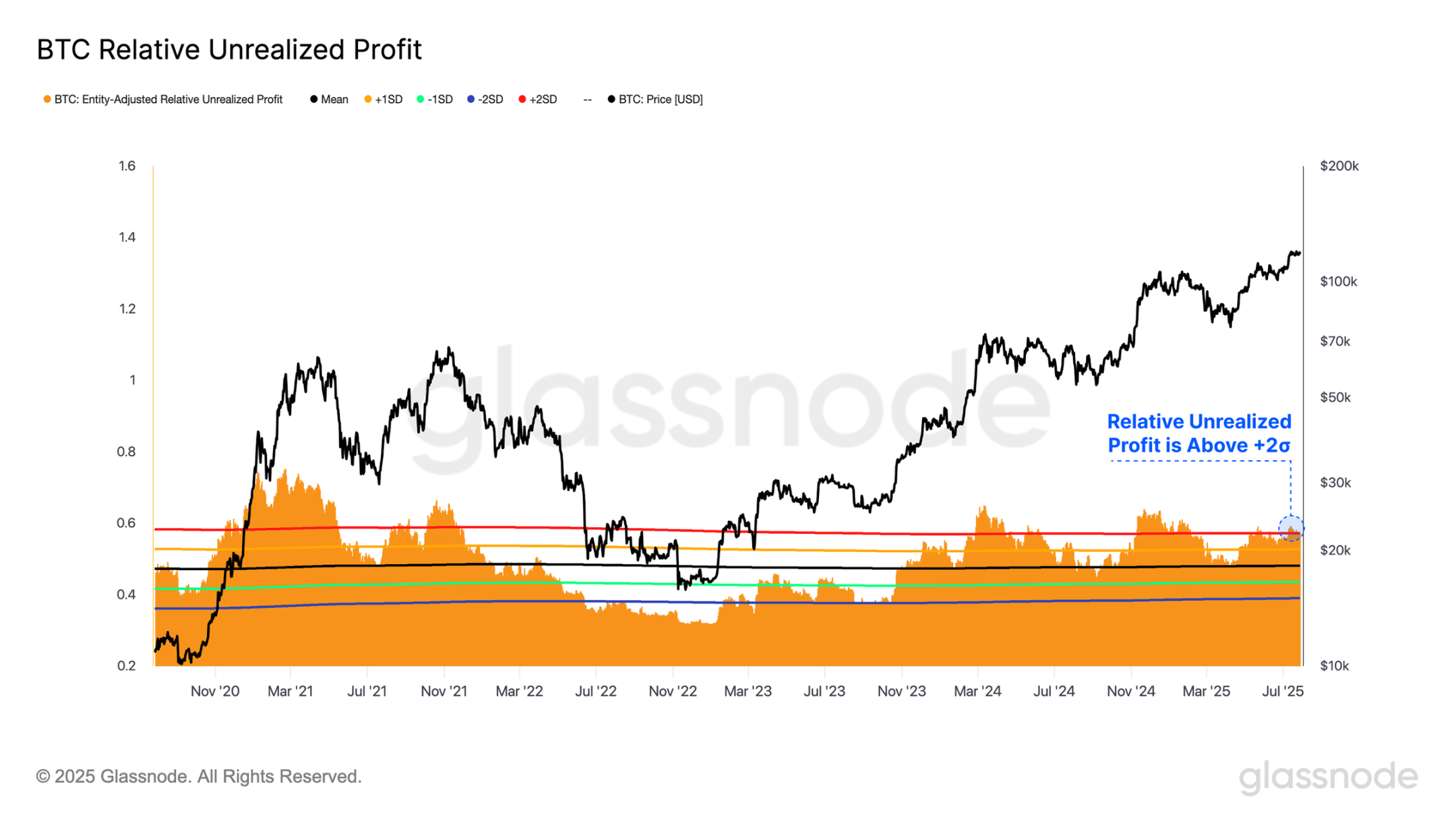
We can also observe the proportion of unrealized profit market cap as a standardized metric. Currently, this metric has once again surpassed the +2σ range, a level historically associated with market euphoria and the formation of historical tops. This reaffirms the reality of participants holding significant unrealized profits from a standardized perspective.
This suggests that many investors maintain an optimistic view of market conditions, which serves as both a catalyst for sentiment and implies that the motivation for future profit-taking may increase.
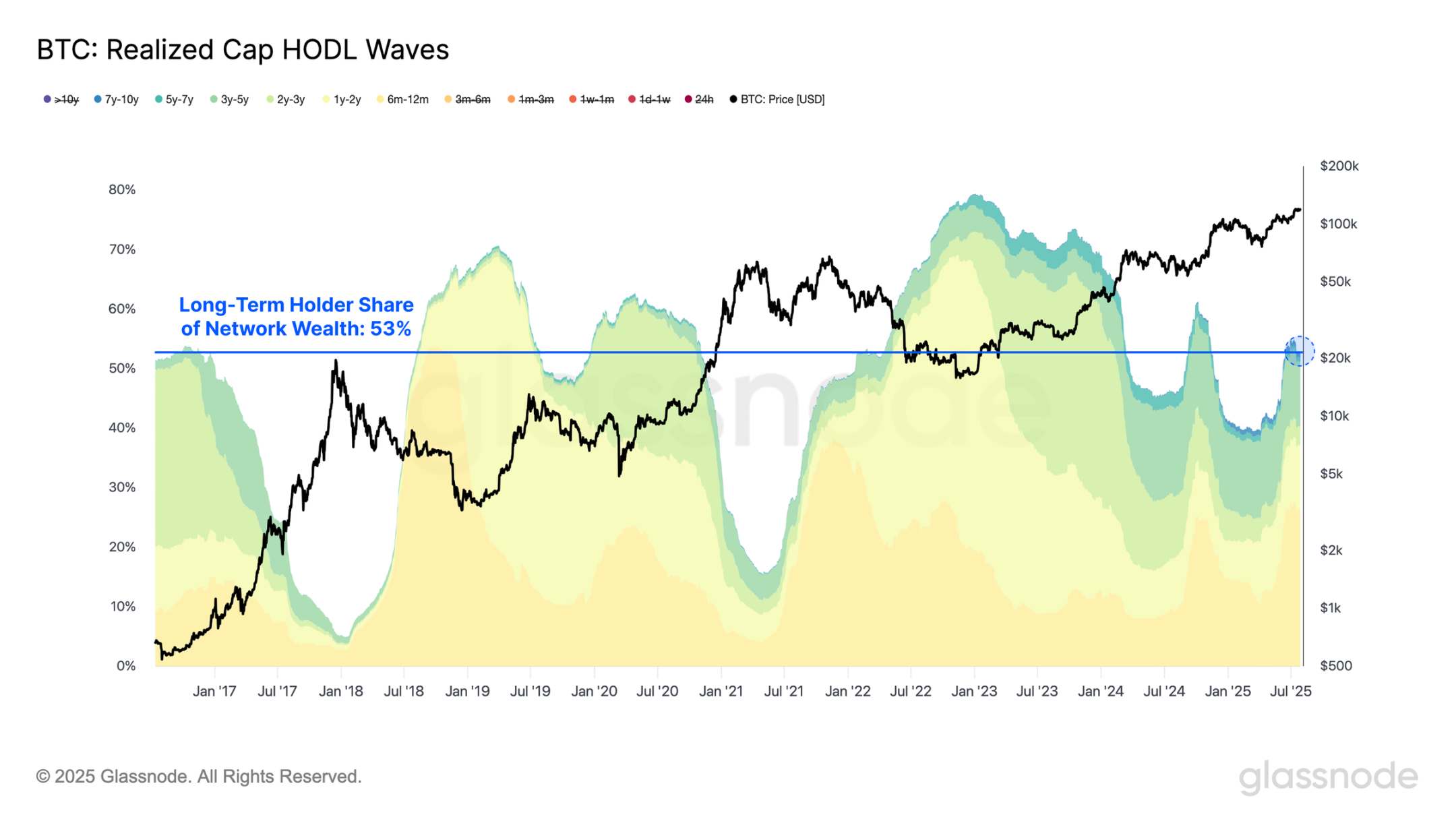
Unlike previous cycles, long-term holders currently control 53% of the wealth. Although this group has been distributing throughout this cycle, this proportion remains substantial in an environment where unrealized profits are at high levels.
Overall dynamics indicate that long-term holders may still have further selling to do. As prices rise to levels enticing enough to activate deeply dormant whale tokens, the market will require more demand inflow to absorb the selling pressure.
Market Cost Analysis
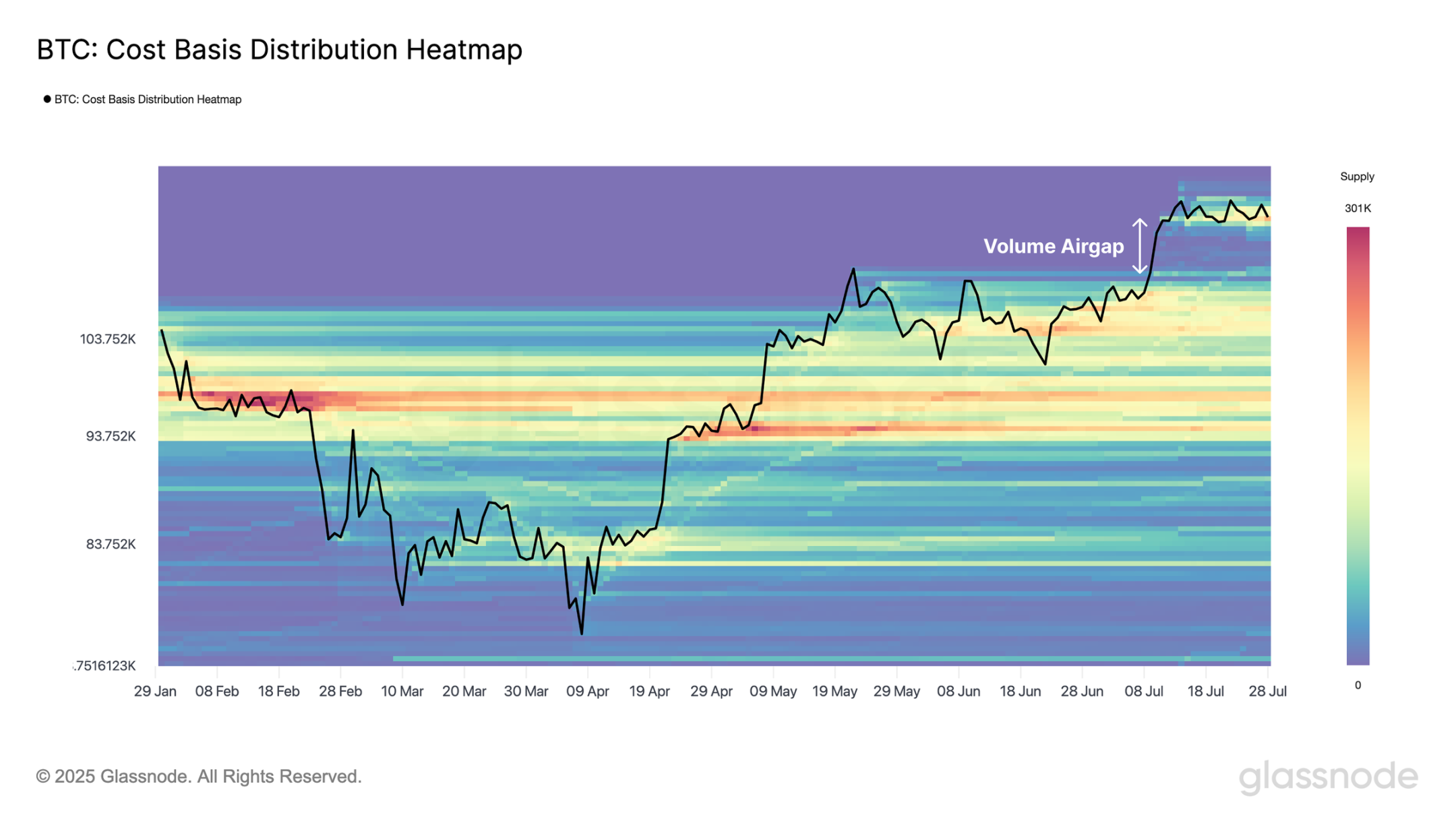
The Bitcoin cost basis distribution chart reveals a significant concentration of cost basis in the $117,000 - $122,000 range. This indicates that a large number of investors completed accumulation in this high price range.
Notably, there is a trading volume vacuum in the $110,000 - $115,000 range below the spot price, resulting from insufficient turnover during the rapid price increase. Not all vacuum zones need to be filled, but this area has price gravity, and the market may need to test the effectiveness of this support, making it a key area to watch during pullbacks.
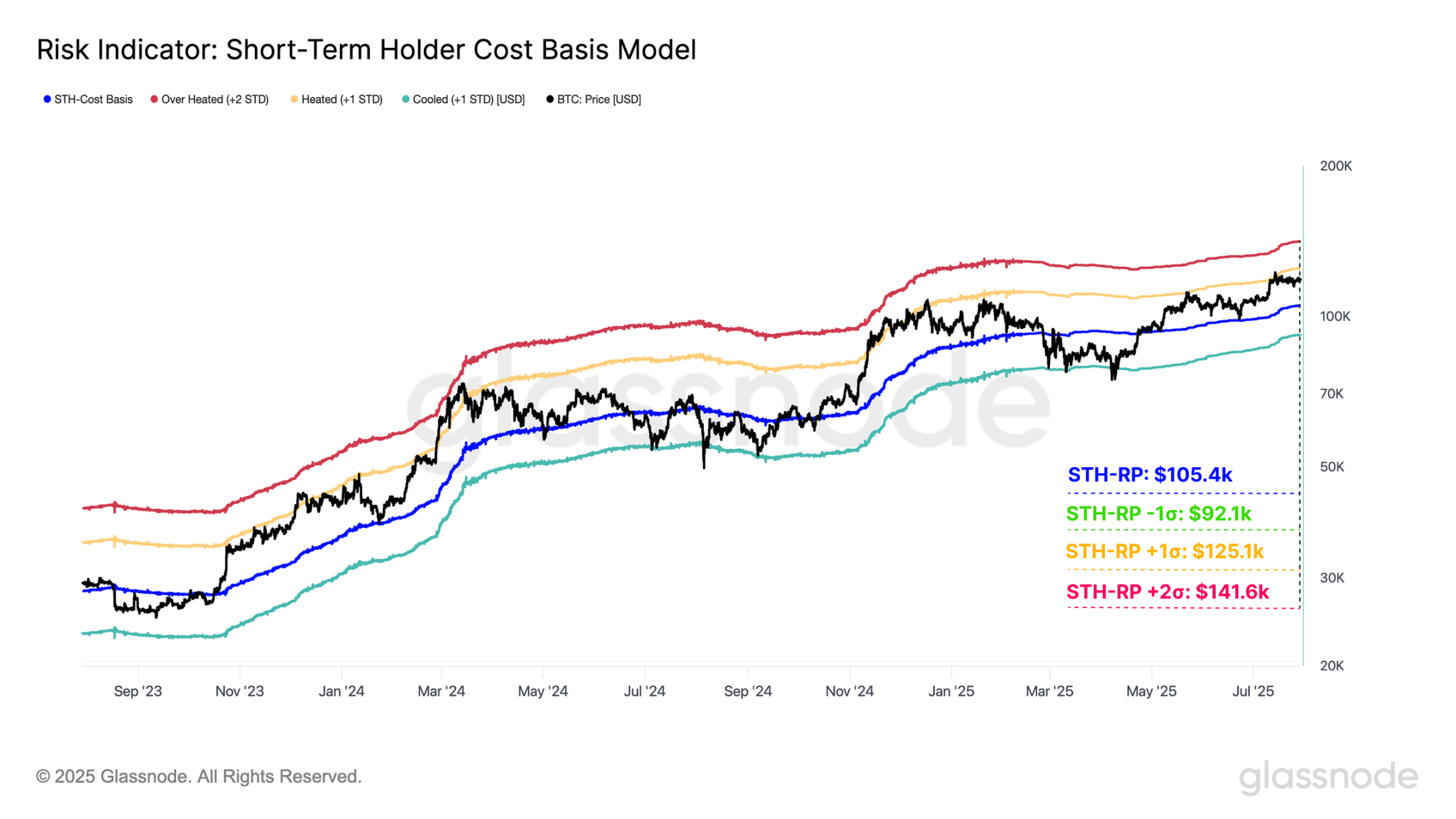
The cost basis of short-term holders (representing the average holding cost of new investors) has historically been a key threshold for delineating local bull and bear market conditions. Adding standard deviation ranges increases the statistical dimension:
- STH CB +2σ: $141,600
- STH CB +1σ: $125,100
- STH Cost Basis: $105,400
- STH CB -1σ: $92,100
A key observation is that Bitcoin's price remains above the short-term holders' cost basis, which is a positive signal for market strength. Additionally, in all major top structures of this cycle, prices have encountered resistance in the +1σ range, and the current pattern is no exception.
From a macro perspective, Bitcoin may maintain oscillation in the $105,000 - $125,000 range before a decisive breakout. If an effective breakout occurs, the $141,000 area (corresponding to the +2σ range) may become the next strong resistance level, where on-chain indicators suggest selling pressure may increase sharply.
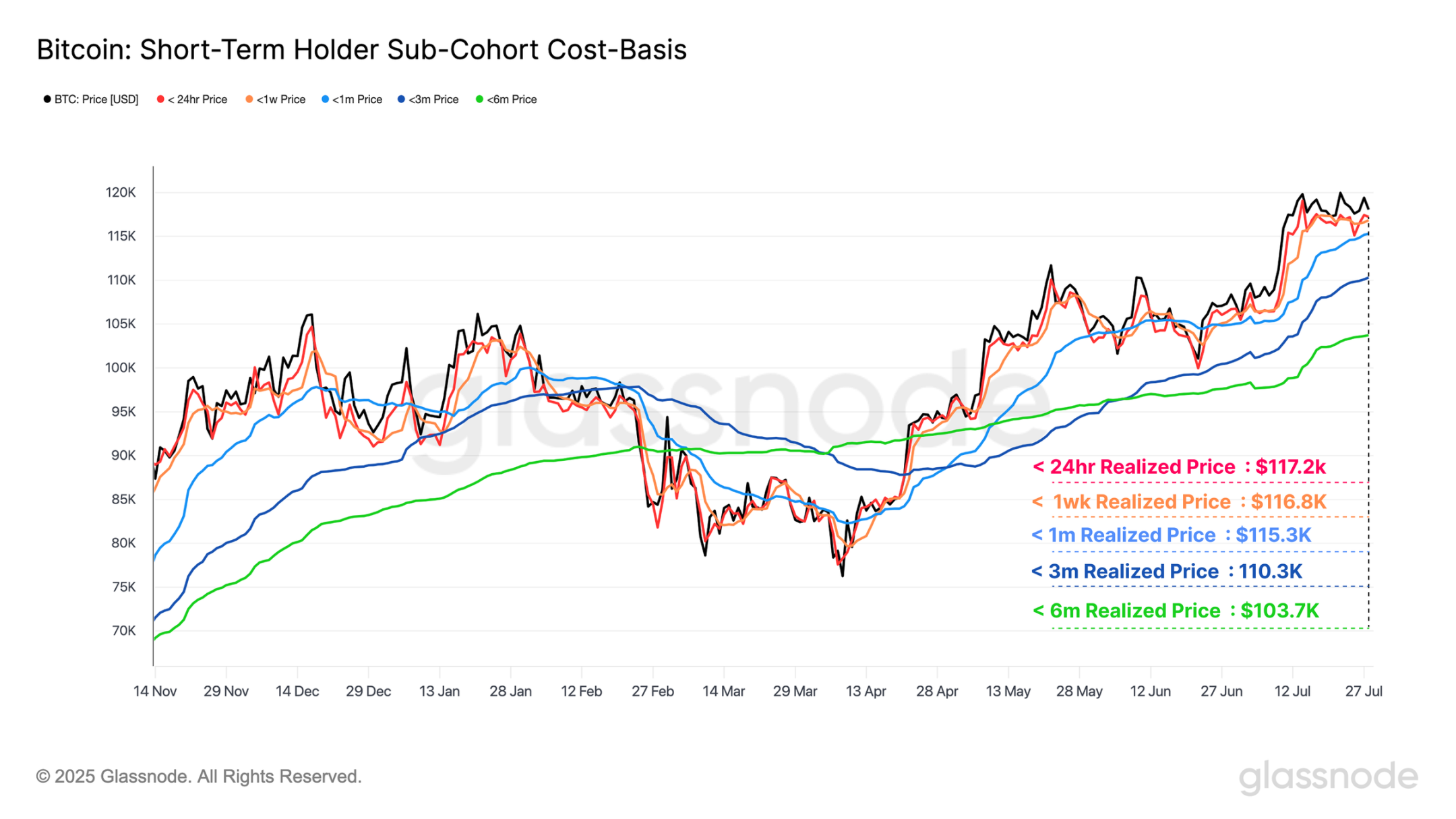
By analyzing the cost basis of internal subgroups of short-term holders, we can construct a "fast-slow cost basis band" as a momentum indicator of short-term market sentiment. The current price remains above all short-term subgroup cost bases, indicating market strength. Notably, the cost basis band for holders from 24 hours to 3 months ($110,000 - $117,000) highly overlaps with the low volume area in the cost basis distribution chart.
The resonance of multiple independent indicators reinforces the importance of this price area, suggesting it may become a key support during pullbacks.
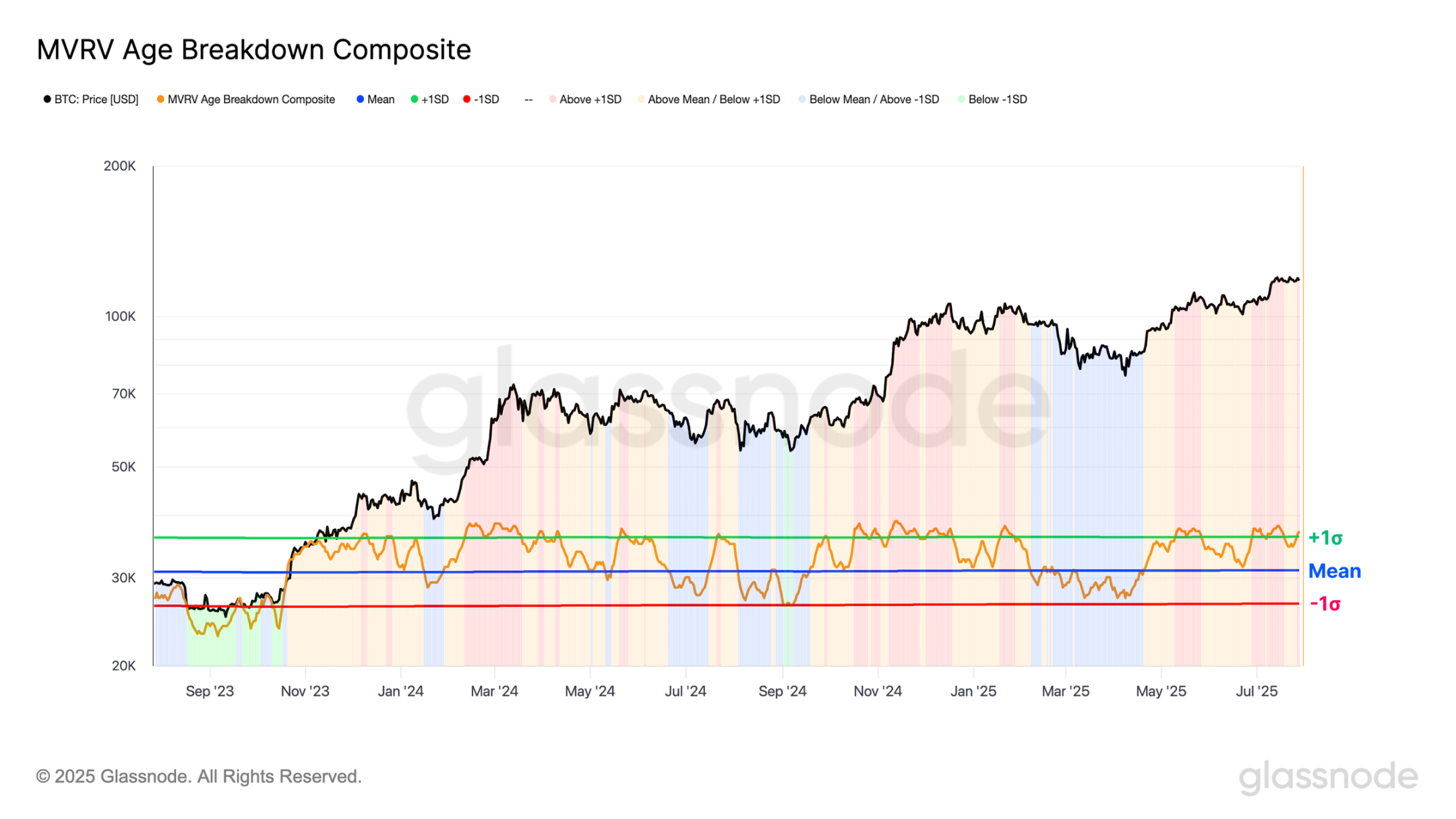
To gain deeper insights into subgroup momentum, we use an equal-weight composite indicator to measure the proportion of profitable subgroups. This indicator has remained above the mean and is approaching the +1σ level, indicating that current market momentum is robust, with most new investors still in profit.
Summary and Conclusion
Last weekend, Bitcoin's resilience faced a severe test as the market efficiently absorbed the sale of 80,000 BTC (worth $9.6 billion), marking one of the largest profit-taking events in its history. Despite the astonishing trading volume, prices quickly stabilized near historical highs, demonstrating the depth and maturity of current market liquidity.
Bitcoin is currently oscillating in the $105,000 - $125,000 range. An effective breakout from this range could alter the market landscape, making $141,000 the next focal point, with on-chain indicators suggesting significant profit-taking may occur in this area. Conversely, the low volume area of $110,000 - $115,000 below the current price warrants close attention, as this region will become a key observation point if a pullback occurs.
 Risk warning
 Risk warning




Popular articles