Epic turnover and selling scale, will the market face further pullbacks?
 Core Viewpoint

 The options market is aggressively repricing, with skew soaring and strong demand for put options, indicating a defensive position layout. The macro backdrop suggests the market is increasingly fatigued.
Original Title: From Rally to Correction
Original Authors: Chris Beamish, Antoine Colpaert, CryptoVizArt, Glassnode
Original Compilation: AididiaoJP, Foresight News
Bitcoin shows signs of weakness following the rally triggered by the Federal Open Market Committee. Long-term holders have realized profits of 3.4 million BTC, while ETF inflows have slowed. With pressure on both the spot and futures markets, the key support level for short-term holders at a cost basis of $111,000 may face deeper cooling risks if breached.
Summary
After the FOMC-driven rally, Bitcoin has entered a correction phase, showing signs of a "buy the rumor, sell the news" market, with broader market structure indicating weakening momentum.
The current 8% decline remains relatively mild, but the $678 billion in realized market cap inflows and the 3.4 million BTC profits realized by long-term holders highlight the unprecedented scale of capital rotation and sell-off in this round.
ETF inflows have sharply slowed before and after the FOMC meeting, while long-term holders have accelerated their selling, creating a fragile balance of capital flow.
Spot trading volume surged during the sell-off, and the futures market experienced severe deleveraging volatility, with liquidation clusters revealing the market's vulnerability to liquidity-driven fluctuations in both directions.
The options market has aggressively repriced, with skew soaring and strong demand for put options indicating defensive positioning, while the macro backdrop suggests increasing fatigue in the market.
From Rally to Correction
Following the FOMC-driven rally, which peaked near $117,000, Bitcoin has transitioned into a correction phase, echoing the typical "buy the rumor, sell the news" pattern. In this issue, we step back from short-term fluctuations to assess the broader market structure, using long-term on-chain indicators, ETF demand, and derivatives positions to evaluate whether this pullback is a healthy consolidation or an early stage of deeper contraction.
On-Chain Analysis
Volatility Background
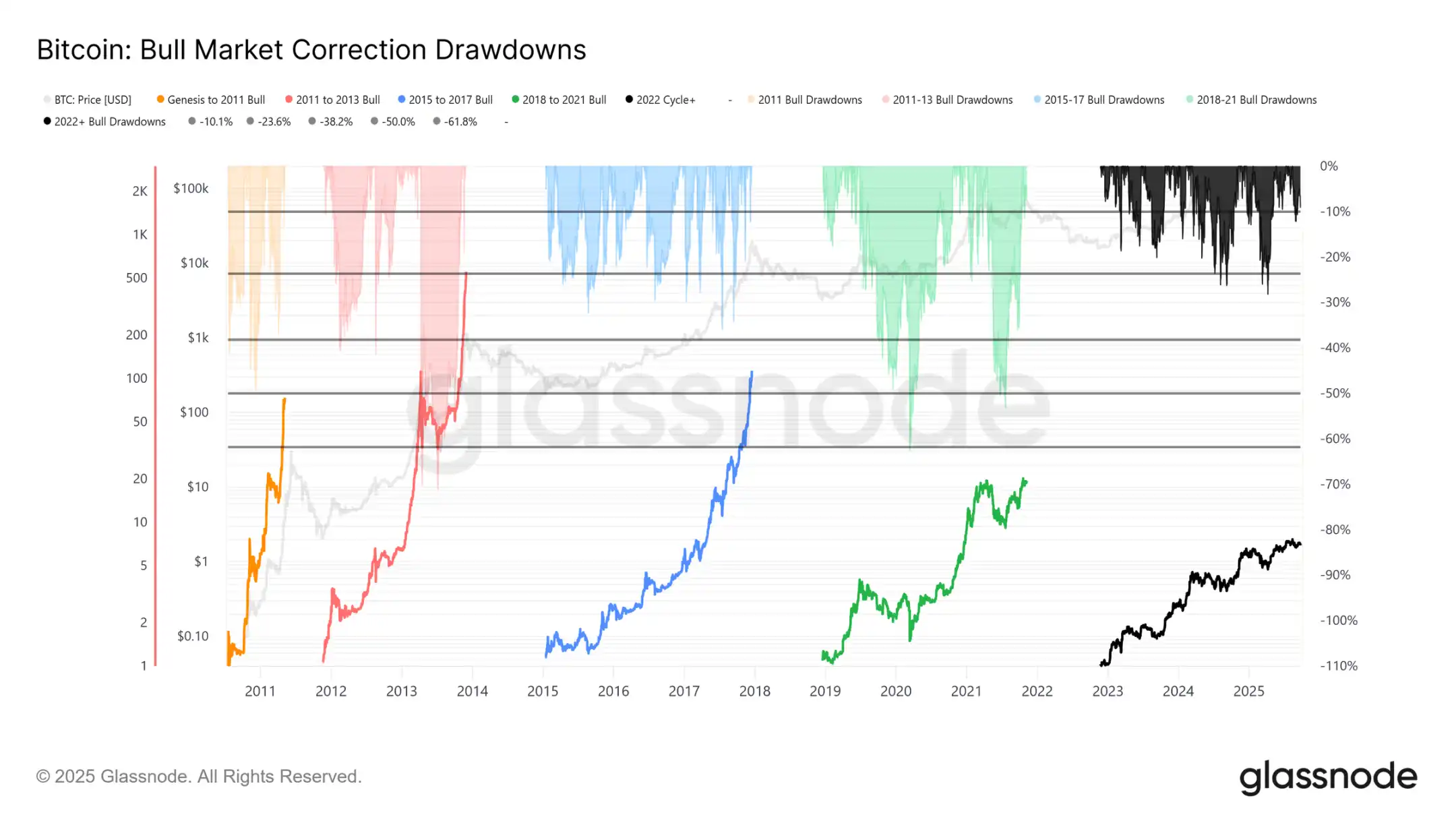
The current decline from the historical high (ATH) of $124,000 to $113,700 is only 8% (with the latest drop reaching 12%), which appears mild compared to the 28% drop in this cycle or the 60% drop in previous cycles. This aligns with the long-term trend of decreasing volatility, similar to the steady progression seen between macro cycles or within phases of 2015-2017, although a late-stage explosive rally has yet to materialize.
Cycle Duration
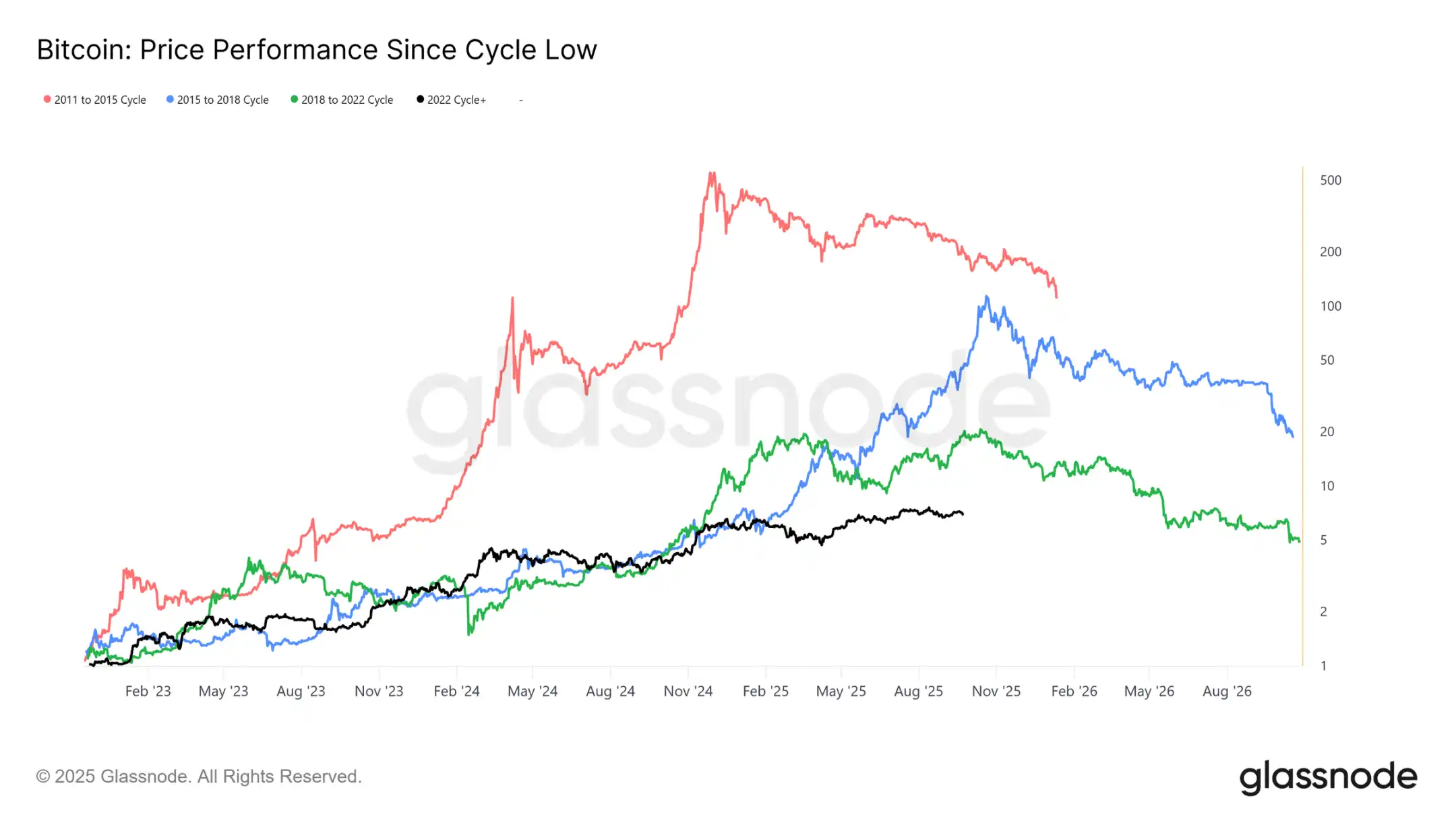
Overlaying the past four cycles shows that even though the current trajectory closely matches the previous two cycles, the peak return rates have weakened over time. Assuming $124,000 marks the global top, this cycle has lasted approximately 1,030 days, very close to the length of the previous two cycles at around 1,060 days.
Capital Inflow Measurement
Beyond price trends, capital deployment provides a more reliable perspective.
Realized market cap has seen three waves of increases since November 2022, raising the total to $1.06 trillion, reflecting the scale of inflows supporting this cycle.
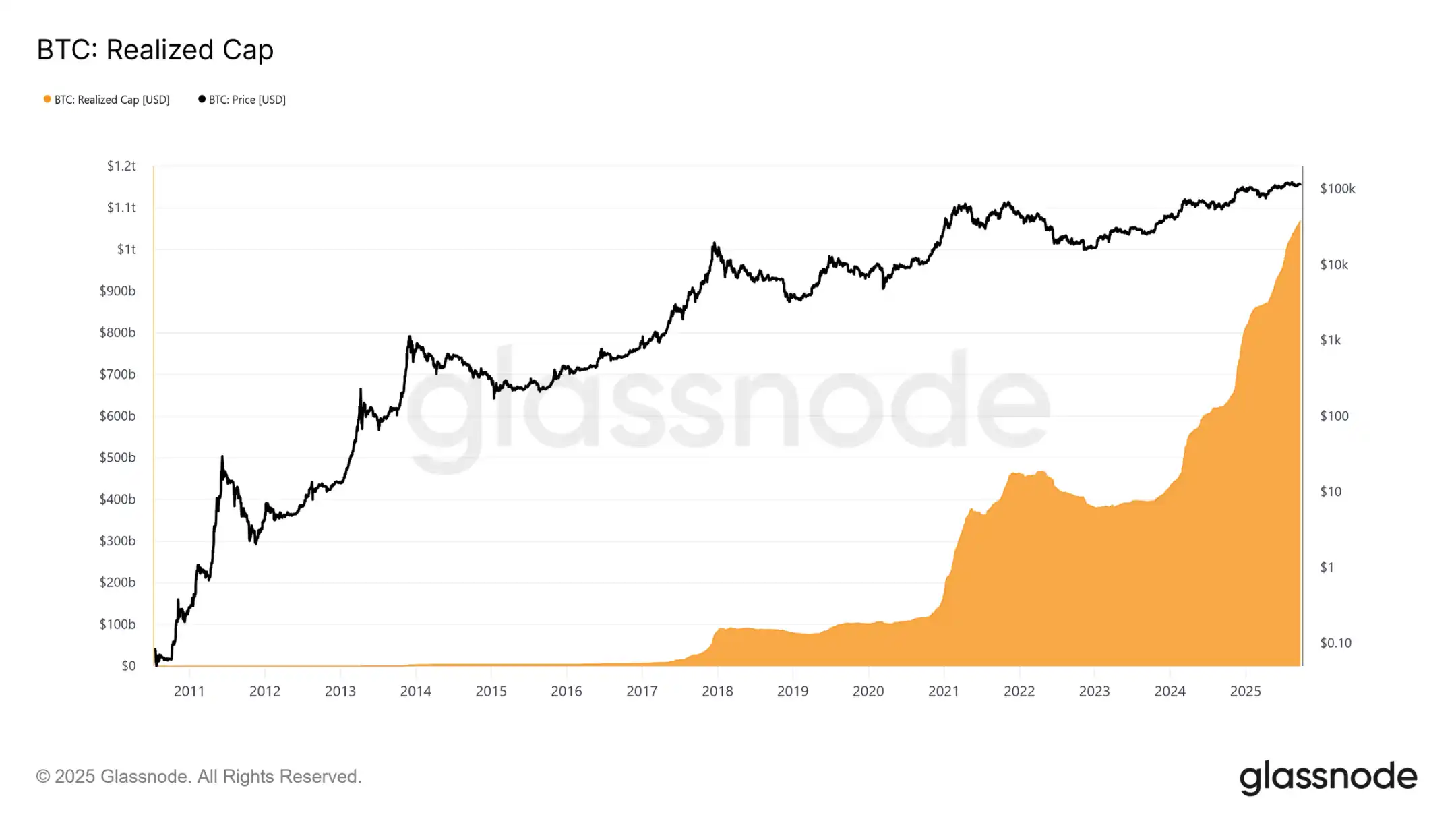
Realized Market Cap Growth
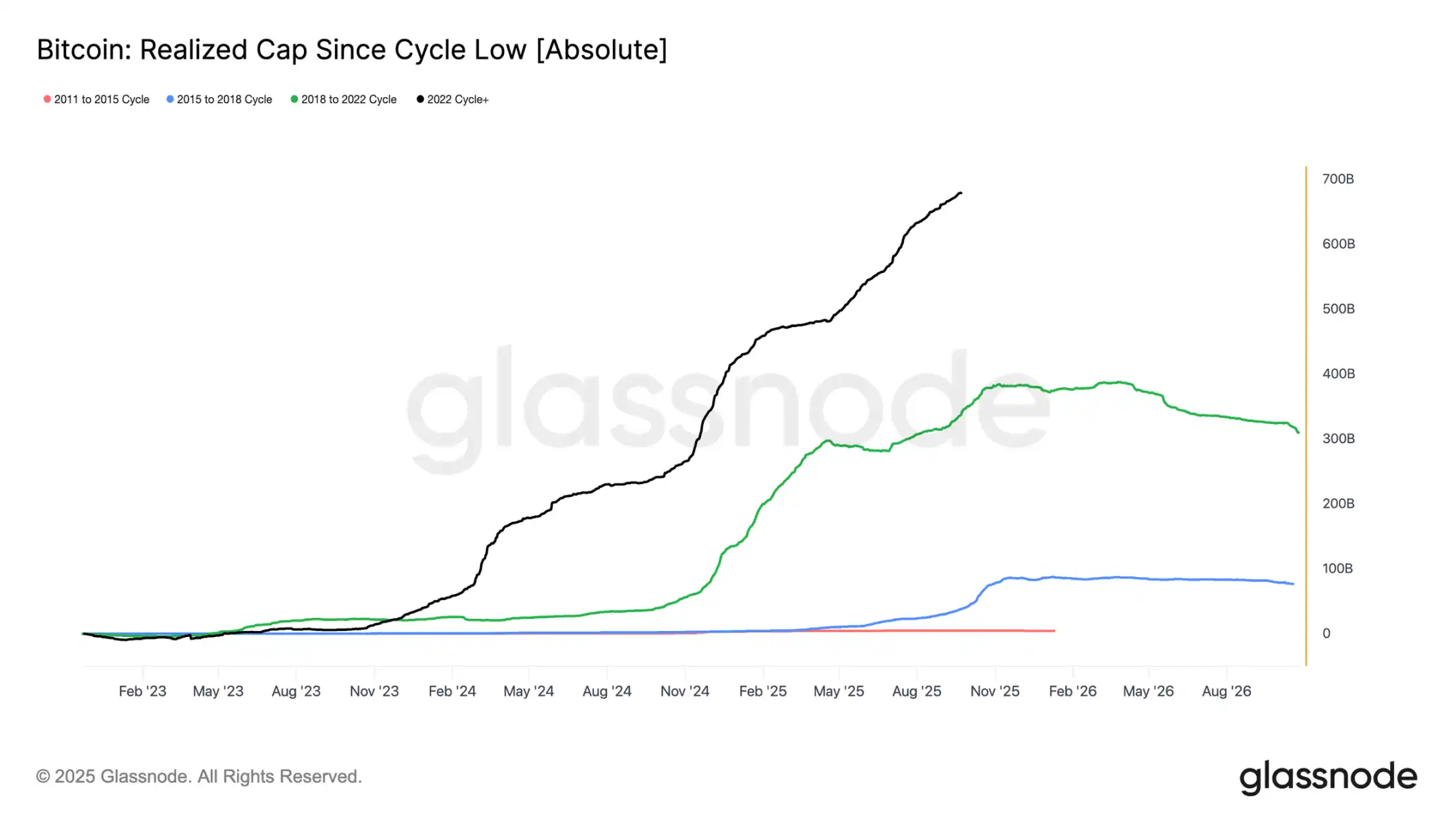
Background Comparison:
- 2011-2015: $4.2 billion
- 2015-2018: $85 billion
- 2018-2022: $383 billion
- 2022-Present: $678 billion
This cycle has absorbed a net inflow of $678 billion, nearly 1.8 times that of the previous cycle, highlighting the unprecedented scale of capital rotation.
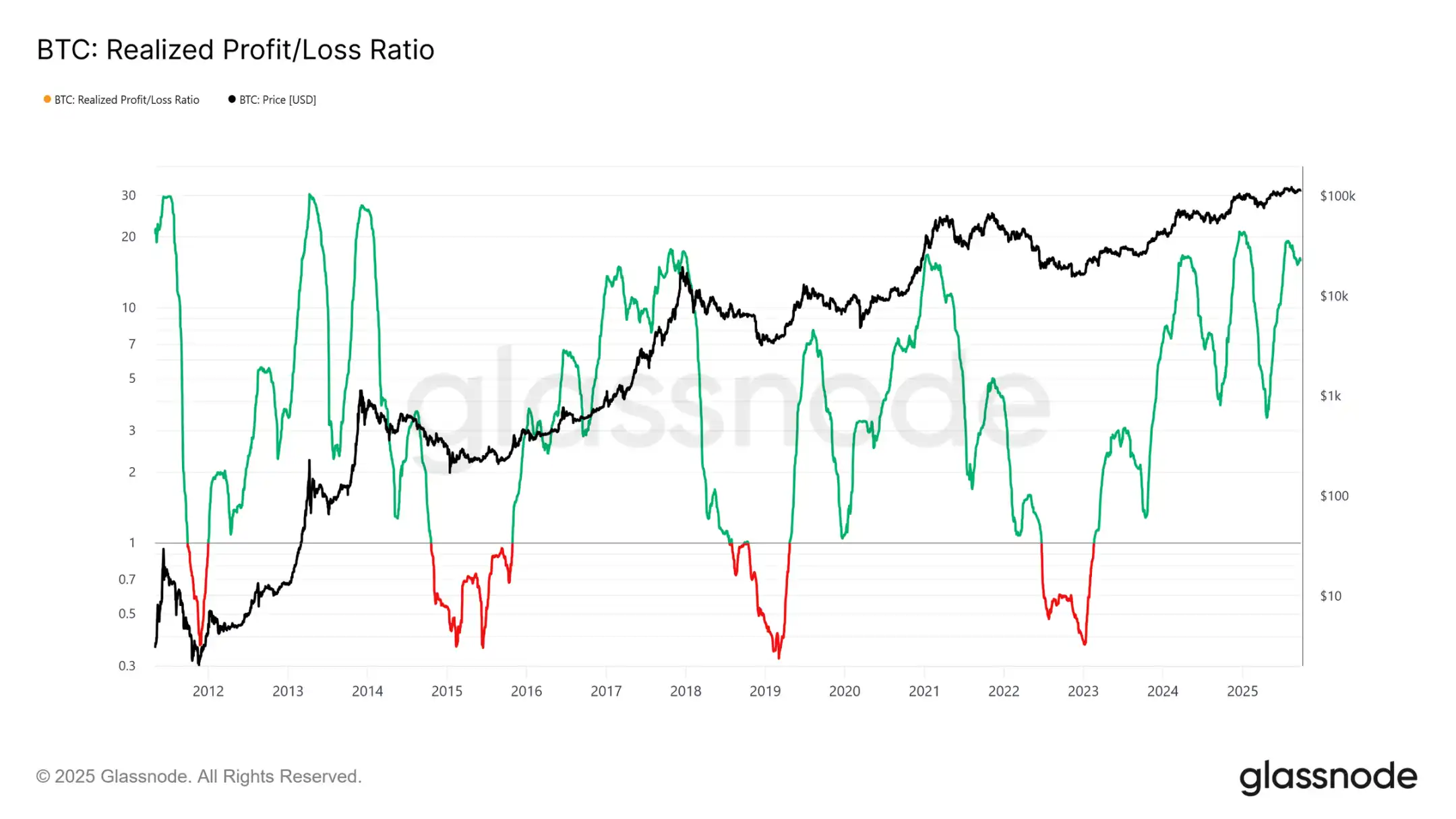
Profit Realization Peaks
Another distinction lies in the inflow structure. Unlike the single wave seen in earlier cycles, this cycle has experienced three distinct, sustained surges over several months. The realized profit-loss ratio indicates that each time profits realized exceed 90% of the moving tokens, it marks a cyclical peak. Having just exited the third such extreme, the probability leans towards the next phase being a cooling period.
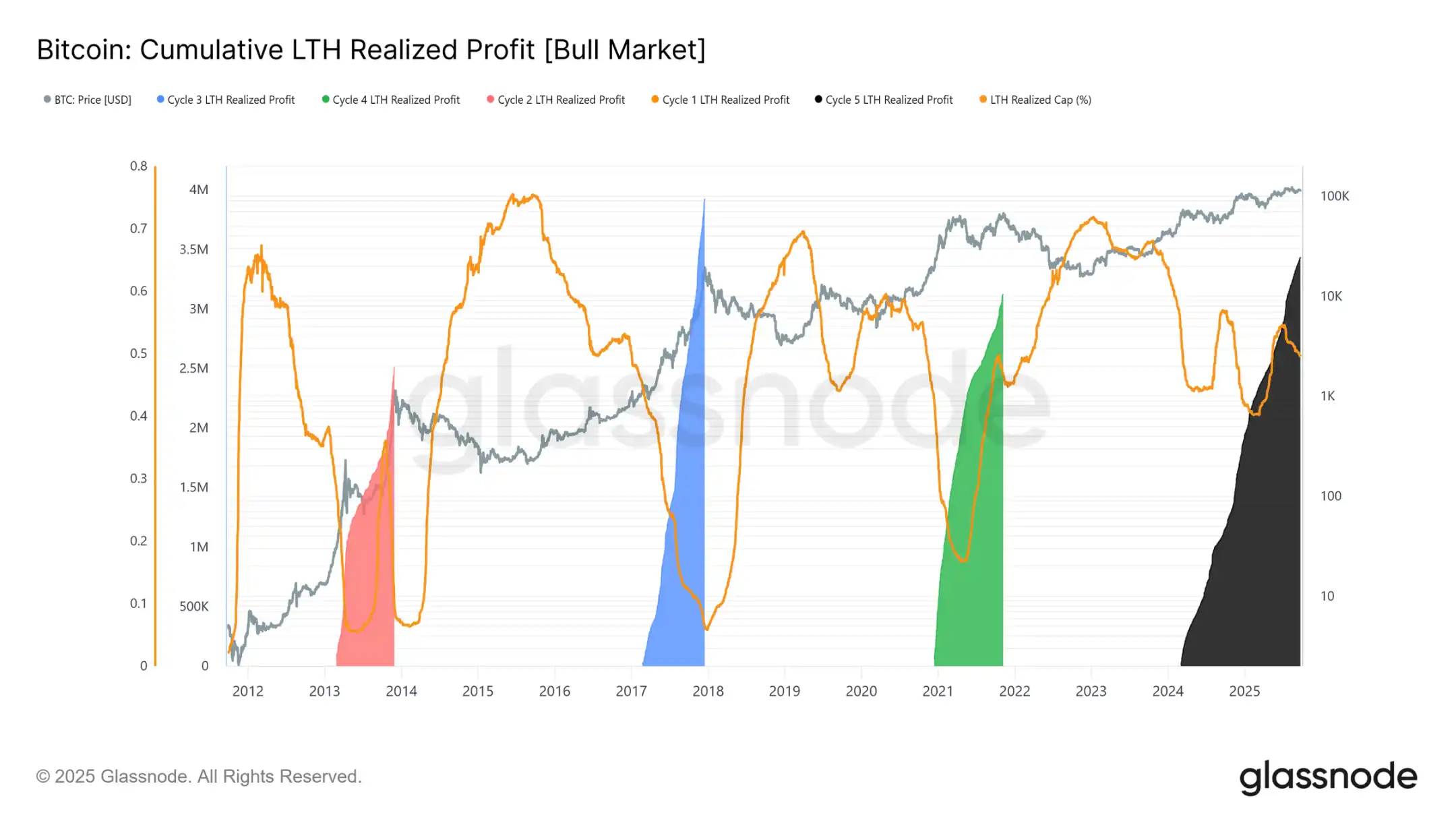
Long-Term Holder Profit Dominance
When focusing on long-term holders, the scale becomes clearer. This metric tracks the cumulative profits of long-term holders from new ATHs to cycle peaks. Historically, significant sell-offs from this group have marked tops. In this cycle, long-term holders have realized profits of 3.4 million BTC, surpassing previous cycles, highlighting the maturity of this group and the scale of capital rotation.
Off-Chain Analysis
ETF Demand vs Long-Term Holders
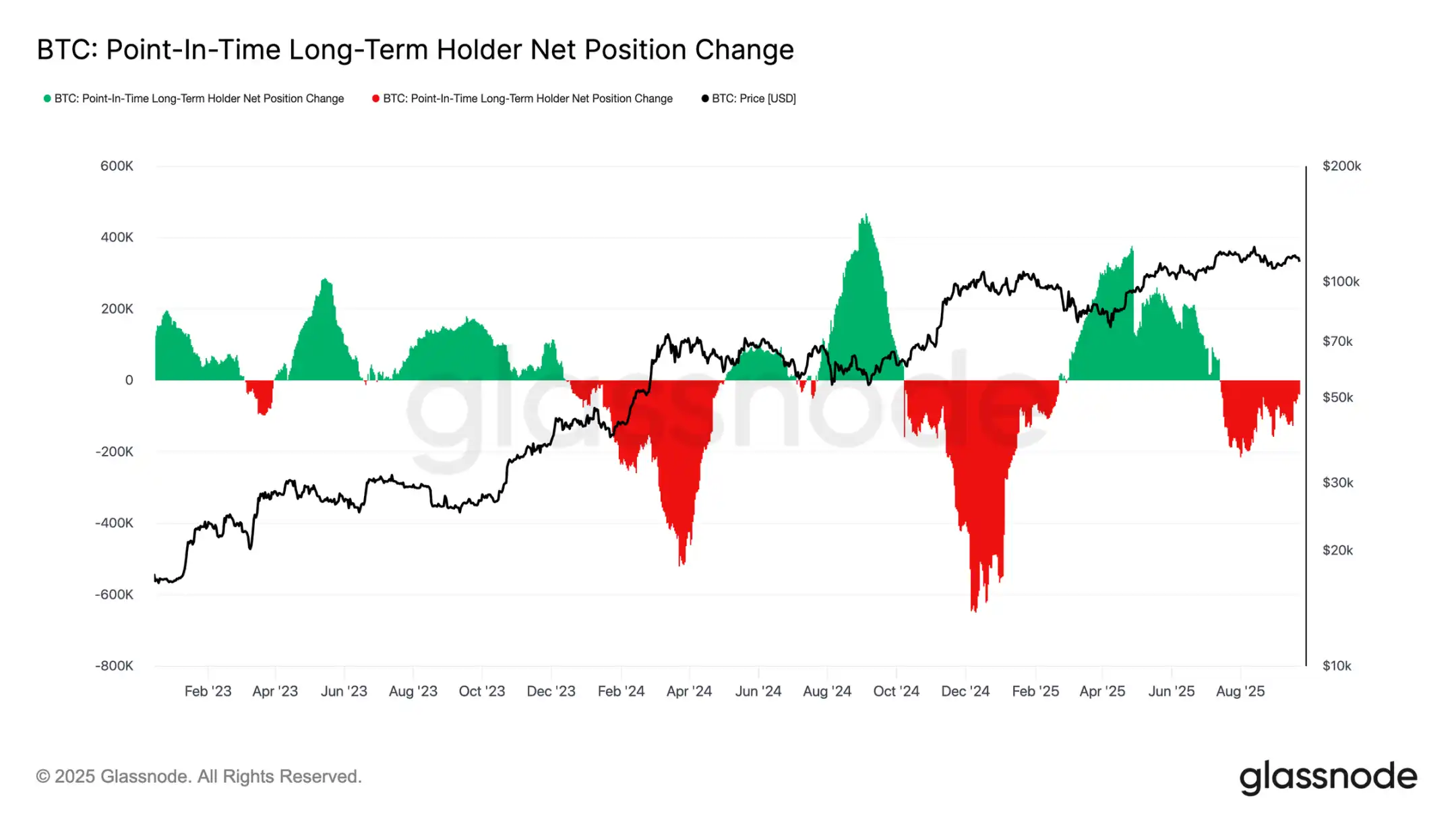
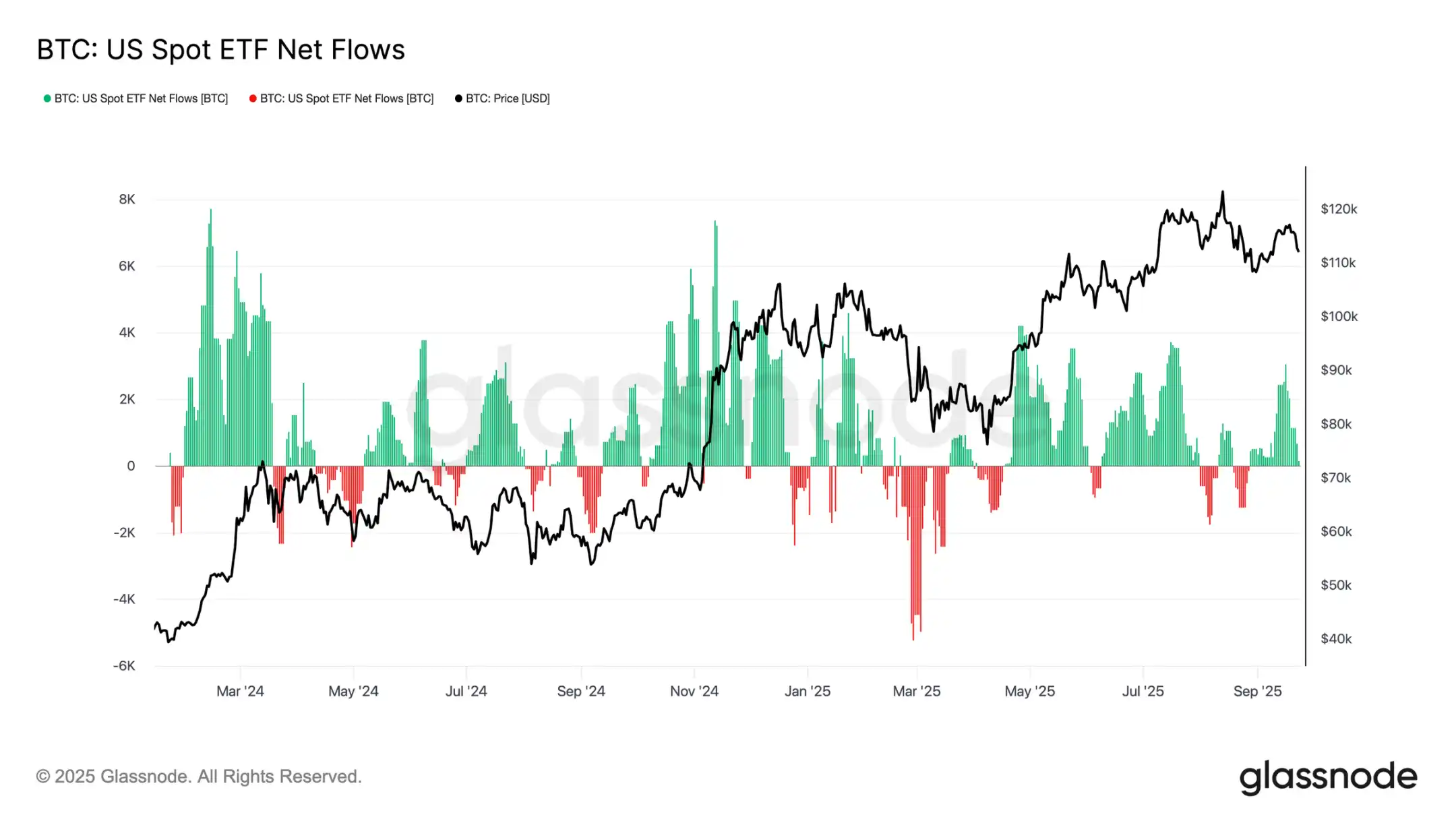
This cycle has also been characterized by a tug-of-war between the supply from long-term holders' sell-offs and institutional demand through U.S. spot ETFs and DATs. As ETFs become a new structural force, prices now reflect this push-pull effect: the profit-taking by long-term holders limits upside potential, while ETF inflows absorb sell-offs and maintain the cycle's progress.
Fragile Balance
ETF inflows have so far balanced the selling from long-term holders, but the margin for error is small. Around the FOMC meeting, long-term holders' sell-offs surged to 12,200 BTC/month, while ETF net inflows plummeted from 2,600 BTC/day to nearly zero. The combination of increased selling pressure and weakened institutional demand has created a fragile backdrop, laying the groundwork for weakness.
Spot Market Pressure
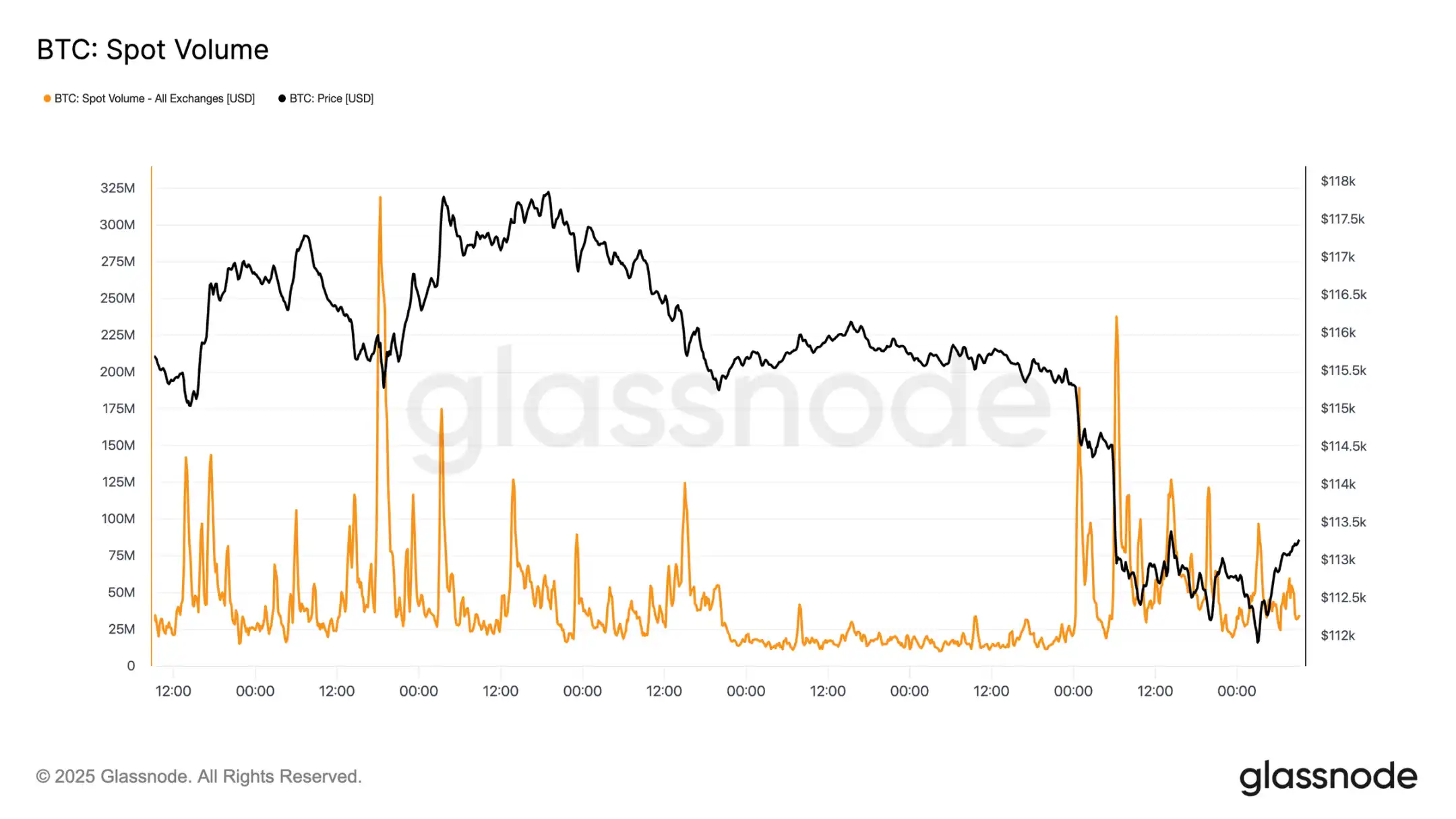
This fragility is evident in the spot market. During the sell-off following the FOMC meeting, trading volume surged as forced liquidations and thin liquidity amplified the downward trend. While painful, a temporary bottom formed near the short-term holders' cost basis of $111,800.
Futures Deleveraging
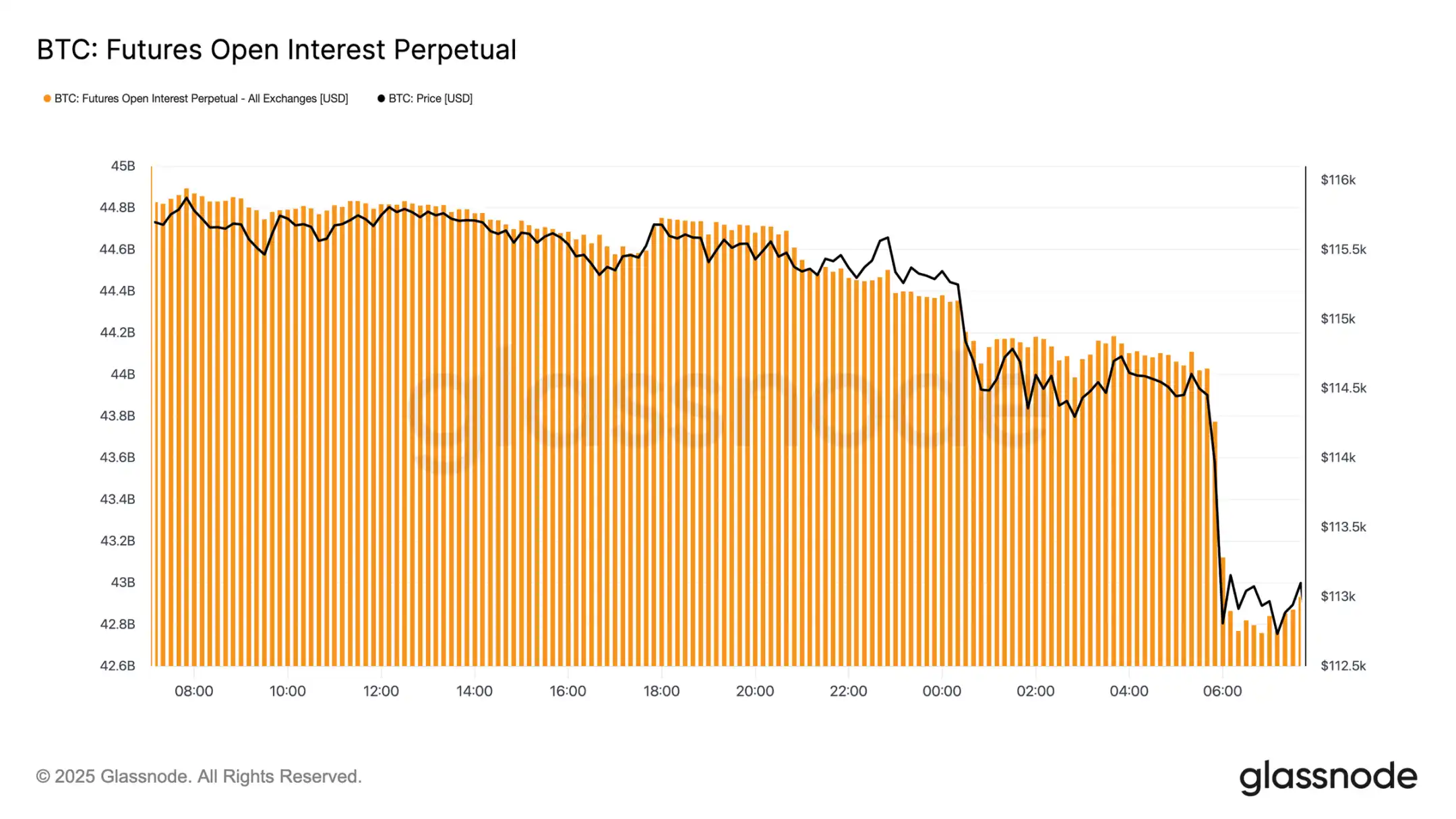
Meanwhile, as Bitcoin fell below $113,000, open interest in futures contracts sharply dropped from $44.8 billion to $42.7 billion. This deleveraging event cleared leveraged long positions, amplifying downward pressure. While it creates instability now, this reset helps eliminate excess leverage and restore balance in the derivatives market.
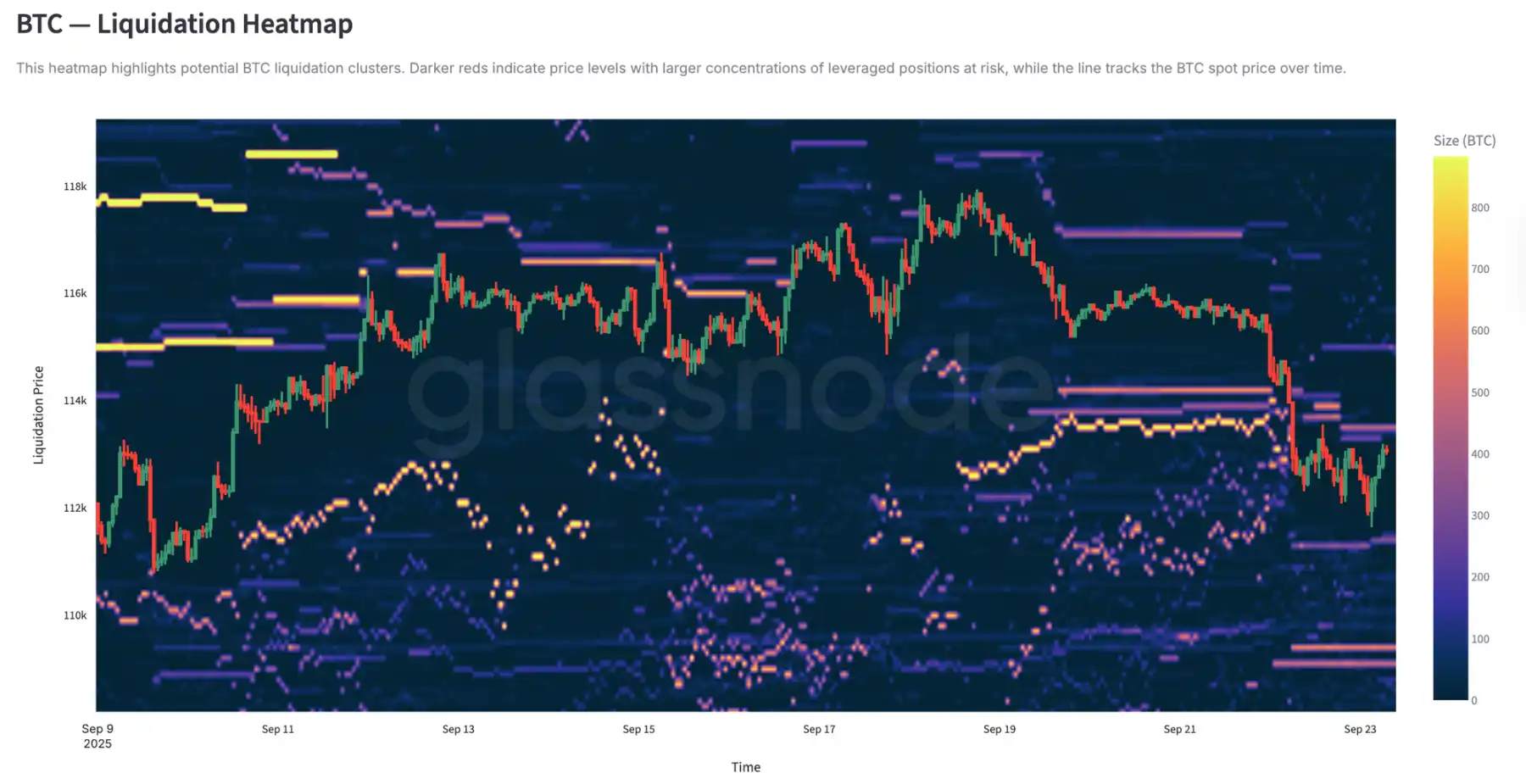
Liquidation Clusters
The perpetual contract liquidation heatmap provides more detail. When prices fell below the $114,000 to $112,000 range, dense clusters of leveraged long positions were cleared, leading to significant liquidations and accelerating the decline. Risk pockets remain above $117,000, making the market susceptible to liquidity-driven fluctuations in both directions. Without stronger demand, the vulnerabilities around these levels increase the risk of further severe volatility.
Options Market
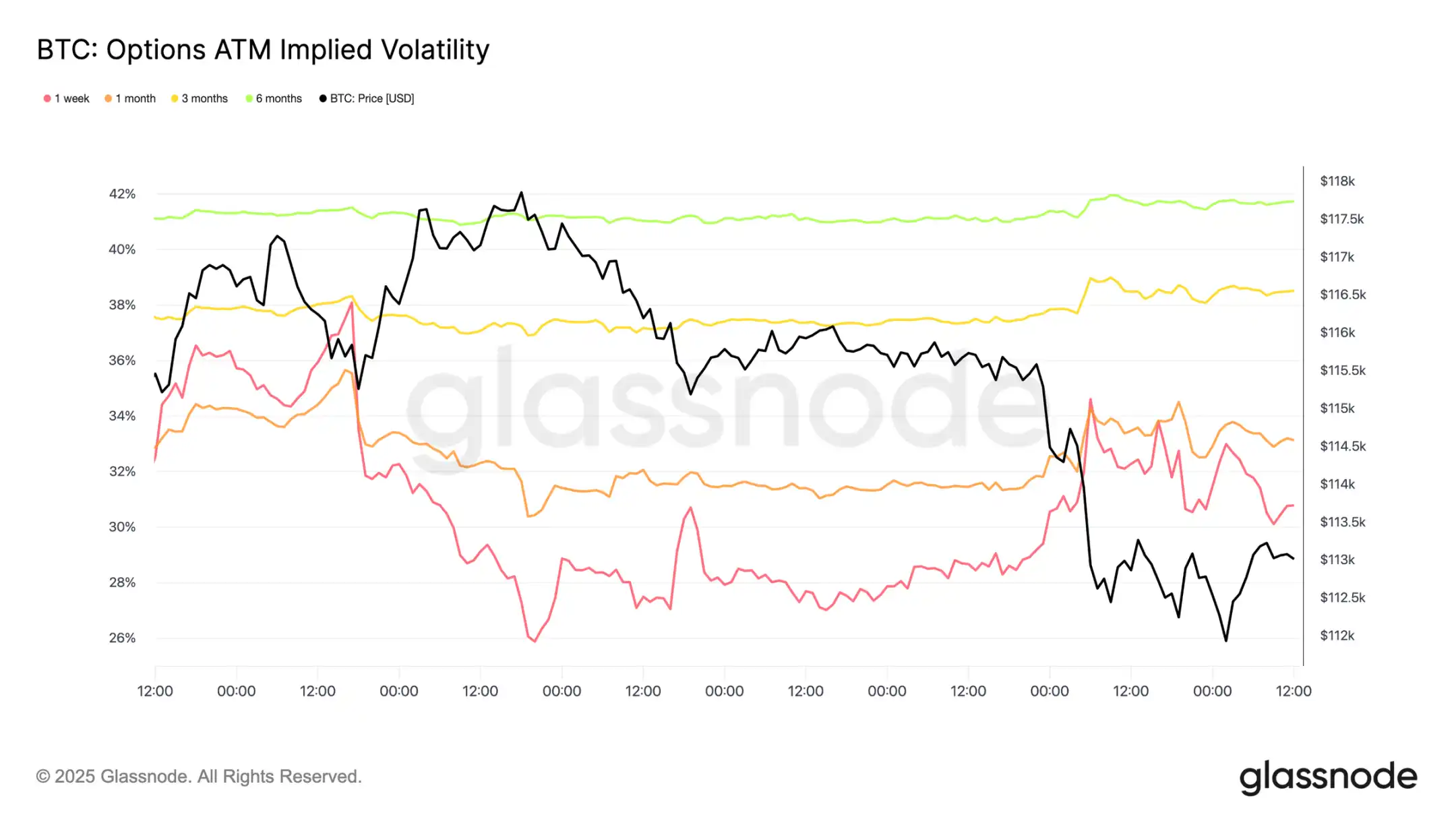
Volatility
Turning to the options market, implied volatility provides a clear perspective on how traders navigated a tumultuous week. Two main catalysts shaped the market landscape: the first interest rate cut of the year and the largest liquidation event since 2021. As hedging demand built up, volatility climbed ahead of the FOMC meeting but quickly faded after the rate cut was confirmed, indicating that this move had largely been priced in. However, the violent liquidation of futures on Sunday night reignited demand for protection, with one-week implied volatility leading the rebound and extending strongly across all maturities.
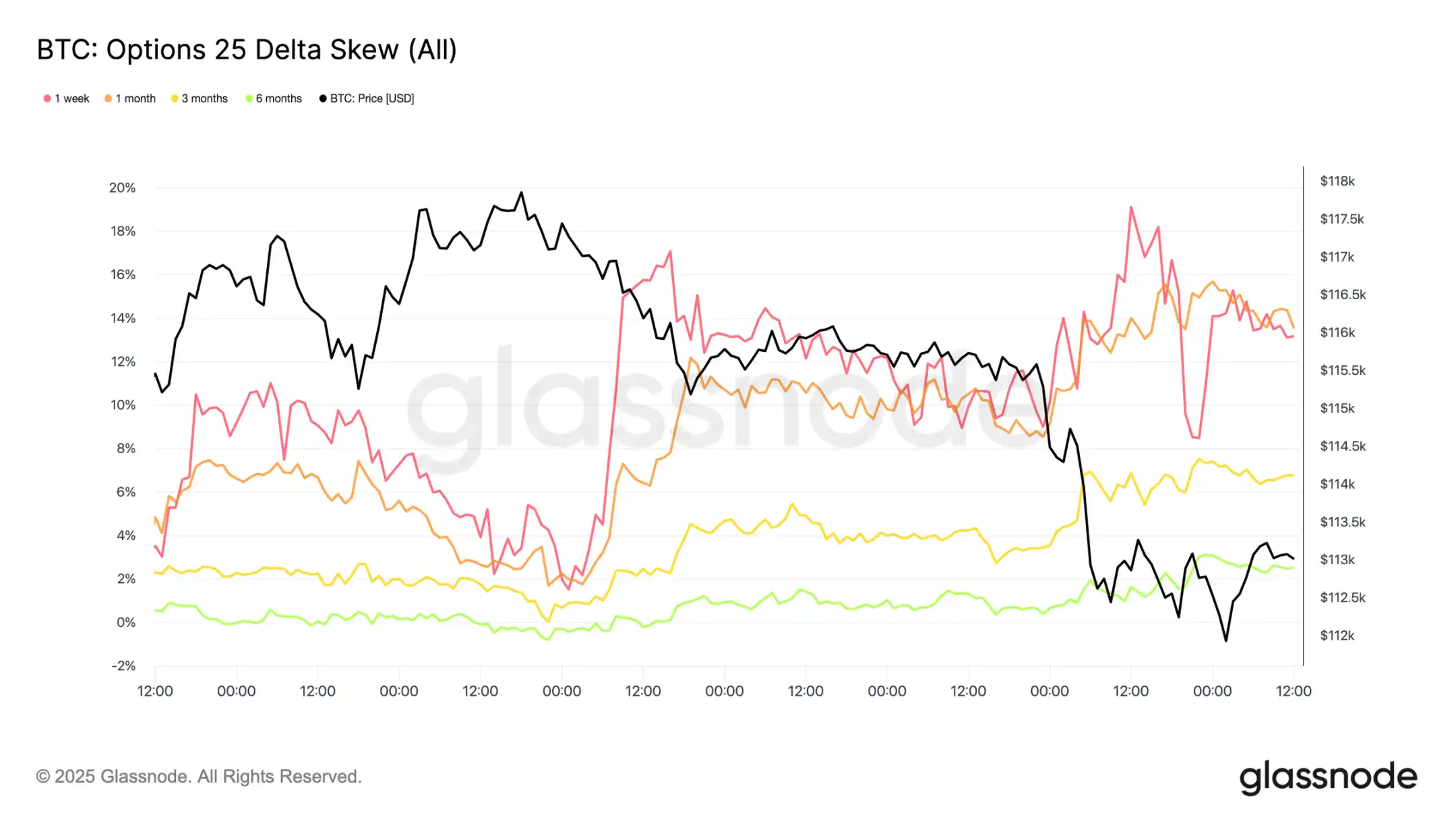
Market Repricing Rate Cuts
After the FOMC meeting, there was aggressive demand for put options in the market, either as protection against sharp declines or as a way to profit from volatility. Just two days later, the market realized this signal with the largest liquidation event since 2021.
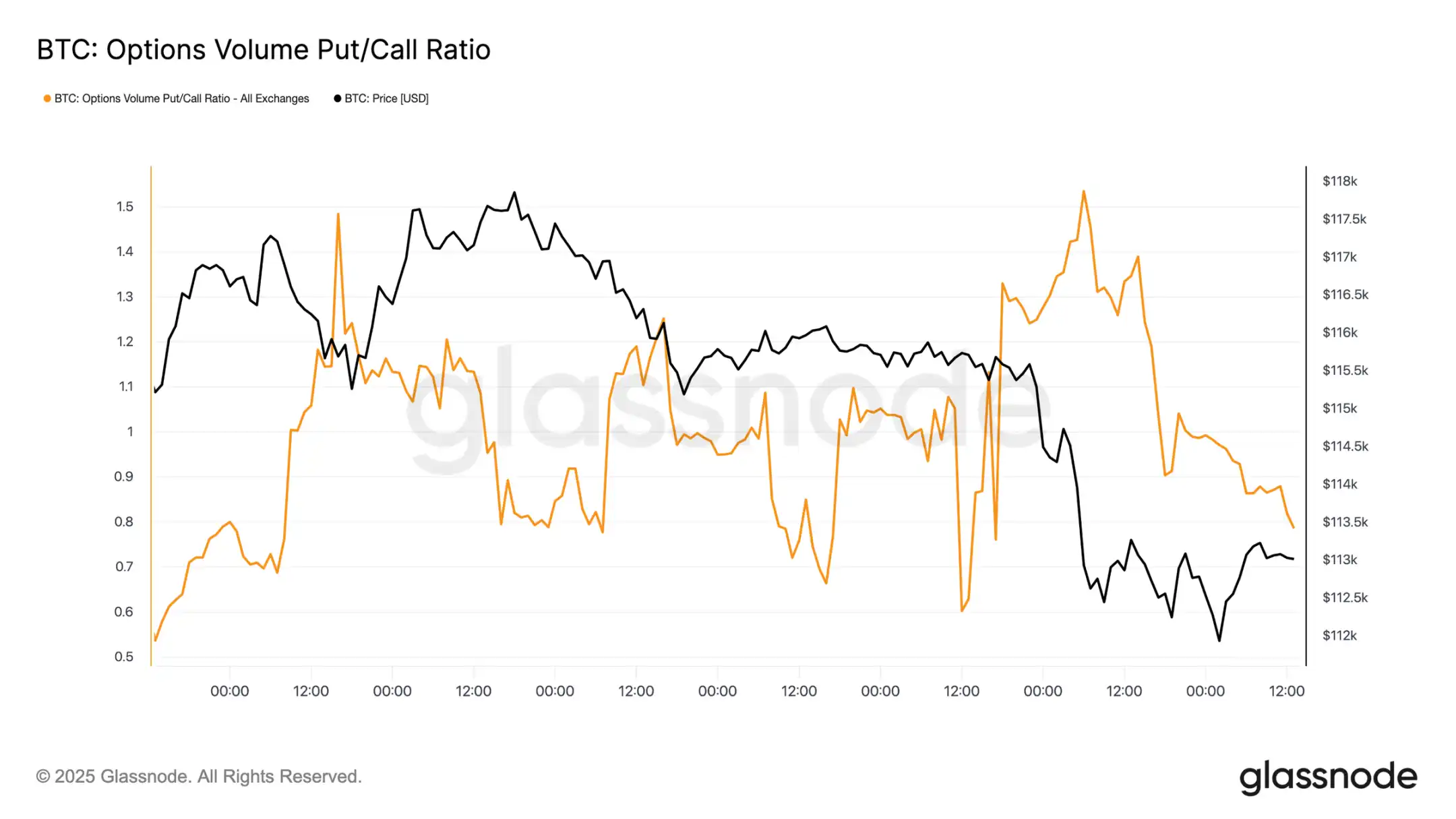
Put/Call Option Flow
After the sell-off, the put/call volume ratio trended downward as traders locked in profits on in-the-money puts while others rotated into cheaper calls. Short- and medium-term options still heavily favor puts, making downside protection costly compared to upside. This imbalance creates opportunities for participants with a constructive view towards the end of the year—either to accumulate calls at relatively low costs or to finance their positions by selling expensive downside risk exposure.
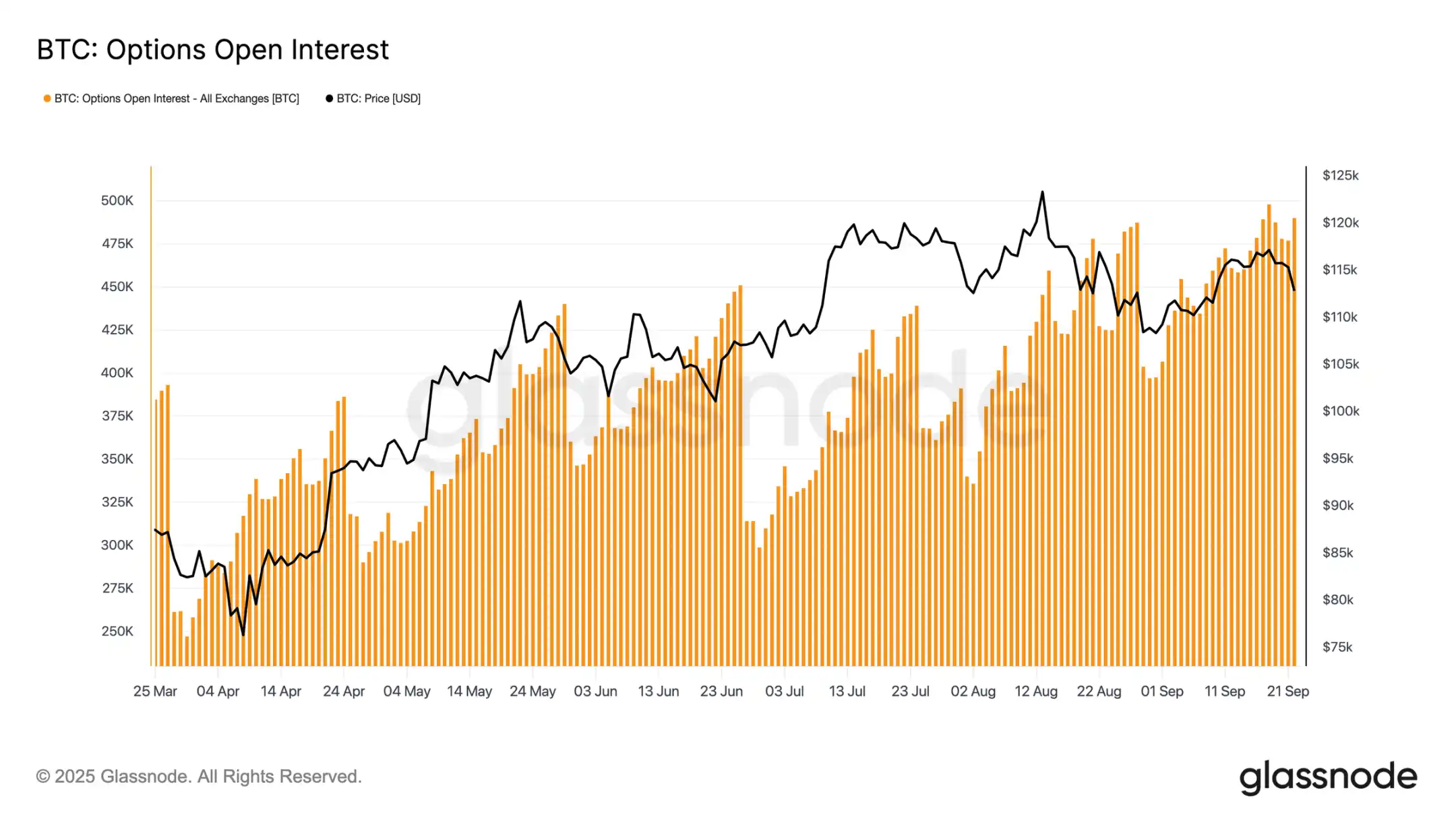
Options Open Interest
Total options open interest hovers near historical highs and will sharply decrease upon expiration on Friday morning, before rebuilding the market again before December. Currently, the market is in a peak area, where even minor price fluctuations will force market makers to hedge aggressively. Market makers are short on the downside and long on the upside, a structure that amplifies sell-offs while limiting rebounds. This dynamic skews recent volatility risk to the downside, exacerbating fragility until expiration clears and positions reset.
Conclusion
Bitcoin's retreat following the FOMC meeting reflects a typical "buy the rumor, sell the news" pattern, but the broader context points to increasing fatigue. The current 12% decline is relatively mild compared to past cycles, but it follows three major waves of capital inflows that have raised realized market cap by $678 billion, nearly double that of the previous cycle. Long-term holders have realized profits of 3.4 million BTC, highlighting the significant sell-offs and maturity of this rally.
Meanwhile, the previously absorbing supply from ETF inflows has slowed, creating a fragile balance. Spot trading volume surged due to forced selling, and futures experienced severe deleveraging, with the options market pricing in downside risks. These signals collectively indicate that market momentum is waning, with liquidity-driven volatility dominating.
Unless institutional and holder demand aligns again, the risk of a deep cooling remains high.
 Risk warning
 Risk warning