Overview of BASE Token Economics Proposal
 Core Viewpoint

 BASE tokenization can create a value of 4 billion dollars directly through token distribution and pricing currency mechanisms.
Original Author: Achim Struve, Outlier Ventures
Original Compilation: AididiaoJP, Foresight News
As several of our portfolio companies are building on Base, we have a strong interest in the success of this ecosystem. This proposal aims to outline a community-building approach that challenges traditional L2 model token design. It addresses the fundamental income versus growth paradox through an adaptive quote currency mechanism. The BASE token represents an opportunity to redesign L2 economics from first principles.
BASE Token Discussion: Redesigning L2 Token Economics
Layer 2 faces a fundamental economic challenge: the competitive pressure to maintain low transaction fees undermines revenue potential. Base has a TVL of $4.95 billion, 1 million daily active users, and $5.1 million in monthly transaction fees, primarily due to its native connection with Coinbase, competitive low fees averaging just $0.02 per transaction, and deep integration with the broader EVM-based ecosystem.
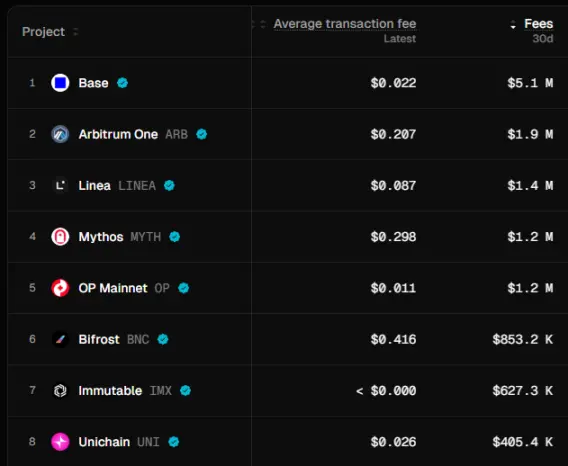
This proposal outlines potential forms for designing a token for Base. It is not just about staying ahead but about establishing leadership. The key recommendation is to reduce reliance on fee extraction as the primary source of revenue. Combining a proven bribery mechanism with an adaptive economics model creates sustainable value capture for Coinbase, Base, and the BASE token.
BASE Token Opportunities
Traditional L2s focus on transaction fees, overlooking the primary value drivers of successful crypto assets. As @mosayeri observed, "The crypto space has long misjudged the value accumulation narrative of L1 assets, believing that the main driver is transaction fees." The value of ETH and SOL primarily comes from being locked as quote currencies in AMM pools, rather than from gas fees.
This presents an opportunity for BASE to establish itself as the primary quote currency on whitelisted Base ecosystem DEXs. BASE is not competing for dwindling fee revenue but generating demand through actual liquidity needs across trading pairs.
Quote Currency Mechanism
Users lock BASE tokens to receive veBASE (vote-escrowed BASE), providing governance rights over the fee distribution algorithm. VeBASE holders will direct rewards to AMM pools that use BASE as their quote currency, with allocation ratios automatically adjusted based on network health metrics. The growth of the ecosystem directly increases the demand for locked BASE tokens, as they are tied to liquidity incentives.
This system builds on mature quote currency concepts similar to Virtuals while incorporating a voting escrow mechanism akin to Aerodrome, but without redistributing liquidity pool fees to voters. A portion of sequencer revenue is used to sustainably acquire incentives for voting decisions in BASE-priced pools. This remains effective even after the initial launch phase. Additionally, unlike static allocation models, dynamic fee distribution responds to real-time conditions through finely-tuned machine learning algorithms. These algorithms analyze network utilization, DEX trading volume patterns, and ecosystem growth metrics to determine overall incentive emissions.
This mechanism will trigger liquidity competition similar to Curve Wars, with protocols accumulating BASE governance tokens to ensure liquidity incentives. As the Base ecosystem expands, more protocols will require BASE liquidity, reducing circulating supply and creating natural demand pressure. At the same time, this approach provides opportunities for large-scale token swaps with leading protocols already established on Base. This further strengthens decentralized ownership within the ecosystem. Base can utilize tokens from other ecosystems to establish its own BASE quote liquidity pools. Transaction fees collected from the protocol's own liquidity can serve as a sustainable long-term revenue source.
Adaptive Economic System
Current L2 token designs use fixed allocation schedules that cannot respond to changing market conditions. BASE introduces a complex adaptive system that goes beyond simple fee adjustments like Ethereum's EIP-1559.
Based on previously published adoption-adjusted allocation principles, BASE implements a dynamic emission schedule that responds to ecosystem demand signals through two strategically focused allocation pools:
- Allocation-focused pool (Coinbase strategic reserve, protocol treasury, community, and users): Increased emissions during strong KPI performance to optimize value distribution when adoption is high.
- Growth and development allocation pool (ecosystem fund and builders, validators, and infrastructure): Increased incentives during weak KPI performance to stimulate growth and network security when additional support is most needed.
The growth and development allocation pool includes incentives for all quote currency pools, distributed to protocols using BASE as their primary trading pair through the ecosystem fund. This aligns the adaptive emission system directly with quote currency value capture.
During any allocation pool's vesting period, emissions will never reach zero, as the system adjusts the relative weight between allocation pools based on market conditions and ecosystem health. Machine learning models analyze multiple factors to prevent governance bottlenecks while ensuring optimal alignment of stakeholders across market cycles.
BASE Token Allocation Framework
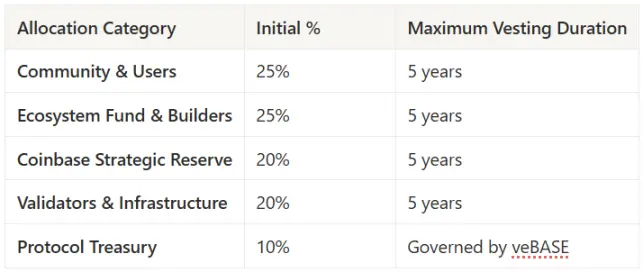
Examples of BASE token allocation and maximum vesting periods, with actual vesting periods potentially varying based on precise adaptive emission parameterization.
Key Features:
- Adaptive emission system: All allocations use a dynamic plan, with allocation-focused pools receiving increased emissions during strong adoption performance, while growth and development pools receive increased incentives during weak periods.
- COIN stakeholder alignment: Coinbase's 20% strategic reserve creates direct value alignment without regulatory complexity.
- Gradual decentralization: Validator incentives (20%) ensure network security during the launch phase, while community allocations support sustainable decentralized ownership of BASE tokens.
- Balanced development: Equal weighting between community rewards and ecosystem development ensures success in both adoption and builder retention.
Final allocations will require extensive token engineering analysis, legal review, and community input to achieve economic sustainability, regulatory compliance, and user alignment.
Strategic Value and Impact for Coinbase
Tokenization of Base represents a fundamental shift in revenue diversification. While Base currently generates modest sequencer fees (kept low for competitive reasons), tokenization could immediately create over $4 billion in value through strategic reserves.
The current model faces limitations. Brian Armstrong noted the emphasis on low fees, recognizing that higher fees would push users toward competitors offering token incentives, creating the income versus growth paradox.
Tokenization breaks this paradox by shifting incentives from fee extraction to ecosystem acceleration and value accumulation. The 20% strategic reserve aligns Coinbase's interests with the long-term success of Base while eliminating the pressure to maximize fees. Token emissions fund growth without impacting the balance sheet, enabling competitive rewards that match those of other L2 incentives.
The strategic impact goes beyond immediate returns gained through various revenue diversification opportunities. Tokenization allows Coinbase to offer institutional custody services for BASE holdings, generating recurring custody fees while positioning itself as the primary institutional gateway for BASE risk exposure. The integration of Coinbase One lowers customer acquisition costs by offering BASE rewards, discounts, and platform privileges to subscribers, creating stickier customer relationships and higher lifetime value.
Allocation Strategy
The allocation strategy should balance Coinbase's customer base with Base ecosystem participants. While @Architect 9000 suggests "airdropping only to Coinbase One members" to mitigate witch attack mechanisms and align customers, fair distribution needs to include active on-chain users of Base and verified builders from the Discord community.
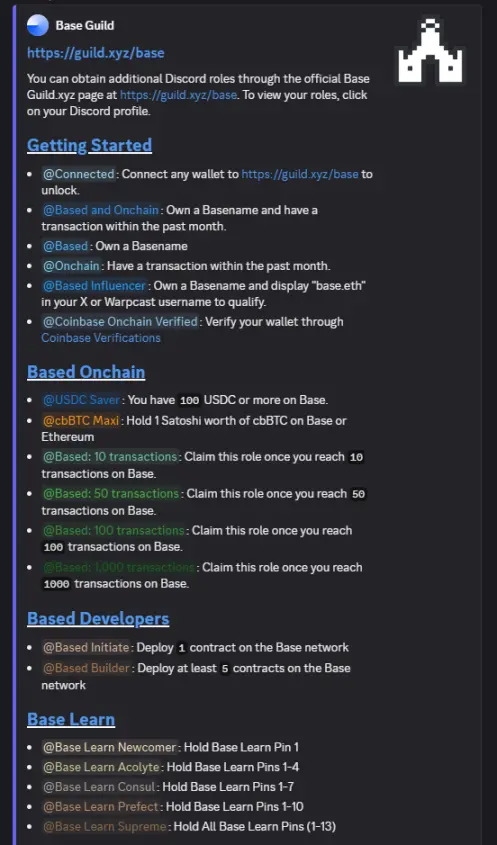
Roles obtained on the Base community Discord server can be used to measure user consistency and commitment, linking to individual BASE airdrop allocations.
This dual approach ensures retention of CEX users and genuine participation in the L2 ecosystem.
Tokenization positions BASE as institutional-grade collateral connecting TradFi and DeFi. As @YTJiaFF pointed out, "With COIN's support, the BASE token will become a secure bridge connecting public companies with crypto assets." Institutions can custody their BASE holdings at Coinbase while using these assets as both on-chain collateral in DeFi protocols and off-chain collateral in traditional credit markets. This dual-collateral functionality creates the first crypto token designed specifically for the enterprise credit market, enabling traditional financial institutions to access crypto liquidity while maintaining regulatory compliance through established custody relationships.
Path to Gradual Decentralization
The transition follows a three-phase approach, balancing innovation with stability. As @SONAR observed, Base has achieved "decentralization in Phase 1 of the 3 phases," and "once Phase 2 arrives, fees will need to be paid to third-party sequencers," making tokenization strategically necessary.
Phase 1: Coinbase retains control of the sequencer while launching token incentives and community governance for fee distribution. In this controlled environment, the quote currency model is validated through some basic KPI-driven incentive distributions.
Phase 2: A hybrid model, including an initial set of decentralized validators requiring BASE staking, while Coinbase retains 3 permanent seats to ensure transitional stability. This phase introduces Futarchy governance, where veBASE holders bet on successful implementations, and market-proven proposals receive fast-track approval.
Phase 3: Full decentralization, opening validator participation and complete community control. Coinbase transitions to a regular network participant while maintaining strategic token holdings. Advanced cross-chain MEV coordination becomes operational, and institutional credit markets expand into traditional finance.
Market Positioning and Competitive Advantage
BASE enters a landscape where existing L2 tokens struggle to capture network value. Despite significant ecosystem growth, ARB, OP, and MATIC underperform compared to ETH, highlighting structural issues in traditional L2 token design. These protocols face sell-off pressure from token unlocks without matching demand.
BASE's quote currency model creates genuine utility demand through AMM quote liquidity deposits, addressing these structural issues. This generates organic buying pressure that expands with ecosystem growth, shifting from speculative utility to necessary infrastructure participation.
Competitive differentiation extends beyond token design to regulatory clarity, institutional access, and enterprise-level compliance. Coinbase's regulatory expertise provides an advantage that decentralized competitors cannot match, while the quote currency model creates a clearer utility definition, reducing the risk of securities classification.
Conclusion: A Decisive Choice Between Fee Capture and Exponential Value
The fundamental question is not whether Coinbase should launch a token, but whether they should capture constrained fee revenue or create exponential value through tokenization.
The current revenue structure suggests generating $180 million within three years ($5 million per month x 12 months x 3 years). On the other hand, strategic BASE tokenization could create approximately $4 billion in comprehensive value through token allocations (initial fully diluted valuation of $10 billion x 0.2 = $2 billion) and due to
- Quote currency demand
- Adaptive smart incentive issuance
- POL providing income comparable to current sequencer fees
- Ecosystem acceleration
- Valuation of an additional $2 billion
These are conservative estimates, assuming valuations align with other L2s and adjusted based on current fee and TVL data. Note that Coinbase premium is not included.

This represents a significant value creation opportunity for Coinbase. The quote currency model addresses the growth versus revenue paradox while positioning BASE as the infrastructure of the ever-expanding Base ecosystem. The early dominance created by this L2 token design generates a competitive advantage that can further strengthen Base's leading market position.
For the broader crypto ecosystem, BASE tokenization may signify the further maturation of L2 economics, moving beyond reliance on transaction fees to true utility-driven value capture. As @jack_anorak observed, "The BASE token is a product decision; Base needs token incentives, and it must be a neutral block space."
Coinbase's choice between constrained fee capture and exponential tokenized value represents a decisive moment that will determine the trajectory of BASE and Coinbase's standing in the crypto space.
Click to learn about job openings at ChainCatcher
Recommended Reading:
NAKA stock price plummets 54% in a day; is the market growing weary of DAT?
Is the Base chain about to launch its token? 6 projects to watch
 Risk warning Risk warning