Ethereum Argentina Developer Conference Highlights: Technology, Community, and Future Roadmap
 Core Viewpoint

 While reflecting on the infrastructure construction of the past decade, Ethereum clearly outlined the key directions for the next ten years at the developer conference: scalability, security, privacy, and institutional adoption.
Original Title: "Ethereum Argentina Developer Conference: Towards a New Decade of Technology and Applications"
Original Author: Sanqing, Foresight News
Opening Ceremony: From the First Webpage to the Ethereum World Expo
From November 17 to 22, the Ethereum Developer Conference was held in Buenos Aires, Argentina. This week featured over 40 official events, 75+ project showcases, and hundreds of side events throughout the city, with an expected attendance of around 15,000 participants.
At the opening ceremony, the host began with Tim Berners-Lee's release of the first webpage in 1991, reflecting on the development of the internet from Web1 to today's Web3. This conference is positioned as the "Ethereum World Expo," gathering important global projects and showcasing the achievements of the local Argentine community. Following the opening ceremony, the main topics of Ethereum Day unfolded, covering various directions from the governance positioning of the Ethereum Foundation, protocol progress, to privacy, security, institutional adoption, and future roadmaps, with core team members and researchers sharing the latest updates in succession.
Ethereum and Foundation Updates (I): Tomasz Stanczak on a Decade of Progress and Future Challenges
Tomasz Stanczak, Co-Executive Director of the Ethereum Foundation, stated in his keynote speech that the first ten years of Ethereum laid the foundation for consensus, clients, and privacy tools. However, the future will face greater challenges in privacy protection, decentralization, and user autonomy, requiring more people to participate in building.
When introducing the structure of Ethereum participants, Tomasz outlined the breadth of the ecosystem with specific groups, including local organizers promoting Devcon in Argentina, communities focused on urban experiments and public goods, core developers responsible for protocol upgrades, engineers concerned with privacy defaults, active L2 teams, interdisciplinary roles from academia to finance practitioners, and volunteers contributing multilingual localization for the Ethereum official website. He emphasized that these long-term builders form the basis for the protocol's security and network vitality.
Tomasz pointed out that Ethereum has maintained zero downtime through multiple upgrades, a feat achieved through the contributions of numerous ongoing workers in the ecosystem. He believes that the current moment is both a point for reviewing past achievements and a time to reassess the next directions worth investing in. He encouraged more developers and users to participate in the network in more direct ways, such as building applications and using ETH for daily interactions, making Ethereum's use and governance more aligned with real-world needs.
In the Q&A session, he mentioned that if, ten years from now, builders still attribute their trajectories to this conference, it would be the most significant outcome of this event. He shared his observations in Argentina: in an environment of high inflation and capital restrictions, crypto assets can provide practical utility for ordinary users, but to truly implement a decentralized system, issues of privacy, security, and usability must be addressed. The local community's attempts in these areas are worth noting. His advice to newcomers is to enhance their "connectivity," believing that proactive communication across teams and communities often leads to unexpectedly positive outcomes.
Ethereum and Foundation Updates (II): Hsiao-Wei Wang on Three Capabilities of the Foundation
Hsiao-Wei Wang, Co-Executive Director of the Ethereum Foundation, summarized the first ten years of Ethereum with the metaphor of a "ladder." "This is a ladder continuously raised by the global community, with no preset endpoint, only a path that everyone can climb at their own pace. Each new step laid by builders becomes a starting point for those who follow."
She pointed out that today's Ethereum is no longer just a blockchain, but a public infrastructure nurturing new types of assets, identities, cultures, and forms of collaboration. The success of Ethereum comes from "no single team owning it," with any participant, including L2, being just a step on the ladder. The foundation's work is not to climb to the top but to "steady the ladder," collectively shaping the next decade.
Reflecting on her work since taking over as Co-Executive Director with Tomasz, she summarized the foundation's new phase into three capabilities. The first is reliability; Ethereum has maintained zero downtime during major upgrades, and this trust comes from long-standing engineering standards that need to be accumulated block by block. The second is flexibility; the foundation does not consider itself to have all the answers but continuously adjusts its direction based on community needs and changes in the external environment, ensuring the protocol remains consistent and adaptable as social usage evolves. The third is true governance responsibility; the foundation's duty is to maintain a stable environment necessary for ecological operation, rather than deciding where Ethereum should go, with direction naturally forming in an open environment.
Hsiao-Wei emphasized that Ethereum's ladder is open to all roles, including researchers, client and application developers, investors, end-users, scientists, scholars, students, and local community organizers. The foundation's responsibility is to invest early in directions that are not yet valued by the mainstream, such as multi-client diversity and cutting-edge research, allowing these seemingly undervalued attempts to become new key steps years later.
She also pointed out that decentralization, neutrality, and resilience under pressure will not be maintained automatically; they must be safeguarded through transparent, honest, and uncompromising design principles. Once these values are compromised, the entire ladder of Ethereum may face structural risks.
Expanding L1, Expanding Blobs, Improving User Experience: Protocol Update Briefing
Ethereum protocol team members Ansgar Dietrichs and Barnabé Monnot provided a phased update on the protocol development team following the foundation's restructuring earlier this year. This report focused on three areas: expanding L1, expanding data blobs, and improving user experience.
Regarding L1 expansion, Ansgar stated that Ethereum has long maintained a block gas limit of 30 million, with engineering focus on key upgrades such as the merge and account abstraction. As L1 more clearly assumes the role of a "settlement layer," the team is enhancing throughput through client optimization and protocol improvements, rather than relying on more expensive hardware.
Since the beginning of this year, client optimization has raised the gas limit to 45 million, with plans to increase it to 60 million in the next hard fork. The team is also advancing proposals such as opcode re-pricing and access lists to continuously improve execution efficiency. He also revealed that the ZK-EVM prototype has achieved real-time proofs in under 12 seconds, laying the groundwork for lowering the computational threshold for nodes in the future.
In terms of expanding blobs, he explained the importance of EIP-4844 by illustrating the data availability needs of Rollups. Proto-danksharding introduces data blobs and commitment mechanisms, allowing Rollups to submit data at a lower cost. The next hard fork will launch data availability proofs based on sampling, preparing for further increases in blob capacity.
Barnabé briefly introduced key work on improving user experience, including cross-chain interoperability (Interop), Trillion Dollar Security, and the privacy-friendly wallet project Kohaku. This time, he mainly focused on Interop. He stated that the goal is to provide users and institutions with a "seamless, secure, permissionless" multi-chain experience, allowing users to simply declare their operational intent, with the backend system automatically completing cross-chain and exchange processes without manual asset bridging. The team is also exploring ways to improve finality time, making interactions between off-chain and on-chain systems more efficient.
Laying the Foundation for Trillion Dollar Assets
Fredrik Svantes, head of protocol security at the Ethereum Foundation, and Mehdi Zerouali, co-founder of security company Sigma Prime, pointed out in the agenda titled "Trillion Dollar Security initiative" that Ethereum is transitioning from supporting millions of users and hundreds of billions of dollars in assets to a stage where it supports trillion-dollar public infrastructure. Security capabilities must be upgraded in tandem to match the potential scale of assets and complexity of applications in the future.
The current plan focuses on three levels. The first is endpoint security and wallet experience, with the core goal of addressing the blind signing issue, allowing wallets to clearly and readably display transaction consequences, enabling ordinary users to understand what they are signing. The second is frontend and infrastructure security; the Fiber Frontend project is exploring verifiable and replaceable frontend solutions to reduce the risk of funds being stolen through malicious scripts after a single website is compromised. The third is communication and progress transparency; the foundation's digital studio is building a public website to display the status and pending completion of various sub-projects using progress bars, facilitating community understanding of the overall security blueprint and participation in contributions.
Mehdi emphasized that Trillion Dollar Security is an open topic library for the entire ecosystem, and all solutions must be open-source, auditable, and collectively owned by the community. He described blind signing as a plague, believing that security should not be provided by taxing users additionally but should be a default attribute. In the Q&A session, both noted that as AI tools accelerate code production, the demand for security researchers and architectural-level audits will only increase; the Ethereum ecosystem has already been funding post-quantum cryptography research and developing prototypes, making it one of the most prepared ecosystems against quantum threats among mainstream public chains.
When discussing ZK-EVM, they compared its current security status to Solidity in 2016, still in its early stages, requiring systematic cultivation of a new generation of security engineers and gradual maturation through open collaboration. Feedback from traditional institutions indicates that many have already viewed Ethereum as the main chain "with the least concern about underlying security issues," which is reflected in their deployment choices.
Institutions and Decentralization: Danny Ryan's Perspective on Wall Street and Ethereum
Danny Ryan, a core researcher at the Ethereum Foundation, stated in his speech "Institutions Decentralization" that after long focusing on decentralized protocol design and now communicating almost daily with banks and large institutions, his biggest realization is that traditional financial infrastructure is far less efficient than the outside world imagines. Asset managers often rely on multiple incompatible software systems, faxes, and manual reconciliations, with securities settlement still stuck in T+1 and T+2 rhythms.
In such a system, institutions are most concerned about various counterparty risks, repeatedly scrutinizing "who might let me down" from trading partners to infrastructure service providers. Within this framework, Ethereum's trusted neutrality and decentralization become advantages, with high availability from multiple clients and thousands of nodes, combined with the security of the cryptoeconomy, making Ethereum potentially a foundational infrastructure for holding trillion-dollar assets.
Danny emphasized that for institutions, privacy is an entry threshold, not just an added bonus. If privacy protection does not meet the existing system's standards, many collaborations cannot even begin. He believes that creating a usable privacy environment for institutions will compel Ethereum to continue investing in areas such as zero-knowledge proofs, which serve both scalability and naturally feed back into privacy. Meanwhile, as regulatory frameworks in various countries gradually clarify, stablecoins and liquidity network effects are expected to usher in a new round of expansion, and Ethereum needs to occupy a key position in this round.
On the architectural level, he pointed out that Ethereum's modular design and L2 ecosystem are very attractive to institutions, as they can build L2s targeting specific assets with partners while sharing Ethereum's security and liquidity.
He proposed that the real goal is not simply to "tokenize assets," but to make the on-chain system good enough that real-world assets find it hard to refuse to migrate, with success measured in "trillion-level" units. Currently, on-chain RWA is still at the level of several billion dollars, just the beginning compared to the scale of global investable assets.
In the Q&A session, he mentioned that a common misunderstanding among institutions is equating decentralization with "unregulatable" or "completely public." In reality, through programmable access control and privacy technologies, intermediary risks can be reduced under compliance.
He suggested that builders form "translation alliances" with traditional finance practitioners to help align each other in language and thinking. Regarding concerns about being "captured by institutions," he acknowledged that the risk exists objectively, but the key is to maintain the globally distributed characteristics of Ethereum's core protocol, on this basis to accommodate large-scale asset onboarding.
Ethereum (Roadmap) in 30min: Vitalik's Principles and Technical Route
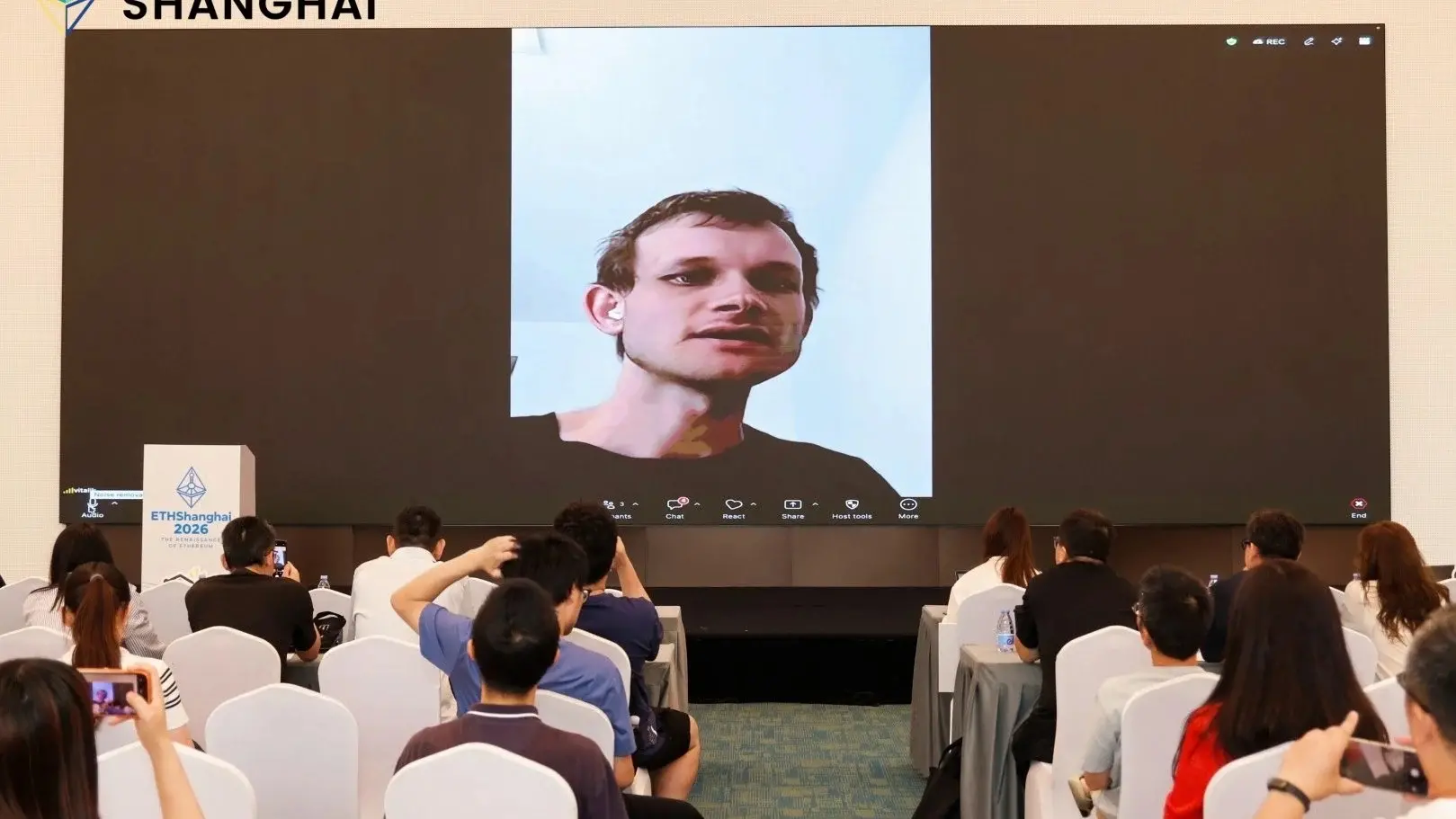
Ethereum founder Vitalik Buterin, in his speech "Ethereum (Roadmap) in 30min," began with the FTX case, contrasting centralized institutions that rely entirely on personal credit with the "Can't be evil" principle pursued by Ethereum. He defined Ethereum as "a globally open censorship-resistant application platform," emphasizing that its core advantage lies in programmability, allowing anyone to deploy smart contracts rather than being limited to preset transaction types.
At the same time, he categorized the advantages and limitations of blockchain: advantages include payment and financial applications, DAOs, decentralized identity and ENS, voting and censorship-resistant publishing, as well as the ability to prove the existence or scarcity of something at a specific time; limitations involve insufficient privacy, difficulty in handling extremely high throughput and low-latency computations, and inability to directly access real-world information.
Regarding the technical route, Vitalik referred to 2025 and 2026 as Ethereum's "scaling arc." This year, the gas limit has been raised by about 50%, and the network is gradually voting to increase it to 60 million. Subsequently, mechanisms such as separating builders and proposers, and block-level access lists will continue to enhance throughput without raising hardware thresholds.
Vitalik is particularly optimistic about ZK-EVM, which allows nodes to confirm blocks through verification proofs rather than replaying all executions, significantly reducing the synchronization and computational costs for full nodes, making it possible to run full nodes on laptops or even mobile phones. The longer-term "Lean Ethereum" route focuses on gradually introducing components closer to theoretical optimality, such as virtual machines and hash functions more suited for zero-knowledge, post-quantum cryptography, formal verification, and more efficient data availability solutions; on the user side, it aims to strengthen privacy and security through light clients, account abstraction, hardware, and social recovery wallets.
In the Q&A session, Vitalik summarized the relationship between Ethereum and Wall Street with "They are users, we support all users," emphasizing that the key is to maintain the underlying attribute of trusted neutrality. When discussing how to bring Ethereum's characteristics into the real world, he mentioned restoring everyday payment scenarios, such as physical merchants in Buenos Aires already accepting ETH and on-chain stablecoins, while also encouraging the adoption of open, verifiable tech stacks in more layers like operating systems, communication, and governance. When asked about the most important abilities individuals should possess, he suggested that community members try to become "generalists," at least completing tasks such as installing a wallet, using ETH for payments, participating in a DAO, writing a simple contract, and having a basic understanding of the underlying protocol.
 Risk warning Risk warning