Tron Industry Weekly Report: Volatile Differentiation of Risk Assets, BTC Breaks $80,000, Detailed Explanation of RWA & Derivatives Engine Origins and Derivio

 Origins Network and Derivio represent two key infrastructure directions: Origins Network focuses on on-chain RWA (real-world assets), while Derivio focuses on on-chain derivatives engines.
I. Outlook
1. Summary of Macroeconomic Aspects and Future Predictions
The core feature of the macroeconomic landscape this week is "confirmation of a high interest rate environment + coexistence of economic resilience and signs of slowdown." The U.S. April non-farm payroll data remains resilient overall, but some leading indicators (such as manufacturing and business investment expectations) show signs of marginal slowdown, leading the market to form a consensus of "soft landing but slowing growth" regarding the economic outlook. Meanwhile, the Federal Reserve continues to emphasize in its policy communications that inflation is not yet fully under control, and expectations for interest rate cuts in the short term have been further pushed back, with the market gradually accepting a pricing framework of "maintaining high interest rates for a longer time." From a global perspective, growth momentum in Europe and some emerging markets is relatively weak, resulting in regional differentiation and an overall moderate slowdown in the global economy. Against this backdrop, liquidity has not shown significant improvement, and risk assets are more reliant on their own fundamentals and capital structure rather than macroeconomic easing.
Next week, the key macro focus will still revolve around the revalidation of inflation and growth. If subsequent data (such as CPI forecasts and marginal employment data) continue to show inflation stickiness, the market will further strengthen expectations of "high interest rates lasting longer," which will suppress risk assets; conversely, if inflation declines or employment shows significant weakness, it may reactivate rate cut trades, bringing about short-term risk-on sentiment.
2. Market Changes and Warnings in the Crypto Industry
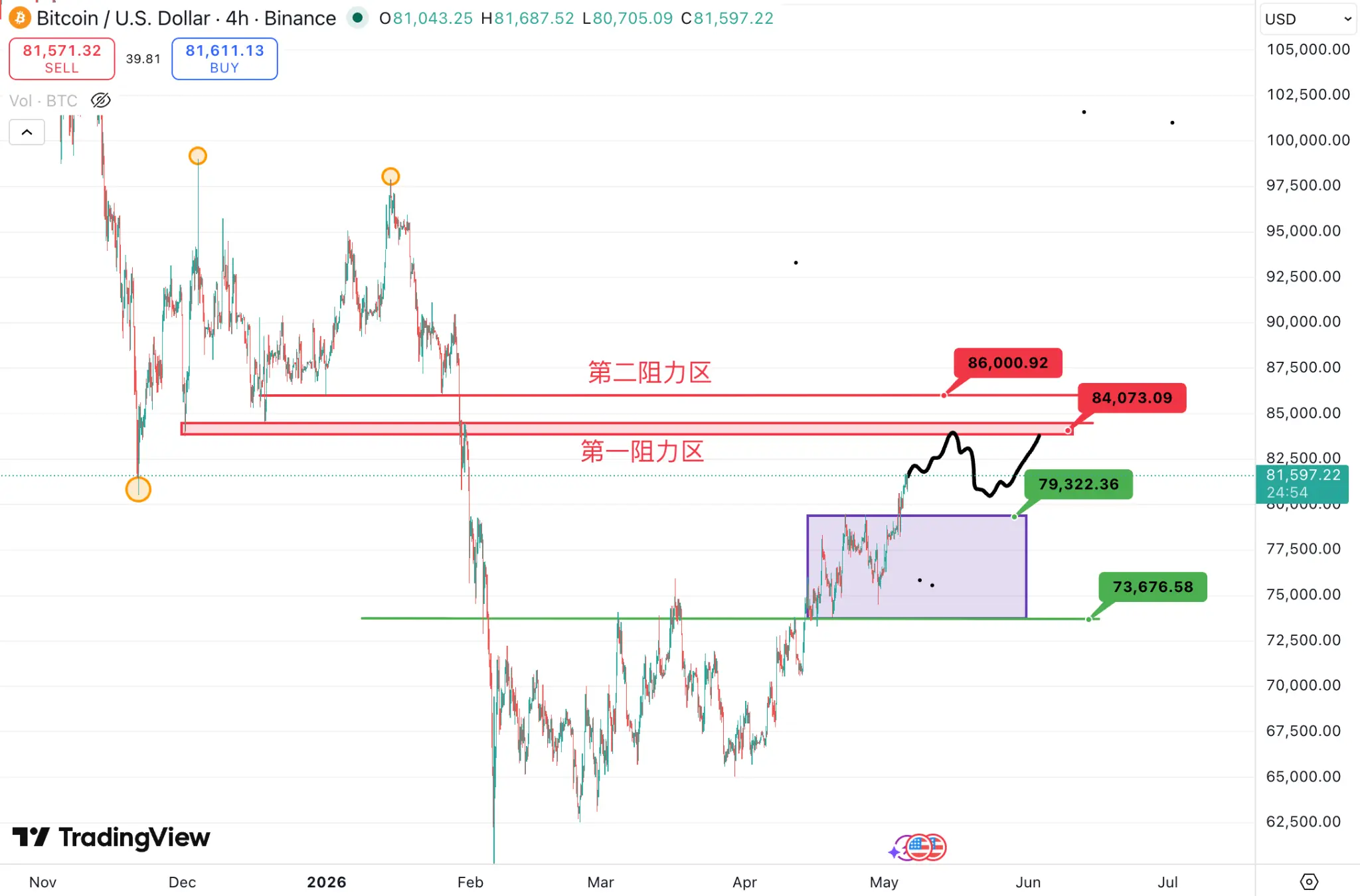
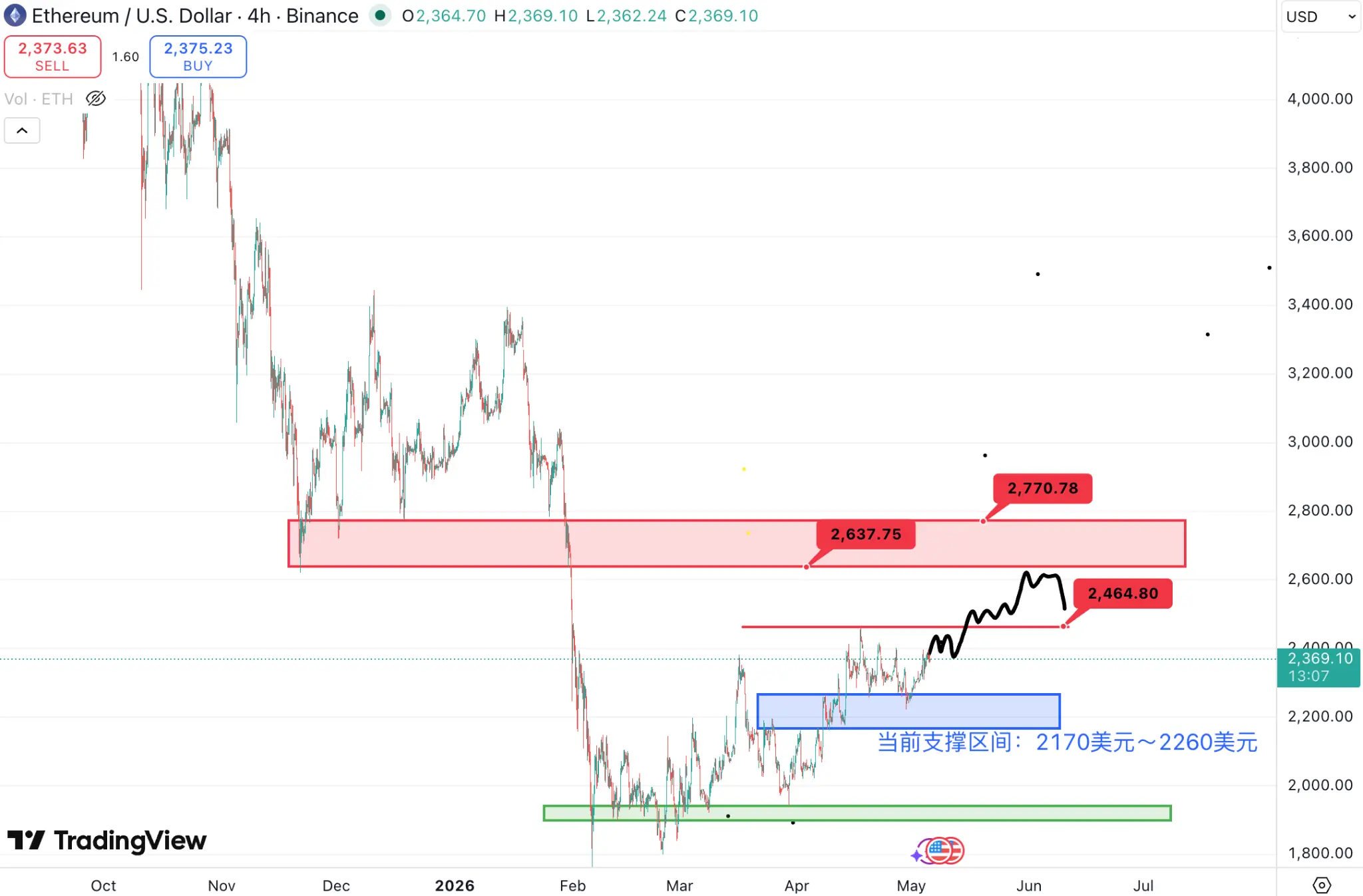
At this stage, the overall performance of the crypto market is characterized by a BTC-dominated recovery rally: BTC has continued to rise from the range of approximately $75,000 to $78,000 in early May, breaking through $80,000 on May 6, and briefly touching around $81,700, reaching a high since the end of January; currently around $81,500. ETH has shown relatively weak performance, currently around $2,375, more following the rebound rather than leading it actively. The main driving factors include a recovery in risk appetite, easing geopolitical tensions, short-seller liquidations, and signs of progress on the U.S. crypto regulatory bill, the CLARITY Act.
In the short term, the focus is on whether BTC can hold above $80,000: if it holds, the next resistance is seen at $83,000 to $84,000; if it falls below $80,000, it may retest $78,000, with further support around $75,000. For ETH, key attention is on the $2,300 support; if it breaks below, it may weaken again; resistance above is seen at $2,450 to $2,500. Overall judgment: the market has entered a "breakout confirmation" phase, with BTC stronger than ETH, and altcoins have not yet fully spread; caution is needed for potential pullbacks after highs and volatility triggered by regulatory/macroeconomic news.
3. Industry and Sector Hotspots
Origins Network and Derivio represent two key infrastructure directions:
Origins Network: Focuses on RWA (Real World Assets) on-chain, bringing real-world value onto the chain through asset issuance and circulation mechanisms, enhancing asset tradability and liquidity, essentially serving as "on-chain asset supply-side infrastructure."
Derivio: Focuses on an on-chain derivatives engine, achieving more flexible financial product design through risk segmentation and yield customization, essentially serving as "on-chain financial structuring and risk management infrastructure."
II. Market Hotspot Sectors and Potential Projects of the Week
1. Overview of Potential Projects
1.1. Brief Analysis of $8 Million Total Financing, Led by Animoca, TBV, and CONDAQ, Connecting Real World Value with On-Chain Asset Issuance and Circulation Infrastructure of Origins Network
Introduction
Origins Network aims to leverage decentralized networks to provide resilient computing power for AI systems and enhance the security of on-chain transactions through AI acceleration technology.
On this basis, Origins Network is committed to building its unique blockchain ecosystem, transforming the data security and high-performance computing advantages brought by AI into a foundation for robust ecosystem operation.
By promoting native large-scale autonomous trading and being compatible with the x402 standard, Origins Network aims to break through key bottlenecks in supporting autonomous agents, high-throughput trading, and privacy protection, thereby constructing a new generation of financial networks that are secure, efficient, scalable, and agent-oriented.
Core Mechanism Overview
A. Consensus Mechanism: Towards Proof of Computation
Although PoS has made progress in reducing computational costs and energy consumption compared to PoW, it has also introduced new issues in resource allocation and incentive direction. This prompts us to rethink: how to design a consensus and governance mechanism that is both efficient and fair in a decentralized network.
Origins Network returns to the core issue of crypto projects: how to effectively and reliably distinguish honest nodes from malicious nodes. To this end, we propose a new consensus algorithm that integrates the core design concepts of PoW and PoS, aiming to achieve a balance between network security, resource efficiency, and fair incentives.
This mechanism inherits the key principles of PoS:
A block or chain is considered valid only when it receives endorsements from the majority of participants (weighted).
Limitations of Traditional Staking
Traditional native staking (such as Solo Staking) has multiple thresholds:
High capital threshold
Uncertain yield stability
Complex operation and maintenance
High learning costs
Becoming a validating node typically requires:
Meeting hardware requirements
Holding a minimum number of tokens
Accepting lock-up periods
Improved Competitive Model and Block Production Mechanism
In PoW, miners compete for block rights through computational power. Origins Network has restructured this competitive dimension.
At the same time, the network introduces a fixed time structure:
Slot: 12 seconds (block interval)
Epoch: 6.4 minutes (includes 32 slots)
That is:
A block is generated every 12 seconds
Each epoch completes 32 block cycles
Validator Selection Mechanism
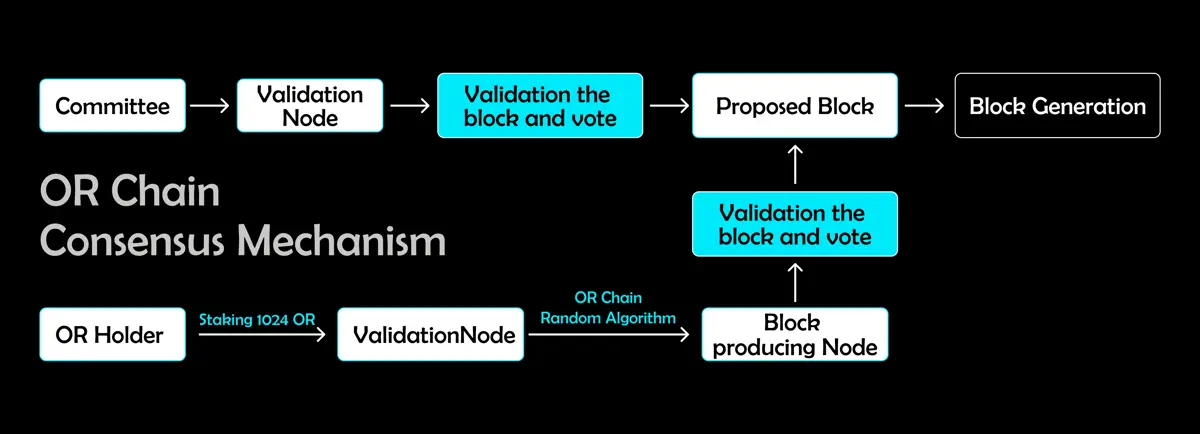
Nodes obtain validator qualifications by staking $OR tokens
Use VRF (Verifiable Random Function) to randomly select block proposers
Each block producer is randomly selected
At the same time:
Within each epoch, all validators are randomly assigned to different slots
Each block forms a committee of at least 128 validators
Responsible for block validation and finality confirmation
Computationally Driven Validation Weight (Core Innovation)
Unlike traditional passive staking mechanisms, Origins Network designs the validation process as:
A structured, time-limited "Computational Sprint"
During this phase:
Nodes (hardware providers) utilize idle computational power
Complete a series of complex computational tasks designed for AI workloads within a limited time window
Each completed task generates a verifiable cryptographic proof
These proofs are used to determine the nodes' "Baseline Voting Weight" in the next governance cycle.
That is:
One unit of computational power = one unit of voting power
Thus ensuring:
Network influence depends on actual computational contributions
Rather than merely on capital holdings
Essence and Optimization of the Mechanism
This design conceptually returns to the essence of PoW (emphasizing computational contributions) but has undergone key optimizations:
No longer requires continuous computation
Instead, completes computational proofs within a limited time window
Operational logic:
Nodes concentrate computational power to generate proofs during the sprint
Proofs determine voting weights for subsequent cycles
After the sprint ends, computational power is released
Improvement in Resource Utilization Efficiency
This design brings key advantages:
Releases computational resources during non-sprint times
Nodes can use computational power for:
AI model training
Inference tasks
Other practical applications
Thus achieving:
Secure consensus + dual utilization of actual computational value
Significantly improving:
Resource utilization efficiency
Long-term sustainability of the network
B. Core Summary of Random Task Validation Mechanism
Origins Network adopts a "random sampling + economic penalties" validation mechanism, significantly reducing validation costs while ensuring security:
- Sampling Validation Replaces Full Validation
Does not validate all computational tasks one by one
Randomly selects some tasks for cross-validation (similar to audit sampling)
Nodes cannot predict which tasks will be checked → suppresses cheating motivation
- Probability Guarantees Long-Term Security
A single act of cheating may escape detection, but the probability is extremely low
Accumulating over time:
The probability of continuous wrongdoing being discovered approaches 1
Rewards are distributed by cycle → once caught:
Clears earnings for the current cycle
Damages reputation
➡️ Long-term cheating will inevitably result in losses, rational nodes will choose honesty
- Computational Contribution Determines Validation Rights
Voting rights are tied to actual computational contributions (rather than merely staking)
Nodes providing computational power also bear validation responsibilities
➡️ Enhances efficiency, avoids redundant computations across the network
- Verifiable Random Selection Mechanism (Key Design)
Each task has a unique ID
Nodes sign the ID with a private key → generates a random seed
Determines whether to be selected to validate that task
Characteristics:
Uncontrollable
Reproducible
Auditable
Ensures fair and transparent validation allocation
- Overall Effect of the Mechanism
Through "computational proofs + random sampling," the system achieves:
Security: Cheating is almost guaranteed to be discovered
Efficiency: Avoids the enormous costs of full validation
Incentive Consistency:
Only nodes that pass all validations can receive rewards
C. Agent Identity Verification Paradigm
- Existing Issues: Identity and Permission Management Out of Control
Multiple Agents × Multiple Services → Credential relationships grow exponentially (M×N)
Enterprises rely on:
Long-term API Keys
Overly broad permissions
Risks:
Once leaked → Long-term, broad access permissions
Cannot verify:
Who is the real Agent
Who is a forged or attacked Agent
Essential issue:
Lack of "verifiable Agent identity binding," security relies on "hiding rather than cryptographic constraints"
- Core Solution: Three-Layer Identity Model (Hierarchical Permission System)
Origins proposes a native identity architecture for Agents:
Three layers of responsibilities
User: Root permissions (highest control)
Agent: Authorized to perform tasks
Session: One-time operation permissions (temporary, minimal permissions)
- Key Technical Mechanisms
(1) Deterministic Identity Derivation
Each Agent derives an independent address from the user's main wallet (BIP-32)
No need to manage a large number of keys
(2) One-Time Session Keys
Completely randomly generated
Become invalid after the task ends
(3) Cryptographic Delegation Chain (Core)
Each operation has a complete link:
Each layer has signature authorization
Full link is verifiable and auditable
- Security Model: Layered Defense (Blast Radius Control)
Impact of breaches at different levels:
Session leak → Only affects one operation
Agent leak → Limited by user policies (e.g., quotas)
User private key leak → The only serious risk point
Achieves minimal permissions + hierarchical isolation + controllable loss range
- Reputation System (Trust Layer)
Reputation is not isolated but globally accumulated
Sources:
Transaction records
Task execution
Interaction history
Builds a unified, quantifiable trust capital on-chain
- Core Paradigm Shift (Most Important)
Origins defines Agents as:
"First-class citizens of the digital economy"
This means Agents:
Have independent identities
Can self-verify
Can initiate transactions
Can execute complex collaborations
- Changes in the Infrastructure Layer
Traditional Model → Origins Model:
Manual key management → Automated hierarchical derivation
Subjective trust → Cryptographically verifiable trust
Broad permission credentials → Programmable constraints
Social reputation → On-chain credit system
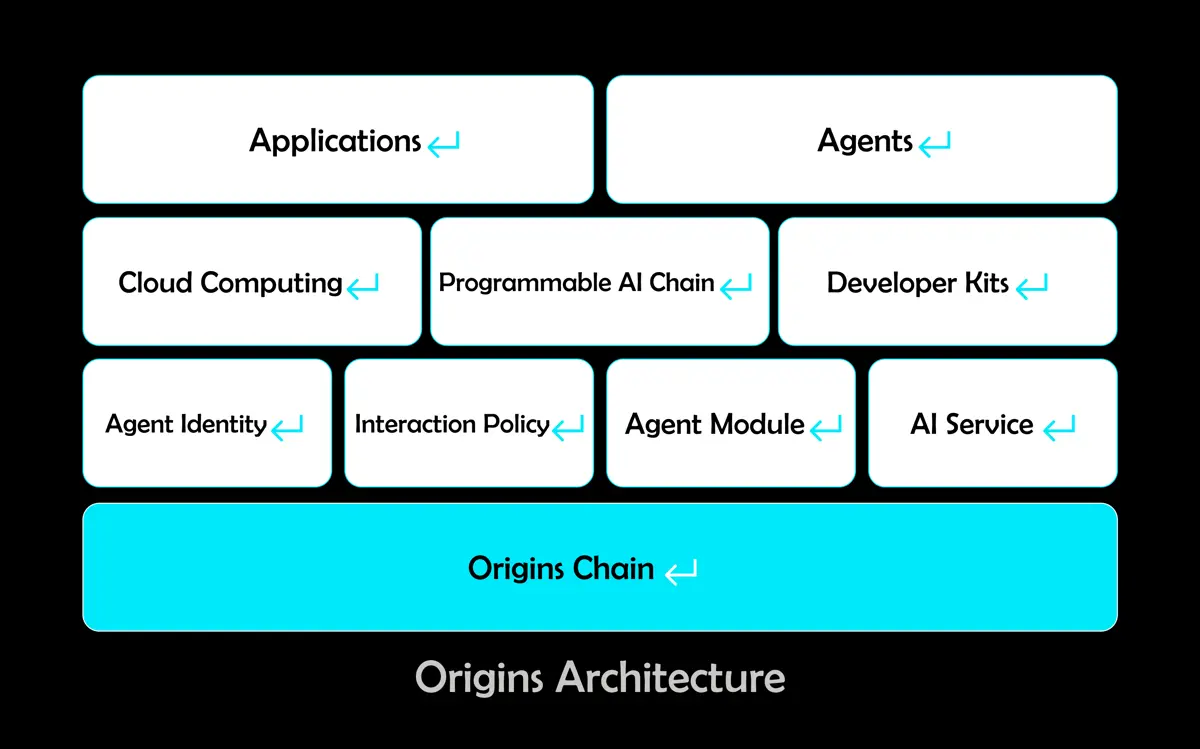
D. Core Summary of Origins Network's Three-Layer Architecture
- Overall Architecture: Three-Layer Collaborative System
Origins Network builds an integrated ecosystem of App + Chain + Cloud:
Cloud (Computing Power and Operation)
Chain (Value and Settlement)
App (Users and Distribution)
Characteristics of the three:
Modular design (can evolve independently)
Standard interface connections (composable)
Forms a self-enhancing value circulation system
- Base Layer: OR Cloud (Computing Power and Operation Infrastructure)
Positioning: AI operating environment + computing power scheduling layer
Core capabilities:
Containerized deployment (secure isolation, scalable)
Persistent memory + state management (supports long-term AI operation)
Aggregates distributed computing resources
Provides standardized LLM API interfaces (reducing development barriers)
Sandbox isolation (ensuring data and privacy security)
Essence: Provides a stable, scalable "off-chain execution layer" for AI Agents
- Economic Layer: Chain + Tokenomics (Value Circulation Hub)
Positioning: Financial and coordination layer for AI applications
Core capabilities:
AI applications → Tokenizable economies
One-click issuance of ERC-20 (Token Factory)
Built-in governance (permissions / ownership / operational control)
Cryptographic signatures + smart contracts → Composable interactions
Supports:
Agent ↔ Agent
Agent ↔ Contract
Multi-Agent collaboration
Essence: Transforms AI applications into "tradable, incentivizable, and governable" on-chain economic units
- Application Layer: App & Ecosystem (User Entry)
Positioning: Distribution + Interaction + User Layer
Core functions:
Application marketplace (discover AI applications)
Leaderboard (based on performance metrics)
Staking participation (revenue + governance)
Airdrop incentives
Social and interaction features
Natural language interaction (similar to chat)
User behaviors:
- Staking / Trading / Voting / Providing liquidity
All recorded on-chain → Forms user profiles and reputations
Essence: Allows users to directly participate in the AI economy and share value
- Core Design Philosophy (Most Important)
The key of Origins is not a single-point product, but:
- AI Full Lifecycle Platform
Covers: Development → Deployment → Operation → Monetization → Governance
- Value Closed Loop
AI operation generates value
Value circulates through tokens
User participation drives ecosystem growth
- Agent Native Economic System
AI is not just a tool
But is:
Tradable
Profitable
Governable
Tron Comments
Origins Network positions itself as an "AI-native financial network," integrating Proof of Computation, random validation mechanisms, hierarchical identity systems, and a Cloud+Chain+App three-layer architecture, achieving a binding of computational contributions and governance weight, as well as native identity and autonomous trading capabilities for Agents. Its advantage lies in unifying AI computation, on-chain economy, and identity trust into the same infrastructure, with the potential to support high-performance Agent trading and large-scale autonomous collaboration.
However, its disadvantage is the high complexity of system design, strong dependence on real computational supply, developer ecosystem, and Agent demand scale, and the new consensus and identity models still need long-term practical validation for security, economic incentive stability, and verifiability under large-scale operation.
2. Detailed Explanation of Key Projects of the Week
2.1. Detailed Explanation of $6 Million Total Financing, Led by YZi Labs, with CMTDIGITAL and UOB as Co-Investors—Derivio, a Derivatives Engine that Makes Risks Segregable and Yields Customizable
Introduction
Derivio is a structured derivatives ecosystem that provides traders with refined risk-return layering through synthetic derivatives and optimizes yield performance with smart leverage; at the same time, it offers ample and deep liquidity pools for crypto asset operators to achieve efficient risk hedging.
Architecture Overview
Phase 1 of Derivio: Structured Derivatives System
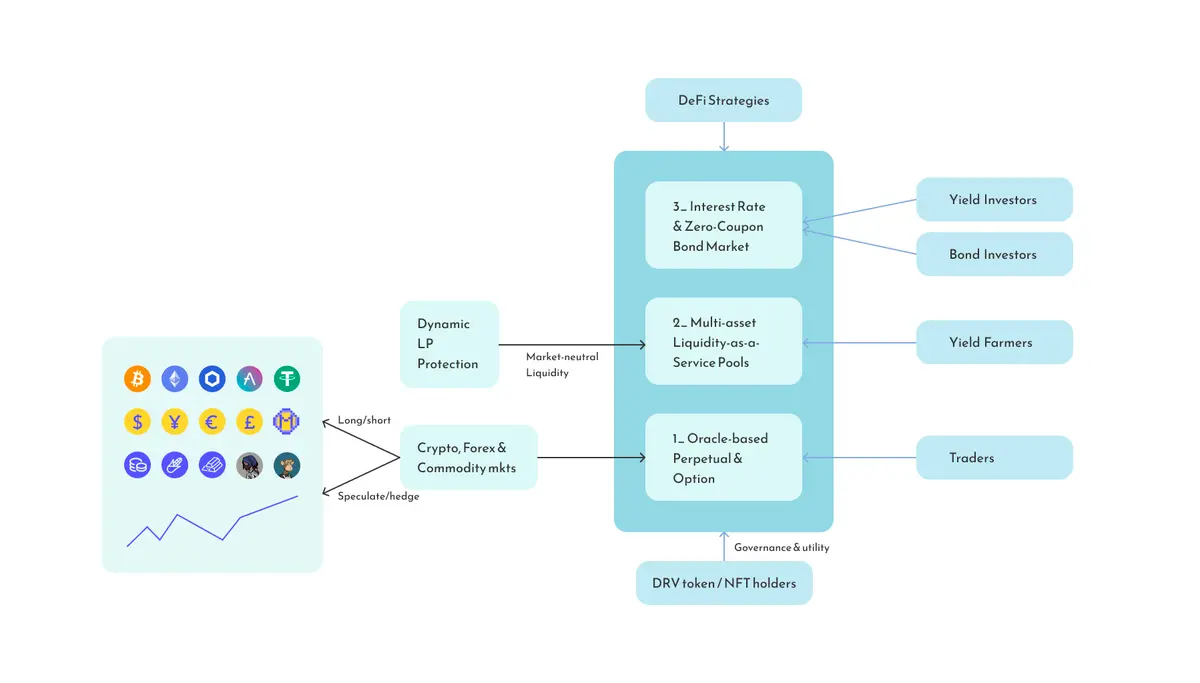
The foundational structured derivatives of Phase 1 of Derivio are built on the Liquidity-as-a-Service derivatives model, focusing on optimizing trading execution efficiency and capital pool security, and expanding new markets based on this to provide better risk hedging tools.
Derivio has built a Universal Margin & Liquidity Engine, with goals including:
Providing traders with deep liquidity and a smooth trading experience
Offering liquidity providers a one-click market-neutral market-making abstraction
Serving as the infrastructure for the entire derivatives ecosystem product system
Phase 1 Architecture of Derivio
Core Participants
Traders
Can trade perpetual contracts and options in various markets, including:
Long-tail tokens, foreign exchange, NFTs, commodities, metals, and energy, etc.Liquidity Providers
Provide liquidity to Derivio's index pools (main pool, blue-chip pool, stablecoin pool)
Share trading profits
Track market Beta (β) strategies designed by quantitative teams
Mint yield tokens/bond tokens using LP tokens
Yield Investors
Purchase or mint yield tokens
Gain pure yield exposure (zero Delta)
Bond Investors
Purchase or mint zero-coupon bonds (issued at a discount)
Hold until maturity, redeem original assets
DRV Token / NFT Holders
Have governance rights over the protocol
Share protocol profits and growth dividends
Phase 2
Derivio will launch more advanced structured derivatives, including:
Autocallables
More complex passive investment strategies
Focusing on:
Fair pricing
Open bidding mechanisms
No-threshold participation
Derivio's DeFi Structured Products
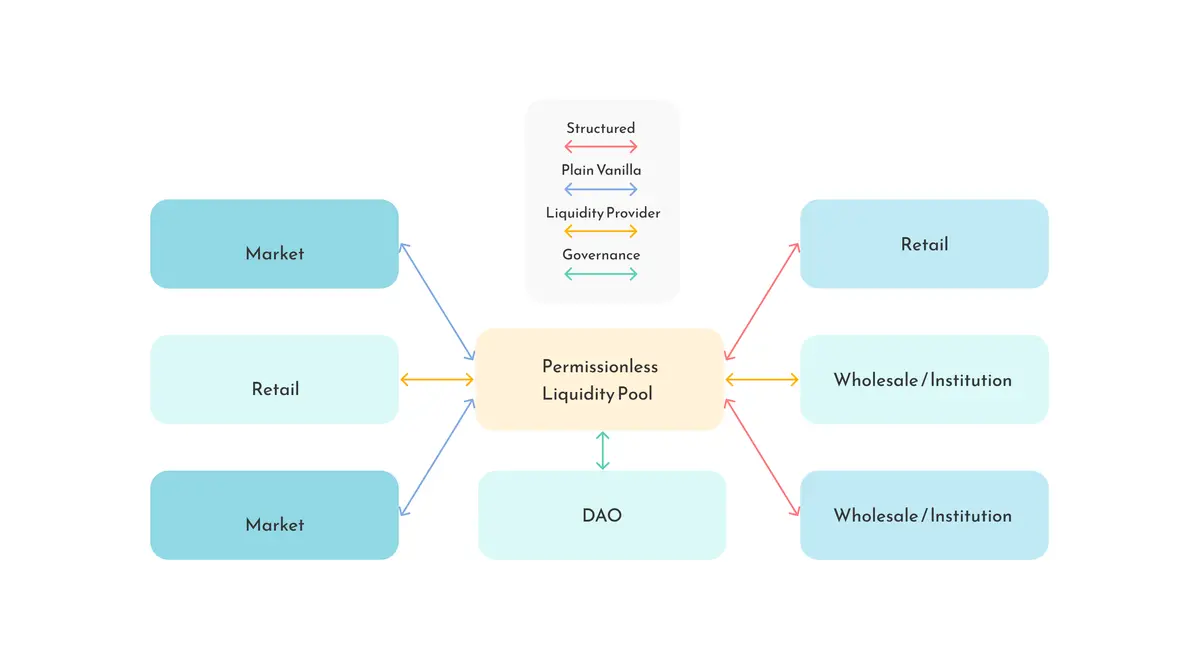
Based on blockchain:
Trustless (no need to trust counterparties)
Permissionless participation
Advantages:
No risk of "pulling the plug" (no rug)
No need to be a bank VIP customer
Mechanism:
Liquidity providers earn profits
Simultaneously provide hedging tools for the market
Derivio's DeFi Architecture
Trading Layer
Perpetual Futures
Provides derivatives trading without expiration
Supports multiple assets (crypto, forex, commodities, etc.)
Core: Continuous price competition and leveraged trading entry
- Universal Margin System
A single account manages all assets and positions
Cross-product margin sharing
Core: Improves capital utilization and reduces liquidation risk
- Funding Rate Mechanism (Funding Curve / Global Funding Rate)
Periodic payments between long and short positions
Balances market direction (avoids extreme bullish/bearish)
Core: Anchors prices to spot, maintains market stability
Prediction and Yield Structure
Payout Curve
Defines yield distribution under different market outcomes
Can design different risk/return structures
Core: Turns "yield forms" into designable products
- CFMM Rediscovery
AMM-like pricing mechanism
Used for pricing derivatives rather than spot
Core: Allows derivatives to also automate market-making and pricing
- Fees
Transaction generates fees
Distributed to liquidity providers
Core: Forms sources of revenue and incentive mechanisms
Liquidity Layer
Super Derivatives Vaults
Concentrated management of funds and participation in multiple strategies
Automatically executes market-making/hedging/yield strategies
Core: Abstracts complex strategies into "saving is participation"
- Market Neutral Liquidity
Eliminates directional risk through hedging (Delta-neutral)
Yields come from fees/funding rates
Core: Stabilizes yields, rather than betting on direction
- Interest Rates & Bonds
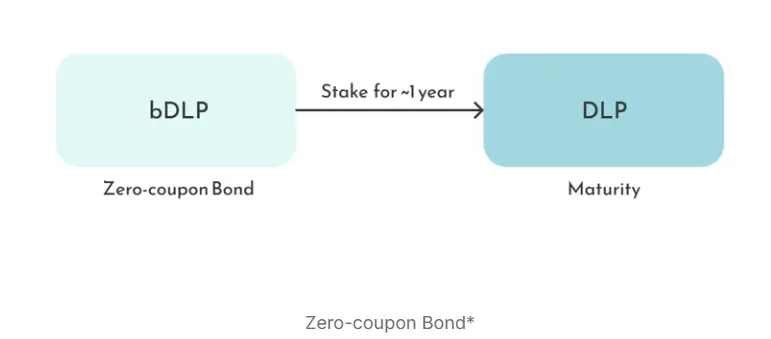
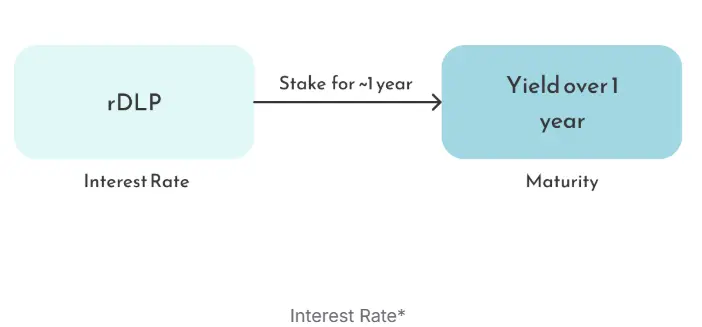
- Interest Rates & Bonds Market
Splits yields into:
Fixed income (bonds)
Floating income (yield)
Core: Splits risks, allowing different investors to take what they need
Tron Comments
Derivio, through the design of "liquidity as a service + universal margin + structured derivatives," separates and reorganizes trading, market-making, and yield, with advantages in providing deep liquidity and market-neutral yields, supporting unified trading and hedging across multiple assets, and meeting different risk preferences of investors through yield/bond layering, showing potential to bring complex TradFi derivatives into DeFi.
However, its disadvantages include high complexity in product structure, strong dependence on liquidity scale and pricing models, potential early market education and cold start issues, and risk management and liquidation mechanisms under extreme market conditions still needing validation through real market scenarios.
III. Industry Data Analysis
1. Overall Market Performance
1.1. Spot BTC vs ETH Price Trends
BTC
ETH
2. Summary of Hot Sectors
1) AI Agent × On-Chain Execution: Moving from "tool invocation" to "controllable execution architecture"
This week's technical discussions focused on how AI Agents can safely participate in on-chain interactions, with an emphasis no longer on simply calling APIs, but on introducing pre-execution validation, permission control, and fund isolation mechanisms. Trends are reflected in directions like Nava and B.AI:
AI is not just generating strategies but is beginning to connect to on-chain accounts, payments, and execution logic.
Technical focus shifts to "execution security layer (Verification / Escrow)."
2) RWA Infrastructure: Deep integration of compliance and on-chain logic (KAIO-like architecture)
This week's technical progress in the RWA direction is reflected in:
Compliance modules (Rules Engine) directly written into smart contract execution logic
Asset issuance, trading, and redemption forming a complete on-chain lifecycle
Signifying a shift from "asset on-chain" to "compliance financial processes on-chain."
3) Deepening ZK Applications: Moving from privacy proofs to "data and identity layers"
This week's focus on ZK technology is not on the underlying algorithms but on the application layer:
Cross-chain asset proofs (multi-chain aggregation)
DID + ZK combined data ownership models (ILITY Network)
ZK is transitioning from "privacy tools" to on-chain data and identity infrastructure.
4) Execution Layer Architecture Innovation: Multi-VM integration (Fluent) continues to advance
Projects like Fluent are driving Blended Execution (unified execution layer) to remain a discussion focus this week:
No longer relying on cross-chain bridges
Running EVM / WASM / SVM on the same execution layer
This is a foundational architecture-level innovation aimed at solving ecosystem fragmentation issues.
5) Decentralized Network Infrastructure: P2P + Serverless Architecture (MarsCat)
A clear direction for application infrastructure this week is:
P2P networks carrying communication and application operations
Web2 services connecting to Web3 through protocol conversion
Essentially building an application operating environment without a central server.
IV. Review of Macroeconomic Data and Key Data Release Nodes for Next Week
This week's macroeconomic main line focuses on U.S. employment and economic activity leading indicators, overall presenting characteristics of "the economy still has resilience, but marginal slowdown."
May 5 (Tuesday):
U.S. JOLTS job openings remained basically flat (around 6.86 million), indicating stable labor demand but not significantly expanding
ISM services PMI (around 53.6) remains in the expansion zone, with strong resilience in the services sector
May 6 (Wednesday):
ADP employment data released, as a leading indicator for non-farm payrolls, the market is closely observing whether employment slows down
Next week's macro focus is highly concentrated on employment data and consumer confidence👇
May 7 (Thursday)
Initial jobless claims data
U.S. productivity and unit labor costs
Used to assess pressures on the corporate side and employment trendsMay 8 (Friday) [Core]
Non-farm payrolls (NFP) (most important data)
Unemployment rate
Michigan consumer confidence index (preliminary)
V. Regulatory Policies
United States
May 1: a16z supports CFTC's unified regulatory stance on prediction markets.
a16z stated that if prediction markets are regulated separately by each state, it would create inconsistent access barriers, supporting the CFTC as a more unified regulatory framework source. The key impact is that the regulation boundaries for prediction markets, event contracts, and on-chain derivatives continue to be a focal point of U.S. policy.
May 2: BlackRock submitted GENIUS Act rule opinions to the OCC.
BlackRock requested the OCC to relax restrictions on stablecoin reserve assets, opposing overly strict caps on tokenized reserve assets, and advocating for an expansion of the range of qualified reserve assets. This event indicates that stablecoin regulation is entering a "rules detail game" phase.
May 4: FINRA approved Securitize to expand tokenized securities business capabilities.
Securitize received FINRA approval to expand its underwriting, custody, and settlement capabilities related to tokenized securities. This is an important advancement in the compliance of tokenized securities in the U.S.
May 5: CFTC advances direction for protecting non-custodial software developers.
CFTC continues to promote clarity around the responsibilities of non-custodial wallets and software developers regarding the no-action letter previously obtained by Phantom, with the core being to distinguish "neutral software interfaces" from "regulated financial intermediaries."
Italy / EU
May 5: The Bank of Italy calls for the EU to assess "tokenized SEPA payments."
Chiara Scotti, Deputy Governor of the Bank of Italy, stated that Europe should evaluate whether to extend SEPA to tokenized payments and financial scenarios to maintain the euro's central position in digital finance. This development highlights that EU regulatory discussions have extended from MiCA compliance to the tokenization upgrade of banking payment systems.
 Risk warning


Popular articles