BIT Research: The Federal Reserve has a new leader, and Bitcoin is entering a new favorable period

 From monetary expansion to policy restructuring, the real variable is shifting towards institutions and expectations.
The current market is in a macro repricing phase driven by policy expectations. The leadership of the Federal Reserve may undergo a new round of changes, and if Kevin Warsh successfully takes over, he will bring new policy orientations regarding interest rate paths, balance sheets, and inflation frameworks. Meanwhile, the debt environment and monetary system that have been continuously expanding over the past decade are intensifying the market's re-examination of "monetary purchasing power."
Looking back at the development path of Bitcoin, it was born after the 2008 financial crisis, overlapping significantly with multiple rounds of quantitative easing by the Federal Reserve. From the massive balance sheet expansion during Ben Bernanke's tenure, to market skepticism during Janet Yellen's period, and then to the pressure testing of a rate environment above 5% during Jerome Powell's tenure, Bitcoin has continuously reshaped its market positioning through different policy phases. Especially after the approval of the spot Bitcoin ETF in 2024, the "currency devaluation trade" has gradually entered the mainstream narrative among institutions.
In this context, the potential changes in the Federal Reserve's policy direction are becoming an important variable influencing the Bitcoin narrative.
Evolution of Monetary Cycles: From Quantitative Easing to Tightening Cycles, Bitcoin Completes Narrative Reshaping
Over the past decade, the Federal Reserve's policy cycle has provided a continuously evolving macro background for Bitcoin. The quantitative easing during Bernanke's tenure brought systematic attention to the issue of fiat currency expansion for the first time, laying the foundation for Bitcoin's narrative as a "fixed supply asset." During Yellen's tenure, Bitcoin's price rose from about $300 to nearly $17,000, gradually entering mainstream visibility, but it was still widely regarded as a high-volatility speculative asset.
Entering Powell's term, Bitcoin faced a more complex cyclical test. Early interest rate hikes and balance sheet reductions led to a price drop of over 80% from the 2017 peak, followed by the Federal Reserve expanding its balance sheet by nearly $3 trillion within weeks during the pandemic, reinforcing the market's perception of "monetary expansion." From 2021 to 2022, after Bitcoin rose to $69,000, it retraced about 75%, showing that it still possesses the attributes of a risk asset.
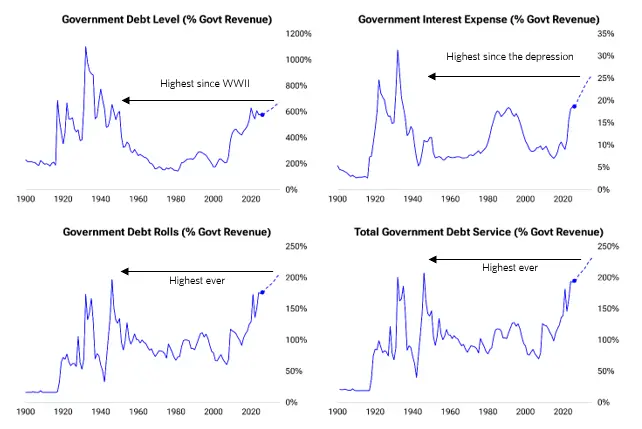
However, a key change occurred in 2024: the approval of the spot Bitcoin ETF allowed the "currency devaluation trade" to gradually gain acceptance among institutions. At the same time, U.S. federal debt has risen to about $39 trillion, and Bitcoin has not exited the mainstream market view in a high-interest-rate environment, completing a phased transition from a fringe asset to a macro asset.
Policy Shift and Uncertainty: Under the Warsh Path, Strengthening and Disturbing the Bitcoin Narrative
Under the potential new policy framework, Warsh's core proposals include: reducing the balance sheet, re-emphasizing interest rate tools, and establishing a new inflation policy mechanism. He pointed out in the hearing on April 21, 2026, that the inflation of 2021-2022 was one of the biggest policy mistakes in the past four to five decades, with cumulative price increases of 25%-35% since 2020 still affecting residents' living costs.
From Bitcoin's perspective, this judgment somewhat reinforces the "currency devaluation narrative." If the Federal Reserve acknowledges the long-term impacts of past balance sheet expansions, the market will re-examine the stability of the monetary system, which supports Bitcoin's emphasis on fixed supply. At the same time, Warsh's clear opposition to central bank digital currencies (CBDCs) also weakens the previously viewed potential competitive path as a systemic alternative to Bitcoin.
However, the short-term macro environment still presents significant disturbances. On one hand, oil prices have risen above $100, and tightening energy supply has shifted the market's expectations from "three rate cuts within the year" to beginning to factor in the possibility of rate hikes; on the other hand, the energy demand brought by AI infrastructure investment may also push inflation levels higher before productivity gains are realized. Internal models even indicate that a scenario where CPI rises to 6% cannot be ruled out.
Additionally, if balance sheet reduction progresses too quickly, in the context of continued U.S. Treasury issuance, long-term interest rates may rise, thereby putting pressure on risk assets. If inflation is systematically underestimated, it may also undermine the institutional credibility of the Federal Reserve.
The above viewpoints are partly derived from BIT on Target. Contact us to obtain the complete report of BIT on Target.
Disclaimer: The market has risks, and investment should be cautious. This article does not constitute investment advice. Trading in digital assets may carry significant risks and instability. Investment decisions should be made after careful consideration of personal circumstances and consulting financial professionals. BIT is not responsible for any investment decisions made based on the information provided in this content.
 Risk warning




Popular articles