Morning News | Strategy establishes a $1.44 billion dividend reserve fund; Binance Wallet now supports the creation of multiple non-custodial wallets; HashKey has passed the Hong Kong Stock Exchange hearing

 Overview of Important Market Events on December 1
整理:ChainCatcher
Important News:
- Elon Musk predicts: Future energy will be hard currency, and Bitcoin is formed based on energy
- HashKey passes Hong Kong Stock Exchange hearing, plans to go public in Hong Kong to build a compliant digital asset ecosystem
- Tether responds to FUD: Approximately $7 billion in excess equity in Q3, group equity close to $30 billion
- November cryptocurrency trading volume hits a 5-month low, significant outflows from Bitcoin ETF
- Strategy establishes a $1.44 billion dividend reserve fund
- Binance wallet now supports the creation of multiple non-custodial wallets
- Sony Bank to issue a stablecoin pegged to the US dollar in the US
What important events occurred in the past 24 hours?
Elon Musk predicts: Future energy will be hard currency, and Bitcoin is formed based on energy
According to ChainCatcher, Musk recently stated on a podcast that in the future, human material needs will be greatly satisfied, and thus currency will no longer be a necessity for humans; the concept of currency may even disappear.
At that time, energy will become the true currency, and "this is why I say Bitcoin is formed based on energy; you cannot control energy through legislation. You cannot suddenly have a lot of energy just by passing a law."
Sony Bank to issue a stablecoin pegged to the US dollar in the US
According to ChainCatcher, Nikkei News reports that Sony Bank plans to issue a stablecoin pegged to the US dollar in the US as early as the 2026 fiscal year.
Sony Group intends to use this stablecoin for payments related to its ecosystem of games and anime content.
According to ChainCatcher, HashKey Holdings Limited (a company registered in the Cayman Islands) has passed the Hong Kong Stock Exchange hearing and officially initiated the process for listing in Hong Kong, as disclosed by the Hong Kong Stock Exchange on December 1. JPMorgan, Cathay Securities, and Guotai Junan International are acting as joint sponsors for this IPO.
Key Information:
- The company has released a post-hearing information package and is currently in the listing preparation stage.
- The expected price range for this IPO is [redacted] HKD per share.
- The number of shares issued, the number of shares for public offering, and the number of placement shares are all [redacted] (subject to adjustment).
- The par value per share is $0.00001.
- The issue price is expected to be determined through negotiations between the overall coordinator and the company.
It is important to note that this post-hearing information package is only a draft and may undergo significant changes. Investors should wait for the official prospectus to be released and make investment decisions based solely on the formal prospectus registered with the Hong Kong Companies Registry.
According to ChainCatcher, Tether CEO Paolo Ardoino posted a response to FUD, citing the Q3 2025 attestation report: Tether will maintain a multi-billion dollar excess reserve buffer, with group equity approaching $30 billion.
As of the end of Q3 2025, Tether had approximately $7 billion in excess equity (along with about $184.5 billion in stablecoin reserves) and about $23 billion in retained earnings. "S&P made the same mistake, not considering the additional group equity and not accounting for the approximately $500 million in basic profits generated monthly from U.S. Treasury yields. Some influencers either have poor math skills or have motives to support our competitors. Always trust ourselves."
November cryptocurrency trading volume hits a 5-month low, significant outflows from Bitcoin ETF
According to ChainCatcher, The Block reports that cryptocurrency market trading volume has significantly shrunk, with centralized exchange monthly trading volume dropping to $1.59 trillion, down 26.7% from October, marking the lowest level since June. Decentralized exchange trading volume also fell to $397.78 billion.
Binance remains the market leader, but its trading volume decreased from $810.44 billion in October to $599.34 billion. Meanwhile, Bitcoin's price fell from around $110,000 at the beginning of the month to $86,500 by the end, with the U.S. Bitcoin spot ETF experiencing a net outflow of $3.48 billion, the largest single-month outflow since February of this year.
According to ChainCatcher, crypto analyst Benjamin Cowen posted that when the Federal Reserve announced the end of quantitative tightening (QT) on August 1, 2019, the balance sheet continued to decline in August as the final round of Treasury bond maturities was settled only by mid-August.
This time, QT ended on December 1, which does not mean the balance sheet will immediately start to rebound; he believes it may take until early 2026 to see such a rebound.
Coinbase CEO: The New York Times now resembles a "political propaganda machine," the public should unsubscribe
According to ChainCatcher, Coinbase co-founder and CEO Brian Armstrong posted on social media that the New York Times now resembles a "political propaganda machine," replacing news reporting with emotional content, stating that "real journalism could have significant value." He noted that no one around him takes it seriously as a media outlet (except for a few people over 60 on the U.S. East Coast) and believes that the culture of the NYT's Dealbook team is different. Armstrong also urged the public to "give a gift to friends and family this holiday season—unsubscribe from the New York Times."
CoinShares withdraws XRP, Solana, and Litecoin ETF applications, shifting to a high-profit product strategy
According to ChainCatcher, CoinShares, Europe's largest digital asset management company, officially withdrew its applications for XRP, Solana Staking, and Litecoin ETFs submitted to the U.S. Securities and Exchange Commission (SEC) on November 28. The company also announced plans to gradually close its Bitcoin futures leveraged ETF product (BTFX). This decision comes as CoinShares prepares to go public in the U.S. through a $1.2 billion SPAC merger with Nasdaq-listed Vine Hill Capital, expected to be completed by the end of this year.
After the merger, CoinShares will rank among the top four crypto ETF asset management companies globally, alongside BlackRock, Fidelity, and Grayscale. CoinShares CEO Jean-Marie Mognetti stated that given the dominance of traditional financial giants in the single-asset crypto ETF market, the company will reallocate resources to more innovative and higher-profit products over the next 12-18 months, including crypto ecosystem equity exposure tools, thematic portfolios on blockchain innovation trends, and actively managed strategies combining cryptocurrencies with other assets.
According to ChainCatcher, the People's Bank of China held a coordination meeting with over ten departments to combat virtual currency trading speculation (hereinafter referred to as the 1128 meeting), emphasizing the need to continue adhering to the relevant provisions of the 2021 notice on further preventing and addressing risks of virtual currency trading speculation (hereinafter referred to as the 9.24 notice), implementing a prohibitive policy on the operational business of virtual currencies in mainland China, and focusing on combating money laundering and illegal capital outflow using virtual currencies.
In response to this policy, lawyer Xiao Za interpreted that overall, the 1128 meeting is a reiteration of old themes, but the real regulation to be enforced is against illegal currency exchange using stablecoins, which severely disrupts financial order. This issue is a real problem that regulatory agencies must face. It is well known that China has strict foreign exchange control regulations, generally allowing individuals to exchange no more than $50,000 per year. Now, with the stablecoin market gradually expanding, application scenarios continuously increasing, and the number of currency merchants rising, many capital outflow demands have been met by stablecoins like USDT and USDC.
Moreover, there are instances where stablecoins facilitate money laundering or concealment of criminal proceeds for upstream crimes. In judicial practice, there have been bold foreign trade merchants using USDT and USDC to circumvent UN sanctions, assisting sanctioned countries in foreign trade. From a judicial perspective, in the past one to two years, China's judicial authorities have gradually increased their regulatory efforts against currency merchants, with many being convicted and punished for illegal business operations, aiding and abetting, money laundering, and concealing criminal proceeds. Additionally, lawyer Xiao Za believes that the 1128 meeting will not affect Hong Kong's open policy towards virtual assets. Hong Kong and mainland China have gradually formed a basic pattern of openness and restriction regarding virtual assets, with a clear regulatory attitude: it is not that financial innovation is not allowed, but it must be done in designated places.
Binance wallet now supports the creation of multiple non-custodial wallets
According to ChainCatcher, the official announcement states that Binance wallet has launched a new feature allowing users to create and manage multiple non-custodial wallets under the same account. With this upgrade, users can enjoy a more flexible and efficient wallet management experience while maintaining the security of Binance's MPC (Multi-Party Computation) non-custodial protection.
Key features include:
Support for multiple non-custodial wallets: Up to 5 non-custodial wallets can be created under the same account.
Personalized management: Users can customize the name and avatar of each wallet and manage them collectively in the "My Wallet" panel.
One-click creation: Create non-custodial wallets with one click using device Passkey.
No mnemonic phrases: Non-custodial security protection based on MPC technology, requiring no mnemonic phrases to be saved.
Sun Yuchen: I have retrieved my WeChat account
According to ChainCatcher, Sun Yuchen posted that he has retrieved his WeChat account.
ChainCatcher previously reported that Sun Yuchen's WeChat was stolen, and he was urgently contacting to retrieve it.
Strategy establishes a $1.44 billion dividend reserve fund
According to ChainCatcher, SEC filings show that Strategy has announced the establishment of a $1.44 billion dollar reserve fund specifically for paying preferred stock dividends and existing debt interest. The reserve fund is sourced from the proceeds of the company's issuance of Class A common stock according to market issuance plans.
Strategy currently plans to maintain a reserve size that covers at least 12 months of dividend payment needs and intends to gradually strengthen the reserve size, with the ultimate goal of building a buffer fund that can cover 24 months or more of dividend payments.
The existence, terms, and size of the reserve fund are entirely at the company's discretion, and Strategy will dynamically adjust the reserve size based on market conditions, liquidity needs, and other factors.
According to ChainCatcher, Zhongke Chainan analysis shows that the People's Bank of China held a coordination meeting on November 28 with the Ministry of Public Security, the Central Cyberspace Administration, and other thirteen departments to combat virtual currency trading speculation.
The lineup of this meeting is noteworthy, as compared to the ten ministries involved in the "9.24 notice" in 2021, the addition of the Central Financial Office, National Financial Regulatory Administration, and Ministry of Justice marks a comprehensive upgrade of China's regulation on virtual currencies from departmental collaboration to systematic governance.
Analysis indicates that this change will reshape the regulatory landscape on three levels: Coordinated pattern upgrade: The involvement of the Central Financial Office will promote regulation from departmental linkage to a higher-level cross-domain coordination, forming a synergy of policies and resources. Deepening regulatory landscape: The National Financial Regulatory Administration's involvement means that regulation will shift from basic monitoring of capital flows to precise identification and professional investigation of illegal financial activities. Improving legal landscape: The inclusion of the Ministry of Justice will promote regulation from being dominated by administrative documents to having stronger legal support for legal application and enforcement, solidifying the authority of law enforcement.
Additionally, the meeting clearly identified "stablecoins" as the core target of this round of crackdown and emphasized focusing on "information flow and capital flow," building a technology-driven full-chain monitoring system, demonstrating the regulatory authorities' determination and means to comprehensively upgrade the crackdown on illegal activities related to virtual currencies.
Previously, the People's Bank of China held a coordination meeting to combat virtual currency trading speculation.
Data: Solana on-chain DApp monthly revenue exceeds all L1 and L2
According to ChainCatcher, SolanaFloor posted on platform X that the monthly revenue of Solana on-chain DApps exceeds that of all L1 and L2 chains, maintaining a leading position in DApp revenue.
Solana ecosystem meme coin PIPPIN rises 61% against the trend, analysts say bulls are in strong control
According to ChainCatcher, GMGN market information shows that the Solana ecosystem meme coin PIPPIN has risen against the trend today, currently priced at $0.1788, with a 24-hour increase of 61.9%.
Analyst @frontrunnersx noted that PIPPIN is exhibiting an unusual trading pattern. Some wallets are concentrating on accumulating and refusing to sell, driving up the price and attracting shorts, who are continuously "liquidated" in a leveraged "death spiral." One address bought about $200,000 worth of PIPPIN six days ago, sold after the price doubled, and is currently performing similar operations on ARC.
Meme Popularity Rankings
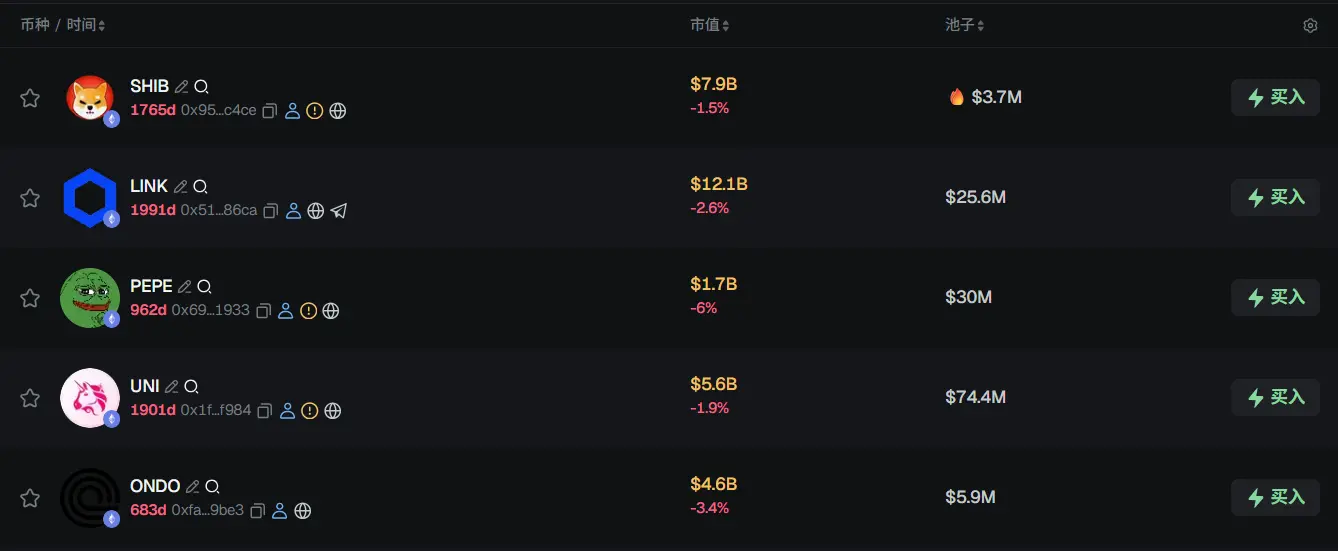
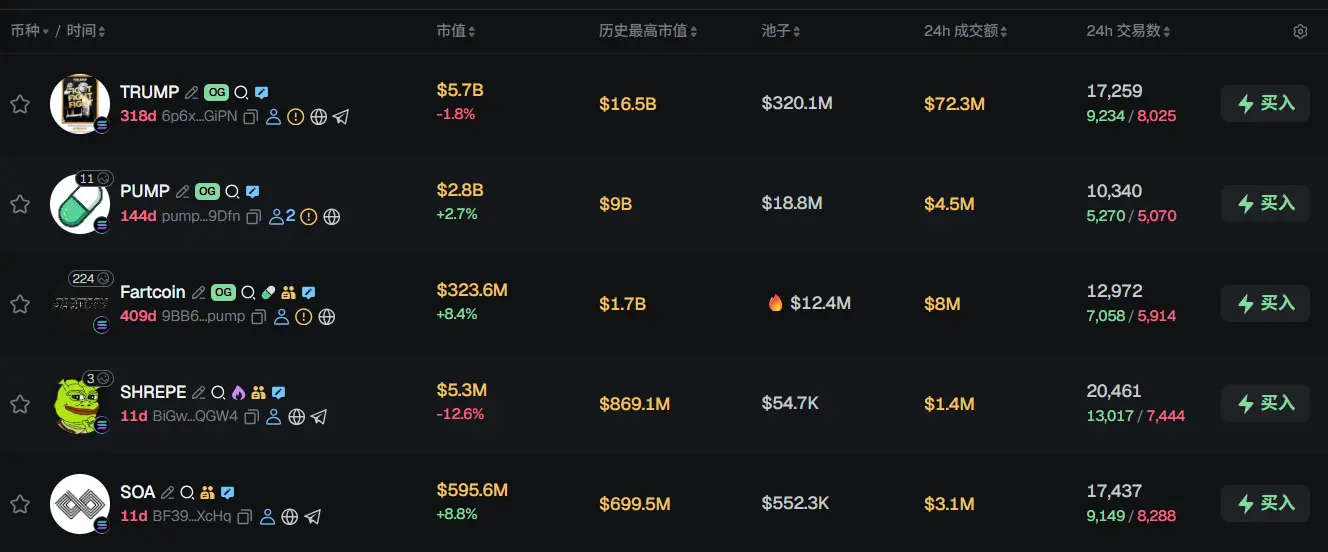
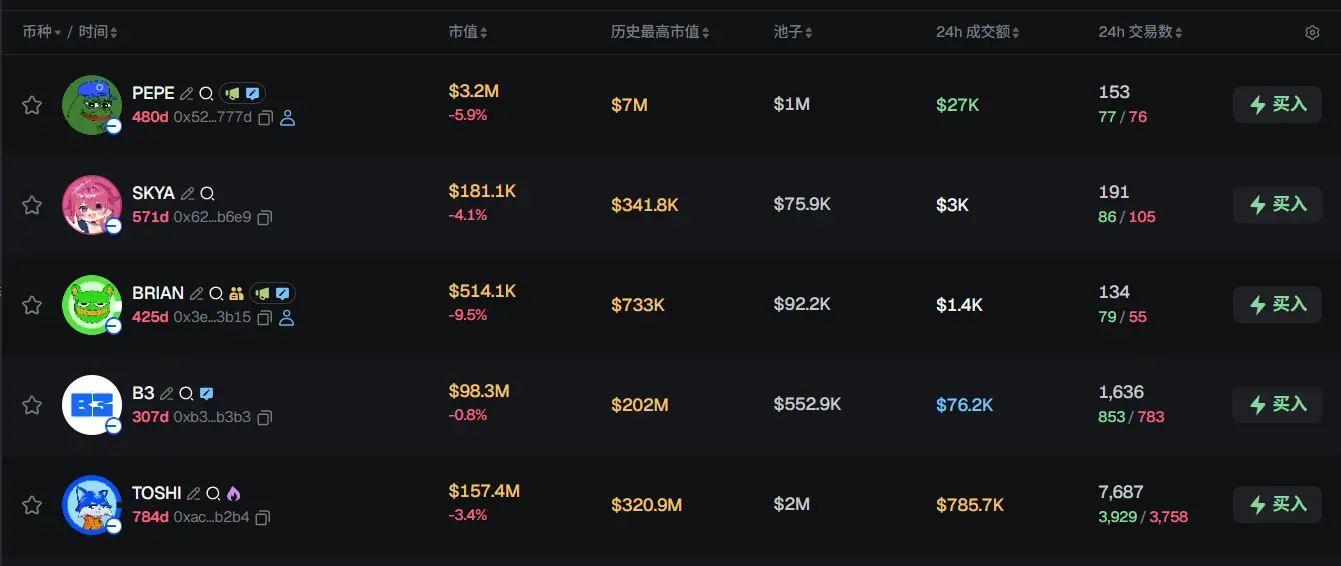
According to meme token tracking and analysis platform GMGN, as of December 2, 09:00,
The top five popular tokens on ETH in the past 24 hours are: SHIB, LINK, PEPE, UNI, ONDO
The top five popular tokens on Solana in the past 24 hours are: TRUMP, PUMP, Fartcoin, SHREPE, SOA
The top five popular tokens on Base in the past 24 hours are: PEPE, SKYA, BRIAN, B3, TOSHI
What are some interesting articles worth reading in the past 24 hours?
In 3 days, Ethereum will welcome these significant changes
The Fusaka hard fork, scheduled to activate on December 3, 2025, is another major network upgrade for Ethereum following Pectra, marking an important step forward for this crypto giant towards scalability.
Fusaka is a combination of Fulu (execution layer) and Osaka (consensus layer). It represents another step for Ethereum towards a highly scalable, data-rich future, where Layer 2 Rollups can operate at lower costs and faster speeds.
This article will delve into the nine core EIP proposals of the Fusaka hard fork.
When Web3 meets d/acc: What can Crypto do in the era of technological acceleration?
If you followed the recent Devconnect conference held in Argentina, you may have noticed an intriguing signal:
Among the many technical agendas regarding Rollups, EIPs, and account abstraction, perhaps the most eye-catching was not a protocol upgrade, but a topic specifically set aside for an independent day—d/acc day.
d/acc, which looks like a code symbol abbreviation, is actually a new concept strongly advocated by Vitalik Buterin as early as 2023. This article will also take you deep into the thought process of d/acc and how Ethereum is accelerating the reshaping of its underlying narrative based on this.
Forbes 2026 interest rate forecast: Who decides the direction of the Federal Reserve?
Editor's note: As the market bets on a "new Federal Reserve chair + a new round of interest rate cuts" in 2026, the path of U.S. interest rates has once again become a main variable in global asset pricing.
CME futures indicate that the federal funds rate may drop to around 3% in 2026, below the current range of 3.75%-4%, with major cuts likely concentrated in the first half of the year. However, with inflation not yet fully returning to target and signs of weakening employment, the policy outlook remains full of uncertainty. Although the Trump administration is expected to appoint a new chair more inclined towards easing, the FOMC's operational mechanism dictates that the policy tone will still be dominated by economic data.
The New York Times published an article titled "Silicon Valley's Man in the White House Is Benefiting Himself and His Friends" on December 1, 2025, at 01:34 (UTC), pointing out conflicts of interest during David Sacks' tenure as the White House AI and Crypto Affairs Director. Subsequently, David Sacks tweeted that given the New York Times' apparent lack of intention to write an impartial report, he has hired the law firm Clare Locke, which specializes in defamation lawsuits, to handle the matter. Below is the full translation of the report:
In July of this year, senior technology official David Sacks of the Trump administration took the stage in a neoclassical auditorium just a few blocks from the White House, smiling broadly. He gathered government officials and Silicon Valley executives to participate in a forum on the booming artificial intelligence industry.
 Risk warning
 Risk warning