The New York Times: Exposing the Profit-Making Secrets of White House AI and Crypto Affairs Director David Sacks
 Core Viewpoint

 The New York Times revealed that David Sacks, while serving as the White House's AI and cryptocurrency policy director, was simultaneously involved in private tech investments, allegedly using his position to benefit himself and his friends, raising serious concerns about conflicts of interest.
Original Title: Silicon Valley's Man in the White House Is Benefiting Himself and His Friends
Original Authors: Cecilia Kang, Tripp Mickle, Ryan Mac, David Yaffe-Bellany, Theodore Schleifer, The New York Times
Original Translation: AididiaoJP, Foresight News
The New York Times published "Silicon Valley's Man in the White House Is Benefiting Himself and His Friends" on December 1, 2025, at 01:34 (UTC), which pointed out that David Sacks, during his tenure as the White House Director of Artificial Intelligence and Cryptocurrency, faced conflicts of interest. Subsequently, David Sacks tweeted that given The New York Times' apparent unwillingness to write an impartial report, he had hired the Clare Locke law firm, which specializes in defamation lawsuits, to handle the matter. Below is the full translation of the report:
In July this year, senior technology official David Sacks of the Trump administration took the stage in a neoclassical auditorium just a few blocks from the White House, smiling broadly. He gathered government officials and Silicon Valley executives to participate in a forum on the booming artificial intelligence industry.
The main guest of the forum was President Trump, who announced an "Artificial Intelligence Action Plan" partially drafted by veteran venture capitalist David Sacks. In a nearly hour-long speech, Trump declared that artificial intelligence is "one of the most important technological revolutions in world history." He then signed an executive order aimed at accelerating the development of the industry.
Among the authoritative audience present, nearly everyone, including the CEOs of chip manufacturers Nvidia and AMD, as well as David Sacks' friends, colleagues, and business partners from the tech industry, benefited from Trump's decree.
One of the winners was David Sacks himself.
At 53 years old, David Sacks has held a highly advantageous "part-time" role in the federal government since January: influencing Silicon Valley policy in Washington while still serving as an investor in Silicon Valley. As the White House Director of Artificial Intelligence and Cryptocurrency, his actions included:
Providing his tech peers with astonishing access to White House connections and working to clear government obstacles for AI companies. This move brought Nvidia and other giants an estimated $200 billion in new sales.
His proposed AI policy recommendations sometimes conflicted with national security advice, raising concerns among some White House colleagues and prompting questions about his priorities.
Creating conditions for personal profit. According to an analysis of his financial disclosure documents by The New York Times, he holds 708 tech investments, of which at least 449 are related to the AI field, and these investments may directly or indirectly benefit from the policies he helped shape.
The New York Times found that although many companies self-promote as AI firms, provide AI services, or have "AI" in their names, in their public disclosure materials, 438 tech investments were classified as software or hardware companies.
David Sacks also leveraged his government position to boost the visibility of his weekly podcast "All-In" and expand related business.
To illustrate the ethical complexities and intertwined interests David Sacks faces, the AI summit in July serves as a typical example. David Sacks initially planned for the forum to be hosted by the "All-In" podcast he co-hosts with other tech investors. A proposal obtained by The New York Times showed that "All-In" had suggested to potential sponsors that each pay $1 million to participate in private receptions and other activities during the summit, aimed at "bringing together President Donald Trump and top AI innovators."
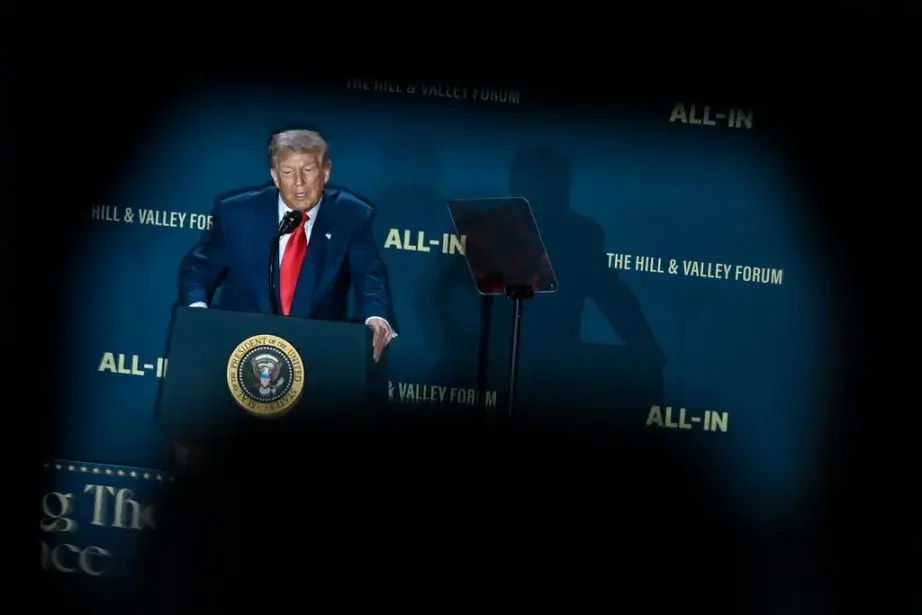
President Trump speaking at an AI summit in Washington in July, co-hosted by the tech podcast "All-In" and the tech conference "Hill & Valley Forum." Photo credit: Kenny Holston/The New York Times
According to two insiders, this plan raised concerns among some officials, leading White House Chief of Staff Susie Wiles to intervene and prevent "All-In" from being the sole host of the forum.
Former Trump advisor and Silicon Valley billionaire critic Steve Bannon stated that David Sacks is a typical representative of ethical conflicts in this administration, asserting that "the tech bros have gone rogue."
"They are leading the White House down a path of destruction through this rising oligarchy," he said.
David Sacks' ability to serve in government as a private sector practitioner is due to his designation as a "special government employee," a title typically granted by the White House to experts providing short-term consulting to the government, and he serves in this role without compensation.
In March of this year, David Sacks received two ethical waivers from the White House, stating that he was in the process of or had sold most of his cryptocurrency and AI assets. The waivers indicated that his remaining investments "have not reached a level that could significantly affect his government service."
However, David Sacks stands out among "special government employees" precisely because he holds investments in hundreds of tech companies that may benefit from the policies he can influence. His publicly disclosed ethical filings based on self-reported information did not disclose the value of these remaining cryptocurrency and AI-related holdings, nor did they specify when he claimed to have divested assets, making it difficult for outsiders to assess whether his government position has resulted in net gains.
White House spokesperson Liz Houston stated that David Sacks has addressed potential conflicts of interest. She described his insights as "a valuable asset to President Trump's agenda of consolidating American tech dominance."
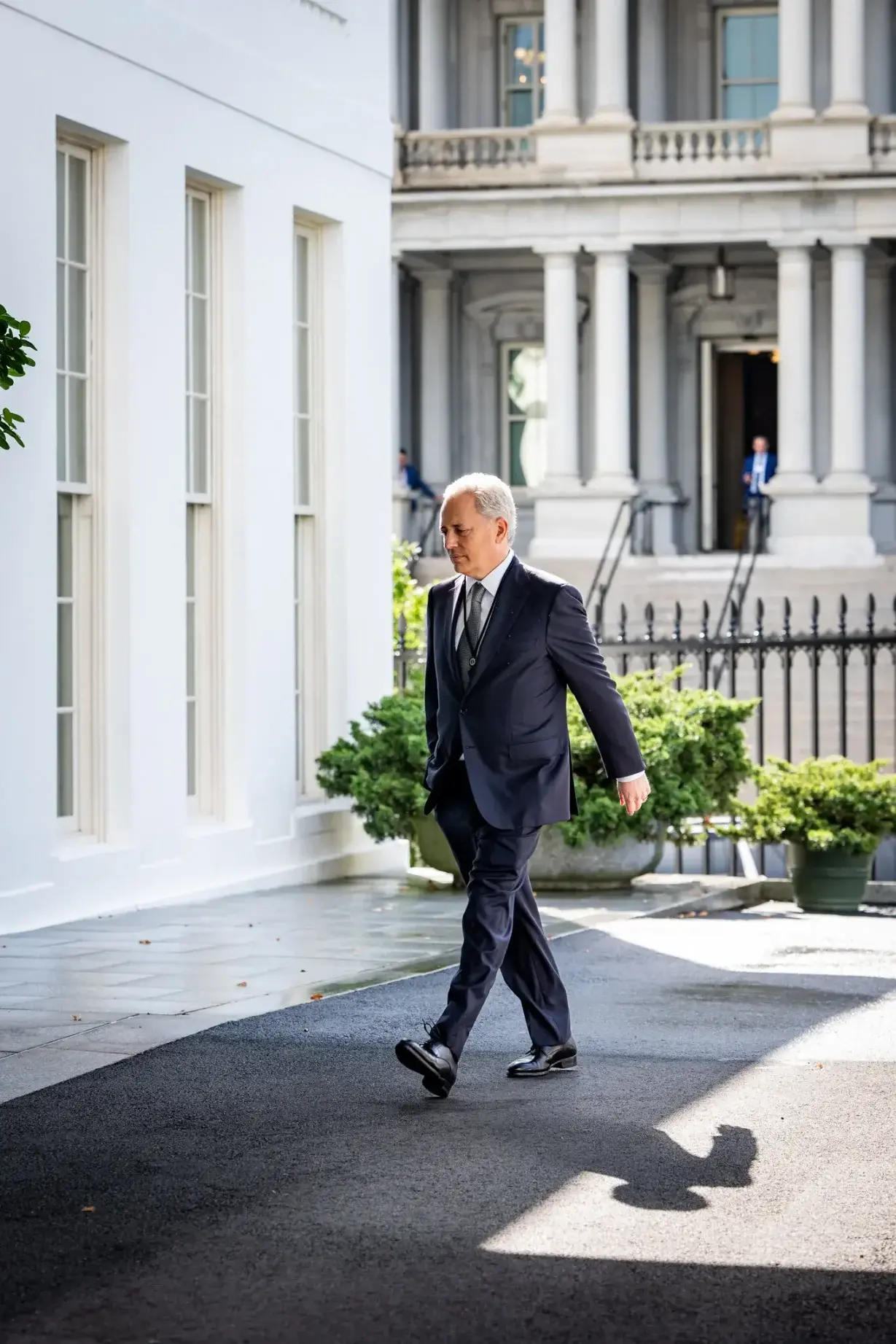
David Sacks, the White House Director of Artificial Intelligence and Cryptocurrency, 53, photographed in September. His disclosure documents show he holds hundreds of tech investments. Photo credit: Haiyun Jiang/The New York Times
David Sacks' spokesperson Jessica Hoffman stated, "The claim of a conflict of interest is inaccurate." She said David Sacks has complied with special government employee regulations, and the government ethics office determined that he needed to sell investments in certain types of AI companies, not all. She added that his government role has caused him losses rather than profits.
At a dinner hosted by the White House for tech executives in September, David Sacks expressed his honor in straddling both the tech and government worlds. "It is a tremendous honor to have a seat at the table in both of these worlds," he said.
"David's Mansion"
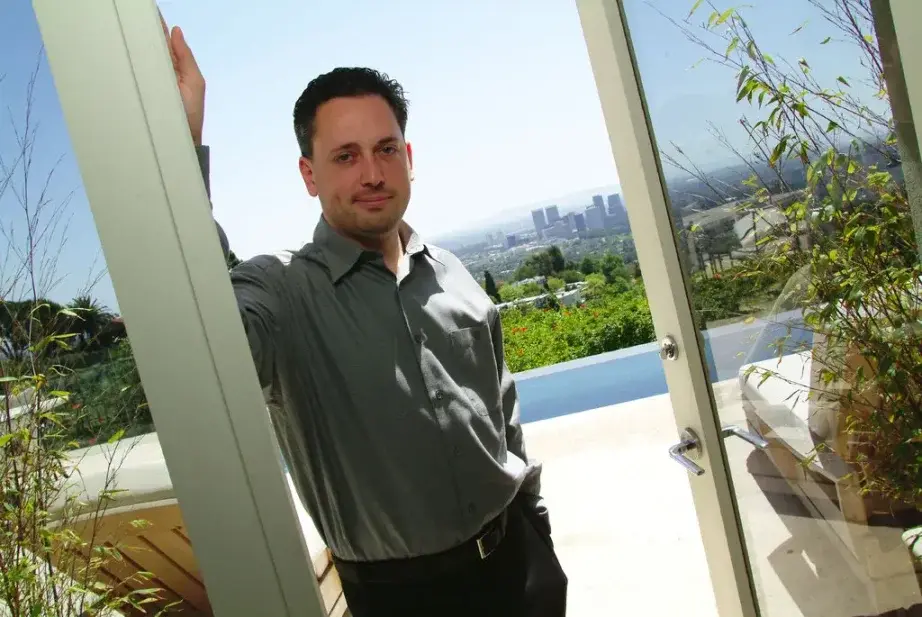
Mr. David Sacks, photographed in 2005, later became an early employee of PayPal. Over the years, he has become a fixture in Silicon Valley.
David Sacks' path to the White House began in Silicon Valley.
He arrived in this tech hotbed in 1990 as an undergraduate at Stanford University, where he met classmates including Peter Thiel. David Sacks later joined a startup with Thiel, which became the electronic payment company PayPal, alongside Elon Musk.
After eBay acquired PayPal for $1.5 billion in 2002, this group began investing in each other. David Sacks funded Musk's rocket company SpaceX and Thiel's co-founded data analytics company Palantir. In turn, Thiel supported David Sacks' business communication startup Yammer, which was sold to Microsoft for $1.2 billion in 2012.
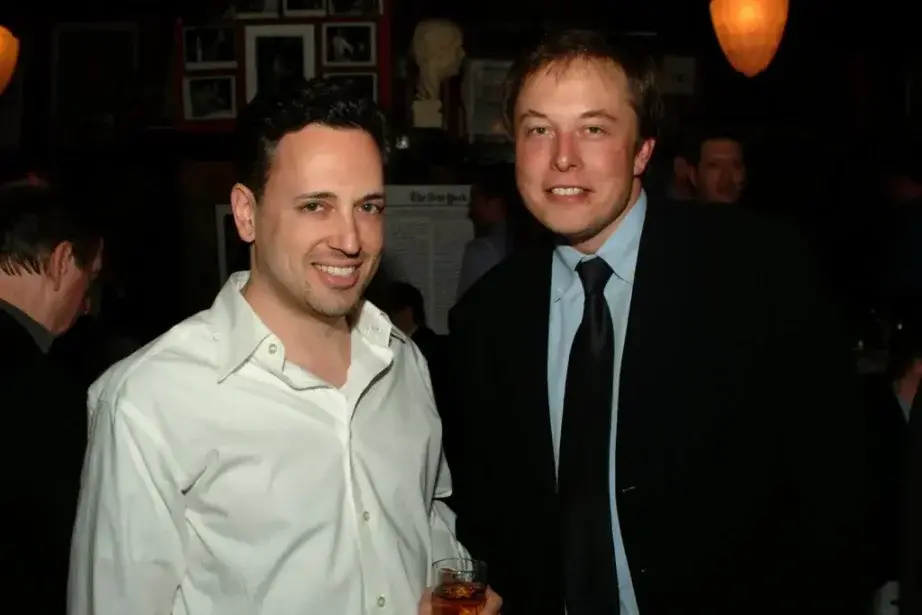
David Sacks with Elon Musk in New York in 2006. They worked together at PayPal and are friends. Photo credit: Christian Grattan/Patrick McMullan, via Getty Images
In 2017, David Sacks founded Craft Ventures, which has invested in hundreds of startups, including those founded by his friends. Three years later, he co-founded the "All-In" podcast with friends and investment partners Jason Calacanis, Chamath Palihapitiya, and David Friedberg.
In 2022, David Sacks became a significant figure in Republican politics when he donated $1 million to a super PAC supporting former tech investor JD Vance's Senate campaign, who had worked for Thiel.
Last year, David Sacks hosted a $12 million fundraising event for Trump at his mansion in San Francisco. The dinner left a deep impression on the presidential candidate.
"I love David's house so much," Trump said two weeks later on the "All-In" show, "that house is amazing."
After the election, the Trump team invited David Sacks to join the government. He agreed, provided he could continue working at Craft, which he was able to do.
"This is exactly what I wanted," David Sacks said in December regarding his dual role.
Alliance with Nvidia
David Sacks opened the doors of the White House to Silicon Valley leaders. One of the most notable visitors was Nvidia CEO Jensen Huang.
Three people familiar with the situation but not authorized to discuss the interactions stated that before David Sacks joined the government, the two did not know each other but established a close relationship this spring.
Both sides had their agendas; 62-year-old Huang sought government approval to sell Nvidia's hot AI chips globally, despite concerns that these components could enhance China's economy and military capabilities. Huang believed that restricting Nvidia chip exports would force Chinese companies to develop stronger alternatives. Promoting Nvidia technology would expand the AI industry, benefiting David Sacks and his friends' AI investments.
According to five people familiar with the discussions at the White House, during a White House meeting, David Sacks echoed Huang's view that dominating the global market with American technology is the best way to defeat China. He worked to repeal Biden-era restrictions on overseas sales by American chip companies like Nvidia and opposed regulations that could hinder foreign companies from procuring American chips for international data centers.
After lifting these restrictions, David Sacks flew to the Middle East in May to finalize an agreement to supply 500,000 American AI chips (primarily from Nvidia) to the United Arab Emirates. Insiders said the sheer volume raised alarms among some White House officials, who worried that China, as an ally of the UAE, would gain access to this technology.
However, this agreement was a significant victory for Nvidia. Analysts estimated that its chip sales could reach $200 billion.
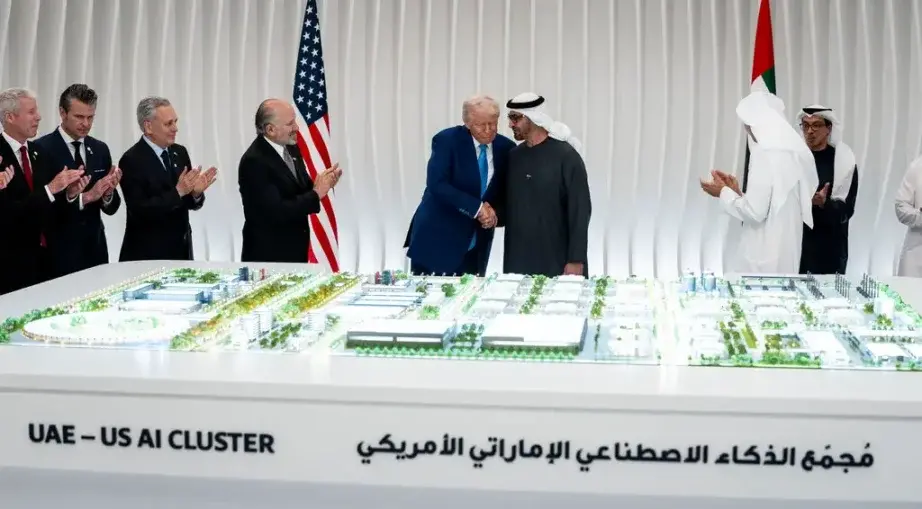
President Trump with UAE ruler Sheikh Mohammed bin Zayed Al Nahyan in May in Abu Dhabi. To Trump's immediate left is Commerce Secretary Howard Leutnick, followed by Mr. David Sacks. Photo credit: Doug Mills/The New York Times
Hoffman stated that David Sacks' thinking stemmed from discussions with multiple parties (not just Huang) and that he "wants the entire American tech industry to win." She indicated that his holdings did not profit from the UAE deal.
An Nvidia spokesperson, Milin Mangaldan, stated that Commerce Secretary Howard Leutnick is the primary contact for the company's AI chip overseas sales.
In the May "All-In" podcast, David Sacks praised the UAE deal: "I define victory as the entire world integrating around American AI companies," he stated.
There remains one obstacle to achieving this goal: lifting the U.S. ban on direct chip sales to China.
Four insiders stated that at the White House, David Sacks argued that the ban, by shifting chip sales to Nvidia's Chinese competitor Huawei, actually bolstered China's power.
In July, David Sacks and Huang presented this argument to Trump during a meeting in the Oval Office. Before the meeting concluded, Trump approved Nvidia's sales of chips to China.
David Sacks' Portfolio
The White House praised David Sacks for minimizing his financial conflicts of interest.
The ethical waivers David Sacks received stated that he and Craft Ventures had sold over $200 million in cryptocurrency positions (including Bitcoin investments) and were in the process of divesting shares in AI-related companies such as Meta, Amazon, and xAI.
The White House stated that David Sacks had begun or completed the sale of "over 99% of holdings that could raise conflict of interest concerns."
White House spokesperson Houston stated that before being able to divest conflicting interests or obtain waivers, David Sacks had been recused from participating in any matters that could affect his financial interests.
However, David Sacks' waivers do not fully reflect his wealth status and do not specify when he sold shares in companies like Meta and Amazon.
According to an analysis by The New York Times, it is clear that David Sacks retains 20 cryptocurrency investments and 449 AI-related investments directly or through Craft.
Among these AI-related investments, 11 were designated as "AI equities" in one waiver, while the remaining 438 were classified as software or hardware manufacturers, even though they promote AI products or services on their websites or have "AI" in their names (such as Resemble.AI and CrewAI). For example, the waiver classified Palantir as "software as a service," while the company's website claims to provide "AI-driven automated decision-making." 41 companies have "AI" in their names.
In one waiver, the White House stated that many software companies "currently do not substantively apply AI-related technologies in their core business," but added that "many of them are likely to apply them in the future."
The policies supported by David Sacks at the White House have paved the way for the prosperity of his investments.
The "AI Action Plan" promotes AI inventions such as domestically produced autonomous drones for the Pentagon. According to his disclosure documents, David Sacks holds shares in defense tech startups like Anduril, Firestorm Labs, and Swarm Aero, which produce drones and other products. In September, Anduril announced a $159 million contract with the U.S. Army to develop AI-equipped night vision goggles.
Anduril spokesperson Shannon Pryor stated that the company's partnership with the Army existed before the AI Action Plan and that the contract was awarded because its founder, Palmer Luckey, is "one of the world's top virtual reality headset designers." Hoffman stated that incorporating AI military applications into policy plans is "an obvious idea."
This spring, David Sacks also supported the "GENIUS Act," which regulates stablecoins (cryptocurrencies designed to maintain a constant price of $1). He promoted this legislation on CNBC and pushed for its passage in Congress.
After the bill passed in July, David Sacks called it "historic" and "significant" on "All-In," with the potential to greatly expand the stablecoin business.
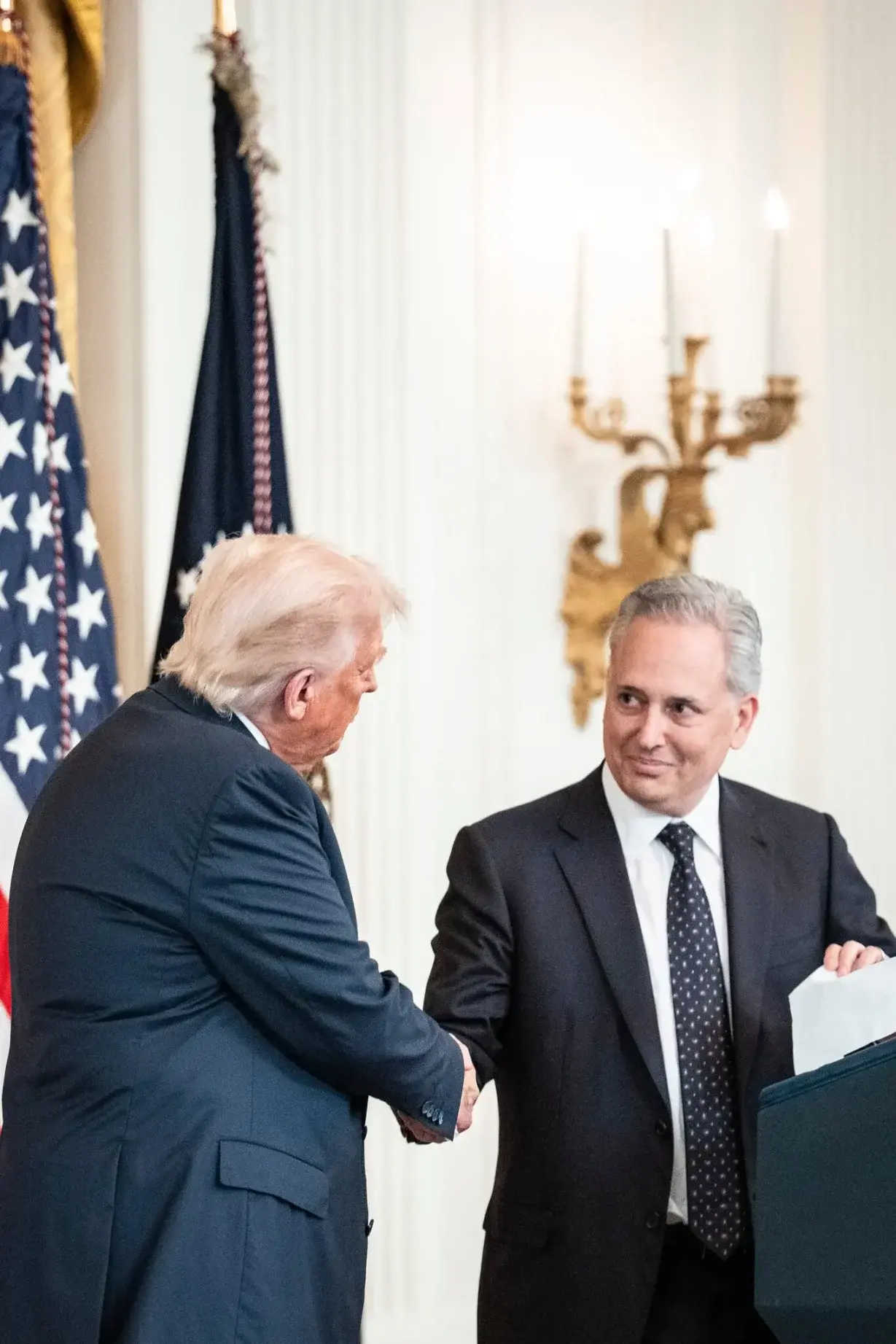
President Trump with David Sacks, as the president is about to sign the "GENIUS Act," which David Sacks called "significant." Photo credit: Haiyun Jiang/The New York Times
Craft's cryptocurrency investment BitGo collaborates with stablecoin issuers. BitGo celebrated the passage of the "GENIUS Act" on its website, seizing the opportunity to claim that its services "perfectly align" with the new guidelines. "The wait is over," the website stated.
In September, BitGo submitted an IPO application. According to financial documents, Craft holds a 7.8% stake, valued at over $130 million based on BitGo's 2023 valuation.
BitGo declined to comment. Hoffman stated that the passage of the "GENIUS Act" "did not bring specific benefits to BitGo."
Since David Sacks entered the White House, AI companies have continued to announce new investments from Craft. In July, Vultron, a startup developing AI software for government contractors, celebrated securing $22 million in new funding and touted the contribution of "White House AI advisor David Sacks' co-founded Craft Ventures."
Vultron CEO Mark Liu stated that this funding was finalized before David Sacks joined the government. "The announcement mentioned David because he is a celebrity in the AI field," he said.
David Sacks remains on the board of Glue, an AI-assisted chat platform startup he helped co-found. In October, Glue announced it had secured $20 million in new funding, including investments from Craft.
Hoffman stated that David Sacks had stepped down from other company boards before joining the Trump administration, but retained his position on Glue's board because "the system allows it." She indicated that this funding was completed last year. Glue did not respond to requests for comment.
Advancements of the "All-In" Podcast
In a March episode of "All-In," hosts Friedberg and Palihapitiya stood outside the East Wing of the White House.
Palihapitiya said they had just "wandered around" the White House, and the episode included photos of them walking through paneled rooms and meeting David Sacks in the porch between the East and West Wings.
The podcast hosts then interviewed Treasury Secretary Scott Bessen about economic policy. Days later, they returned to the White House for a nearly two-hour interview with Leutnick. Two months later, they interviewed the Secretary of Agriculture and the Secretary of the Interior. In September, "All-In" released a video of a private tour of the Oval Office with Trump.
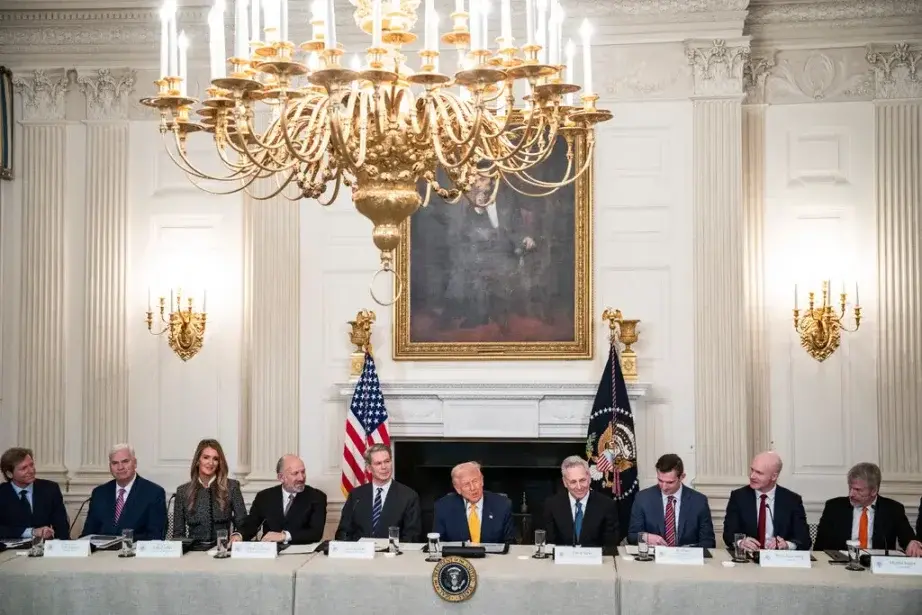
David Sacks sitting next to President Trump during the March White House digital assets summit. Since mid-2024, Trump has appeared on the "All-In" podcast three times. Photo credit: Haiyun Jiang for The New York Times
David Sacks' government work has boosted the podcast's visibility, with monthly downloads reaching 6 million. Based on its $7,500 ticket price and public attendance estimates, ticket sales for its annual conference in Los Angeles this year were about $21 million, up from $15 million last year. In June, the podcast launched a $1,200 "All-In" branded tequila.
Hoffman stated that David Sacks has given up AI and cryptocurrency-related income (such as sponsorship fees) but can participate in the revenue sharing from tequila and event ticket sales. Podcast CEO Jon Hale did not respond to requests for comment.
David Sacks' personal business and policy work intersected at the Washington AI event in July, where he designated "All-In" as the organizer.
However, two insiders stated that White House Chief of Staff Wiles was reluctant to have the government seen as endorsing the "All-In" brand. They said she requested additional co-hosts. Hoffman stated that David Sacks reached out to the organizers of the annual tech and government officials meeting "Hill and Valley Forum."
Visa and the New York Stock Exchange sponsored the AI summit, but the organizers declined to disclose the sponsorship amount. Hoffman stated that "All-In" incurred losses in hosting the event and "did not hold a VIP reception." The NYSE declined to comment, and Visa did not respond to requests for comment.
At the event's opening, David Sacks described his White House experience as "incredible" and praised the government's work in AI and cryptocurrency. He then handed over hosting duties to his "All-In" partner, who interviewed Nvidia's Huang and White House officials on stage.
In his keynote speech, Trump praised David Sacks as "outstanding," then signed an executive order to accelerate data center construction and AI system exports.
He then handed the presidential signing pen to David Sacks.
Recommended Reading:
Rewriting the 18-Year Script, U.S. Government Shutdown Ends = Bitcoin Price Will Soar?
$1 Billion Stablecoin Vanishes, What’s the Truth Behind the DeFi Chain Reaction?
MMT Short Squeeze Event Review: A Carefully Designed Money-Making Scheme
 Risk warning Risk warning