Morning Report | Strategy did not increase its Bitcoin holdings last week; Metaplanet approved the issuance of dividend preferred shares; Ghana passed the cryptocurrency legalization bill

 Overview of Important Market Events on December 22
整理:ChainCatcher
Important News:
- Bloomberg: Hong Kong Plans to Introduce New Regulations for Insurance Companies on Crypto Assets and Infrastructure Investments
- DWF Labs Partner: First Physical Gold Transaction Completed, Plans to Enter RWA Market
- Guangzhou's 14th Five-Year Plan Suggestions: Accelerate Construction of a Financial Strong City, Expand Digital RMB Application Scenarios
- Japan's Largest Bitcoin Holder Metaplanet Approves Issuance of Dividend Preferred Shares
- Hyperliquid Clarifies False Accusations: Platform Status is Transparent and Verifiable, Will Gradually Decentralize and Eventually Open Source
- Market News: Strategy Did Not Increase Bitcoin Holdings Last Week
- Bloomberg: Ghana Passes Cryptocurrency Legalization Bill
What Important Events Happened in the Last 24 Hours?
DWF Labs Partner: First Physical Gold Transaction Completed, Plans to Enter RWA Market
According to ChainCatcher, DWF Labs partner Andrei Grachev announced that DWF Labs has just completed its first physical gold transaction. This was a test transaction involving a 25-kilogram gold bar, and everything went smoothly. DWF Labs is expanding its business and plans to trade physical silver, platinum, and cotton in the future, with a vision to occupy a significant share in the RWA market.
CoinShares: Last Week's Outflow from Digital Asset Investment Products Was $952 Million, the First Outflow in Four Weeks
ChainCatcher reports that CoinShares released its latest weekly report indicating that due to the delayed implementation of the U.S. Transparency Act, prolonged regulatory uncertainty, and concerns over whale sell-offs, digital asset investment products experienced an outflow of $952 million, marking the first outflow in four weeks. The outflow was almost entirely concentrated in the U.S., amounting to $990 million, partially offset by inflows from Canada and Germany.
Ethereum saw an outflow of $555 million, Bitcoin an outflow of $460 million, while Solana and XRP continued to attract inflows, indicating that investors are selectively supporting Ethereum.
ChainCatcher reports that Hyperliquid officially clarified a recent article that made false accusations against it, claiming that Hyperliquid had issues with solvency, integrity, and transparency. The responses to the 10 specific accusations are as follows:
System under-collateralized by $362 million: False, the author of the article ignored HyperEVM USDC (running parallel to the Arbitrum bridge), with the current total USDC amount being $4.351 billion.
Manipulating trading volume through TestnetSetYesterdayUserVlm: False, this is only a testnet feature and cannot be called on the mainnet.
Certain users have privileges, such as fee waivers or manipulation affecting airdrops: False, all fees, balances, and transactions are visible on-chain, with no distortion mechanisms.
CoreWriter "God Mode" can mint, transfer funds, etc.: False, this is a way to send HyperCore operations to HyperEVM smart contracts, with no described privileges.
Governance can freeze the chain with no revocation function: Misunderstanding, freezing is used for network upgrades, similar to hard forks on other chains. During the POPCAT event in November 2025, L1 was not frozen, only the Arbitrum bridge was automatically locked as a security measure.
A single private key can instantly set oracle prices: Misunderstanding, the HIP-3 oracle is configured by the deployer and can use MPC, etc. The perpetual contracts operated by validators use a weighted median price with no time delay to ensure security.
Eight undisclosed addresses control all transaction submissions: False, some transactions have been sent directly by validators, and future upgrades will include MEV and anti-censorship mechanisms.
Liquidation cartel has an unfair advantage: Misunderstanding, only HLP can back liquidations, and deposits are permissionless, with most liquidations processed through the order book.
Hidden lending protocols involving over $1 million: False, portfolio margin, lending, and HLP are publicly announced pre-alpha versions with documentation on file.
ModifyNonCirculatingSupply can change token supply: False, HIP-1 token supply is fixed, and this function is only for display purposes, not affecting execution.
Bloomberg: Ghana Passes Cryptocurrency Legalization Bill
ChainCatcher reports that according to Bloomberg, Ghana's parliament has approved a cryptocurrency legalization bill aimed at addressing the lack of regulation amid the expanding use of cryptocurrencies in the country.
According to Bank of Ghana Governor Johnson Asiamah, the newly passed Virtual Asset Service Providers Act will facilitate the licensing of crypto platforms and the regulation of related activities. Previously, the Governor of the Bank of Ghana stated that cryptocurrency regulatory legislation would be introduced by the end of 2025.
Market News: Strategy Did Not Increase Bitcoin Holdings Last Week
ChainCatcher reports that according to market news, Strategy did not increase its Bitcoin holdings during the period from December 15 to December 21.
However, Strategy increased its USD reserves by $748 million, now holding $2.19 billion and 671,268 Bitcoins.
Japan's Largest Bitcoin Holder Metaplanet Approves Issuance of Dividend Preferred Shares
ChainCatcher reports that Japan's largest corporate Bitcoin holder Metaplanet approved a comprehensive reform of its capital structure on Monday, allowing it to raise funds from institutional investors by issuing dividend preferred shares. The approved proposal includes reclassifying capital reserves, doubling the authorized number of Class A and Class B preferred shares, and modifying the dividend structure to introduce floating and regular dividends.
Class A preferred shares will adopt a monthly floating dividend mechanism, while Class B preferred shares will provide quarterly dividends and be open to international institutional investors. It is reported that Metaplanet currently holds approximately 30,823 Bitcoins, valued at $2.75 billion, making it the largest corporate Bitcoin holder in Asia. The company also announced plans to trade in the U.S. over-the-counter market through American Depositary Receipts, further expanding its global market layout.
Gold-Silver Ratio Set to Break Near Five-Year Low, Spot Silver's Surge Outpaces Gold
ChainCatcher reports that according to market data, the gold-silver ratio is set to break near a five-year low, currently reported at 60.027.
Despite gold prices recently reaching historic highs, silver prices have also reached new highs with a larger increase. Today, spot gold first surpassed $4,400 per ounce, up nearly 68% year-to-date, while spot silver first surpassed $69 per ounce, up nearly 139% year-to-date.
Aave Founder: New ARFC Proposal Vote is Completely Legal and Complies with Governance Framework
ChainCatcher reports that Aave founder Stani.eth stated that tomorrow's vote on the "Transfer of Brand Asset Control to Token Holders" ARFC proposal is completely legal. Discussions have taken place over the past five days, and a timeline for the ARFC proposal has been established, with the snapshot also meeting governance framework requirements. Voting is the best way to resolve issues and is the ultimate path for governance.
The leading lending protocol Aave is currently embroiled in a public relations whirlpool, with its community recently engaged in intense debates over revenue distribution mechanisms and brand ownership. The price of AAVE has dropped 8.9% in the past 24 hours, currently reported at $161.
Previously reported, the Aave community will open voting on the "Transfer of Brand Asset Control to Token Holders" ARFC proposal on Snapshot tomorrow at 10:40, with voting lasting until December 26. The proposal includes clarifying the ownership and usage rights of Aave brand assets and intellectual property (domain names, social accounts, naming rights, etc.) and granting DAO control over these.
Victory Securities Implements "No Buy" Restrictions on Virtual Asset Accounts from "Mainland China" IP Addresses
ChainCatcher reports that according to the Hong Kong Economic Journal, Victory Securities has notified clients that starting December 19, it will implement "no buy" restrictions on virtual asset accounts identified by the system as coming from "Mainland China" IP addresses. Sources indicate that this is in response to recent measures by the mainland to strengthen regulation of virtual asset trading.
Dalio: Bitcoin Unlikely to Be Held in Large Quantities by Central Banks and Many Institutions
ChainCatcher reports that Ray Dalio, founder of Bridgewater Associates, stated in a podcast with Nikhil Kamath that due to key issues such as transaction transparency and the risk of Bitcoin being cracked, it is unlikely that Bitcoin will be held in large quantities by central banks and many other institutions.
Guangzhou's 14th Five-Year Plan Suggestions: Accelerate Construction of a Financial Strong City, Expand Digital RMB Application Scenarios
ChainCatcher reports that the Guangzhou Municipal Committee of the Communist Party of China has released suggestions for formulating the 14th Five-Year Plan for the national economy and social development of Guangzhou. Among them, it mentions accelerating the construction of a financial strong city. Building a modern financial service system that is compatible with the core engine functions of the Greater Bay Area and has a higher level of internationalization.
Increase the intensity of reforms in the financial sector, build a complete chain of technology financial service systems, promote effective connections between green finance and transitional finance, improve the "toolbox" of financial support for small and micro enterprises, build a provincial pension finance demonstration model, and expand digital RMB application scenarios. (Jin Shi)
People's Bank of China Releases Notice on Implementation of One-Time Credit Repair Policy
ChainCatcher reports that the People's Bank of China has released a notice regarding the implementation of a one-time credit repair policy. To actively respond to the subsequent impacts of the COVID-19 pandemic and support individuals with damaged credit who are actively repaying to efficiently and conveniently rebuild their credit, thereby aiding the sustained recovery of the economy, it has decided to implement a one-time credit repair policy.
For personal overdue information with a single amount not exceeding 10,000 RMB during the period from January 1, 2020, to December 31, 2025, if the individual fully repays the overdue debt by March 31, 2026 (inclusive), the financial credit information database will not display the relevant overdue information. Among them:
If the individual fully repays the overdue debt by November 30, 2025 (inclusive), the financial credit information database will not display the relevant overdue information starting from January 1, 2026; if the individual fully repays the overdue debt between December 1, 2025, and March 31, 2026, the financial credit information database will not display the relevant overdue information by the end of the following month.
The Credit Reporting Center of the People's Bank of China is responsible for organizing the unified technical processing of eligible overdue information, without the need for individual applications.
Michael Saylor: If Strategy Accumulates 5% of Total Bitcoin Supply, Price Will Rise to $1 Million
ChainCatcher reports that Strategy founder Michael Saylor stated in an interview, "If Strategy can accumulate 5% of the total Bitcoin supply, the price of Bitcoin will rise to $1 million; if it reaches 7%, each Bitcoin will be $10 million. Strategy can be understood as accelerating the empowerment of the entire Bitcoin network."
Yesterday's report indicated that Michael Saylor released Bitcoin Tracker information again, possibly hinting at another BTC accumulation.
ChainCatcher reports that the Hong Kong Insurance Authority has proposed new regulations aimed at guiding insurance funds into the crypto asset and infrastructure sectors. According to a presentation document dated December 4, the regulatory body plans to impose a 100% risk capital requirement on crypto assets, while the risk capital requirement for stablecoin investments will depend on the fiat currency to which the stablecoin is pegged.
The Hong Kong Insurance Authority stated that it has initiated a review of the risk capital system this year, with the primary goal of supporting the development of the insurance industry and the broader economy. The proposal is expected to undergo public consultation from February to April next year, followed by submission for legislation.
Additionally, the new regulations will also involve incentives for infrastructure investments, proposing capital benefits for investments in infrastructure projects linked to Hong Kong, Mainland China, or those pegged to Hong Kong (such as the development of new towns in the Northern Metropolis), to support the local infrastructure construction plans of the Special Administrative Region government. As of 2024, the total premium income of the Hong Kong insurance industry is approximately HKD 635 billion.
Coinbase CEO: Predictive Markets Should Be Regulated by CFTC
ChainCatcher reports that Coinbase CEO Brian Armstrong stated early in the morning that predictive markets should be regulated by the U.S. Commodity Futures Trading Commission (CFTC), and any state government claiming otherwise is hindering Americans from using tools that enhance their competitiveness.
Last week, Coinbase filed a lawsuit regarding predictive market regulation issues against Michigan, Illinois, and Connecticut.
Meme Popularity Rankings
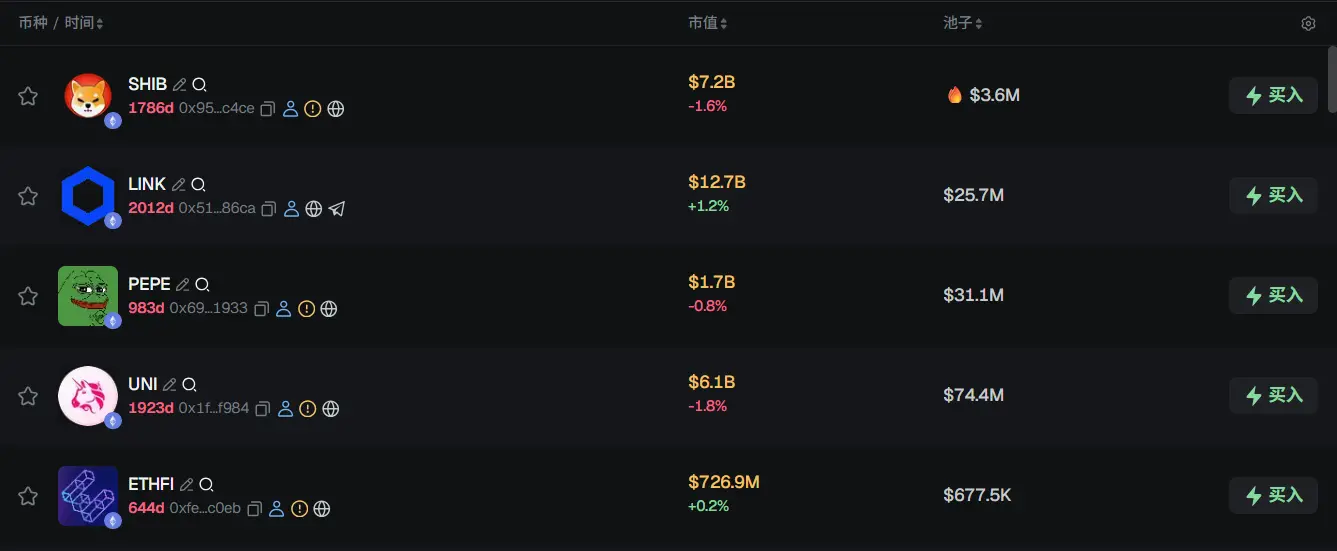
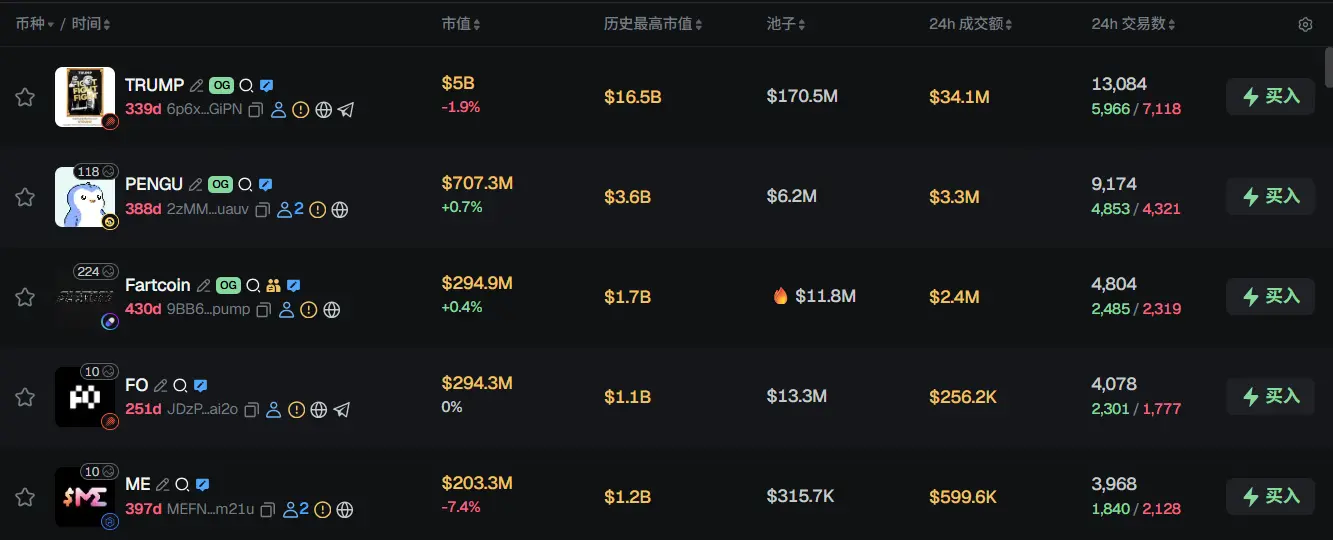
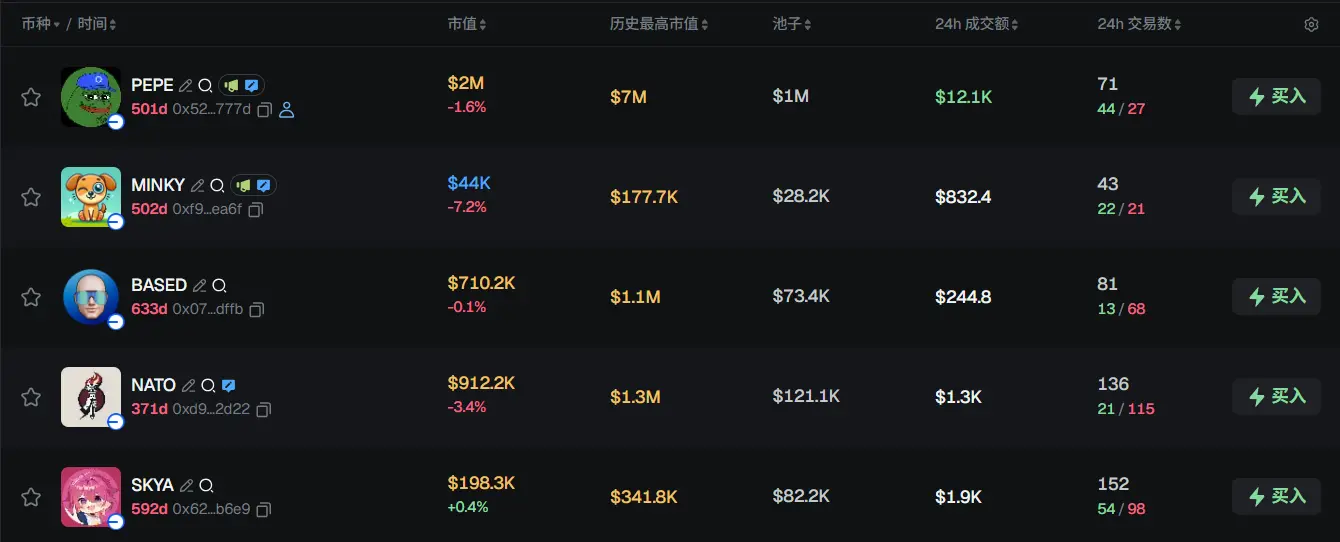
According to the meme token tracking and analysis platform GMGN, as of December 23, 09:00,
The top five popular tokens in ETH over the past 24 hours are: SHIB, LINK, PEPE, UNI, ETHFI
The top five popular tokens in Solana over the past 24 hours are: TRUMP, PENGU, Fartcoin, FO, ME
The top five popular tokens in Base over the past 24 hours are: PEPE, MINKY, BASED, NATO, SKYA
What Exciting Articles Are Worth Reading in the Last 24 Hours?
2025 Cryptocurrency Market Chronicles: I Am Not a Believer, I Am a Gambler
Setting aside the top-tier exchanges and project teams, the winners of this round of the crypto market are mostly professional traders, airdrop hunters, and Bitcoin holders, while many small retail investors are trading at a loss in the secondary market.
As another round of hot narratives is unearthed, some people exit at high points to enjoy life, flaunting their luxury cars and watches, loudly proclaiming "thank u crypto"; while more people have long been unable to keep up with the rhythm, remaining stuck in this prolonged season.
Reviewing Major Institutions' Bitcoin Price Predictions for 2025: Almost All Failed
From the end of 2024 to the beginning of 2025, the crypto market had a highly consistent narrative for the new cycle: the aftermath of the halving, ETF and institutional diffusion, and more favorable regulatory expectations were widely seen as the core fuel driving BTC and overall risk assets upward. Against this backdrop, several institutions and well-known figures provided aggressive annual target prices (especially in the $200,000 - $250,000 range), while others focused on "industry structural changes," such as the expansion of compliant product supply, further mainstreaming of exchanges and crypto companies, and continuous growth in RWA/stablecoin sectors.
Looking back at the actual trends of 2025, price predictions generally overestimated the intensity and sustainability of the rise, while judgments related to regulation and industry structure were relatively easier to fulfill.
Catfish Effect? Stablecoins Are Not Really the Enemy of Bank Deposits
Editor's Note: Whether stablecoins will impact the banking system has been one of the core debates over the past few years. However, as data, research, and regulatory frameworks become clearer, the answer is becoming more rational: stablecoins have not triggered large-scale deposit outflows; rather, under the real constraints of "deposit stickiness," they have become a competitive force pushing banks to improve interest rates and efficiency.
This article reinterprets stablecoins from the perspective of banks. They may not be a threat but rather a catalyst forcing the financial system to renew itself.
Before formally starting this story, I need to clarify my position in this event.
I am an observer and analyst. During the explosive popularity of the Nofx project, I developed the nof0 project—both inspired by nof1. During the development process, I communicated with core members of Nofx, Tinkle and Zack, mainly focusing on technical implementation and open-source collaboration.
It should be clear: I have only had technical exchanges with the Nofx team, with no commercial cooperation; I have had no direct contact with the ChainOpera AI (COAI) team. In writing this article, I have tried to maintain an objective and neutral stance, with all analyses and judgments based on publicly available information, including GitHub records, social media statements, security reports, etc.
 Risk warning
 Risk warning