








Dialogue with OpenMind Founder: After receiving $20 million in investments from Pantera, Sequoia, and others, how far has the robot version of the "Android" system progressed?
 Core Viewpoint

 The decentralized Android concept of robots.
Guest: Jan Liphardt, Founder of OpenMind
Interview Organized by: momo, ChainCatcher
After decades of research and teaching at Stanford University and the University of California, Berkeley, Jan Liphardt, an associate professor of physics and bioengineering, keenly observed that a profound structural transformation is occurring in the field of robotics.
On one hand, robots are accelerating from laboratories and factories into real-world scenarios, but their "brains" remain fragmented and closed. Over 150 hardware manufacturers are fighting their own battles, and mainstream software is still stuck at the mechanical control level, making it difficult for systems to collaborate, let alone achieve natural interaction between machines and humans or value exchange between machines.
On the other hand, after more than a decade of development, blockchain technology, with its immutable ledger, decentralized governance, and micro-payment capabilities, has provided the infrastructural possibilities for identity recognition, trustworthy collaboration, and economic interaction between machines.
It is the intersection of these two trends that has given rise to Liphardt's core idea for founding OpenMind: to build an open and collaborative "operating system" for robots, akin to Android, enabling machines to possess cross-platform and cross-vendor social and collaborative capabilities, truly achieving thinking, learning, and cooperation.
In August 2025, this vision of OpenMind received a $20 million investment from several well-known institutions, including Pantera Capital, Sequoia China, and Coinbase Ventures.
With the completion of financing, the progress of OpenMind's core products and commercialization is accelerating. Its core open-source system OM1 has attracted thousands of developers worldwide, prioritizing technical integration with companies such as Yushu Technology, Zhiyuan Robotics, UBTECH, Yujian Technology, Yundong Technology, Accelerated Evolution, Zhujidi Power, and Zhongqing. Pilot projects are planned to gradually roll out in schools and home scenarios. The robotic dog built on OM1 has already acquired capabilities such as recognizing its owner, remembering items, and guarding the home. Additionally, OpenMind is about to launch an application store specifically for quadruped and humanoid robots, with the first application ready.
Recently, in an interview with ChainCatcher, Jan Liphardt elaborated on the motivations for entrepreneurship, technological pathways, and industry challenges, systematically analyzing the collaboration pain points in the robotics industry, the value of the open-source ecosystem, and the key role of decentralized protocols in achieving machine social collaboration.
Why do "robots" need a decentralized "Android"?
1. You have a profound background in bioengineering research and teaching at universities like Stanford. We are curious, when and what prompted you to start paying attention to blockchain and decentralized systems? How has this cross-disciplinary perspective reshaped your thinking about the future development of robotics technology, especially regarding intelligence and collaboration?
Jan Liphardt: We are indeed in a very special era where machines are gradually "awakening." I consider this from three perspectives:
First, artificial intelligence is inherently global. AI models do not care which country you are in. The speed of technological evolution is very fast, but establishing multinational regulatory and governance frameworks often takes years or even decades. Questions like "Who is responsible?" or "Does this robot belong to the U.S., China, or Japan?" leave us little time to ponder. The decentralized nature of blockchain helps lower barriers, making international governance of AI and robotics more timely and effective.
Second, AI is not inherently good or rule-abiding. We must establish new systems to permanently record "what is real" and "what is right," which requires immutable ledger technology.
Third, like humans, non-biological thinking machines will also use economic logic to allocate their time and resources. Therefore, we must start building payment systems and market mechanisms suitable for them now.
Looking back, we are particularly fortunate. Over the past 18 years, thousands of people around the world have quietly built robust, secure, immutable, and decentralized ledger systems. It is likely that blockchain will become the core technological foundation for the coexistence and collaboration of 8 billion humans and increasingly intelligent machines in the future.
2. OpenMind aims to build a decentralized "Android" system for robots. How did this grand vision initially come about? How did you make the decision to transition from a stable academic career to the uncertain path of entrepreneurship?
Jan Liphardt: Our idea is quite straightforward. Today, there are billions of smartphones from different manufacturers, all running Android. The future of robots will be similar, so we also need an "Android" for thinking machines.
As for moving from academia to entrepreneurship, my view is that life does not have absolute stability or security; each stage presents different opportunities and challenges. If you truly want to achieve something significant, you must use different combinations of tools at different times. Sometimes deep scientific research is needed, while other times a well-funded, agile team with a business mindset is required.
3. What do you think is the biggest pain point currently facing the robotics industry? Why are traditional robotic system solutions unable to solve these problems?
Jan Liphardt: In terms of hardware, the reliability of key components like dexterous hands remains a bottleneck. Imagine a mechanical hand with five fingers and 12 degrees of freedom that fails after operating for a hundred hours—what is its practical value? Of course, specific scenarios like logistics, transportation, defense, and surgery are maturing rapidly, but the industry is still exploring what the best entry point is for "general robots."
This field is currently very fragmented, with over 150 hardware companies working on humanoid robots or other forms of robots. Many of these companies dream of becoming the "iPhone of robots," controlling all aspects of hardware, software, cloud, data, and ecosystem. However, we believe that, like the smartphone industry, there will not be a single winner in general robotics; rather, many strong participants will emerge.
On the other hand, traditional ROS-like software focuses on mechanical tasks and navigation, but what will make robots smarter and more useful in the future is often their social and cognitive abilities.
Additionally, ROS cannot provide hardware identity identification, built-in economic guarantees (such as deposits, penalties, or automatic settlements), nor does it have a convenient and secure payment mechanism, making it difficult for machines to prove their work in the real world to the capital market or DeFi (for example, as real-world assets RWA or DePIN). In OpenMind's view, these capabilities are precisely the key to achieving safety and high autonomy for robots.
4. Timing is crucial for entrepreneurship. Do you believe that now is a key moment to push this vision forward? What technological maturities or market demand evolutions have contributed to this "timing"?
Jan Liphardt: Yes, we believe the time has come. Both robot hardware and software have crossed the "good enough" threshold in many application scenarios.
Amazon has deployed over a million robots in its warehouses, and Waymo's self-driving cars are seen everywhere on the streets of San Francisco. We expect that by 2026, the first batch of general robots will enter American households and start doing some useful tasks.
Of course, high-difficulty fine motor tasks, like pulling noodles or slicing roast duck, still pose challenges for humanoid robots. However, these are relatively marginal scenarios and should not hinder robots from entering homes, schools, hospitals, and office environments.
On the other hand, in the field of cryptographic technology, infrastructures such as stablecoins, Layer 2, and asset custody have matured enough to support reliable and efficient micro-payment settlements between machines. Our machine settlement protocol in collaboration with Circle is a practical validation in this direction.
Collaborating with Chinese Robot Manufacturers for Multi-Scenario Implementation
5. According to official information, OpenMind's current core products include the open-source robot operating system OM1 and the decentralized network FABRIC protocol. What other important components are there? Can you systematically introduce the capabilities and divisions of the core products, and how they collaborate?
Jan Liphardt: In simple terms, the goal of OM1 is to make individual machines intelligent. FABRIC, on the other hand, is a global decentralized network primarily aimed at solving collaboration issues between machines and between humans and machines. For example, it allows robots to have their own identity identifiers, coordinate tasks safely with other machines or humans, and even support transactions of digital products between robots, such as certain robotic skill chips.
6. What is the current R&D progress of OM1? What capabilities need to be prioritized for breakthroughs next?
Jan Liphardt: Regarding the progress of OM1, there are several intuitive indicators. We have surpassed 2,500 stars on GitHub, while similar industry projects typically range from 30 to 80. We have over 300 active contributors, and in the past two weeks, about 7,500 independent developers have accessed our code repository.
In terms of implementation, OM1 has been adapted for various robot forms, including humanoid robots, bipedal robots, and robotic dogs. It has also been used to drive the world's first blockchain-governed robotic dog connected to a decentralized network.
Our current focus has two directions:
First, we are starting to build customized models specifically to address the concrete bottlenecks encountered in real-world deployments; second, we are improving robotic simulation tools to better fit the development needs of "social robots," rather than just serving physical manipulation. For example, current mainstream simulation environments like NVIDIA's Isaac Sim cannot simulate human voice interactions, which poses a significant barrier for social robots that need to converse with humans in environments filled with household noise, television sounds, children, and pets. We are investing efforts in these areas.
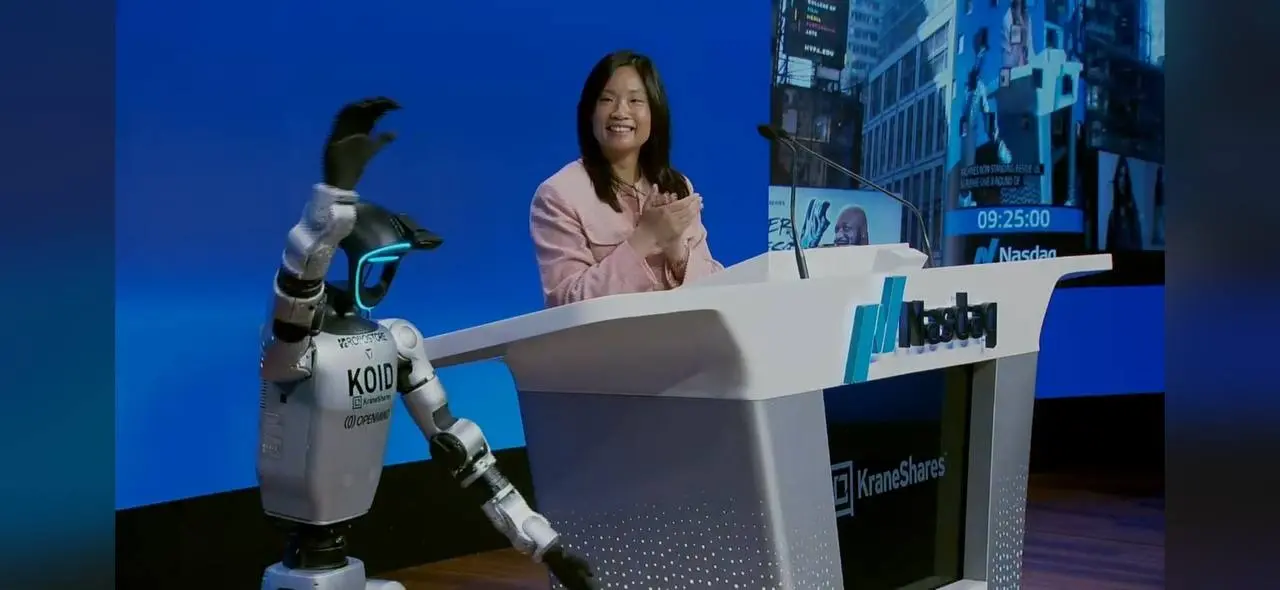
Robots equipped with OpenMind OM1 witness the launch of the first humanoid robot ETF, KraneShares KOID.
7. You have showcased robotic dogs based on the OpenMind system at offline events and on social media. Can you share what capabilities these robotic dogs currently possess? What advantages do they have compared to traditional system solutions?
Jan Liphardt: Our robotic dogs currently possess quite a few capabilities. They can recognize who their owner is, map the environment of the home, check their surroundings and remember the locations of items like keys and glasses, and even answer math questions and common queries. They also monitor their owner's status; for example, if someone falls to the ground and remains motionless, the robot will determine whether medical assistance is needed, and it can help safeguard home security.
We are basically adding new skills to it every week. Current home tests can generally run for 6 hours. The next important goal is to achieve 48 hours of continuous companionship, which means it needs to be able to recharge autonomously and learn to remain quiet at night, avoiding sudden singing, talking, or making noises that could disturb family members' rest.
8. We noticed that OpenMind is building a robot application store. Can you specifically introduce the vision and current progress of this application store?
Jan Liphardt: Yes, OpenMind is building an application store specifically for quadruped and humanoid robots. This allows users to download applications and skills for robots from a single platform, just like customizing phone functions through the Apple App Store or Google Play Store.
Last week, the first application was officially launched in the OpenMind application store. We are preparing marketing and developer education plans to attract thousands of developers worldwide to contribute new applications and skills, creating more value for users with quadruped and humanoid robots.
This application store is a "service layer" built on our core system, connecting developers with end users. It serves as an important platform for discovering, distributing, and commercializing robotic skills, aiming to accelerate the prosperity of the entire ecosystem.
9. What is the current status of product delivery for OpenMind? What commercial progress or representative partners do you have?
Jan Liphardt: Our cloud infrastructure is being rapidly adopted, and we are collaborating with several Chinese robot manufacturers to jointly design new products aimed at users in the U.S., Europe, and the Middle East.
For example, we have listed companies such as Yushu Technology, Zhiyuan Robotics, UBTECH, Yujian Technology, Yundong Technology, Accelerated Evolution, Zhujidi Power, and Zhongqing as our first batch of deeply integrated partners, planning to gradually roll out pilot projects in more schools and home scenarios in various regions.
By the first quarter of 2026, we expect to reach reference implementation agreements with these leading robot manufacturers to promote the large-scale application of the ecosystem.
10. How can ordinary developers, robotics enthusiasts, and general users participate in or use the OpenMind ecosystem? Are there any corresponding incentive programs?
Jan Liphardt: Anyone can participate; just visit our GitHub page. We are also focusing on building organic developer adoption through our Developer Alliance Program (which offers $250,000 in credits to OM1 contributors), which has attracted over 100 contributors and more than 10,000 users building on the platform.
Participation in the OpenMind ecosystem is very open. Any interested developer can start by visiting our GitHub homepage. At the same time, we launched the "Developer Alliance Program," which encourages contributions to OM1 through a total of $250,000 in credit incentives. Currently, this program has attracted over 100 contributors, and thousands of developers are building on our platform.
What are OpenMind's Differentiated Advantages?
11. What is the current competitive landscape in this field? What are OpenMind's most distinctive differentiated advantages compared to potential competitors?
Jan Liphardt: When comparing with similar solutions in the industry, our positioning and distinctions are as follows:
For example, Husarnet, similar to FABRIC, also achieves collaboration between ROS2 nodes through peer-to-peer VPN. However, we differ in providing complete end-to-end encryption, more refined localization and network management capabilities, and crucially, we leverage blockchain to achieve network effects, encrypted payments, and secure model deployment, while not being limited to the ROS2 ecosystem.
Looking at Viam, which is a modular cloud robot software platform, our focus is more on AI-native runtime and open-source technology stack, not just solving mechanical integration issues.
There are also research teams like Physical Intelligence that focus on foundational models for robots, concentrating on perception and operation. We clearly view this as a module that can be integrated into OM1 rather than direct competition. We emphasize openness and transparency, deployment orientation, and the ability to flexibly invoke capabilities from different sources at runtime.
Overall, our differentiation lies in becoming a neutral, modular cloud and coordination layer in the field of "embodied AI." We do not aim to compete with every emerging robotic application but rather provide an infrastructure that allows more hardware manufacturers, application developers, and researchers to access our technology stack. As the ecosystem expands, our models, tools, and data will form a positive feedback loop, and the prosperity of the ecosystem will reinforce our platform's value rather than dilute it.
12. What do you think is the most pressing challenge to overcome in the long journey of building a decentralized "Android" for robots?
Jan Liphardt: In the process of building a decentralized "Android" for robots, our current core challenges mainly focus on several technical aspects:
First, our evaluation system is still in a relatively early stage. Currently, it mainly relies on internally designed testing scenarios and uses a "large model as the judge" approach to determine whether robots truly understand instructions and whether their behavior is safe and reliable.
Second, the continuous adaptability after deployment is also a challenge. Each new home environment brings unexpected detail differences, such as lighting conditions, movies playing in the background, or specific tasks not covered in testing, all of which require robots to adapt quickly. Additionally, how to smoothly connect and switch between high-level decision-making and low-level motion control is another area we are focusing on.
In terms of functional testing, we adopt a phased approach. New features are first validated internally through scripted tasks, log playback, and evaluation frameworks; then tested on controlled real hardware; and finally opened to select partners for pilot testing. Feedback from partners is crucial, as the metrics and opinions they provide from real application scenarios will directly feed back into our model iterations. At the same time, the integration of different forms of robots also helps us verify the system's compatibility.
These challenges are all part of our advancement plan, and the team is gradually tackling them.
13. What is your ultimate vision for the robotics industry or human-machine collaboration? Can you paint a specific scenario? What role will crypto ultimately play in this?
Jan Liphardt: OpenMind's long-term vision is a "social model." In the coming months to years, we will gradually build a foundational model for human-machine interaction based on existing cloud infrastructure and data capabilities, with privacy protection designed at the core of the technical architecture from the outset.
These models can become the "default brains" for the robots developed by our partners in the future. We look forward to these groundbreaking social and cognitive abilities enabling robots to help people learn more efficiently, receive more personalized care, and accomplish more valuable work in schools, hospitals, homes, and workplaces.
14. On the road to the "machine economy," what do you see as the biggest opportunities and potential risks (such as ethics, regulation, etc.)?
Jan Liphardt: When it comes to the opportunities of the "machine economy," it is much like what we are familiar with in science fiction movies, where robots become trustworthy partners and assistants in life, with applications ranging from companionship at home to industrial production, almost limitless.
However, potential risks also exist, as these movies warn us. I sometimes find it incredible, for example, to see my 13-year-old child naturally asking a robotic dog math questions. This leads us to ponder: how can we ensure that this technology remains safe and benevolent?
At OpenMind, our answer is to ensure that the software running inside these machine brains is open and transparent, so that all humans can review, understand, and help fix issues when they arise.
 Risk warning Risk warning


Popular articles





