Before the $75,000 Gamma level, both bulls and bears are waiting for a signal
 Core Viewpoint

 The selling pressure is being digested, and the belief is still on the way.
Author: Glassnode
Compiled by: AididiaoJP, Foresight News
Bitcoin has rebounded to nearly $76,000, mainly benefiting from ETF fund inflows and a recovery in spot buying. Currently, short positions remain crowded, with funding rates continuing to be negative, while pressure in the options market has eased—these all indicate that the market environment is improving, but it is still too early to form a firm belief.
Key Points
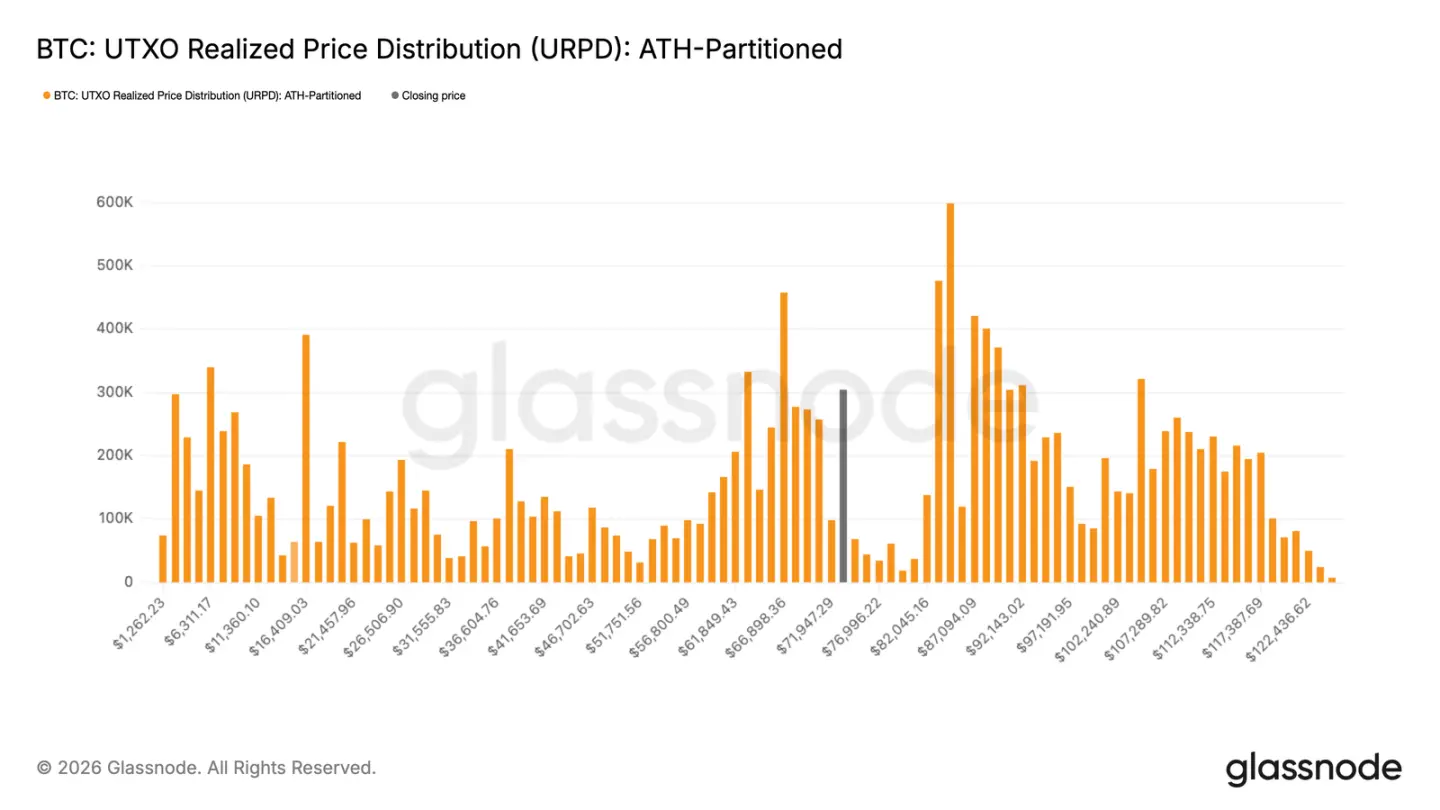
- Bitcoin has broken through $70,000, entering a "vacuum zone" between $72,000 and $82,000. According to the URPD indicator, there is almost no resistance on-chain until approaching the upper edge of $82,000, where decent selling pressure will be encountered.
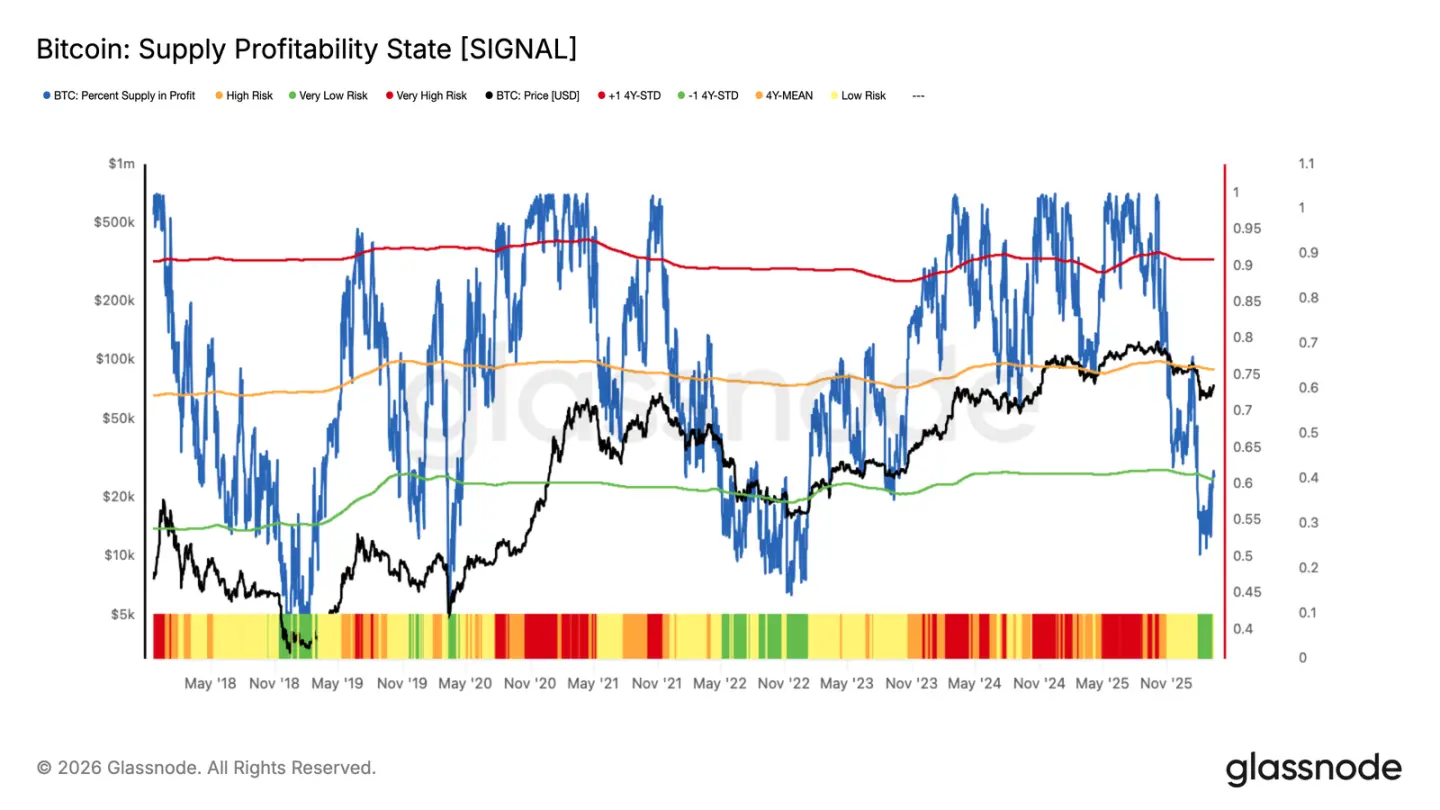
- The "profit supply ratio" has risen to around 60%. Historically, this level often corresponds to exhaustion after the first rebound from the cycle bottom. To confirm that a bull market has truly arrived, this indicator needs to stabilize above 75%.
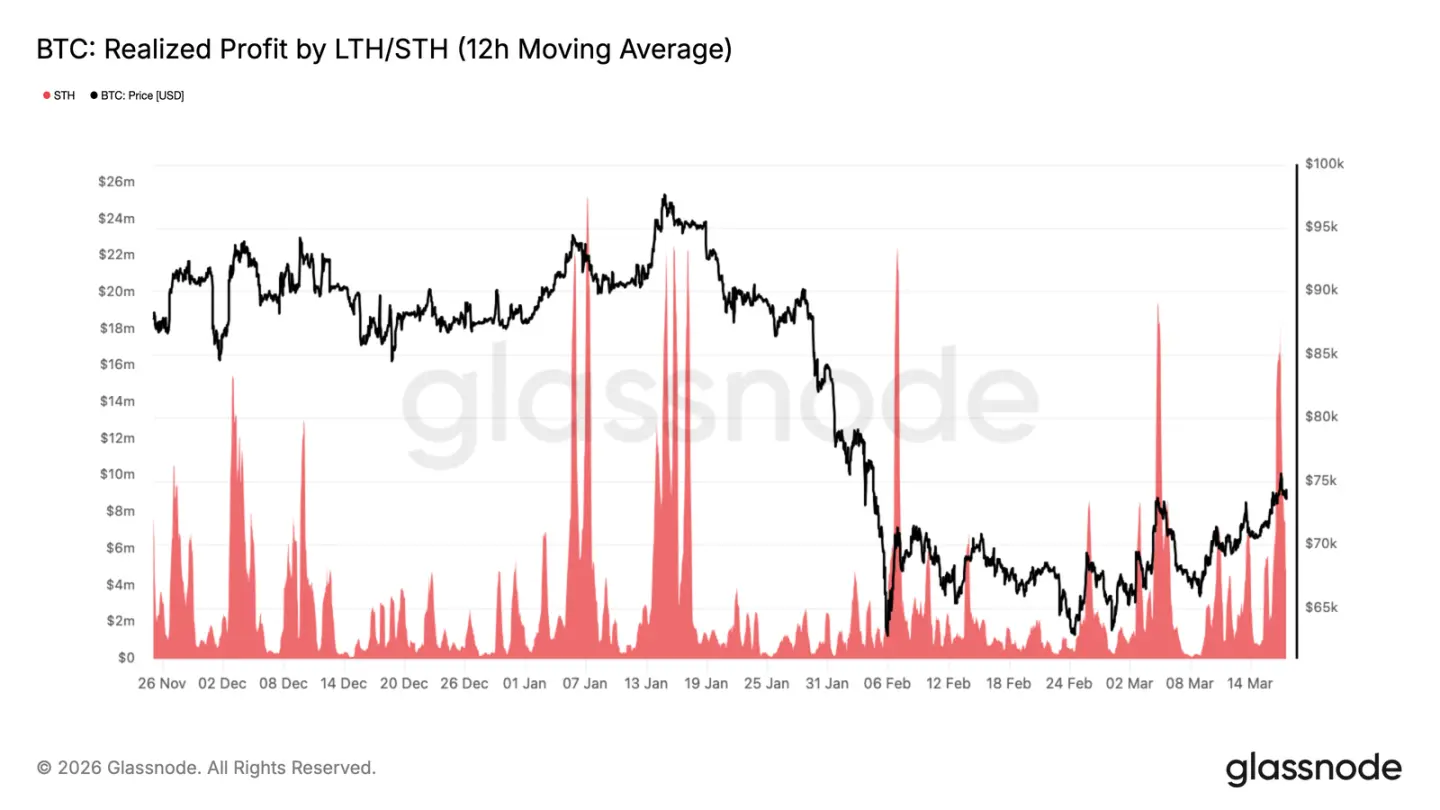
- As the price approaches $74,000, "short-term holders realizing profits" surged to $18.4 million per hour, mirroring the situation in February—short-term holders are continuously selling during the rise. The next key point is whether the market can absorb this selling pressure above $70,000, which is crucial for a potential rise to $78,000 to $82,000.
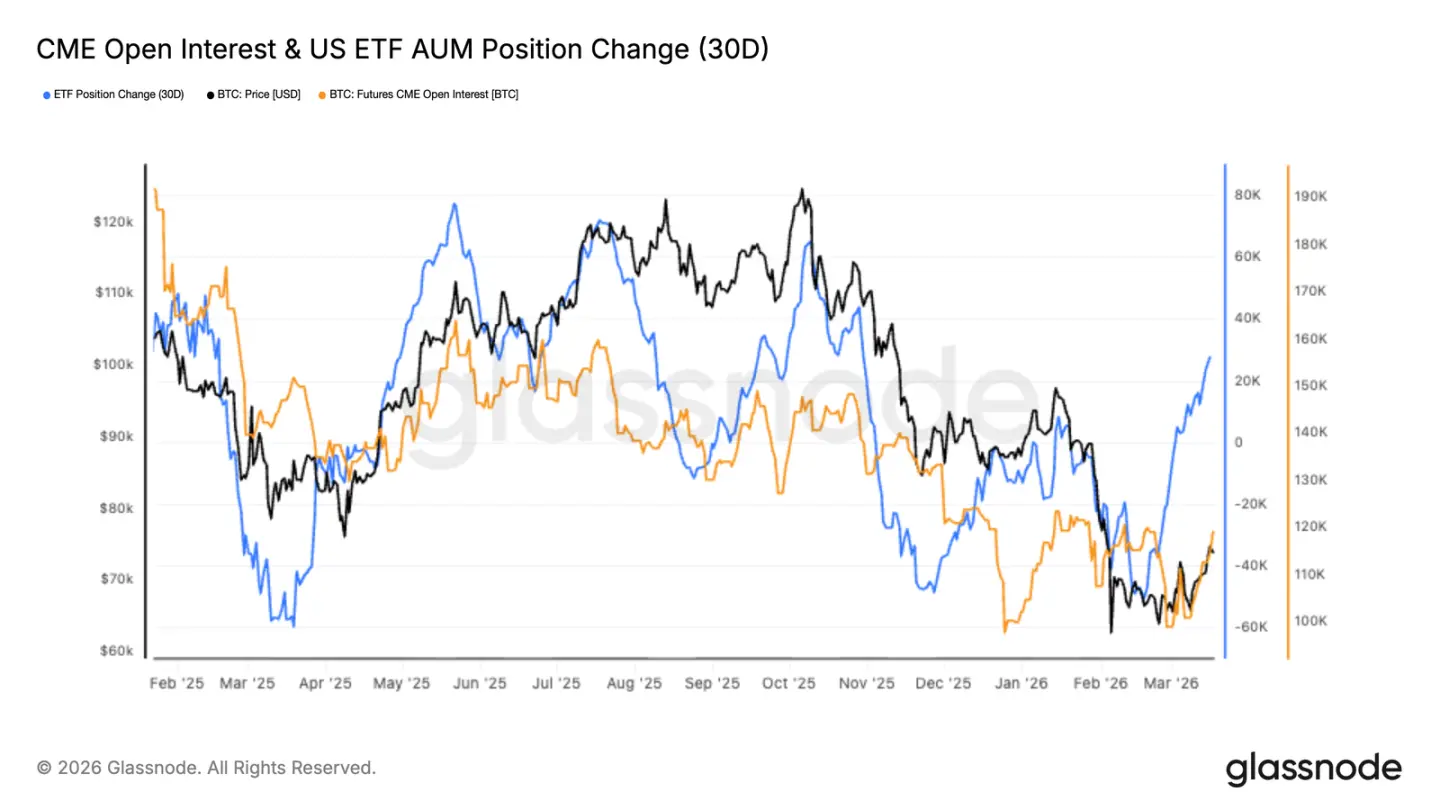
- Over the past month, ETF fund inflows have significantly warmed up, indicating that institutional demand is returning, and the market is once again driven by spot buying.
- The open interest in CME futures remains low, indicating that this wave of increase is mainly driven by spot buying rather than leveraged positions.
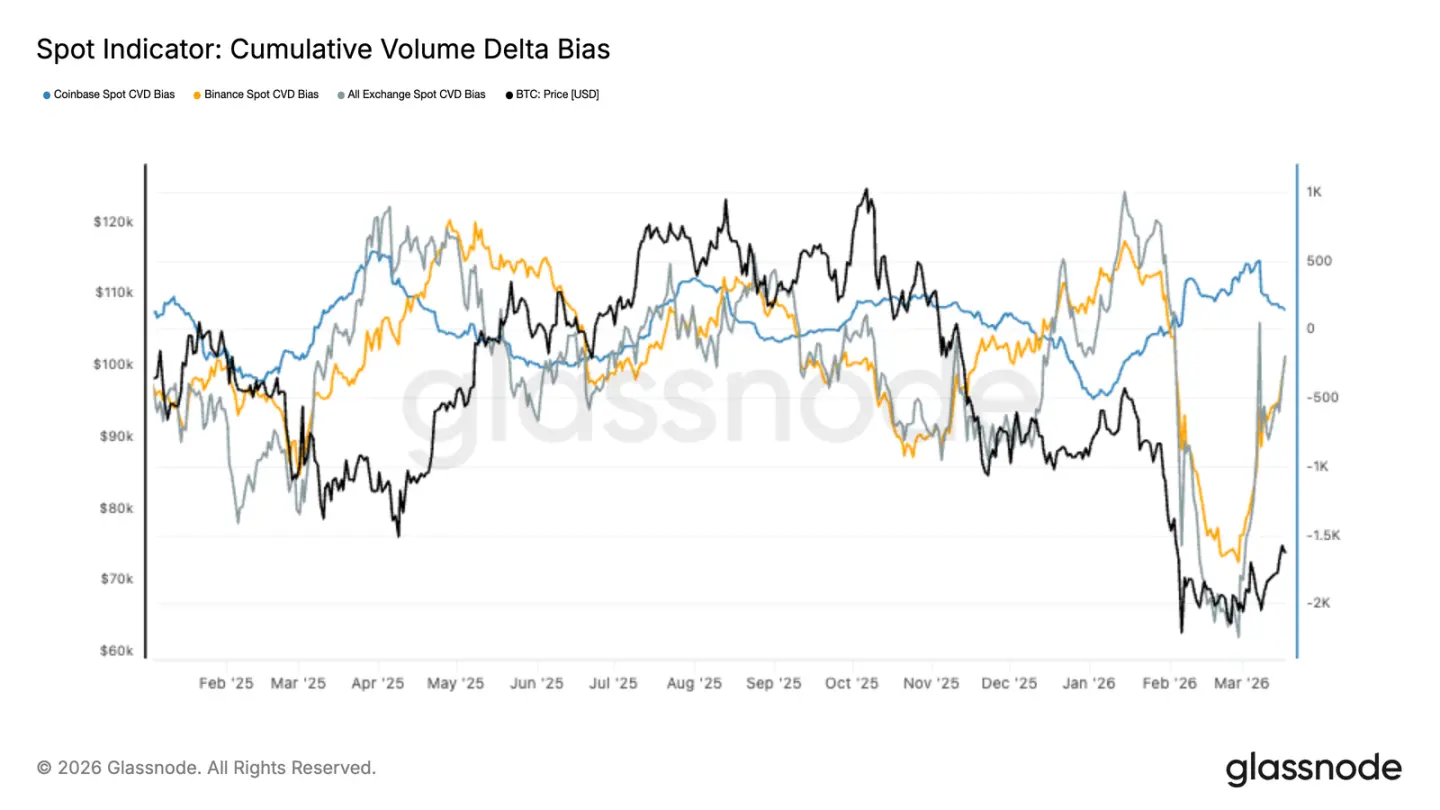
- The "spot cumulative trading volume Delta" across major exchanges has turned upward, meaning that the previous continuous selling pressure has transformed into new buying accumulation.
- Coinbase's spot activity has stabilized and warmed up—this often signals that institutions are starting to re-enter the market. The selling pressure from Binance has also noticeably weakened, with the aggressive selling during the previous downturn basically gone.
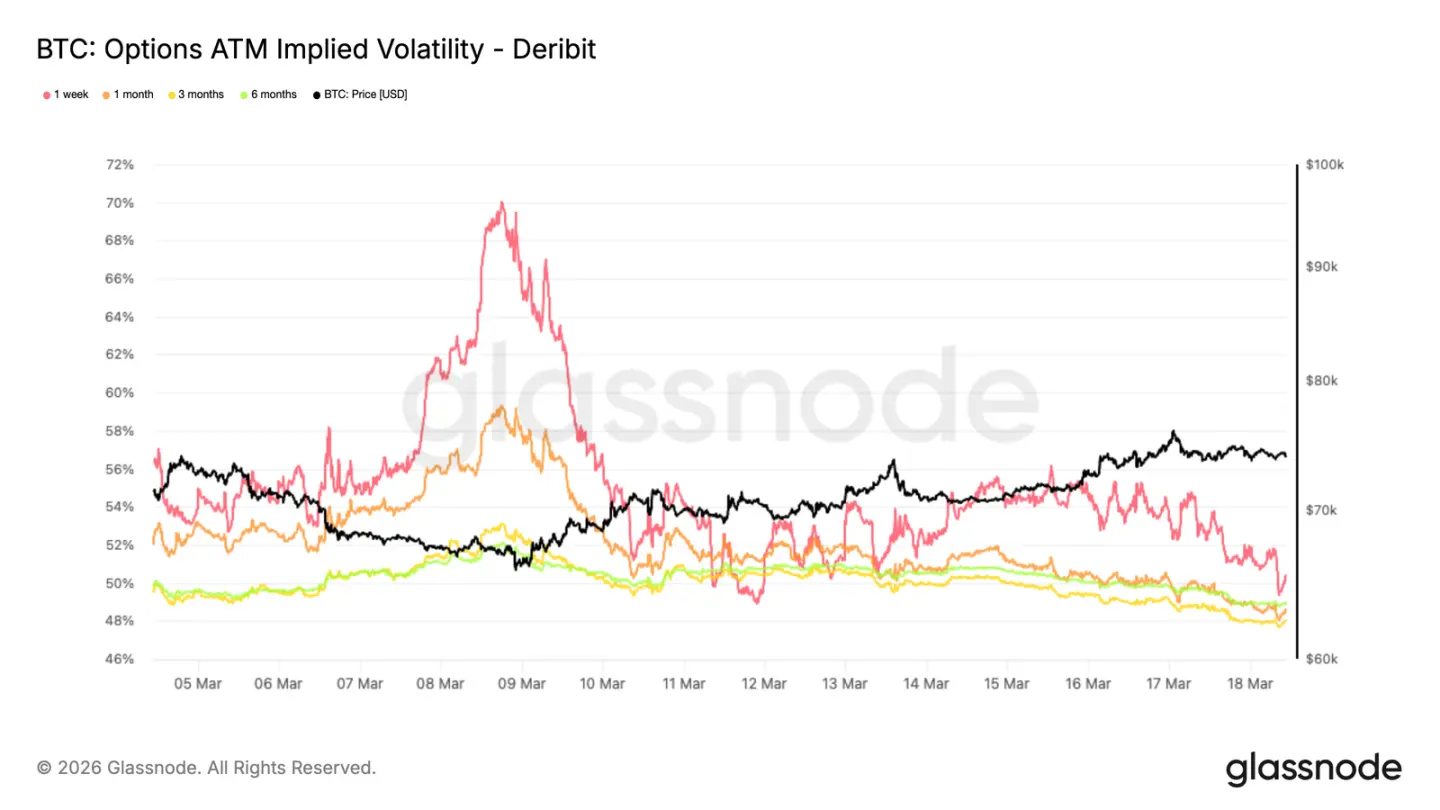
- Implied volatility across all maturities is declining, indicating reduced hedging demand and a return to normalcy in the market.
- The options skew indicator has slightly turned positive, suggesting that some are starting to position for upward movements, and sentiment is improving.
- Market makers' Gamma positions are nearing neutral, meaning that options will not amplify market volatility in the short term.
On-Chain Data Interpretation
Finally Breaking Out of the Dense Zone
After several weeks of turmoil, Bitcoin has finally stabilized above $70,000 and is now around $74,000, completely breaking through the consolidation range from February to March. The URPD indicator makes this very clear—this indicator shows at what price levels people are buying coins, where there are many buyers, and where the support or resistance lies.
Data shows that a large number of chips have accumulated between $59,000 and $72,000, mainly built in February and March 2026, and the current price has stepped over these dense chip zones. Further up, between $72,000 and $82,000 is a vacuum area, where very few people bought previously, so there is basically no resistance when pushing upwards. This breakout occurred amid geopolitical uncertainties and a resilient external market, indicating that investors currently view macroeconomic negatives as temporary. Regardless of the long-term trajectory, it is highly likely that the price will oscillate in the range of $72,000 to $82,000 in the short term.
A Single Rebound Doesn't Mean Much
Although it has broken through $70,000 and entered the vacuum zone between $72,000 and $82, a single rise does not indicate a structural reversal. To assess the health of the market, we need to see if people are making money—the "profit supply ratio" indicator is very useful as it counts how many Bitcoins are currently in a profit state.
Historically, from the bottom of a bear market to the early stages of a bull market, this indicator often climbs from below 60% at -1 standard deviation to around 75%, the long-term average. This wave of increase has pushed it to around 60%, which in the past has often been a level where the first rebound exhausts. If it can stabilize above 75%, it would indicate a real possibility of entering a bull market; if it continues to oscillate at the current level, it would still be the old script of a bear market rebound.
Watching How the Market Absorbs Selling Pressure
In addition to looking at how many people are in profit, another important perspective is how the market digests profit-taking—when prices rise, some will want to sell. If recent buyers sell but the price does not drop back to the dense zone of $59,000 to $72,000, the likelihood of moving upwards increases significantly. This week, when the price surged above $74,000, the 12-hour average of "short-term holders realizing profits" soared to $18.4 million per hour, just like in February—back then, as soon as it broke above $70, people started selling, preventing a breakthrough.
Early rebounds in a bear market are often like this, where new buyers lack conviction and want to run as soon as they see some profit. In the coming weeks, if the market can withstand this wave of selling pressure and stabilize above $70,000, the chances of pushing towards $78,000 (the real market average) or even $82,000 (the upper edge of the vacuum zone) will increase.
Off-Chain Data Analysis
Institutions Are Quietly Entering the Market
Bitcoin's recent rebound coincides with a significant recovery in the allocation of U.S. spot ETFs—the 30-day change in holdings has turned upwards, sweeping away previous outflow shadows. This indicates that institutional demand has indeed returned, and funds are starting to allocate to spot.
At the same time, open interest in CME futures remains sluggish, just stopping its decline. This wave of increase is mainly driven by spot buying, not by leveraged positions. Historically, this structure is healthier: prices are pushed up by real capital rather than inflated by leverage.
ETF sizes are increasing, while futures positions have not yet moved—this indicates that institutions are just beginning to re-enter the market. If CME's positions also follow suit, it would suggest that confidence is strengthening, making the upward trend more stable.
Spot Buying Has Returned
The "spot cumulative trading volume Delta" has recently shown a clear warming trend, and Binance has now started to shift to net buying.
This turning point aligns with Bitcoin's rebound from the $60,000 low, indicating that this wave of increase is indeed supported by real capital, not just driven by derivatives. Coinbase's cumulative trading volume Delta has also stabilized and risen—this area typically represents institutional activity, indicating that some are starting to stockpile again.
Data from major exchanges is improving, suggesting that market depth is recovering, and buyers are beginning to regain confidence. Although it hasn't reached a frenzied level, it has shifted from distribution to accumulation, providing a more stable foundation for prices—this is key for a sustainable rebound.
Funding Rates Indicate: Everyone Loves to Short
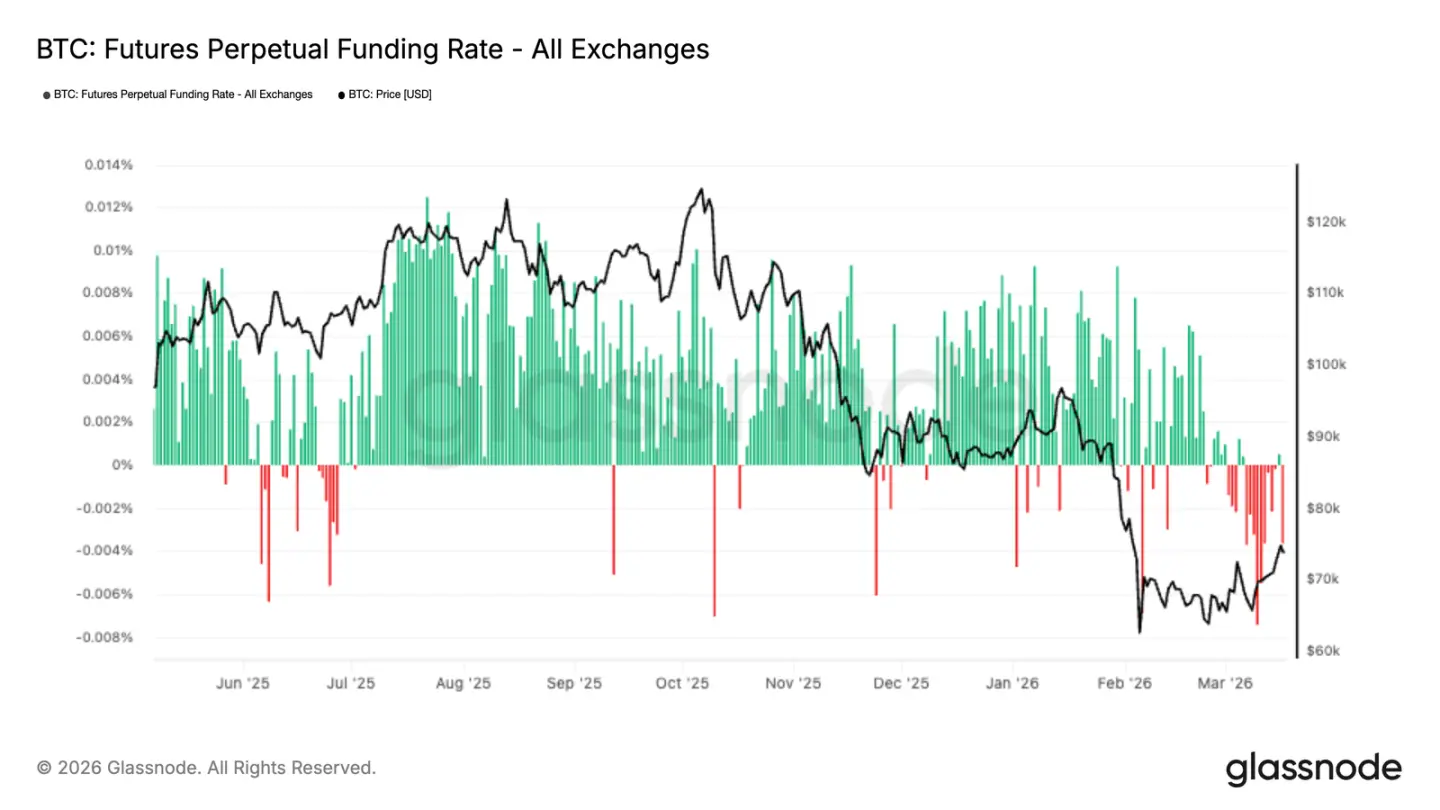
In recent weeks, the funding rates for perpetual contracts have dropped to negative values—this indicates that those wanting to short have an absolute advantage in the derivatives market. This bearish sentiment accumulated while Bitcoin oscillated between $60,000 and $70,000, with leveraged players generally pessimistic about the future.
Interestingly, the breakthrough above $74,000 occurred precisely against the backdrop of continuously negative funding rates. What does this indicate? It suggests that at least part of this upward movement is due to shorts covering, rather than longs aggressively pushing up.
This situation often means that shorts are already crowded, potentially leading to a short squeeze at any moment. As prices rise, shorts being liquidated could further propel the market higher. In the short term, this is indeed a positive sign, but to establish a sustained trend, funding rates need to return to normal, and a rebalancing between longs and shorts is necessary.
ATM Implied Volatility Declines
Bitcoin's volatility shock is dissipating. The one-week implied volatility has dropped from around 56% at the beginning of the week to now 50%, with longer maturities also generally down by 3 percentage points.
This indicates that traders are no longer as tense as before, and the wave of volatility during market panic has passed. A decline in implied volatility typically means that the market is transitioning from a state of stress to a relatively stable period.
The current signals are clear: people are gradually withdrawing panic hedges. We have observed a large amount of downside protection being unwound, which is also one of the reasons for the decline in implied volatility, conveniently aiding this rebound. The market is moving towards a more balanced state. In an environment where both spot and derivatives trading are relatively thin, options hedging may become an important force influencing prices—currently, the upward path may be smoother.
25 Delta Skew Trends Towards Neutral
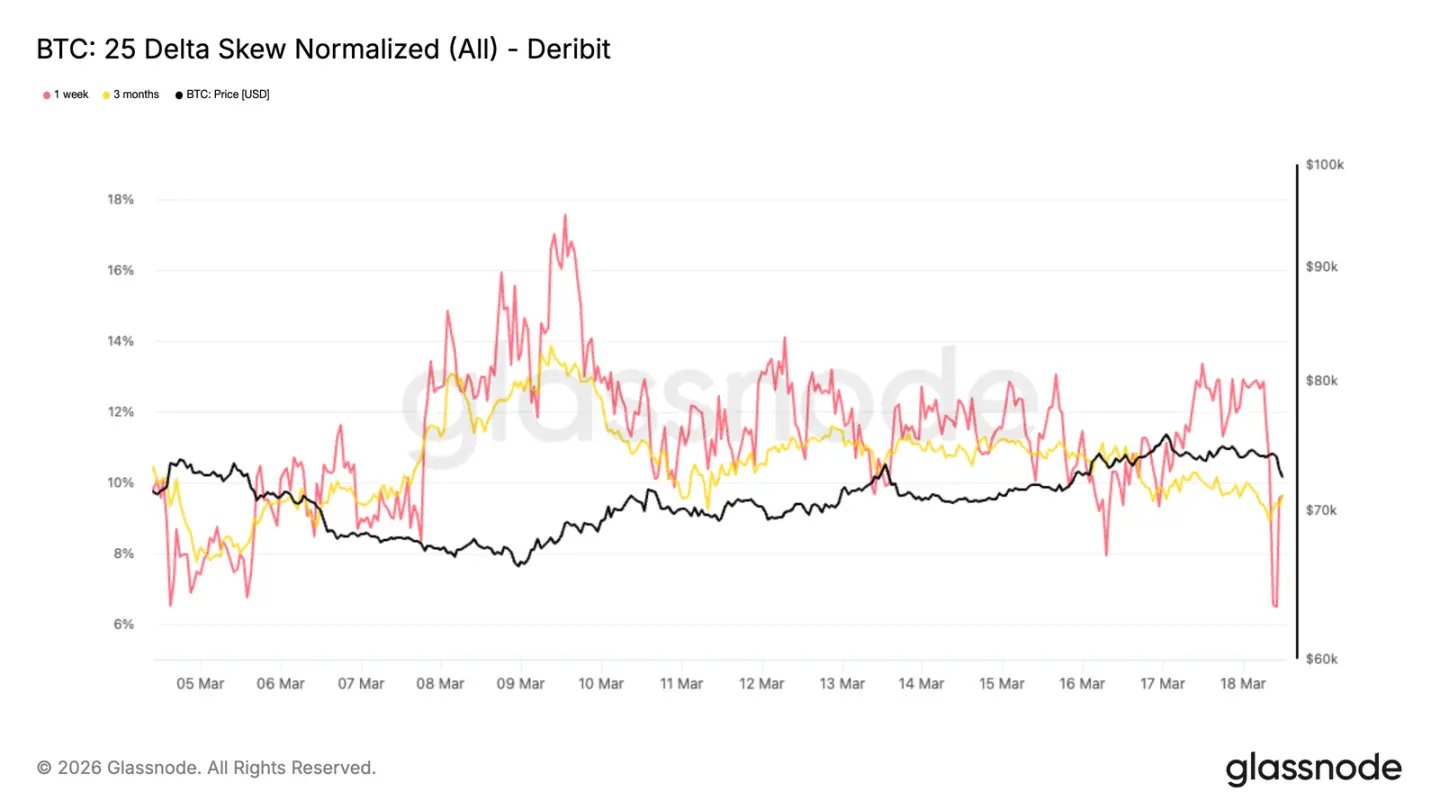
After the normalization of implied volatility, the skew has also started to adjust. The 25 delta skew is currently still negative, around -10% across various maturities, down 4 to 7 percentage points from previous highs.
A negative skew means that put options are still more expensive than call options—indicating that people still want to buy protection, and market makers are unwilling to sell downside volatility too cheaply.
However, the skew is gradually moving towards neutral. This change indicates that the demand for downside hedging is beginning to weaken, and defensive positions are decreasing.
In other words, put options are relatively less expensive now. This adjustment typically occurs when the market begins to open up to upward movements, but the macroeconomic situation is not yet fully clear, and sentiment remains cautious.
The current skew state indicates that the market is transitioning from panic protection to a more balanced options structure, while also preparing for potential tactical rebounds.
Options Flow Begins to Warm Up
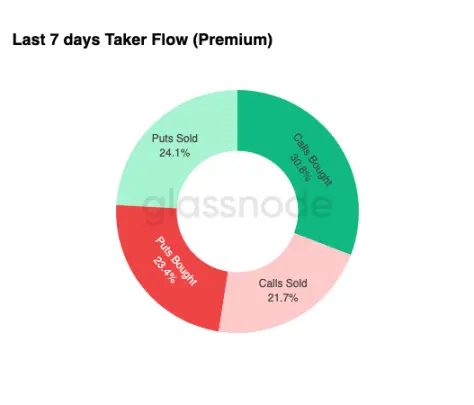
Changes in sentiment can also be observed in options trading. Recently, trades with positive Delta accounted for 54.9%, with buying call options making up 30.8%—people are starting to use call options to bet on upward movements again, as the downside risk is limited.
At the same time, we see a large amount of downside protection being closed out. When traders close positions, market makers need to buy back to hedge, and this buying also provides support for prices.
These are typical characteristics of a transitional period—people are starting to position for a rebound while still holding some defenses, so overall it is cautious yet slightly positive.
As for whether this is a structural change or just short-term speculation, we will have to wait and see.
Negative Gamma Concentrated at $75,000
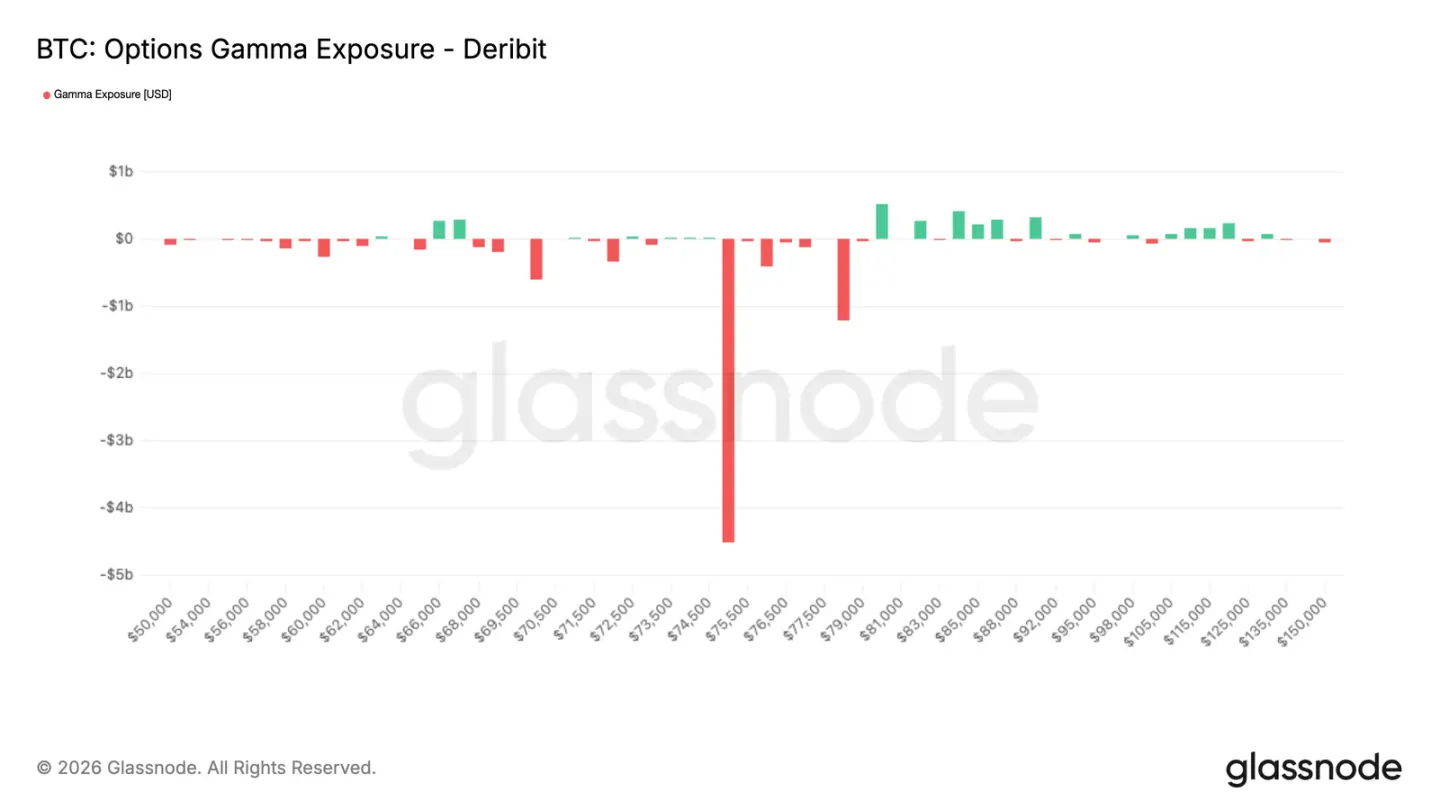
Finally, let's focus on the most important indicator: market makers' Gamma exposure. With trading being thin, market makers' hedging operations can easily pull prices towards a key strike price.
Currently, the only meaningful level is $75,000—approximately $4.5 billion of negative Gamma is piled up here. Bitcoin is currently consolidating just below this level, and a slight upward movement could trigger market makers to buy to hedge, pushing prices towards $78,000 and above.
This $75,000 threshold is crucial before the March options expiration—because out of that $4.5 billion, $3.9 billion expires this month. Once the end-of-quarter expiration passes, market makers' hedging positions will be unwound, and the upward movement may not be as smooth, with the market potentially entering a consolidation or correction phase, returning to the main narrative of macroeconomic factors.
Conclusion
Bitcoin's rebound is approaching $75,000, with increasingly solid support behind it—ETF fund inflows, warming cumulative trading volume Delta, and both institutions and retail investors are re-entering the market. The market has switched from the previous "distribution mode" to "accumulation mode," providing a more stable platform for prices.
On the other hand, the derivatives market remains defensive. Continuous negative funding rates indicate that shorts are crowded—this could actually add fuel to the rise through short covering. The options market is also stabilizing, with declining volatility and slightly positive skew, indicating that sentiment is improving, but it has not yet reached a gambler's frenzy level. Overall, there is still room for upward movement in the short term, but to establish a sustained trend, we need to see if the subsequent funds can continue to flow in and whether leverage and confidence can keep up.

 Risk warning


Popular articles