Tron Industry Weekly Report: Rising Interest Rate Probability Makes It Hard for BTC to Hold 70,000, Detailed Explanation of the Composable and Collaborative AGI Network Sentient

 This issue focuses on three major projects: Zona (5 million USD) building an RWA and crypto leverage engine; Sentient (85 million USD) constructing a composable AGI network; Beatcoin (5 million USD) promoting on-chain behavior and value coordination AI protocols.
I. Outlook
1. Summary of Macroeconomic Trends and Future Predictions
This week, the global macroeconomic narrative revolves around the interplay of inflation expectations and policy paths: In the United States, there remains a divergence in the market regarding the pace of interest rate cuts by the Federal Reserve, with overall data showing resilience, leading to expectations of sustained high interest rates; at the same time, former President Trump's proposal for a 10% global tariff has intensified concerns over trade protectionism and a resurgence of inflation. The performance of risk assets has been mixed, with funds repeatedly switching between a "high interest rate environment vs liquidity expectations."
In the coming week, the market will continue to focus on signals from the Federal Reserve and key economic data (such as PCE/employment). If data remains strong, expectations for interest rate cuts may be pushed further out; at the same time, attention should be paid to how trade policy statements affect market sentiment. Overall, the short-term macro environment is still dominated by volatility and uncertainty, with liquidity expectations continuing to be a core pricing variable.
2. Market Movements and Warnings in the Crypto Industry
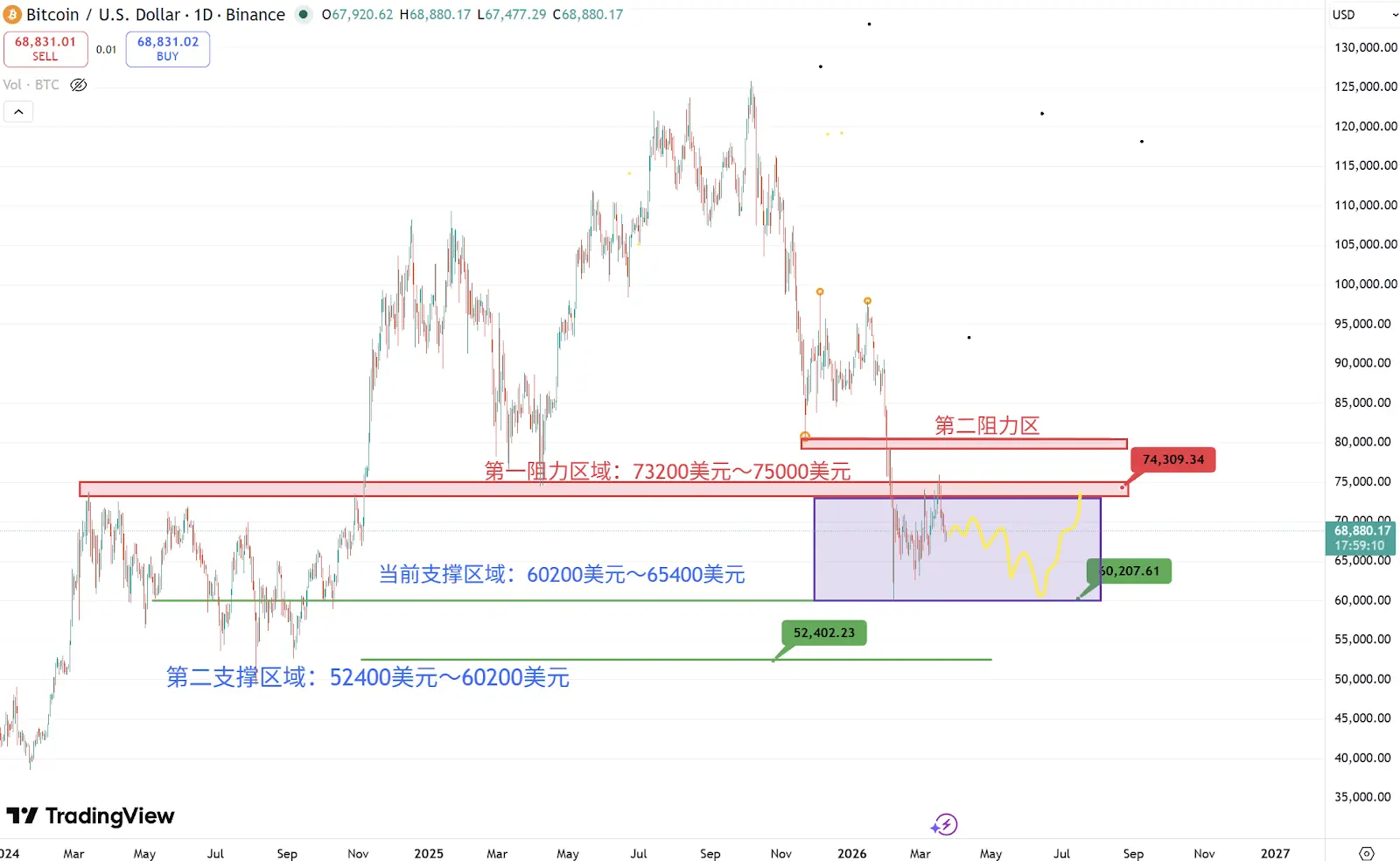
This week, the crypto market exhibited a pattern of strength followed by weakness. Bitcoin initially surged to a peak driven by risk-averse sentiment and capital inflows, but subsequently retreated under hawkish expectations from the Federal Reserve and macro pressures, oscillating around the $70,000 mark in the latter half of the week, without forming a sustained upward trend.
Looking ahead to next week, the focus remains on macro variables and risk appetite. If inflation and interest rate expectations continue to tighten, Bitcoin may continue to experience high-level fluctuations or even face pressure; however, if risk aversion and capital inflows persist, there remains an opportunity to repeatedly test upper resistance levels. At this stage, Bitcoin is relatively stronger than most altcoins, and the market appears to be a structural play under existing capital rather than a broad-based strengthening.
3. Industry and Sector Hotspots
This issue focuses on three cutting-edge projects: Zona, backed by Animoca and ECHO with a total funding of $5 million, aims to create an automated leverage engine that unifies real-world assets (RWA) and crypto assets; Sentient, led by HashKey, IDG, and Pantera with a cumulative funding of $85 million, aims to build a composable and collaborative AGI network; Beatcoin, after being led by COGITENT and Go2 Mars Labs with a total funding of $5 million, continues to advance its AI protocol aimed at coordinating on-chain behavior and value.
II. Market Hotspot Sectors and Potential Projects of the Week
1. Overview of Potential Projects
1.1. Brief Analysis of Zona, with Total Funding of $5 Million, Led by Animoca and ECHO—An Automated Leverage Engine Unifying RWA and Crypto Assets
Introduction
Zona is a one-click looping protocol that supports both RWA (real-world assets) and crypto-native assets.
Users can complete borrowing + looping with just one click, obtaining:
- Boosted Price Exposure
- Boosted Yield
- Or simultaneously amplifying both price and yield exposure
Zona abstracts the complex DeFi operations that originally required multiple steps and cross-protocol execution (collateral → borrowing → exchanging → re-collateralizing → repeating) into a single atomic transaction, significantly lowering operational thresholds and execution risks, making leverage strategies equally safe, controllable, and user-friendly for ordinary users.
Core Mechanism Overview
ZonaLend
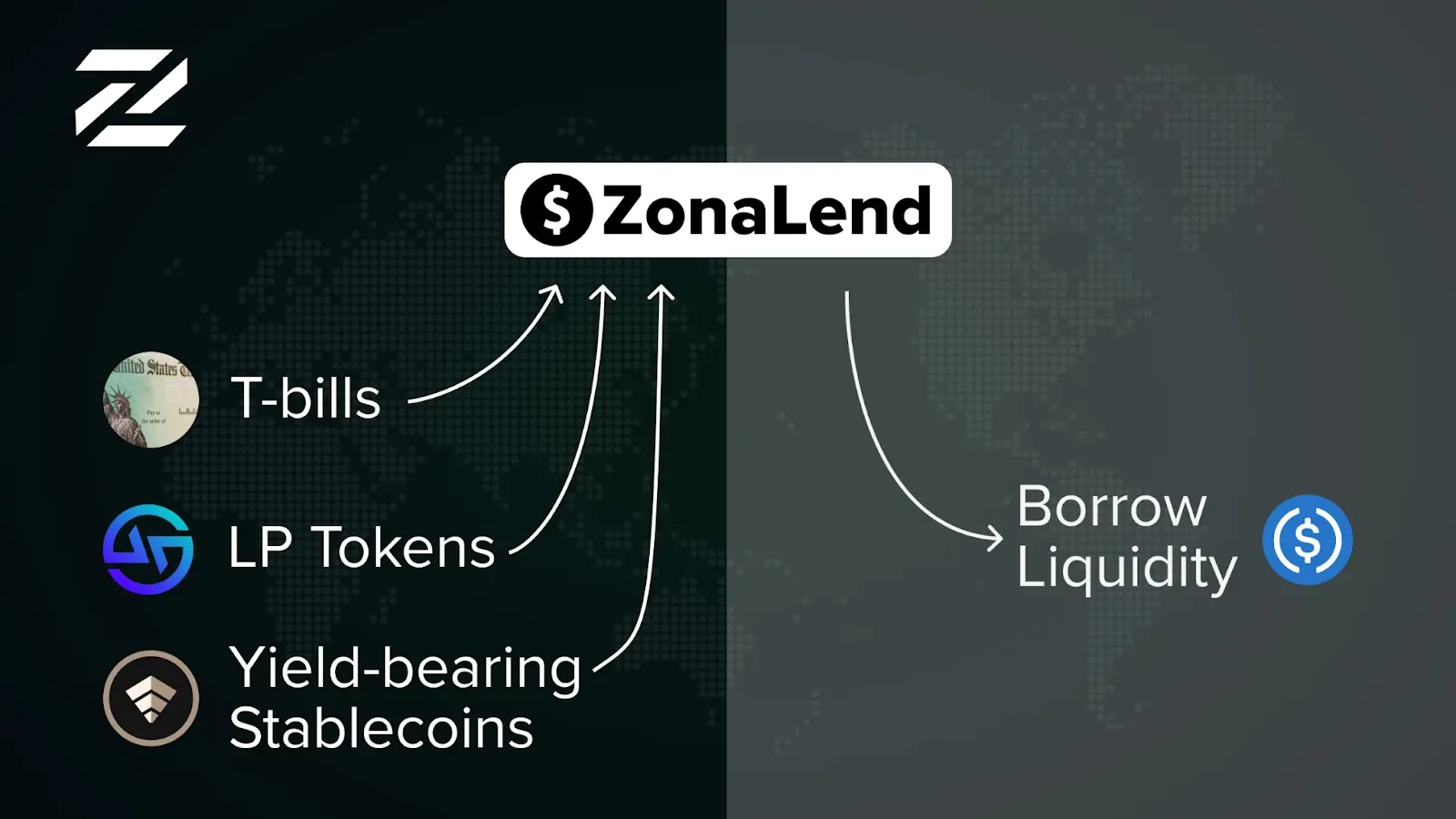
Zona Lend allows users to deposit and borrow RWA tokenized by Zona, RWA tokenized by third-party issuers, as well as crypto-native assets like USDT, USDC, and WETH.
What are the use cases?
- Leveraged Long
Users can deposit RWA tokens as collateral, borrow stablecoins, then use the stablecoins to purchase more RWA tokens and continue depositing, repeating the process.
This looping mechanism effectively leverages the price of RWA tokens while amplifying exposure to rental income generated by RWA.
- Leveraged Short
Users can deposit USDT as collateral, borrow RWA tokens, then exchange RWA tokens for more stablecoins and continue depositing, repeating the process.
This looping mechanism effectively leverages a short position on RWA, allowing users to profit when the value of tokenized parking spaces and other RWAs declines.
- Non-RWA Exposure
In addition to RWA, Zona's lending products also support crypto-native assets like USDT, USDC, and WETH.
If users only wish to gain exposure to crypto assets, Zona's lending platform can be used like other conventional lending protocols.
- Yield Generation
Users can deposit RWA tokens, stablecoins, or crypto assets and earn yields when other users borrow these assets.
The yield comes from the interest paid by borrowers, allowing depositors to earn passive income while keeping their assets liquid and available for withdrawal at any time.
What is the maximum Loan-to-Value (LTV) ratio?
The maximum Loan-to-Value (LTV) ratio will vary based on the volatility and available liquidity of different assets.
For RWA tokens, the initial LTV will be set at 50% and will be further adjusted after a monitoring period.
Asset Underwriting & Selection
To ensure the stability of the protocol, every asset supported by ZonaLend must undergo a rigorous review process.
Our underwriting framework evaluates RWA and crypto-native assets from the following risk dimensions:
- Market Demand: Assessing asset scale, institutional interest, and user demand
- Liquidity Conditions: Analyzing market depth, trading volume, and acceptable slippage
- Volatility Analysis: Reviewing historical price volatility and its correlation with the overall market
- Technical Infrastructure: Verifying oracle reliability and DEX integration depth
- Counterparty Quality: Conducting due diligence on issuers, including past records and redemption capabilities
- Regulatory and Risk Mitigation: Analyzing compliance, default risks, and smart contract security
Who is the lending function of ZonaLend suitable for?
The lending function primarily targets:
- RWA Investors: Empowering idle RWA tokens.
For example, using RWA as collateral to borrow stablecoins, which can then be used for other investments or leveraged looping operations on the same asset to generate more returns. - DeFi Users: Those who wish to deposit stablecoins or crypto assets (like WETH) to earn interest when RWA investors engage in over-collateralized borrowing.
What digital assets does ZonaLend support?
Crypto Assets:
- Blue-chip assets (BTC/ETH)
- Yield-bearing stablecoins (USDe)
- Liquid staking tokens (LSTs, such as stETH)
- Perpetual contract LPs (such as GLP)
- Highly volatile assets (such as meme coins)
Real-World Assets (RWAs):
- Stocks/ETFs (NVDA/S&P 500)
- Government Bonds (T-Bills)
- Commodities (Gold)
- Real Estate (Real Estate Funds)
In the future, RWA assets tokenized by Zona will also be supported.
Who is the borrowing function of ZonaLend suitable for?
The borrowing function primarily targets:
Enhancing Capital Efficiency: Borrowing funds without selling assets.
Users can use RWA or crypto-native assets (like DEX LP tokens) as collateral to obtain stablecoin liquidity for new opportunities or leverage strategies.Strategic Hedging and Shorting: For market speculation or risk hedging.
By borrowing specific tokens against collateralized assets, users can profit when prices fall or hedge against volatility risks in their portfolios.
Is there a fee for borrowing?
Yes. Users need to pay interest to asset providers when borrowing.
The interest rate depends on the capital utilization rate in that market:
For example, an 80% utilization rate will correspond to a higher interest rate than a 50% utilization rate.
Most of the interest will be distributed to depositors in that market, with Zona taking a small portion as protocol income based on the Reserve Factor, and the ratios may vary across different markets.
Health Factor
The Health Factor (HF) is a key indicator of the safety of borrowing positions.
It is expressed as: collateral value × liquidation threshold / borrowing value.
Health Factor Range Explanation:
- HF < 1.0 (Liquidation): The position is below the liquidation threshold and will be liquidated.
- HF 1.0 -- 1.1 (Danger): The position faces immediate liquidation risk and should immediately add collateral or repay debt.
- HF 1.1 -- 2.0 (Safe): The position is relatively safe but requires continuous monitoring.
- HF > 2.0 (Excellent): The position has ample safety margin and is far from liquidation risk.
Liquidations
When the value of collateral on ZonaLend falls below the liquidation threshold, a liquidation mechanism will be triggered.
The system will sell part of the collateral to liquidators at a discount below market price and use the proceeds to repay the user's debt, thereby protecting lenders and preventing bad debts in the protocol.
It is important to note that RWA liquidations on ZonaLend are conducted entirely on-chain, without involving any off-chain redemption processes.
Its logic is similar to the liquidation of Lido stETH in Aave: liquidations are completed on-chain and do not require redeeming staked ETH from validator nodes.
ZonaLoop
ZonaLoop is a one-click looping operation interface built on the ZonaLend infrastructure.
Users simply need to input the desired collateral asset, target position size, and leverage multiple, and ZonaLoop will automatically complete the entire looping process, eliminating the complexity of manual operations across multiple protocols.
How it works
ZonaLoop achieves fully automated execution of looping operations by packaging multiple steps into a single atomic transaction:
1️⃣ Deposit collateral
First, users deposit assets (RWA or crypto-native assets) as collateral into ZonaLend.
2️⃣ Automatically borrow
Based on the user's set target leverage multiple, ZonaLoop will automatically borrow stablecoins against the collateralized assets.
3️⃣ Swap and re-deposit
The borrowed stablecoins will be automatically exchanged for more collateral assets and immediately re-deposited as collateral, thereby expanding the position size.
4️⃣ Repeat automatically
The above process will be automatically repeated until the user-defined leverage level is reached—this entire process can be completed with a single transaction.
Benefits
- One-click simplicity: No need to switch between multiple protocols or manually execute multiple transactions to complete complex circular leverage operations.
- Gas efficiency: All circular steps are packaged into a single transaction, significantly reducing Gas consumption.
- Leveraged yield: By automating the circular process, the position size is amplified, thereby increasing the sources of yield.
- Leveraged exposure: Enhances exposure to the price movements of target assets without requiring additional capital investment.
Tron Commentary
The core advantage of ZonaLend lies in its integration of Real World Assets (RWA) with crypto-native assets into a unified lending and leverage framework, significantly lowering the operational threshold for complex leverage strategies through the one-click circular feature of ZonaLoop. It has clear product differentiation in enhancing capital efficiency, amplifying yield, and price exposure; at the same time, based on asset tiered underwriting, dynamic Loan-to-Value (LTV), and on-chain liquidation mechanisms, the protocol has a solid foundation for risk control and scalability.
Its main disadvantage is its high reliance on the liquidity, pricing, and oracle of underlying RWAs, which may face amplified volatility and liquidation pressure under extreme market conditions. While the one-click leverage abstraction improves usability, it also raises higher requirements for user risk awareness and protocol risk control design.
1.2. Interpretation of total financing of $85 million, led by Hashkey, IDG, and Pantera—a composable and collaborative AGI network Sentient
Introduction
Sentient is a decentralized protocol dedicated to building GRID—the world's first open AGI network co-created by the community. Our mission is to transform today's closed and fragmented AI ecosystem into an open and collaborative system, ensuring that advanced intelligence truly serves all humanity rather than being monopolized by a few institutions.
Architecture Analysis
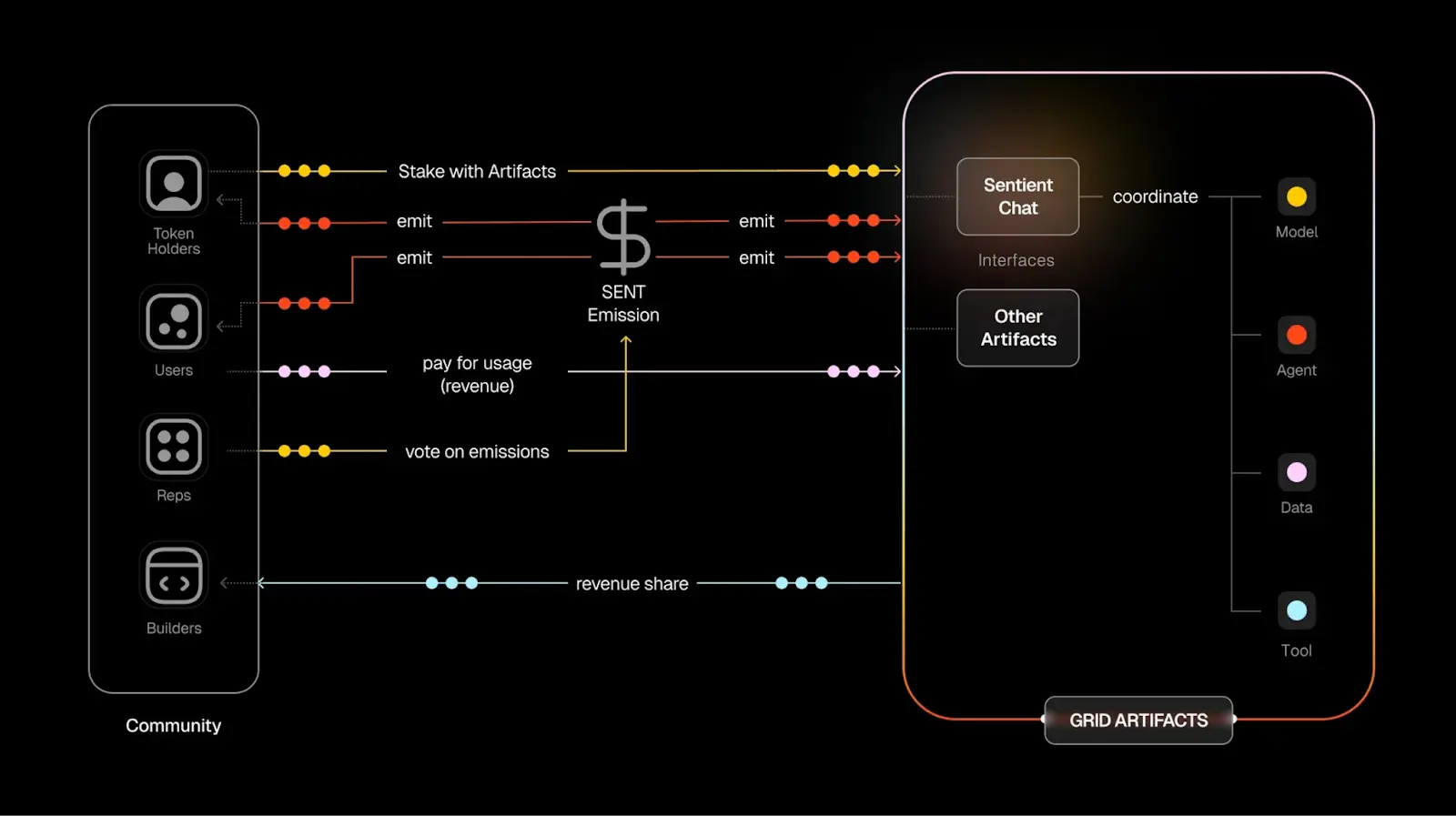
The above image shows the overall breakdown of the Sentient architecture and the interaction relationships between its components.
The GRID Network
GRID is the foundational layer of the entire system and the supply side of the network. It is a decentralized, global pool of AI artifacts. Each artifact is an independent intelligent component contributed by the community, which can be called directly or combined through the unified coordination of Sentient Chat.
For Users
Users can interact with the entire network through the unified interface of Sentient Chat or directly access and use individual AI artifacts.
For Builders
Once developers connect their AI artifacts to GRID, they immediately gain access to powerful distribution channels through Sentient Chat. When their artifacts are called and used by users, developers will receive direct income and token rewards from the network's economic system.
The Economy Layer
The $SENT token constitutes the economic engine of GRID, forming a self-reinforcing, sustainably growing positive feedback loop through the following three core mechanisms to reward high-value contributions and drive network expansion:
- Payment: When users pay for services, a portion of the payment will be directly allocated to the corresponding AI artifact developers and stakers.
- Staking: Community members can stake tokens on the AI artifacts they deem most valuable and useful, thereby earning corresponding reward shares.
- Emission: The network will issue new $SENT token rewards to active ecosystem participants. The distribution of these tokens is not fixed but guided by multiple signals, including:
- Actual payment behavior
- Community staking weight
- AI expert voting results
The GRID Deep Dive
Workflow
Queries sent to GRID will be decomposed, routed to the most suitable intelligent agents, and enhanced with tools such as search and vertical domain data, ultimately integrating the results into an optimal output to provide users with coherent and high-quality answers.
The output of GRID reflects the collective wisdom of thousands of open-source developers rather than the capabilities of a closed small team.
This intelligent routing mechanism is driven by workflows defined by experts and the community. For relatively simple queries, GRID will directly adopt standard workflows designed by experts. The system will analyze and classify each query and route it to the workflow most suitable for that use case.
Example Workflow: Research Analysis
User question:
"What European SaaS startups raised over $50 million in funding in the past year?"
GRID identifies this question as a research query and routes it to a dedicated research workflow:
1️⃣ Search
The search agent compiles an initial list of relevant SaaS startups.
2️⃣ Research
The research agent evaluates the founders' backgrounds and core company data.
3️⃣ Search
The search agent looks for the latest revenue metrics of these companies.
4️⃣ Conceptualize
The infographic component visualizes the revenue growth trajectory.
5️⃣ Aggregate
The system synthesizes all results to generate and deliver the final answer.
Workflow Design Mechanism
GRID has designed various workflows for different use cases (such as writing, finance, travel, etc.). These workflows are planned and maintained by community experts and receive corresponding rewards based on their actual effectiveness.
Tron Commentary
The core advantage of Sentient lies in its construction of a truly open and composable decentralized AGI network centered around GRID. Through modular AI artifacts and community/expert co-built workflows, it achieves high-quality collaboration across models, tools, and data sources, effectively incentivizing developer contributions and content competition through the $SENT token economy.
Its main disadvantage is its high complexity, relying heavily on fine-tuning workflow design, routing quality, and incentive mechanisms. Additionally, it still requires time and scale effects to continuously validate its performance consistency, result predictability, and competitiveness against centralized large models in extreme experiences.
2. Weekly Key Project Details
2.1. Detailed total financing of $5 million, led by COGITENT & Go2 Mars Labs—an AI protocol for on-chain behavior and value coordination, Beatcoin
Introduction
Beatcoin is an interaction and value coordination AI protocol designed for real on-chain use cases.
Unlike creating new transaction primitives or leaning towards speculative use cases, Beatcoin focuses more on reconstructing how on-chain behavior generates value—bridging the gap between "what users did on-chain" and "how value is accumulated, recognized, and coordinated."
Web3 has made significant progress in decentralization at the asset layer, but at the behavior and value layers, the entire system remains in a state of structural failure. Beatcoin's goal is to address this long-neglected core issue.
Architecture Overview
Beatcoin is designed as a three-layer collaborative system, with each layer performing different functions while reinforcing each other, collectively forming a closed-loop interaction and value coordination framework.
Overall, the system's operational logic is:
User interaction → Behavior recording → Value quantification → AI-assisted optimization → More efficient interaction
Interaction Layer
The interaction layer is the entry layer of the Beatcoin system, with the core responsibility of capturing high-frequency, real on-chain behaviors, including but not limited to:
- Token swaps
- Cross-chain bridging
- Multi-step protocol interactions
- Application layer usage behaviors
Key Features:
- Fully on-chain or cryptographically verifiable
- Naturally cross-chain design
- Focus on actual user behavior rather than subjective user statements
Unlike viewing transactions as isolated events, the interaction layer provides the raw data foundation needed to understand cross-protocol and cross-chain behavior contexts and interaction patterns.
Value Quantification Layer
The value quantification layer is the core settlement engine of Beatcoin.
Its function is to transform raw interaction data into structured, accumulable value units, namely Beat Points (BP).
This layer mainly implements:
- Standardizing heterogeneous on-chain behaviors into unified behavioral units
- Applying consistent quantification models across different chains and applications
- Continuously recording user behavior to achieve long-term value accumulation
Design goals for Beat Points (BP):
- Reflect sustained participation rather than one-time behavior
- Accumulate across various interaction scenarios and ecosystems
- Serve as a universal reference metric for incentives, access control, and value coordination
By decoupling value accounting from a single application, this layer enables:
- Different protocols to share a unified behavioral value benchmark
- Users to carry their accumulated interaction value across multiple ecosystems
- Incentive systems to possess composability and long-term alignment capabilities
AI Service Layer
The AI service layer is built on structured behavioral data, acting as the efficiency and coordination engine of the system. Similar to traditional analytical tools, this layer operates based on interaction data with semantic structure, enabling AI to:
- Analyze multi-step, cross-chain interaction paths
- Identify efficiency bottlenecks, friction points, and optimization opportunities
- Assist decision-making without replacing user intent
- Help design dynamic, adaptable incentive strategies for protocols
Typical outputs include:
- Interaction path optimization suggestions
- Cost and risk trade-off analysis
- Behavioral pattern insights
- Incentive distribution and adjustment recommendations
It should be emphasized that this layer only provides suggestions and not mandatory decisions:
- AI provides guidance, not commands
- All actions are still initiated by the user
- All outputs can be transparently verified based on on-chain data
Closed-Loop Coordination Model
These three layers are not isolated modules but form a continuously operating feedback loop:
- Users interact with on-chain protocols (interaction layer)
- Actions are recorded and abstracted into structured data
- Actions are quantified into long-term value (value quantification layer)
- AI analyzes the data and provides optimization insights (AI service layer)
- Users and applications optimize subsequent actions based on insights
The results brought by this closed-loop mechanism include:
- Continuous reduction of user interaction friction
- Ongoing improvement of on-chain coordination efficiency
- Continuous alignment between behavior, value, and incentives
Tron Review
The core advantage of Beat Coin lies in its construction of a cross-chain, verifiable interaction record and value quantification system based on behavior rather than assets or transaction outcomes. Through Beat Points (BP), it transforms long-term, genuine on-chain participation into reusable universal value, and achieves continuous optimization and coordination for users and protocols through the AI service layer, demonstrating significant system-level differentiation.
Its main disadvantage is the high complexity of the architecture, which heavily relies on the definition of behavior, quantification models, and the quality of AI feedback. Additionally, the network effect requires multiple protocols and ecosystems to fully unleash its potential, posing high demands on adoption rates and standard consensus during the early cold start phase.
Industry Data Analysis
1. Overall Market Performance
1.1. Spot BTC vs ETH Price Trends
BTC
ETH
2. Summary of Hot Sectors
Stablecoins / Payment Infrastructure
Traditional finance accelerates entry, with Mastercard acquiring a stablecoin infrastructure company, promoting the integration of stablecoins with global payment networks, reinforcing the trend of "on-chain settlement layers."
RWA / Asset Tokenization
The SEC approves Nasdaq to advance stock tokenization, marking the entry of real assets on-chain into the "pilot phase of mainstream financial systems."
ETH Staking and Institutionalization
BlackRock launches an Ethereum staking ETF, promoting the standardization of staking yield products towards traditional finance.
Regulatory and Compliance Framework
The SEC and CFTC collaborate to clarify the boundaries of crypto regulation, further clarifying the compliance path for the industry.
Security and DeFi Risks
DeFi still faces vulnerability risks, with a flash loan attack incident occurring this week, emphasizing that security infrastructure remains a core shortcoming.
Macroeconomic Data Review and Key Data Release Points for Next Week
This Week's Macroeconomic Review (3.16--3.22)
🇺🇸 Federal Reserve: Maintains interest rates, emphasizes that inflation remains high, and rate cuts require more confirmation
🇺🇸 Inflation: PPI rises year-on-year to about 3.4%, reaching a nearly one-year high
Macroeconomic Environment: Rising oil prices and geopolitical conflicts, inflation expectations rise again
Key Data for Next Week (3.23--3.29)
🇺🇸 Core PCE (Key)
🇺🇸 PMI Preliminary (Manufacturing/Services)
🇺🇸 Initial Jobless Claims
🇺🇸 Durable Goods Orders
Regulatory Policies
United States
On March 17, the SEC and CFTC jointly released interpretive guidance on the applicability of federal securities laws to crypto assets, representing a clear regulatory action within the week.
South Korea
From March 18 to 19, the South Korean government proposed legislation to abolish the planned implementation of a crypto asset tax (20% national tax, approximately 22% after local tax), which is a policy advancement within the week.
Kenya
Around March 17, the Kenyan Ministry of Finance publicly solicited opinions on the 2026 "Virtual Asset Service Provider Regulations (Draft)," which is a formal regulatory process initiated within the week.
Argentina
On March 16, a court ordered a nationwide ban on Polymarket and requested ENACOM to coordinate enforcement. If the regulation of "prediction markets/crypto-related platforms" is also included in the observation scope of crypto regulation, this can be considered progress for the week.
 Risk warning Risk warning