The Major's Phone and the Emperor's New Clothes of the Prediction Market

 The Dilemma of Prediction Markets and the Future Landscape
In May 2026, The Guardian disclosed a case related to Polymarket.
Israeli prosecutors accused Tel Aviv resident Omer Ziv and a reserve major in the Israeli Air Force of using confidential information related to military operations to trade war-related contracts on Polymarket. Prosecutors stated that the major provided Ziv with the relevant information, and Ziv subsequently placed bets through multiple accounts, earning over $150,000. The two are currently facing multiple charges, including bribery, obstruction of justice, and security crimes.
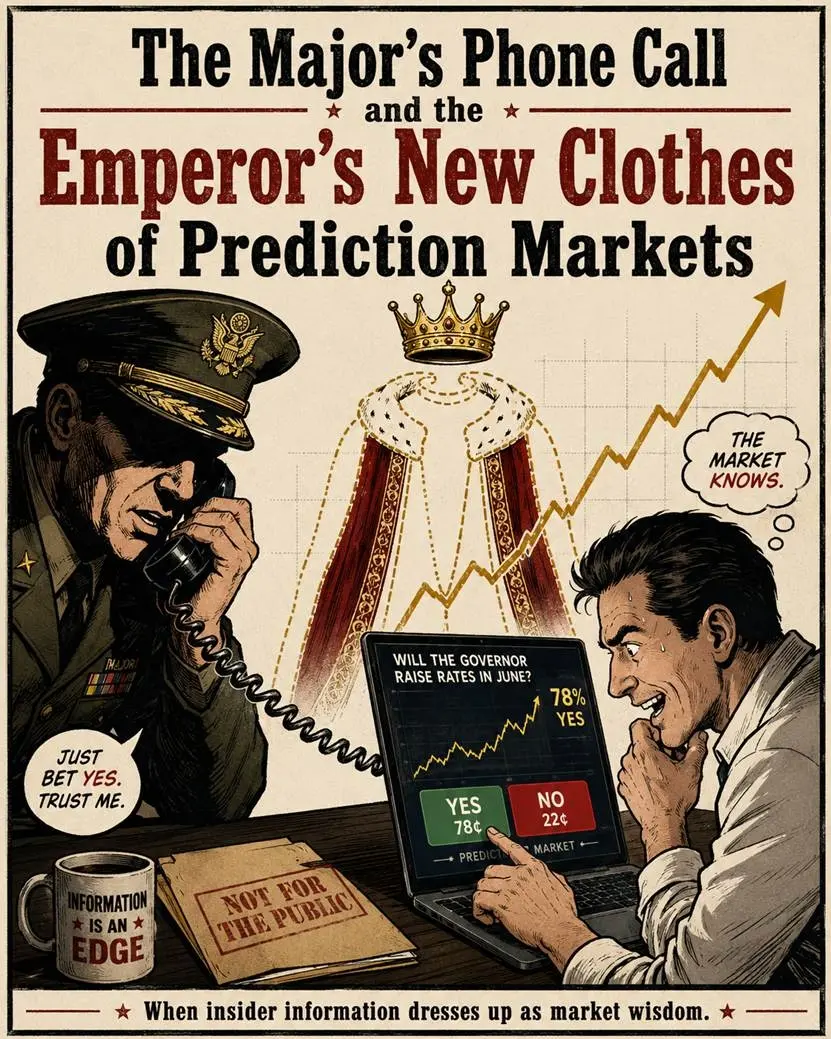
From the perspective of the prediction market, this incident appears to be just a successful trade. A person correctly predicted a war event, possibly because he was truly professional, understood public signals, monitored flight paths, satellite images, official wording, and the rhythm of news releases, piecing together fragments to anticipate the action window and ultimately profiting in the market. However, the reality could also be absurd; he might simply have had insider information or even be an insider himself, naturally knowing the timing of the action and then betting in the market, akin to an athlete betting on their own game, and betting on a loss. Such traders do not need to reason or model; they only need to place orders before the information is made public, and the prediction market cannot discern whether they are cheating. This is because the participating accounts only record profits and losses; they do not automatically inform the outside world whether the money earned was due to judgment or information privilege.
In traditional financial markets, such issues have long been commonplace. When someone accurately buys stocks before a company announcement, regulators do not merely say he has good foresight. Regulators will investigate whether he has connections with the company, law firms, investment banks, advisors, or trading counterparts. They will look at the timing of the trades, account behavior, and the possibility of information exposure, but even then, it is impossible to completely avoid insider trading.
In contrast, prediction markets encounter even more complex events. Wars, elections, regulatory approvals, company announcements, sports injuries—each type of event has its own upstream information. The closer one is to the upstream, the easier it is to realize profits in the market ahead of time. For example, regarding the timing of military actions, ordinary users can only guess, while military insiders can know in advance. Whether a company acquisition is completed, ordinary users look at announcements, while core teams and advisors already know ahead of time. For player injury statuses, ordinary users look at pre-game news, while the team's medical team has already written down the answers themselves.
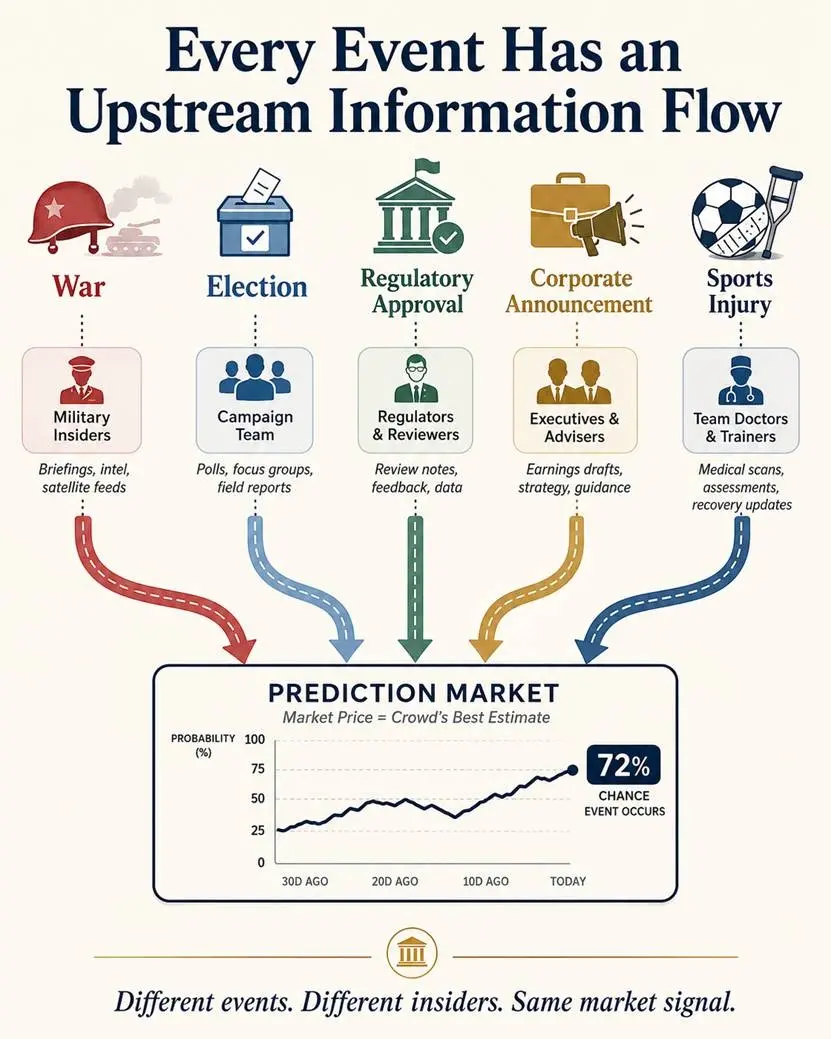
What happens when this insider information enters the tradable market? The market becomes more accurate because insider information is much more reliable than ordinary information. But does this mean that the core value of Polymarket still holds? The prediction market was originally meant to compress dispersed judgments, information, and funds in the market into a tradable event probability in real-time. However, if this probability is primarily driven by insider information, it no longer represents the collective judgment that a public market should have.
Traditional prediction markets struggle to escape the black box of human judgment. An insider trader can place bets in advance and hit the result, and afterward, they can completely claim they just bought based on intuition or simply got lucky. Unless the platform or regulatory body finds evidence of their access to insider information, it is difficult for the market to prove that this profit came from cheating. Trading records can only show what they bought, when they bought it, and how much they earned, but it is hard to prove why they made those purchases.
This is very unfair to other participants. Ordinary users are still making judgments based on public information, while insider traders already have the answers. Ultimately, the higher win rate of insider information is instead cloaked in the guise of "predictive ability."
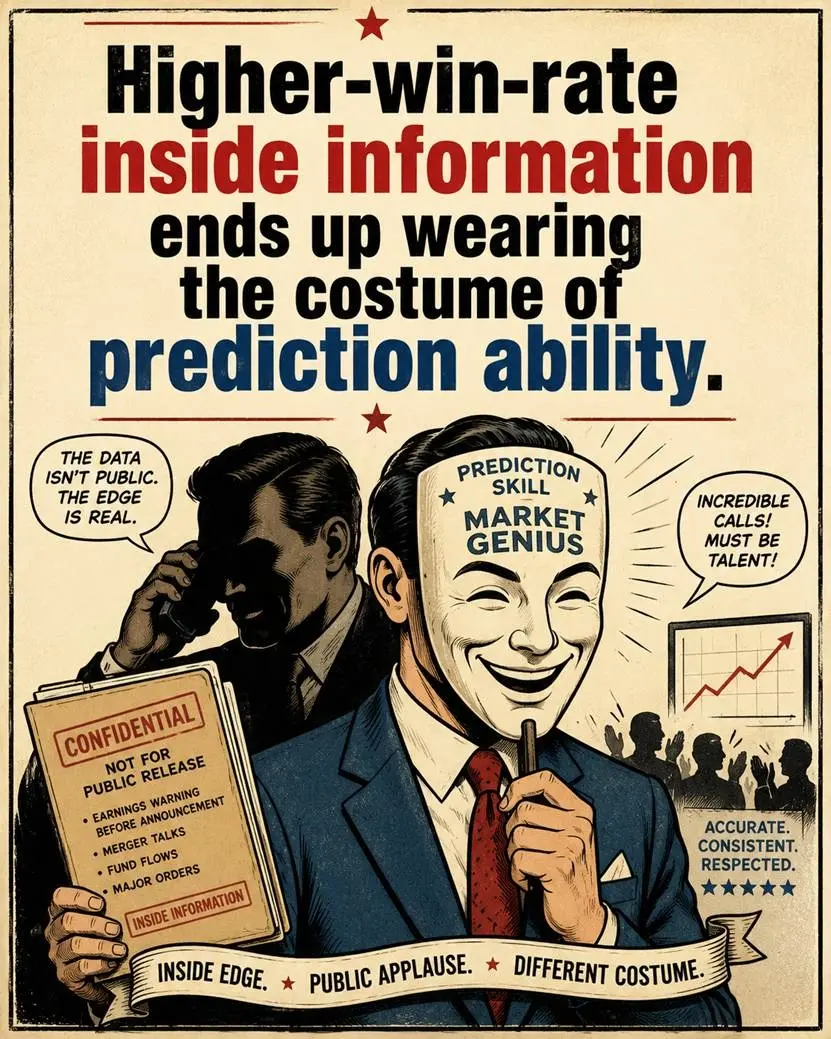
This is also a structural weakness of purely human prediction markets. Human bets can lack explanation. A person can refuse to explain their reasoning or can fabricate reasons afterward. Platforms find it difficult to require every transaction to be accompanied by a complete chain of evidence. Even if they do, individuals can submit superficially reasonable but unverifiable explanations.
If prediction markets involve AI agents, the rules can be redesigned. AI must submit evidence, logic, and reasoning chains before placing bets. Why it supports a certain outcome, which public sources it cited, how it handles conflicting information, and why its confidence level is adjusted can all be recorded. These records can be placed on the blockchain and enter auditable archives, to be reviewed during disputes, reviews, or regulatory scrutiny.
In this way, the market evaluates not just "who predicted correctly," but also "how they predicted correctly." An AI that wins consistently needs to demonstrate stable public information processing capabilities, reasoning quality, and calibration ability. This ensures that its returns come from better analysis rather than relying on insider information, which is the emperor's new clothes.
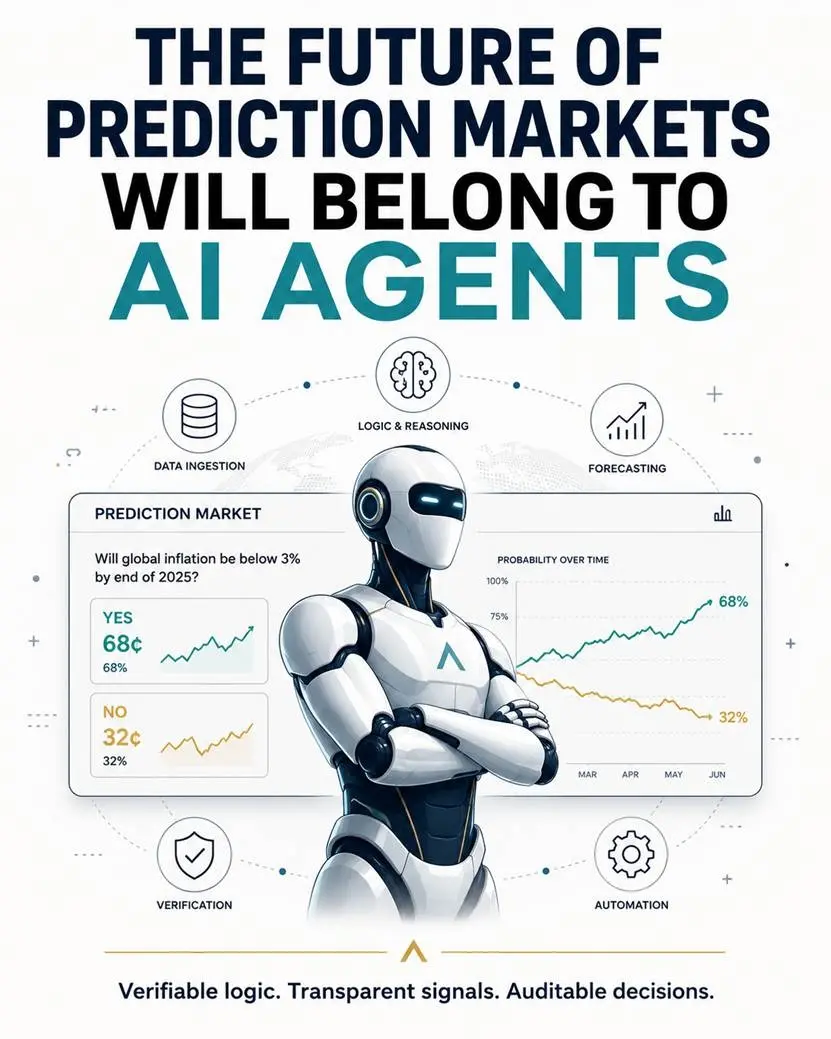
In the future, prediction markets will be dominated by AI agents. The human betting process is too difficult to penetrate; hitting the mark can be attributed to judgment, luck, or even disguising insider information as skill. AI agents can at least be required to leave behind evidence, logic, reasoning chains, and timestamps, facilitating regulatory review and scrutiny. For prediction markets to enter broader financial fields, it is not enough to simply prove accuracy; they must also demonstrate that this accuracy comes from verifiable judgments. Only then will the information generated by prediction markets hold value. Purely human markets find it hard to achieve this; a purely AI-participated auditable market is the form of the next generation of prediction markets.
 Risk warning