








Daily Observation of Cryptocurrency Concept Stocks: SpaceX S-1 Exposes 18,712 BTC, Tesla's "Reduction Path" and the Divergence of Musk's Corporate Bitcoin Strategy

 Released on May 22, 2026. The disclosure of SpaceX S-1 allows the public to fully compare the Bitcoin reserve strategies of Elon Musk's two most important companies for the first time: Tesla, Inc. (NASDAQ: $TSLA) spent $1.5 billion to purchase Bitcoin in 2021, and then sold about 75% of its holdings in 2022, currently holding only 11,509 BTC (approximately $890 million); SpaceX, on the other hand, purchased 25,724 BTC at an average price of about $35,320 in the same year and has quietly held onto them since, despite a reduction of about 7,000 BTC along the way, still retaining 18,712 BTC and not moving any since the end of 2024. The differences in these two paths reveal a key question: what does a company's "commitment to holding" Bitcoin reserves actually mean in practice? The comparison between Tesla and SpaceX is the most compelling real case study to date.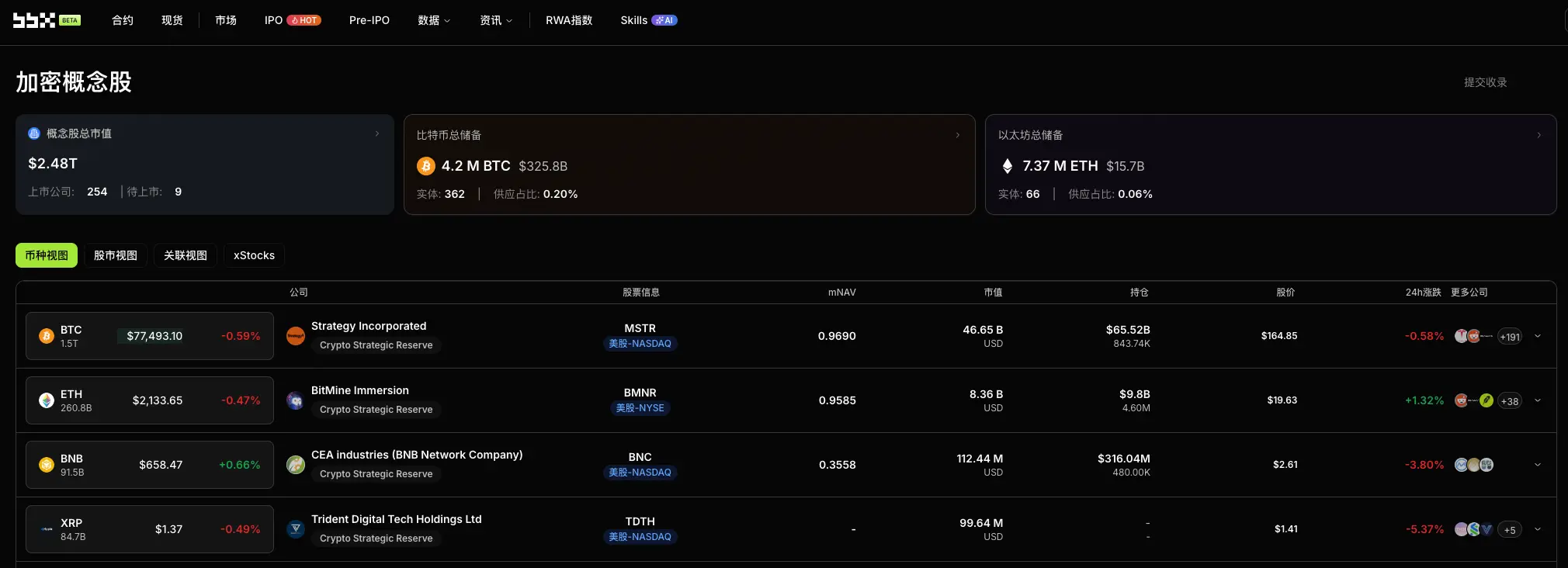
Tesla's Reduction History: $1.5 Billion Entry, Three Reductions, Remaining 11,509 BTC
Tesla purchased 43,200 BTC at an average price of about $43,200 in February 2021, with a total expenditure of approximately $1.5 billion; subsequently, in Q2 2022 (around the time BTC fell from $46,000 to $29,000), it sold about 75% of its holdings (approximately 29,000 BTC), cashing out about $936 million; currently, according to BitcoinTreasuries data, it holds 11,509 BTC, with a current market value of about $890 million calculated at approximately $77,000, generating a total profit of about $540 million compared to the original $1.5 billion investment (considering the proceeds from the 2022 sale and the remaining holdings). Tesla's decision to reduce its BTC holdings was explained by management at the time as "maximizing liquidity," but in hindsight, the approximately 29,000 BTC sold would have a market value of about $2.24 billion if held until now, resulting in an unrealized potential profit loss of about $1.3 billion from the reduction decision. This comparison does not imply that Tesla's decision was wrong—BTC did indeed drop to $16,000 in 2022—but it reveals the vulnerability of "corporate cryptocurrency commitments" under extreme market pressure.
SpaceX's "Silent Holding": Why It Has Not Disclosed for Seven Years and Why Its Holdings Have Decreased
SpaceX has never proactively disclosed its Bitcoin holdings until forced to do so by the S-1 filing. SpaceX originally held 25,724 BTC purchased in 2021, and its current holdings are 18,712 BTC, a difference of about 7,000 BTC; the S-1 did not disclose the timeline or specific reasons for the reduction. Arkham Intelligence's on-chain tracking data previously estimated the holdings to be as low as 6,095 BTC, but the actual S-1 data shows a much higher number, indicating that some holdings are held through third-party custodians, leading to a systematic underestimation in on-chain tracking. The S-1 notes that Bitcoin is held by "third-party custodians" but does not disclose the name of the custodian. SpaceX's choice not to disclose its holdings and its long-term underestimation in unverified market analyses is essentially a form of "silent holding"—avoiding the market expectation management pressure that comes with continuous public accumulation like Strategy, and also avoiding the market sentiment entrapment that Tesla faced due to its public holdings in 2021-2022.
Post-IPO Impact: How SpaceX Will Change the Valuation System of Corporate BTC Reserves
Once SpaceX completes its Nasdaq listing (expected in June 2026), it will become one of the top ten publicly listed companies in the world with approximately $1.45 billion in BTC holdings. This event will impact the valuation of the entire cryptocurrency stock ecosystem on two levels: first, legitimacy endorsement— the highest-valued private tech company in the world lists Bitcoin as a core asset on its balance sheet as a non-financial company, providing a powerful "precedent" endorsement for CFOs of other non-financial enterprises; second, valuation framework challenge—SpaceX's main businesses (Starlink, rocket launches) are real cash flow businesses, and Bitcoin is only part of its balance sheet, which is completely different from Strategy ($MSTR) treating Bitcoin as its core business model. How the market will price a hybrid model that combines BTC reserves with real business cash flow will become one of the most noteworthy valuation paradigm questions in the second half of 2026.
The Scale of "Silent Holders" of Corporate BTC Reserves Far Exceeds Market Expectations
The greatest significance of SpaceX's S-1 may not lie in the 18,712 BTC itself, but in revealing a long-ignored fact: many private and public companies may be holding substantial Bitcoin positions in a "silent holding" manner, only exposed upon forced disclosure. Arkham Intelligence's previous estimate of SpaceX's holdings was only 6,095 BTC, while the actual S-1 disclosed number is more than three times that, with a shocking margin of error. This suggests to the market that the current publicly available data on corporate Bitcoin reserves (BitcoinTreasuries tracks about 1.4 million BTC held by publicly listed companies) may be systematically underestimated, and the true scale of corporate-level "silent holdings" cannot be fully captured by on-chain tools. For institutions like BlackRock, Inc. (NYSE: $BLK), the public explanation of its BTC holding logic during the SpaceX IPO roadshow will become one of the most authoritative practical endorsements for the proposition of "Bitcoin as a corporate asset."
Data source: https://bbx.com/ Cryptocurrency stock information database, organized based on yesterday's announcements from global listed companies and SEC/TSE disclosure documents.
 Risk warning


Popular articles





