Morning News | Hyperliquid launches off-chain event prediction market contracts; Strategy completes $1.5 billion debt buyback; Kelp DAO announces rsETH has fully recovered

 Overview of Important Market Events on May 26
整理:ChainCatcher
Important News:
- Ondo Finance founder Nathan Allman unexpectedly passed away, president Ian De Bode takes over as CEO
- Hyperliquid announces the launch of off-chain event prediction market contracts
- Kelp DAO announces rsETH has fully recovered after five weeks of repairs, previously suffered a $293 million hack
- Strategy completes $1.5 billion debt buyback, BTC yield reaches 13.3% year-to-date
- CME launches futures contracts for Avalanche and Sui
- Report: AI Agent has completed over $73 million in on-chain payments, USDC becomes the default settlement asset
What important events occurred in the past 24 hours?
Strategy completes $1.5 billion debt buyback, BTC yield reaches 13.3% year-to-date
According to ChainCatcher, Strategy has completed the buyback of $1.5 billion in convertible bonds due in 2029 at an approximately 8% discount, generating an additional 0.7% BTC yield, reducing total debt to $6.7 billion. From the beginning of 2026 to now, Strategy has achieved a 13.3% BTC yield, with BTC gains amounting to 89,378 coins, valued at approximately $6.8 billion. As of May 25, 2026, the company holds a total of 843,738 BTC, with a total purchase cost of approximately $63.87 billion, at an average price of about $75,700 per coin.
CME launches futures contracts for Avalanche and Sui
According to ChainCatcher, CME Group has announced the launch of futures contracts for Avalanche (AVAX) and Sui (SUI) for investors to trade.
According to ChainCatcher, the Hong Kong Financial Services and the Treasury Bureau and the Hong Kong Securities and Futures Commission have published a summary of the consultation on the regulatory system for virtual asset provision and management services. The proposed licensing system for virtual asset provision and management received broad support during the consultation period.
The new licensing system will follow the principle of "same business, same risk, same rules," aligning with the regulated activities under the Securities and Futures Ordinance. This series of new systems will enhance participation in Hong Kong's digital asset market and help build a robust and secure ecosystem.
According to ChainCatcher, crypto market maker Keyrock, in collaboration with Coinbase, Tempo, and Virtuals Protocol, released the report "Who Pays the Agent?" stating that AI Agent is rapidly becoming an important participant in the on-chain economy. Data shows that from May 2025 to April 2026, AI Agent has completed approximately 176 million on-chain transactions, with a total settlement amount exceeding $73 million. The report notes that the average payment amount per transaction by AI Agent is only $0.31 to $0.48, indicating that a machine-native micropayment economy is forming. About 76% of the transaction amounts are below the Visa fixed fee threshold of $0.30, making it difficult for traditional bank cards and banking payment systems to adapt to the AI high-frequency, small-value, autonomous payment needs.
Data shows that 98.6% of AI Agent payments are settled in USDC. As of Q1 2026, over 104,000 AI Agents have completed registration. The report states that on the Base network, a USDC transfer costs about $0.0001, accounting for approximately 0.03% of the $0.31 transaction amount, which presents a significant cost advantage compared to traditional payment systems. The report believes that stablecoins are gradually becoming the "default currency infrastructure" for economic activities between AI and machines. However, Keyrock also warns that the current high dependence of the AI payment ecosystem on USDC poses a centralization risk, meaning that the entire emerging AI payment system largely relies on the regulation and infrastructure stability of a single stablecoin issuer.
In addition, several technology and payment companies have begun to lay out AI Agent payment infrastructure, including the x402 protocol launched by Coinbase, the Machine Payments Protocol (MPP) launched by Stripe and Tempo, Google's AP2 delegated payment system, and Visa's expanded tokenized payment voucher service. The report also points out that the current regulatory frameworks, including the European MiCA Act, the U.S. GENIUS Act, and the EU AI Act, still lack comprehensive regulatory standards for AI autonomous financial transactions and inter-machine payment behaviors.
According to ChainCatcher, on-chain detective ZachXBT posted on his personal channel that a certain entity previously received ESPORTS, RIVER, and LIGHT tokens through Sablier's affiliated contract, directly linked to three multi-signers of the LAB multi-signature wallet. These BSC tokens have all experienced market manipulation on centralized exchanges.
ZachXBT had previously flagged anomalies with LAB and RIVER, while the ESPORTS token suffered another flash crash, plummeting 93%. The CEX deposit address associated with the entity and the LAB signer addresses have been made public.
According to ChainCatcher, Cointelegraph reports that crypto-related political action committees (PACs) and industry executives have invested over $500 million in the 2026 U.S. elections.
Follow the Crypto data shows that crypto industry companies and related individuals have contributed over $320 million, with crypto-related PACs still holding over $245 million in cash; among them, Republican-related candidates/committees received about $127 million in support, significantly higher than the approximately $11.5 million for Democrats.
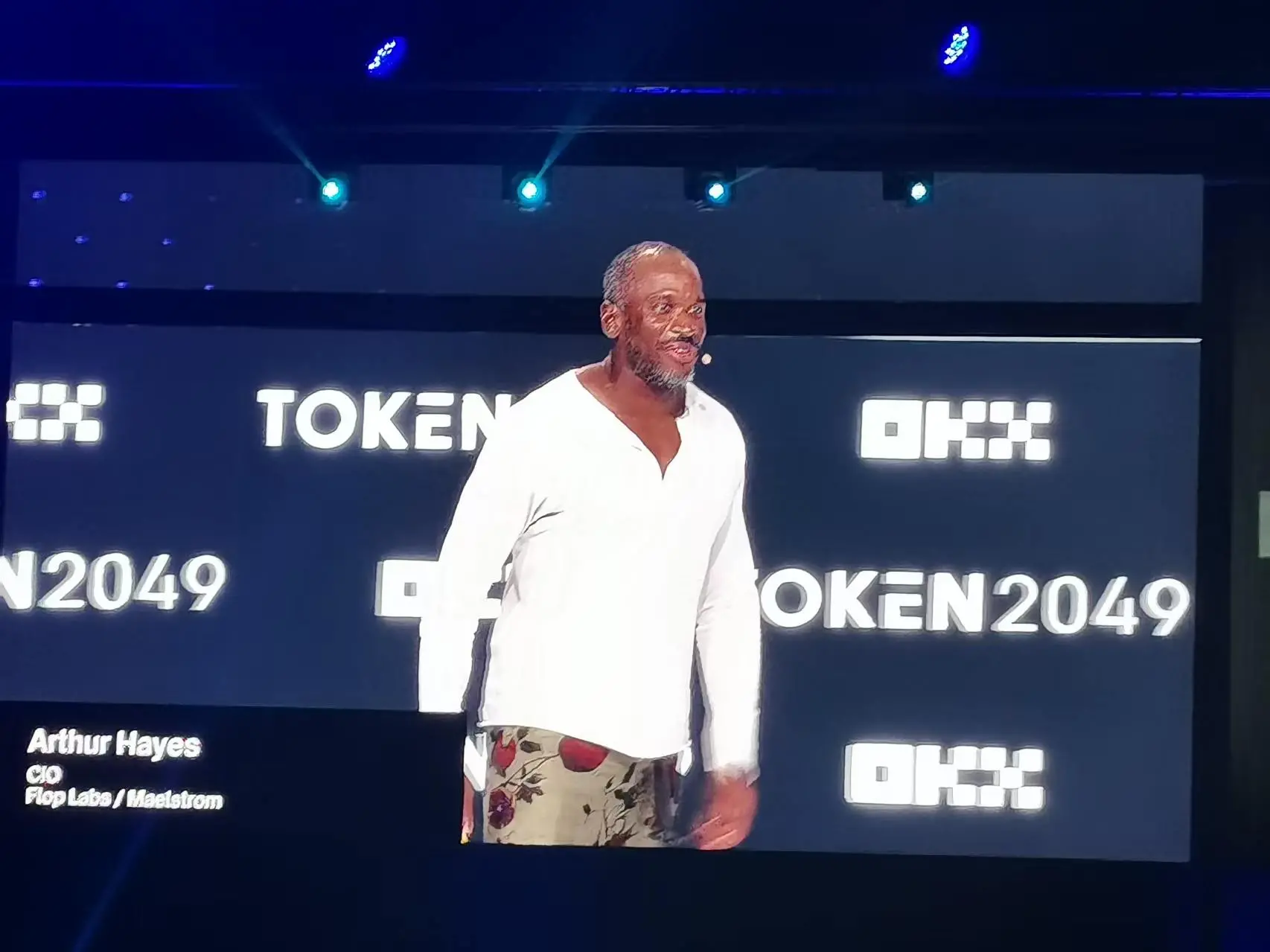
Arthur Hayes: Currency privacy will be "very necessary," hence Zcash is his second-largest holding
According to ChainCatcher, Arthur Hayes stated that as large tech companies, governments, and AI continue to expand their surveillance scope, currency privacy will "become very necessary" in the future.
Arthur Hayes mentioned that this is also the reason he has made the privacy coin Zcash (ZEC) his second-largest holding asset.
According to ChainCatcher, Kelp DAO announced on Monday that after being attacked by the North Korean Lazarus Group on April 18, resulting in a loss of $293 million, rsETH has fully recovered after five weeks of repairs. Kelp DAO stated that the last batch of 20,373.7 rsETH has been sent to the LayerZero smart contract responsible for cross-chain transfers, officially concluding the operational part of the rsETH recovery plan.
Multiple crypto protocols contributed funds through the DeFi United initiative to assist in the recovery of rsETH support. The first batch of 25,000 rsETH was transferred on May 13, and withdrawals were reopened the next day; currently, minting, redemption, and reward operations are all functioning normally. This attack caused a chain reaction in the DeFi lending market, as the attacker borrowed WETH using a large amount of stolen rsETH as collateral on Aave, leading to $190 million in bad debts for Aave, with TVL dropping from $26.4 billion to below $14 billion, and it has since remained in the range of $13.9 billion to $15.1 billion without recovery. In April, there were 25 crypto hacking incidents, resulting in total losses of $630 million.
Ondo Finance founder Nathan Allman unexpectedly passed away, president Ian De Bode takes over as CEO
According to ChainCatcher, Ondo Finance announced that its founder and CEO Nathan Allman unexpectedly passed away. Ondo stated, "Nate's talent, humility, and execution shaped Ondo today. He always believed that technology could build a more open and accessible financial system, and this philosophy will continue to be reflected in everything we build in the future."
The announcement stated that Ondo has established an experienced management team, and long-time president Ian De Bode will take over as CEO. Ondo stated that Ian has led the company's strategy, products, and daily operations for over two years and has the full support of the management team.
According to ChainCatcher, mobile payment news reports that Alipay announced that "AI payment" has completed 300 million AI agent payments and supports 95% of general agent frameworks, becoming the world's first large-scale commercial AI-native payment infrastructure. At the same time, Alipay launched the world's first Token Pay service and AI wallet product, along with previously launched AI payment and AI receipt, building a full-stack AI-native payment system for the AI era, covering complete services from authorization to management, from payment to settlement, and from security to trust.
Currently, the general agent frameworks supported by Alipay AI payment include: general agents such as Qianwen, JVS Claw, Claude code, Hermes Agent, smart devices such as Qianwen AI glasses, Rokid, future smart AI headphones, smart cockpits from Li Auto, Chery, Geely, Dongfeng, and leading AI tool platforms such as TRAE SOLO, Qoder, and Button.
Hyperliquid announces the launch of off-chain event prediction market contracts
According to ChainCatcher, Hyperliquid has now supported standardized result markets based on off-chain events. These markets are published by automated news source software operated by validators in daily on-chain operations. Validators will vote on the deployment and settlement of standardized markets based on factors such as whether the rules are clear, whether the results are correct, and the subjective quality of the market.
Kohaku under the Ethereum Foundation releases SDK for wallet-level privacy integration
According to ChainCatcher, The Defiant reports that Kohaku Initiative under the Ethereum Foundation has released a software development kit (SDK) that supports direct integration of privacy protocols such as Railgun, Tornado Cash, and Privacy Pools into wallet interfaces without intermediaries.
This SDK allows all privacy protocol transactions to be routed through the 4337 memory pool, enabling users to control privacy autonomously without relying on centralized relays.
The team has implemented private transactions with 4337 memory pool relay functionality, and integration with Tornado Cash and Privacy Pools is under development. Kohaku aims to make end-to-end privacy the default option for Ethereum users by abstracting the complexity of privacy protocol interactions.
Developers have created a CLI-based wallet demo, with wallets like Ambire integrating, and a browser extension wallet is also in development. Kohaku is also developing post-quantum accounts, multi-signature, and hardware wallet support.
According to ChainCatcher, The Wall Street Journal published an article stating that although the GENIUS Act and the CLARITY Act are promoting the compliance of stablecoins, stablecoins essentially belong to "private currency," which may bring structural risks to the financial system.
The article points out that stablecoins hope to combine the stability of the dollar with the efficiency of blockchain payments, but because they operate on fragmented, privatized infrastructure, they do not possess the unity of the traditional dollar system. Although USDT and USDC are pegged to the dollar, their prices may still deviate from $1.
In addition, stablecoin issuers have incentives to configure high-risk, low-liquidity assets to enhance yields, and once the value of these related assets declines, it may trigger de-pegging and concentrated redemption risks. The article cites Chainalysis data indicating that stablecoins account for 84% of illegal activities in crypto, mainly involving sanctions evasion and money laundering, while real economic payment scenarios account for less than 1%.
The Wall Street Journal believes that stablecoins are replaying the private currency experiment path of the "Free Banking Era" in 19th century America, and in the future may need to accept stricter regulation like banks and integrate more deeply into the central bank system.
Meme Popularity Rankings
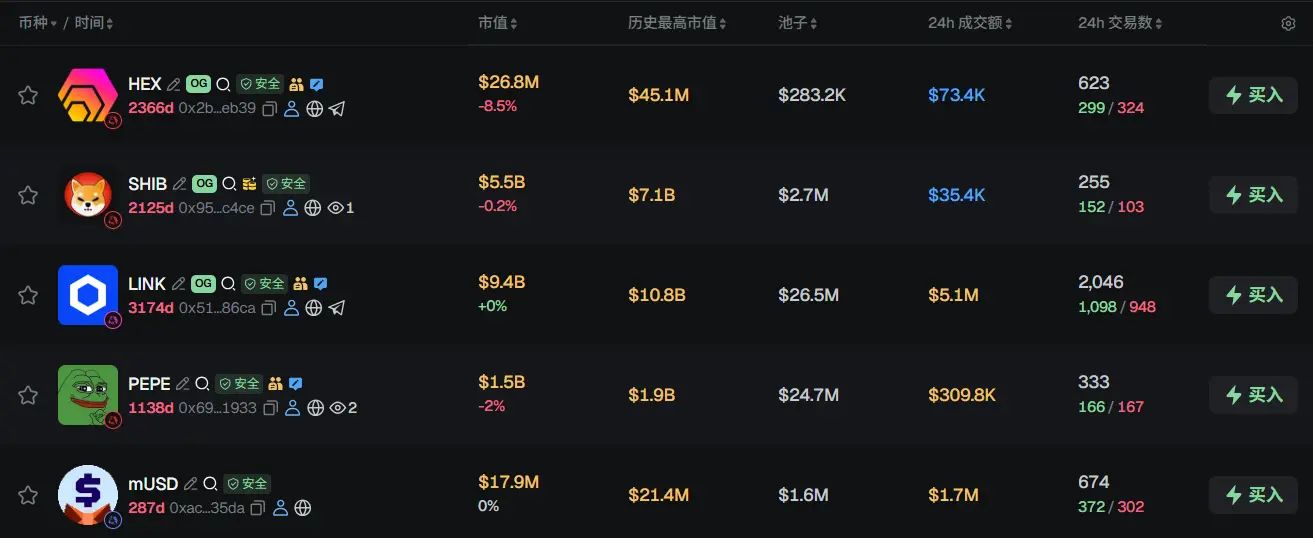
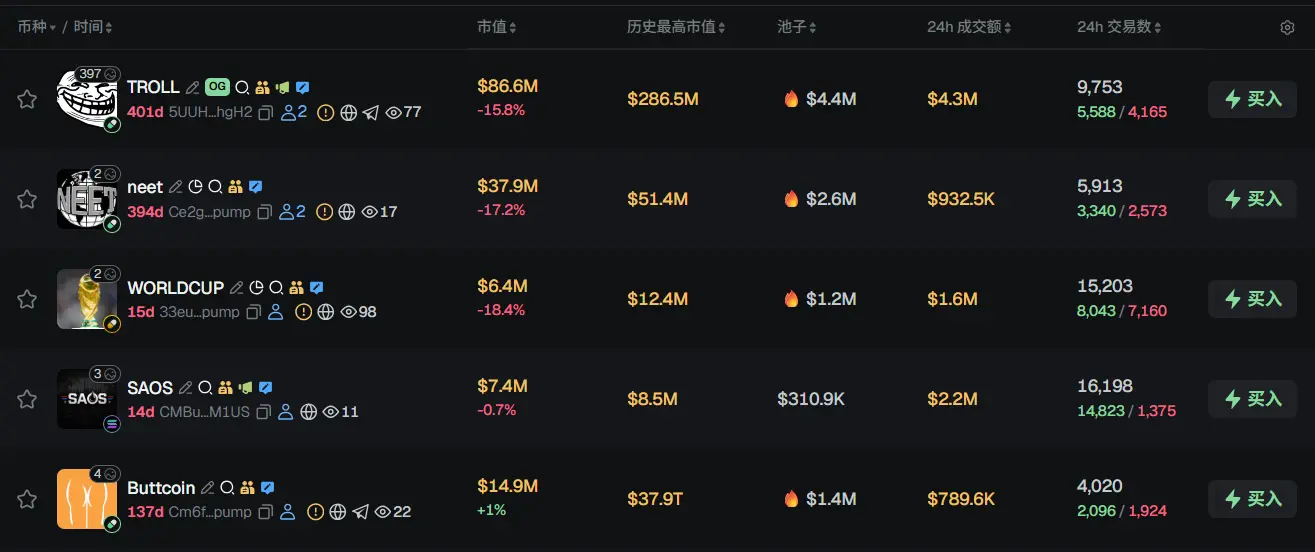
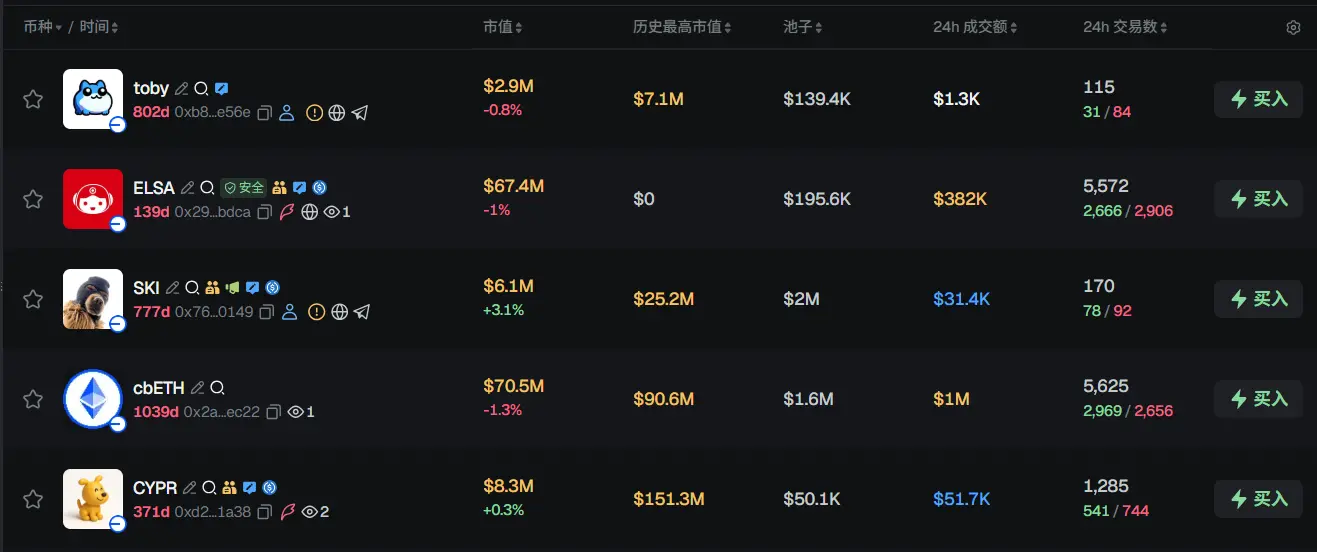
According to the meme token tracking and analysis platform GMGN market data as of May 27, 09:00,
The top five popular ETH tokens in the past 24 hours are: HEX, SHIB, LINK, PEPE, mUSD
The top five popular Solana tokens in the past 24 hours are: TROLL, neet, WORLDCUP, SAOS, Buttcoin
The top five popular Base tokens in the past 24 hours are: toby, ELSA, SKI, cbETH, CYPR
What are some noteworthy articles to read in the past 24 hours?
Insiders betting on Musk are reaping "historic returns"
The largest initial public offering (IPO) in history is entering its countdown phase. Elon Musk's SpaceX is expected to price its IPO on June 12, with trading starting the next day.
Investors are targeting a valuation of about $2 trillion. If calculated this way, Musk himself would directly become the world's first trillionaire. However, the real drama of this deal is that the wealth will not flow solely to Musk. With the disclosure of the prospectus, a group of loyal aides and early allies who have long been hidden behind Musk are seeing the value of their holdings come to light for the first time.
Their "loyalty" and patience are yielding the most generous returns in history.
Last week, the prediction market was shut down in India. Users trying to access polymarket.com only see the error message "This site can't be reached." The Indian Ministry of Electronics and Information Technology (MeitY) has issued a blocking order, requiring domestic internet service providers to cut access, citing that the platform has been classified as "online money gambling," which falls into a completely prohibited category.
On the same day, Bloomberg reported that Polymarket has appointed local representatives in Japan and is preparing to lobby for the "legalization of prediction markets," aiming to obtain approval from the Japanese government by 2030.
This back-and-forth precisely describes Polymarket's situation; the prediction market scale is continuously growing, but regulatory challenges in various countries make it difficult to move forward.
A comprehensive analysis of on-chain vaults: which eight sectors are rising and which are declining?
This part of the report provides a quantitative analysis of the vault landscape to offer a comprehensive picture of the field and its evolution. We analyze the ecosystem by category, tracking the TVL shifts of different vaults and curators.
We break down the concentration of curators and provide insights into major capital flows, placing the structural changes of vaults this year in a specific context.
Vaults should not be viewed as a single, all-encompassing market but should be evaluated based on their different implementations, each with different parameters, risk vectors, and responses to stress tests. Aggregated data can only provide a partial picture, necessitating a more detailed analytical perspective.
Before starting the analysis, it is important to define the term "vault" as the foundation of our methodology.
 Risk warning



Popular articles