








Morning Report | Korea's Mirae Asset Group has been approved to acquire 92.06% of Korbit for 133.4 billion won; RootData launches stock perpetual contract exchange rankings, aiming to establish a reliable data benchmark for investors
 July 9 Market Important Events Overview
Compiled by: ChainCatcher
What important events have occurred in the past 24 hours?
Analysis: If the Federal Reserve supports the U.S. stock market, the crypto market may benefit from liquidity injection
According to ChainCatcher, as reported by Cointelegraph, the U.S. stock market has grown by 68% over the past five years, adding approximately $6 trillion in market value this year, with 58% of Americans holding stocks. Analysts warn that if the stock market experiences a significant correction, the Federal Reserve may break decades of precedent by purchasing stock ETFs to support the market. Alvin Kan, Chief Operating Officer of Bitget Wallet, stated that once the Federal Reserve intervenes (by lowering interest rates, expanding its balance sheet, or even purchasing ETFs), the crypto market historically tends to enter a medium to long-term upward trend due to restored risk appetite and capital flowing back into high-beta assets. Tim Sun, a senior researcher at HashKey, pointed out that the macro pricing of crypto assets is still linked to U.S. dollar liquidity, real interest rates, and stock market risk sentiment. Once the market is convinced of a policy bottom, the risk premium for high-volatility assets will compress, benefiting Bitcoin and mainstream crypto assets.
WasabiCard CEO: Regulatory clarity is an important step for stablecoin payments to become mainstream
According to ChainCatcher, reports indicate that the U.S. "Digital Asset Market Clarity Act" (CLARITY Act) is expected to enter the next stage of the legislative process on July 4, 2026. As the regulatory framework for digital assets continues to improve, market expectations for the development of stablecoin payments have become clearer, providing businesses with more explicit policy references for adopting stablecoins for global payments. In this regard, WasabiCard CEO Ray Yang stated, "For businesses, regulatory transparency is more important than regulatory leniency. Companies can adapt to strict compliance requirements, but it is difficult to formulate long-term development plans in an unclear regulatory environment. The advancement of the CLARITY Act will create a clearer and more predictable development environment for stablecoin payments." As a global payment infrastructure platform for enterprise-level stablecoins, WasabiCard continues to enhance its compliance capabilities and global payment network, establishing a risk management system covering KYB, KYC, KYT, and AML, and holds U.S. MSB and MTL licenses to provide one-stop payment solutions for global issuance, stablecoin payments, global remittances, and fund distribution. Regarding the development prospects of stablecoin payments, Ray Yang believes, "As the global regulatory environment continues to improve, stablecoin payments will accelerate their integration into the global payment systems of enterprises. WasabiCard will continue to help businesses conduct global operations more robustly through compliant and reliable payment infrastructure."
U.S. Supreme Court expands presidential authority over personnel in financial regulatory agencies, which may affect SEC and CFTC's crypto regulation progress
According to ChainCatcher, as reported by The Block, the U.S. Supreme Court ruled 6 to 3 in favor of Trump's authority to replace leaders of several independent federal agencies, including the FTC, excluding the Federal Reserve, strengthening presidential control over regulatory personnel. At the time of this ruling, the SEC and CFTC were advancing a new round of crypto asset regulatory rules, including rule revisions, exemptions, and the delineation of responsibilities regarding digital assets. Currently, the SEC is led by three Republican commissioners, while the CFTC has only Chairman Michael Selig in office. Former CFTC officials and industry insiders indicated that the reduction in the number of commissioners may weaken internal agency dynamics and the robustness of rules, and may also make rules dominated by a single commissioner easier to rewrite or abolish in future administrations. However, as long as they comply with their respective authorizing statutes and the Administrative Procedure Act, the relevant rules still hold legal validity.
Pantera Capital: Hyperliquid's potential reachable market daily trading volume is about $10 trillion, regulation remains the biggest risk
According to ChainCatcher, Pantera Capital, a crypto venture fund, stated that Hyperliquid's potential reachable market size is approximately $10 trillion in nominal daily trading volume, which includes about $200 billion in 0DTE options and leveraged ETF trading, approximately $2 trillion in commodity derivatives trading, and about $8 trillion in foreign exchange derivatives trading that is currently almost entirely off-chain. Pantera indicated that if Hyperliquid can continuously capture a low single-digit share of this comprehensive trading volume, its revenue potential could reach five times its current level. It is estimated that if the HIP-3 market is calculated at an annualized nominal trading volume of $36.5 trillion and captures a 1% market share, under the assumption of a 2 basis point comprehensive fee rate and a 50% Hyperliquid economic share, Hyperliquid could generate about $3.7 billion in revenue. However, Pantera also pointed out that regulation is the biggest risk facing Hyperliquid. Perpetual contracts are not yet fully open in the U.S., and if the U.S. pushes for the legalization of related products and launches regulated platforms in the future, Hyperliquid may face more intense competition, and some U.S. user trading volumes may also shift to compliant venues. Pantera also believes that Hyperliquid may eventually launch a regulated version for the U.S. market, similar to other platforms.
Data: Public companies hold a total of 1.3401 million Bitcoins, with Strategy accounting for nearly 63%
According to ChainCatcher, data from CoinMarketCap shows that public companies currently hold a total of 1,340,145 Bitcoins, accounting for 6.38% of the total Bitcoin supply. Among them, Strategy's holdings account for 62.96%, ranking first; Others account for 15.45%; Twenty One Capital and XXI account for 3.25% and 3.21%, respectively, while MARA accounts for 2.71%. Against the backdrop of record net outflows from Bitcoin ETFs in June, corporate treasury allocations have shown divergence. Data shows that Strategy has recently reduced some Bitcoin holdings, while Strive's holdings have exceeded 19,800 Bitcoins, and mining companies like Riot and CleanSpark continue to increase their positions.
U.S. Senator Wyden urges the Senate to retain blockchain developer protection provisions in the Clarity Act
According to ChainCatcher, as reported by The Block, U.S. Democratic Senator Ron Wyden sent a letter to bipartisan Senate leaders urging the retention of Section 604 of the Clarity Act, the "Blockchain Regulatory Certainty Act." This provision provides a safe harbor for non-custodial developers, clarifying that they do not fall under the category of money transmitters, and has received widespread support from the crypto industry, as it provides legal certainty for software developers and prevents the outflow of innovation. However, law enforcement agencies and Catholic leaders have warned that this provision may weaken regulatory capabilities to combat human trafficking and hinder investigations. In his letter, Wyden countered that this provision aligns the policies of the DOJ and FinCEN, ensuring resources are focused on illegal money transmission activities, and stipulates that non-custodial developers are not protected if they are found to transfer or use funds from illegal activities. This controversy is one of the main unresolved issues in the advancement of the Clarity Act, with another being ethical provisions. The time window before the Senate's August recess is narrowing.
DeFi asset management and risk analysis company Gauntlet secures $125 million investment from SBI Holdings
According to ChainCatcher, as reported by Fortune, DeFi asset management and risk analysis company Gauntlet has completed a $125 million financing round, exclusively invested by Japanese financial group SBI Holdings, with the financing completed in June this year, and the specific valuation has not been disclosed. This is Gauntlet's largest financing round since its establishment in 2018, far exceeding its $24 million Series B financing led by Ribbit Capital in 2022, which had a valuation of $1 billion. Gauntlet was founded by former Wall Street quantitative trader Tarun Chitra, initially focusing on providing stress testing and vulnerability analysis services for DeFi protocols. However, as the DAO governance model has waned, it has gradually transformed into a "treasury curation" business—using quantitative analysis to assess the risk of yield strategies and helping institutional investors manage digital asset allocations. Its clients include asset management giants like Apollo, Coinbase, and stablecoin issuer Circle.
Strive executive: Bullish, neutral, and bearish investors all have corresponding tools, more capital will flow into Bitcoin
According to ChainCatcher, Joe Burnett, Vice President of Bitcoin Strategy at Strive, stated that there are currently three types of investment views on Bitcoin in the market: first, bullish investors believe that Bitcoin's long-term annualized return rate exceeds financing costs, so they are willing to borrow long-term capital to increase their Bitcoin holdings; second, neutral investors view Bitcoin as a "Digital Credit" asset, only needing to believe that Bitcoin will not disappear and can roughly follow U.S. dollar inflation growth to meet their return needs. For example, according to Michael Saylor, if Bitcoin grows at an average annual rate of 3.3%, it can continuously rely on capital gains to pay current dividends; third, bearish investors can express their views by shorting Bitcoin or using leveraged Bitcoin products. Burnett believes that as bullish, neutral, and bearish investors all have corresponding Bitcoin investment tools, more capital is expected to enter the Bitcoin market.
Mirae Asset Group approved to acquire 92.06% of Korbit for 133.4 billion KRW
According to ChainCatcher, as reported by Etoday, South Korean regulators announced the approval of Mirae Asset Consulting, a subsidiary of Mirae Asset Group, to acquire a 92.06% stake in the South Korean cryptocurrency exchange Korbit for approximately 133.4 billion KRW (about $98 million). This transaction marks the first acquisition of a virtual asset exchange by a traditional financial group in South Korea. The Korea Fair Trade Commission also released data on the market share of South Korean cryptocurrency exchanges for 2025, showing that Upbit accounts for about 69%, Bithumb about 28%, Coinone about 2%, Korbit about 0.5%, and Gopax about 0.1%. Due to Korbit's low market share, regulators believe that this merger will not create an exclusionary effect in the securities or asset management sectors, nor will it significantly impact the competitive landscape for future digital asset ETFs.
Russia's largest private bank Alfa-Bank plans to offer cryptocurrency services to clients
According to ChainCatcher, as reported by Bits.media, Russia's largest private bank Alfa-Bank announced plans to become a digital custodian and provide cryptocurrency-related services, not only to its own clients but also to other legal entities. Dmitry Vitman, the bank's Chief Operating Officer, stated that the bank hopes to create investment tools based on open blockchain to attract foreign investors and develop proprietary products and tools that can compete in international markets. He expects that after the government’s cryptocurrency regulatory bill takes effect, Russia may see retail brokerage services emerge by the end of 2026 or early 2027, involving both Russian and foreign infrastructure, but large-scale liquidity is not expected until at least the end of 2027. Digital custodians are regulated entities responsible for monitoring all client cryptocurrency transactions and freezing transfers to addresses not approved by the state under Russian law.
U.S. regulators plan to block CME's application for 24-hour oil contracts
According to ChainCatcher, the U.S. Commodity Futures Trading Commission (CFTC) plans to block the Chicago Mercantile Exchange's (CME) application for the rapid listing of 24x7 oil contracts due to concerns that the energy market is not yet prepared to handle a surge of around-the-clock derivative contracts. CME stated in June that it plans to offer 24-hour trading for a futures contract linked to WTI crude oil in units of 10 barrels, citing that investors want to manage their positions "whenever news breaks." On Wednesday, CME submitted a self-certification application for this new product, meaning the CFTC has only one day to intervene; otherwise, the contract will be allowed to trade. According to insiders, the CFTC plans to block CME's self-certification. CFTC Chairman Michael Selig has met with executives from energy companies such as Shell, Vitol, BP, and ExxonMobil in recent weeks. Another application submitted by CME for the same product (which requires a 45-day review period) is still under review by regulators.
Chris Turner: ECB rate hike expectations support the euro, Fed outlook dominates the market
According to ChainCatcher, as reported by Jin10, ING analyst Chris Turner stated that expectations for the European Central Bank to possibly raise rates again in September are supporting the euro. He pointed out that tensions between the U.S. and Iran have led to soaring oil prices, but the euro has shown resilience as the yield differential has narrowed in favor of the euro. However, he also stated that the outlook for Fed rate hikes is "the more dominant theme," which could lead to the euro falling below 1.14 against the dollar.
Hyundai Card completes cross-border remittance verification using stablecoins between Hyundai Motor's overseas entities, taking only 7 minutes
According to ChainCatcher, Hyundai Card announced on the 9th that it has completed a proof of concept (PoC) for cross-border remittances using stablecoins between Hyundai Motor's U.S. entity (HMA) and Mexican entity (HMM). In the first PoC, the U.S. entity converted $20,000 into USDT and then remitted it to the Mexican entity, which converted it back to dollars. The entire process, including international remittance and verification, averaged only 7 minutes, far less than the 3 to 4 hours typically required for traditional bank cross-border remittances. Tether and Avalanche participated in this verification. The second phase of the PoC will start at the end of this month, targeting Hyundai Motor's European entity, to conduct actual remittances in local currencies instead of dollars, verifying the cost-saving effects of currency exchange, with Circle and Visa participating as partners. Hyundai Card emphasized that this verification has comprehensively considered regulatory requirements such as accounting, taxation, legal, and internal controls, going beyond mere technical testing to reach the level of actual business deployment, with plans to expand the application of stablecoins to inter-entity settlements and fund transfers within Hyundai Motor Group's global network.
U.S. 10-year Treasury futures decline, with Fed expected to raise rates by 38 basis points in December
According to ChainCatcher, as reported by Jin10, U.S. 10-year Treasury futures fell by 3 points, and federal funds futures indicate that the Fed is expected to raise rates by 38 basis points by December.
Probability of the Fed maintaining rates in July is 69%, with a 51.9% probability of a rate hike in September
According to ChainCatcher, as reported by Jin10, CME's "FedWatch" shows that the probability of the Fed maintaining rates in July is 69%, with a cumulative probability of a 25 basis point rate hike at 31%. By September, the probability of maintaining rates is 31.1%, with a cumulative probability of a 25 basis point rate hike at 51.9% and a cumulative probability of a 50 basis point hike at 17%.
Data: In the past month, the transfer amount of tokenized stocks was approximately $8.41 billion, a month-on-month increase of 105%
According to ChainCatcher, data from Cointelegraph shows that the transfer amount of tokenized stocks increased by 105% to $8.41 billion in the past month, with the distributed value increasing by 43% to $2.16 billion, and the number of holders growing by 17% to over 409,000. The growth was primarily driven by leading platforms. Among them, Figure's distributed asset value grew by 935% in the past 30 days, Securitize grew by 332%, and xStocks grew by about 62%. In terms of distributed value, Ondo ranks first with approximately $846 million, followed by Stocks, Securitize, and Figure with approximately $708 million, $306 million, and $239 million, respectively. The report states that tokenized stocks have outperformed other RWA sub-sectors. During the same period, the distributed asset value of tokenized U.S. Treasuries, the largest asset class, remained basically flat, while the overall tokenized RWA market grew by only about 4% to $33.5 billion. Over the past year, the tokenized stock market has grown from approximately $37.8 million to $2.16 billion, an increase of about 471%.
Block accused of equating Cash App's security with traditional banks, agrees to pay $45 million to settle
According to ChainCatcher, The Block reported that Block, the parent company of Cash App, has agreed to pay $45 million to settle with regulatory agencies in nearly 50 U.S. states over allegations of misleading security advertising and insufficient anti-fraud measures. Regulators accused Block of promoting Cash App as having security guarantees comparable to traditional banks but failing to establish a robust fraud detection system or provide an effective fraud reporting hotline, resulting in user losses due to fraud. Additionally, regulators alleged that Block continued marketing activities despite being aware of the increase in fraud, amplifying the risks in promotional activities. Under the settlement agreement, Block must improve customer support services, provide 24-hour human customer service, and cease related advertising regarding Cash App's security. Block denies any wrongdoing, stating that the settlement involves previously disclosed historical legacy issues.
JPMorgan: The biggest risk to Bitcoin may come from blockchain adoption unrelated to public chains
According to ChainCatcher, as reported by The Block, JPMorgan analysts pointed out that Strategy's recent sell-off of Bitcoin and its BTC monetization plans may bring temporary selling pressure, but this is not the main structural risk for Bitcoin. The greater risk lies in blockchain applications (including payments, clearing, RWA, etc.) increasingly shifting towards bank-built or regulatory-friendly permissioned chains and unified ledgers, rather than public chains. If tokenized deposits, SWIFT blockchain projects, central bank digital currencies, etc., are implemented within traditional financial infrastructure, and settlements increasingly adopt private or delayed netting models, the activity, liquidity, and capital flow of public chains and tokens may be weakened, and the demand for stablecoins may also be partially replaced by bank tokenized deposits, thereby suppressing Bitcoin's performance. Analysts state that a hybrid architecture and favorable regulation for public chain stablecoins or a strengthened "digital gold" narrative may correct the above judgment.
Post-quantum cryptography management platform QIZ Security completes $17 million seed round financing, led by Bessemer Venture Partners and Merlin Ventures
According to ChainCatcher, as reported by PR Newswire, QIZ Security announced the completion of a $17 million seed round financing, led by Bessemer Venture Partners and Merlin Ventures, with participation from Evolution Equity Partners, Qbeat Ventures, Singtel Innov8, Qino Cyber Capital, and others. The company positions itself as a management platform for crypto assets and post-quantum cryptography (PQC), providing continuous crypto asset discovery, risk modeling, and governance, helping large financial, telecommunications, healthcare, and critical infrastructure clients achieve "crypto agility" to address the risk of quantum computing "Q-Day," which could crack existing encryption systems as early as 2029, and collaborates with Cisco, AWS, Google, CrowdStrike, Deloitte, EY, IBM, and others to promote enterprise quantum security migration planning.
Data: The probability of Anthropic's valuation reaching $1.5 trillion by the end of the year on Polymarket rises to 78%, up 47% in 24 hours
According to ChainCatcher, data from the PPP prediction market tool shows that the probability of Anthropic's valuation reaching $1.5 trillion by the end of 2026 on Polymarket has risen to 78%, up 47% in 24 hours; the probability of reaching $2 trillion has risen to 37%, up 19%. On June 1, Anthropic secretly submitted an S-1 registration statement draft to the U.S. SEC, officially starting the IPO process in the U.S. Recently, research firm SemiAnalysis released a report stating that Anthropic is expected to achieve $1 billion in GAAP operating profit in the third quarter of 2026, with an operating profit margin of 6%.
MARA acquires Texas 2000 MW computing power park project company for up to $600 million
According to ChainCatcher, regulatory documents show that MARA Holdings' subsidiary Volt Texas has signed an agreement to acquire a majority stake in MAT 1177 LLC, which holds the Texas data infrastructure park project, retaining only a small minority stake for the seller. The project company has signed a letter of intent with an electric company to provide up to 2000 megawatts of power for the construction of a large digital infrastructure park that can support high-performance computing and Bitcoin mining. The transaction price will be paid in installments based on milestones, with a maximum cumulative acquisition amount of up to $600 million if all development milestones are completed. The acquisition of related land, power access, and subsequent data center lease execution will trigger installment payment obligations.
RootData launches stock perpetual contract exchange rankings, aiming to establish a credible data benchmark for investors
According to ChainCatcher, RootData has launched stock perpetual contract exchange rankings, covering centralized and decentralized platforms that support stock perpetual contracts and other stock derivatives trading, aiming to establish a credible data benchmark for investors. It is reported that RootData's ranking collects first-hand data directly through official APIs of exchanges and public market data sources, rather than relying on third-party data service providers, thereby ensuring the originality, timeliness, and accuracy of the data to the greatest extent. In addition, the ranking system will continue to track various platforms' performance in trading volume, open interest, liquidity, spreads, depth, trading costs, and contract coverage across multiple dimensions. Currently, RootData's data submission channel is open, allowing exchanges with stock perpetual contract businesses to submit official APIs and supplementary data.
Data: Ethereum spot ETF saw total net inflow of $70.4773 million yesterday, continuing 5 days of net inflow
According to ChainCatcher, based on SoSoValue data, on July 8, Eastern Time, the total net inflow of Ethereum spot ETFs was $70.4773 million. The Ethereum spot ETF with the highest single-day net inflow yesterday was Fidelity ETF FETH, with a single-day net inflow of $69.2086 million, bringing FETH's historical total net inflow to $2.181 billion. The second was VanEck ETF ETHV, with a single-day net inflow of $1.2687 million, bringing ETHV's historical total net inflow to $163 million. As of the time of publication, the total net asset value of Ethereum spot ETFs was $9.339 billion, with an ETF net asset ratio (market cap compared to total Ethereum market cap) of 4.46%, and historical cumulative net inflow reaching $11.007 billion.
Data: In the past 24 hours, the total liquidation across the network was $331 million, with long positions liquidated at $261 million and short positions at $69.4852 million
According to ChainCatcher, based on Coinglass data, in the past 24 hours, the total liquidation across the network was $331 million, with long positions liquidated at $261 million and short positions at $69.4852 million. Among them, Bitcoin long positions were liquidated at $57.3906 million, Bitcoin short positions at $18.2983 million, Ethereum long positions at $51.5561 million, and Ethereum short positions at $13.6441 million. Additionally, in the last 24 hours, a total of 115,759 people were liquidated globally, with the largest single liquidation occurring on OKX - ETH-USDT-SWAP worth $4.3798 million.
Blockchain analysis company Elliptic announces investment from Circle Ventures
According to ChainCatcher, blockchain analysis company Elliptic announced that it has received strategic investment from Circle Ventures. Previously, the company completed a $120 million Series D financing round led by One Peak, with participation from Nasdaq Ventures, Deutsche Bank, and British Business Bank in May this year. Meanwhile, Circle has officially joined Elliptic's Agentic design partner program, which brings together infrastructure providers, compliance agencies, and technology teams to jointly develop compliance solutions for AI agents. Elliptic pointed out that AI agents differ from traditional bots in that they can autonomously set goals and make independent decisions, operating at speeds and scales that far exceed the capacity limits of human compliance systems, necessitating specialized solutions to address this.
PayPal USD officially launched on the Polygon chain
According to ChainCatcher, official news from Paxos announced that PayPal USD (PYUSD) has officially been natively issued on the Polygon chain and is providing services to the market through Polygon's "Open Money Stack." This move aims to provide on-chain dollar settlement solutions under federal regulation for institutions and enterprises, covering deposit, withdrawal, and compliance functions. The Polygon chain currently has an average daily stablecoin settlement amount exceeding $2.5 billion, with a total settlement amount exceeding $2.6 trillion. PYUSD is issued by Paxos, a national trust chartered institution regulated by the Office of the Comptroller of the Currency (OCC).
Data: Bitcoin spot ETF saw total net outflow of $84.8601 million yesterday, with Grayscale GBTC leading the net outflow at $63.6893 million
According to ChainCatcher, based on SoSoValue data, yesterday (July 8, Eastern Time), the total net outflow of Bitcoin spot ETFs was $84.8601 million. The Bitcoin spot ETF with the highest single-day net inflow yesterday was Grayscale Bitcoin Trust ETF BTC, with a single-day net inflow of $52.8336 million, bringing BTC's historical total net inflow to $2.493 billion. The Bitcoin spot ETF with the highest single-day net outflow yesterday was Grayscale ETF GBTC, with a single-day net outflow of $63.6893 million, bringing GBTC's historical total net outflow to $27.279 billion. As of the time of publication, the total net asset value of Bitcoin spot ETFs was $75.339 billion, with an ETF net asset ratio (market cap compared to total Bitcoin market cap) of 6.05%, and historical cumulative net inflow reaching $51.281 billion.
KAST user terms spark controversy: depositing stablecoins transfers ownership, ether.fi CEO publicly accuses it of fraud
According to ChainCatcher, a public dispute lasting five days between ether.fi CEO Mike Silagadze and KAST CEO Raagulan Pathy has brought KAST's user deposit terms into the public spotlight. Silagadze publicly shared screenshots showing that KAST's terms treat user-deposited stablecoins as sold to KAST, with ownership immediately transferred to the company, and the original terms did not mention that users could request redemption. The Defiant verified through the Wayback Machine that these terms had been in use at least since June 25. As of July 7, KAST updated its terms to add users' right to redeem unspent balances, but the legal structure remains unchanged—deposits are still defined as sales, with the company's total liability capped at $500, registered in Comoros on Anjouan Island, and subject to Seychelles law. Additionally, KAST previously promised that points would be exchanged for tokens on a one-to-one basis but changed on July 2 to convert to tokenized equity, causing user dissatisfaction. Research account Decentralisedco pointed out that KAST could earn about 4-5% annualized returns from idle balances by counting user stablecoins as company assets, a structure different from competitors like ether.fi that settle through user-controlled smart contracts.
Robinhood Chain sees surge in on-chain activity, DEX daily trading volume exceeds $560 million
According to ChainCatcher, the Robinhood Chain ecosystem has recently experienced explosive growth. The first meme coin on the chain, Cash Cat, has surpassed a market cap of $100 million, and DEX daily trading volume has exceeded $560 million. The number of active addresses on the chain is approaching 200,000, with over 140,000 being new addresses making their first trades, indicating a large influx of new users. In terms of token issuance, nearly 16,000 new tokens were created in a single day, with 7 Robinhood Chain meme coins currently having a market cap exceeding $1 million.
Meme Popularity Rankings
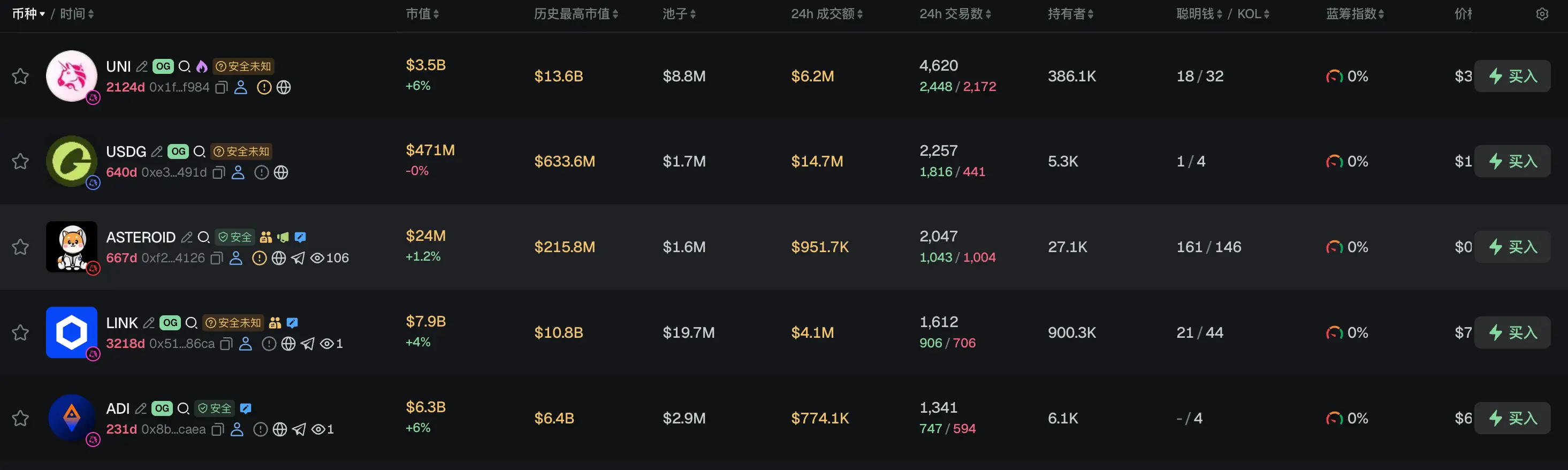
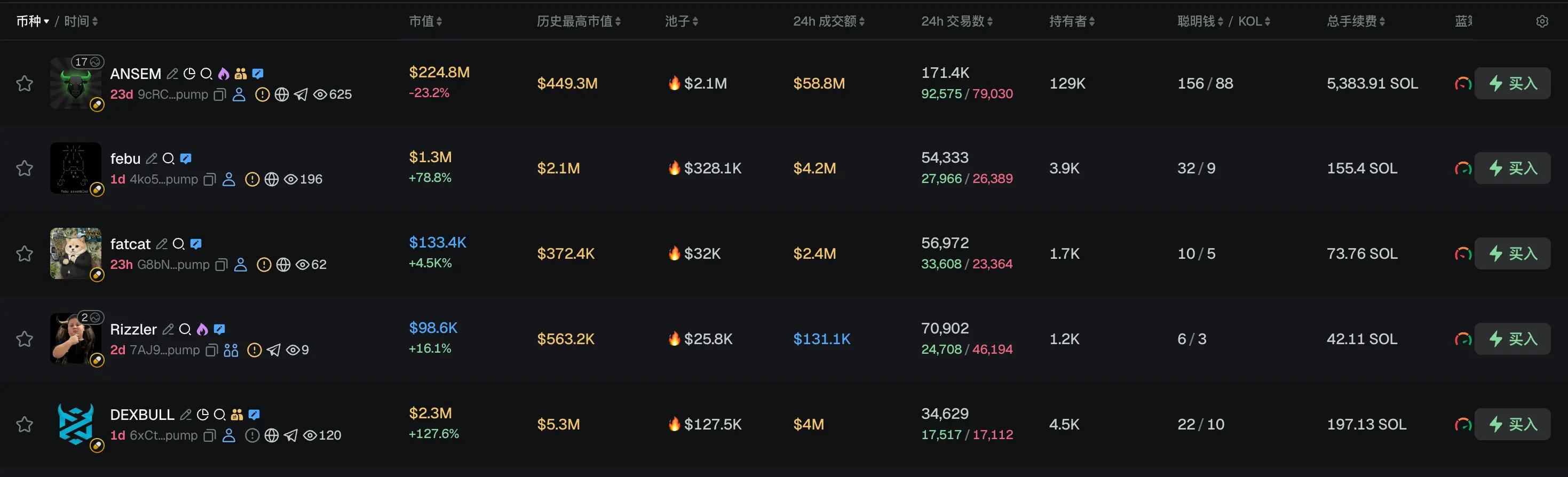
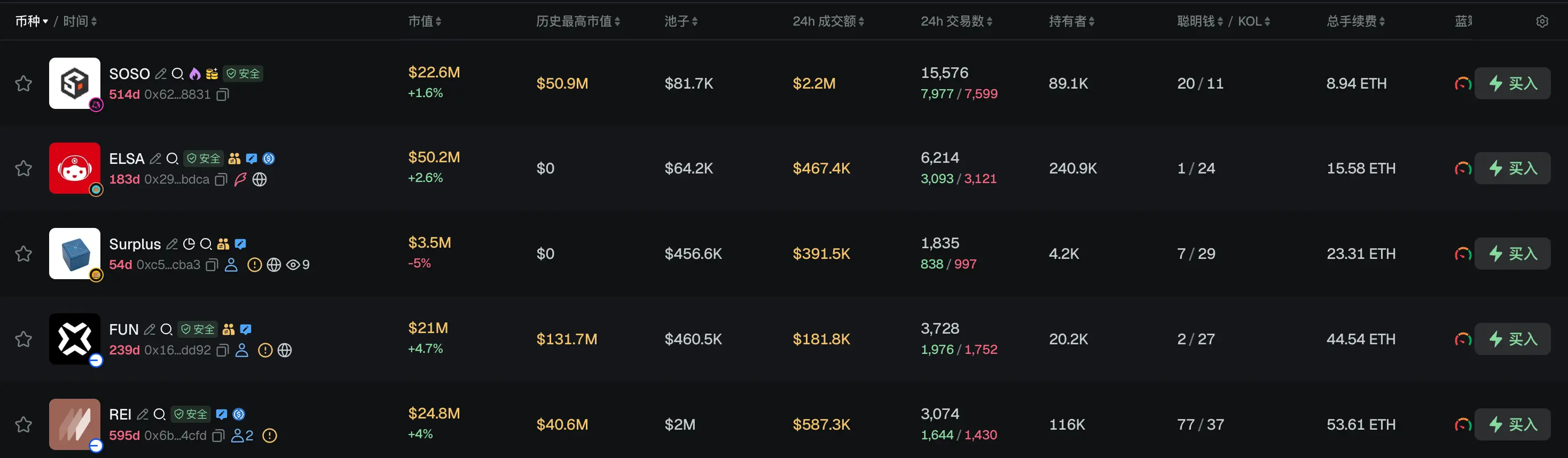
According to the meme token tracking and analysis platform GMGN, as of July 10, 09:30,
The top five popular tokens on ETH in the past 24 hours are: UNI, USDG, ASTEROID, LINK, ADI
The top five popular tokens on Solana in the past 24 hours are: ANSEM, febu, fatcat, Rizzler, DEXBULL
The top five popular tokens on Base in the past 24 hours are: SOSO, ELSA, Surplus, FUN, REI
What are some interesting articles worth reading in the past 24 hours?
Perpetual contracts began in the fringes of cryptocurrency, where market structures evolved the fastest. They are now moving to the center of global finance. Recent actions by the CFTC have not resolved all regulatory issues, especially for unlicensed on-chain platforms, but they do mark an important shift. The U.S. is beginning to embrace this product rather than reject it. Hyperliquid is at the center of this transition. It combines the best attributes of DeFi (open access, 24/7 markets, transparent settlements, and high alignment of interests) with a product that increasingly seems more suited to modern trading than its competitive tools. The question is no longer whether perpetual contracts are important outside of cryptocurrency; the market has answered that. The question is whether the infrastructure that the blockchain industry built first can become a place where more and more financial sectors engage in risk pricing, trading, and price discovery.
Goldman Sachs expects core PCE to fall to 3.0% year-on-year by the end of 2026 (currently 3.4%), and core CPI to fall to 2.6% (currently 2.9%), with month-on-month readings remaining moderate in the coming months. The baseline scenario is to maintain rates unchanged throughout 2026, but acknowledges some risk of rate hikes. Citigroup's judgment is the most dovish. Hollenhorst believes that the market's pricing for a July rate hike is "too hawkish relative to the Fed's reaction function." He expects that as the unemployment rate rises in the coming months, the balance within the committee will shift from rate hikes to rate cuts, with the baseline scenario being a 25 basis point cut in both October and December this year, and another 25 basis points in January 2027.
Binance Research: Stablecoins are reshaping the financial landscape
The underlying forces are structural rather than speculative: currency instability, financial exclusion, an 18-fold yield gap, time zone arbitrage, and the arrival of software conducting business activities. None of these will reverse due to emotional reversals. Risks are real and worth stating. Reserve transparency and anchor integrity are the uncompromising foundations of this asset class. Regulation is converging unevenly, and a fragmented rulebook may slow down institutions or fracture liquidity across borders. Activities are unevenly distributed across different venues, public chains, and issuers—this concentration highlights the importance of continuous investment in resilience building and regulatory communication as the market matures. The direction is clear. Stablecoins initially entered the financial system as tools for trading crypto assets, and now they are becoming the underlying layer upon which the rest of the financial system relies for settlement.
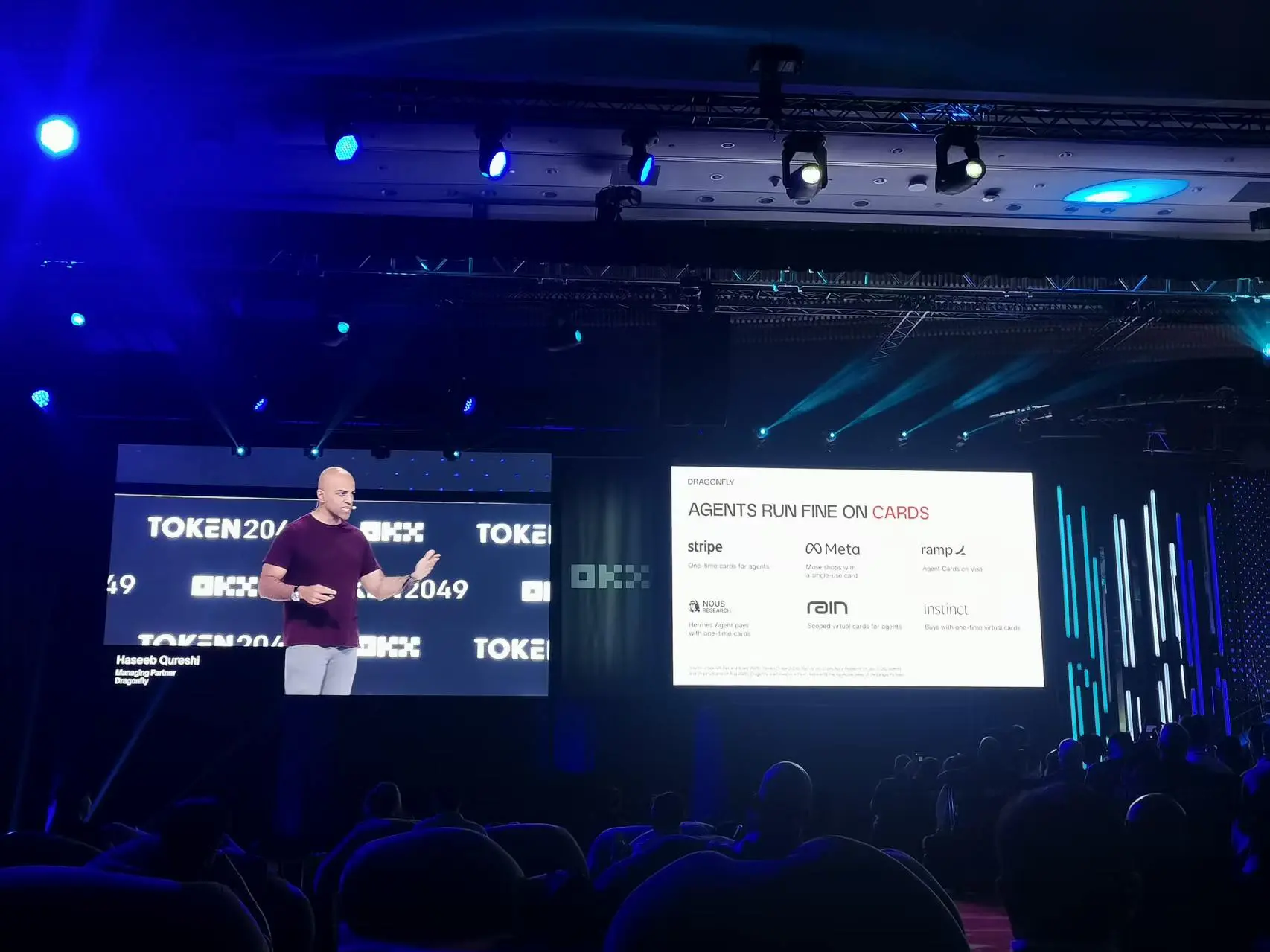
Dragonfly partner: BTC is intergenerational wealth, firmly optimistic about ETH and SOL
Today's cryptocurrencies are the same. We have clarity on the direction and potential of this technology, and what remains is to build, execute, and scale solidly. If you are someone who constantly seeks the "Wild West," enjoying extreme uncertainty and crazy opportunities, this may no longer be the best place for you—perhaps fields like AI, which are still in early exploration, will be more appealing. But for me, this does not mean the end of the industry; it is a testament that we are on the right path, and those who participated early and persevered are reaping the sense of achievement and returns that lead this industry toward maturity. The industry continues to evolve; it’s just that the gameplay has changed.
Zapper's previous profit model mainly relied on small fees collected from DEX aggregation trading, but in the fiercely competitive aggregator space, the fee space has been continuously compressed. Meanwhile, maintaining data indexing and real-time updates covering multiple chains and hundreds of protocols requires ongoing investment in engineering resources and infrastructure costs. When the logic of "traffic first, monetization later" fails to materialize during a prolonged market contraction, shutting down becomes a necessary choice. Zapper ultimately fell into the gap between traffic and revenue. Its shutdown does not mean that the value of DeFi entry has been disproven, but rather indicates that without strong trading monetization channels, pure tool products struggle to survive independently. The next Zapper may not emerge, but the industry still needs a better "entry."
Goldman Sachs: How to invest in tech stocks in the second half of the year?
Meanwhile, market concerns about AI undermining content value are easing. Goldman Sachs believes that AI is more likely to become a new tool for enhancing commercialization efficiency and improving operational efficiency, rather than simply replacing existing businesses, thus improving the growth logic for some internet and digital content companies. Overall, Goldman Sachs believes that technology investments in Asia in the second half of the year should still focus on the AI theme, but the allocation strategy needs to be more balanced: offensively, continue to focus on AI infrastructure and hardware supply chains with improving prosperity; defensively, pay attention to software and IT service companies that can create new demand and enhance efficiency through AI, balancing growth and defensiveness in a more volatile market environment.
 Risk warning

Popular articles





