Morning Report | Coinbase partners with Standard Chartered Bank to expand multi-currency fiat channels; Sharplink and Forward to be included in the Russell Index; JPMorgan may issue stablecoins in the future

 Overview of Important Market Events on May 27
Compiled by: ChainCatcher
Important News:
- Sharplink and Forward to be included in Russell Index, providing indirect exposure to ETH and SOL
- Coinbase partners with Standard Chartered to expand multi-currency fiat channels
- Tom Lee: The super cycle in the crypto market is coming, ETH will benefit from Wall Street tokenization and the AI Agent wave
- Hong Kong Monetary Authority: Three new regulatory measures for investment accounts of mainland investors, account opening verification back to January 2023
- Polymarket plans to require traders to undergo KYC to address sanctions and legal risks
- Bloomberg analyst: SK Hynix ETF size has surged tenfold this year, becoming the third-largest ETF in the Hong Kong market
- JPMorgan CEO: JPMorgan may issue a stablecoin in the future
What important events happened in the past 24 hours?
JPMorgan CEO: JPMorgan may issue a stablecoin in the future
According to ChainCatcher, JPMorgan CEO Jamie Dimon stated that JPMorgan may issue a stablecoin in the future, as reported by Wall Street Journal.
ChainCatcher reports that Bloomberg senior ETF analyst Eric Balchunas stated on the X platform that the 2x leveraged SK Hynix ETF has seen its asset size grow approximately tenfold this year, making it the third-largest ETF in the Hong Kong market, accounting for about 8.5% of total ETF assets.
Eric Balchunas also pointed out that the ETF's daily trading volume exceeds $1 billion. When equivalently calculated to the U.S. market size, this corresponds to a daily trading level of about $150 billion, which is considered extremely rare in the global ETF market. If proportionally converted, the ETF's size in the U.S. market would be equivalent to about $1.3 trillion, but products of this magnitude do not currently exist globally.
Forbes: Hyperliquid launches SpaceX perpetual contracts, raising regulatory gray area controversy
ChainCatcher reports that according to Forbes, the decentralized derivatives platform Hyperliquid has launched SpaceX pre-IPO perpetual contracts (SPCX-USDC) through Trade.xyz, raising global regulatory gray area controversies. The contract allows leveraged trading without holding any SpaceX stock or obtaining company authorization, with an initial reference price of $150, corresponding to an implied valuation of about $1.78 trillion, which briefly surged to $216.
It is reported that the contract is settled in USDC, with prices sourced from market oracles, and is not linked to SpaceX's actual financials or equity structure. SpaceX itself has neither authorized nor participated in this market, but its valuation is being priced and traded in real-time on-chain, raising concerns about "private company price discovery being taken over by decentralized derivatives." This market stems from Hyperliquid's HIP-3 mechanism, which supports the notion that private company valuations may be being repriced by on-chain derivatives, while the regulatory framework has yet to be established.
Polymarket plans to require traders to undergo KYC to address sanctions and legal risks
ChainCatcher reports that according to The Information, the prediction market Polymarket is facing increasing regulatory and compliance pressures regarding sanctions, and the platform is pushing for traders to undergo identity verification (KYC) to mitigate potential legal and compliance risks.
It is reported that although Polymarket's platform rules do not allow such behavior in certain regions, some users still participate in market trading through automated trading bots, creating gray usage paths in regions like Russia. Some developers even use tools like Telegram to organize trading traffic and expand user bases. As the platform grows and regulatory scrutiny increases, Polymarket is being forced to seek a balance between decentralized prediction markets and compliance requirements to address potential sanctions and legal risks.
ChainCatcher reports that according to Caixin, regarding the issue of "some banks in Hong Kong requiring a declaration to open investment accounts," the Hong Kong Monetary Authority responded today that the relevant regulatory requirements were issued to all recognized institutions on May 22.
Materials provided by the Hong Kong Monetary Authority show that registered institutions are required to take three additional measures when opening and managing investment accounts for mainland investors, including:
- Closing investment accounts opened using suspicious or forged documents, identifying customer investment accounts that have used suspicious or forged documents since January 2023 or any other period specified by the Monetary Authority, including identification documents;
- Closing zero-balance inactive investment accounts, specifically referring to investment accounts held by mainland investors that have no asset balance as of May 22, 2026 (reference date), and have had no customer activity in the 12 months prior to the reference date;
- When opening new investment accounts, obtaining a written declaration from the mainland investor confirming that all funds used to support investment activities and related settlements come from legal sources outside mainland China.
The relevant documents indicate that the additional regulatory measures apply only to investment accounts, including investment accounts within comprehensive bank accounts, while non-investment functions (such as regular savings, time deposits, payments, loans, and credit cards) are not subject to these measures; additionally, the applicable subjects of the additional measures are individual clients and do not apply to corporate clients and institutional clients.
ChainCatcher reports that famous trader Killa (@KillaXBT) stated that from the perspective of actual prices over 180 days, the time investors have been in a loss state during this adjustment may not be sufficient.
Historical experience shows that bear markets are usually accompanied by prolonged periods of continuous losses, with many investors remaining in a state of unrealized losses for a long time. If historical patterns repeat, the current adjustment cycle may require more time to digest, and the market may still need to undergo a longer bottoming process.
ChainCatcher reports that Ethereum co-founder Vitalik Buterin stated that he will no longer write regular blog posts and has decided to try writing some sci-fi novels on the theme of decentralized governance.
According to the link he published, he has completed the first and second chapters of the sci-fi novel.
Falcon Finance and Anchorage launch institutional compliance stablecoin fUSD
ChainCatcher reports that Falcon Finance officially announced a partnership with Anchorage Digital Bank to jointly launch the dollar stablecoin fUSD, which is positioned as an institutional-grade payment stablecoin compliant with the GENIUS Act framework and has been launched on Ceffu's custody and collateral infrastructure.
It is reported that fUSD is backed by assets such as U.S. Treasury bonds, issued by Anchorage Digital Bank, but does not directly pay interest or returns to holders.
ChainCatcher reports that according to Digital Asset, the trading volume of domestic virtual assets in South Korea has dropped to about 8% of KOSPI trading volume, less than one-tenth. Media statistics show that the trading volume ratio of the Korean won market exchanges (Upbit, Bithumb, Coinone, Korbit, Gopax) to KOSPI trading volume is only 8%.
Reports indicate that the South Korean virtual asset market has been weakening since the second half of 2025, with a significant drop following a large-scale futures liquidation in October 2025, while KOSPI has strengthened due to semiconductor prosperity and policy support. Additionally, according to CryptoQuant data, the Bitcoin Korea premium indicator has been mostly negative since March, reflecting weak buying interest in the Korean market.
ChainCatcher reports that TD Cowen's Washington research team managing director Jaret Seiberg released a report on Tuesday stating that the political environment surrounding the CLARITY Act continues to deteriorate, and the likelihood of this crypto market structure bill passing this year is decreasing. Seiberg pointed out that recent controversies involving President Trump make it difficult for Democrats to support the bill without conflict of interest provisions.
Seiberg stated that these events increase pressure on Democrats to include provisions regarding conflicts of interest related to the president, while also making Republicans reluctant to push legislation that could force them to vote against related amendments. He expects lawmakers may choose to wait and see, but the midterm elections leave limited room for further delays. He previously stated that the legislative window could extend until the August recess, and if not resolved this year, the passing time may be delayed until 2027.
ChainCatcher reports that a16z crypto stated that not all tokenized assets are being fully utilized on-chain. Bonds are currently the largest category of tokenized assets, with a market value of $15.2 billion, but only about 5% of the supply is used in DeFi; precious metals are similar, having been tokenized but mostly lying idle.
In contrast, smaller categories perform differently: reinsurance tokens have 84% of their supply deployed in DeFi, while private credit is at 33%. a16z believes this is logical, as the categories with the highest DeFi usage were built for DeFi from the start, such as Nexus Mutual and Maple Finance.
a16z pointed out that many practices currently referred to as tokenization are actually closer to digitization, meaning that records are moved onto the blockchain without unlocking more new functionalities, while one of the core value propositions of on-chain financial systems is composability.
ChainCatcher reports that Bitmine chairman Tom Lee stated that he remains optimistic that the crypto market is about to enter a new super cycle and believes that Ethereum will become a core beneficiary asset. Tom Lee pointed out that the two main driving forces of this cycle are Wall Street-driven asset tokenization and the rapid development of AI Agents.
He stated, "We continue to expect that the crypto market and Ethereum will usher in a super cycle." Additionally, Tom Lee believes that the significant correction of Ethereum previously has provided an attractive buying opportunity. Currently, the staking scale within the Ethereum ecosystem continues to rise, with over 39.2 million ETH staked, accounting for about 32% of the total supply.
According to market news, Bitmine increased its holdings by a total of 111,942 ETH last week, with its ETH holdings accounting for about 4.47% of the total supply of 120.7 million ETH.
Supreme Court: Will study judgment rules for new cases such as virtual currencies
ChainCatcher reports that the State Council Information Office held a series of themed press conferences on "Starting the 14th Five-Year Plan," introducing relevant information on "promoting comprehensive rule of law." Liu Guixiang, deputy-level full-time member of the Supreme People's Court Judicial Committee and second-level chief judge, stated that the Supreme Court will conduct in-depth research on judgment rules for new cases such as virtual currencies and cross-border finance, and will formulate judicial interpretations on civil compensation related to insider trading and market manipulation as soon as possible to ensure the stable operation of the capital market and protect the legitimate rights and interests of small and medium investors.
In addition, he also stated that regarding new business formats in the digital economy, the Supreme Court will study and formulate normative documents on judicial protection of cases related to artificial intelligence and data ownership, improving judgment rules regarding data ownership, data transactions, and AI generation.
Coinbase partners with Standard Chartered to expand multi-currency fiat channels
ChainCatcher reports that Coinbase announced a partnership with Standard Chartered to expand global multi-currency funding channels through Coinbase Prime, supporting Australian dollars, Singapore dollars, Canadian dollars, Swiss francs, euros, and British pounds.
Coinbase stated that this move will enhance capital efficiency, reduce foreign exchange friction, and enable institutional clients to seamlessly conduct global market business on the same platform through Coinbase Prime.
Sharplink and Forward to be included in Russell Index, providing indirect exposure to ETH and SOL
ChainCatcher reports that according to The Block, Sharplink and Forward Industries, which adopt a crypto asset reserve strategy, will be included in the Russell 2000 and Russell 3000 indices after the FTSE Russell annual adjustment, effective at the opening of U.S. stocks on June 29. This means that index investors will gain indirect exposure to ETH and SOL through the two companies.
Reports indicate that Sharplink currently holds 868,699 ETH, valued at nearly $1.8 billion; Forward Industries holds approximately $585 million in SOL. Previous data from FTSE Russell shows that about $12.2 trillion in assets are benchmarked to the Russell U.S. indices.
Resolv Foundation announces attack response solution, launches new business line Vault Street for RWA
ChainCatcher reports that according to official news, the Resolv Foundation released a complete recovery framework following a protocol security incident. Previously, on March 22, 2026, the protocol was attacked due to a security vulnerability, leading to the illegal minting of USR tokens entering the market, after which the protocol suspended operations and entered recovery mode. Resolv stated that USR was designed as a "senior layer" stable asset backed by collateral, while RLP serves as an "insurance layer" to absorb losses. According to the recovery plan, USR/wstUSR held before the attack will be exchanged at a 1:1 ratio for USDC, while USR purchased after the attack will be processed at a 1:0.5 USDC ratio; RLP holders will recover approximately 60%+, with some compensation issued in the form of RESOLV tokens. The official also opened a three-month compensation application window.
At the same time, Resolv announced the launch of a new business line "Vault Street," managed by the Resolv Foundation, focusing on the distribution and structured yield products of tokenized real-world assets (RWA). The first product, primeUSD, has entered the private testing phase, open to professional institutional investors, allowing users to participate in leveraged U.S. Treasury yield strategies through stablecoins. Resolv stated that this product combines structured financing experience from traditional finance with on-chain DeFi infrastructure, aiming to build an institutional-grade RWA yield distribution platform. Additionally, the functionality of the RESOLV token remains unchanged, with staking and unstaking functions restored, and reward distribution resumed on May 26. Resolv emphasized that it will continue to promote the expansion of Vault Street products, upgrade security architecture, and build on-chain infrastructure for institutional-grade assets, stating that "the phase from protocol launch to security incident has ended, and Vault Street will open a new chapter for Resolv."
ChainCatcher reports that the Ethereum Foundation stated that the Open Intents Framework aims to serve as shared infrastructure for cross-chain intents, providing a modular open framework for deploying, discovering, and executing intents for the ecosystem.
At the same time, LI.FI announced the launch of LI.FI Intents, a full-stack execution engine for same-chain and cross-chain transfers, competing for quotes through a professional Solver network and completing order execution. LI.FI documentation shows that its Intent/Solver Marketplace is one of the official foundations of the Open Intents Framework, and the Ethereum Foundation stated that the framework is entering the stage of large-scale adoption.
Meme Popularity Rankings
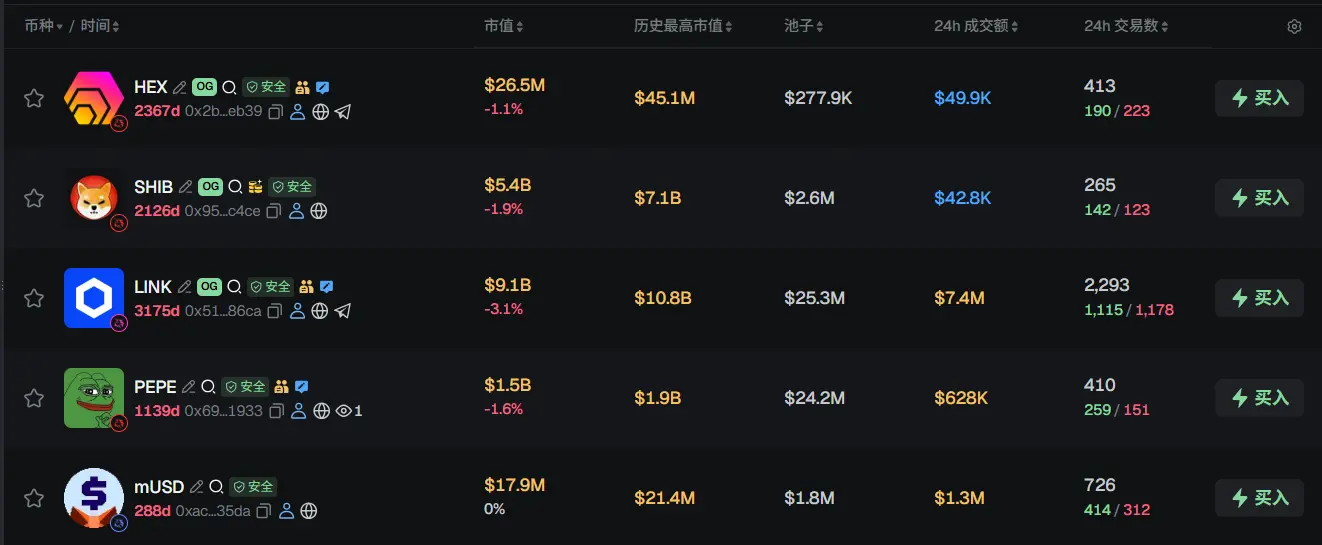
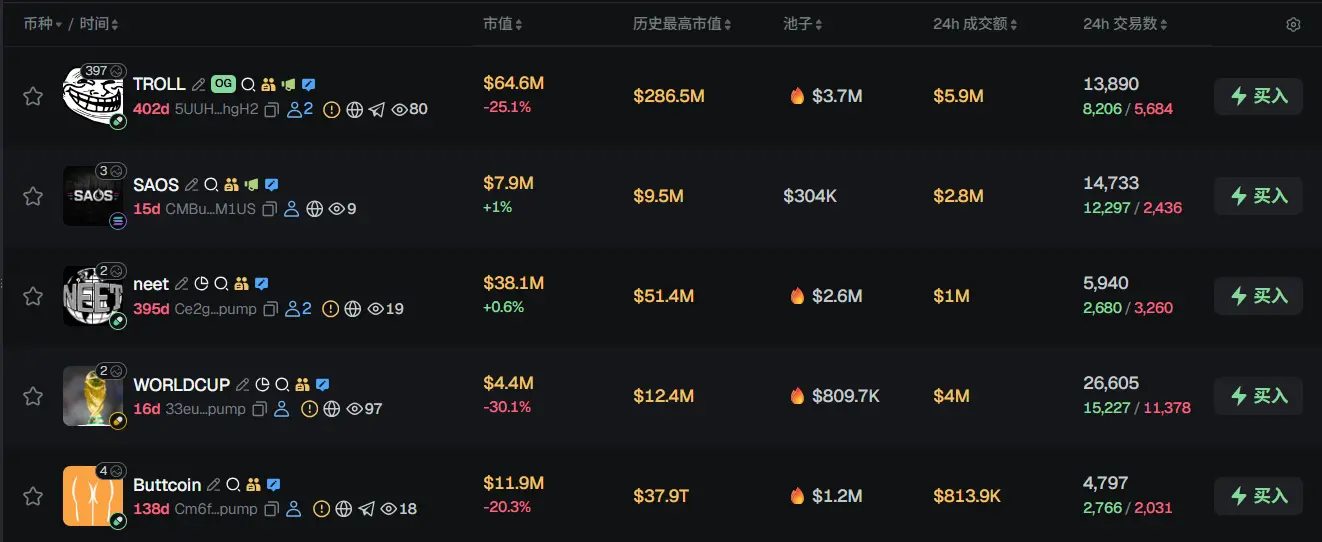
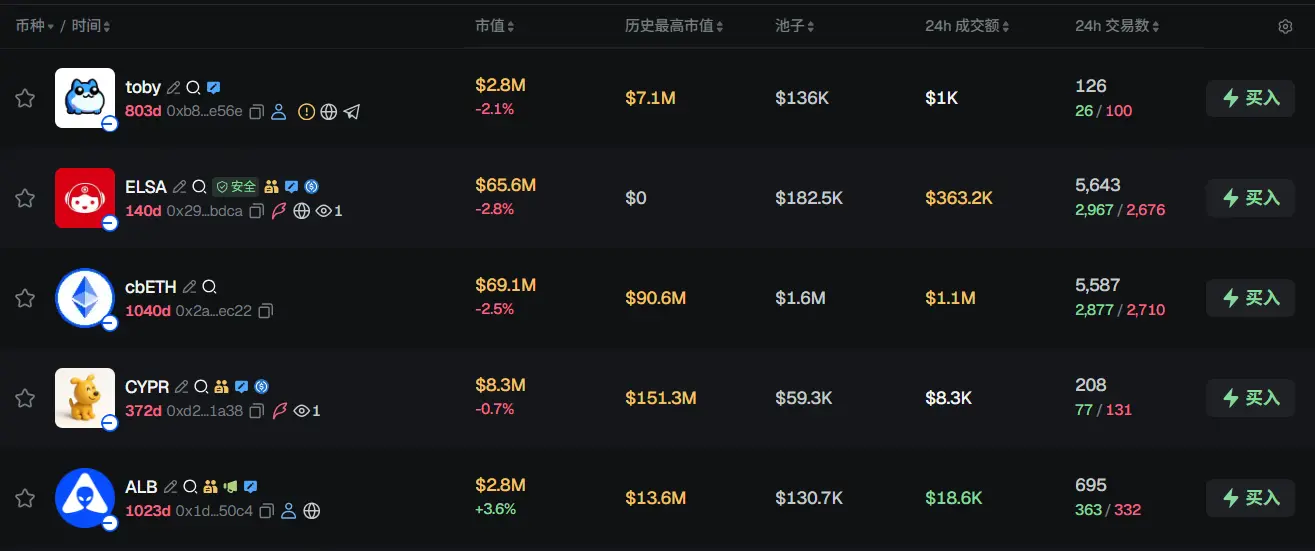
According to the meme token tracking and analysis platform GMGN market data, as of May 28, 09:00,
The top five popular tokens on ETH in the past 24 hours are: HEX, SHIB, LINK, PEPE, mUSD
The top five popular tokens on Solana in the past 24 hours are: TROLL, SAOS, neet, WORLDCUP, Buttcoin
The top five popular tokens on Base in the past 24 hours are: toby, ELSA, cbETH, CYPR, ALB
What are some interesting articles worth reading in the past 24 hours?
Bankless founder: Why I sold all my ETH
If you missed last week's news, I sold my ETH.
For someone who has built a career, community, identity, and business landscape around Ethereum, making this decision is not easy.
The reasons for deciding to sell require a more thorough explanation than scattered tweets on Twitter.
The argument that "ETH is money" has not failed… it has simply been realized. Ethereum has received the ETH price it deserves, and I believe that ETH as an asset will not be revalued, either upwards or downwards.
Who can make money in the age of Agents?
Many speculate that the next billion users of blockchain will be Agents. But few have asked a further question: In that world, who can make money?
Every value capture theory in the crypto space has assumed that users are human. The "Fat Protocols" theory argues that protocols are best at monetizing human users.
In contrast, the "Fat Apps" theory that my colleagues and I explored in "How to Capture Value" and "The Great Revaluation" argues that the application layer can do better. But Agents change the nature of user identity, and existing theories will become invalid as a result.

 Risk warning



Popular articles