








As the largest buyer is about to exit, who will take on the potential selling pressure of over 7 million USD in ETH every day?
 Core Viewpoint

 There are currently no signs of any major demand channels taking over.
Author: Zhou, ChainCatcher
On October 7, Tom Lee, Chairman of the Ethereum treasury company Bitmine, stated at the Token2049 conference in Singapore that the company would stop buying ETH once its holdings reached 5% of the total supply, which is a hard cap.
According to Bitmine, as of October 4, the company held 6,016,414 ETH, accounting for approximately 4.9% of the total supply. There are less than 100,000 ETH left to reach the cap, and at the company's recent buying pace, it could reach the limit in about a month and a half.
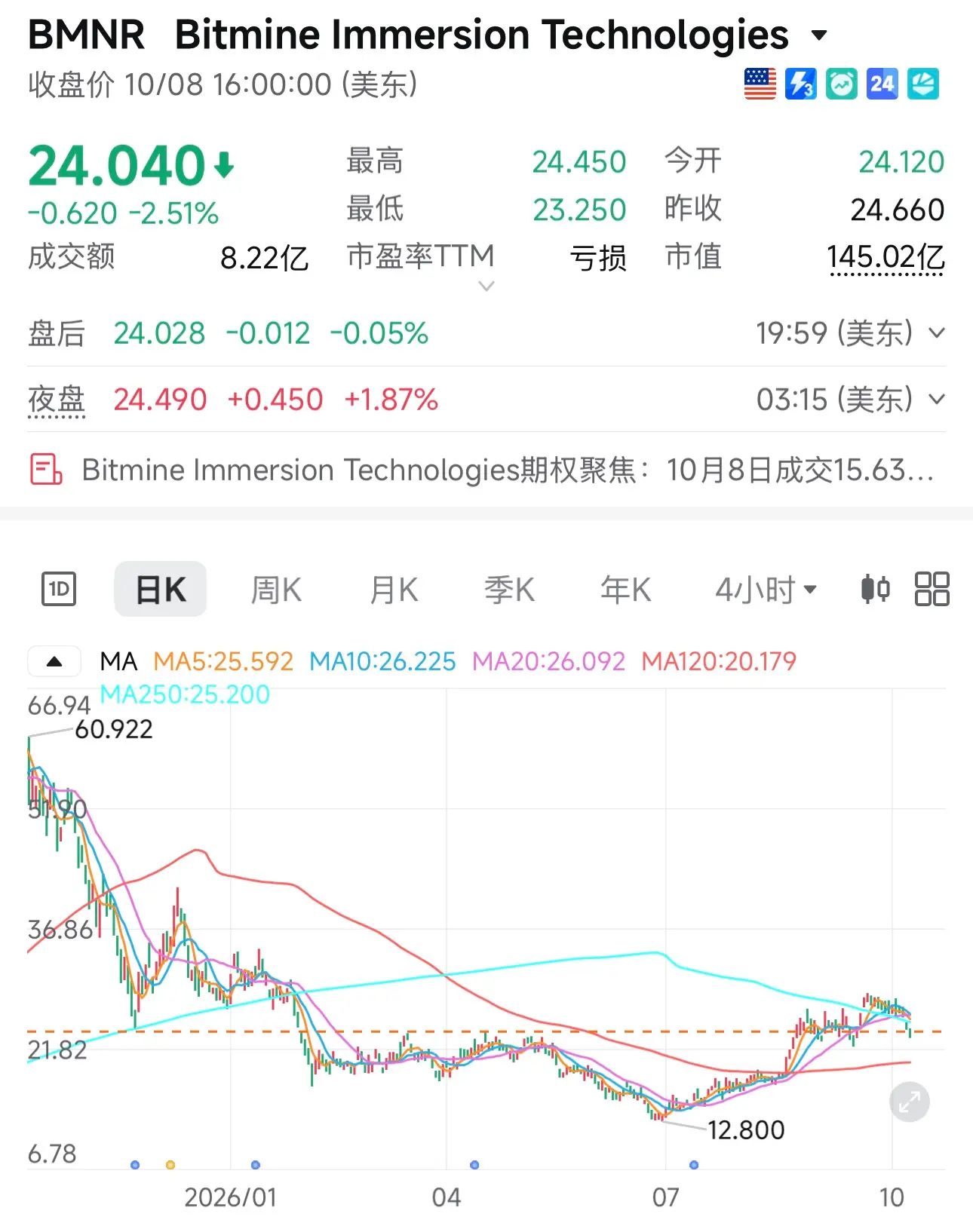
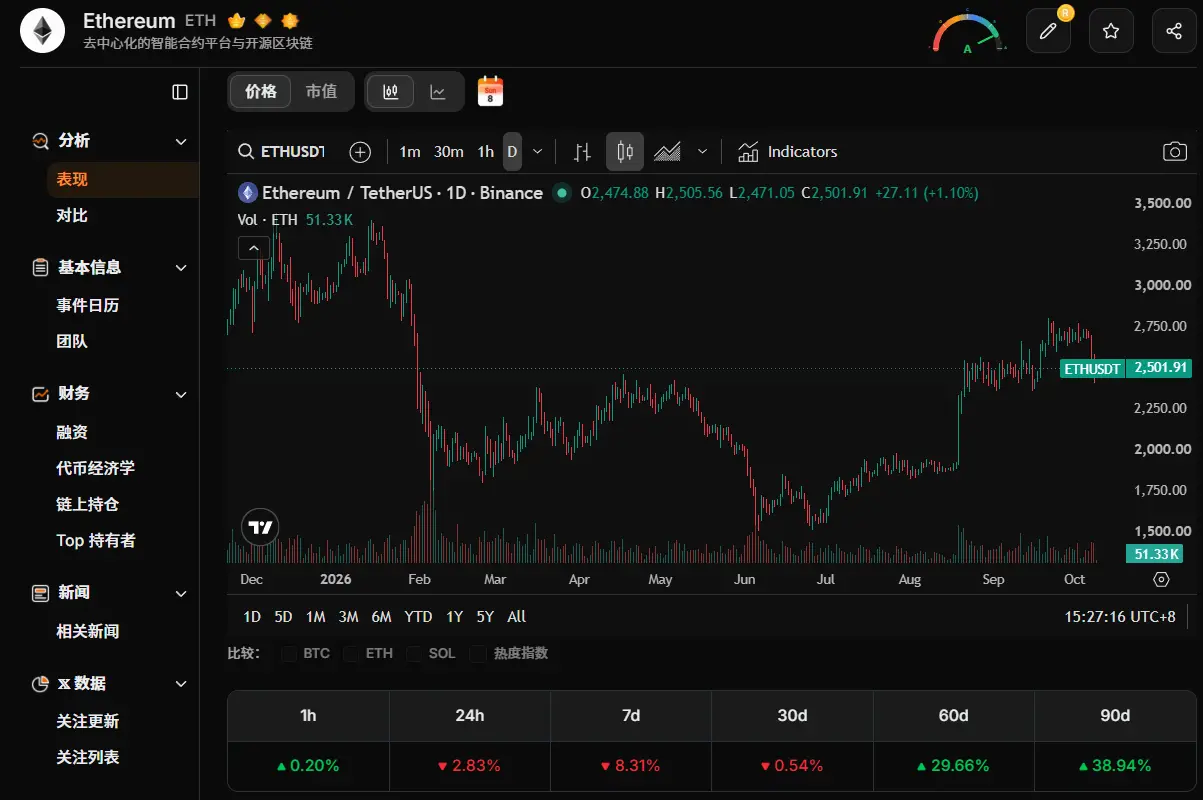
This also means that the most stable buyer of ETH over the past year is about to exit the market. Meanwhile, ETH spot ETFs have been experiencing continuous outflows recently, with ETH dropping approximately 8.2% from October 7 to 8. After Bitmine stops buying, can the market sustain itself?
Bitmine Once Absorbed 70% of New ETH
It is well known that Bitmine launched its ETH treasury strategy on June 30, 2025, and has been buying weekly since then. The company refers to its goal of holding 5% of the total ETH supply as the 5% alchemy.
Tom Lee mentioned that the company initially thought it would take five years to achieve this goal, but it only took a little over a year.
At its fastest, Bitmine's weekly purchases exceeded 100,000 ETH. Starting in May this year, the company actively slowed its pace, reducing weekly purchases to tens of thousands, and in recent weeks further down to about 15,000. Even so, since 2026, Bitmine has accumulated more than 1 million ETH.
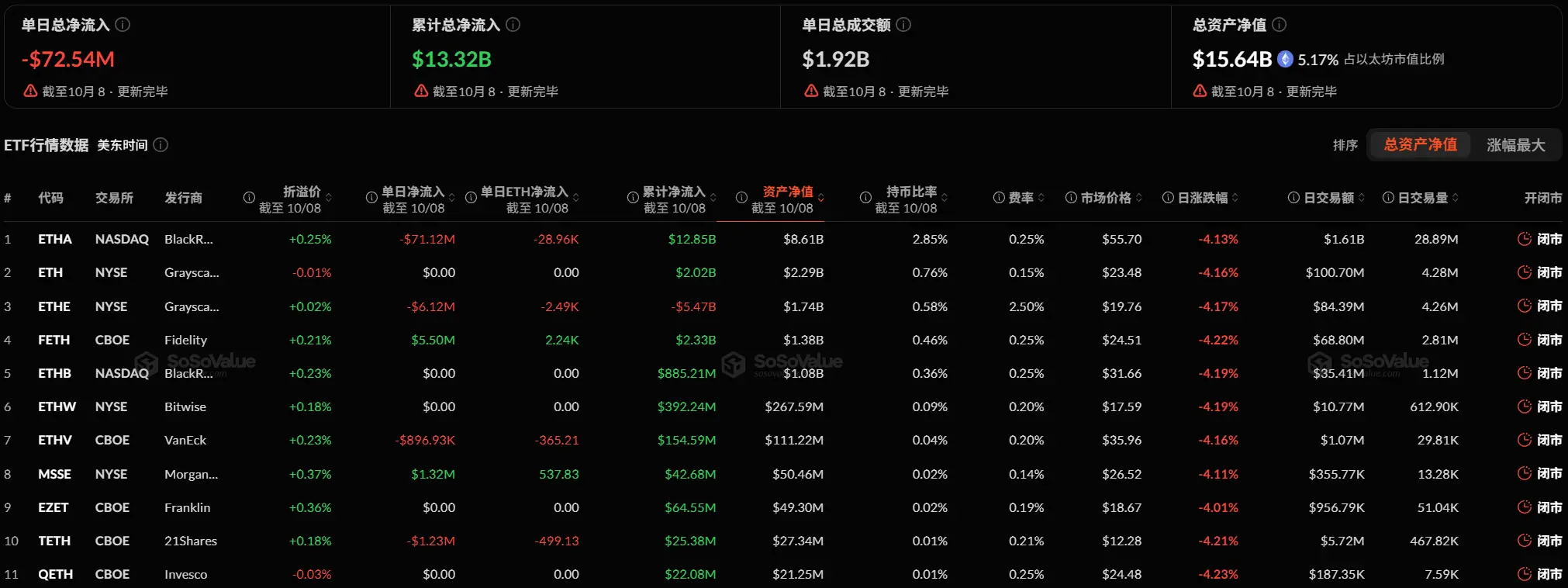
According to SoSoValue data, as of October 8, the total net asset value of U.S. ETH spot ETFs was approximately $15.64 billion, accounting for about 5.17% of ETH's market value. Bitmine alone accounts for about 4.9%, with its holdings now comparable to all U.S. ETH spot ETFs combined.
To understand how important this buying pressure is for ETH, we need to look at the supply side of ETH.
After Ethereum transitioned to proof of stake, new ETH is issued as rewards to stakers, and the issuance increases with the overall staking scale of the network. On the other hand, the base transaction fees paid by users are burned. After the Dencun upgrade in 2024, transaction fees on layer two networks will significantly decrease, leading to a reduction in the burn rate, and ETH will return to a net issuance state.
According to ultrasound.money data, in the past 7 days, 20,876 new ETH were issued, while only 655 were burned, resulting in an average daily issuance of about 2,980 ETH (approximately $7.22 million), with an annual supply growth rate of about 0.86%.
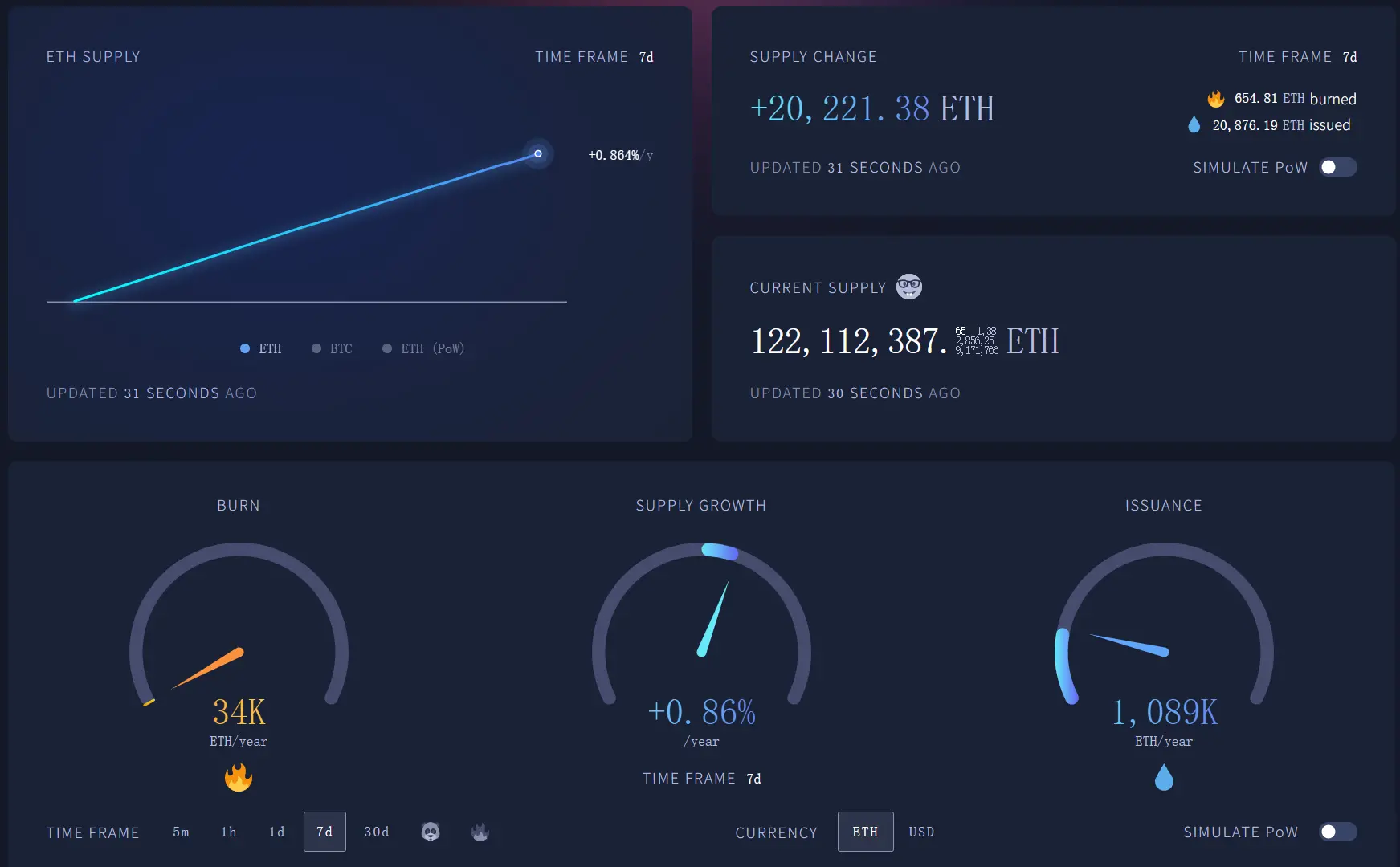
According to Bitmine's announcement, last week the company bought 15,112 ETH in the market, which accounted for about 72% of the new issuance during the same period. This means that about 70% of the new supply of ETH in recent times has been absorbed by this company.
However, this buying pressure did not support the price. After ETH peaked in October 2025, the crypto market entered a bear market. Although ETH saw a significant rebound in the third quarter, it weakened again in October, with a decline of over 40% in the past year.
After the 5% Hard Cap, Bitmine May Shift from Buying to Selling
The 5% was not originally Bitmine's hard cap. Previously, Tom Lee stated in an interview that if Ethereum's applications continue to expand and more companies start holding ETH, holding more than 5% could be reasonable, and the company might reassess this issue in 2027.
Lee also mentioned that Bitmine's annual staking income of about $300 million is sufficient to cover the $30 million to $35 million dividends of the 9.5% Series A preferred stock, and the company has no reason to sell ETH due to funding needs.
Now, Lee's stance has tightened, stating that 5% is the hard cap, and the company will not hold more than this proportion of ETH. In his view, with a hard cap in place, shareholders do not need to worry about the company continuing to raise funds to buy coins, and BMNR has a better chance of outperforming ETH in a rising market.
This statement is related to Bitmine's situation over the past year. If the treasury company's stock price falls below the value of its assets, issuing more shares to buy coins will dilute the corresponding ETH per share. Bitmine has already repurchased 21 million shares this year, and Lee stated in the announcement that this is the largest stock buyback in the history of crypto treasury companies.
Some crypto KOLs believe that the hard cap eliminates the risk of equity dilution for BMNR, and Lee agrees with this. For the ETH market, this means that the exit of a stable large buyer has become a foregone conclusion.
After stopping purchases, Bitmine's holdings will not remain static. Tom Lee also mentioned that after reaching 5%, the company could sell the staking rewards received to maintain its proportion.
According to Bitmine's announcement, as of October 4, the company had staked 5,067,309 ETH, accounting for 84% of its holdings, with a 7-day annualized yield of 2.63%, and expected annual staking income of about $363 million. Based on this calculation, Bitmine could receive approximately 133,000 ETH in rewards each year.
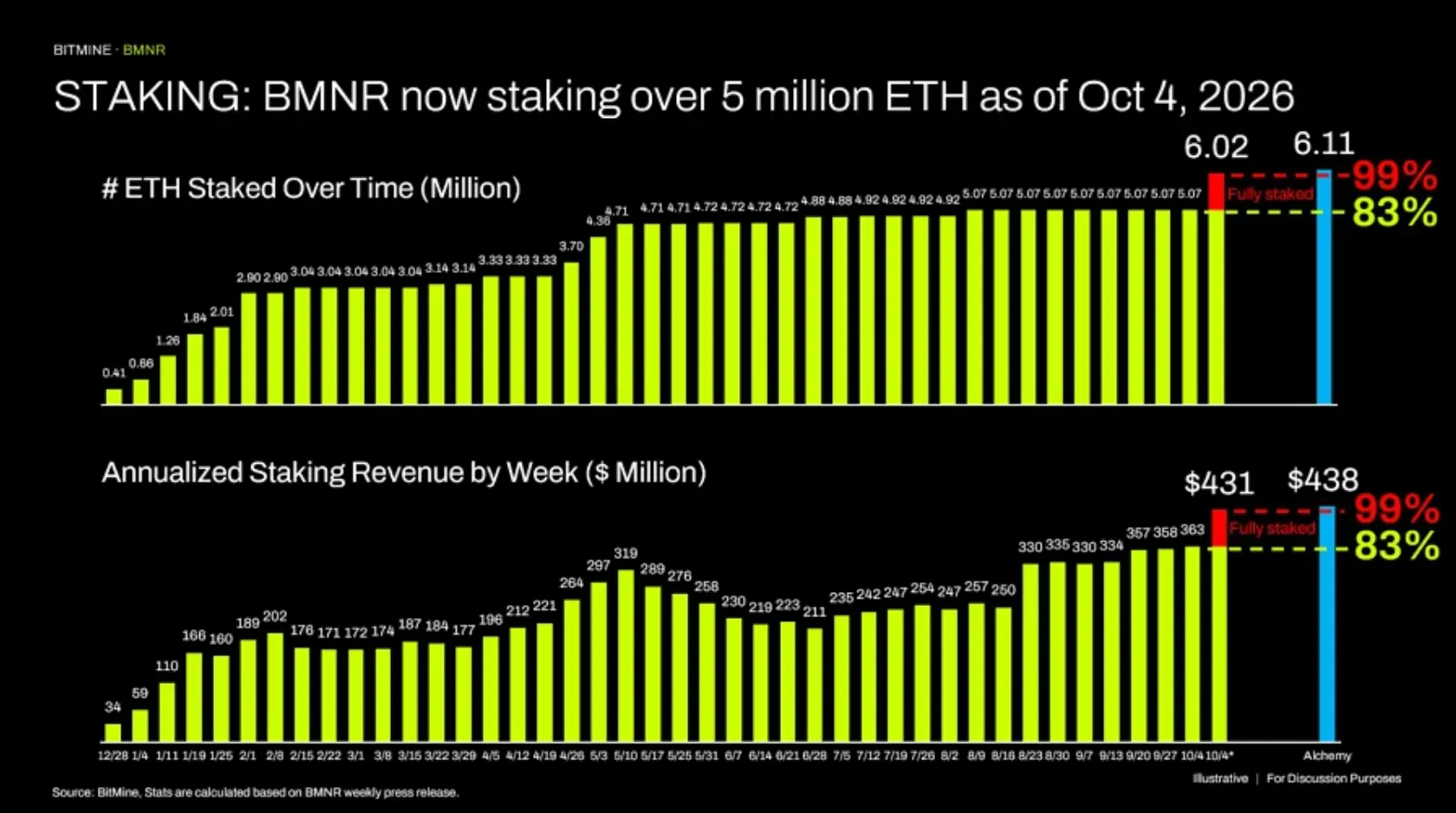
The supply of ETH itself is also increasing, with a net increase of about 1.05 million ETH per year, of which 5% is about 53,000 ETH, which Bitmine can retain without exceeding the cap. To maintain its proportion at 5%, Bitmine may need to sell about 80,000 ETH in rewards each year.
However, in terms of scale, 80,000 ETH at the current price is approximately $200 million, averaging less than $600,000 per day, which has limited direct impact on the market. The real change lies in the direction; Bitmine may shift from being a buyer that absorbs 70% of new supply each week to a seller that continuously releases a small amount of ETH.
The principal will not be included in the sales. Lee previously stated that the company has no need to sell its core holdings, and the 5.07 million ETH already staked continues to generate income for the company.
No New Buyers Have Emerged, Divergence Between Bulls and Bears Widens
With Bitmine's exit imminent, the market naturally turns its attention to other buyers, but several major demand channels currently show no signs of stepping in.
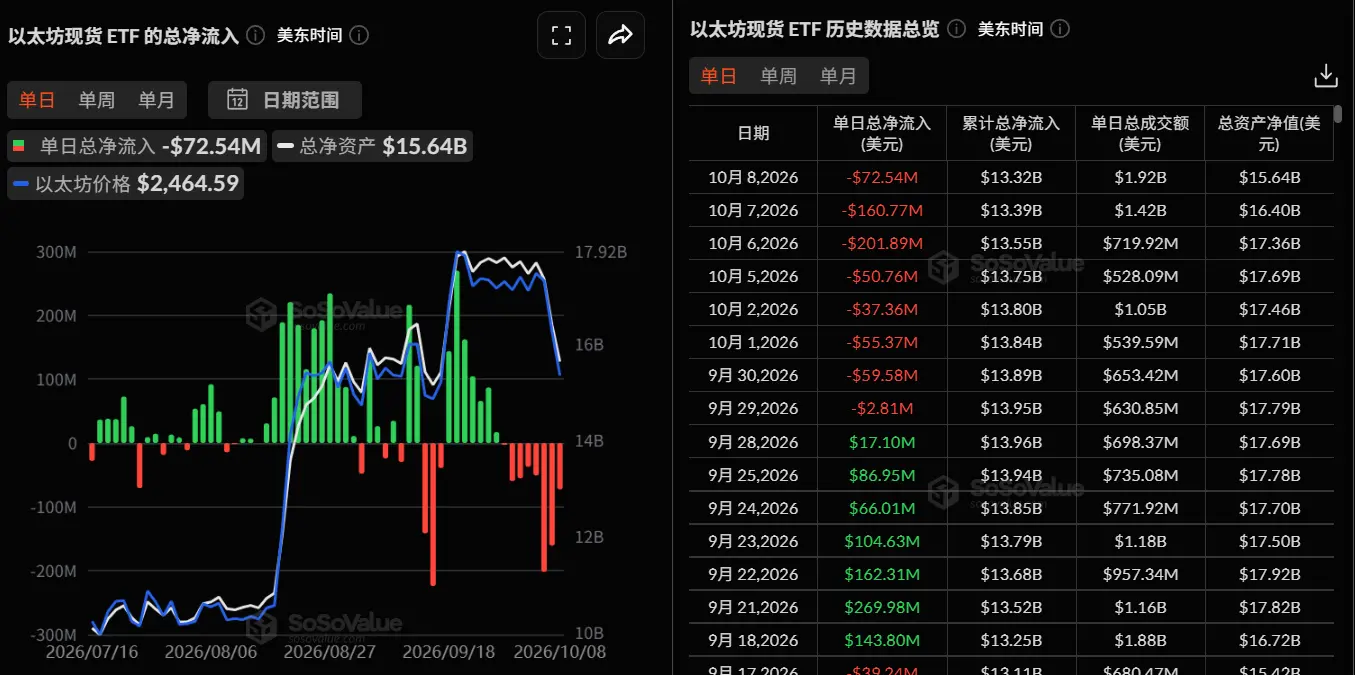
First, there are ETFs. According to SoSoValue data, following the rebound of ETH, ETH spot ETFs experienced two consecutive months of net inflows in August and September, but turned to net outflows in October. Since September 29, ETFs have seen net outflows for 8 consecutive trading days, totaling approximately $641 million, with net outflows of $579 million since October.
This was especially true in the days surrounding Lee's remarks. On October 6, there was a net outflow of $202 million in a single day, almost entirely from BlackRock's ETHA, followed by outflows of $161 million and $72.54 million on October 7 and 8, respectively.
Exchange data points in a similar direction. According to Binance's proof of reserves, users' ETH balances decreased by 4.61% in September, approximately $499 million, while users' BTC holdings increased by about $537 million during the same period.
Other ETH treasury companies are also struggling to step in. When stock prices fall below the value of their holdings, the model of issuing more shares to buy coins becomes unsustainable. For example, the second-largest ETH treasury company, SharpLink, only bought about 5,000 ETH when ETH was at a low in June this year, marking its first increase in eight months.
Subsequently, SharpLink's increase in holdings mainly came from staking rewards. According to Lookonchain monitoring, as of the end of September, SharpLink held approximately 892,100 ETH and had accumulated staking rewards of 27,900 ETH.
However, at the beginning of this month, Lee pointed out that Ethereum treasury companies currently hold about 7% of the ETH supply, and this proportion could rise to 15% during this cycle. Based on this calculation, after Bitmine stops buying, other institutions will still need to purchase about 9.8 million ETH.
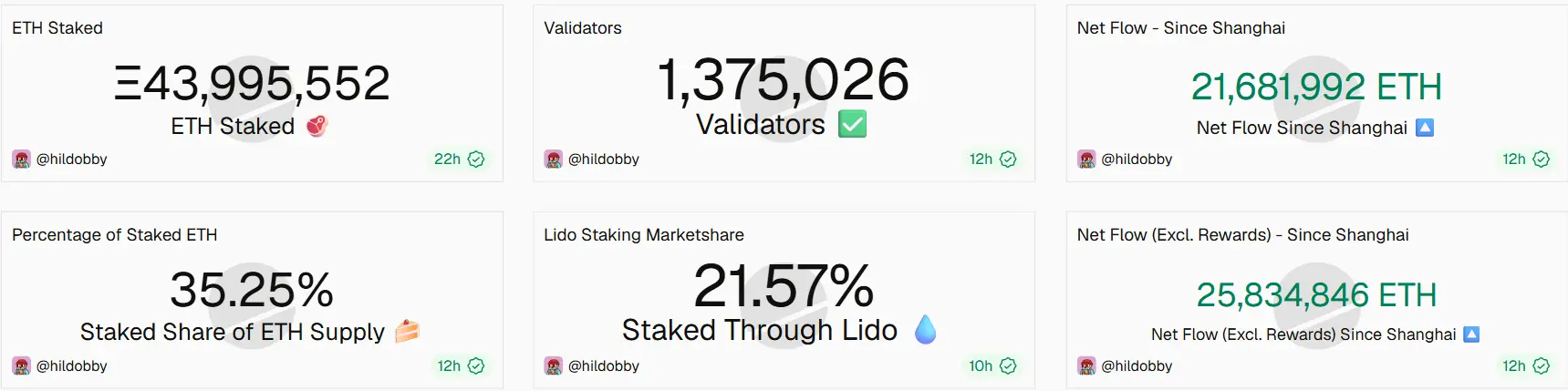
The situation on the staking side is slightly better. As of October 6, there were about 1.5 million ETH waiting to be staked, while about 767,000 ETH were in the exit queue, with the entry queue clearly outpacing the exit queue. However, the exit queue previously surged to 851,000 ETH due to a security incident disclosed by MetaMask on September 30. Lido stated that this portion of preventive exit ETH would gradually be restaked, so some of the ETH in the entry queue is returning ETH, not all of it is new demand.
Regarding the outlook for ETH, Lee remains relatively optimistic. He stated that the crypto bull market began in August and could become the largest one in history, driven by institutional-led asset tokenization, intergenerational wealth transfer, treasury companies absorbing supply, and on-chain payments by AI agents.
Crypto KOL Blue Fox also stated that Bitmine's decision to stop buying at 5% is correct, and after completing accumulation at a low level, Lee's next main task is to narrate the story for ETH and promote Ethereum as the settlement layer for on-chain Wall Street.
Many believe that the 5% is a self-imposed limit by the company, and Bitmine's cessation of purchases does not necessarily mean that prices will fall. However, after stopping, ETH will lack a stable large buyer, and prices will become more reliant on ETFs, staking demand, and other institutions, potentially amplifying volatility.
There are also views that, from a concentration perspective, stopping purchases is a commendable restraint; a single institution can become the largest participant but should not attempt to dominate Ethereum.

 Risk warning




Popular articles





