Tron Industry Weekly Report: The US-Iran Agreement Dominates the Cryptocurrency Market Rebound, Detailed Explanation of the Web3 Payment Infrastructure AEON for Consumer and Settlement Scenarios

 Last week's hot project raised a total of $8 million, led by YZi Labs, with follow-on investments from star institutions such as IDG, Hashkey, and SevenX—AEON, a Web3 smart payment infrastructure aimed at global consumer payments and on-chain settlement scenarios.
I. Outlook
1. Macroeconomic Summary and Future Predictions
This week, the core theme of the global macro market remains "rising inflation + geopolitical conflict + interest rate watchfulness." The U.S. CPI for May rose to about 4.2%, marking the third consecutive month of increases, with the situation in the Middle East driving energy prices as a major factor. Market expectations for the Federal Reserve to tighten policies further within the year have warmed. Meanwhile, AI infrastructure investment continues to drive performance in U.S. and Asian manufacturing and tech exports, presenting a pattern of "AI-driven growth" coexisting with "rising energy costs." Overall, risk assets are suppressed by high oil prices and policy uncertainty, as the market enters a phase of waiting for the interest rate decisions of various central banks.
Next week, market focus will be on interest rate decisions from major central banks such as the Federal Reserve, the Bank of England, and the Bank of Japan. The market generally expects the Federal Reserve to maintain interest rates, but will pay more attention to its statements on inflation and future policy paths; if high oil prices and inflation pressures persist, the Federal Reserve may signal a hawkish stance. Meanwhile, the situation in the Middle East and oil price trends will continue to dominate global risk appetite. If energy prices continue to rise, global stock markets and the crypto market may face further volatility; conversely, if geopolitical risks ease, it could drive a phase of rebound in risk assets.
2. Crypto Industry Market Changes and Warnings
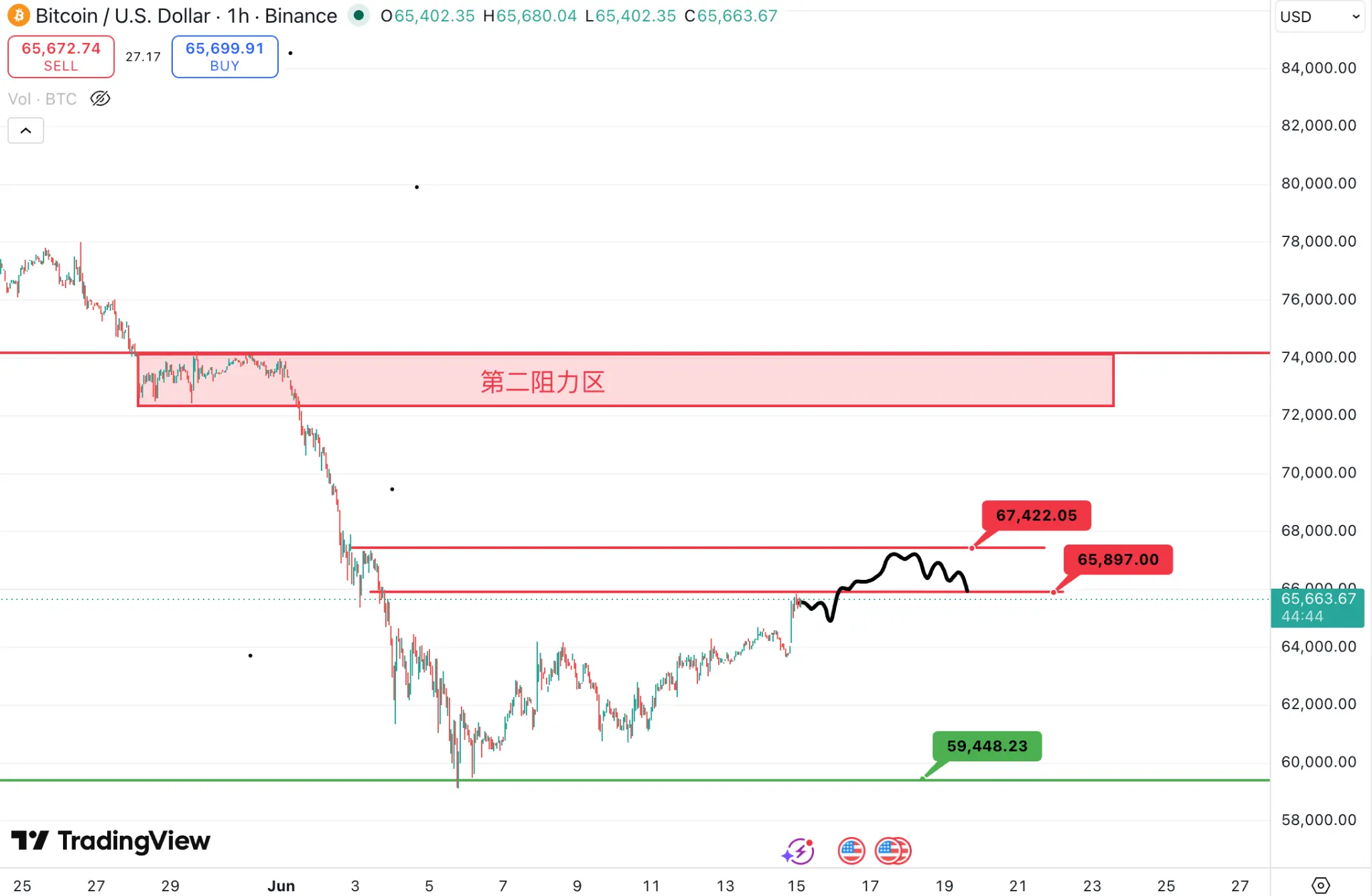
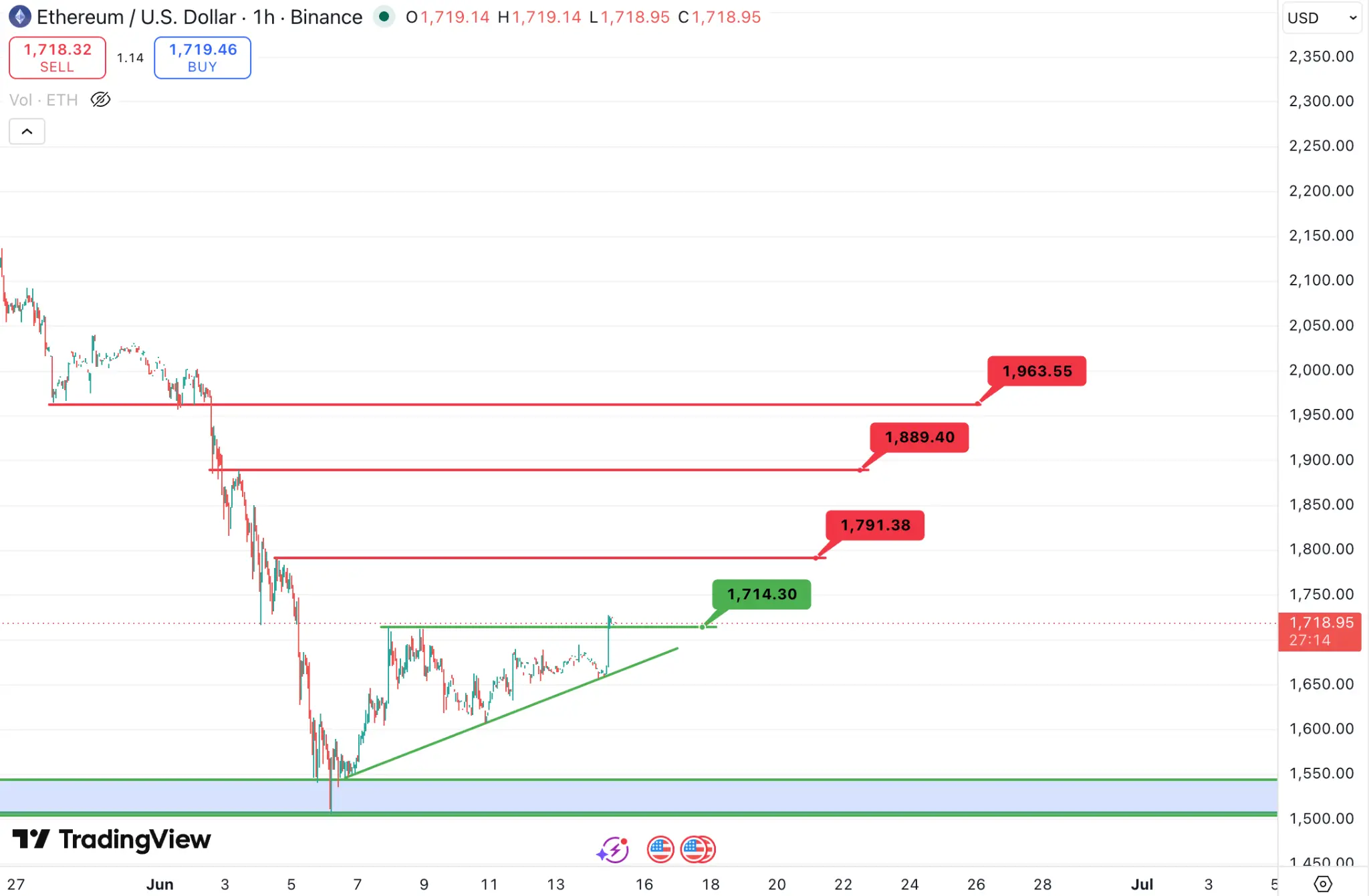
This week, the overall crypto market maintained a weak oscillation, with BTC fluctuating mainly between $61,000 and $64,000, while ETH and mainstream altcoins faced similar pressures. Market sentiment was affected by the pullback in U.S. tech stocks, cooling AI concepts, and capital flowing towards large tech IPO expectations, leading to widespread selling of risk assets. Meanwhile, Bitcoin spot ETFs continued to see net outflows, and the market fear index remained low, reflecting that institutional funds are still cautious. However, BTC has repeatedly held the critical support level of $60,000, with some long-term funds and institutions beginning to accumulate at lower prices, indicating that the market has not yet shown systemic risks.
The market is expected to remain dominated by macro factors, with a focus on U.S. economic data, changes in interest rate expectations, and ETF capital flows. If BTC can stabilize above $63,000, the market may welcome a technical rebound, potentially driving ETH and quality altcoins to recover; if ETF outflows continue and risk appetite further declines, it may test the support around $60,000 again. Overall, next week is likely to remain a phase of oscillation and bottom-building, with funds continuing to favor BTC, ETH, and quality projects with real income and AI narratives, while small and mid-cap tokens may continue to show divergence.
3. Industry and Track Hotspots
Last week's hot project raised a total of $8 million, led by YZi Labs, with follow-up investments from star institutions such as IDG, Hashkey, and SevenX—targeting global consumer payment and on-chain settlement scenarios with the Web3 smart payment infrastructure AEON.
II. Market Hotspot Tracks and Potential Projects of the Week
1. Potential Project Overview
1.1. Detailed Explanation of the $8 Million Funding, Led by YZi Labs, with Follow-up Investments from IDG, Hashkey, and SevenX—Targeting Global Consumer Payment and On-chain Settlement Scenarios with the Web3 Smart Payment Infrastructure AEON
- Introduction
AEON's core is to build a "universal crypto payment and settlement middleware," aiming to become the underlying payment infrastructure connecting Web3 with real-world consumption scenarios. It achieves integration of on-chain and off-chain payments, cross-chain settlements, and AI Agent automatic payment capabilities through a unified node network, allowing crypto assets to be used in real consumption scenarios like traditional payment tools. AEON currently supports large-scale offline crypto payments in markets such as Vietnam, the Philippines, Nigeria, and Brazil, covering over 70% of retail merchant networks in Asia, Africa, and Latin America, emphasizing lower fees, higher efficiency, and higher payment success rates compared to traditional payment solutions like Visa and Stripe.
At the same time, AEON has launched the AI-native Payment Framework (APF), allowing AI Agents to complete real-world payments directly, such as automatically booking flights, hotels, topping up phone credits, or accessing paid databases through ChatGPT, making it one of the few crypto payment protocols that truly implement AI Agent payment scenarios. Additionally, AEON supports cross-chain verifiable settlements, allowing users to make payments using assets from one chain and complete final settlements on another chain, thus achieving a more flexible multi-chain payment experience. Overall, AEON's core goal is to unify complex crypto payments, cross-chain settlements, and AI payment capabilities into a simple, low-friction, and scalable Web3 payment network.
- Protocol Feature Analysis
Node Network
AEON has built a decentralized node network as the underlying infrastructure for the entire crypto payment and settlement ecosystem. This network is responsible for connecting different blockchains and off-chain environments, achieving secure and efficient payment communication and settlement capabilities, while promoting ecological operation through community governance.
AEON's Core Solutions
Node Network & Decentralized Ecosystem
AEON's node network is the core infrastructure of the entire protocol.
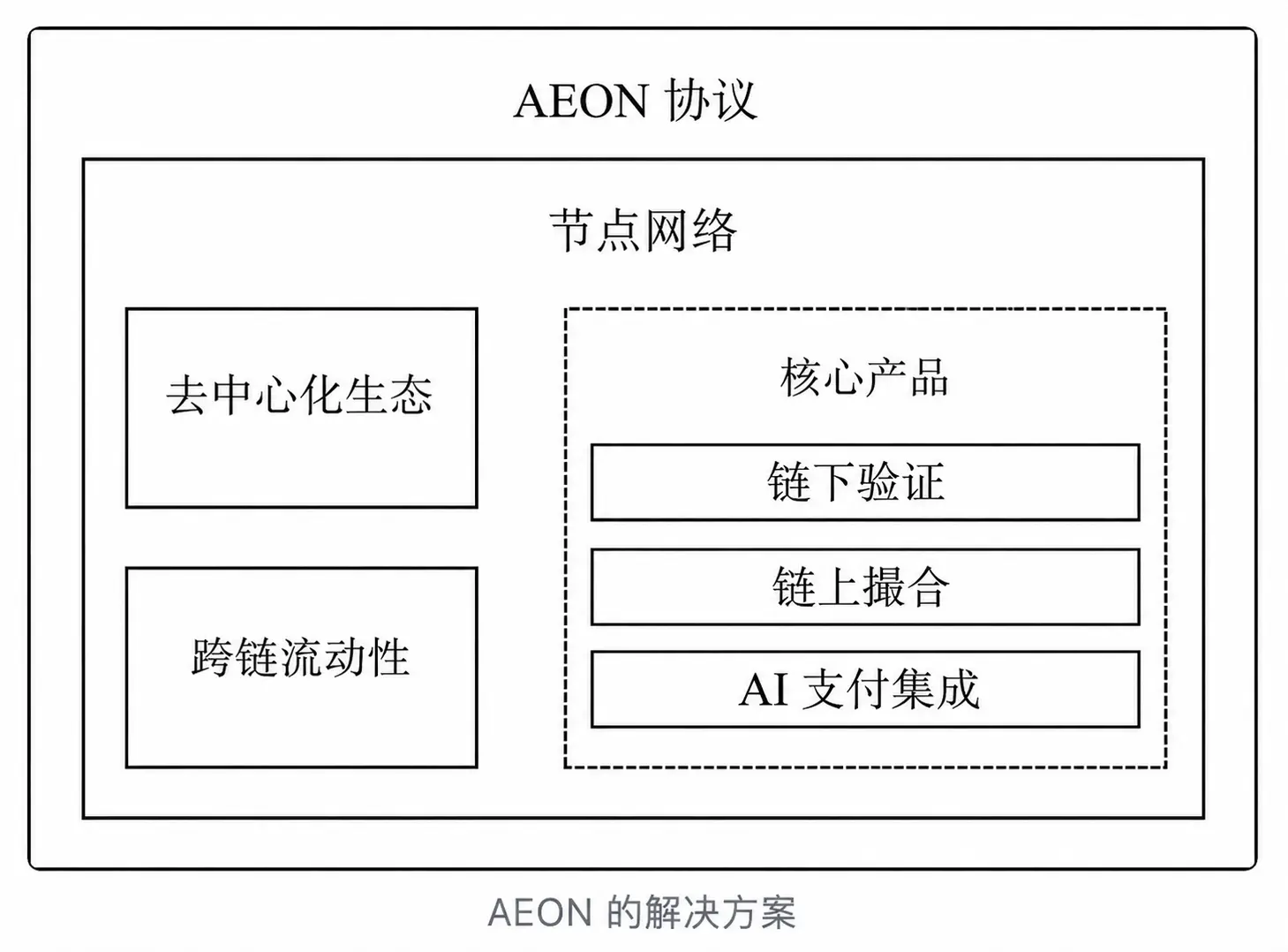
Its main functions include:
Connecting different blockchain networks
Supporting communication between on-chain and off-chain environments
Providing decentralized governance capabilities
The entire ecosystem is governed by community participation, forming a stakeholder-driven governance system.
Off-chain Information Verification and On-chain Matching
AEON emphasizes the verification of off-chain payment information and securely maps it to on-chain.
The system ensures data authenticity and integrity through:
Cryptographic verification
Multiple redundancy verification mechanisms
At the same time, the entire process is verifiable, allowing participants to independently verify transactions and information flows.
Core Products
Cross-Chain Liquidity
AEON provides cross-chain liquidity solutions to facilitate asset flow between different blockchains.
Users can:
Transfer assets between different chains
Complete cross-chain payments and exchanges
Enhance asset liquidity and usage flexibility
Off-Chain Payments
AEON's off-chain payment system emphasizes:
Faster payment speeds
No need to wait for long on-chain confirmations
Improved user payment experience
Its goal is to bring crypto payments closer to traditional mobile payment experiences.
AI Payment Integration
AEON is developing an AI Agent payment system.
AI Agents can handle:
Identity verification
Payment intent recognition
Authorization and signature management
Thus allowing AI to autonomously complete real-world payment processes while enhancing payment security and automation.
Overall, AEON aims to build a unified payment infrastructure that meets current crypto payment needs and adapts to the future AI economy.
Node Tiers
Master Node
Minimum Stake:
- 1,000,000 AEON
Main Responsibilities:
Governance
Network security
Consensus maintenance
Execution Layer
Minimum Stake:
- 100,000 AEON
Main Responsibilities:
High-speed transaction processing
Smart contract execution
Staking Mechanism
AEON adopts a non-custodial staking model:
User assets are locked in smart contracts
They are not transferred to third parties
It also employs a key separation architecture:
Operational Key for node operation
Withdrawal Key stored in a cold wallet
Validators need to remain online 24/7.
If:
Offline for a long time
Malicious behavior occurs
It will trigger a slashing penalty mechanism.
Delegation
Users who do not meet the minimum staking threshold can delegate AEON to trusted validators.
Delegators will receive a proportional share of block rewards, while validators will charge about 5%–10% in technical service fees.
- Protocol Technical Framework Analysis
The AEON Protocol is building a decentralized node network to achieve secure and verifiable payments and settlements across multiple chains. The entire protocol consists of three layers:
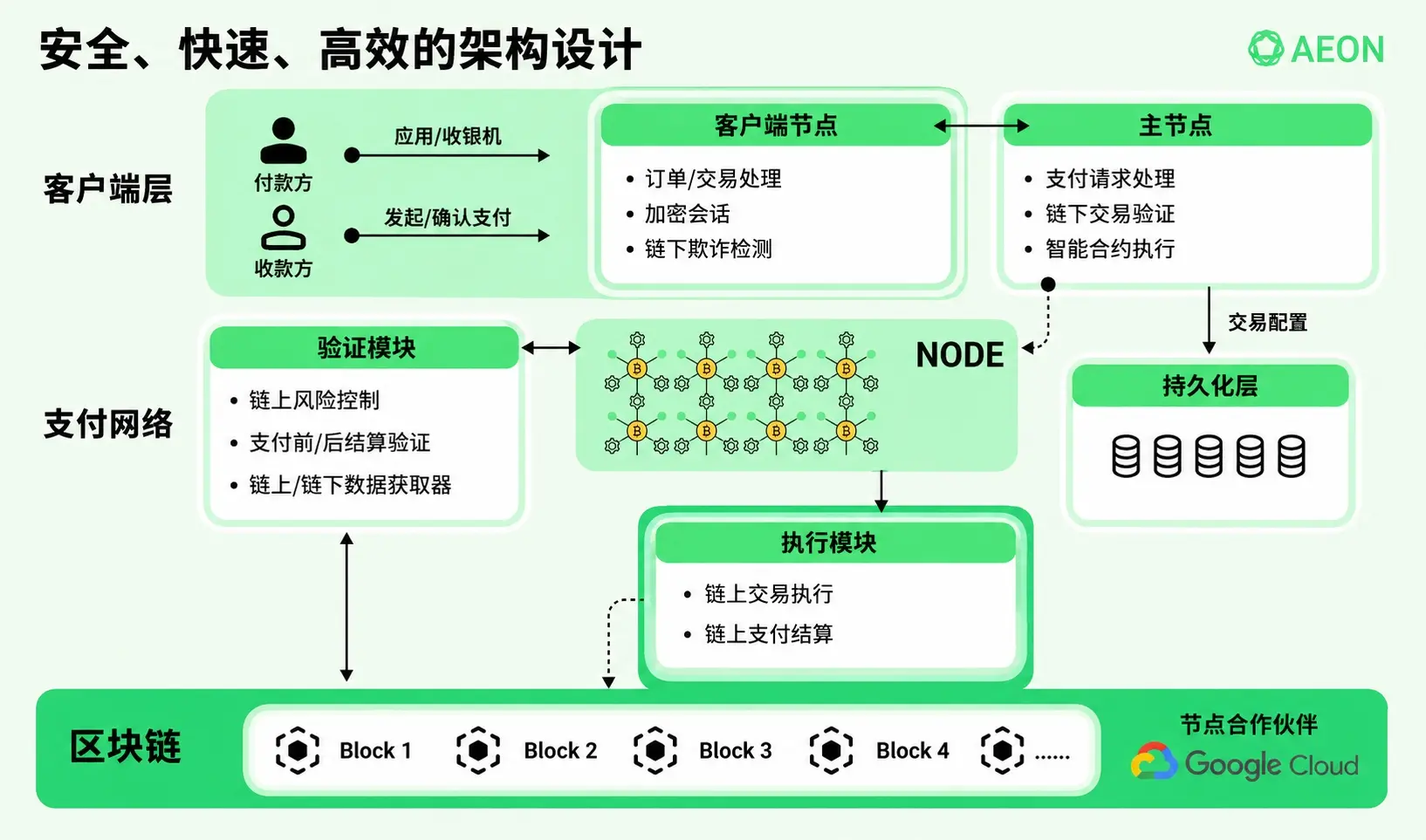
Client Layer
This is the user-facing interaction layer responsible for initiating payment requests.
Its goal is to provide users with the simplest and smoothest payment experience while ensuring cryptographic security.
Network Layer
This is AEON's distributed verification layer.
Dedicated nodes in the network will verify the following before transaction execution:
Transaction authenticity
Security compliance
Final settlement path
Thus ensuring that each payment is verifiable and secure.
Execution Layer
This is the final on-chain settlement layer.
Verified transactions will be executed and settled across multiple supported blockchains, including:
EVM ecosystem
SVM (Solana)
TON and other networks
Thus ensuring consistency, security, and reliability of final settlements during cross-chain payment processes.
- Client Layer
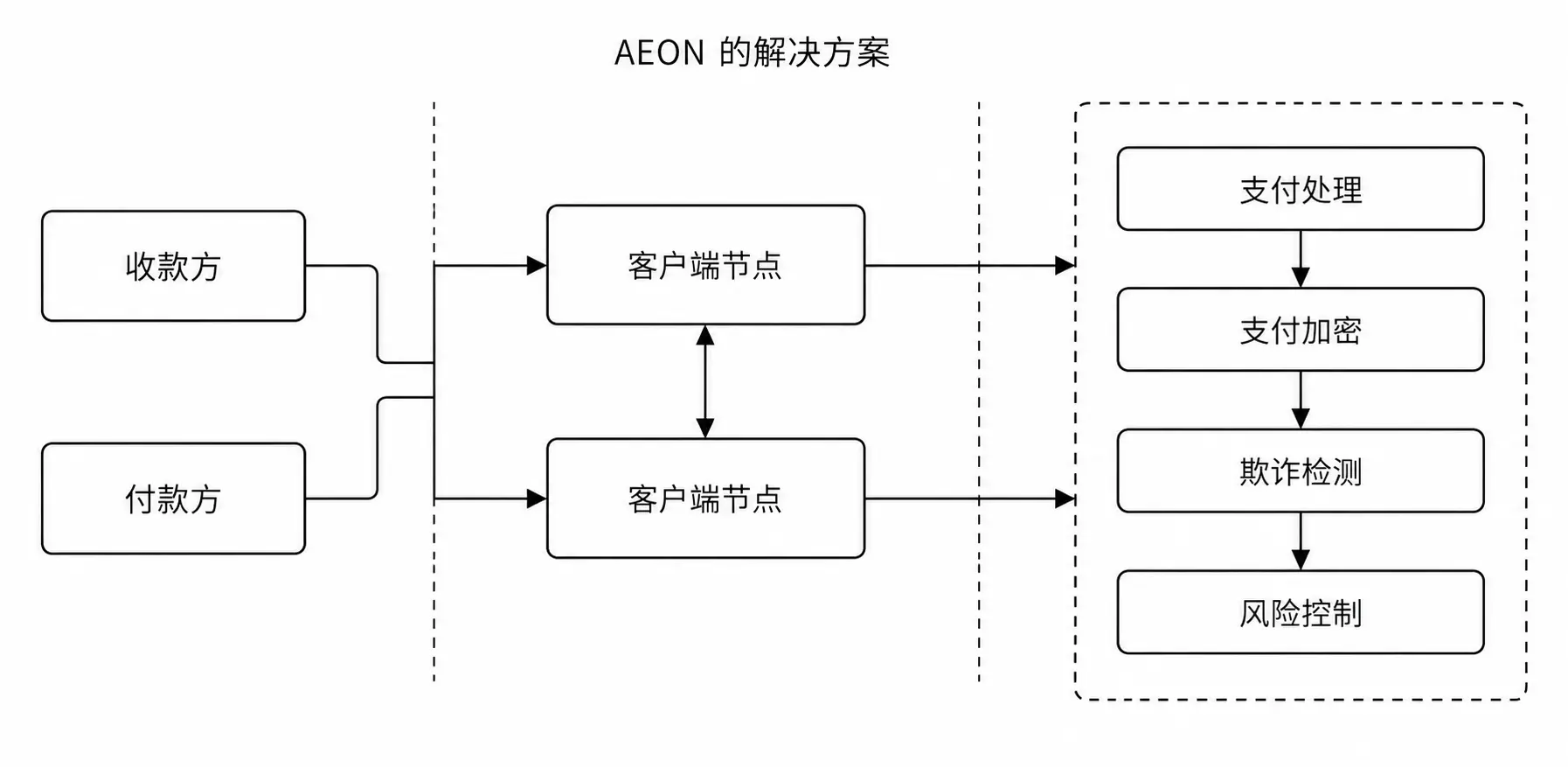
The Client Layer is the user-facing payment entry layer in the AEON payment system, typically existing in the form of mobile apps, websites, or POS terminals. It connects merchants (Payee) with users (Payer), enabling real-time payment requests and transaction confirmations.
The core of this layer is the Client Node, which essentially acts as a Checkout service. User-side applications initiate payment requests to the Client Node via API, which further sends the requests to the Master Nodes in the AEON node network for verification and processing.
The Client Node primarily undertakes the following functions:
Order and transaction processing
Merchants initiate payment orders, users complete payments, and transactions are confirmed after network verification.Encrypted payment sessions
All payment requests are encrypted before being sent to the node network to ensure payment data security.Off-chain risk control
The system performs fraud detection off-chain to prevent double spending, account forgery, and other abnormal transactions.Fund risk control
When certain high-volatility assets have insufficient liquidity or price risks, the system automatically switches to stablecoin settlements to reduce slippage and settlement failure risks.
The entire payment request process typically includes:
Merchants create orders through the AEON payment gateway
The request includes amount, product information, wallet address, and supported payment assets
Users select payment methods and complete payments
The request enters the AEON node network for verification and settlement
AEON supports various payment methods, including:
Decentralized wallets (MetaMask, TON Wallet, Trust Wallet, etc.)
Centralized exchanges (Binance, etc.)
Third-party payments (Binance Pay)
Traditional payment channels (Visa, Mastercard, etc.)
AEON's own account system
Overall, the goal of the Client Layer is to unify Web3 payments, off-chain payments, and traditional financial payment entries, providing users with a low-friction and highly compatible payment experience.
- Network Layer
The Network Layer is AEON's core verification and transaction routing layer, responsible for completing payment verification, consensus, and settlement through a decentralized node network.
When a new payment request arrives, the Client Node broadcasts the transaction to multiple Master Nodes via RPC. These nodes will store the transaction in a synchronized Mempool, with an overall mechanism similar to Ethereum's libp2p network. All active Master Nodes are recorded in an on-chain smart contract.
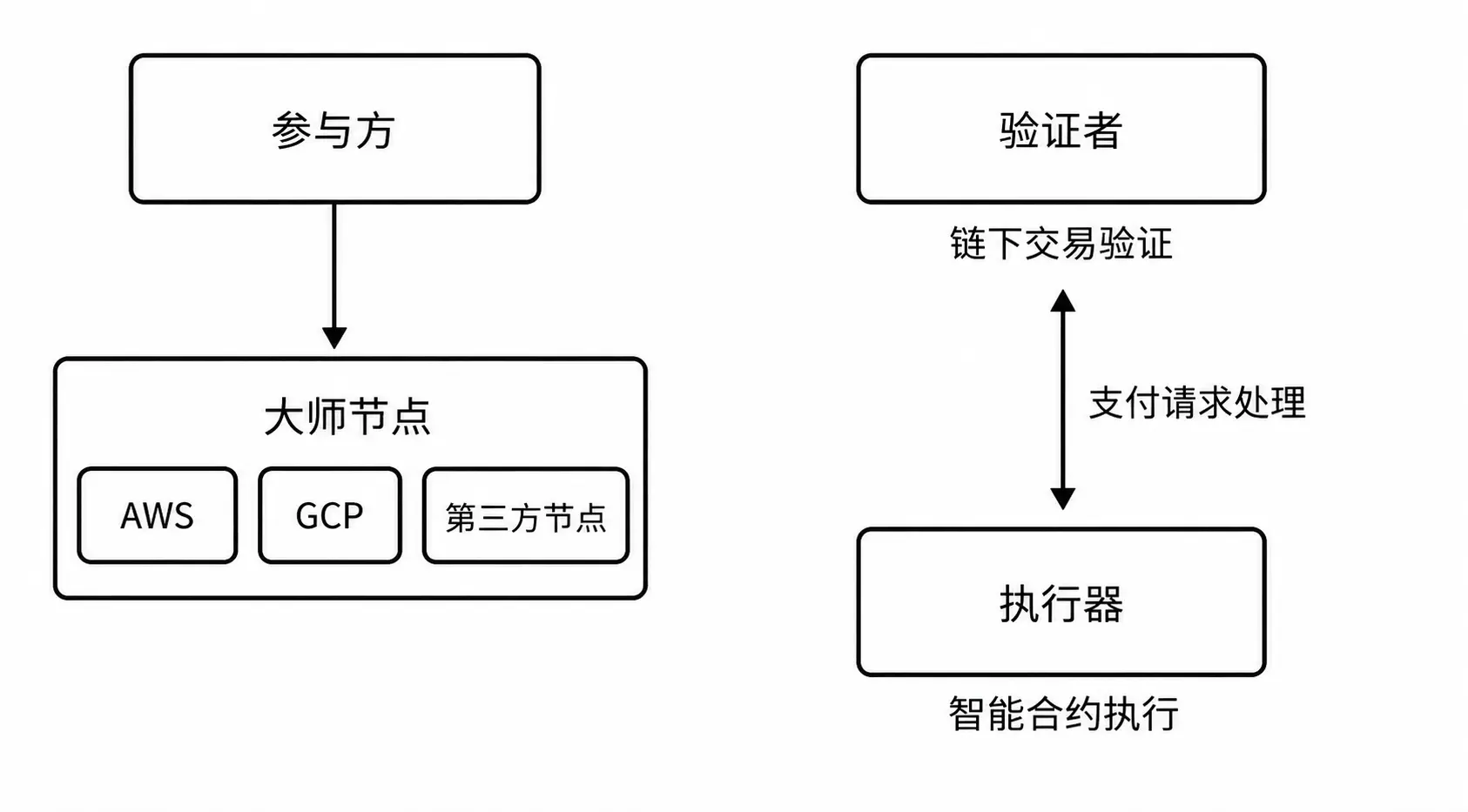
In the actual verification process, not all nodes will participate in a single transaction. The system first filters out eligible verification nodes from the node pool, for example, selecting 10 from 100 nodes to participate in the current transaction. Filtering criteria include:
Node online rate
Network stability
Historical reputation
The system will then combine:
VRF (Verifiable Random Function)
Reputation System
To randomly select one node as the Proposer. If that node fails to complete the transaction proposal within the specified time, the system will automatically reselect a new Leader.
Verification nodes will check the transaction content, structure, and security, and return verification results through an off-chain multi-signature mechanism based on Schnorr. Once a majority of nodes reach consensus:
The Proposer will complete the final on-chain settlement
Settlement data will be recorded on-chain (e.g., Base)
Asset transfers on other chains will be executed synchronously
The system will then reward all participating verification nodes, while the Proposer can also earn additional transaction fee revenue.
- Execution Layer
AEON's Execution Layer is built on a DPoS (Delegated Proof of Stake) mechanism, responsible for transaction verification, node governance, and final on-chain settlement, aiming to achieve efficient payment processing while ensuring security.
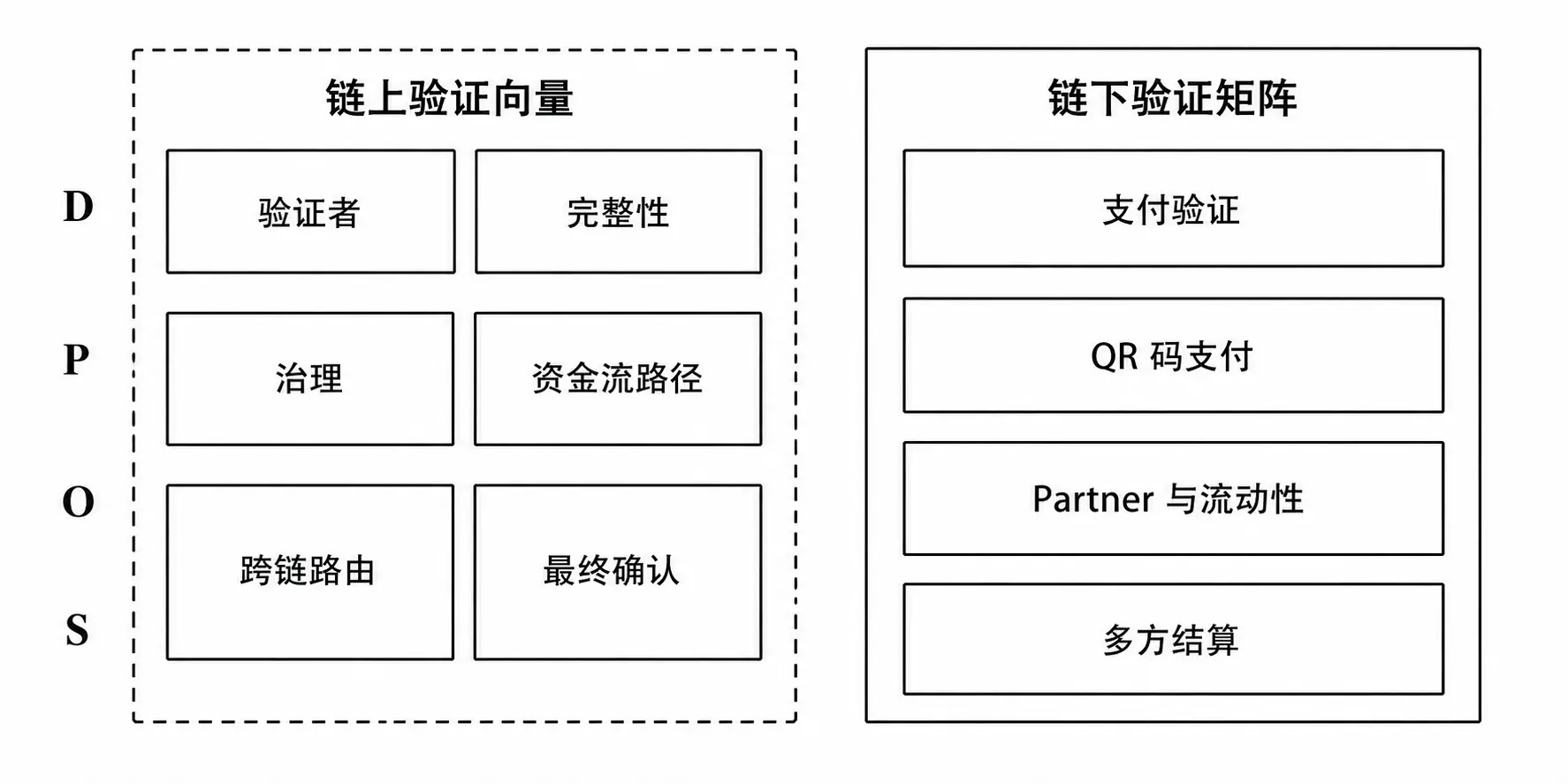
Validator & Consensus
AEON employs a fixed-size active validator set, for example, 21 nodes. Validators must stake at least 100,000 AEON to participate in network verification.
Each transaction requires consensus from more than 2/3 of the validating nodes before it can be settled. Nodes will independently execute:
Digital signature verification
Wallet source checks
Cross-chain message authentication
Thus ensuring transaction authenticity and cross-chain security.
Validator Governance
The system will dynamically rotate the validator set based on:
Node online rate
Historical reputation
Staking weight
Nodes that are offline for long periods or frequently violate consensus will be automatically removed.
Slashing Mechanism
If validators exhibit:
Double signing
Long-term downtime
Malicious behavior
A portion of their staked funds will be destroyed or transferred to the Treasury to ensure network security.
On-chain & Off-chain Verification
AEON employs both on-chain and off-chain dual verification mechanisms.
On-chain verification mainly checks:
Fund flow
Cross-chain paths
Transaction finality
Off-chain verification is responsible for:
QR code payment verification
Partner liquidity checks
Multi-party settlement path verification
Thus ensuring the integrity and security of the payment process.
Storage
AEON uses a shared persistent storage layer to save transaction data, supporting high-frequency scenarios such as duplicate payments and subscriptions, while reducing the cost of frequently reading the blockchain.
The blockchain itself serves as the final immutable ledger, permanently recording all historical transactions.
Overall, the Execution Layer is essentially AEON's decentralized payment verification and cross-chain settlement core engine.
AI Payment Framework (APF)
AEON's AI Payment Framework (APF) aims to enable AI Agents to complete payment processes securely and efficiently.
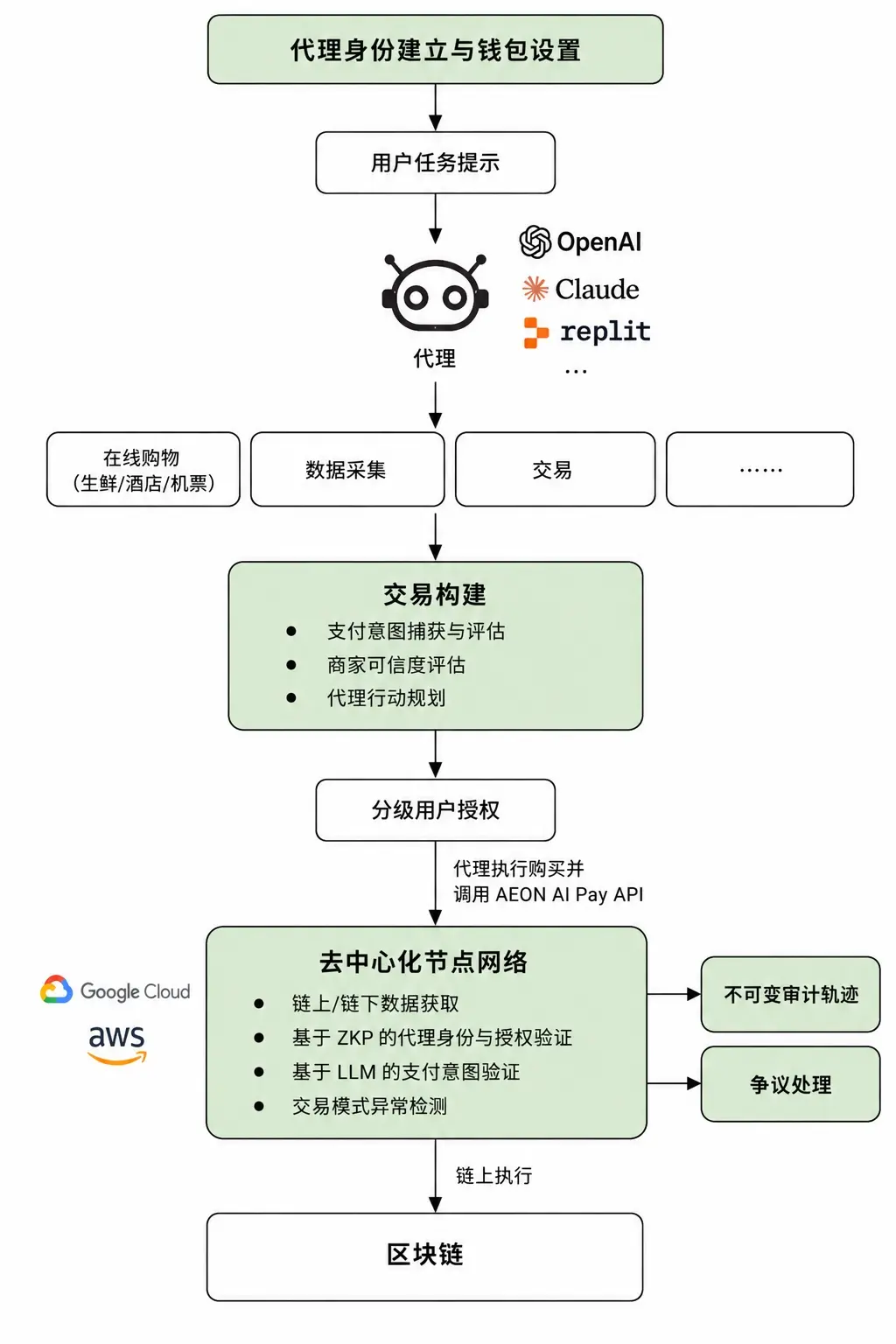
The entire system mainly includes:
Creating identities and wallets for AI Agents
Receiving and understanding user task instructions
Automatically constructing payment transactions
Verifying payment intent and merchant authenticity
Obtaining tiered user authorization
Executing transactions through a decentralized node network
Throughout the process, the APF continuously ensures:
Data integrity
Payment security
Verifiability
Immutable audit records
Essentially, AEON hopes to enable AI Agents not just to "provide suggestions," but to truly possess the ability to autonomously complete real-world payments and commercial interactions.
- Agent Identity Protocol
AEON's Agent Identity Protocol is a proprietary cryptographic framework designed to establish secure, immutable digital identities for AI Agents, ensuring that payment transactions initiated by AI Agents can be verified, authorized, and traceable. Its core goal is to ensure that every AI payment is genuinely authorized by the user and can only be executed by the designated Agent.
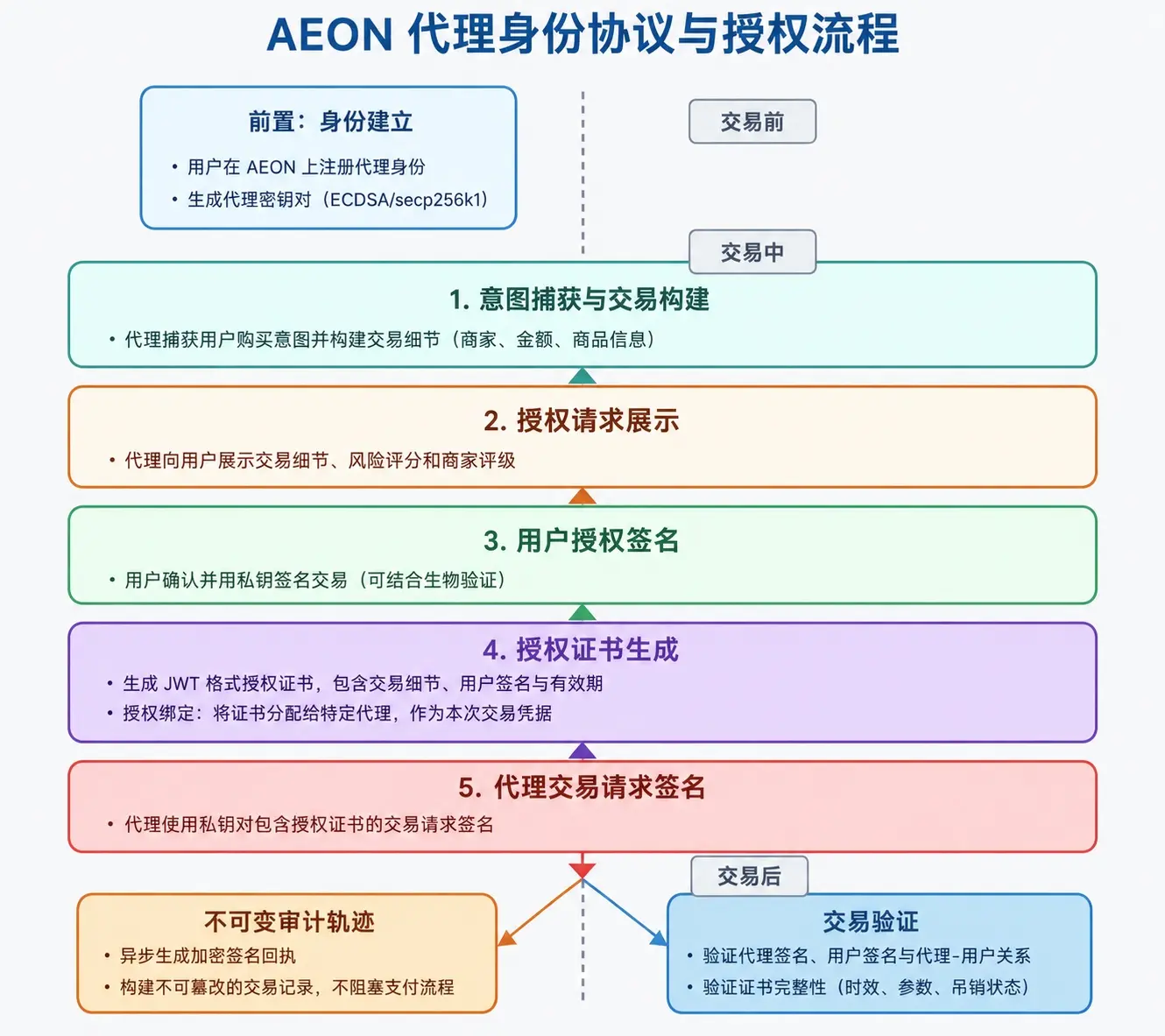
Identity Establishment
Each AI Agent is assigned a unique cryptographic identity.
The system generates a unique digital identity and on-chain address for the Agent through:
ECDSA (secp256k1 curve)
Public-private key mechanism
Keccak-256 hash
Thus ensuring that the identity cannot be forged.
Authorization Binding
AEON encrypts the binding of user authorization to the Agent identity.
In the authorization certificate:
The specified Agent ID is embedded
The user signature covers not only the transaction content
But also the specific Agent identity executing that transaction
Therefore, even if the authorization certificate is leaked, other Agents cannot use it.
Secure Credential Management
AEON adopts a Self-Custody model for managing Agent private keys:
Private keys are stored only locally by the user
AEON cannot access or recover private keys
The platform only retains the corresponding public key for verification
The system also maintains:
The authorization relationship between users and Agents
An encrypted database
An Agent ownership registry
Thus ensuring the trustworthiness of identity relationships.
Transaction Verification
During payment execution, the system performs multi-layer verification, including:
Agent Identity Verification
Verifying the Agent's signature
Checking if the Agent ID matches the authorization certificate
User Authorization Verification
Verifying the user's digital signature
Checking if the user has control over the Agent
Transaction Parameter Verification
Verifying parameters such as amount, merchant, and purpose
Checking authorization validity period and revocation status
The overall goal is to prevent Agent impersonation, certificate theft, and overstepping of payment authority.
Immutable Audit Trail
AEON generates encrypted audit records for each AI Agent payment.
Its core mechanisms include:
SHA-256 / Blake2 hash chain
Multi-party digital signatures
RFC3161 timestamps
PBFT distributed storage
WORM immutable storage
Merkle Tree integrity verification
Thus forming a complete, verifiable, and unmodifiable payment audit trail.
- LLM-based Payment Intent Verification
AEON's Intent Verification Framework is a semantic analysis system based on LLM (Large Language Model) designed to map user natural language instructions to specific transaction parameters.
Its core goal is to ensure that every payment initiated by an AI Agent accurately reflects the user's true intent.
Essentially, it serves as a semantic bridge connecting "human instructions" with "financial transactions," aimed at avoiding misunderstandings or erroneous executions by AI in complex payment processes.
Financial Intent Embedding Model (FIEM)
FIEM is AEON's self-developed financial intent embedding model specifically designed for payment intent recognition.
This model is trained on:
Millions of payment dialogues
Financial transaction data
User payment instructions
Unlike ordinary general-purpose LLMs, FIEM additionally integrates:
Financial knowledge graphs
Merchant directories
Payment ontology
Thus improving the accuracy of payment intent recognition by about 87% compared to ordinary AI assistants.
Its core function is to better understand "what the user really wants to pay."
Cross-Context Semantic Alignment Verification (CSAV)
CSAV is used to track the user's true payment intent across multiple rounds of dialogue.
The system constructs a cross-context semantic relationship graph to analyze:
The user's initial needs
Changes in intermediate dialogue
Final payment parameters
To ensure consistency among them.
This mechanism can prevent:
AI intent drift
Semantic errors in multi-step purchases
Final payments being inconsistent with the user's original intent
Thus ensuring that AI Agents can accurately execute payment actions even in complex scenarios.
- ZKP-based Agent Identity & Authorization Verification
AEON introduces a ZKP (Zero-Knowledge Proof)-based identity and authorization verification mechanism in the AI Payment Framework to verify whether an AI Agent has genuinely obtained user authorization without exposing sensitive data.
Its core goal is to achieve a high-privacy, verifiable AI payment process while ensuring payment security.
Zero-Knowledge Authentication
AEON uses zero-knowledge proofs to verify payment authorization without exposing complete credential information to merchants or verification nodes.
During transaction verification, the system combines:
zk-SNARKs
Merkle Proof
Homomorphic Computation
To verify transaction parameters.
For example:
Verifying whether the transaction meets authorization conditions
Verifying whether the amount is within the permitted range
Verifying whether the Agent has execution permissions
But without disclosing complete payment details.
Protection Mechanisms
AEON adopts a multi-layer privacy protection design, including:
Blinded Verification
Verification nodes can confirm that the transaction meets conditions but cannot see the actual payment content.
Distributed Parameter Validation
Transaction parameters are verified in parts to prevent a single node from grasping the complete transaction context.
The overall goal is to maximize user privacy while maintaining the legality of transaction verification.
Authorization Mode
AEON provides various AI payment authorization methods:
Single Authorization
Each transaction requires explicit user confirmation.
Conditional Authorization
Transactions meeting preset conditions can be executed automatically.
Preset Authorization Templates
Supports establishing standard authorization templates for repetitive payment scenarios.
Authorization conditions may include:
Payment limits
Merchant whitelists
Authorization validity periods, etc.
Authorization Flow
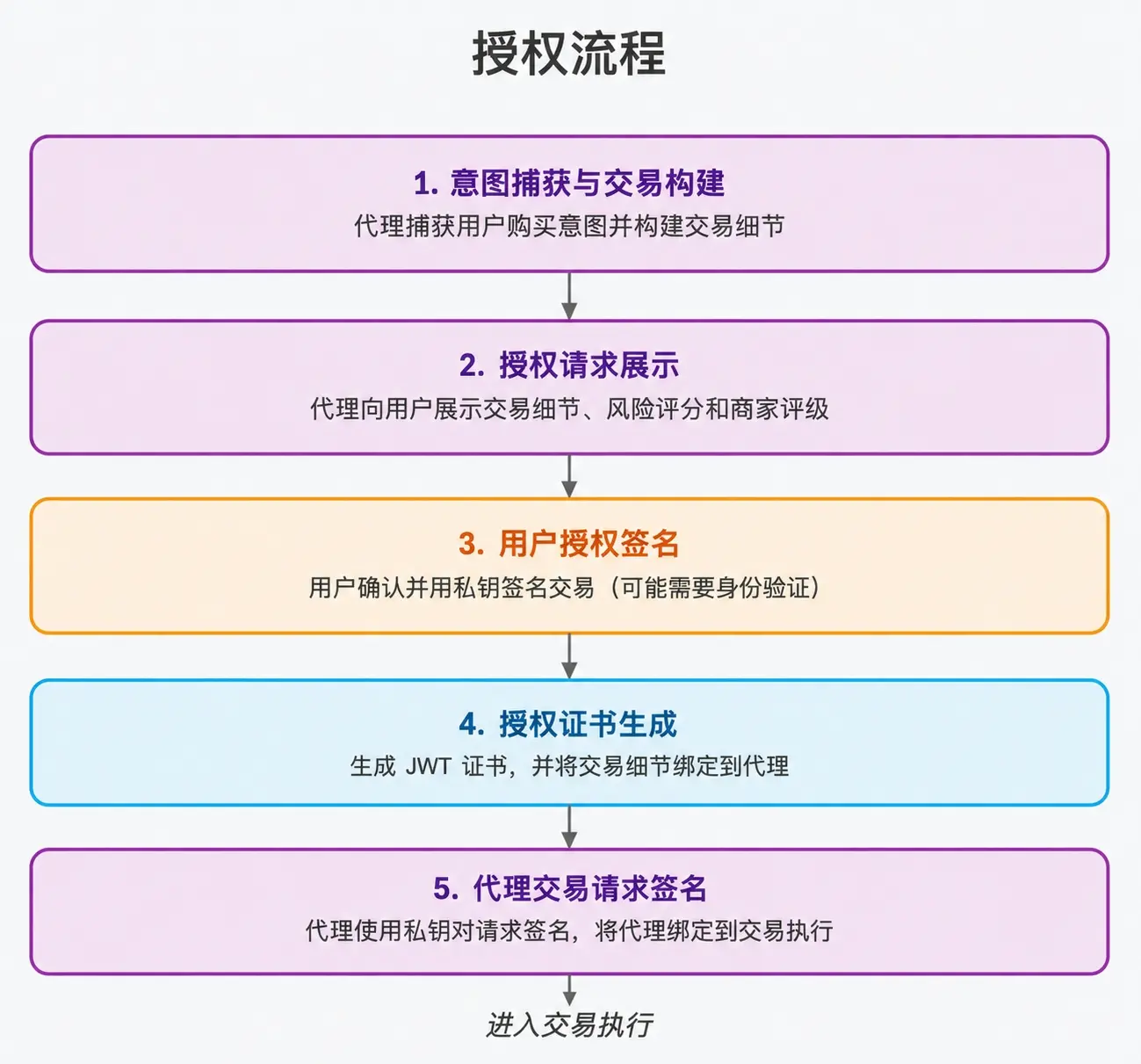
The entire AI payment authorization process includes:
The Agent understands the user's payment intent and constructs the transaction
The system presents the payment request to the user
The user signs the authorization using their private key
The system generates an Authorization Certificate (in JWT format)
The Agent signs the transaction request again using its private key
The Agent submits the authorization certificate and signature to the AEON network
AEON verifies the validity and timeliness of the authorization
Completes the payment and generates an immutable audit record
For large transactions, it may also require:
Fingerprint verification
Secondary identity confirmation
To further enhance security.
Tron Comments
AEON's advantage lies in its focus not only on traditional crypto payments but also on attempting to build a "universal payment and settlement infrastructure" for the AI Economy. By integrating a unified node network, cross-chain settlements, off-chain payments, and AI Agent payment frameworks, it combines Web3 payments, real-world consumption scenarios, and AI automated business behaviors into a single system. Its ZKP identity verification, LLM intent recognition, and multi-layer on-chain and off-chain risk control mechanisms also enhance security and verifiability in AI payment scenarios.
However, its disadvantage is that the overall system architecture is extremely complex, requiring coordination across multiple aspects such as cross-chain liquidity, node consensus, payment networks, AI Agent authorization, and real merchant integration. Additionally, AI autonomous payments are still in the early stages, with high uncertainty regarding user habits, regulatory compliance, payment liability, and large-scale merchant adoption.
III. Industry Data Analysis
1. Overall Market Performance
1.1. Spot BTC vs ETH Price Trends
BTC
ETH
IV. Macroeconomic Data Review and Key Data Release Points for Next Week
United States
May CPI rose year-on-year to 4.2%, reaching a nearly three-year high, with rising energy prices being the main driving factor; core CPI is about 2.9%, still above the Federal Reserve's target.
May PPI rose year-on-year to 6.5%, reaching a new high since the end of 2022, indicating continued upward inflation pressure upstream.
Market expectations for short-term interest rate cuts by the Federal Reserve have further cooled.
Eurozone
The European Central Bank (ECB) raised interest rates by 25 basis points, marking the first rate hike of 2023.
Eurozone inflation rose to 3.2% in May, with the ECB simultaneously raising its inflation forecast for the next two years and lowering its economic growth expectations.
Key Data and Events for Next Week (June 15—June 21)
United States (Most Important)
June 17 (Wednesday)
Federal Reserve FOMC interest rate decision
Federal Reserve Chairman Kevin Warsh press conference
U.S. May Retail Sales
June 18 (Thursday)
- U.S. Initial Jobless Claims
Japan
June 15-16
Bank of Japan (BOJ) interest rate decision
Market attention on whether to signal further tightening of policies.
United Kingdom
June 18
Bank of England (BOE) interest rate decision
Market expects to maintain interest rates, but will focus on inflation statements.
V. Regulatory Policies
United States
The U.S. Congress continues to advance stablecoin regulatory legislation and crypto market structure bills, with the regulatory focus shifting from enforcement to legislation, making stablecoin regulatory frameworks one of the core issues in Washington. The overall U.S. crypto regulatory system is entering the implementation phase.
Discussions around reserve requirements for stablecoin issuers, audit disclosures, and federal regulatory authority are heating up, paving the way for a comprehensive regulatory framework.
European Union
- On the eve of the full implementation of MiCA (Markets in Crypto-Assets Regulation), member states continue to advance the conversion of CASP (Crypto Asset Service Provider) licenses and regulatory coordination, with the European unified regulatory system entering its final preparation stage.
United Kingdom
- UK regulators continue to advance the construction of a digital asset regulatory framework independent of the EU, focusing on stablecoins, trading platform regulation, and compliance requirements for financial institutions participating in crypto business.
Hong Kong
- Hong Kong continues to promote the implementation of stablecoin regulatory systems, further refining the implementation details around stablecoin issuer access, reserve management, and licensing systems, consolidating its position as Asia's digital asset regulatory center.
Japan
- Japan continues to advance the financialization reform of crypto assets, carrying out follow-up work on crypto ETFs, institutional investor participation, and digital asset regulatory frameworks to further strengthen compliance market construction.
 Risk warning
Popular articles