Morning Report | The central bank held a monetary policy meeting for the second quarter of 2026, emphasizing the continued implementation of a moderately loose monetary policy; Analysis: The market lacks incremental liquidity, with about 40% of altcoin prices near historical lows
 July 8 Market Important Events Overview
Compiled by: ChainCatcher
What important events have occurred in the past 24 hours?
Data: Recently listed crypto companies' stock prices have dropped 73% from their highs, Gemini down over 90%
According to ChainCatcher, a report from 10x Research indicates that the stock prices of recently listed crypto-related companies have generally fallen significantly from their post-listing highs. Among them, Gemini (GEMI) has dropped by 91%, Amber (AMBR) by 89%, BitGo (BTGO) by 79%, Circle (CRCL) by 78%, Coinbase (COIN) by 63%, and Securitize (SECZ) has also fallen by 41%. Data shows that these 8 recently listed crypto companies have an average decline of 73% from their post-listing highs. The report points out that the sharp drop in stock prices after listing has become a common phenomenon for crypto company IPOs, and investors need to adopt more systematic strategies to cope with such volatility.
Russian State Duma approves final version of crypto regulation bill, removes mandatory wallet address reporting requirement
According to ChainCatcher, Bits.media reports that the Financial Market Committee of the Russian State Duma has approved the final version of the government's crypto regulation bill, which will be submitted for a second reading. Committee Chairman Anatoly Aksakov revealed that the second reading version has made several key adjustments: the requirement for mandatory reporting of crypto wallet addresses has been removed, replaced by only reporting balances and transaction flows to protect residents from the risk of sensitive information leakage; a new amendment allows the legal purchase of securities in the securities market and Russian digital financial assets using cryptocurrencies. In the future, it may allow Russian licensed brokers and asset managers to trade on foreign crypto exchanges, but they must meet additional requirements such as "friendliness" of the jurisdiction. For non-professional investors, the annual limit through a single intermediary is set at 300,000 rubles, and it is limited to "the most liquid cryptocurrencies." The bill also introduces a two-day freeze on large transfers to foreign and third parties. Aksakov did not clarify whether the proposal to prohibit Russians from using non-custodial crypto wallets would be retained.
Kazakhstan President signs decree to promote digital asset industry development
According to ChainCatcher, the Ministry of Artificial Intelligence and Digital Development of Kazakhstan announced that the President of Kazakhstan signed a decree on July 8, 2026, titled "Measures to Stimulate and Develop the Digital Asset Industry of the Republic of Kazakhstan," aimed at building a modern and transparent digital financial services ecosystem. The core content of the decree covers four major directions: first, promoting the modernization of payment infrastructure and developing mechanisms to support digital assets and stablecoins for cross-border settlements; second, encouraging crypto asset trading to be included in a regulated legal framework, allowing digital assets previously held on unregulated platforms abroad to be voluntarily disclosed and transferred to domestic licensed providers; third, introducing tax incentive policies, exempting personal income tax on income from digital asset trading conducted through Kazakhstan's regulated infrastructure; fourth, allowing associated gas from oil and gas fields to be used for self-generation and allocated to digital mining to promote regional investment and efficient energy utilization. Additionally, the decree clarifies the development direction of tokenized financial instruments and national trading infrastructure.
Indian central bank supports cryptocurrency ban, tax department warns of tax evasion risks
According to ChainCatcher, Reuters reports that the Reserve Bank of India has reiterated its call for a "tendency to ban" cryptocurrency, while the country's tax department has warned that transactions conducted through offshore exchanges are difficult to trace. These documents reveal that although the government has not yet implemented policies to ban or regulate cryptocurrencies, major government agencies in India tend to adopt stricter restrictions on virtual digital assets. Since a court ruling in 2018 declared the Reserve Bank of India's (RBI) policy effectively banning cryptocurrencies invalid, India has allowed cryptocurrencies to remain in a gray area. Legislation drafted in 2021 aimed at banning private cryptocurrencies has never been submitted for parliamentary review, and a discussion document on the topic has also been postponed multiple times. The government has delayed the implementation of a formal virtual asset policy, stating that any plans should balance innovation and risk management while protecting monetary sovereignty, financial stability, and preventing consumer losses.
Former Twitter CISO Michael Coates appointed Chief Information Security Officer of Solana Foundation
According to ChainCatcher, security expert Michael Coates announced on the X platform that he has been appointed Chief Information Security Officer (CISO) of the Solana Foundation, marking a new chapter in his career. Coates previously served as the security chief at Mozilla, CISO at Twitter, and founded a startup focused on enterprise SaaS data security, Altitude Networks, which was later acquired by CoinList, thus entering the crypto industry. Coates stated that he chose to join Solana because the chain currently has a daily stablecoin trading volume of hundreds of billions of dollars, surpassing the daily trading volume of most cryptocurrencies combined. He mentioned that his future work will focus on integrating security capabilities into industry operations and application security foundations, addressing the unique security challenges of cryptocurrencies, and collaborating with policymakers and standards organizations to promote the improvement of cybersecurity regulations.
Analysis: SpaceX's inclusion in the Nasdaq 100 index brings Bitcoin investment opportunities for passive index investors
According to ChainCatcher, Bitcoin Magazine reports that SpaceX officially joined the Nasdaq 100 index on July 7, after disclosing that its balance sheet holds 18,712 Bitcoins. JPMorgan estimates that this index rebalancing will drive approximately $4.3 billion in passive fund inflows into funds and ETFs tracking the Nasdaq 100. This means that institutional capital has gained structural exposure to Bitcoin through corporate treasury channels. After SpaceX's inclusion, the number of companies holding Bitcoin treasuries in the Nasdaq 100 has increased to three (SpaceX, Tesla, and Strategy). Analysts point out that the inclusion in the index creates demand driven by rules rather than active allocation, and the combination of Bitcoin holdings with strong fundamentals can enhance a company's market visibility and liquidity. Currently, publicly listed companies hold over 1.26 million Bitcoins, and corporate Bitcoin strategies are shifting from early experimentation to integration with mature financial infrastructure.
EU plans to expand MiCA regulatory scope to cover tokenized and non-EU stablecoin issuers
According to ChainCatcher, The Block reports that the EU is considering revising its Markets in Crypto-Assets Regulation (MiCA), just about a week after this crypto regulatory framework came into full effect. The European Commission is soliciting opinions from relevant stakeholders, with a deadline of September 30. According to several anonymous sources familiar with the matter, the European Commission is assessing whether to expand the regulatory scope of MiCA to include emerging areas such as tokenization and non-EU stablecoin issuers. MiCA is a comprehensive regulatory framework established by the EU for crypto assets, aimed at creating uniform rules for the issuance, trading, custody, and other related services of crypto assets across the EU. The regulation will officially take effect in December 2024, but most service providers have been granted a transition period to complete compliance adjustments, which will last until July 1 of this year.
Mirae Asset's Hong Kong branch plans to launch a tokenized asset trading platform within three years, initially targeting Hong Kong customers
According to ChainCatcher, Straight News reports that Mirae Asset's Hong Kong branch plans to launch a tokenized asset trading platform within the next three years, aiming to convert existing investment assets and traditional financial assets into tokens for customer trading. The company has recently expanded its business based on its newly launched trading platform MAPS (Mirae Asset Portfolio Service), focusing on transitioning from institutional business to a customer-based platform business. The initial phase of the platform will target Hong Kong customers, with a long-term goal of establishing a cross-regional trading framework connecting Korea and overseas markets.
Data: Bitcoin spot ETF saw total net inflow of $21.435 million yesterday, continuing three days of net inflows
According to ChainCatcher, based on SoSoValue data, Bitcoin spot ETFs had a total net inflow of $21.435 million. The Bitcoin spot ETF with the highest single-day net inflow was Blackrock ETF IBIT, with a single-day net inflow of $54.799 million, currently totaling $60.258 billion in historical net inflows. The Bitcoin spot ETF with the highest single-day net outflow was Fidelity ETF FBTC, with a single-day net outflow of $24.9199 million, currently totaling $10.229 billion in historical net inflows. As of the time of writing, the total net asset value of Bitcoin spot ETFs is $77.259 billion, with an ETF net asset ratio (market cap compared to total Bitcoin market cap) of 6.05%, and historical cumulative net inflows have reached $51.366 billion.
Federal Reserve's probability of keeping rates unchanged in July is 73.3%, with a 52.7% chance of a rate hike in September
According to ChainCatcher, Jin10 reports that CME's "FedWatch" shows that the probability of the Federal Reserve keeping rates unchanged in July is 73.3%, while the cumulative probability of a 25 basis point rate hike is 26.7%. By September, the probability of keeping rates unchanged is 32.4%, with a cumulative probability of a 25 basis point rate hike at 52.7%, and a cumulative probability of a 50 basis point rate hike at 14.9%.
AscendEX announces cessation of operations, public hot wallet assets insufficient to cover user withdrawals
According to ChainCatcher, the crypto exchange AscendEX has announced that it will cease operations, attributing the reason to the current market environment and the impact of the EU's Markets in Crypto-Assets Regulation (MiCA). In response, on-chain detective ZachXBT pointed out that AscendEX's public hot wallet currently lacks sufficient liquid assets to cover verified user withdrawal demands amounting to millions of dollars. Affected users are advised to report to law enforcement and regulatory agencies in their respective countries or regions to hold AscendEX co-founder George (Jing) Cao accountable.
Japan's Siiibo Securities to be renamed Metaplanet Securities, laying out plans for BTC financial platform
According to ChainCatcher, Japan's bond issuance and purchasing platform operator Siiibo Securities announced plans to be renamed "Metaplanet Securities Inc." starting July 13, 2026, and will officially join the Metaplanet group. Siiibo Securities stated that the name change requires approval from an extraordinary shareholders' meeting. The company previously operated with the mission of "creating direct finance that is free, transparent, and fair," focusing on online private bond issuance and purchasing platforms for emerging enterprises and individual investors, and holds a Type I financial instruments business license in Japan. With the integration into the Metaplanet group, Siiibo plans to further expand its business direction, intending to leverage its parent company's experience in BTC asset operations to develop and provide BTC-based financial products to individual investors, creating a "BTC x Finance" platform. It is understood that Siiibo Securities was established in 2019 and currently operates an online securities platform focused on corporate bonds, providing private bond issuance and investment services, covering approximately 40 companies and over 100 bond products. After joining the Metaplanet group, it will no longer be limited to the venture debt field but will explore more innovative income products to meet investor return demands.
Data: $391 million liquidations across the network in the past 24 hours, with $287 million in long liquidations and $104 million in short liquidations
According to ChainCatcher, based on Coinglass data, there were $391 million in liquidations across the network in the past 24 hours, with $287 million in long liquidations and $104 million in short liquidations. Among them, Bitcoin long liquidations amounted to $55.7478 million, Bitcoin short liquidations to $30.916 million, Ethereum long liquidations to $54.0562 million, and Ethereum short liquidations to $28.4245 million. Additionally, in the last 24 hours, a total of 131,611 people were liquidated globally, with the largest single liquidation occurring on Binance - ETHUSDT worth $7.2448 million.
Data: Ethereum spot ETF saw total net inflow of $26.9252 million yesterday, continuing four days of net inflows
According to ChainCatcher, based on SoSoValue data, as of July 7, Eastern Time, Ethereum spot ETFs had a total net inflow of $26.9252 million. The Ethereum spot ETF with the highest single-day net inflow was Blackrock ETF ETHA, with a single-day net inflow of $26.9252 million, currently totaling $11.175 billion in historical net inflows. As of the time of writing, the total net asset value of Ethereum spot ETFs is $9.526 billion, with an ETF net asset ratio (market cap compared to total Ethereum market cap) of 4.42%, and historical cumulative net inflows have reached $10.937 billion.
Binance Research Institute releases stablecoin industry report: platform stablecoin reserves reach $53 billion, market share rises to 57%
According to ChainCatcher, Binance Research Institute released the industry report "Stablecoins: Reshaping the Financial Landscape." The report shows that as of now, Binance platform stablecoin reserves have reached $53 billion, with market share increasing from 54% to 57%, approximately $42 billion higher than the second-largest trading platform. Meanwhile, in the first five months of 2026, the cumulative trading volume of TradFi-related perpetual contracts exceeded $1.1 trillion, with Binance's trading volume exceeding $500 billion, accounting for about 47% of the market share. Additionally, since 2022, Binance Wealth Management has issued $1.2 billion in returns to over 14 million stablecoin users; BNB Chain's daily stablecoin transaction count reached 10 million, with monthly active addresses reaching 15 million, accounting for approximately 24% of the market share based on transaction volume. The report points out that stablecoins are evolving from tools for trading crypto assets to important settlement infrastructure in global finance, and Binance has built a one-stop stablecoin financial ecosystem covering trading, payments, returns, investments, and on-chain ecology.
Central Bank holds Q2 2026 monetary policy meeting, emphasizes continued implementation of moderately loose monetary policy
According to ChainCatcher, the People's Bank of China announced on July 8 that the central bank's monetary policy committee held its second quarter 2026 meeting (the 113th meeting) on July 4. The meeting pointed out that monetary policy has remained moderately loose this year, with social financing costs at historically low levels and a basic balance in the foreign exchange market supply and demand. In the face of the current complex and changing external environment and domestic challenges such as strong supply and weak demand and structural differentiation, the overall operation of the economy is stable and moving towards new and better developments. The meeting emphasized that the next stage will continue to implement a moderately loose monetary policy, increase counter-cyclical and cross-cyclical adjustments, strengthen the coordination of monetary and fiscal policies, and promote stable economic growth and reasonable price recovery. At the same time, the meeting clearly stated the need to maintain ample liquidity and promote low-level operation of comprehensive social financing costs; assess the bond market operation from a macro-prudential perspective, paying attention to changes in long-term yields; and maintain basic stability of the RMB exchange rate at a reasonable and balanced level. In addition, the central bank will continue to optimize various structural monetary policy tools, solidly implement the "five major articles" of finance, and increase financial support for key areas such as expanding domestic demand, technological innovation, small and micro enterprises, and the private economy.
News: Driven by oversubscription, SK Hynix will end $28 billion ADR book-building on Wednesday
According to ChainCatcher, Reuters reports that insiders revealed that due to the subscription scale reaching several times, South Korean chip manufacturer SK Hynix will end its $28 billion American Depositary Receipt (ADR) issuance book-building at 4 PM Eastern Time on Wednesday. It is reported that the final pricing guidance for this issuance will be announced after the close of the Korean stock market on Thursday, and the allocation results will be finalized later on Thursday evening, with plans to officially list on Nasdaq on July 10. The report indicates that this issuance has attracted strong demand from American investors, with several large orders ranging from $200 million to over $1 billion. The company previously disclosed that institutions such as Baillie Gifford and Coatue Management have expressed interest in purchasing up to $7 billion in ADRs. This transaction is expected to issue 17.79 million new shares, making it the second-largest stock issuance in history globally, following SpaceX's record $85.7 billion IPO last month, surpassing the previous records set by Saudi Aramco (2019) and Alibaba (2014). As a core supplier of high-bandwidth memory (HBM) for companies like Nvidia and Google, SK Hynix stipulates that every 10 ADRs represent 1 share of common stock, with a reference price of 242,500 Korean won per ADR based on the Seoul closing price on July 3.
Data: Hyperliquid team holds HYPE daily staking interest of about $1 million, currently holding about 241 million tokens
According to ChainCatcher, on-chain analyst Yu Jin monitored that the Hyperliquid team has allocated 238 million HYPE, all currently staked, valued at approximately $16 billion at the current price, generating about 14,400 HYPE in staking interest daily, worth about $1 million. Yu Jin stated that since HYPE was listed a year and a half ago, the team has accumulated about 8.08 million HYPE in staking interest, valued at approximately $565 million at the current price. They have only sold about 4.93 million HYPE, so the current amount of HYPE in the address has exceeded the initial allocation size, reaching about 241 million tokens, valued at approximately $16.5 billion. Previously, it was reported that the Hyperliquid development team, Hyperliquid Labs, transferred 452,000 HYPE in the early morning, equivalent to about $3.232 million, with HYPE dropping 5% that day. Yu Jin indicated that this HYPE may be sold through the market maker Flowdesk, with part flowing into their on-chain wallet and another part into their recharge addresses on OKX, Bybit, and Gate.
SecondFi releases latest update on theft incident, isolation mode to launch this week, security wallet export feature planned for next week
According to ChainCatcher, Cardano wallet service provider SecondFi released the latest update on the theft incident, stating that "isolation mode" will be launched this week, allowing users to check whether their wallet addresses are involved in the incident and submit tickets; next week, they plan to launch a security wallet export feature to provide a safer wallet migration path for users of different technical levels. SecondFi reiterated that it will provide potential asset recovery solutions for wallets confirmed to be affected through a process, expected to use zero-knowledge proof-based recovery tools and set qualifications and terms; the official also reminded that it will not request private keys or mnemonic phrases, and users should only operate through the official website support and designated verification tools.
Dune analysis: Stablecoin differentiation intensifies, USDT wins in payment sector, USDC leads DeFi
According to ChainCatcher, Cointelegraph reports that according to the latest data from Dune Analytics, in the first half of 2026, USDT completed approximately $95 billion in commodity payment settlements, far exceeding USDC's $14 billion; in the business-to-business (B2B) payment sector, USDT accounted for as much as 92%. On the Tron network, which is USDT's largest network, about 93% of the token supply is held in regular wallets. In contrast, USDC has a significant advantage in the DeFi sector, with USDC processing approximately $2.6 trillion in transfers on the Base network in June, while the Ethereum network processed about $1.6 trillion. Currently, USDT and USDC together account for about 83% of the total stablecoin market capitalization of approximately $315 billion.
South Korean Ministry of Finance: Will closely monitor stock market volatility risks
According to ChainCatcher, the South Korean Ministry of Finance stated on Wednesday that after a meeting with the central bank governor and heads of financial regulatory agencies, Finance Minister Kim Yun-cheol agreed to closely monitor risk factors that may exacerbate stock market volatility. The Ministry of Finance stated that the increased volatility in the stock market is due to profit-taking by foreign and institutional investors, portfolio rebalancing, and changes in global AI sector expectations. According to Gate market data, during the morning session today, the South Korean KOSPI index fell by as much as 4%, reaching its lowest level since May 20, before rebounding due to a recovery in chip stocks. The Ministry of Finance pointed out that the increased concentration in the semiconductor industry has become a factor exacerbating volatility in the financial market.
Wintermute: Recent Bitcoin trend is a rebound repair market, not a structural market change
According to ChainCatcher, Decrypt reports that market maker Wintermute stated that Bitcoin's recent nearly 10% rebound is a "textbook rebound market," rather than a structural market change, and the company remains cautious. Wintermute pointed out that the loosening macro environment, the Fed's dovish tone, and positive news related to Ethereum and institutional adoption are the three factors driving the rebound, sufficient to explain the current market without seeking a larger narrative. The company believes the market may continue to "rise slightly." However, Wintermute stated that a single data point does not constitute a trend, and more sustained inflows are needed to confirm a structural change; until broader capital flows genuinely shift, the current situation is merely a repair market.
CFTC charges North Carolina man with $14 million crypto and futures fraud
According to ChainCatcher, the U.S. CFTC has sued North Carolina man Trevor Vernon and his company Argent Capital Management LLC, accusing them of defrauding approximately 60 investors out of a total of $14 million through a fraudulent commodity pool. According to the complaint submitted by the CFTC to the federal district court for the Western District of North Carolina, the commodity pool operated by Vernon and his company involved trading various asset classes, including stock index futures options, stock index futures contracts, and crypto assets. The CFTC stated that Vernon falsely claimed to investors through quarterly financial updates and monthly performance review emails that he was a "successful trader," but in reality, he continuously incurred significant losses while trading with investors' funds. The regulatory agency indicated that Vernon had accumulated losses of at least $8.6 million in futures, options, and crypto trading. The CFTC stated that his actual trading results were "persistent and catastrophic losses," which severely contradicted the profitability he presented to investors.
South Korean central bank releases regulatory proposal paper, suggests limiting personal stablecoin transactions over $10,000 to certified wallet transfers only
According to ChainCatcher, the legal team of the South Korean central bank released a research paper titled "Regulatory Proposal for Foreign Remittance Transactions of Stablecoins," proposing regulatory suggestions for large stablecoin transactions. The paper references South Korea's current foreign exchange management regulations, proposing constraints on stablecoin transfers between individuals exceeding $10,000, requiring such transactions to only be conducted between officially certified wallets, along with a prior reporting mechanism. The institution admitted that comprehensive control over unregistered wallets poses technical challenges, but due to anti-money laundering compliance requirements, it is necessary to strengthen restrictions on large cross-border stablecoin capital flows. South Korean regulatory authorities have previously suggested multiple times the need to improve the monitoring system for cross-border crypto asset transactions involving non-custodial wallets, and this paper further details the control ideas.
ZachXBT: LAB drops 85% in 24 hours, trading of this token not recommended
According to ChainCatcher, on-chain investigator ZachXBT stated that the LAB token has dropped from $14 to less than $2 in the past 24 hours, a decline of about 85%, with the fully diluted valuation (FDV) significantly shrinking from about $14 billion. ZachXBT expressed disappointment that Binance, Bitget, and Gate failed to take measures in advance to prevent price manipulation, stating that if centralized exchanges truly valued user interests, they should at least return profits from accounts suspected of market manipulation to users. He also pointed out that LAB investors were originally scheduled to start unlocking tokens later this month, but the vesting arrangements have been modified multiple times, with insiders controlling almost the entire circulating supply and implementing extreme price manipulation through market makers on centralized exchanges, thus "trading LAB is not recommended under any circumstances."
Analysis: Market lacks incremental liquidity, about 40% of altcoin prices are near historical lows
According to ChainCatcher, CryptoQuant analyst Darkfost stated that currently about 40% of altcoins are near historical lows. Indicators show that the prices of these tokens have fallen within 25% above their historical lows, reflecting that the altcoin market is in an extremely weak state. Darkfost noted that when Bitcoin fell below $60,000 in late June, this proportion rose to 45%. The latest data shows this proportion is about 39.9%. He also pointed out that the current market environment has undergone significant changes. CMC statistics show that there are currently about 53.5 million existing cryptocurrencies, with approximately 60,000 new tokens appearing daily. In the absence of strong incremental liquidity, most cryptocurrencies will face the risk of failure.
South Korean National Police Agency selects Dunamu as the preferred external custodian for seized digital assets
According to ChainCatcher, DigitalAsset reports that Upbit operator Dunamu has been selected as the first priority for the South Korean National Police Agency's "Custody Management Business for Seized Digital Assets." According to data from the South Korean government procurement portal (KONEPS), Dunamu ranked first with a comprehensive score of 94.73 (technical score 84.73, bid price score 10), surpassing the Korea Digital Asset Custody Company (KDAC, 91.29) and Hecto Wallet One (87.27). The project budget is 267 million Korean won, with a contract duration of one year, aimed at securely storing digital assets seized by the police during investigations. Previously, there have been cases in South Korea where seized Bitcoins were lost, raising concerns about the need for external custody of digital assets.
Gate founder Dr. Han: Gate completes MiCA license layout in advance, promoting fair competition in the European crypto market
According to ChainCatcher, CoinDesk reports that with the official full implementation of the EU's Markets in Crypto-Assets Regulation (MiCA), the European digital asset market has entered a new era of unified regulation. Regarding the impact of MiCA on the industry landscape, Gate founder and CEO Dr. Han stated in an interview that Gate began laying the groundwork for European compliance several years ago and completed preparations for MiCA and Payment Institution (PI) licenses ahead of schedule in 2025. He pointed out that the significance of MiCA lies not only in establishing a unified regulatory framework but also in ensuring that all market participants start on the same starting line. "Only when all platforms adhere to the same rules can the industry truly compete around products, services, and user experiences." At the same time, he also stated that if unauthorized platforms can still provide services to European users, the fair competition environment will still face challenges, making the effective enforcement of regulations equally crucial. Currently, Gate Europe has continuously improved its compliance system, risk management, and operational governance capabilities based on MiCA and PI dual licenses, and is deepening its global compliance layout. In addition to Europe, multiple entities under Gate have completed relevant regulatory registrations, license applications, or obtained authorizations and approvals in jurisdictions such as Malta, the Bahamas, Japan, the United States, Australia, and Dubai, solidifying the global business foundation through multi-regional regulatory licenses, and continuously providing safer, more transparent, and efficient digital asset services to global users. In the future, Gate will continue to adhere to the parallel development of compliance and innovation, promoting the long-term healthy development of the digital asset industry with higher quality product experiences and global service capabilities.
Ethereum Foundation developer acceleration team member Sophia Dew announces departure
According to ChainCatcher, Sophia Dew, a member of the Ethereum Foundation (EF) Developer Acceleration team, announced that this week will be her last week of full-time service at the Ethereum Foundation. Dew has been active in the Ethereum ecosystem for the past four years, participating in projects such as Funding Commons, Gitcoin, and Celo. She stated that after leaving, she will continue to promote the vision of Ethereum and crypto technology in other ways and clearly expressed her optimism about Ethereum's future development.
News: SpaceXAI and Cursor to release first jointly developed AI model as early as today
According to ChainCatcher, The Information reports that internal memos show that SpaceXAI and Cursor plan to release their first jointly developed AI model as early as today (July 8). It is reported that to further enhance operational efficiency, the two companies postponed the release of the model earlier this week. The report indicates that the new model has the capability to process information quickly and aims to compete with advanced large models such as Anthropic's Opus 4.8 and OpenAI's GPT 5.5. Information shows that Elon Musk's SpaceX acquired xAI (now renamed SpaceXAI) in February this year, and subsequently acquired the startup parent company of the well-known AI programming assistant Cursor, Anysphere, in June for $60 billion in an all-stock deal to strengthen its layout in the high-profit enterprise-level AI code generation field. Additionally, SpaceX has performed strongly since its initial public offering on June 12, benefiting from Nasdaq's revised rules for newly listed companies, and was officially included in the Nasdaq 100 index on Tuesday.
Meme Popular List
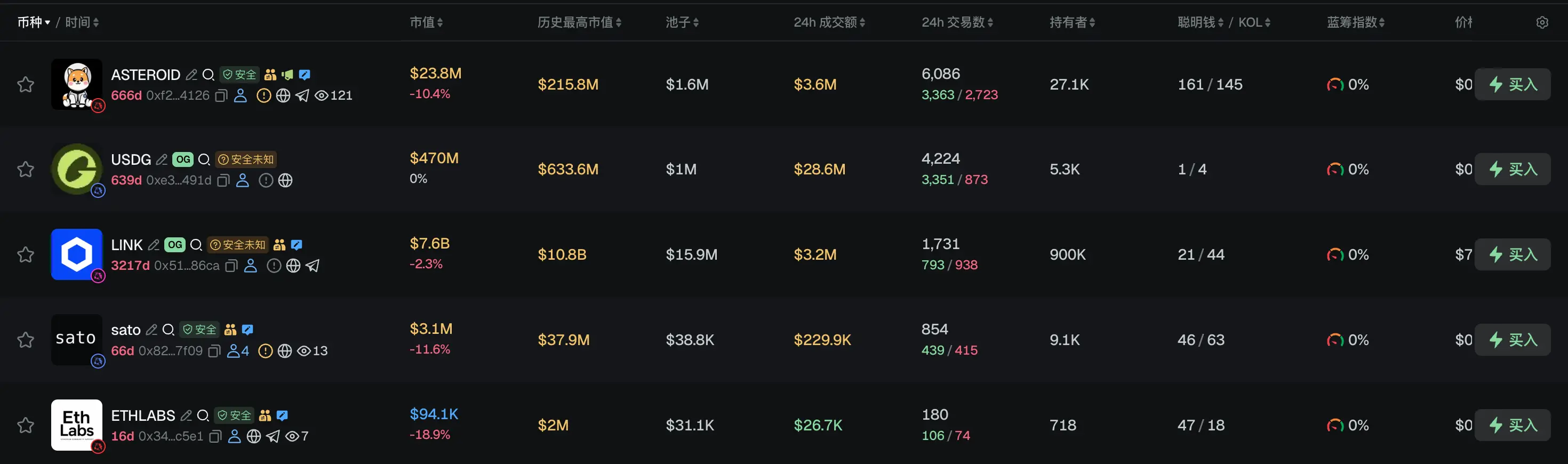
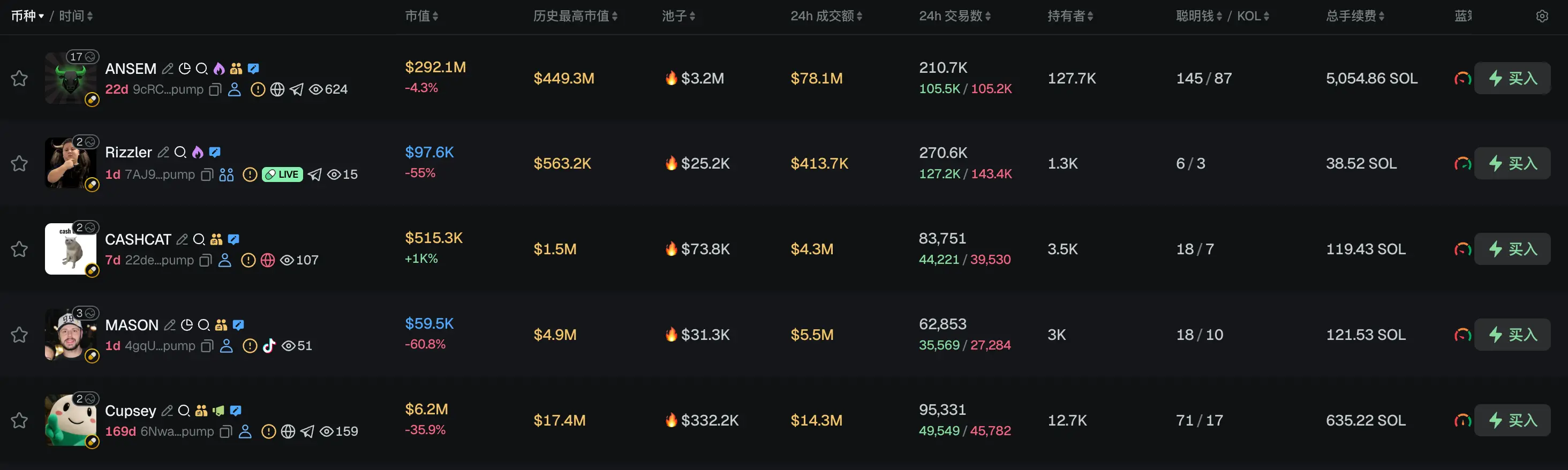
According to the meme token tracking and analysis platform GMGN market data, as of July 9, 09:30,
The top five popular ETH tokens in the past 24 hours are: ASTEROID, USDG, LINK, sato, ETHLABS
The top five popular Solana tokens in the past 24 hours are: ANSEM, Rizzler, CASHCAT, MASON, Cupsey
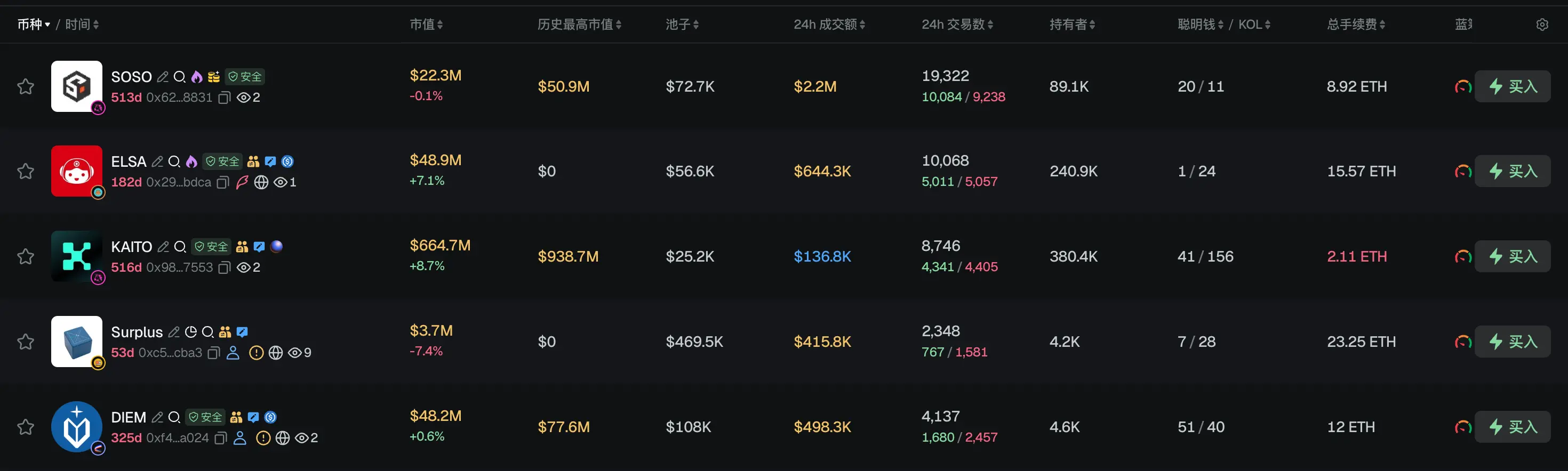
The top five popular Base tokens in the past 24 hours are: SOSO, ELSA, KAITO, Surplus, DIEM
What are some interesting articles worth reading in the past 24 hours?
Incubation, Alliances, and Promotions: The Gamble Behind Robinhood's Web3 Strategy
From cautious coin listings in 2018 to building its own public chain in 2026, Robinhood has completed a "reverse takeover" of the crypto world in eight years. Its journey reveals an unavoidable conclusion: when traditional finance's massive ships sail into the deep sea of crypto, they are not looking to integrate into the existing on-chain world, but rather to rebuild a new continent beneath their feet with compliant structures and massive user bases. This posture of leveraging users to dictate protocols may become the main narrative of the integration of traditional finance and crypto in the next decade.
SemiAnalysis: Anthropic's Q3 profits will exceed $1 billion
SemiAnalysis lists major risk factors, including: OpenAI's rumored price reduction plans, competitive pressures from Google DeepMind and Meta in programming models, potential regulatory restrictions on the release of cutting-edge models by governments, and the dilution effect on overall gross margins from the rising proportion of TaaS revenue. The report clearly states that if regulatory frameworks hinder model releases and narrow the capability gap between open-source models and cutting-edge proprietary models, it will fundamentally weaken Anthropic's business moat.
Collateral Dollars: How Does the "Second Layer Dollar" on Stablecoins Form?
The deposit channel of the Eurodollar system begins with a bank liability and expands through deposit creation, interbank financing, and the forward dollar market. The collateral channel of stablecoins begins with a controlled tokenized asset, and it only expands when an intermediary issues a liability against that token, while another balance sheet treats that liability as near currency. The issuer controls the underlying commitment, the collateral intermediary issues a second commitment, and the funding party decides whether this second commitment has currency-like properties. The discount prices the distance between "token control" and "bank dollar exchange." Under pressure, it is this distance that expands first. Only when the debt built on stablecoins survives the leap from "token liquidity" to "bank dollar liquidity" does collateral dollars truly exist.
Pacific "Fever": How Extreme Weather Becomes a Cash Cow for Wall Street?
The wording of these posts carries an obvious apocalyptic tone and cannot be taken at face value. However, they reflect one thing: there is already a group of people in the market weaving a narrative connecting El Niño, energy shortages, fertilizer shortages, and tensions in the Strait of Hormuz, and this narrative is gaining traction and attention. More importantly, this narrative points not only to profits and losses in futures accounts but also to potential impacts on the cost of living for ordinary people. Initially, no one cared about this storm. It was just a typhoon, a downpour, a slight rise in sea temperatures. But storms do not stop just because no one cares. Heavy rains around the world, canceled flights, disappearing anchovies in Peru, rotting cocoa pods in Ghana, and the shortage of white sugar are all part of the storm, which will ultimately affect the lives of different people.
In terms of project quality, 80% of the projects in X Launch have RootData transparency ratings better than 85% of the platform's projects, with A+B grades accounting for 80%, far exceeding the industry average, further validating the strong correlation between high transparency and main site liquidity support. As OKX Boost continues to iterate its gameplay and delve into quality projects, it has become not only an important window for users to capture early Alpha but also an important window for observing the migration of funds, narratives, and liquidity in the Web3 primary market. We will continue to track and bring monthly updates to our followers.
 Risk warning