Morning Report | Michael Saylor and Adam Back published articles opposing BIP 110; Forbes released a list of the top 10 cryptocurrencies worth investing in, including HYPE, ZEC, and others

 July 12 Market Important Events Overview
Compiled by: ChainCatcher
What important events have occurred in the past 24 hours?
Opinion: The crypto company IPO window may restart next year, regulation is no longer the primary obstacle
According to ChainCatcher, Christian Lopez, head of blockchain and digital assets at investment bank Cohen & Company Capital Markets, stated that as investors rotate funds to other sectors and macro uncertainty continues to suppress risk appetite, the crypto IPO market has significantly slowed down. Lopez pointed out that despite the successful listings of Circle and Bullish raising high expectations for crypto IPOs in 2026, the subsequent weakening market environment, declining trading volumes, and some post-listing performances falling short of expectations have weakened enthusiasm for new issuances. Several crypto companies, including Kraken's parent company Payward, Consensys, Ledger, and Grayscale, have postponed their IPO plans, waiting for market improvements; however, Blockchain.com and FalconX are still advancing their listing processes. Lopez believes that the uncertain interest rate outlook and global deleveraging pressures are making investors more cautious about high-beta assets like crypto. He expects that the IPO window for crypto companies may not materially reopen until next year. Additionally, he stated that regulatory clarity is no longer the primary obstacle for crypto companies to go public; rather, capital acquisition capabilities and business diversification are more critical.
Coinbase: The CLARITY Act will strengthen crypto regulation and national security protection
According to ChainCatcher, Coinbase Chief Policy Officer Faryar Shirzad responded on X to U.S. Senator Elizabeth Warren's criticism of the CLARITY Act, stating that the bill will not weaken national security but will bring digital asset platforms under stronger regulation. Elizabeth Warren previously stated that the current draft of the CLARITY Act could provide opportunities to evade sanctions. Faryar Shirzad stated that the bill will require crypto platforms to comply with stricter national security standards and allow platforms to freeze suspicious transactions at the request of law enforcement. U.S. Senator Cynthia Lummis previously stated that the CLARITY Act includes 16 illegal financial protection measures and warned that this bill may be Congress's last major opportunity to pass comprehensive digital asset rules before 2030.
Forbes releases list of 10 cryptocurrencies worth investing in, including HYPE, ZEC, etc.
According to ChainCatcher, Forbes has selected 10 cryptocurrencies worth investing in based on token utility or value storage attributes, combined with performance over the past 7 days and 24-hour trading volume. The selected projects all have a market capitalization exceeding $5 billion, namely BTC, ETH, BNB, XRP, SOL, TRON (TRX), HYPE, RAIN, LEO, and Zcash (ZEC). Forbes stated that Bitcoin and Ethereum are widely regarded as the "gold and silver" of the cryptocurrency world, with current market capitalizations of approximately $1.289 trillion and $216.47 billion, respectively, accounting for about 68% of the entire crypto market. In terms of selection methodology, Forbes considered the fundamental use of each crypto asset, excluding stablecoins, wrapped crypto assets, liquid staking tokens, and meme coins, focusing on projects with clear investment logic that are expected to appreciate as adoption and utility increase.
Data: Bitcoin short-term holders' buying pressure still dominates, ETF funds have returned but trend reversal cannot be confirmed
According to ChainCatcher, CryptoQuant analyst Axel Adler stated that their newly launched "Bitcoin Short-Term Holder Actual Pressure Model" shows that the buying and selling pressure from short-term holders is slightly cooling, but buying power remains dominant. This model measures the changes in market bullish and bearish forces by comparing the realized buying pressure and selling pressure of short-term holders. In bear market phases, this indicator can serve as a contrarian signal: when prices approach local lows, buyers are usually more active; when approaching local highs, selling pressure tends to rise. In the past 24 hours, there has been no trend-switching signal from this model. The latest hourly data shows that the buying pressure score is 28.57, slightly down from the previous day's 28.98; the selling pressure score is 22.62, down from the previous 22.68. Currently, buyers are still leading sellers by about 5.94 percentage points. Overall, market buying pressure has cooled somewhat, but short-term holders still maintain a buying advantage. Meanwhile, the funding situation in the Bitcoin ETF market has slightly improved. After eight consecutive weeks of outflows, the ETF market recently recorded a net inflow of approximately $197.4 million. However, Adler pointed out that this scale is insufficient to confirm a trend reversal in institutional demand. Currently, the 30-day fund flow momentum of ETFs remains deeply negative, around -$4.73 billion, and the cumulative fund scale has fallen from a peak of about $62 billion to around $51 billion, indicating short-term funding has improved, but institutional buying demand has not fully recovered. Axel Adler expects that next week the market will see several important data and events, including further developments in the Middle East, the impact of the U.S.-Iran conflict on energy supplies, and earnings reports from major U.S. banks, speeches from Federal Reserve Chairman Warsh, the June Consumer Price Index (CPI), the University of Michigan Consumer Sentiment Index, retail sales, and real estate market data.
U.S. Senate plans to push for full Senate review of the CLARITY Act on July 20
According to ChainCatcher, The Hill reported that the CLARITY Act, which provides a regulatory framework for the digital asset industry, is facing a critical legislative window. Bipartisan negotiations among U.S. officials have yet to reach consensus on key issues such as government ethics rules and illegal finance. If the bill does not advance before the August recess, there will be almost no time window before the midterm elections, which could lead to the legislative process returning to square one. Currently, the Republican leadership aims to push for a review during the week of July 20, but at least 7 Democratic senators' support is needed for it to pass.
Data: $76.9595 million liquidated across the network in the past 24 hours, with $30.1516 million in long liquidations and $46.8079 million in short liquidations
According to ChainCatcher, Coinglass data shows that $76.9595 million was liquidated across the network in the past 24 hours, with $30.1516 million in long liquidations and $46.8079 million in short liquidations. Among them, Bitcoin long liquidations totaled $5.5866 million, Bitcoin short liquidations totaled $5.5497 million, Ethereum long liquidations totaled $4.4148 million, and Ethereum short liquidations totaled $21.0224 million. Additionally, in the past 24 hours, a total of 45,677 people were liquidated globally, with the largest single liquidation occurring on Hyperliquid - ETH-USD worth $2.4857 million.
Key progress in Qian Zhimin's 60,000 Bitcoin case: Blue Sky Gray officially joins as litigation administrator, confrontation over applicable laws between China and the UK
According to ChainCatcher, Caixin reported that a three-day hearing for Qian Zhimin's 60,000 Bitcoin case was held from July 7 to 9, 2026, during which Blue Sky Gray officially joined the Bitcoin rights dispute through a litigation administrator. The Bitcoin dispute has shifted from a "two-party confrontation" to a "three-party competition": 1. The UK prosecution (DPP) claims that the assets should be reclaimed by the state; 2. Chinese victims claim ownership rights to the Bitcoin that can be traced to significant appreciation; 3. The litigation administrator representing Blue Sky Gray claims that the Bitcoin is substitute property formed after Qian Zhimin misappropriated company funds. It is reported that the involved Bitcoin was valued at approximately 427,000 yuan each in July of this year, appreciating 152 times from the cost price of 2,815 yuan per coin when Qian Zhimin purchased them in 2014. If the applicants can successfully assert their ownership rights to the relevant Bitcoin assets, the amount they can recover will not be limited to the original investment loss but will also extend to the appreciation gains of Bitcoin. The litigation administrator representing Blue Sky Gray believes that the involved Bitcoin essentially comes from misappropriated company property, and the company has the right to trace and assert ownership rights. Meanwhile, the Director of Public Prosecutions (DPP) continues to insist that Chinese law should apply, while the leading law firm representing individual victims has proposed four mutually complementary legal arguments to avoid the overall failure of victims' claims due to any single legal path being denied: 1. Bitcoin in the UK should be governed by UK law; 2. The investment contract is a scam, and upon cancellation, the beneficial rights revert to the victims; 3. The tracking mechanisms of POCA Sections 305 and 306 should also apply to the victims; 4. A "mixed structure" to break the binary choice between Chinese and UK law.
ZachXBT questions LAB team's price manipulation multiple times, related entities currently hold 81.5 million tokens
According to ChainCatcher, on-chain detective ZachXBT updated on X, stating that an entity initially funded by the LAB team deposited 18.4 million LAB into Aster, approximately $18.3 million, and sold it on the DEX spot market, causing LAB's price to drop again by 54%, from $1.20 to $0.55. ZachXBT stated that this entity transferred LAB to three Aster deposit addresses between July 10 and 11 and currently holds about 81.5 million LAB. He added that this entity received over 196 million LAB from the LAB team in April 2026, subsequently transferred to a Bitget address, and withdrew from Bitget to 10 addresses between May 11 and 12. ZachXBT has previously questioned the LAB team regarding market manipulation and insider supply issues, stating that one of the multi-signers of the LAB team had financial ties to addresses related to RIVER and pointed out that nearly 226 million LAB was deposited into Bitget between March and April.
Data: The weekly trading volume of South Korea's top 5 crypto exchanges falls below 10 trillion won, hitting a new low since September 2023
According to ChainCatcher, Digital Asset reported that the weekly trading volume of South Korea's top 5 crypto exchanges has declined for five consecutive weeks. From July 3 to 10, the total weekly trading volume of the five exchanges was approximately 9.9676 trillion won, a decrease of 25.75% from the previous week's approximately 13.4 trillion won, marking the first time it has fallen below 10 trillion won since the last week of September 2023, when it recorded about 9.6 trillion won. The report pointed out that the weekly trading volume of South Korea's top 5 exchanges has continued to weaken since June, with figures of 17.7 trillion won, 15.4 trillion won, 14.6 trillion won, and 13.4 trillion won, respectively. Compared to the trading volume in the first week of June, the cumulative decline over the past month is approximately 43.5%. In terms of market share, Upbit continues to lead with 63.02%, but has decreased by 3.95 percentage points from the previous week; Bithumb has risen to 29.51%, an increase of 2.38 percentage points; Coinone has risen to 6.66%, an increase of 1.46 percentage points; Korbit and Gopax are at 0.78% and 0.03%, respectively.
Two hacker addresses bought ETH today using DAI, totaling 6,454 ETH
According to ChainCatcher, on-chain analyst Yu Jin monitored that two hacker addresses coincidentally bought large amounts of ETH using DAI today. A hacker who stole funds from Coinbase users bought 4,049.7 ETH (average price of about $1,822) using 7.378 million DAI. The second address (which transferred ETH from Tornado Cash to DAI last November) bought 2,405 ETH (average price of about $1,804) using 4.34 million DAI two hours ago.
Brad Garlinghouse: Ripple considered shutting down the company and distributing XRP to shareholders
According to ChainCatcher, Ripple CEO Brad Garlinghouse stated that after the SEC sued in 2020, he and co-founder Chris Larsen seriously considered shutting down the company and distributing their XRP holdings to shareholders. Garlinghouse stated that they chose to fight the SEC rather than shut down the company, a decision that preserved hundreds of jobs but cost Ripple approximately $150 million in legal fees over four years. Ripple ultimately won after a federal judge ruled that XRP itself is not a security, and the case was settled last year after changes in SEC leadership, with the new leadership taking a more lenient stance on cryptocurrencies.
Custodia submits petition to the U.S. Supreme Court to advance dispute over Fed master account
According to ChainCatcher, Custodia Bank has submitted a petition for review to the U.S. Supreme Court, seeking to confirm whether the president of the regional Federal Reserve Bank has the authority to refuse to provide master account services to the institution. Custodia Bank has repeatedly applied for a Fed master account, which was denied by the Fed in 2023 on the grounds that its new business model and focus on crypto assets pose significant safety and soundness risks. Custodia Bank subsequently appealed to the U.S. Tenth Circuit Court of Appeals, which supported the Kansas City Federal Reserve Bank in 2024. The U.S. Supreme Court will decide in October whether to accept the case.
Singapore police collaborate with CEX to prevent 145 potential scam victims from losing over $4.2 million
According to ChainCatcher, Bitcoin.com reported that Singapore's police anti-fraud center and cyber investigation department, during a six-week joint anti-fraud operation from April 16 to May 31, 2026, collaborated with Coinbase, Coinhako, Gemini, Independent Reserve, OKX, StraitsX, and Upbit to identify potential scam victims using blockchain analysis tools from Chainalysis and TRM Labs, conducting over 145 targeted interventions via phone and in-person, preventing potential losses exceeding $4.2 million. Coinbase Singapore stated on July 10 on X that it collaborated with Singapore police to prevent over 145 individuals from losing a total of more than $4.2 million due to scams. Singapore police stated that they will continue to work with cryptocurrency exchanges and other private sectors to combat cybercrime.
Data: Hyperliquid platform whales currently hold $5.118 billion, with a long-short ratio of 0.95
According to ChainCatcher, Coinglass data shows that whales on the Hyperliquid platform currently hold $5.118 billion, with long positions of $2.494 billion, accounting for 48.72% of holdings, and short positions of $2.625 billion, accounting for 51.28%. Long positions have a loss of $24.1209 million, while short positions have a loss of $76.3876 million. Among them, the whale address 0x082e..88 has a five-fold leveraged long position on HYPE at a price of $38.6755, currently showing an unrealized profit and loss of $39.4312 million.
Michael Saylor and Adam Back publish against BIP 110, emphasizing the spirit of Bitcoin decentralization
According to ChainCatcher, Blockstream co-founder Adam Back published a statement regarding the Bitcoin community's controversy over BIP 110, stating that he understands and sympathizes with the concerns of those supporting BIP 110, who dislike spam transactions and want to protect the network. However, this proposal is essentially an act of "trying to monitor others," which will erode Bitcoin's decentralization, security, and neutrality, fundamentally conflicting with the spirit of Bitcoin. In response, Michael Saylor retweeted and stated, "There are 110 things more dangerous than spam for Bitcoin. BIP 110 will turn the spam controversy into a consensus change, making some currently valid transactions that have paid fees invalid. This precedent is the real danger, and we should focus on the truly important threats." Previously, David Bailey, chairman of the Bitcoin treasury company Nakamoto and chairman of Bitcoin Magazine, stated that the failure of the long-standing controversy over "BIP-110" constitutes an "extremely favorable" outcome for Bitcoin and further validates the network's resistance to attacks and splits.
Data: Polymarket's revenue reached $11.46 million this week, setting a new high for the year
According to ChainCatcher, DeFiLlama data shows that Polymarket's revenue reached $11.46 million for the week of July 6 to 12, setting a new high since 2026. Its current total locked value (TVL) is approximately $374 million, with an annualized revenue of about $188 million and a trading volume of approximately $4.936 billion over the past 30 days.
Data: If ETH breaks $1,889, the cumulative short liquidation intensity on major CEXs will reach $718 million
According to ChainCatcher, Coinglass data shows that if ETH breaks $1,889, the cumulative short liquidation intensity on major CEXs will reach $718 million. Conversely, if ETH falls below $1,710, the cumulative long liquidation intensity on major CEXs will reach $551 million.
Data: If BTC breaks $67,030, the cumulative short liquidation intensity on major CEXs will reach $769 million
According to ChainCatcher, Coinglass data shows that if BTC breaks $67,030, the cumulative short liquidation intensity on major CEXs will reach $769 million. Conversely, if BTC falls below $61,090, the cumulative long liquidation intensity on major CEXs will reach $687 million.
Data: Coinbase Bitcoin premium index has been in negative premium for 55 consecutive days, setting a new record for the longest "negative streak"
According to ChainCatcher, Coinglass data shows that the Coinbase Bitcoin premium index has been in negative premium territory for 55 consecutive days (since May 19), with the latest value at -0.0072%. Previously, this index was in negative premium for 40 consecutive days from January 16 to February 24 this year, setting the longest "negative streak" record since the index was launched, surpassing the approximately 30 days of consecutive negative premium during the "1011 crash." Historical data shows that prolonged negative premiums are often accompanied by the exit of U.S. institutional funds, and short-term pullback pressure should be monitored.
Turkish prosecutors indict a crypto money laundering crime gang involving $850 million
According to ChainCatcher, Hürriyet Daily News reported that Turkish prosecutors have indicted a massive money laundering network involving "Grand Bazaar," with the amount involved nearing 40 billion Turkish lira (approximately $850 million). The indictment lists 504 suspects, who are accused of using shell companies, bank accounts, currency exchange offices, POS terminals, and cryptocurrency transactions to conceal illegal proceeds. The suspects are also accused of converting the proceeds into cryptocurrencies and transferring them abroad, luring victims into fraudulent investment schemes with promises of high returns. Prosecutors are seeking the maximum sentence of 34.5 years in prison for the alleged mastermind Türker Ak and up to 31 years for the alleged network manager Murat Dönmezoğlu.
Analyst: Bitcoin has been below the short-term holder cost basis for over 9 months, bear market characteristics have not yet faded
According to ChainCatcher, CryptoQuant analyst Darkfost stated that Bitcoin prices have been below the short-term holder cost basis (STH Cost Basis) for over 9 months, and historically, such prolonged loss phases for short-term holders are often highly correlated with bear market cycles. Currently, the short-term holder cost basis for Bitcoin is approximately $70,700, continuing to constitute an upper resistance level. The market trend in May reflected this pressure, as BTC quickly encountered a pullback after testing that area around $82,000.
Analysis: Stablecoin total market value saw the largest single-month decline in June since the Terra crash, but long-term growth logic remains unchanged
According to ChainCatcher, CoinDesk reported that the stablecoin market experienced the largest scale correction in recent years in June, with a total market value decrease of $7.7 billion, marking the largest single-month decline since the collapse of Terra-Luna in May 2022. Since the peak in May, the stablecoin market has shrunk by approximately $10 billion, with the two major stablecoin issuers being the main driving forces behind this round of correction: Tether's USDT market cap has decreased from about $190 billion in May to $184 billion, a reduction of about $6 billion; Circle's USDC has fallen from a high of nearly $80 billion in March 2026 to about $73 billion, shrinking by about $7 billion. However, compared to the over 26% cumulative decline in the stablecoin market during the 2022 crypto winter, this round of adjustment is still relatively mild. Wall Street institutions remain optimistic about the long-term prospects of stablecoins, with Citigroup previously predicting that the global stablecoin market size will reach $1.9 trillion under baseline scenarios by 2030, and could rise to $4 trillion under optimistic scenarios.
Standard Chartered research chief: In the next 3-12 months, announcements related to TradFi institutions entering DeFi may increase by more than 10 times
According to ChainCatcher, CoinMarketCap posted on X that Geoff Kendrick, global head of digital asset research at Standard Chartered Bank, expects that the number of announcements related to traditional financial institutions entering DeFi may increase by 10 to 20 times in the next 3 to 12 months.
Analyst: Bitcoin may be entering the late stage of the bear market, with downward momentum slowing
According to ChainCatcher, Cointelegraph reported that Jamie Coutts, chief cryptocurrency analyst at Real Vision, stated that Bitcoin may be entering the late stage of the bear market, with downward momentum beginning to slow. Coutts pointed out that compared to the previous market cycle, Bitcoin's volatility has decreased by about 50%, indicating that the current downturn may not be as severe as past bear markets. However, Coutts also warned that markets rarely follow historical patterns so perfectly. "They basically move at their own pace. Currently, all trend indicators are clearly bearish." On the positive side, some early technical signs indicate that selling pressure is easing. "I am starting to see momentum indicators showing bullish divergence over longer time frames. This suggests acceleration, or more precisely, that negative momentum is slowing down, but that does not mean we have technically exited the bear market."
São Paulo court rules Coinbase to return nearly $100,000 to user whose self-custody wallet was hacked
According to ChainCatcher, a court in São Paulo, Brazil, ruled that Coinbase must return nearly $100,000 to a user who claimed that funds deposited in their Coinbase Wallet disappeared in unauthorized transactions. Coinbase argued that the wallet's private key is entirely controlled by the user but failed to prove that the transaction was initiated by the wallet holder or that there were security measures in place to prevent this outcome. The court ruled based on relevant provisions of the Consumer Protection Law and ordered Coinbase to return the full amount plus statutory interest.
BIP-110 Bitcoin data restriction proposal approaching deadline, miner support rate at 0
According to ChainCatcher, the Bitcoin BIP-110 proposal is approaching its early August deadline, with the current miner support rate below 1%, currently at 0, with no major mining pools supporting it. BIP-110, formally known as "Reducing Data Temporary Soft Fork," plans to limit OP_RETURN data capacity within a year, prohibiting most arbitrary data writing exceeding 256 bytes and restricting certain script formats primarily used for data storage. Strategy founder Michael Saylor and Blockstream co-founder Adam Back have both publicly opposed BIP-110. Data shows that BIP-110 adopts a user-activated soft fork mechanism, setting a 55% miner signal threshold, with the proportion of nodes running BIP-110 software in single digits, mainly from Bitcoin Knots users. The current signaling cycle for this proposal will end around block height 959,615, with a voluntary lock-in period expected to begin in early August and activation planned around September. If widespread support is still lacking at that time, it may lead to a minority of nodes forming a separate chain.
Single-chip Bitaxe ASIC miner mines complete Bitcoin block, earning over $200,000 in rewards
According to ChainCatcher, Bitcoin News reported that a single-chip Bitaxe ASIC miner mined Bitcoin block number 957,382, earning the full block reward of 3.1382 Bitcoins, valued at approximately $200,580. This miner has a hash rate of about 1 TH/s and is the only device at that address. By mining through a public pool (with a 0% fee), the miner retains 100% of the block reward and transaction fees. The mining difficulty for this block was as high as 294.14T, more than 2.2 times the required difficulty of 133.87T. With a hash rate of 1 TH/s, the probability of mining a block is approximately once in 16,000 years, making this an extremely rare event.
Meme Popularity Rankings
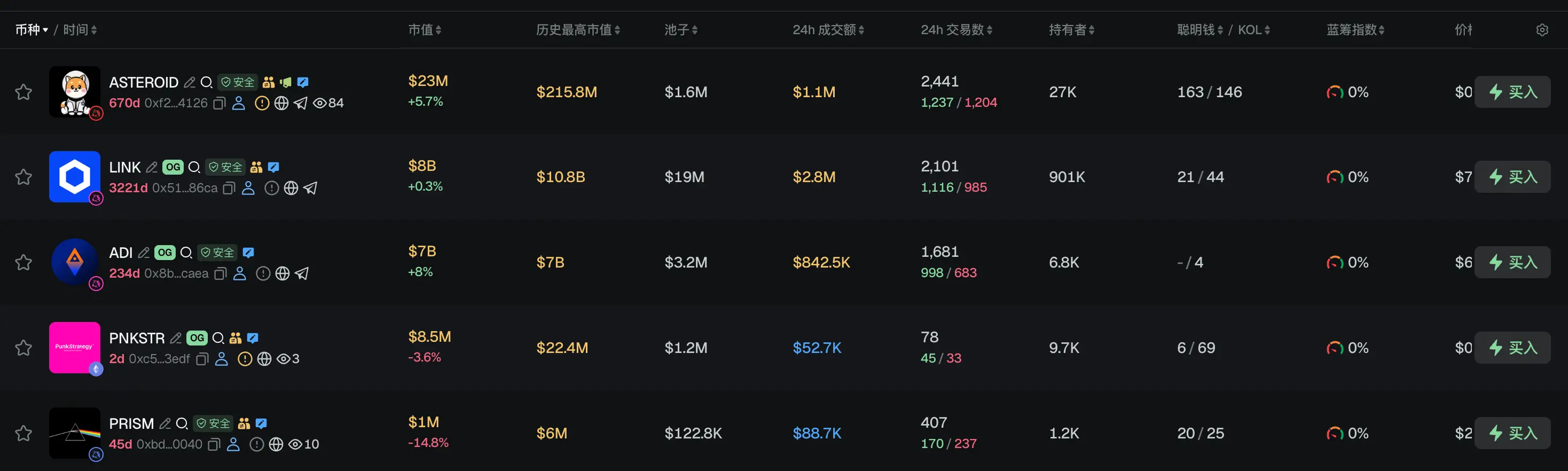
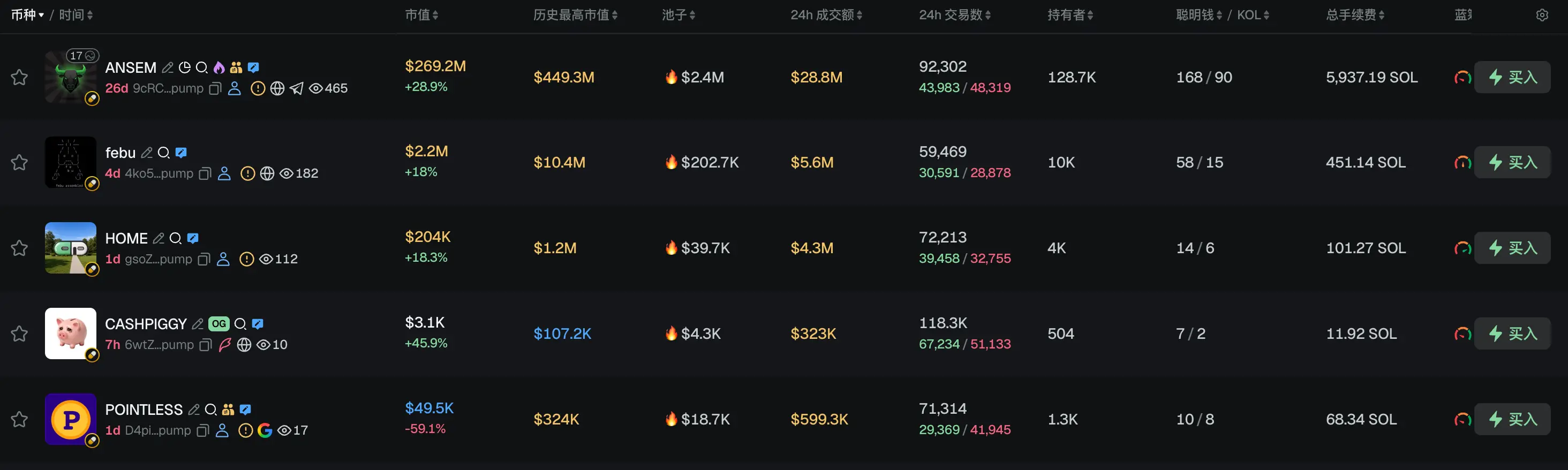
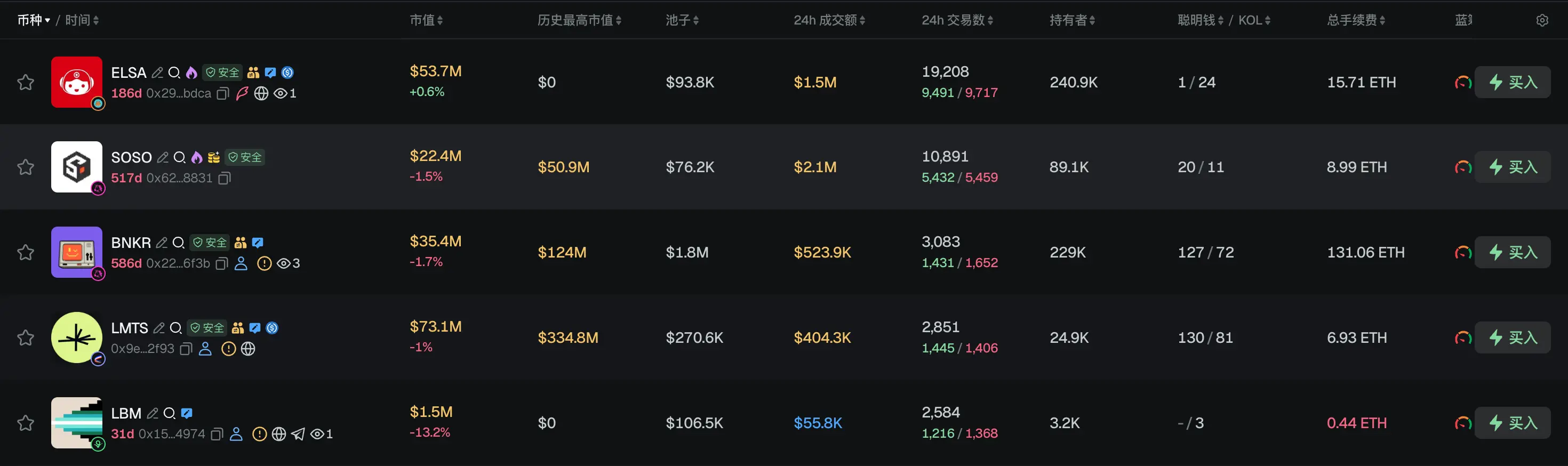
According to the meme token tracking and analysis platform GMGN, as of July 13, 10:54,
The top five popular ETH tokens in the past 24 hours are: ASTEROID, LINK, ADI, USDG, PNKSTR
The top five popular Solana tokens in the past 24 hours are: ANSEM, febu, HOME, CASHPIGGY, POINTLESS
The top five popular Base tokens in the past 24 hours are: ELSA, SOSO, BNKR, LMTS, LBM
What are some noteworthy articles to read in the past 24 hours?
Anthropic's IPO is not just a story of one company going public. It marks the starting point for a restructuring of the capital structure of the entire AI industry—super-scale cloud service providers have issued over $100 billion in equity this year, and in the next 2-3 years, this ecosystem will require trillions of dollars in financing annually to support computing power construction. When Anthropic knocks on the public market door with a net profit of $1 billion in a single quarter, it also rings the alarm for OpenAI.
As of July 10, the dynamic PE of the S&P 500 (20.4x) and Nasdaq 100 (23.3x) has expanded by 0.9 and 2.4 percentage points respectively compared to last week, remaining at relatively low levels compared to the peak on June 2; at the same time, the earnings growth rates for Nasdaq 100 and MAG8 have been revised up by 0.36 and 0.08 percentage points respectively compared to last week. Considering the current valuation levels and the ongoing trend of earnings revisions, we judge that U.S. stocks will maintain a fluctuating upward pattern in the short term, and suggest focusing on: 1) The software industry, which may see further capital inflows; 2) The long-term geopolitical risks and the defense industry with high demand certainty; 3) Energy infrastructure benefiting from data center construction and electrification transformation; 4) The financial sector (banks and Fintech) driven by both capital returns and regulatory improvements.
Gold and oil prices have also experienced unexpected reversals for investors. After a strong performance at the beginning of 2026, gold prices just recorded the largest single-month decline since 2008, falling over 11%; oil prices have also retreated against warnings from energy experts. These changes point to a reality: market consensus is disintegrating, and the reliability of mainstream narrative logic has been significantly undermined. In choosing hedging strategies, given the potential for stock differentiation and sector rotation during earnings season, the effectiveness of index-level hedging tools may be limited. Maxwell Grinacoff suggests, "Single stock options may provide better tactical opportunities." Amundi's Vincent Mortier offers a more macro suggestion: diversify risks as much as possible and hedge comprehensively—this way, "you can relax and vacation all summer, which is a nice goal."
Five, the competition for stablecoins enters a new phase. The approval of Circle National Trust is an important institutional response from the U.S. regulatory system to the "payment attributes" and "infrastructure attributes" of stablecoins. It proves that for stablecoins to truly become the infrastructure of the global digital economy, they must enter the highest level of regulatory framework and exist in a manner that aligns with their business nature (trust bank rather than commercial bank). For Circle, this is a milestone victory in regulatory efforts over the past decade and the starting point for greater ambitions in the future. For the entire industry, the dimension of stablecoin competition has been fundamentally upgraded—from issuance capability to infrastructure control. Whoever can truly embed stablecoins into the federally regulated banking system is more likely to occupy key nodes in the next generation of dollar settlement networks.
 Risk warning