Base founder Jesse rarely publicly admits to strategic mistakes, social dreams shattered everywhere
 Core Viewpoint

 Jesse Pollak admitted that Base's bet on on-chain social and creator tokens was a "mistake" and stepped down from the leadership position at Base App. This is not just a routine personnel adjustment, but a strategic shift for Base to retreat from the social narrative and return to the main battlegrounds of trading, payments, and AI-driven finance.
Author: Gu Yu, ChainCatcher
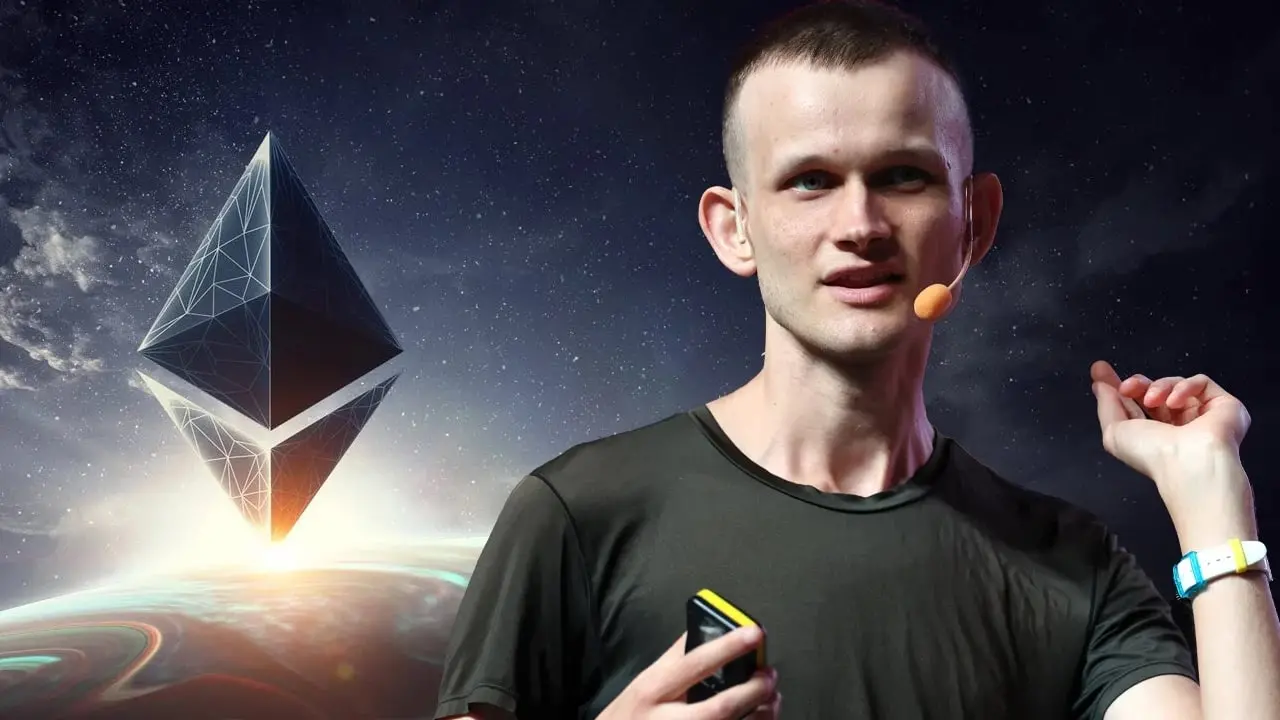
On July 15, Base founder [Jesse Pollak](https://www.rootdata.com/zh/member/Jesse Pollak?k=MTQ4MzE=) published a lengthy article announcing that he would return the leadership of the Base App to Coinbase, while he would focus all his energy on the Base blockchain itself, aiming to build Base into a "global financial blockchain." Jesse will continue to lead the Base chain but will no longer be responsible for the Base App; the Base App will be taken over by Jordan Fish, known in the crypto community as Cobie.
The most noteworthy aspect of this adjustment is not Jesse's departure from the Base App, but rather his rare admission of the strategic misjudgment in the social direction of Base over the past two years.
In the past, Base attempted to position itself as a consumer-grade entry point into the crypto world. From Farcaster to Zora, from creator coins to miniapps, and then to the Base App, Base hoped to bring more ordinary users on-chain through "on-chain social + creator economy."
However, Pollak admitted: Base was right about builders but wrong about social. This statement can almost be seen as a phased judgment on Base's social experiment.
On-chain social did not become the next adoption center; what truly emerged were prediction markets, perpetual contracts, stablecoins, and tokenized assets. Users are not unwilling to go on-chain; they are unwilling to go on-chain just for socializing.
They are more willing to go on-chain for trading, payments, yields, and speculation.
1. What Did Jesse Say?
In the lengthy article, Jesse reviewed the reflections and adjustments of the past six months in detail. He candidly stated: "The first quarter of 2026 was a heavy blow." Over the past two years, Base made a dual-track bet: one was believing that builders would unlock the next wave of crypto adoption; the other was believing that adoption would be driven by "new on-chain native social experiences" (creators, content, messaging).
The result was: "Our bet on builders was correct, but our bet on social was clearly wrong." Builders indeed drove the wave of adoption—prediction markets, perpetual contracts, and stablecoins became the strongest growth engines—but social did not occupy the center. On the contrary, "the entire social side market we have been trying to build—Farcaster, Zora, miniapps, and yes, creator tokens—completely collapsed."
He bluntly stated: "I was wrong. Whether it was the timing that was wrong… or completely wrong, only time will tell, but in any case, I am sure I was wrong." The collateral damage is quite severe: Base is lagging in key areas—perpetual contracts (despite projects like Avantis and others), prediction markets (despite projects like Limitless and others) are behind mature competitors; there is also a lot of room for improvement in enterprise-level tokenization and payment unlocking. People have lost confidence, and CT reminds him of his mistakes every week.
Jesse stated that this year is a "practice of eating shit." But the lesson he learned is: when things feel the worst, the best approach is to lower your head and build. He has refocused his attention from the App back to on-chain, started coding again, launched features like Azul, Beryl, B20, privacy, and ledgers, and re-examined the assumptions: Does crypto need social to grow? Does Base need an App? Can Base be bigger than Coinbase?
The conclusion has become clear: "Better money is enough— we are seeing this in real-time through stablecoins, predictions, perpetuals, and tokenization… I am now focused on bringing a billion people on-chain by making global finance truly work." The three specific pillars for 2026: winning trades (all assets, including tokenized stocks, memes, App coins, etc.), payments (global stablecoins, effective for individuals and businesses), and agency (AI agents accelerating everything, as crypto is computer-native money, and AI will create trillions of new economic participants).
He has returned the Base App to Coinbase, led by Cobie, and allowed it to expand beyond the Base ecosystem (which he, as Base's leader, "would not like"). He emphasized that builders remain the cornerstone, and Base will continue to support them through Base Layer, Batches, ecosystem funds, and more.
2. Why Did Base's Social Dream Collapse?
Base's bet on social was not without logic.
Jesse is the soul of Base and one of the most important shapers of Base's community culture. Years ago, friend.tech exploded on Base, leading the market to believe that Jesse and Base might become the main battleground for on-chain social and the creator economy. friend.tech proved one thing: when social relationships are financialized, on-chain products can gain massive attention in a very short time.
This also reinforced Base's preference for social; the rapid decline of friend.tech did not affect Base's judgment.
Farcaster, Zora, creator coins, miniapps, Base App—these layouts actually represent a complete vision: if Coinbase provides a compliant entry, Base provides a low-cost on-chain environment, Farcaster provides a social graph, and Zora provides content and creator assetization tools, then Base has the opportunity to create a consumer-grade on-chain ecosystem different from traditional DeFi.
But this logic ultimately did not work out. The problem is that on-chain social can easily turn into on-chain speculation.
The explosion of friend.tech was not fundamentally because users found a better social experience, but because users discovered that social relationships could be traded. Creator tokens are similar; they turn content, influence, and community relationships into assets, but many times, asset trading is far more important than content consumption.
Once the speculation heat declines, social relationships do not naturally remain.
Farcaster faces the cold start problem of social networks, Zora faces the tension between content consumption and asset issuance, and creator coins can easily turn into short-cycle attention trades. Base invested a lot of resources, hoping these products could bring mainstream users, but what ultimately remained were more crypto-native users, airdrop hunters, short-term traders, and creator token players.
This is also why Jesse would say the entire social side market "completely collapsed." It was not without heat, but it did not form sustainable adoption.
In contrast, the demand for stablecoins, prediction markets, perpetual contracts, and tokenized assets is more direct. Users go on-chain not to "own social relationships," but for faster trading, lower-cost payments, higher yields, stronger speculation opportunities, or to enter markets that traditional finance cannot provide.
This was a brutal but necessary correction for Base. Social can be part of on-chain applications, but it is hard to become the center of Base's next phase of growth.
3. The Positive Pressure from Robinhood Chain
If it were just a failure of the social experiment, Base would still have enough time to adjust slowly.
However, the sudden emergence of Robinhood Chain has rapidly amplified Base's sense of crisis.
In early July, after Robinhood Chain went live, it quickly accumulated trading activity. According to Token Terminal data, just 11 days after its mainnet launch, Robinhood Chain processed 7.6 million transactions in a single day, while Base processed 9.2 million transactions during the same period, with the gap between the two being much smaller than the market had previously expected.
More importantly, the growth of Robinhood Chain is not purely on-chain spinning. It is tied to Robinhood's tokenized stock platform, launching stock tokenization products in over 120 countries, and has approximately 23 million brokerage users as potential entry points. Data also shows that Robinhood Chain has achieved over $500 million in daily trading volume in Uniswap deployments, second only to the Ethereum mainnet, and at one point surpassed Base to become the second-largest spot activity deployment on Uniswap.
Of course, the early data of Robinhood Chain has obvious subsidy factors. Robinhood has been paying Gas fees for users for 90 days before the mainnet launch, and this subsidy is expected to last until the end of September 2026. In other words, whether the current high trading volume can continue after the subsidy ends still needs to be observed.
But for Base, the real danger is not whether Robinhood Chain is currently "overinflated," but rather that it represents a new competitive model.
Base's past advantages were Coinbase exchange traffic, a compliant brand in the U.S., and a developer ecosystem; Robinhood Chain has another more direct entry: stocks, ETFs, options, retail accounts, and tokenized U.S. stocks. It is not competing for traffic from crypto-native users but is bringing traditional brokerage users directly into the on-chain financial world.
If Base's past ideal was to "make on-chain social a consumer entry," Robinhood Chain's answer is simpler and more straightforward: users are already trading, so let's put trading assets on-chain.
This is a positive pressure for Base.
4. Base's New Starting Point
Jesse's shift essentially repositions Base.
In the past, Base's narrative leaned more towards on-chain consumer. It hoped to bring ordinary users on-chain with low costs, strong distribution, and social products. But now, Base's narrative is transforming into on-chain finance: trading, payments, stablecoins, AI agents, settlement layers.
This aligns more closely with the overall industry trend. Over the past year, the real on-chain demand that has emerged has almost all been related to finance: stablecoin payments, tokenized stocks, prediction markets, perpetual contracts, RWA, on-chain lending, AI agent payments. Social can bring narrative, but finance brings trading, revenue, costs, and retention.
Base's advantages remain evident. It is backed by Coinbase, with a strong compliant brand, exchange entry, developer community, stablecoin scenarios, and enterprise customer resources. Meanwhile, Base is not blank in the AI track. Venice and Virtuals are the two most representative cards in the Base ecosystem; the former represents AI applications and privacy, open model directions, while the latter represents AI agent assetization and agency economy directions.
If what Jesse said about "AI will create trillions of new economic participants" holds true, then Base's opportunity is not only to accommodate human traders but also to accommodate wallets, payments, settlements, and trading activities of AI agents.
This is also the most imaginative part of Base's new narrative: stablecoins solve the payment medium between machines and humans; prediction markets and perpetual contracts provide trading scenarios; tokenized assets provide tradable targets; AI agents may become new on-chain users. If Base can connect these modules, it will no longer just be Coinbase's Layer 2 but could become the main settlement layer for the next generation of financial activities within the Coinbase system.
Base's greatest advantage has never solely been the users, compliance, stablecoins, institutional relationships, and financial infrastructure capabilities behind the Coinbase entry. Social experiments can fail, but if Base can re-establish advantages in trading, payments, stablecoins, AI agents, and tokenized assets, it remains one of the most strategically valuable networks among Ethereum Layer 2s.
The real issue is that the market will no longer give Base too much time to tell its story. Robinhood Chain has quickly approached with tokenized stocks and subsidized trading, Stripe is reconstructing the merchant-side entry with stablecoin payments, and Solana and Hyperliquid are continuously applying pressure on trading experiences and market microstructures.
The rise of Robinhood Chain once again proves: in the competition of Layer 2, no one's position is unbreakable. Base once became the "top player" with the endorsement of Coinbase, but now faces direct challenges from competitors that also have strong platform support.
 Risk warning