Morning News | The Trump Meme Coin controversy escalates, U.S. senators request SEC to investigate Rug Pull risks; CZ responds to lost BTC data, stating that if the data is accurate, storing cryptocurrency on exchanges is safer than self-custody

 Overview of Important Market Events on August 4
Compiled by: ChainCatcher
What important events have occurred in the past 24 hours?
Trump Meme Coin controversy escalates, U.S. Senators request SEC investigation into Rug Pull risks
According to ChainCatcher, CNN reports that U.S. Democratic Senators Elizabeth Warren and Richard Blumenthal have requested the U.S. Securities and Exchange Commission (SEC) to investigate the Trump-issued Meme Coin TRUMP to confirm whether the project involves fraud or improper profit. In a letter to SEC Chairman Paul Atkins, the two stated that the Trump Meme Coin project "may constitute an illegal scam" and requested the regulatory agency to investigate whether the token involves "illegal fraudulent activities or facilitates improper profit acquisition." It is reported that Trump launched his personal Meme Coin TRUMP just days before his inauguration in 2025. After its launch, the token's price soared, reaching a market cap peak of about $9 billion on January 19, 2025, but then plummeted significantly. Currently, the token's market cap has dropped to less than $400 million, a decline of over 95% from its peak. According to data from the crypto data platform CoinMarketCap, investors who bought at the high are currently facing about a 97% loss. Blockchain analytics firm Nansen previously cited data showing that by the end of June, nearly 1 million investors had lost money due to this Meme Coin, with total losses estimated at around $3.8 billion. About 80% of the supply of the Trump Meme Coin is held by entities related to the Trump Organization. Trump has previously stated that he complies with the law and lets his family manage personal financial matters. Elizabeth Warren and Richard Blumenthal emphasized in their letter whether the project resembles a Rug Pull in the crypto industry. They believe that even if it is not a traditional sudden withdrawal, it may fall under a "soft pull" that leads to investor losses through gradual withdrawal of market support. The SEC has not yet commented on this matter.
Changxin Storage considers building a second DRAM wafer fab in Beijing, negotiating financing support
According to ChainCatcher, Reuters reports that sources say Changxin Storage is considering building a second 12-inch DRAM wafer fab in Beijing's Yizhuang and is negotiating financing with the Beijing Economic-Technological Development Area and several state-owned technology companies. The company is seeking at least 60 million yuan (about $8.9 million) in support, but negotiations are still in the early stages, and the scale and structure of the financing may be adjusted. The proposed factory will be located at the site of Changxin Storage's existing Beijing DRAM wafer fab. The planned production capacity and total investment for the project have not yet been determined, while building a fab capable of producing advanced DRAM typically requires over $10 billion. Currently, Changxin Storage operates two 12-inch DRAM wafer fabs in Hefei and one in Beijing, each with a monthly production capacity of about 100,000 wafers. Changxin Storage is also building new factories in Shanghai and Hefei, and once these projects are fully operational, the company's monthly production capacity could double to over 600,000 wafers. This expansion comes as demand for storage chips driven by AI infrastructure, data centers, and consumer electronics enters an upward cycle. The company completed an $8.6 billion IPO last month, marking the largest semiconductor company listing financing in mainland China, and its stock price has risen 13% since going public. Changxin Storage is currently the fourth-largest DRAM manufacturer globally, but Samsung Electronics, SK Hynix, and Micron together still account for nearly 90% of the global market share in the first quarter. Both Beijing and Shanghai are also providing funding and other support to Changxin Storage to capture the economic and strategic benefits of its expansion.
FalconX lays off 10% of staff in response to crypto market downturn and withdraws Singapore license application
According to ChainCatcher, Bloomberg reports that digital asset broker FalconX has laid off 10% of its global workforce to cope with a prolonged downturn in the crypto market. Sources say about half of the employees in its Singapore office were laid off, including senior management and staff in sales and accounting positions. FalconX is adjusting its business strategy in Singapore, focusing on crypto derivatives trading that does not require relevant licenses and plans to withdraw its license application submitted to the Monetary Authority of Singapore. The company stated it will concentrate resources on priority businesses while continuing to maintain its Asia-Pacific operations and expand its regulated business in Europe. FalconX currently has about 350 employees worldwide and has seven offices in locations including Silicon Valley, New York, London, Singapore, and Hong Kong. Over the past 18 months, the company has acquired derivatives startup Arbelos Markets, crypto exchange-traded product issuer 21Shares, and blockchain trading and network technology company bloXroute. FalconX is the latest crypto company to lay off staff, following Crypto.com, Coinbase, and Gemini. Reports indicate that the industry is facing ongoing bear markets, cost pressures, and the impact of advancements in AI technology. Since its establishment in 2018, FalconX has facilitated about $2.5 trillion in trading volume and completed a $150 million Series D funding round at an $8 billion valuation in 2022.
Jim Cramer announces plans to liquidate Bitcoin holdings, concerned about quantum computing threats to its security
According to ChainCatcher, former hedge fund manager and CNBC host Jim Cramer stated that due to concerns about quantum computing threatening Bitcoin's security, he plans to sell all of his BTC holdings. His statement stems from an interview with IBM Chairman and CEO Arvind Krishna, who said investors should be wary of quantum computing posing challenges to modern cryptography within the next 3 to 4 years. Cramer believes that quantum computing could threaten the Bitcoin network in a similar timeframe. However, it is currently unclear how much BTC he holds or whether he has completed the sale. Following his statement, Bitcoin continued to trade normally around $63,764, with some market participants interpreting his comments as a "reverse Cramer" signal. Bitcoin uses the ECDSA signature mechanism based on the secp256k1 curve, and theoretically, a sufficiently powerful quantum computer could use Shor's algorithm to derive private keys from public keys. The risk primarily lies in addresses with exposed public keys, including reused addresses, early wallet formats, and the brief time window after a transaction is broadcast but not yet confirmed. Researchers estimate that about 6 to 7 million BTC, accounting for approximately 30% of the supply, may fall into this category. Google Quantum AI estimated in March that breaking the relevant cryptographic mechanisms could require fewer than 500,000 physical qubits, reducing previous estimates by about 20 times. However, current quantum systems typically only have hundreds to thousands of physical qubits, with even fewer logical qubits that have higher reliability. Most researchers expect that truly capable quantum computers for cryptographic breaking may not appear until the 2030s or even 2040s, making Cramer's 3-year prediction significantly earlier than most technical expectations.
Castle Securities: The forces driving U.S. stocks to new highs remain solid
According to ChainCatcher, Jin10 reports that Castle Securities stated that after retail investor speculative trading cooled, the forces driving U.S. stocks to record highs this year are still "solidly present." Scott Rubner, head of equity and equity derivatives strategy at Castle Securities, stated that the market is shifting from a capital flow-driven environment to one determined by earnings, corporate demand, and macroeconomic background. The retreat of retail investors has caused the assets of leveraged ETFs to decline by 28% to $154 billion, and the decrease in financing costs for stock positions indicates that the pressure faced by Wall Street trading desks has eased. Recent strong earnings performance has been favorable for the U.S. stock market, and corporate buyback demand is expected to accelerate.
The Tie launches SEC-registered broker The Tie Capital, offering digital asset investment banking services
According to ChainCatcher, The Tie co-founder and CEO Joshua Frank announced the official launch of its wholly-owned subsidiary, The Tie Capital. The company is a broker registered with the U.S. SEC and a member of FINRA, providing investment banking and capital market advisory services to crypto protocols, on-chain businesses, and digital asset service providers. The service scope includes private financing, buy-side and sell-side mergers and acquisitions, agreement restructuring, token generation events (TGE), token-to-equity conversions, and other special situation transactions. The business is led by Boomer Saraga as managing director. The Tie was established in 2017, primarily providing market intelligence, data APIs, conferences, corporate access, and staking infrastructure services, and this launch aims to further serve institutional clients.
Data: On-chain U.S. Treasury market size surpasses $16.2 billion, investors leverage DeFi to amplify returns
According to ChainCatcher, market research firm The Kobeissi Letter stated that investors are accelerating their allocation to tokenized U.S. Treasuries, driving the continuous expansion of the on-chain U.S. Treasury market. Data shows that the total market value of on-chain U.S. Treasury funds has risen to a historical high of $16.2 billion, an increase of about 77% since the beginning of the year. Kobeissi pointed out that the market growth is primarily driven by on-chain yield demand. An increasing number of users are using tokenized U.S. Treasuries as collateral to borrow stablecoins and deploy funds into DeFi strategies to enhance capital utilization. Some on-chain lending platforms support looping leverage strategies, allowing users to repeatedly collateralize tokenized Treasuries, borrow stablecoins, and reinvest in the market, with some strategies yielding annualized returns exceeding 10%. Kobeissi believes that as traditional financial assets continue to go on-chain, tokenized U.S. Treasuries are becoming an important infrastructure for on-chain finance and may become a significant component of future on-chain capital markets.
Fireblocks survey: 99% of European institutions support crypto regulation, MiCA promotes early layout in Europe
According to ChainCatcher, Bitcoin.com reports that Fireblocks released its 2026 Financial Grid survey, covering over 600 executives. The report shows that 99% of institutions in continental Europe and 100% of institutions in the UK expect regulatory policies to support the development of digital assets. Influenced by the clarity of the MiCA regulatory framework, 53% of European institutions have completed funding commitments before 2026, higher than the global average of 42%; in the UK, where the regulatory framework is still being developed, this proportion is only 36%, but another 59% of UK institutions plan to complete budget allocations by 2026. In terms of product layout, European institutions lead in tokenized money market funds (62% vs. 45%) and tokenized securities; the UK is more aggressive in stablecoin issuance, with 50% of institutions planning to issue stablecoins independently, higher than Europe's 40%. Both markets list around-the-clock settlement and real-time payments as primary application scenarios.
CZ responds to BTC loss data, says if data is accurate, storing cryptocurrency on exchanges may be safer than self-custody
According to ChainCatcher, CZ retweeted Willy Woo's post about Bitcoin loss data, stating that if the data is accurate, from a statistical perspective, exchange-custodied assets may be safer than self-custodied ones. Exchange hacks are easier to quantify, while incidents of theft or loss of self-custodied wallets often go unreported, making related data harder to collect. On the other hand, exchange data is also affected by some already-defunct exchanges. Finally, CZ emphasized that no custody method is absolutely superior; different solutions are suitable for different users, and adopting a balanced asset custody approach may be a better choice. Willy Woo's previously released statistics indicate that approximately 1.57 million BTC have been permanently lost due to self-custody. Additionally, about 1.51 million BTC have been lost due to exchange hacks, bankruptcies, and other incidents.
Data: Bitcoin spot ETF saw total net inflow of $170 million yesterday, BlackRock's IBIT leads with net inflow of $111 million
According to ChainCatcher, based on SoSoValue data, yesterday (Eastern Time August 3), Bitcoin spot ETFs saw a total net inflow of $170 million. The Bitcoin spot ETF with the highest single-day net inflow yesterday was BlackRock's ETF IBIT, with a single-day net inflow of $111 million, bringing IBIT's historical total net inflow to $60.593 billion. Following that was Fidelity's ETF FBTC, with a single-day net inflow of $33.3598 million, and FBTC's historical total net inflow now stands at $9.953 billion. As of the time of publication, the total net asset value of Bitcoin spot ETFs is $77.58 billion, with an ETF net asset ratio (market cap relative to Bitcoin's total market cap) of 6.06%, and historical cumulative net inflow has reached $51.495 billion.
Nigeria releases virtual asset tax guidelines, requiring reporting of income from mining, staking, and airdrops
According to ChainCatcher, The Nation Online reports that the Nigerian Tax Authority has released the "Virtual Asset Tax Guidelines," officially incorporating cryptocurrencies, stablecoins, NFTs, and other blockchain digital assets into the country's tax system. The guidelines, published on July 31, provide the first detailed framework for taxing income from cryptocurrencies, stablecoins, governance tokens, NFTs, and other assets. The guidelines stipulate that income generated from the disposal, exchange, or transfer of virtual assets must be taxed under Nigerian tax law, and income from blockchain activities such as mining, staking, validation, airdrops, and token rewards must also be taxed. Virtual assets must be valued at market prices recognized by the tax authority on exchange platforms. Individuals and businesses must maintain complete transaction records, and virtual asset service providers must register for tax and report large or suspicious transactions. The SEC continues to regulate securities-type virtual assets, while the tax authority is responsible for tax management. The guidelines do not set a separate tax rate for cryptocurrencies but apply existing tax law provisions. The guidelines follow President Bola Tinubu's executive order to establish a coordinated regulatory framework for virtual assets.
Kamino launches institutional-grade yield vault, first commodity yield vault size is $25 million USDC
According to ChainCatcher, Solana lending protocol Kamino announced the launch of Kamino Institutional Yield, a set of on-chain vault infrastructure designed to connect real-world institutional credit markets with on-chain users. The first vault built on this infrastructure, Commodity Yield, is now live with an initial deposit size of $25 million USDC. This vault connects on-chain users with institutional commodity trade financing needs, targeting an annualized yield of about 7-8%. The vault conducts off-chain lending through a fund structure regulated by the Cayman Islands Monetary Authority (CIMA), with strict lending standards and ongoing portfolio transparency. Users depositing USDC can receive kicUSDC, with funds deployed to short-term commodity loans, secured by physical commodities and/or cash fully collateralized by tier-one banks.
RISEx XLP vault associated RWA strategy experiences over $670,000 unauthorized withdrawal, user funds fully compensated
According to ChainCatcher, decentralized spot and perpetual contract trading platform RISEx announced that on August 3, an unauthorized withdrawal occurred involving $673,011.56 USDC related to the RWA strategy associated with the XLP vault. The issue stemmed from a configuration error since deployment on July 13, and the team discovered and fixed it within minutes, fully compensating XLP depositors using part of the fees generated in July, with user funds unaffected. RISEx stated that the platform, RISE cross-chain bridge, and XLP vault all have withdrawal limit mechanisms, and this amount was below the threshold. The team has reviewed the relevant transactions and configurations, confirming no other similar issues, and is tracking the funds, attempting to contact relevant addresses to request a return. A post-analysis report will be released later.
Federal Reserve's probability of a 25 basis point rate hike in September is 67.2%, while the probability of maintaining rates is 32.8%
According to ChainCatcher, Jin10 reports that CME's "FedWatch" shows that the probability of the Federal Reserve maintaining rates in September is 32.8%, while the cumulative probability of a 25 basis point rate hike is 67.2%. By October, the probability of maintaining rates is 23.3%, while the cumulative probability of a 25 basis point rate hike is 57.3%, and the cumulative probability of a 50 basis point hike is 19.3%.
U.S. Senator Hagerty urges Senate to pass the CLARITY Act, stating that the U.S. cannot fall behind in the digital asset space
According to ChainCatcher, CoinDesk reports that U.S. Senator Bill Hagerty has called on the Senate to quickly pass the CLARITY Act (Digital Asset Market Structure Bill), stating that the U.S. cannot fall behind in the digital asset space. He believes that establishing a clear regulatory framework is crucial for promoting innovation in U.S. digital assets and maintaining global competitiveness. The CLARITY Act aims to clarify the regulatory responsibilities for the U.S. digital asset market and provide a clearer rules framework for the crypto industry. The bill is currently awaiting further review by the Senate.
Dinari and Circle launch tokenized U.S. stock platform, planning to bring S&P 500 components on-chain
According to ChainCatcher, Fortune reports that tokenized securities company Dinari, based in California, has announced a partnership with stablecoin issuer Circle to provide blockchain-based tokenized stock trading services for U.S. investors, planning to bring the entire S&P 500 index components on-chain. Dinari stated that its platform represents underlying stocks through dShares, with each token corresponding to real securities held in custody by regulated institutions. Investors can buy and sell stocks using USDC through self-custody wallets, supporting features such as instant settlement and cross-platform asset transfers. This model aims to connect the approximately $300 billion stablecoin market with the over $60 trillion U.S. stock market. Currently, the Dinari platform is live in 85 jurisdictions, supporting over 6,000 tokenized assets.
BlackRock tokenizes $311 billion European money market fund shares
According to ChainCatcher, Decrypt reports that BlackRock has launched a tokenized share class for its European money market fund, involving six funds under the BlackRock Institutional Cash Series, collectively holding assets of $311 billion. This is BlackRock's first on-chain fund access in Europe, covering both distribution and accumulation shares for euro, pound, and dollar strategies. The related tokens are minted on Ethereum through JPMorgan's blockchain division Kinexys, which is responsible for minting and burning and connecting on-chain activities with traditional shareholder registration systems. Each token represents a share of the underlying fund, with the official shareholder register still maintained by the fund's transfer agent. Smart contracts can transfer holdings between approved investor wallets, and the related shares are sold to professional and qualified clients, not to retail investors. This week, BlackRock also issued tokenized money market funds for stablecoin reserve management on Solana, Ethereum, and Stripe's Tempo.
Bank of America: Investors should focus on opportunities in the yen and pound currency pairs
According to ChainCatcher, Jin10 reports that Bank of America stated that if the Federal Reserve resumes rate hikes, investors should focus on specific currency pairs rather than overall exchange rate fluctuations. The bank believes that opportunities in the yen and pound currency pairs are the most prominent, as these pairs exhibit the most volatility during Fed rate hikes, making targeted trading more attractive than betting on the entire G10 forex market.
SpaceX to release its first earnings report post-IPO on Tuesday, stock price down nearly 50% from peak, market focuses on Starlink, AI, and lock-up pressure
According to ChainCatcher, SpaceX will release its first earnings report post-IPO on Tuesday after market close, with the market focusing on the operational performance of its Starlink, Starship, and AI businesses. Since its IPO on June 12, SpaceX's stock price has continued to decline, closing at $114.53 on Monday, about 15% lower than the offering price of $135, and nearly 50% down from the historical peak of $225.64, with a market value evaporating by over $500 billion. Visible Alpha estimates its Q2 revenue to be around $6.9 billion, primarily driven by Starlink. Regarding AI business, SpaceX previously acquired xAI and established computational power supply collaborations with Google, Anthropic, etc., with Q1 AI business revenue reaching $818 million. Additionally, the 13th test flight of Starship has recently been completed, but the booster recovery experienced a hard landing. After this earnings report, SpaceX will face a lock-up period expiration on Thursday, with about 911 million shares (valued at approximately $100 billion) becoming tradable, raising market concerns about potential selling pressure. Data from S3 Partners shows that investors shorting SpaceX have realized gains of about $8.3 billion. Institutions like New Street and Yorkville Advisors believe that the pullback may provide an entry opportunity for long-term investors, and the ultimate trend will depend on the strategic signals released by Musk during the earnings call.
Citi: European market risk appetite rebounds, benefiting from capital inflows and corporate earnings
According to ChainCatcher, Jin10 reports that Citi Group strategist David Chew stated that the European stock market is the only major market area where risk appetite has significantly improved recently, benefiting from new capital inflows and better-than-expected corporate earnings performance. The report noted that last week, investment positioning sentiment improved across all major European indices, while relevant indicators in the U.S. market showed weakened investor confidence. Chew also mentioned that the European market benefits from the European Central Bank's decision to maintain interest rates.
Data: Ethereum spot ETF saw total net outflow of $11.4178 million yesterday, BlackRock's ETHB leads with net inflow of $5.7791 million
According to ChainCatcher, based on SoSoValue data, yesterday (Eastern Time August 3), Ethereum spot ETFs saw a total net outflow of $11.4178 million. The Ethereum spot ETF with the highest single-day net inflow yesterday was BlackRock's Staked ETH ETF ETHB, with a single-day net inflow of $5.7791 million, bringing ETHB's historical total net inflow to $550 million. Following that was Morgan Stanley's Ethereum Trust MSSE, with a single-day net inflow of $603,300, and MSSE's historical total net inflow now stands at $20.4623 million. The Ethereum spot ETF with the highest single-day net outflow yesterday was BlackRock's ETF ETHA, with a single-day net outflow of $9.0303 million, bringing ETHA's historical total net inflow to $11.437 billion. As of the time of publication, the total net asset value of Ethereum spot ETFs is $10.233 billion, with an ETF net asset ratio (market cap relative to Ethereum's total market cap) of 4.54%, and historical cumulative net inflow has reached $11.199 billion.
Coinkite CTO accused of ignoring RNG code warnings a year in advance, involving over 1,800 BTC stolen
According to ChainCatcher, Bitcoin News posted on X platform stating that new evidence shows that the anonymous switck account that wrote the LibNgU code may actually be Coinkite co-founder and CTO Peter Gray, who is at the core of the COLDCARD entropy failure incident. Researchers claim that Gray's GPG key signed dozens of switck submissions, and other identifiers seem to link the two identities. Bitcoin developer James O'Beirne stated that he warned Coinkite in May 2025 that the RNG implementation of LibNgU looked suspicious and suggested removing it, but he claims the response was that if there were problems, they should have been discovered. Screenshots also show that as early as April 2021, users had questioned the rewriting of LibNgU. If these findings are accurate, it means that the engineer who introduced the code is later associated with the theft of over 1,800 BTC and had received direct warnings about the RNG implementation more than a year before the vulnerability was publicly disclosed.
Data: GPS rises over 13%, PLTRB rises over 16%
According to ChainCatcher, Binance spot data shows significant market fluctuations. GPS rose 13.64% in 24 hours, while PLTRB rose 16.17% in 24 hours, reaching a new high today. Additionally, COTI, HUMA, and C98 all experienced a "high-to-low" state, with COTI down 7.68% in 24 hours, HUMA down 5.55%, and C98 down 5.22%. Meanwhile, HOME also experienced a "2-hour small drop" state, with a decline of 10.34%.
India expands global tax reporting rules to cover crypto assets and central bank digital currencies
According to ChainCatcher, the Economic Times of India reports that the Indian Central Board of Direct Taxes has revised the global tax reporting framework, extending the applicability of the Foreign Account Tax Compliance Act and Common Reporting Standards to specific crypto assets, central bank digital currencies, and digital currency products, while tightening due diligence requirements for financial institutions. The updated compliance framework provides guidelines for banks, mutual funds, insurance companies, custodians, and other investment entities on reporting account identification, tax residency verification, and financial information reporting. Financial institutions are also required to conduct enhanced due diligence on high-value accounts with balances exceeding $1 million.
Italy's largest bank significantly reduces Bitcoin ETF holdings, increases holdings in staking Ethereum ETFs
According to ChainCatcher, CryptoSlate reports that Italy's largest bank, UniCredit, significantly adjusted its crypto ETF holdings in the second quarter. Documents show that the bank's holdings of iShares Bitcoin Trust (IBIT) common stock dropped from 646,809 shares to 40,723 shares, a decrease of 93.7%; the number of IBIT call options held dropped from 2,496,500 shares to 18,000 shares, a decrease of 99.3%. At the same time, a new IBIT put option representing 500,000 shares appeared in the holdings, but the 13F document does not disclose details such as strike price, expiration date, premiums, and Delta, making it impossible to determine the bank's net options exposure or whether it is a hedging strategy. Additionally, the bank's holdings of iShares Staked Ethereum Trust increased from 116,200 shares to 349,600 shares, nearly doubling; Bitwise Solana Staked ETF dropped from 2,817 shares to 7 shares; XRP Trust holdings of 712,319 shares remained unchanged.
Michael Saylor: I have never sold any Bitcoin, Strategy's buying and selling of BTC is a corporate capital management behavior
According to ChainCatcher, Strategy founder Michael Saylor stated that his previous assertion of "Never Sell Your Bitcoin" was shared as a personal investor's philosophy with other holders. Saylor claimed that he has never sold any Bitcoin, "not even one satoshi." He emphasized that Strategy is a publicly traded company, not a personal wallet, and the company has been publicly disclosing since 2020 that it may manage capital through buying or selling BTC. Saylor stated that Strategy's long-term belief in Bitcoin has not changed, and the company's related operations are part of corporate financial strategy, while his personal holding philosophy remains unchanged. Previously, the market had focused on whether Strategy would adjust its Bitcoin holding strategy, and Saylor's statement aims to distinguish personal holding behavior from publicly traded company asset management decisions.
Data: Ethereum ETF attracted $365 million in July, HYPE ETF saw net outflow
According to ChainCatcher, in the fund flows of crypto asset ETFs in July, Ethereum (ETH) ETFs emerged as the biggest winner, with a net inflow of $365 million for the month. Data shows that Bitcoin ETFs had a net inflow of $172.43 million in July; Solana (SOL) ETFs had a net inflow of $14.62 million; XRP ETFs had a net inflow of $27.29 million; Chainlink (LINK) ETFs had a net inflow of $4.54 million; HBAR ETFs had a net inflow of $3 million; LTC ETFs had a net inflow of $30,400. In contrast, HYPE-related ETFs became the only product to experience a net outflow, with a net outflow of $15.16 million in July. Overall, institutional capital allocation in July clearly favored the Ethereum ecosystem, with ETH ETFs attracting more capital than BTC ETFs, indicating a sustained increase in market demand for Ethereum-related assets.
Telegram claims to have suffered a "takedown extortion" attack: temporary removal from Apple App Store due to a user's insertion of illegal content
According to ChainCatcher, Telegram founder and CEO Pavel Durov stated that Telegram was briefly removed from the Apple App Store recently because a user inserted illegal pornographic content into a public group. The app was restored within hours. Durov stated that attackers exploited a technical vulnerability to insert AI-modified illegal content into old messages in active groups, hiding the content by editing historical messages, making it difficult for ordinary group members to detect and report in a timely manner. Such attacks fall under "takedown extortion," where attackers insert illegal content into public groups through automated accounts and report it to platforms like Apple, attempting to force group managers to pay a ransom, or else the community would be banned due to platform rules. Durov further explained that Telegram continuously combats illegal content through user reports, AI filtering, content hashing, etc., and this incident is not a systemic issue with the platform but rather a targeted attack exploiting rule loopholes. He also warned that Apple's direct removal of the app without prior contact with Telegram could pose risks to all mobile applications providing user-generated content (UGC), and platform developers need to enhance their defenses against malicious reports and "takedown attacks."
Meme Popularity Rankings
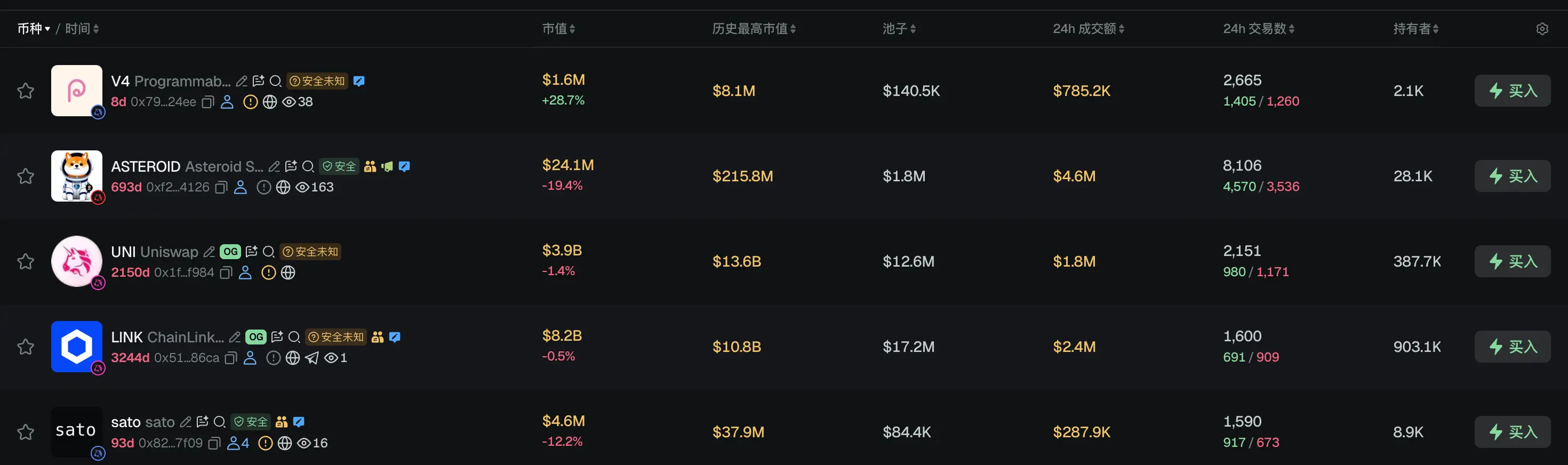
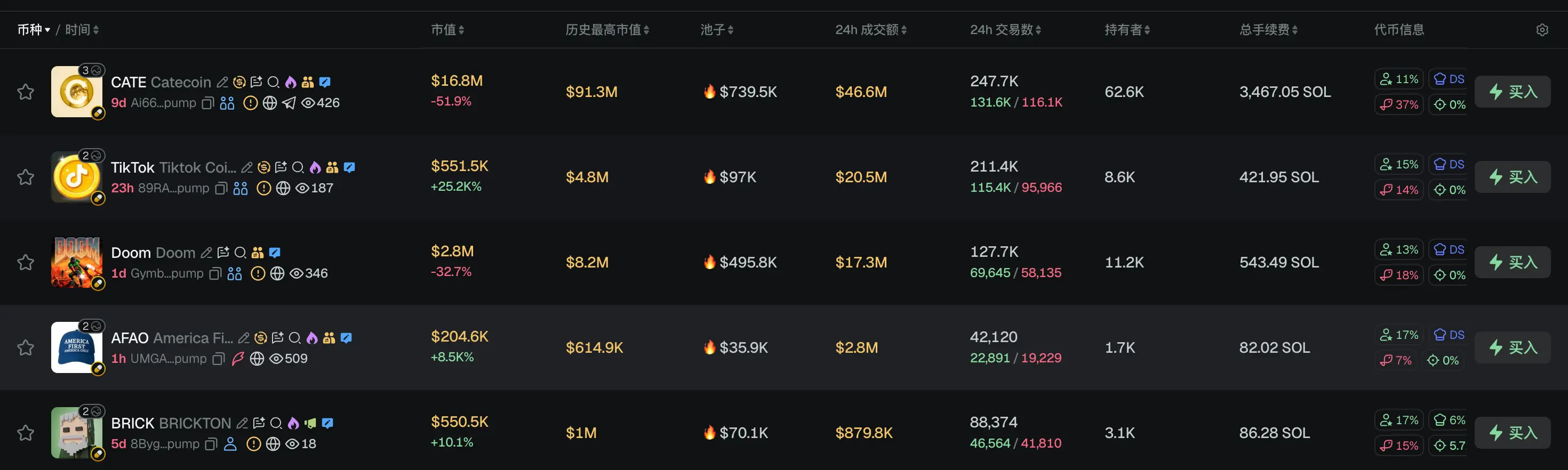
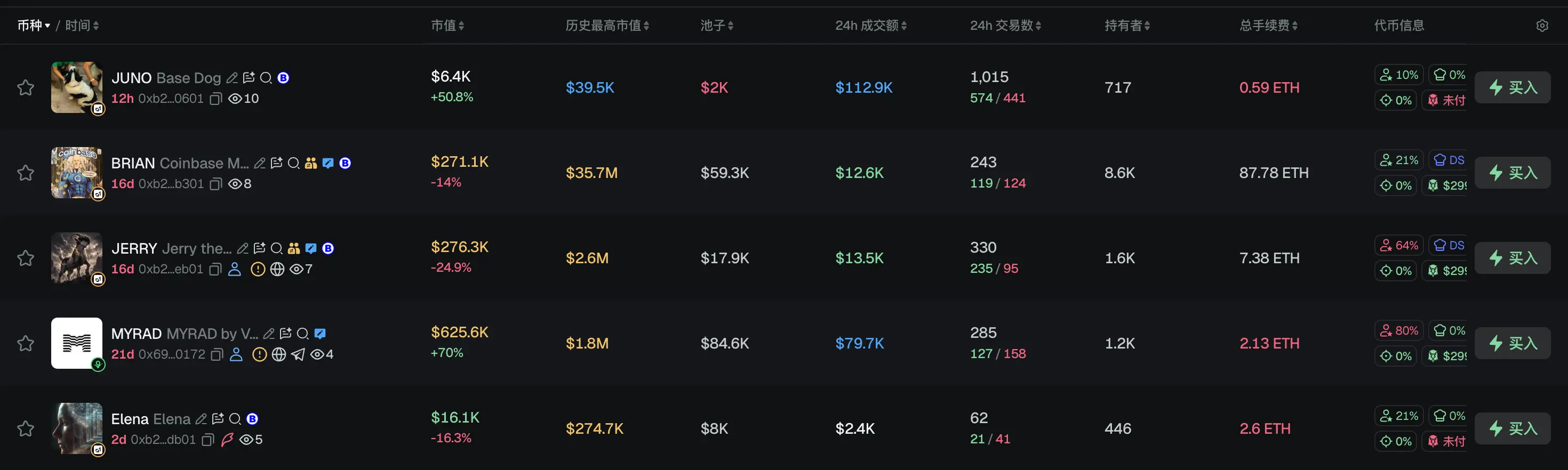
According to meme token tracking and analysis platform GMGN market data, as of August 5, 08:45,
The top five popular ETH tokens in the past 24 hours are: V4, ASTEROID, UNI, LINK, sato
The top five popular Solana tokens in the past 24 hours are: CATE, TikTok, Doom, BRICK, JEFF
The top five popular Base tokens in the past 24 hours are: QUID, ELSA, SOL, VELVET, SOSO
What are some noteworthy articles to read in the past 24 hours?
Assets have taken on on-chain forms, currencies have become programmable vehicles, markets are beginning to provide around-the-clock pricing, software is gradually gaining payment and trading permissions, and regulation is moving from vague gray areas to more concrete boundaries. These changes are not yet sufficient to prove that a "completely new financial system" has been established, but they are enough to indicate that Crypto's role is changing; it has not left the speculative market but is gradually building an executable system that can be used by real assets, traditional institutions, and smart software beneath the speculative market. Regardless, the Crypto industry has undergone 15 years of evolution and has finally taken the most critical step from "a sociological experiment of digital gold" to "a high-frequency speculative casino" to "a frictionless global financial infrastructure." In the next 15 years, let us continue to witness.
The source of this advantage includes high interest rates, USDC holders not directly receiving reserve income, and Circle still being in the rapid expansion phase of the stablecoin network. As interest rates decline, competition among stablecoins intensifies, channel demands for more income grow, and user income transmission expands, Circle's unit monetization rate faces long-term compression pressure. Therefore, the most important insight from the ETF analogy for CRCL is that USDC can become a core asset of massive digital dollars, and Circle needs to build a high-value fee layer on top of USDC to avoid ultimately becoming a public utility for stablecoin issuance with low fees and heavy channel sharing.
The company urgently needs to reduce funding costs. In the first quarter, Better's lending scale reached $1.64 billion, a year-on-year increase of 89%, with revenue of $47.5 million, but still incurred a loss of about $70 million. The company has cumulatively lent over $110 billion since 2016; in December 2021, it laid off 900 people in a single online meeting, and for years Garg has faced external criticism regarding this matter. The pressures have not weakened his determination to bet on this track. "The worst outcome is that the product launches and no one cares, but that's not the reality." Discussing the industry's prospects, he stated, "We don't have to just fantasize about the future; what's more important is to create the future ourselves."
Dalio's warning: The AI bubble has arrived, gold is the hard currency
Regarding the 80-year cycle, I have previously mentioned that the change of world order occurs approximately every 80 years, but this number is not absolutely precise; its cycle length has an average fluctuation range, just like human lifespan, where each person's expected lifespan or longevity varies. I won't overly emphasize the length of time; I will focus more on the current situation. Based on symptoms or related indicators, where are we currently in this process? Where will the next important node appear? The answer is right around the time zone we are currently in.
On the eve of Circle's earnings report, Wall Street shows huge divergence in CRCL valuation
With the earnings report approaching, the market awaits Circle to provide answers. Ultimately, the divergence on Wall Street regarding Circle does not stem from short-term performance but from differing judgments about the company's future positioning. Bears are concerned whether Circle's traditional reserve income model can still support the current valuation after USDC growth slows; bulls bet that Circle can gradually grow into a digital financial infrastructure platform based on its stablecoin business. Therefore, in this earnings report, the market will not only focus on revenue and profit performance but also closely observe reserve income (especially distribution agreements with Coinbase and other partners) and progress in payment, RWA, and other businesses. After the earnings report is released tomorrow night, Odaily Planet Daily will also provide an immediate interpretation of the earnings report.
The company stated that despite facing market headwinds, its mining operational efficiency continues to improve, and its hash power scale is also expanding. American Bitcoin, part of the Trump family's crypto portfolio, is one of several crypto businesses under the Trump family. The family's crypto layout also includes projects like the decentralized finance platform World Liberty Financial. Previously, financial disclosure documents indicated that Trump earned at least $1.4 billion from his crypto-related businesses last year, making him one of the highest earners in the U.S. crypto space. For investors, American Bitcoin's continuous losses and deep stock price retracement reflect the high-risk nature of current single bets on Bitcoin exposure strategies. In the context of increasing industry differentiation, whether miners can navigate the bear market cycle with cost advantages remains to be seen by the market.
The commercialization of Starship's first flight is the real turning point. Thomas Black summarizes that until Starship achieves its first commercial launch, SpaceX's quarterly earnings reports are unlikely to provide a clear roadmap for investors. The company's future growth logic is based on the continuous increase in Starship flight frequency and the gradual phasing out of the Falcon 9 rocket. What investors should focus on during this earnings season is the management's latest statements on the commercialization path of Starship and the specific arrangements for testing progress—this is the core basis for penetrating current market noise and assessing SpaceX's long-term value.
Valuations are relatively low, and the AI cycle provides long-term support. From a global horizontal comparison, Goldman Sachs data shows that U.S. stock valuations are currently at a relatively "cheap" level compared to other major markets. Meanwhile, John Flood points out that the main dividends of the AI supercycle have not yet been fully released, and the world's largest tech companies are continuously increasing capital investment, expanding the breadth and depth of profit improvement. However, Goldman Sachs also highlighted a seasonal risk worth noting: since 1974, the median return of the S&P 500 index from early August to election day in 13 midterm election years has been 0%. This means that even if the earnings fundamentals continue to improve, John Flood's prediction of a new high within the year still carries uncertainty in terms of timing. Goldman Sachs concludes that the earnings outlook provides strong support for bulls, but whether it can be sustained remains a key variable.
Uniswap's next move: Pools.trade is coming
However, the actual execution effect remains to be verified. After all, Uniswap previously integrated the CCA (Continuous Clearing Auction) token issuance mechanism on Robinhood Chain on July 13, and the market response was relatively flat. Whether the newly launched Pools.trade can achieve different results will need to be observed after its official launch. Additionally, it is worth noting that if Uniswap, as a foundational liquidity protocol, extends its business boundaries to the token issuance phase, it may impact its existing cooperative relationships with upper-layer issuance platforms. If issuance platforms view Uniswap as a direct competitor, they may theoretically adjust their token liquidity deployment strategies, such as reducing or stopping the migration of tokens to Uniswap, which could lead to Uniswap suffering losses.
 Risk warning



Popular articles