Morning Report | The US and UK expand cooperation on digital asset regulation, planning to establish comparable standards for stablecoins; the S&P 500 adds $2.1 trillion in market value in a single month, roughly equivalent to the total market value of the entire cryptocurrency market

 August 6 Market Important Events Overview
Compiled by: ChainCatcher
What important events have occurred in the past 24 hours?
Chairman of the U.S. Senate Banking Committee: The CLARITY Act will be voted on before Congress recesses
According to ChainCatcher, Tim Scott, the chairman of the U.S. Senate Banking Committee, stated that the CLARITY Act, aimed at regulating the cryptocurrency market, will be voted on before Congress goes on recess, and "there will undoubtedly be a vote." In an interview with Fox News, Scott mentioned that the Senate might extend its working hours beyond the next two days to push for progress on related legislation. He noted that there is a consensus forming within the Republican Party regarding the bill and believes that advancing a cryptocurrency regulatory framework "is in the best interest of the United States." Tim Scott stated, "We will get this done." The CLARITY Act aims to further clarify the regulatory framework for digital assets in the U.S., delineating the regulatory responsibilities of the Securities and Exchange Commission (SEC) and the Commodity Futures Trading Commission (CFTC) in the cryptocurrency market. Supporters believe that the bill will provide clearer rules for the industry and help maintain U.S. competitiveness in the digital asset space. Currently, the bill still faces internal congressional disputes regarding consumer protection, regulatory authority, and market risks. If passed, it will be an important step in building the U.S. cryptocurrency regulatory system.
Waller insists on cautious market guidance, considering a rate hike in September if inflation is strong
According to ChainCatcher, even after deciding not to disclose many details about interest rate strategies, which led to a significant sell-off of government bonds, Federal Reserve Chairman Waller continues to adhere to his usual concise communication style, as reported by the Financial Times. People close to Waller indicated that he acknowledged making some mistakes in his first 10 weeks at the helm of the world's most important central bank, including failing to reinforce key information regarding price stability and causing confusion about whether his long-term plans to reform the Fed would impact recent policy decisions. However, they insisted that these mistakes are not sufficient to overturn Waller's rationale for the Fed's reform plans. Sources also revealed that if inflation data released in the coming weeks is strong and market expectations for rising borrowing costs increase, Waller is prepared to raise interest rates at the September meeting. They added that although the Fed chairman has suggested the possibility of reducing the central bank's $6.7 trillion balance sheet to tighten monetary policy, interest rates remain the primary tool and will be used if necessary at the upcoming meeting.
U.S. Senator Warren: Supports cryptocurrency regulatory legislation but opposes the CLARITY Act
According to ChainCatcher, U.S. Senator Elizabeth Warren stated that she supports advancing cryptocurrency-related legislation but does not support the current CLARITY Act, believing that the bill fails to adequately address key issues such as corruption, consumer protection, national security, and economic risks. Warren pointed out that the cryptocurrency industry needs a clear regulatory framework, but any regulatory scheme must ensure investor rights and the safety of the financial system. She believes that the CLARITY Act is insufficient in preventing conflicts of interest, protecting consumers, and reducing potential systemic risks. The CLARITY Act aims to further clarify the regulatory responsibilities in the U.S. digital asset market, establishing a clearer legal framework for cryptocurrency trading, issuance, and market participants. Supporters argue that the bill will help enhance industry certainty and promote innovation. However, some Democratic lawmakers, including Warren, have previously expressed concerns about cryptocurrency regulatory legislation, believing that some proposals could weaken the power of regulatory agencies and create regulatory arbitrage opportunities for large cryptocurrency firms. Warren has long held a cautious stance on digital assets, focusing on consumer protection, financial stability, and the risks of illegal activities in the cryptocurrency market. Her statement indicates that U.S. cryptocurrency regulatory legislation still faces a tug-of-war between the two parties and different interest groups.
JPMorgan CEO: Market leverage remains high but does not yet pose a systemic threat
According to ChainCatcher, JPMorgan CEO Jamie Dimon warned that current financial market leverage remains high, with margin debt reaching historical highs, and some borrowing is not directly classified as margin debt but is hidden within first-tier brokers, hedge funds, ETFs, and U.S. Treasury arbitrage strategies. Dimon stated that high leverage increases the likelihood of a single investor or fund quickly disturbing the market and triggering broader volatility. Recently, the AI-focused hedge fund Situational Awareness faced margin calls due to unsuccessful bets on leveraged tech stocks and was forced to liquidate most of its listed stock portfolio. However, Dimon did not define the current leverage levels as a systemic threat. He noted that the market as a whole can still absorb the failures of individual institutions and emphasized that the current environment is different from the 2008 financial crisis, when the real shock came from the impending massive losses in the mortgage market, not just leverage itself. Dimon also mentioned that when market volatility rises, clearinghouses and banks typically require more collateral. Meanwhile, government deficits, infrastructure investments, and global rearmament could reignite inflationary pressures and support higher long-term interest rates.
JPMorgan: Hyperliquid ETF inflows stagnate, competitive pressure on trading platforms intensifies
According to ChainCatcher, JPMorgan stated that the Hyperliquid (HYPE) ETF led inflows among non-Bitcoin crypto funds in May and June, but related demand has essentially stagnated in July and early August, reflecting growing concerns about its competitive prospects. Analysts led by Nikolaos Panigirtzoglou pointed out that decentralized platforms like Hyperliquid face significant market share pressure. Following the launch of regulated crypto perpetual futures products in the U.S., some trading activity may shift from overseas decentralized platforms to compliant centralized exchanges, which have advantages in licensing, compliance, and investor protection. JPMorgan also noted that Hyperliquid is expanding its prediction market business, but competition in this area is also intensifying. Although HYPE has become the fourth-largest asset in corporate crypto treasuries after BTC, ETH, and SOL, it remains uncertain whether it can continue to capture market share from larger ecosystems like Solana and XRP. Currently, the assets under management for BTC and ETH ETFs are approximately $77 billion and $10 billion, respectively, while other crypto ETFs, including SOL, XRP, and HYPE, total only about $2 billion to $3 billion. HYPE has fallen over 3% in the past 24 hours, trading at around $55.30.
Former U.S. CFTC Commissioner: The Wall Street Journal's August 4 editorial fundamentally misreads the CLARITY Act
According to ChainCatcher, Summer Mersinger, CEO of the Blockchain Association and former U.S. Commodity Futures Trading Commission (CFTC) commissioner, published an article responding to the Wall Street Journal's August 4 editorial, accusing it of fundamentally misreading the CLARITY Act. Mersinger stated that the bill explicitly prohibits stablecoin rewards equivalent to bank deposit interest but allows for rewards based on user behavior, similar to credit card points. In terms of DeFi regulation, Section 10301 of the bill requires the SEC to issue regulatory rules for "nominally decentralized, substantially controllable" protocols, which does not equate to regulatory exemptions; Section 10201 includes digital commodity brokers under all reporting obligations of the Bank Secrecy Act while allocating $3 billion for state-level enforcement, contrary to the Wall Street Journal's accusations of insufficient regulation of illegal finance. Regarding concerns about the "shadow market" for tokenized securities, Mersinger emphasized that Section 10505 of the bill clearly states that securities remain subject to SEC oversight after settlement on the blockchain. She believes that the Wall Street Journal is essentially defending the monopoly position of traditional financial institutions, which conflicts with the newspaper's long-standing advocacy for free market principles.
Analysts: Bitcoin volatility has dropped to historical support levels, caution against hidden risks of sharp fluctuations
According to ChainCatcher, Bitcoin's 30-day implied volatility has fallen to a long-term support level of 36%, with the price maintaining a narrow range below $65,000. Adam Haeems, head of asset management at Tesseract Group, warned that a low-volatility environment can suppress trading costs, prompting traders to build large directional bets and hedging positions; once the market breaks through key price levels, market makers' passive hedging actions can amplify market fluctuations, leading to a mean-reversion spike in volatility. In terms of market sentiment, Paul-Howard, a senior director at Wincent, stated that demand for put options has significantly cooled, but there is also a lack of buying interest for call options. Glassnode summarized this state as "there is neither funding to buy up nor funding to sell down," believing that this phenomenon often represents the market nearing a cyclical bottom. The divergence between Dogecoin and Bitcoin also reflects the continued low level of speculative sentiment. Howard believes that favorable regulatory advancements like the CLARITY Act, which could drive institutional ETF inflows, may become an important catalyst for the next significant market movement; meanwhile, failed negotiations in the Strait of Hormuz and inflation exceeding expectations pose major downside risks.
S&P 500 adds $2.1 trillion in market value in a single month, equivalent to the total market value of the entire crypto market
According to ChainCatcher, the S&P 500 index has risen 3.12% this month, adding approximately $2.1 trillion in market value (equivalent to the total market value of the entire crypto market), reaching a historic high of $70.5 trillion, while Bitcoin has only risen about 2% this month, hovering around $64,600. Analysts pointed out that this round of stock market gains is primarily driven by narratives around AI and semiconductor stocks, rather than a broad recovery in macro risk appetite, leaving Bitcoin without a direct benefit. Meanwhile, the crypto market is also facing multiple internal pressures: the Coldcard platform suffered a $120 million vulnerability attack, the outlook for the CLARITY Act remains uncertain, Strategy has reduced its BTC holdings for three consecutive months, and the supply of stablecoins continues to shrink—USDT's scale has dropped from $190 billion in April to $183 billion, while USDC has fallen from $79.5 billion to $72 billion.
U.S. Treasuries extend losses due to Google's bond issuance plan and related reports on Fed rate hikes
According to ChainCatcher, U.S. Treasuries were under pressure in early trading in New York. Google announced the launch of a 10-part bond issuance, dragging down the long end of the yield curve and pushing the 2s10s and 5s30s spreads to intra-day highs. On the short end, reports indicated that if inflation data released in the coming weeks is hot, Fed Chairman Kevin Waller "will be prepared to raise rates at the September meeting." Following the report, short-term U.S. Treasury yields rose. U.S. Treasury yields increased across the board by 3 to 4 basis points, with long-term bonds leading the decline, and the 2s10s and 5s30s curves steepened by about 1 basis point, reaching their widest point during the session. The yield on the 10-year U.S. Treasury rose to about 4.65%, up 3.5 basis points on the day. Google's bond issuance covers multiple maturities, with the shortest being 2 years and the longest being 40 years. The interest rate market is currently pricing in about a 15 basis point expectation for a rate hike in September, with a cumulative expectation of about 33 basis points by the end of the year.
RedotPay responds to Binance's $473 million lawsuit: will actively defend and deny related allegations
According to ChainCatcher, RedotPay responded to the lawsuit filed by Binance, stating that it will actively defend itself. The company stated in a statement that it is aware of the legal proceedings initiated by Binance and will mount a strong defense against all allegations, denying the claims against the company and its co-founders, stating that these allegations are baseless. Previously, Bloomberg reported that a Binance-affiliated entity sued RedotPay's co-founder in Hong Kong, accusing him of violating agreements by directing over 470,000 Binance users to the RedotPay platform, resulting in approximately $473 million in losses. Binance claimed in the lawsuit that it discovered in March 2026 that RedotPay allowed and encouraged the use of Binance Pay funds for unauthorized purposes without segregation, including for topping up RedotPay cards. Binance's Chaintecs also filed a lawsuit against RedotPay affiliates in Singapore, with a related hearing scheduled for this Friday. Public information shows that Binance and RedotPay first reached a commercial cooperation in November 2023, which was terminated less than six months later due to Binance's claim that its funds were used for RedotPay prepaid card top-ups. The two parties reached a second agreement in March 2025, requiring Binance funds to remain segregated, allowing Binance users to exchange cryptocurrencies for fiat on RedotPay, conduct in-app transfers, and purchase RedotPay-branded goods, but not for topping up RedotPay cards. Binance terminated this agreement in April 2026, stating it was part of a merchant partner review. RedotPay previously planned to go public in the U.S. with an estimated valuation of about $4 billion, intending to raise over $1 billion.
Data: Institutional Bitcoin holdings shrink by 10% over three months, corporate treasury model under pressure
According to ChainCatcher, on-chain data from CryptoQuant shows that institutional BTC holdings, including trusts, ETFs, and closed-end funds, have decreased from 1.33 million coins three months ago to 1.2 million coins, a decline of about 10%. Meanwhile, the corporate Bitcoin treasury model is also under pressure. Analysts at Novaque Research pointed out that several Bitcoin treasury companies currently have market values that have fallen below their net asset values (NAV) of BTC holdings, and the previously positive feedback loop of "stock price premium → financing to buy coins → strengthening premium" has significantly weakened. The largest publicly traded company by holdings, Strategy, sold 1,638 BTC last week.
Data: BlackRock's IBIT has accumulated over $478 million in Bitcoin purchases this week
According to ChainCatcher, monitoring by Arkham shows that BlackRock's Bitcoin spot ETF, iShares Bitcoin Trust (IBIT), has recorded net inflows for several consecutive trading days this week, with investors increasing their Bitcoin holdings daily. Data shows that as of now, IBIT has accumulated Bitcoin purchases worth approximately $478.5 million this week. Market analysis suggests that the continuous inflow of institutional funds into Bitcoin spot ETFs reflects a growing demand from traditional investors for digital asset allocation. As one of the largest asset management companies globally, the fund movements of BlackRock's IBIT are also seen as an important indicator of institutional investor participation in the Bitcoin market.
Hyperliquid releases Q2 report, RWA trading volume rises to 32.2%, HYPE quarterly up 79% to a record high
According to ChainCatcher, Hyperliquid Research Collective (HRC) released its Q2 2026 report, stating that trading of real-world asset (RWA) perpetual contracts on the Hyperliquid platform continues to grow, with HIP-3-related trading volume rising from 1.8% in the previous quarter to 20.7%, further reaching 32.2% in Q2, with quarterly trading volume reaching $213 billion, accounting for nearly one-third of the platform's total trading volume. The report shows that during Q2, the Hyperliquid ecosystem gained more attention from traditional finance, with three HYPE ETFs beginning to trade, providing investment channels for institutional investors unable to directly hold tokens. Meanwhile, funds management companies like Hyperliquid Strategies continue to build HYPE reserves, with funds and related treasuries currently holding about 7.7% of the HYPE supply. In terms of data, HYPE rose 79% in Q2, reaching a historical high of $76.9, while Bitcoin fell 14% during the same period. Hyperliquid's protocol revenue has resumed growth after hitting a low in April, with monthly revenue reaching $16.9 million at the end of the quarter, and cumulative protocol revenue surpassing $1 billion, of which $141 million was returned to holders through buybacks.
The CLARITY Act may be delayed until 2027, large crypto firms may expand their advantages in a regulatory vacuum
According to ChainCatcher, Cryptopolitan reported that the U.S. Senate will enter recess on August 7, and the window for passing the CLARITY Act before then is extremely limited. If a vote is not completed this week, the next feasible window will be pushed to September, and if missed again, it may be delayed until after the midterm elections, potentially until 2027. The main disagreement regarding the bill currently lies in the Democrats' insistence on including ethical provisions for cryptocurrency practitioners in government, but the merged draft has not yet incorporated relevant statements. During the regulatory vacuum period, large institutions like Coinbase and Circle are better able to adapt to uncertain environments due to their capital strength—ARK Invest increased its holdings in these two companies this week, and Circle also received approval for a federal national trust bank license in July—while small and medium-sized crypto firms and DeFi projects continue to face pressure. In terms of market outlook, Polymarket data shows that the probability of the CLARITY Act passing in 2026 has dropped to 23%, a significant decline from Galaxy Research's mid-May prediction of 67% to 75%.
Daly: The Fed needs to remain vigilant and be prepared to act when necessary
According to ChainCatcher, Fed's Daly stated that she "fully supports" the decision to maintain interest rates last week. She noted that with inflation levels significantly above the 2% target, the Fed needs to gather more data to determine what policies to adopt in the future. Daly emphasized that the Fed should "closely monitor incoming information" and be prepared to take action when necessary.
U.S. and U.K. expand cooperation on digital asset regulation, plan to establish comparable standards for stablecoins
According to ChainCatcher, the U.S. Treasury issued a joint statement outlining the discussions from the U.S.-U.K. financial regulatory working group meeting held on July 8 in London. The regulatory agencies from both sides are expanding collaboration in areas such as digital assets, stablecoins, payment modernization, AI, financial stability, capital markets, and cross-border financial cooperation. Attendees included the finance departments of both countries, the Bank of England, the Federal Reserve, the U.K. Financial Conduct Authority, and several U.S. financial regulatory agencies. The U.S. side introduced the implementation progress of the GENIUS Act for stablecoins and the structure of the digital asset market, while the U.K. side presented its digital strategy for wholesale financial markets. Both sides support comparable regulatory standards for stablecoins, including cross-border use, comparable treatment of similar risks, and ensuring that stablecoins used as currency are backed by high-quality liquid assets at least on a one-to-one basis. The U.S. Federal Deposit Insurance Corporation has proposed implementation standards for the GENIUS Act, covering reserves, redemption, capital, liquidity, risk management, custody, and safekeeping. The Bank of England has released a draft rule for stablecoins that could achieve systemic scale in the U.K. economy, including a temporary issuance cap of £40 billion for each systemic stablecoin, unrestricted use by individuals and businesses, and reserve requirements. The financial regulatory working group is expected to meet again in early 2027.
Russian President Putin signs law regulating digital currencies and digital rights
According to ChainCatcher, Russian President Putin signed a law on August 4 that comprehensively regulates digital currencies and digital rights in Russia. The relevant documents have been published on the Russian legal information website. The law clarifies the operational rules for cryptocurrency exchange platforms, digital asset custodians, and other market participants, regulating the conditions under which investors can purchase cryptocurrencies. The law regulates relationships related to the circulation, accounting, storage of digital currencies and foreign digital tools, as well as "mining" activities, and the issuance and circulation of digital rights, while providing for the regulation of the operations of information system operators for issuing digital financial assets, cryptocurrency exchange institutions, digital asset custodians, brokers, asset management companies, trading organizers, and clearing institutions. According to the law, Russian citizens can legally invest in cryptocurrencies through exchanges within Russia and use services provided by brokers, trust managers, asset management companies, and cryptocurrency exchange institutions when conducting cryptocurrency transactions and related operations. The registration and custody of cryptocurrencies will be handled by relevant digital custodians approved by the Central Bank of Russia, and market participants must comply with strict information security requirements. The Central Bank of Russia will also establish a registry of cryptocurrency exchange institutions, with a filing system for credit institutions and brokers included in the management. The law will officially take effect on September 1, but some provisions will come into effect on July 1 or September 1, 2027.
Summary of important domestic and international news, Ministry of Commerce retaliates against the U.S., spot gold and silver surge
According to ChainCatcher, data from Gate shows that the Ministry of Commerce has taken countermeasures against U.S. compliance testing companies and strengthened export controls on dual-use items related to drones. Meanwhile, spot gold and silver both rose over 4%, with gold briefly rising above $4,260. Federal Reserve official Kashkari stated that now is the time to gradually raise interest rates, but he does not advocate for a significant rate hike. In the Middle East, Iran and Oman are close to reaching an agreement on the Strait, with the new shipping route expected to be usable in 2 to 4 months.
Probability of a 25 basis point rate hike by the Fed in September is 54.4%
According to ChainCatcher, CME's "FedWatch" shows that the probability of the Fed maintaining interest rates in September is 45.6%, while the probability of a cumulative 25 basis point rate hike is 54.4%. By October, the probability of maintaining interest rates is 33.5%, while the probability of a cumulative 25 basis point rate hike is 52.1%, and the probability of a cumulative 50 basis point hike is 14.5%.
Warren questions U.S. policy on UAE AI chips, involving $2.5 billion in investments related to World Liberty
According to ChainCatcher, U.S. Senator Elizabeth Warren has demanded an explanation from the U.S. Department of Commerce regarding its policy towards the UAE, which involves the UAE-related entities investing in the cryptocurrency project World Liberty Financial supported by the Trump family, after the U.S. granted the UAE more access to AI chip exports. A letter to Commerce Secretary Howard Lutnick mentioned that an entity from Abu Dhabi invested $500 million in World Liberty Financial in January; another UAE-related company used World Liberty's USD 1 stablecoin to complete a $2 billion investment in the cryptocurrency exchange Binance. The U.S. Department of Commerce previously reclassified the UAE as Country Group A:5, allowing it to receive more license-free exports, including advanced chips. The department also stated that it would "actively review" license applications for exporting chips and servers to the UAE entity MGX, which completed the $2 billion investment in Binance. Warren stated that the actions of the Department of Commerce raise significant questions about the potential influence of presidential cryptocurrency business interests on agency operations and national security. In June, several senators, including Warren, had already requested a hearing on the $500 million transaction involving World Liberty Financial.
Ethereum Foundation recruits protocol security researcher, focusing on AI-assisted vulnerability discovery and hard fork reviews
According to ChainCatcher, the Ethereum Foundation has released a job posting for a Protocol Security Researcher, part of the protocol security team, responsible for identifying security vulnerabilities across execution, consensus, network layers, specifications, and client implementations. The work includes AI-assisted security research and automated vulnerability discovery, hard fork reviews, fuzz testing tool development, manual audits of protocol changes, and coordinating vulnerability disclosures. The team requires candidates to have deep experience with the Ethereum protocol, prioritizing engineers who have actively participated in protocol development and are familiar with execution or consensus layer specifications. Common programming languages include Go, Rust, Java, C#, Nim, and Python. The position is remote and open to candidates from Europe and around the world.
OpenFX acquires Global Ledger, launches multi-currency accounts for fintech
According to ChainCatcher, real-time cross-border payment platform OpenFX announced the acquisition of Global Ledger, with its founder Tyler McIntyre appointed as head of banking, simultaneously launching multi-currency account services. McIntyre previously co-founded the neobank Novo, which serves over 300,000 businesses and is valued at over $700 million. The account allows customers to make payments in local currencies, enabling companies to hold incoming funds directly without immediate conversion. OpenFX's initial offering is a USD account, which can facilitate payments to and from over 100 countries via ACH, Fedwire, and SWIFT, and supports instant connections with stablecoins like USDC.
Data: Grayscale's XRP Trust ETF sold over $180 million in XRP in the first half of the year, incurring over $34 million in losses
According to ChainCatcher, Grayscale's XRP Trust ETF submitted a 10-Q filing to the U.S. SEC, stating that the fund sold over $180 million worth of XRP in the first half of 2026, reducing its holdings from 122.23 million coins at the end of 2025 to 55.04 million coins as of June 30, realizing a loss of $34.16 million from the sale of XRP due to redemptions, with an additional unrealized loss of $17.47 million. During the same period, the price of XRP fell from $1.84 to $1.05, a decline of over 40%.
Data: Ethereum spot ETF saw total net inflows of $60.8576 million yesterday, with BlackRock's ETHA leading with $50.3442 million
According to ChainCatcher, data from SoSoValue shows that the Ethereum spot ETF had total net inflows of $60.8576 million yesterday. The Ethereum spot ETF with the highest single-day net inflow was BlackRock's ETF ETHA, with a net inflow of $50.3442 million, bringing ETHA's total historical net inflows to $11.53 billion. The second highest was BlackRock's Staked ETH ETF ETHB, with a single-day net inflow of $4.9382 million, currently totaling $555 million in historical net inflows. As of the time of writing, the total net asset value of Ethereum spot ETFs is $10.606 billion, with an ETF net asset ratio (market cap compared to total Ethereum market cap) of 4.58%, and historical cumulative net inflows reaching $11.313 billion.
Data: Bitcoin spot ETF saw total net inflows of $244 million yesterday, continuing three days of net inflows
According to ChainCatcher, data from SoSoValue shows that yesterday (Eastern Time August 5), Bitcoin spot ETFs had total net inflows of $244 million. The Bitcoin spot ETF with the highest single-day net inflow was BlackRock's ETF IBIT, with a net inflow of $197 million, bringing IBIT's total historical net inflows to $60.96 billion. The second highest was the ETF ARKB from Ark Invest and 21Shares, with a single-day net inflow of $37.6304 million, currently totaling $1.346 billion in historical net inflows. The Bitcoin spot ETF with the highest single-day net outflow was VanEck's ETF HODL, with a net outflow of $14.6712 million, currently totaling $1.136 billion in historical net inflows. As of the time of writing, the total net asset value of Bitcoin spot ETFs is $79.206 billion, with an ETF net asset ratio (market cap compared to total Bitcoin market cap) of 6.09%, and historical cumulative net inflows reaching $51.951 billion.
Bitcoin Red Team audits 390 projects in 29.8 hours, discovering nearly 5,000 potential issues
According to ChainCatcher, the Bitcoin security organization Bitcoin Red Team, composed of 16 volunteers, stated that during a rapid AI-assisted review of Bitcoin ecosystem projects, it discovered nearly 5,000 potential issues. The team includes AnchorWatch CEO Rob Hamilton and Bitcoin developer Calle, among others. Calle stated that Bitcoin Red Team used AI tools alongside manual reviews to scan for vulnerabilities in open-source code repositories related to Bitcoin, averaging about one critical vulnerability discovered per person per hour. Calle disclosed that within 29.8 hours of launching, the team had identified 4,962 potential issues across 390 projects, of which up to 720 were considered high-risk or critical issues, with 21.4% of the findings currently reproducible. This security review initiative was launched shortly after the Coldcard hardware wallet vulnerability incident, in which stolen Bitcoin was valued at over $100 million.
CFTC Chairman: The derivatives market will enter a new stage of development, and we cannot blindly follow regulatory consensus
According to ChainCatcher, Michael Selig, chairman of the U.S. Commodity Futures Trading Commission (CFTC), wrote in The Economist that the global derivatives market is entering a new stage of development, where financial innovation needs to lead rather than introduce regulatory models that may restrict market development. Michael Selig pointed out that for decades, derivatives (including futures, options, and swaps) have been important tools for businesses, farmers, investors, and financial institutions to manage risks and optimize capital allocation. Today, the nominal value of the global derivatives market exceeds $1,200 trillion, with nearly half of the market regulated by the CFTC. He stated that the U.S. leadership in the derivatives field has been built on generations of market competition, strong institutions, effective regulation, and an openness to innovation. For a long time, global regulators have viewed the CFTC as a benchmark for efficient market regulation. Selig stated, "The new era of finance requires innovation, not consensus," and the U.S. will not introduce regulatory measures that hinder market development but will seek a balance between innovation and market efficiency, continuing to play a leading role in the formulation of derivatives market rules and financial innovation during his tenure to keep the market competitive.
Analysis: Market digests SpaceX's selling pressure, $100 billion stock unlock occurs without significant price drop
According to ChainCatcher, Bloomberg reported that SpaceX's stock performed relatively steadily on Thursday, following the expiration of a lock-up agreement that restricted insiders from selling shares, involving the unlocking of up to approximately 911.5 million shares, valued at around $100 billion at current valuations. Trading data shows that SpaceX's stock fluctuated within a range of less than 3% in the morning session, as the market digested the potential selling pressure from this large-scale share release. In the first 30 minutes after the market opened, the trading volume approached 93 million shares, accounting for about 40% of the total trading volume from the previous trading day. This unlocking occurred shortly after SpaceX's first earnings report was released. Previously, due to investor concerns about the company's AI business investments being higher than expected, SpaceX's stock had fallen by about 14%. However, most Wall Street analysts still maintain a long-term optimistic view of the company. Market focus includes SpaceX's future investment plans in AI, satellite internet, and mobile communications. Despite facing short-term capital expenditure pressures, analysts believe that the company's leading position in rocket launches, the Starlink satellite network, and the commercial space sector remains a crucial factor supporting its long-term valuation. This $100 billion stock unlock also serves as an important event for the market to test investor confidence post-SpaceX's IPO. The lack of significant price fluctuations indicates that the market had certain expectations regarding the liquidity release of internal shareholders.
Meme Popularity Ranking
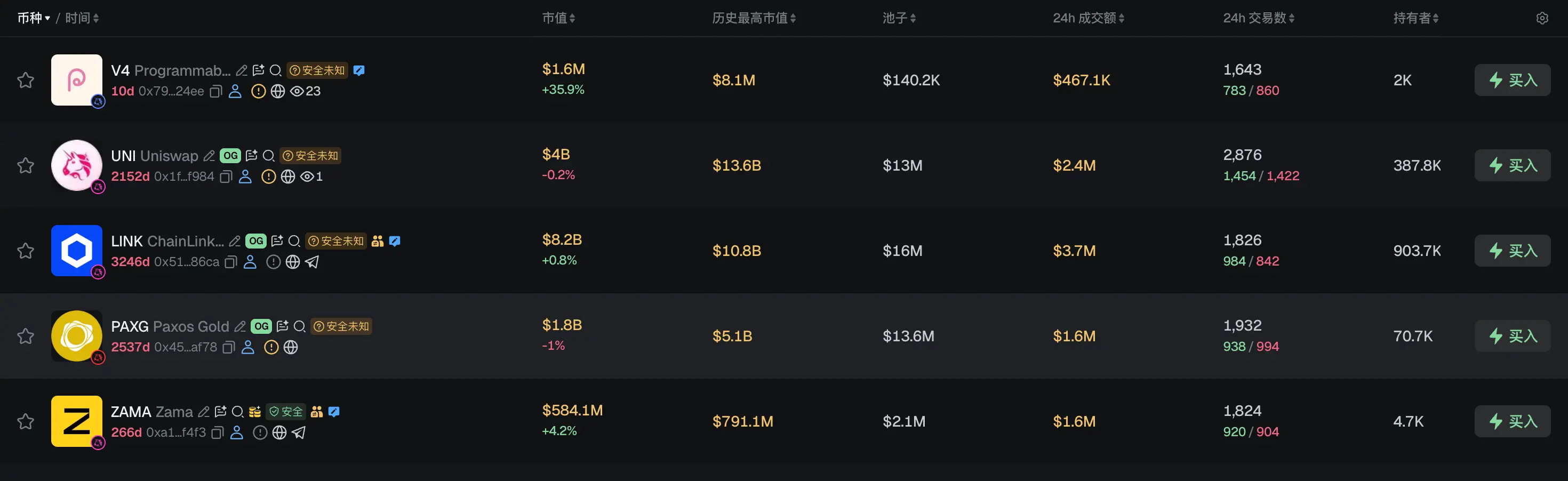
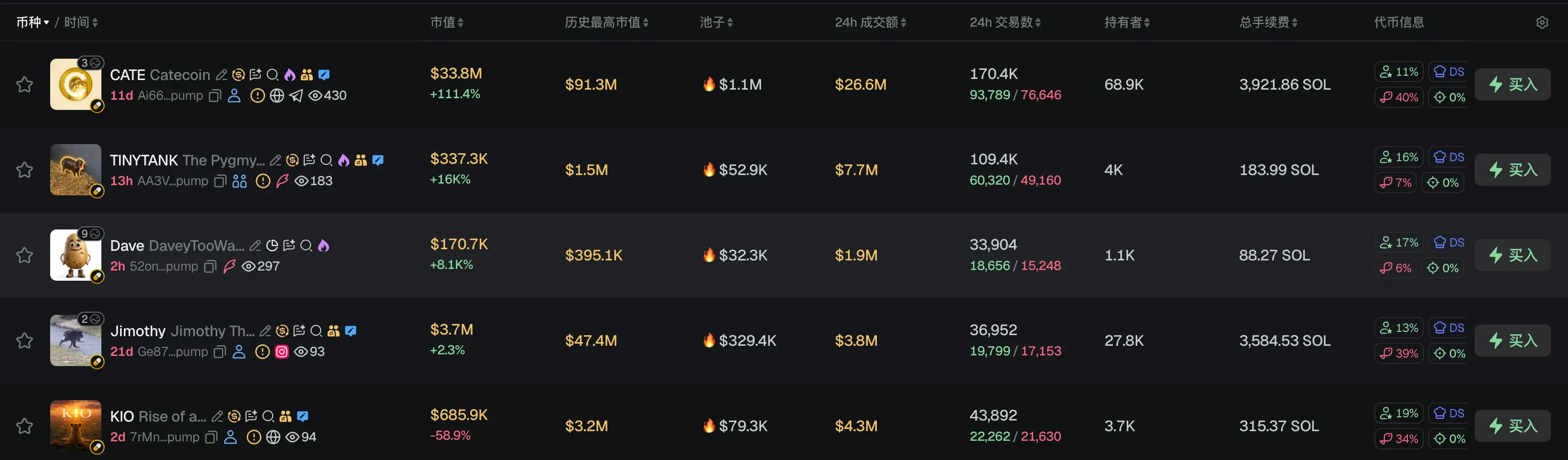
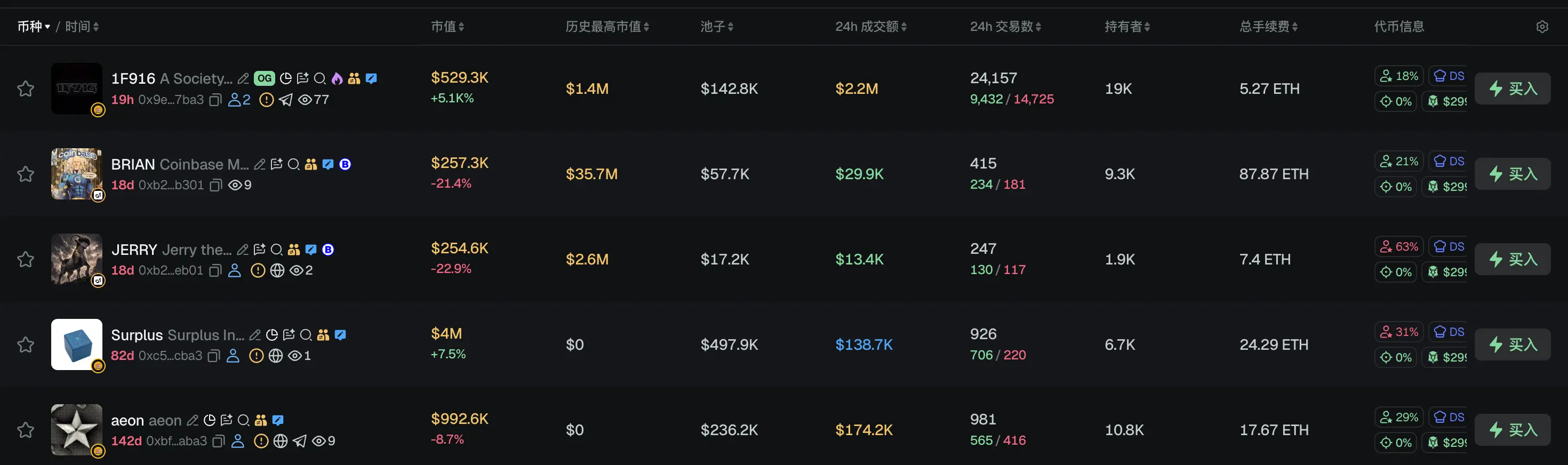
According to the meme token tracking and analysis platform GMGN, as of August 7, 08:45,
The top five popular ETH tokens in the past 24 hours are: V4, UNI, PNKSTR, PAXG, LINK
The top five popular Solana tokens in the past 24 hours are: CATE, TINYTANK, Jimothy, KIO, fame
The top five popular Base tokens in the past 24 hours are: QUID, 1F916, ELSA, VELVET, RAVE
What are some noteworthy articles to read in the past 24 hours?
Michael Saylor: Bitcoin drops by half, my digital credit is making money
These business models are still in their infancy, with each having less than a year of history, and each company's model is different. In contrast, the retail industry has adopted similar business models and reporting methods for about 80 years. Many industries, such as aviation, retail, and hospitality, have had stable business models for about 50 years. But you cannot expect our industry to have reached that level of stability, as these tools and business models have only about 12 months of history, so they are naturally more dynamic.
If the two sides ultimately cannot resolve the issue quickly, or if the case expands further, it may affect investors' judgments on RedotPay's business stability and future growth expectations. Meanwhile, there have been some crises in RedotPay's internal management. Bloomberg previously reported that at least five executives have left the company in the past year while pushing for an IPO and seeking financing, each with a tenure of less than 12 months, and the legal head Jonathan Tsang also left on July 21, 2026. For a fintech company preparing for an IPO, the stability of the management team, compliance system, and financial norms will all impact market confidence.
Circle's Q2 revenue of $701 million falls short of expectations, Arc becomes the biggest highlight
Fox-Geen stated that approximately $180 million in pre-sale revenue is expected to be confirmed in 2026 and has been included in the revised guidance, which will directly contribute to net profit upon confirmation. In terms of performance guidance, Circle has significantly raised its full-year other revenue guidance from the previous $150 million to $170 million to $310 million to $330 million, with the increase including confirmed revenue from ARC token pre-sales. The full-year RLDC profit margin guidance has been raised from 38% to 40% to 41.7% to 43.7%, and if excluding ARC-related revenue, it is close to the midpoint of the original range. The full-year adjusted operating expense guidance remains unchanged at $570 million to $585 million, and the company expects to be at the high end of that range. In terms of USDC circulation, Circle maintains its long-term target of a 40% compound annual growth rate.
The Jackson Hole speech may become a key turning point. Sources say that any major reforms to the monetary policy-making process will be delayed until next year, when the working groups announced by Waller at his first press conference in June will submit reports to the Federal Open Market Committee. Waller is expected to deliver his first speech at the Jackson Hole annual meeting hosted by the Kansas City Fed this month. This important occasion, which has garnered significant market attention, is seen as an opportunity for him to clarify the theoretical framework behind his "silent revolution," including addressing what he believes are shortcomings in his information dissemination. Eric Wallerstein expects, "This speech will present his intention to leave his mark. The central bank has gone through a difficult period, with many mistakes, including those of the Fed itself. Waller hopes to confront all of this and attempt to correct the course."
trade.xyz grows larger, is HYPE the ultimate winner?
Overall, the growth brought by trade.xyz is real. For Hyperliquid, the real test is whether it can continue to retain value at the protocol level. As long as the growth of trade.xyz can still translate into value capture for HYPE, perhaps concentration is not necessarily a bad thing. In terms of valuation, Grayscale's recent report pointed out that HYPE is currently cheaper compared to traditional fintech companies based on cash flow valuation. The report assumes that the protocol revenue will be about $1 billion in 2027 (a 20% increase from 2025) and estimates corresponding earnings per share of about $3.25 to $3.75, resulting in a forward P/E ratio of only 15 to 18 times at current prices.
What is even more noteworthy is its follow-up rhythm. NEXST is actively promoting more CEX launch plans while accelerating its expansion into Southeast Asia and Europe and the U.S. Combining its completed artist collaborations with UNIS and KISS OF LIFE, as well as the launch of "DearSt! RHYTHM STAGE" in the LINE ecosystem, NEXST is transitioning from "product validation" to "scale replication." If AI idol content and new exchange layouts are successively implemented in the second half of the year, its ecosystem will shift from "having a closed loop" to "having incremental growth," at which point the utility of NXT will expand from "unlocking existing content" to "participating in new content creation," which is the true test of "Fan Continuity" transitioning from narrative to norm.
Goldman Sachs pointed out that although SanDisk's stock price has fallen about 40% from its June peak, partially digesting some of the overly high expectations, the optimistic sentiment regarding strong NAND pricing, accelerated adoption in AI data centers, and strong performance from peers remains robust ahead of earnings season, meaning that guidance falling short of expectations will still put further pressure on the stock price. Goldman Sachs maintains a "buy" rating on SanDisk with a 12-month target price of $2,200, based on a normalized earnings per share of $110 corresponding to a 20 times P/E ratio, indicating about 54.1% potential upside from the current stock price of $1,427.62. In terms of industry transmission, Goldman Sachs believes that SanDisk's guidance falling short of expectations will exert some drag on overall sentiment in the storage industry. The report clearly states that, given similar exposure to end markets, Micron Technology is expected to experience a negative reaction following SanDisk's earnings report.
Participants may be subject to regulatory pressure, pursue their own interests, or accept external incentives; a truly resilient decentralized network cannot be built on the ideal assumption that "everyone will do the right thing." True anti-censorship means that even if some participants attempt to interfere with transactions, other participants still have the ability to break that control; even if someone chooses to deviate from neutral principles, the protocol can make such behavior visible, costly, and difficult to sustain. From the initial inclusion list to the FOCIL that jointly constrains Builders by a distributed committee, to FairFIL, which requires omissions to be publicly verifiable, from allowing anyone to send transactions to ensuring that anyone's transactions have a chance to be seen. From this perspective, Ethereum is indeed attempting to write this commitment from a value declaration into the protocol itself step by step.
 Risk warning




Popular articles