Bitcoin 78,000 life and death in 48 hours: $6.4 billion options expiration, Nvidia earnings report, and Waller's debut at Jackson Hole as a series of catalysts
 Core Viewpoint

 Every variable is toggling different switches of the Bitcoin price, making this window one of the most decisive moments of the year.
Author: Jose Antonio Lanz, Decrypt
Compiled by: ShenChao TechFlow
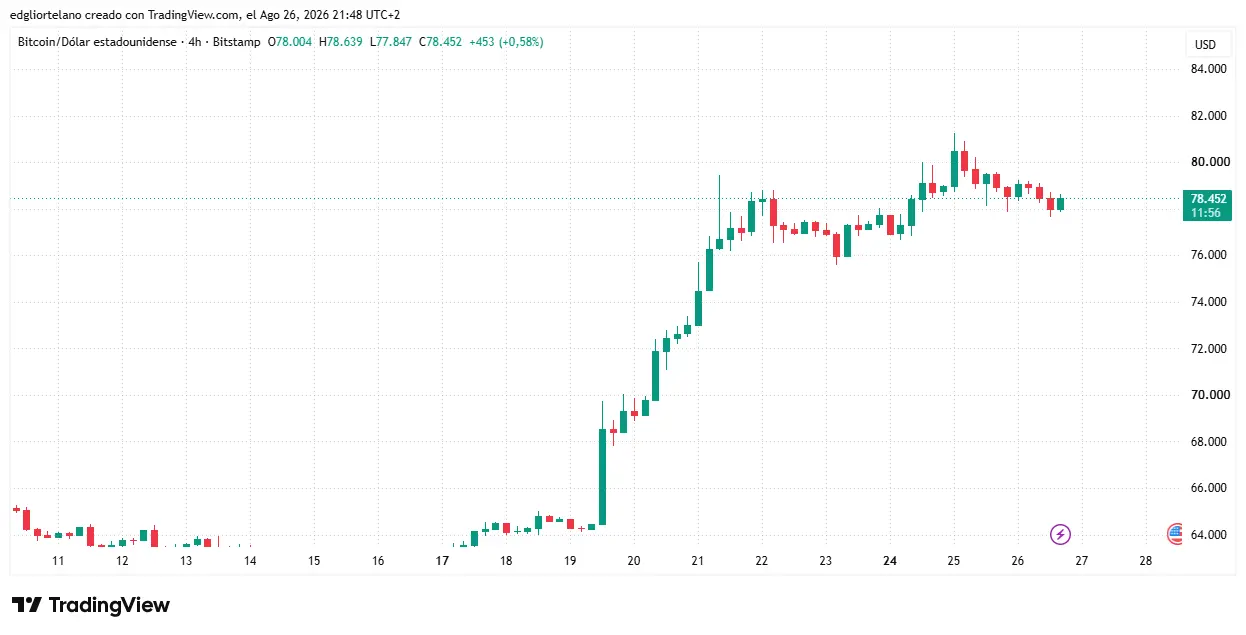
Bitcoin has just emerged from a sharp rally only to face its first real test: after briefly touching above $81,000, a somewhat hot inflation report caused the price to retract by about $3,000 within hours. The real challenge now is "timing"—over the next 48 hours, economic data, a massive options expiration, the new Federal Reserve Chair's first major speech, Nvidia's earnings report, and the interest rate decision in three weeks will all converge. Each variable is pulling different levers on Bitcoin's price, making this window one of the most decisive moments of the year.

Inflation and GDP: Higher-for-Longer Suppresses Risk Assets
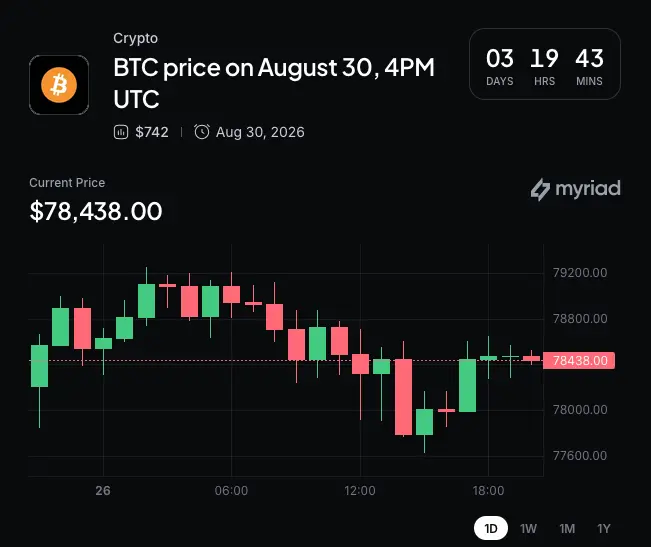
After a brief rebound that saw Bitcoin surpass $81,000, it is currently stabilizing around $78,000—interrupted by a hot inflation report. This single data point caused Bitcoin's price to erase about $3,000 in just a few hours, reminding the market how quickly sentiment can reverse when positions are so crowded.
For crypto traders, the bigger question right now may be "timing." Over the next 48 hours, five catalysts will overlap: economic data, a massive options expiration, the new Federal Reserve Chair's first major speech, Nvidia's earnings report, and the interest rate decision that will come three weeks later.
Each of these factors is pulling different levers on Bitcoin's price, and together, they make this period one of the most influential windows for Bitcoin this year. Here’s why each catalyst affects market sentiment and fundamentals.
The two most closely watched data sets were released on Wednesday morning. The July Personal Consumption Expenditures (PCE) report—the inflation indicator most valued by the Federal Reserve—showed a year-on-year price increase of 3.7%, higher than the market expectation of 3.6%; core PCE remained steady at 3.3%, as expected.
The government’s second estimate of Q2 GDP showed an annualized growth of 1.5%, with consumer spending revised up to stronger than the initial estimate.
The PCE is considered more important than other inflation indicators because it is the benchmark the Federal Reserve uses when discussing the 2% target, rather than the more commonly cited CPI. A hot reading leaves policymakers with fewer reasons to cut rates; meanwhile, the GDP data showing resilient consumption eliminates any arguments for "urgent economic support."
This combination jointly suppressed Bitcoin on Wednesday. Higher and longer interest rate expectations tend to boost the dollar and raise bond yields, both of which pull funds away from non-yielding assets. Bitcoin fell from above $81,000 to below $78,000 within hours after the data release.
$6.4 Billion Options Expiration on Friday
This Friday, approximately $6.4 billion in Bitcoin options contracts will expire on the derivatives exchange Deribit, coinciding with the Jackson Hole keynote speech. Traders are focused on a price level known as "max pain"—the strike price at which the majority of contracts expire worthless—which is currently around $78,000, below Bitcoin's current price.
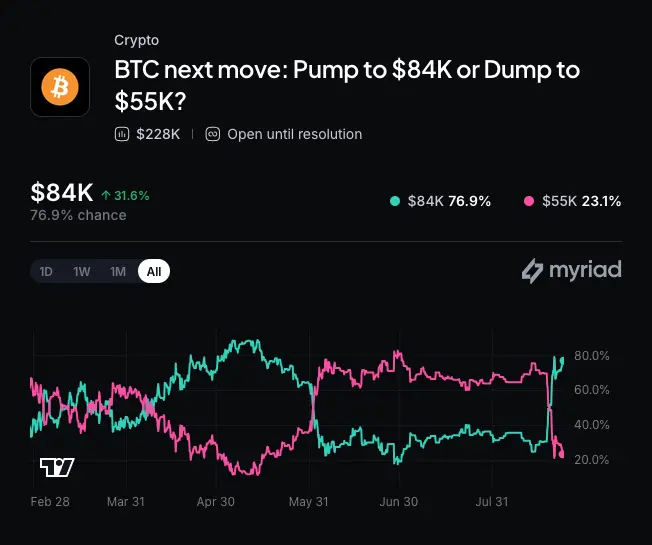
The significance of such a large expiration lies in the fact that institutions selling these options must buy or sell actual Bitcoin to hedge their exposure as prices fluctuate; a $6.4 billion ledger can independently stir the market through hedging flows, regardless of any news. The greater the gap between the spot price and the max pain point, the more intense the hedging activity tends to be as settlement approaches.
If Bitcoin remains significantly above the max pain point by Friday, market makers selling call options may need to continue buying the underlying asset to maintain their hedge, thereby adding upward pressure on the price. If the price is pulled toward the $68,000 range, this dynamic would reverse—under such a large expiration, positions closing tend to amplify volatility in either direction.
Nvidia Earnings Report: A Barometer for AI Narrative
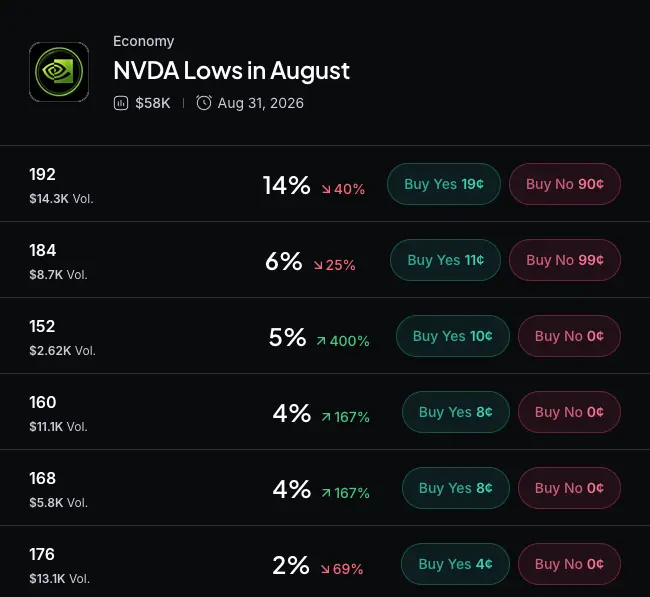
Nvidia will announce its Q2 earnings after the market closes on Wednesday, with Wall Street expecting revenue of about $92.3 billion. This company is important for crypto traders because it serves as the clearest barometer for "how much capital is flowing into AI infrastructure"; this round of Bitcoin's rally this year has been more about dancing to the sentiment of AI stocks rather than an independent trend.
When investors are confident in tech earnings, they often increase their positions across the entire risk curve, including crypto assets. Don't forget, while AI/tech stocks are currently driving the S&P 500, they are also in a high-risk sentiment that conservative traders are reluctant to touch.
A strong earnings report with an optimistic outlook could draw more capital into broader risk assets and extend Wednesday's dip-buying into Bitcoin; conversely, a disappointing report or cautious guidance on AI could have the opposite effect, as the two have been highly correlated this year, potentially causing tech stocks and crypto assets to decline together.
Warsh's Jackson Hole Debut: How the New Chair Sets the Tone
Kevin Warsh, who took over as Federal Reserve Chair in May, will deliver his first keynote speech at the Federal Reserve's Jackson Hole symposium on Friday. His speech comes just three weeks before the interest rate decision on September 16, when policymakers will also release updated economic forecasts (as reported by Decrypt).
This is the market's first opportunity to hear how a new chair will "talk about policy," rather than just interpreting the data. Traders will analyze both the wording and tone—any mention of inflation risks or weakness in the labor market could sway interest rate expectations for weeks.
If the tone is dovish, downplaying the hot PCE and emphasizing a softer labor market, it could lower yields and the dollar, which is a combination that once ignited this month's rally; if the tone is hawkish, focusing on inflation risks, it could have the opposite effect, extending Wednesday's pullback into the weekend.
Futures pricing has fluctuated dramatically over the past month. The CME FedWatch tool, which converts bond market bets into interest rate decision odds, currently shows a 38.4% probability of a rate hike in September, down from 82% a month ago, with 61.6% leaning toward "holding steady."
ETF Fund Flows: Real-Time Signal of Institutional Demand
The U.S. spot Bitcoin and Ethereum ETFs attracted $2.6 billion last week, marking the best single-week performance since October 2025, although most of the capital growth came from the rise in existing coin prices rather than new net inflows.
ETF flows are the cleanest real-time signal of institutional demand, independent of retail trading or derivatives speculation. The contraction of exchange supply is another indicator worth tracking, as it means fewer coins are available for sale, making prices more sensitive to buying and selling pressure than in deeper markets.
This scarcity fueled a short squeeze last week: traders betting on a decline were forced to cover their positions, erasing about $3 billion in short positions in a single day.
If ETF inflows continue while exchange supply continues to shrink, the same mechanism could push prices higher with relatively moderate buying; however, if it turns to sustained net outflows, this support could disappear just as quickly.

 Risk warning



Popular articles