Morning Report | Tom Lee: This is just the first wave of the upward trend; institutions are betting on a significant market in the fourth quarter; former SEC and CFTC officials call for regulatory easing to attract the return of crypto perpetual contracts
 September 1 Market Important Events Overview
Compiled by: ChainCatcher
What important events have occurred in the past 24 hours?
Bitfinex Securities launches 5 tokenized notes associated with Bitcoin reserve companies like Strategy and Metaplanet
According to ChainCatcher, Bitfinex Securities, a tokenized investment platform under the cryptocurrency exchange Bitfinex, has launched 5 tokenized notes, providing economic exposure to Bitcoin reserve companies such as Strategy, Metaplanet, H100 Group, and Capital B for eligible investors. The platform has also launched the floating rate perpetual preferred stock STRC from Strategy. The aforementioned notes are issued through the Luxembourg ORO (II) fund, managed by SICOS Securities, with the underlying securities held by regulated financial institutions, but do not grant investors direct ownership of the corresponding company shares. Products can be invested in fractional amounts starting from around $1 and support trading in USD, USDT, and Bitcoin, available only to eligible non-U.S. investors. Bitfinex Securities stated that this is the first time related products have been traded on a regulated tokenized securities exchange in the secondary market. After completing a $50 million tokenized financing for metal company Alkemya in August this year, the platform has listed assets exceeding $500 million.
Bitfinex: Fed's hawkish signals lead to Bitcoin pullback, but spot buying supports market structure
According to ChainCatcher, Bitfinex analyzed that despite tightening macro conditions, Bitcoin remains stable above $77,100. After Fed Chairman Warsh's hawkish speech at Jackson Hole last week, BTC fell from above $81,000, but the rise in August was mainly driven by spot buying rather than excessive leverage—open interest gradually increased, and the basis remained relatively restrained. Last week, nearly $1 billion flowed into U.S. spot Bitcoin ETFs, while Ethereum investment products saw a net inflow of $815.7 million for ten consecutive days. On the macro front, U.S. PCE inflation is at 3.7%, core inflation at 3.3%, private demand annualized growth in Q2 at 4.2%, and a deficit of $1.8 trillion in the first ten months of this fiscal year. Warsh confirmed that the 2% inflation target is a hard constraint, and the market has raised the probability of a rate hike in September to 57%. Bitfinex believes that ETF and stablecoin liquidity continue to support prices, but rate hike expectations limit upside potential. If crypto inflows remain resilient, it will prove that potential demand is still solid.
Fed Governor Barr: Should raise rates decisively if inflation does not cool down
According to ChainCatcher, Fed Governor Michael Barr stated that if inflation does not decline, the Fed should be prepared to raise rates. He warned that the inflation rate has been above target for over five years, and there are entrenched risks of price pressures. Barr mentioned that if upcoming data shows inflation is cooling, policymakers can afford to be patient. In a speech at an event in Washington on Tuesday, Barr stated: "If the data trends give me confidence that inflation is moderating and moving toward the 2% target, then I think we can take a little more time to assess the policy stance. But if inflation does not appear to be cooling sufficiently, then I think we should act decisively to raise rates."
Tom Lee: This is just the first wave of the bull market, institutions bet on a big market in Q4
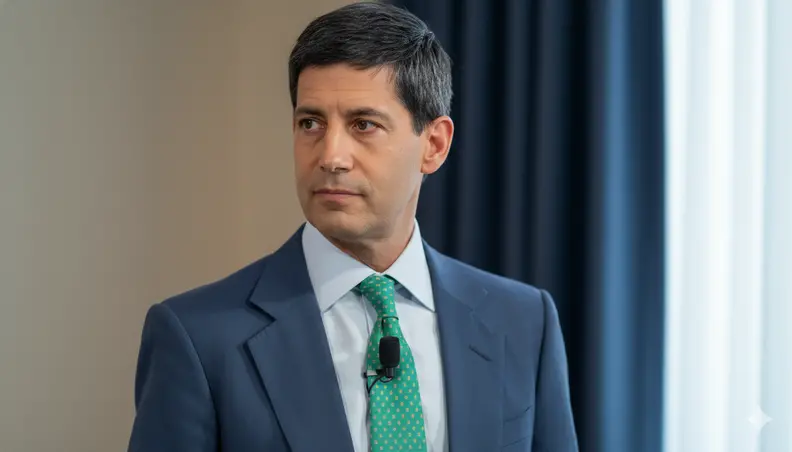
According to ChainCatcher, Tom Lee stated during his appearance on CNBC that "I think there are actually very few people who truly hold cryptocurrencies, and because of this, I believe Bitcoin can easily break through six figures (like over $100,000), although it may also be affected by rate hikes. As for how cryptocurrencies will perform, I think this will be a good test, but we have already seen long-term yields (interest rates) rising. So, if we see the Fed raise rates while long-term yields actually decline, that would be equivalent to monetary easing. Therefore, the key may be how long-term yields respond to the Fed's rate hikes." He also added, "I think this is just the first wave of the bull market because this round of cryptocurrency has caught many people off guard. I believe institutional investors are buying stocks related to cryptocurrencies, which is evident—the trading volume has surged significantly, signaling that they are betting on a big market in Q4. I think $150,000 is still possible, and it's actually not far from now."
OSL Group announces mid-term results for 2026, total revenue up 65.8% year-on-year
According to ChainCatcher, Hong Kong-listed company OSL Group (HKEX:863) announced its mid-term results for the six months ending June 30, 2026. Total revenue reached HKD 55.813 billion, a year-on-year increase of 65.8%; revenue from payment services was HKD 49.083 billion, up 69.3%, accounting for 88% of total revenue; total trading volume was HKD 172 billion, up 241.3% year-on-year; revenue outside the Asia-Pacific region was HKD 7.8 billion, a tenfold increase; adjusted non-IFRS earnings were HKD 331 million, up 75.5% year-on-year. OSL Group's Executive Director and CEO Kevin Choi stated that despite a significant market correction in the first half of the year, the company's trading volume and revenue both reached new highs, claiming to have become the world's largest stablecoin payment infrastructure company by B2B stablecoin payment volume. In 2025, the company completed a strategic upgrade, achieving an annual B2B stablecoin payment volume of $12.3 billion. In February 2026, it launched the corporate dollar stablecoin USDGO issued by Anchorage Digital Bank, N.A., which saw a circulation of over $800 million within four months, exceeding $1.2 billion by August. During the reporting period, OSL completed the acquisition of Banxa Holdings Inc. in January 2026 and obtained the EU MiCAR license granted by the Austrian Financial Market Authority and the AFSL issued by the Australian Securities and Investments Commission, while also launching the stablecoin payment infrastructure OSL AgentPay aimed at AI agents.
Former SEC and CFTC officials call for regulatory easing to attract crypto perpetual contracts back
According to ChainCatcher, as the legislative process for crypto market structure stalls during the summer recess, the U.S. Securities and Exchange Commission (SEC) and the Commodity Futures Trading Commission (CFTC) are accelerating their rule-making efforts for this $2.5 trillion industry. The two agencies are advancing several crypto-related initiatives, including re-evaluating the definitions of derivatives such as swaps and perpetual contracts, and rewriting the SEC's crypto custody rules. A bipartisan group consisting of former CFTC Chairman Chris Giancarlo, former CFTC Commissioners Brian Quintenz and Sharon Brown-Hruska, former SEC Commissioner Steven Wallman, and former SEC Chief Economist Chester Spatt stated in a comment letter sponsored by Kalshi that similar risks should receive similar regulatory treatment, and overlapping rules should not impose additional compliance costs. Giancarlo stated that if federal regulation calibrates based on actual risks rather than maximum burdens, liquidity will flow back to the U.S., and the longer we wait, the harder it will be to attract liquidity back. Kalshi estimates that offshore perpetual contract trading volume will exceed $90 trillion by 2025, up from about $28 trillion two years ago. Additionally, the SEC last week submitted its plan to rewrite custody rules for investment advisers and investment companies to the White House Office of Information and Regulatory Affairs for review, and its "Reg Crypto" proposal has officially entered the Federal Register, with a public comment period ending on October 20.
21 international financial institutions commit to establish a joint stablecoin company
According to ChainCatcher, 21 international financial institutions announced plans to establish a new company in the second half of 2026 to promote the issuance of stablecoins, with the specific name to be announced later. The company will initially focus on dollar-denominated stablecoins and plans to expand to more G7 currencies in the future, prioritizing euro stablecoins. Participating institutions include Bank of America, Citigroup, Morgan Stanley, Goldman Sachs, Deutsche Bank, UBS, Wells Fargo, BBVA, Santander Bank, MUFG Bank, and others. The stablecoin plan will target wholesale, institutional, and retail markets, applicable to cross-border payments, digital asset settlements, and other scenarios. The group stated that the stablecoin solution will combine bank-grade compliance, governance, and institutional risk management capabilities, and plans to comply with relevant regulatory requirements such as the U.S. GENIUS Act and the EU MiCA. The project aims to officially launch stablecoin products in the first half of 2027.
Securitize token fund HINC becomes collateral for Loopscale
According to ChainCatcher, The Defiant reported that the tokenized credit fund HINC launched by Securitize in collaboration with Neuberger has gone live on the Solana lending protocol Loopscale as collateral, allowing qualified investors to borrow USDG stablecoins without redeeming their holdings. HINC was launched on August 18 on Avalanche, Ethereum, Solana, and Sui, primarily holding high-yield corporate bonds, CLO tranches, and bank loans, with a minimum subscription of $100,000 and a fee rate of 0.6%, available only to qualified investors and accredited purchasers. Mary Gooneratne, co-founder of Loopscale, stated that HINC brings a fundamentally different type of collateral to the Solana credit market, supporting actively managed high-yield strategies, indicating that on-chain lending can surpass crypto-native assets and short-duration instruments. RedStone uses its Trusted Single Source Oracle standard to price HINC, publishing the manager's daily NAV in a signed, timestamped, on-chain format for protocol verification and triggering liquidation events. Loopscale currently has a TVL of approximately $91.3 million, with active loans of $55.9 million, ranking 27th on DefiLlama. HINC is the third Securitize product to go live on this protocol, following Apollo's tokenized credit fund ACRED and Securitize's own NYSE-listed stock SECZ, which have also served as collateral.
Kraken's parent company Payward partners with the London Stock Exchange to tokenize 100 UK-listed stocks
According to ChainCatcher, Kraken's parent company Payward has announced a partnership with the London Stock Exchange (LSE) to tokenize the stocks of the 100 largest companies listed on the LSE into 1:1 backed xStocks. The first batch of London-listed xStocks is expected to go live on Kraken and other platforms supporting the xStocks Alliance in the coming weeks, available to investors in over 110 countries, but not yet open to UK investors. Subject to regulatory approval, the LSE plans to list and support xStocks trading on its newly launched extended trading hours platform LSE 24. LSE CEO Julia Hoggett stated that by collaborating with Payward and continuously working with market infrastructure ecosystems, they are exploring how issuers and investors can benefit from new access methods while maintaining standards that support public markets. In addition to tokenizing existing stocks, both parties will also explore the issuance of native equity tokens through LSE infrastructure, which will have the same rights as traditional stocks and be fully interchangeable. Payward's tokenized stock framework was launched in June 2025 and acquired by Payward in December, processing over $40 billion in total trading volume to date, covering over 200,000 holders, with nearly $20 billion settled on-chain. According to RWA.xyz data, there are currently approximately $2.53 billion in existing tokenized stocks, with xStocks tokenizing about $606.6 million, making it the second-largest issuer after Ondo.
U.S. SEC: Strengthening scrutiny of private company investment SPVs, requiring proof of asset authenticity
According to ChainCatcher, the Wall Street Journal reported that the U.S. Securities and Exchange Commission (SEC) has intensified its scrutiny of the companies behind so-called special purpose vehicles (SPVs). According to insiders, SEC examiners have been requiring registered investment advisers to provide evidence that their SPVs actually own or hold the private company shares they claim. Some insiders indicated that such funds have ramped up marketing efforts ahead of the highly anticipated IPO of SpaceX and Anthropic's planned listing, and as investor complaints have increased, regulators have decided to enhance scrutiny. According to one insider, the SEC's current review typically includes document requests, and some reviews also involve on-site interviews. The review process may take anywhere from weeks to a year.
Ripple and Coincheck launch digital asset custody collaboration in Asia
According to ChainCatcher, Cointelegraph reported that Ripple announced a partnership with digital asset infrastructure company SettleMint to provide tokenized asset custody and management solutions for financial institutions. Ripple's institutional-grade digital asset custody infrastructure, Ripple Custody, will integrate with SettleMint's Digital Asset Lifecycle Platform (DALP), covering the entire lifecycle of tokens to simplify the custody process for institutions. Just a day earlier, digital asset service provider Coincheck Group announced a partnership with wallet infrastructure company DFNS to build digital asset wallet technology and custody services in Japan. DFNS's wallet-as-a-service can provide institutions with complete transaction lifecycle management, including workflow orchestration and governance controls, and supports over 100 blockchain networks. Both collaborations aim to build more institutional-grade digital asset infrastructure to address the barriers traditional financial institutions face in entering the crypto space. Chainalysis' 2025 Global Crypto Adoption Index shows that on-chain crypto activity in the Asia-Pacific region is growing at the fastest rate globally, with a year-on-year increase of 69%. Currently, several Asian countries are developing their own cryptocurrency regulatory frameworks, with Japan's bill passed in July classifying crypto assets under the Financial Instruments and Exchange Act. Japan's Finance Minister Katsunobu Kato previously expressed a desire to bring crypto assets under the same regulatory framework as traditional financial assets.
U.S. pressures Japan to raise interest rates: Bitcoin's fixed monetary policy advantage is back in focus
According to ChainCatcher, CoinDesk reported that U.S. Treasury Secretary Yellen has reportedly urged Japan to raise interest rates to curb the continued depreciation of the yen, highlighting the susceptibility of traditional monetary policy to government and external factors. In contrast, Bitcoin's monetary policy is pre-set by code, with new coin issuance following a fixed rhythm and halving approximately every four years, providing higher predictability. However, Bitcoin still struggles to escape the impacts of traditional financial markets in the short term. If Japan's rate hikes lead to a rapid appreciation of the yen, long-standing low-interest yen financing trades may be unwound, triggering sell-offs in stocks, bonds, and crypto assets. In August 2024, the Bank of Japan's rate hike had strengthened the yen and put pressure on risk assets, including Bitcoin. Technically, BTC's 50-day moving average is currently trending upward and is close to crossing above the 200-day moving average, potentially forming a "golden cross." However, analysts believe that moving averages are lagging indicators, and the historical predictive effectiveness of golden crosses as independent indicators is not stable.
Binance sees $15.7 billion inflow in August, accounting for over 75% of centralized exchange inflows
According to ChainCatcher, cryptocurrency trading platform Binance saw an inflow of $15.7 billion in August, setting a monthly record and accounting for over 75% of all centralized exchange inflows. During the same period, Bitcoin's price rose over 20%, surpassing $80,000, driving an increase in exchange trading volume. Binance Research pointed out that $15.7 billion is approximately 8.4 times that of the second-largest inflow exchange, with Bybit and OKX being the three exchanges concentrated in liquidity. Smaller platforms saw more dispersed inflows. Additionally, Binance is facing accusations in the EU for accepting local users without obtaining a license under the Markets in Crypto-Assets (MiCA) regulation.
Ankr's ankrFLOW contract attacked, Flow Foundation to replenish funds
According to ChainCatcher, the Flow blockchain official released a statement saying that at approximately 06:18 UTC today, Ankr's ankrFLOW liquid staking contract had a vulnerability, allowing attackers to create approximately 8.6 million uncollateralized ankrFLOW. This is not a vulnerability of the Flow EVM or the Flow protocol and does not affect the Flow token economics. The attackers subsequently used ankrFLOW as collateral on the MORE Markets lending protocol, exhausting approximately $15.5 million in WFLOW reserves, worth about $410,000, and profiting approximately $246,000 after slippage. Some reports incorrectly stated that the impact was around $9.3 million. Ankr and MORE Markets have suspended the related contracts, and some exchanges have proactively suspended FLOW deposits. The Flow Foundation will work with Ankr to replenish the stolen WFLOW reserves and rebalance the liquidity pool. The Flow network is operating normally, and ankrFLOW staking and MORE Markets lending will be suspended until Ankr deploys a fix. User funds are safe, and no action is required.
Security company Huntress: Hackers steal crypto wallet data through fake Google Docs and Claude.ai pages
According to ChainCatcher, security company Huntress disclosed that hackers are spreading malware to cryptocurrency users by faking Google Docs files, hosting malicious files on GitHub, and impersonating Claude.ai pages. Attackers disguised themselves as senior employees of CoinDesk on the social platform X, luring victims to open Google Docs documents containing malicious code under the pretense of inviting them to an online meeting, thus guiding users to install the malware themselves. Mac users face threats from Atomic macOS Stealer (AMOS), which can steal browser passwords, crypto wallet data, and Telegram files; Windows users are pushed fake Google API Connector updates, which, once installed, implant NetSupport RAT and a fake Ledger hardware wallet application. Additionally, hackers have placed fake ads on search engines like Bing, luring users to visit counterfeit Claude.ai pages and execute malicious commands, with related malware MacSync and SectopRAT capable of stealing cookies, saved passwords, mnemonic phrases, and payment card information. Security company Socket also discovered 16 malicious extensions targeting Chrome and Edge that can empty EVM, Solana, and Tron wallet assets.
London Stock Exchange partners with Kraken's parent company Payward to tokenize UK large-cap stocks on-chain
According to ChainCatcher, the London Stock Exchange (LSEG) and Payward, the parent company of cryptocurrency exchange Kraken, announced a partnership to bring the stocks of the largest listed companies in the UK onto the blockchain. In the coming weeks, the stocks of the top 100 companies listed on the LSE will be launched on Payward's xStocks tokenized stock framework, which are tokens corresponding 1:1 to the underlying stocks and can be traded 24/7 on centralized exchanges, self-custody wallets, and on-chain applications. This initiative continues the rapidly expanding framework of Payward. Over the past year, xStocks has accumulated a trading volume of over $40 billion, with nearly $20 billion settled on-chain and over 200,000 product holders. Through blockchain channels, UK-listed stocks will reach an investor base in over 110 countries, although xStocks is currently not open to domestic UK investors. Subject to regulatory approval, the LSE plans to list and support xStocks trading on its newly launched 24-hour trading platform LSE 24, gradually covering tokenized stocks and more asset classes in the U.S., EU, UK, and Hong Kong. Both parties also stated they would explore stock tokens issued natively by the LSE, allowing LSE members to issue and service stocks directly on-chain, with the same full interchangeability and rights as traditional stocks. Payward Co-CEO Arjun Sethi stated that for years, people have assumed that crypto and traditional finance must collide and one would lose, but that has never been the real story;
Analysis: ETF outflows combined with macro pressures make it very difficult for BTC to hold above $80,000
According to ChainCatcher, Greeks.live researcher Adam stated: "I see people discussing Strategy restarting buying coins; this short-term stimulus does not affect the long-term trend, and Strategy is also a big retail trap. BTC now has no possibility of market manipulation, and no one can predict the trend. It can only be said that after Strategy has floating profits, there is more room to buy coins, but looking at the long term, ETFs are still overall flowing out, making it very difficult to hold above $80,000, with significant selling pressure. On the macro front, whether it's the Fed's hawkish rhetoric or the escalation of the U.S.-Iran conflict, both are challenging the already fragile investors. Short-term volatility is decreasing rapidly, and relying on just one bullish candle is hard to support a bull market. I hope that after a slight correction, we can reach above $85,000; otherwise, arbitrageurs and sellers will create significant selling pressure, and the end-of-month Gex is gathering, needing to continue this momentum."
Monetary Authority of Singapore launches public consultation on stablecoin regulation
According to ChainCatcher, the Monetary Authority of Singapore is publicly soliciting opinions on the proposed legislative amendments to the Payment Services Act of 2019, aiming to establish a stablecoin regulatory framework in Singapore. At the same time, it is seeking public feedback on related proposals for further regulatory requirements, referencing developments in the stablecoin industry since 2023. This consultation also seeks opinions on policy positions regarding multi-jurisdiction issuance and recognition of offshore-issued stablecoins. The deadline for feedback is October 16.
Thai SEC proposes allowing retail investors to trade regulated overseas crypto derivatives
According to ChainCatcher, the Thai Securities and Exchange Commission (SEC) has proposed allowing intermediaries to provide retail investors with access to certain digital asset derivatives traded overseas. According to the proposal, eligible products must be similar to crypto derivatives traded domestically in Thailand, including aspects such as underlying assets, duration, leverage, and settlement methods. Additionally, these products must be traded on exchanges that adopt central counterparty clearing and are supervised by regulatory bodies belonging to specific international regulatory or exchange organizations. Crypto derivatives that do not meet these criteria will only be available to institutional investors. The Thai SEC stated that institutional investors are better equipped to assess and manage complex and high-risk products. Current rules only allow intermediaries to provide related investment services to retail and high-net-worth clients when overseas derivatives are similar to domestic trading products, while overseas crypto derivatives, due to their varying structures and risk levels, require targeted rules. This consultation is the latest initiative to incorporate crypto-related products into the regulated capital market in Thailand. The Thai SEC issued a notice on March 5, officially designating cryptocurrencies and digital tokens as permitted derivative underlying assets and is in discussions with the Thailand Futures Exchange regarding potential contract specifications. The consultation will continue until September 30, and the Thai SEC has not yet announced the proposed implementation date for the amendments.
North Korean hackers transfer tens of millions of dollars on Hyperliquid, Trump pushes for platform entry into the U.S.
According to ChainCatcher, Arkham blockchain data shows that wallets associated with the North Korean state-sponsored hacking group Lazarus Group sold over $30 million worth of Bitcoin on the decentralized perpetual contract trading platform Hyperliquid in the past three weeks and used the proceeds to purchase Ethereum and Solana, which were then transferred to centralized exchanges such as Kraken, LBank, and KuCoin. Kraken responded that it maintains an industry-leading compliance program, continuously monitoring on-chain activities to identify and block assets related to sanctioned wallets; LBank and KuCoin stated that the associated risks are ongoing challenges faced by the industry and emphasized that publicly available on-chain data may not reflect compliance measures at the platform level. This comes as the Trump administration is exploring ways to bring Hyperliquid into the regulated U.S. financial system. Trump stated earlier this month at a White House event that CFTC Chairman Mike Selig is formulating a path to bring Hyperliquid into the U.S. in a fully compliant and legal manner. According to Bloomberg, Kraken's parent company Payward is in deep negotiations with Hyperliquid Labs to offer perpetual contracts to U.S. traders. Hyperliquid is a leading platform in the decentralized perpetual contract space, allowing users to trade directly from crypto wallets without traditional brokerage accounts or KYC checks. According to DefiLlama data, its cumulative perpetual contract trading volume has exceeded $5 trillion, with current open interest of approximately $13.3 billion.
Bitcoin "kimchi premium" reappears in the South Korean market: positive for a week, setting the longest record since May
According to ChainCatcher, Bitcoin has reappeared with a "kimchi premium" in the South Korean market. The price of Bitcoin in South Korea's largest cryptocurrency exchange, Upbit, is about 1% higher than the price on Binance in USD, and this premium has persisted for a week, marking the longest duration since early May. Bitcoin's price in early September was about $79,000, having briefly surpassed $80,000 in August. The U.S. spot Bitcoin ETF saw a net inflow of about $1.92 billion in the week of August 17, setting a new weekly high in ten months; another $923 million flowed in during the week ending August 31. Upbit data shows that Bitcoin traded at a discount in the South Korean market for most of this summer, with discounts reaching as high as 3.1% in early June and an average discount of 0.25% in August. 10x Research indicates that while the Korean premium has turned positive, spot trading volume has not increased in tandem.
Analysis: Cutting-edge AI market is diversifying into closed camps
According to ChainCatcher, venture capitalist Tomasz Tunguz stated on X that the cutting-edge AI market is diversifying into closed camps, with labs choosing partners, cutting off competitors, and rationing access to the strongest models. Salesforce has chosen Anthropic as its dedicated AI partner, making Claude the default model for the world's largest CRM and Slack. OpenAI cut off API access after SpaceX acquired Cursor on November 12. Z.ai has placed its flagship model under security review after accumulating over $10 billion in revenue. Anthropic is rationing Mythos 5 through Project Glasswing and limiting Fable to inference only in the U.S. OpenAI is first launching a variant of GPT-5.6 to trusted partners. Nvidia is investing in an open ecosystem, including commitments of $13 billion to Hugging Face, $7 billion to Poolside, and $26 billion to Nemotron. Tunguz stated that access, rather than price, has become the new scarcity in the cutting-edge AI landscape.
Dragonfly partner Haseeb: Anthropic and OpenAI IPOs will result in the largest liquidity transfer
According to ChainCatcher, Haseeb Qureshi, managing partner at venture capital firm Dragonfly, stated on X that the IPOs of Anthropic and OpenAI will represent the largest liquidity transfer from global institutions to San Francisco futurists in history. He predicts that the most concentrated beneficiaries of these funds will be San Francisco real estate and cryptocurrencies. Employee lock-up periods typically expire 180 days after an IPO. Anthropic is expected to go public in mid-October, so this process is anticipated to begin in April 2027, continuing with OpenAI's IPO the following year.
Analysis: Japanese government bond yields hit 30-year high, Bitcoin hovers around $78,000
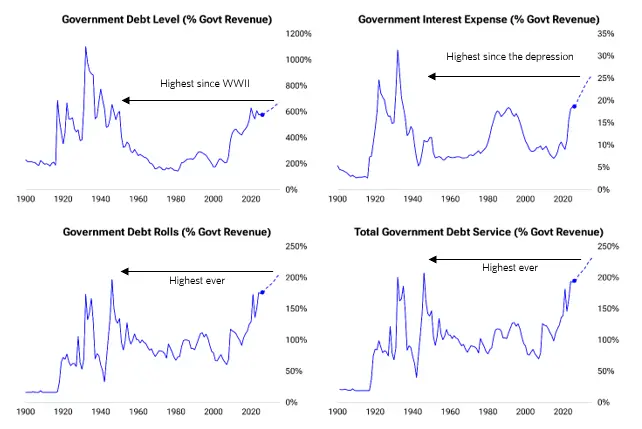
According to ChainCatcher, Cointelegraph reported that the global bond bear market continues to ferment, with Japan's 10-year government bond yield rising to 3% on Tuesday, the first time since 1996; the 30-year bond yield also broke the historical high of 4.18%. The U.S. 10-year government bond yield has also risen to multi-year highs, at 4.78%, with global long-term sovereign bond yields at their highest levels since the 2008 financial crisis. Against this backdrop, Bitcoin remains in a sideways consolidation, maintaining around $78,000, slightly retreating from an earlier high of nearly $79,000. There is a dense resistance area between the current spot price and $86,000, limiting Bitcoin's upward momentum, and market sentiment remains cautiously optimistic in the short term, with the $76,000 to $82,000 range seen as a key battleground in the coming weeks. This round of selling occurred after U.S. Treasury Secretary Yellen announced an increase in the maximum scale of government bond repurchase transactions to $4 billion starting in September, with some commentators likening it to a form of yield curve control. Arthur Hayes has long argued that the Fed will eventually use the FIMA repurchase facility, which would create new dollar liquidity, which is also why he recommends allocating Bitcoin, gold, and cryptocurrencies; Yellen hinted at using this tool as early as August.
Kast launches stablecoin business platform, integrating corporate accounts, payment cards, cross-border transfers, and stablecoin yield balances
According to ChainCatcher, Cointelegraph reported that stablecoin payment company Kast has launched the KAST Business platform, integrating corporate accounts, payment cards, cross-border transfers, and stablecoin yield balances. The platform provides services through stablecoin infrastructure. Kast stated that businesses can receive payments through fiat virtual accounts provided by regulated partners, deposit supported stablecoins and crypto assets, issue virtual cards, and make local payments in over 20 currencies. The platform covers over 170 countries and regions, but specific availability varies by jurisdiction. Idle balances earn an annual yield of up to 8%, with up to 3% cashback on spending. Kast is a fintech company rather than a bank, with regulated services provided by licensed partner institutions. Kast completed a $80 million financing at a valuation of $600 million in March, which will be used for product development, licensing acquisition, and expansion into North America, Latin America, and the Middle East. The company claims to currently have over 1 million users and plans to attract 1,000 to 5,000 active businesses by the end of 2026.
South Korea arrests 4 Uzbeks for transferring USDT to Syrian terrorist organization
According to ChainCatcher, Decrypt reported that the Gwangju Police Department's Security Investigation Division in South Korea arrested 4 Uzbek suspects in April under the Anti-Terrorism Financing Act and disclosed the case on Tuesday. One of them is listed on Interpol's red notice. The police stated that this is the first case involving cryptocurrency flowing out from a designated terrorist organization and then returning to fund it through physical goods. According to police investigations, from August 2024 to April 2025, the alleged mastermind transferred 4,267 USDT to the Syrian terrorist organization "Katibat Tawhid wal Jihad" (KTJ) in seven transactions. KTJ was established in 2014 and is mainly composed of Central Asian militants, recognized as a terrorist organization by the UN and the U.S. Additionally, the mastermind is also accused of receiving cryptocurrency from KTJ to purchase 11 used cars and 2 excavators, totaling approximately 170 million Korean won (about $121,000), which were then sent to Syria, while the other three suspects are accused of assisting in the purchase and export of these vehicles. The police stated that previous terrorism-related cases mostly involved remittances to terrorist organizations, while this case is the first to receive funds from a terrorist organization and reverse procure and supply vehicles. Investigations show that the mastermind rotated operations among three personal wallets, with the car purchase funds deposited into an account under his spouse's name, and he presented someone else's driver's license when arrested. He entered South Korea on a student visa in 2017, graduated from a university in Daejeon, and has been illegally residing since 2023. He denied the main charges during his first court hearing in June, claiming the remittances were for family living expenses and that he did not know the identity of the car buyers. The police stated that the investigation also led to the arrest of a second suspect listed on a red notice, and the case is ongoing.
Data: Bitcoin spot ETF saw a total net inflow of $217 million yesterday, with BlackRock's IBIT leading at $206 million
According to ChainCatcher, based on SoSoValue data, Bitcoin spot ETFs saw a total net inflow of $217 million yesterday (Eastern Time, August 31). The Bitcoin spot ETF with the highest single-day net inflow yesterday was BlackRock's ETF IBIT, with a net inflow of $206 million, bringing IBIT's historical total net inflow to $63.571 billion. Following that was Grayscale's Bitcoin Mini Trust ETF BTC, with a single-day net inflow of $9.4165 million, and BTC's historical total net inflow currently stands at $2.867 billion. The Bitcoin spot ETF with the highest single-day net outflow yesterday was VanEck's ETF HODL, with a net outflow of $13.4134 million, while HODL's historical total net inflow currently stands at $1.049 billion. As of the time of publication, the total net asset value of Bitcoin spot ETFs is $99.611 billion, with an ETF net asset ratio (market cap relative to Bitcoin's total market cap) of 6.29%, and the historical cumulative net inflow has reached $54.847 billion.
XRP rises 40% in two weeks, CME futures holdings ratio rises to 17%
According to ChainCatcher, CoinDesk reported that XRP has risen about 40% in the past two weeks, from about $0.99 to $1.38, but during the same period, total open interest in XRP futures has decreased by 16% to about 234 million XRP. CoinGlass data shows that all exchanges except CME have reduced XRP futures holdings. CME's XRP futures open interest has increased by about 36% to 38.7 million XRP, with its share of the total market open interest rising from about 10% to 17%. CFTC data shows that as of August 25, leveraged funds held net short positions equivalent to about 11.6 million XRP, more than doubling from the previous week's 5.7 million XRP; traders and asset management institutions increased net long positions by about 6 million XRP and 2.8 million XRP, respectively. This shift in holdings occurred ahead of the procedural vote in the Senate on the U.S. CLARITY Act (expected in mid-September). The bill had previously driven XRP's price up by about 5% when it passed the Senate Banking Committee in May.
Data: Ethereum spot ETF saw a total net inflow of $87.679 million yesterday, continuing 11 days of net inflows
According to ChainCatcher, based on SoSoValue data, Ethereum spot ETFs saw a total net inflow of $87.679 million yesterday. The Ethereum spot ETF with the highest single-day net inflow yesterday was BlackRock's ETF ETHA, with a net inflow of $59.9357 million, bringing ETHA's historical total net inflow to $12.797 billion. Following that was Grayscale's Ethereum Mini Trust ETF ETH, with a single-day net inflow of $13.5037 million, and ETH's historical total net inflow currently stands at $1.924 billion. As of the time of publication, the total net asset value of Ethereum spot ETFs is $15.614 billion, with an ETF net asset ratio (market cap relative to Ethereum's total market cap) of 5.23%, and the historical cumulative net inflow has reached $13.062 billion.
Meme Popularity Rankings
According to data from the meme token tracking and analysis platform GMGN, as of September 2, 08:45,
The top five popular tokens in the past 24 hours for ETH are: UNI, MANYU, SHIB, LINK, V4
The top five popular tokens in the past 24 hours for Solana are: fone, GPRO, SOLCAT, OTC, CATE
The top five popular tokens in the past 24 hours for Base are: Basecat, DiamondPepe, SETZ, Bcash, BASELINE
What are some exciting articles worth reading in the past 24 hours?
In ten years, every major agency will support stablecoin rails
Host: Cuy's account on X is Cuy Sheffield, and you can find us on various social platforms, @SimonTaylor, shouting into the void, and also finbrainfood.com, of course tempo.xyz. If you want to see more of this show, please like, subscribe, and leave comments. I always tell you this because it's your way of thanking us. If you like any of our content, leaving a comment is the best way to show appreciation. If you do this, you'll hear more of our content. Take care, and see you next time.
Trump's eldest son fund injects $300 million into Polymarket's capital game
Capital is rushing in, making the scene increasingly crowded, which makes the issue of exit more urgent. The capital exit is nothing more than two paths: issuing tokens and going public. Last year, Polymarket executives publicly stated that there would be tokens and airdrops; the parent company Blockratize registered the POLY and $POLY trademarks in February this year, and ICE's cooperation announcement also mentioned future tokenization arrangements, but the specific issuance time and airdrop rules have not yet been finalized. The company has not yet submitted a listing prospectus, and JPMorgan ended its banking partnership with Polymarket last year due to regulatory risks, but the bank stated it still maintains multiple business interactions with the company and is considering participating in future IPO underwriting.
Gemini, MoonPay, Dallas Fed, BIS converge this week on Agentic Finance
In the past decade, the fiercest wars in fintech have taken place on mobile screens. Everyone is competing for daily active users, main accounts, the most commonly used card, and who can get closer to users. The next round of many truly important financial wars may not have an interface at all. It happens in a set of authorization rules in the background, in an acceptable counterparty list, in a few basis points of yield differences, and also in the moment when AI decides "where this money should go right now." Therefore, the real question that Agentic Finance should ask is probably never: When will AI manage our money? But rather, as more and more money begins to automatically seek its best destination according to machine-understandable rules—who still has the right to decide where this money ultimately stays?
$1.8 million acquisition of Nasdaq shell company, Rune aims to blow up shorts with meme coins
The problem is: once this flywheel starts, its opposite is equally valid. When on-chain liquidity recedes, meme coin prices fall → demand for stock tokens disappears → U.S. stocks lose on-chain buying support → stock prices fall → meme narratives collapse. A short ratio of 92.3% is a double-edged sword—it is both fuel for a short squeeze and a true pricing of the company's fundamentals by shorts. Before Schedule 13D, company announcements, and stock token contracts appear, this remains a high-visibility, low-confirmation capital experiment. However, if on-chain demand can indeed be transformed into underlying stock buying through the minting and collateralization mechanisms of stock tokens, then what is born on the Robinhood Chain is not just a batch of new meme coins. It could be a new capital machine connecting crypto attention with Nasdaq small-cap stocks.
Conversation with Uniswap founder: Uniswap builds liquidity networks for all assets
Host: I completely agree. Hayden, it's an honor to collaborate with your team on all the things we do together, and I'm glad to see you continuously evolving this company—and this protocol, this business, whatever we call it now. Congratulations on everything you've done. Well, it's great to see you again. Hayden Adams (Uniswap founder): Yes, I'm very happy to be on the show. Host: Anything said in this episode of the Empire podcast does not constitute advice to buy or sell any investment or product. This podcast is for reference only, and the views expressed by anyone in the show are solely their personal opinions and do not constitute financial advice, nor do they necessarily represent the views of Block Works. Our hosts, guests, and Block Works team members may hold positions in the companies discussed…
Looking ahead to the second half of the year, the competitive logic in the TradFi track is shifting from who has the larger traffic to who can provide better quotes and deeper order books on core assets across multiple experiential dimensions. Platforms that complete positioning ahead of time will be more likely to capture the next round of incremental growth.
Overview of Robinhood's biggest gainers today and projects worth noting
Finally, I believe the essence of this market is that on-chain liquidity has begun to substantively compete for the pricing power of traditional financial assets. Robinhood is no longer "another L2 that can issue dogs," but an L2 that can "lock U.S. stocks into the pool while issuing dogs." All the exaggerated gains today are market-making for this statement. When the speculative frenzy subsides, this statement will certainly be falsified, which will also be the day these assets are repriced. But creating assets during the speculative frenzy is a consistent theme in crypto, and it is also the repeated practice of every crypto player in an environment of information overload and time pressure, navigating between FOMO and profit-taking.
Ultraman podcast reveals bombshell: Astra's operational computer has reached human level
And Fable 5, it remains the de facto No.1. It wins in two soul-piercing areas: front-end UI design and "One-shot" capability. You throw a bunch of messy requirements at Fable 5, and it often delivers a "feels like it's done" product on the first try. Its extremely high initial hit rate, combined with outstanding visual presentation and aesthetic taste, allows users to experience what true "smoothness" is. This is also why Fable 5 remains the top choice for developers—it not only gets the job done but does it beautifully. There are reports that Astra has now opened internal testing to some partners to collect feedback, and if all goes well, we will soon experience this new species. Next, who will take the lead, Astra or Fable 5.1?
 Risk warning

Popular articles