Interlace launches the "Global Partner Program for Physical Cards": Interlace provides backend products, while physical card partners are responsible for frontend customer acquisition
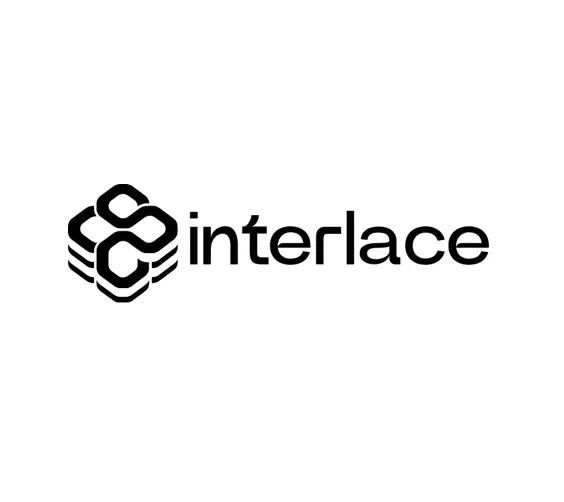
 The stablecoin infrastructure platform Interlace officially launched the "Global Partner Program for Physical Cards," opening up physical card authorization cooperation to global channels and business resource providers.
With the accelerated integration of Web3 and traditional finance, stablecoins are rapidly entering real financial scenarios such as cross-border settlement and fund management. According to Visa data, the supply of stablecoins is expected to grow by over 50% by 2025, reaching approximately $274 billion, with annual stablecoin transaction volume exceeding $10 trillion. As an important vehicle connecting digital assets with real payment needs such as offline consumption and mobile payments, physical cards are becoming a key direction for wallets, Web3 trading platforms, Neobanks, and fintech companies to expand payment scenarios. However, from card issuance infrastructure, compliance and risk control to card production and wallet integration, there are still high barriers for companies to independently build physical card businesses. According to analysis from the industry consulting firm FinConduit, if companies adopt the Principal Membership model to build their own card business, it typically requires a construction period of 12 to 24 months and involves hundreds of thousands of dollars in upfront capital investment.
In this context, the stablecoin infrastructure platform Interlace has officially launched the "Global Partner Program for Physical Cards," opening up physical card authorization cooperation to global channels and business resource parties. Partners participate as independent business partners, leveraging their own customer resources and industry networks to expand physical card business, and receive corresponding commercial returns based on specific project contributions. Interlace will provide mature card issuance infrastructure, physical card products, and white-label solutions. Through this cooperation model, Interlace hopes to work with more partners to jointly expand the physical card business and further promote the extension of digital asset payments to more real-world scenarios.
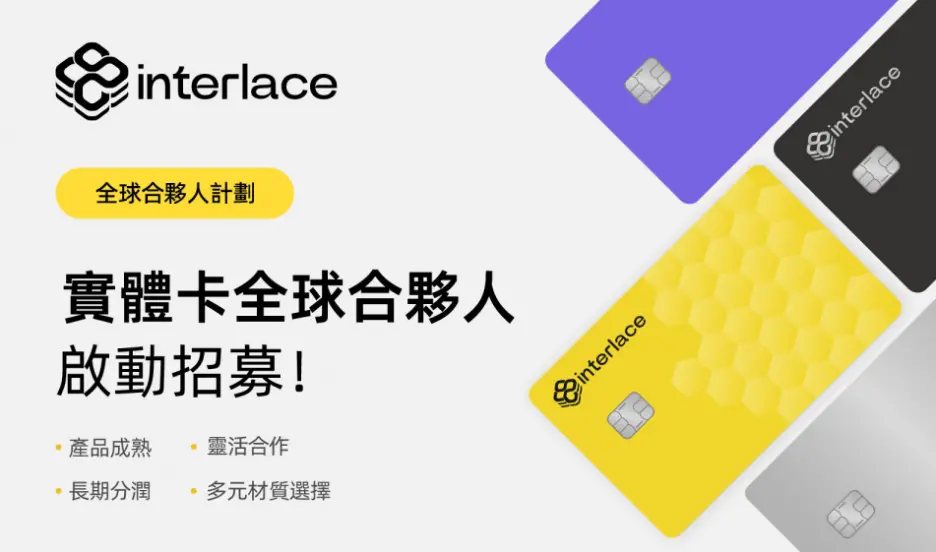
From Infrastructure to Channel Distribution, Lowering the Barriers to Starting Physical Card Business
For most companies, building a physical card business from scratch is not an easy task, typically involving multiple aspects such as card issuance infrastructure, physical card production and customization, payment and wallet integration, user-end and management backend, as well as compliance and risk control, all of which have high requirements for technical capabilities, resource investment, and operational capabilities.
The Global Partner Program for Physical Cards launched by Interlace aims to open mature card issuance and payment infrastructure to global partners. Currently, Interlace has issued over 8 million cards, supporting over 40 fiat currencies and more than 180 countries and regions, serving over 250 API integration clients. The platform's core capabilities include global accounts, stablecoin withdrawals and deposits, enterprise-level wallets and fund management, card issuance and card payment infrastructure, as well as global payment and acquiring scenarios.
In terms of physical card products, Interlace supports bulk physical card issuance, card inventory management, Apple Pay, Google Wallet, online and offline payments, wallet binding, and ATM cash withdrawal, while also offering various card solutions such as blank cards, semi-customized cards, and fully customized cards to meet partners' different needs from market testing to brand operation.

In addition, to help partners create differentiated card product advantages, Interlace also offers a variety of material and form options such as metal cards, ceramic cards, LED cards, and ring cards to meet different business scenario needs.

Flexible Cooperation Models and Diverse Revenue Models, Expanding Long-term Income Growth Space
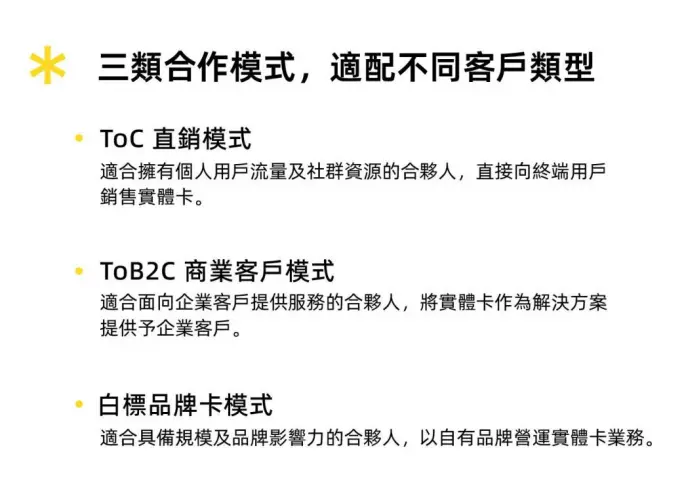
For different channels and business needs, the Interlace Global Partner Program for Physical Cards offers three main cooperation models: ToC direct sales, ToB2C commercial clients, and white-label brand cards, covering various partners such as Web3 communities, KOLs, OTC service providers, cross-border service agencies, wallets and exchanges, fintech platforms, and enterprise service providers.
Among them, the ToC direct sales model is suitable for partners with personal users, communities, or private domain traffic, allowing partners to directly expand and sell physical card products to individual users, quickly launching business by leveraging their existing customer resources and market channels; the ToB2C commercial client model provides physical card solutions to enterprises, platforms, or institutions, which then distribute to downstream users, suitable for institutional clients such as wallets, exchanges, cross-border e-commerce, and employee benefits platforms.
For partners with established brands and long-term card business plans, Interlace also offers a white-label brand card model, allowing partners to operate physical card businesses under their own brand and provide corresponding user-end web applications and management backends, further lowering the barriers from product construction to business operation.
In terms of business models, Interlace provides partners with diverse sources of revenue, including card resale profits, card activation fees, membership or management service fees, as well as enterprise project service fees and white-label system fees. Through flexible cooperation models and diverse revenue sources, partners can explore suitable physical card business models based on their own customer resources, channel capabilities, and business positioning, expanding long-term, sustainable business space.
Mature Compliance and Security Capabilities, Supporting Worry-free Business Expansion
For physical cards and global payment businesses, compliance and risk management are the foundation for long-term business development. Interlace has established a compliance and security system covering card issuance, payment, and customer management, and possesses relevant qualifications such as Hong Kong MSO and TCSP, US MSB, and Canadian MSB, while also being PCI DSS Level 1 certified, providing infrastructure and compliance capability support for global business.
During the cooperation process, Interlace will also help partners conduct physical card business more Specification ly through mature business and compliance reviews, and provide ongoing technical, product, and operational support. Partners only need to focus on customer expansion and market operations in which they excel, while the backend infrastructure and related capabilities will be supported by Interlace.
Currently, the Interlace Global Partner Program for Physical Cards has officially started recruitment. Partners interested in expanding physical card business can submit relevant business materials through Interlace's official channels to further advance product, card, and system configuration and officially start business.
By opening mature physical card infrastructure and flexible cooperation models, Interlace hopes to work with global partners to jointly expand the application of physical cards in cross-border payments, commercial settlements, enterprise services, and more real-world scenarios, further improving the payment infrastructure connecting digital assets to the real economy.
 Risk warning