Tron Industry Weekly Report: Interest rate hike expectations may lead BTC to test $76,000, detailed explanation of AI-driven DeFi risk management infrastructure Gauntlet

 A detailed explanation of the total financing of 174.63 million USD, led by SBI Holdings, RIBBIT, Polychain, and Paradigm, to create AI-driven DeFi risk management and parameter optimization infrastructure Gauntlet.
# I. Outlook
1. Macroeconomic Summary and Future Predictions
This week's macro summary (September 7, 2026 - September 13, 2026): The core of global macro trading has shifted this week from "Is growth slowing?" to the risks of re-inflation under energy shocks and the global monetary policy tightening. In the United States, the August PPI rose 0.4% month-on-month and reached 5.4% year-on-year, with final demand goods prices surging 1.1% month-on-month, indicating that energy and upstream costs are significantly being transmitted to the production side; the August CPI released on September 11 was largely in line with market expectations, but combined with the strong employment data of 162,000 new non-farm jobs and an unemployment rate holding at 4.1% in August, the market is no longer discussing short-term rate cuts, but has significantly raised expectations for the Fed to raise rates again in September, with pricing for next week's rate hike exceeding 80% by Friday. The tightening signals from Europe are even clearer: on September 10, the European Central Bank directly raised rates by 25 basis points, increasing the deposit rate to 2.50%, mainly due to the Middle East conflict driving up energy costs and worsening inflation pressures. Meanwhile, Brent crude oil has risen above $100 per barrel this week, with energy shocks pushing global long-term government bond yields significantly higher, and the yield on the 10-year U.S. Treasury bond briefly reaching its highest level since 2023; the U.S. dollar index did not strengthen significantly despite rising rate hike expectations, remaining around 99 before and after September 10, reflecting the market's simultaneous trading of U.S. fiscal, debt, and global synchronized tightening risks. Overall, the biggest macro change from September 7 to 13 is not a sudden weakening of the economy, but rather the logic of "rising oil prices → inflation resurging → central banks tightening again → global bond yields rising" beginning to become the main theme in the market.
Future predictions for the week ahead (September 14, 2026 - September 20, 2026): Next week will be the most critical global central bank week in September, with market volatility primarily focused on the FOMC meeting on September 15-16. The Fed will announce its interest rate decision, economic forecasts, and the latest dot plot in the early hours of September 17 Beijing time; as of this weekend, market expectations for a 25 basis point rate hike have reached about 85%, so what truly determines the direction of the U.S. dollar, U.S. Treasuries, and global risk assets is not "whether to raise rates" itself, but whether the Fed hints that energy shocks have caused a persistent change in the inflation path and whether further rate hikes are needed within the year. Additionally, next week the U.S. will also release data on August retail sales, import and export prices, and industrial output, the Bank of England will announce its interest rate decision on September 17, the Bank of Japan will hold a monetary policy meeting on September 17-18, and Europe will release the final value of the August HICP, so global monetary policy may further present a synchronized hawkish pattern. From an asset logic perspective, if the Fed raises rates by 25 basis points and signals continued tightening, short-term U.S. rates and the dollar will gain support, while liquidity pressure on high-valuation stocks, gold, and crypto assets will further increase; however, what needs to be more vigilant now is the combination of "rising inflation + impaired growth" formed by oil prices consistently maintaining above $100—if energy prices continue to rise, even if subsequent U.S. economic data begins to weaken, the Fed will find it difficult to quickly shift to easing. Therefore, the core judgment of the macro market from September 14 to 20 can be summarized as: shifting from "Will the Fed raise rates?" to "Is this round of rate hikes a one-time adjustment or the beginning of a new global tightening cycle?"
2. Market Movements and Warnings in the Crypto Industry
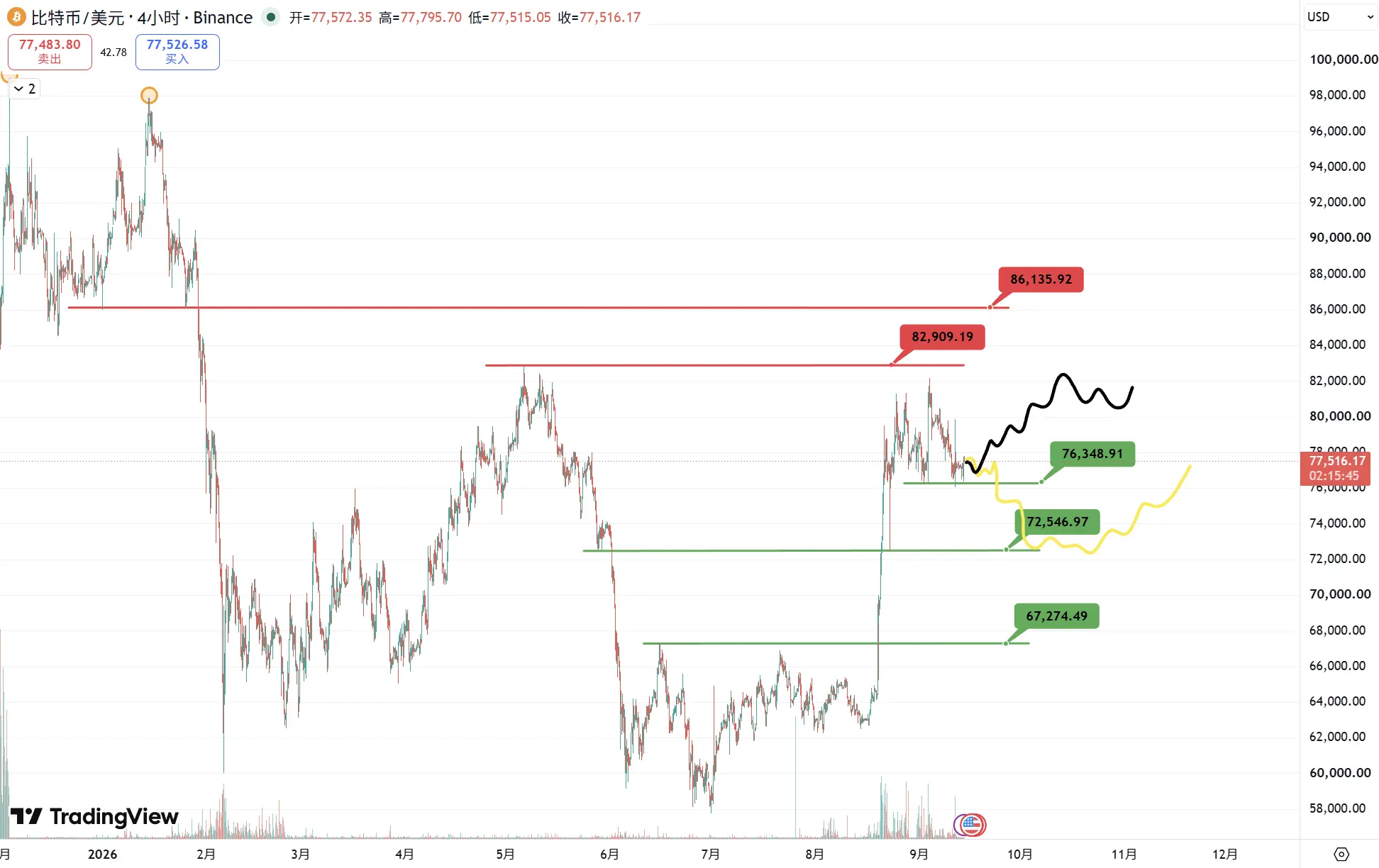
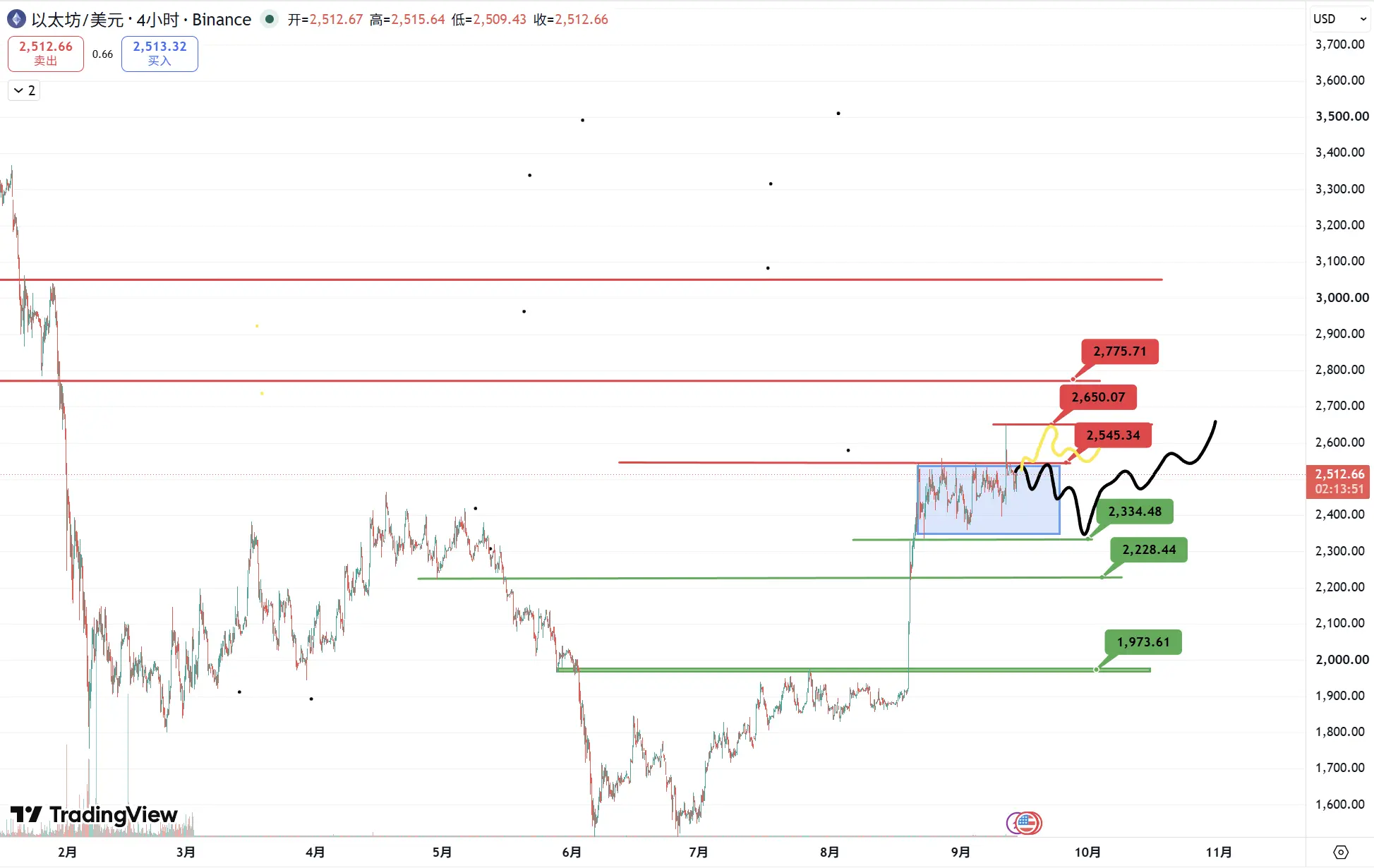
This week's market review (September 7, 2026 - September 13, 2026): The crypto market overall showed a pattern of falling first and then rebounding, but risk appetite remains weak. BTC opened at about $80,344 on September 7 and continued to face pressure, falling to a low of about $76,554 on September 10. Although it rebounded to around $79,696 on September 11, it remained primarily in the range of $77,000 to $79,000 by September 13, failing to regain the $80,000 level; ETH fell from about $2,512 during the same period, hitting a low of about $2,418 on September 10, quickly rebounding to a high of about $2,653 on September 11, and then returning to around $2,500, showing relatively more resilience compared to BTC. There was a clear divergence in capital flows: from September 8 to 11, the U.S. spot BTC ETF saw a cumulative net outflow of about $463 million, ending three consecutive weeks of net inflows, while the ETH ETF continued to see net inflows during the same period, indicating that some institutional funds are rotating from BTC to ETH. On the macro level, oil prices and U.S. Treasury yields rose significantly this week, with market expectations for a Fed rate hike on September 16 heating up significantly, suppressing valuations of high-risk assets, which is also a key reason for BTC's continued pressure.
Future predictions for the week ahead (September 14, 2026 - September 20, 2026): The absolute core of the crypto market next week will be the Fed's interest rate decision on September 16 and its subsequent policy guidance, with expected market volatility significantly increasing; if the Fed raises rates as the market expects and continues to release hawkish signals, U.S. Treasury yields will rise further, and BTC will first need to focus on the support zone of $76,000 to $77,000. If it effectively breaks below this level, it may further test the $74,000 to $75,000 range in the short term; on the upside, it needs to break through and stabilize above $80,000 to challenge the previous high of about $82,000. For ETH, key support is at $2,400 to $2,450 and resistance at $2,600 to $2,650. Given that recent ETF fund performance has significantly outperformed BTC, if risk appetite does not deteriorate further, ETH may continue to maintain relative strength; however, if the Fed's policy is significantly more hawkish than expected, a drop below $2,400 would warrant caution towards a pullback to $2,300 to $2,350. Besides the Fed, the progress of the CLARITY Act in the U.S. Senate is also an important policy variable for the crypto market next week. Therefore, the short-term judgment remains focused on high volatility and defensive priorities; only if BTC stabilizes above $80,000 again and ETF funds return to sustained net inflows can the market have the conditions to restore a clear upward trend.
3. Industry and Sector Hotspots
This week's most notable financing theme is "Financialization of Payments." Huma Finance's $38 million and Latitude's $35 million Series A are not purely focused on on-chain payments but are addressing liquidity issues after stablecoins enter the real financial system, as well as local fiat C2C and cross-border settlement problems. Notably, Latitude has received participation from institutions like Coinbase and plans to continue obtaining regulatory licenses in markets such as Southeast Asia, Latin America, and Africa, indicating that VC interest in stablecoins is shifting from "issuing stablecoins" to Stablecoin Payment Rails, PayFi, cross-border payments, and compliance infrastructure.
The second main theme is the renewed interest in AI + Crypto and infrastructure, but funding is becoming more selective. PIN AI secured $10 million in the Pre-seed stage and attracted a16z and Hack VC; meanwhile, projects like INFINIT and Antarctic are financing around DeFi abstraction layers and on-chain derivatives infrastructure. Overall, this week capital has not returned to chasing purely narrative projects on a large scale but is clearly leaning towards projects with real payment scenarios, AI Agents/personal AI, DeFi efficiency improvements, and scalable infrastructure.
# II. Market Hotspot Sectors and Potential Projects of the Week
1. Overview of Potential Projects
1.1. Detailed explanation of total financing of $174.63 million, led by SBI Holdings, RIBBIT, Polychain, and Paradigm, with participation from Standard, Final Round, Dragonfly, and Coinbase—creating AI-driven DeFi risk management and parameter optimization infrastructure Gauntlet
Introduction
Gauntlet is a leading risk modeling and strategy optimization platform in the crypto industry, focusing on providing data-driven optimization solutions for tokens, DeFi protocols, and public chains. With years of accumulated models and rich practical experience, Gauntlet has become an important risk management service provider in the DeFi space, continuously monitoring and optimizing risks for various customized vault strategies.
Gauntlet helps investors, development teams, and project parties allocate on-chain funds more scientifically through professional research in crypto-economics and data analysis. After eight years of development, its models have safeguarded the security of hundreds of billions of dollars in digital assets, effectively reducing operational risks while improving capital utilization efficiency.
Gauntlet's core advantages lie in its financial modeling, risk management, and economic research capabilities. The team excels at constructing complex risk models and continuously optimizing protocol parameters, enabling partners to achieve better operational outcomes while controlling risks. Additionally, Gauntlet conducts stress tests, extreme scenario simulations, and economic security assessments to help protocols identify potential risks in advance, enhancing the overall stability and security of the system.
Brief Description of the Protocol Mechanism
Gauntlet USD Alpha Vault
Gauntlet USD Alpha (gtUSDa) is a yield vault focused on maximizing risk-adjusted yield for stablecoins. This strategy relies on Gauntlet's market-validated optimization engine to dynamically allocate funds across lending protocols on multiple blockchains, pursuing higher profits while controlling risks, catering to the fund management needs of various users, including crypto-native institutions and traditional financial institutions.
This vault is built on the Aera Protocol. Aera is a decentralized asset management protocol that allows users to manage on-chain digital assets in a non-custodial manner. Users can view the complete operational data of the vault through the Gauntlet App, including historical yield rates, fund allocation across markets, and key indicators such as collateral asset risk exposure.
Unlike some yield vaults in the market that rely on airdrop points or high incentive subsidies to attract funds, Gauntlet USD Alpha places greater emphasis on long-term sustainable yields. Gauntlet believes that what truly holds value is the ability to continuously generate real yields rather than short-term incentives. In the future, as strategies continue to optimize, Gauntlet USD Alpha will combine floating and fixed-rate yield opportunities for dynamic allocation across different blockchains, continuously enhancing the long-term yield performance of stablecoin funds.
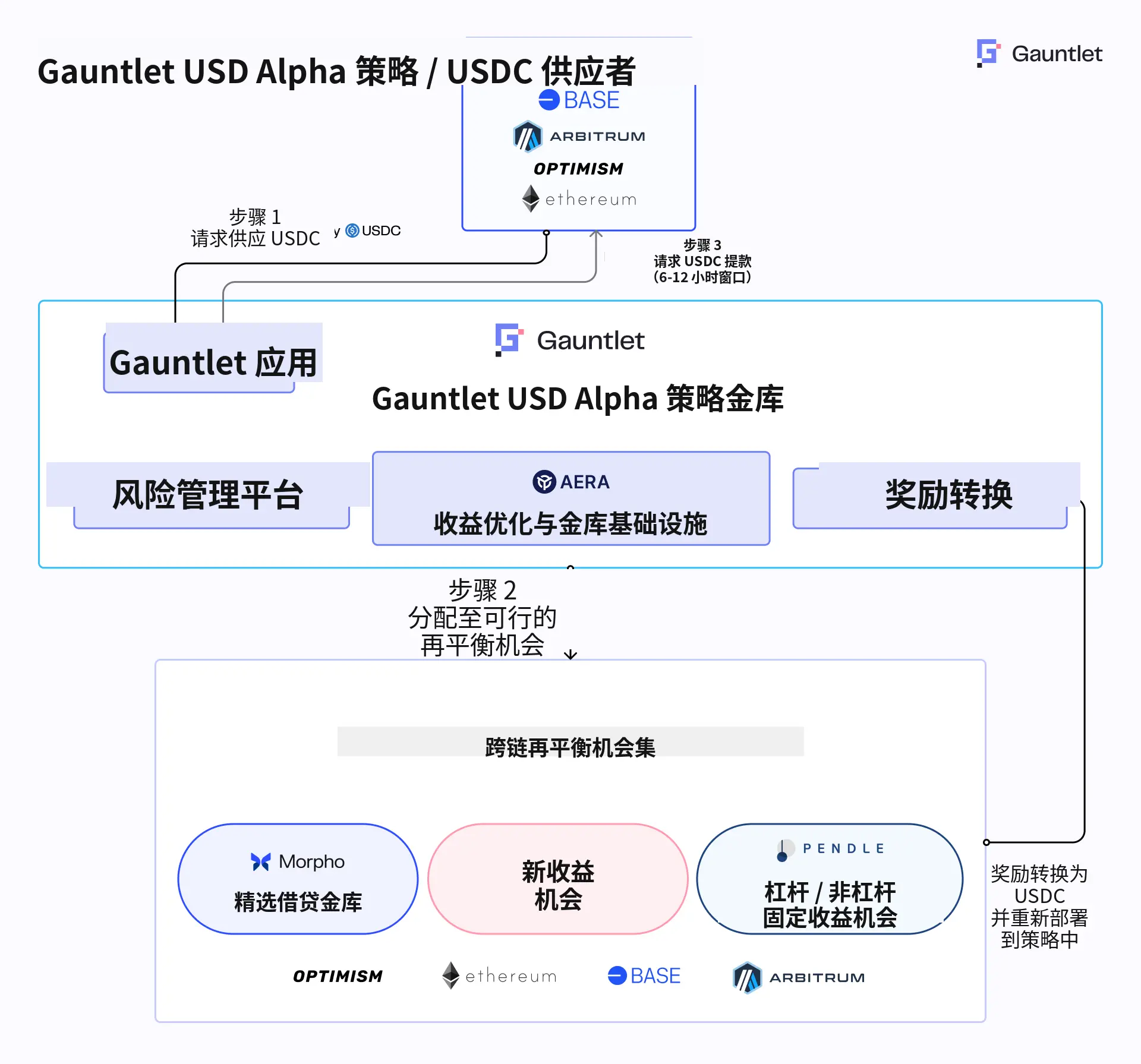
- Gauntlet USD Alpha Mechanism
Supply
Users can deposit USDC into the Gauntlet USD Alpha Vault through the Gauntlet App on four networks: Base, Arbitrum, Optimism, and Ethereum Mainnet. After depositing, the funds will enter the vault, where the strategy will automatically perform cross-chain yield allocation.
Receive gtUSDa
After completing the deposit, users will receive gtUSDa. gtUSDa is an ERC-20 token that represents the user's share of assets in the vault, including the principal and subsequent earnings. Typically, deposit information will be synchronized on-chain and confirmed within 6 to 12 hours.
Yield Optimization
Gauntlet utilizes its self-developed automated optimization engine combined with a risk management platform to dynamically seek the best yield opportunities across multiple blockchains and automatically adjust fund allocations. Currently, the strategy is mainly allocated to Morpho Vaults on Base, Ethereum, Arbitrum, and Optimism.
During the fund allocation process, the system not only compares the real-time yield rates of various markets but also comprehensively evaluates the fund scale (TVL), the impact of single fund allocations on market yields, and potential risks, continuously pursuing more stable and sustainable real yields while ensuring that risks are controllable.
Incentives
In addition to the base yield, the Morpho incentive rewards obtained by the vault will be regularly converted into USDC and reinvested into the strategy for yield reinvestment. Meanwhile, Gauntlet USDC Rewards will be continuously distributed to users through Sablier, further enhancing the overall yield level.
Withdrawal
Users can initiate USDC withdrawal requests at any time using their held gtUSDa. The system will automatically complete the redemption process, and typically, the withdrawal transaction will be completed within 6 to 12 hours, with funds returned to the user's wallet.
- Strategy Benefits
Gauntlet USD Alpha is developed by the Gauntlet team, aiming to continuously obtain high-quality yields on stablecoins through automated cross-chain asset allocation and dynamic rebalancing mechanisms while achieving long-term stable returns under controlled risk.
Pursuing higher risk-adjusted yields: The strategy dynamically seeks stablecoin yield opportunities across multiple blockchains, with risk-adjusted yield as the core goal, rather than simply pursuing the highest annualized yield.
Automated fund rebalancing: The system automatically completes fund adjustments and reinvests the rewards and incentives into the strategy without requiring manual operation from users, effectively reducing gas costs and additional expenses caused by frequent adjustments.
Continuous management by a professional team: The vault is operated and optimized by the Gauntlet team. As a leading quantitative risk management institution in the crypto industry, Gauntlet currently manages over $2 billion in vault assets and has provided risk management services for DeFi protocols with a total locked value (TVL) exceeding $45 billion, possessing rich practical experience.
Built on Aera Protocol: The strategy operates on the Aera decentralized asset management infrastructure. This protocol, incubated by Gauntlet, helps strategies quickly access new DeFi protocols and EVM public chains and timely allocate new yield opportunities, improving fund allocation efficiency.
Institutional-level security and compliance assurance: The overall architecture is designed according to institutional-level standards, providing higher guarantees in asset security, risk control, and compliance management, making it more suitable for institutional investors and large fund allocation needs.
Transparent data monitoring: Users can view the vault's yield performance, asset allocation, risk indicators, and other key data in real-time through the Gauntlet App, gaining a comprehensive understanding of the strategy's operation and fund status.
- Optimization & Risk Management Considerations
The goal of Gauntlet USD Alpha is not merely to pursue the highest income but to achieve the best balance between yield, risk, and capital efficiency. The strategy continuously adjusts fund allocations through an automated optimization model while combining a strict risk management framework to maintain stable and sustainable yield performance in different market environments.
Performance Optimization
Gauntlet's yield optimization not only focuses on the yield itself but also comprehensively evaluates multiple factors that affect the long-term performance of the strategy:
TVL impact (fund scale): Assessing the impact of fund allocation scale on the underlying protocol's yield, avoiding yield decline due to excessive concentration of funds.
Market environment changes: Dynamically adjusting asset allocation based on market trends and expected changes to timely seize new yield opportunities.
Liquidity constraints: Reasonably controlling position sizes based on real-time liquidity from DEX and various yield vaults to avoid slippage and execution costs from large trades.
Sustainable yield: Using a 30-day rolling yield as the core reference indicator, filtering out short-term high-income fluctuations, and focusing more on real yields that can be sustained over the long term.
Gauntlet hopes that each allocation strategy not only has competitive yields but also meets strict risk standards and maintains stable operation during significant market fluctuations.
Main Risks and Mitigation Measures
- Liquidity Risk
When a large amount of capital enters or exits the strategy, it may lead to changes in yield rates, increased trading slippage, and even affect cross-chain bridging efficiency. To mitigate these risks, Gauntlet will limit position sizes based on real-time liquidity from DEX and various vaults and continuously optimize fund allocation, reducing tail risks while pursuing yields.
- Stablecoin Risk
Some emerging stablecoins carry depeg risks. To address this, Gauntlet sets strict proportional limits on high-risk stablecoins in the portfolio and uses mainstream stablecoins such as USDC, USDT, and DAI as core assets to ensure that the overall portfolio maintains high stability and liquidity.
- Smart Contract Risk
Underlying protocols (such as Morpho) and their Vault Adapters may face systemic risks such as smart contract vulnerabilities and oracle anomalies. Gauntlet only selects protocols that meet its risk standards for fund allocation and continuously updates risk assessment models to monitor all positions in real-time, promptly identifying potential security risks.
Risk Constraints Framework
To avoid excessive concentration of assets or taking on excessive risks, Gauntlet has established a systematic set of risk control rules for the strategy and continuously optimizes them based on market conditions:
Position size limits: The funding allocation cap for each vault will be dynamically adjusted based on the real-time liquidity of the corresponding vault and DEX, avoiding impacts on strategy execution efficiency due to oversized positions.
Stablecoin risk exposure limits: The total proportion of non-mainstream stablecoin-related assets in the portfolio must not exceed 40%. Among them, USDC, USDT, and DAI are defined as core (Blue-chip) stablecoins, serving as the main allocation objects for the portfolio.
Collateral asset risk control: The allocation scale of collateral assets in all vaults is limited by the corresponding DEX liquidity, ensuring sufficient exit capability during market fluctuations.
Trading and rebalancing limits: The strategy will control the speed and scale of asset rebalancing based on the liquidity of the spot DEX, reducing the impact of large adjustments on market prices and further decreasing trading costs and slippage.
Overall, Gauntlet USD Alpha does not rely on short-term high income or high incentives to obtain returns but instead relies on automated yield optimization, quantitative risk management, and strict position constraints to continuously seek stablecoin investment opportunities that balance yield and safety in the cross-chain DeFi market.
Morpho Vaults
In addition to the official Vaults, Gauntlet Partner Vaults can also be jointly deployed with various DeFi protocols, helping partners integrate Gauntlet Vaults into their product systems. Depending on different yield goals and risk preferences, partners can choose to deploy one of the following three strategy types:
Prime: Focused on safety and stable yields, suitable for users and institutional funds with lower risk tolerance.
Balanced: Maintaining a balance between yield and risk, considering both stable returns and capital utilization efficiency.
Frontier: Focusing on emerging markets and high-yield opportunities, pursuing higher returns while taking on greater risks.
Through unified strategy screening, risk management, and automated optimization capabilities, Gauntlet provides customizable and scalable on-chain asset management solutions for different types of DeFi protocols and institutional investors.
Morpho Protocol
Morpho is a leading lending primitive in the current DeFi space, consisting of two parts: the underlying Morpho provides a trustless lending market, while the upper Morpho Vaults offer non-custodial risk management and yield optimization capabilities, allowing funds to be automatically allocated to the optimal lending market.
In the Morpho ecosystem, borrowers can borrow funds from Morpho Markets by collateralizing assets, while suppliers deposit loan assets into Morpho Vaults. As the Vault Curator, Gauntlet dynamically allocates funds to multiple Morpho Markets based on the investment strategies of different vaults, continuously optimizing risk-adjusted yields while strictly controlling risks.
Another core feature of Morpho is that all Morpho Markets are immutable once created. This immutable design ensures that market parameters cannot be arbitrarily changed later, providing a more stable, transparent, and reliable underlying infrastructure for lending protocols.
Morpho Vault Structure
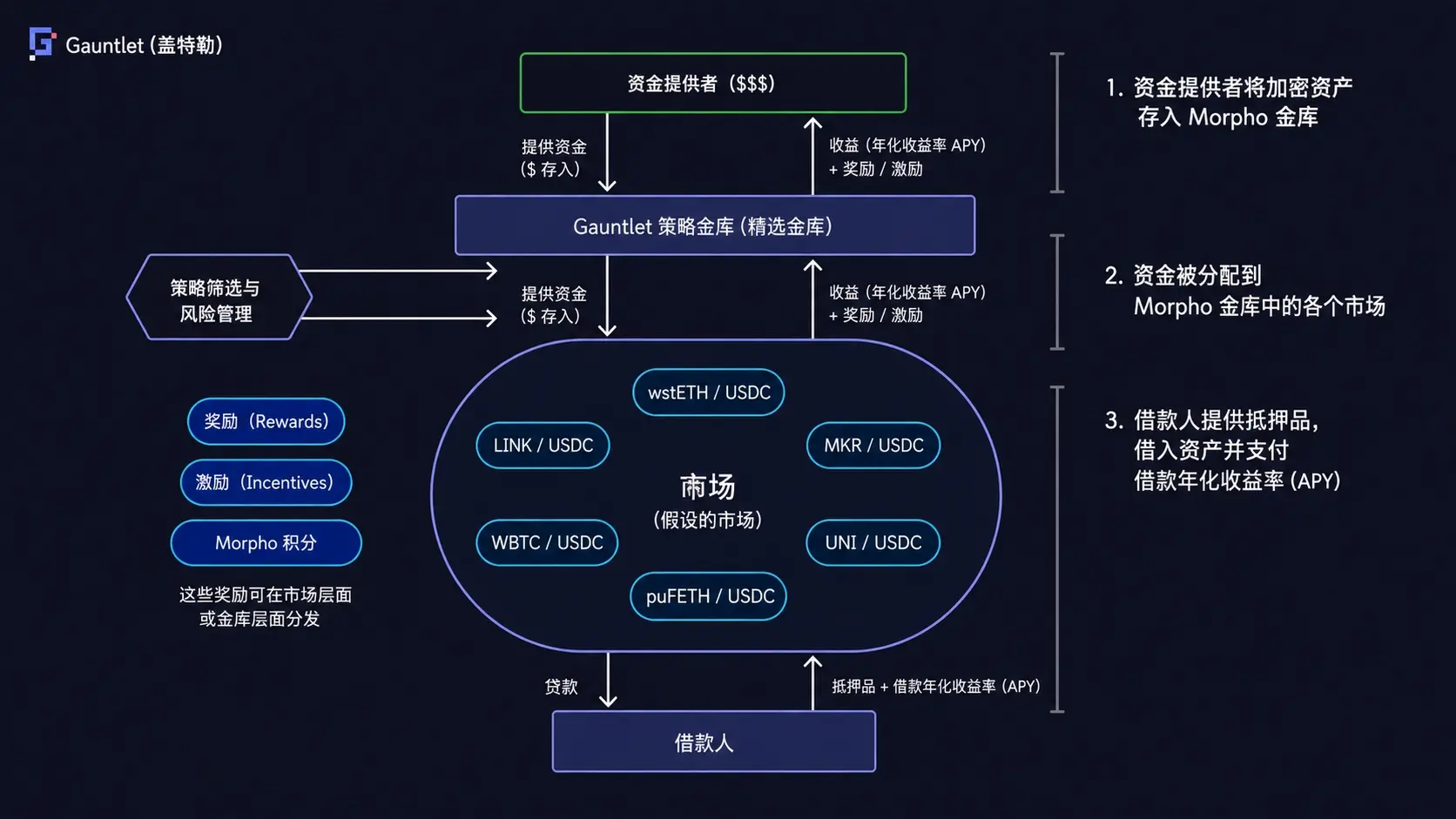
Supply Asset
Supply Asset is the foundational asset of the Morpho Vault and the source of funds for the entire yield strategy. Users only need to deposit the specified assets into the Gauntlet-managed Vault to participate in the corresponding investment strategy and obtain risk-adjusted yields optimized by Gauntlet.
Vault APY
Vault APY (Annual Percentage Yield) is the core yield indicator of Morpho Vault, representing the expected yield that fund providers will earn within a year after depositing assets into the Vault.
The APY of the Vault is not fixed; it is determined by the underlying lending market yields and market incentives. Additionally, the yield will change in real-time based on factors such as market utilization and supply allocation, so the APY will continuously adjust dynamically according to market conditions.
Allocated Markets
The Vault itself does not directly generate yields but automatically allocates the funds deposited by users to multiple Morpho Markets to earn returns. Therefore, the overall yield performance of the Vault depends on the combination of lending markets it is allocated to.
As the Vault Curator, Gauntlet continuously monitors the yield rates, risk levels, and liquidity of different markets and dynamically adjusts the fund allocation to strive for higher and more stable returns for users while controlling risk.
Suppliers
Suppliers are the main users of Morpho Vault. Users only need to deposit specified assets into the Vault, which will automatically allocate them to multiple lending markets according to preset strategies, earning corresponding risk-adjusted returns.
The Morpho Vault launched by Gauntlet fully automates this process, with experienced Vault Curators responsible for strategy formulation and fund reallocation, while users maintain non-custodial asset control without needing to manage manually to enjoy professional-grade asset allocation services.
Kamino Vaults Overview
Kamino Lending Vaults are automated lending yield vaults built on Kamino Lend. The funds deposited by users are automatically allocated among multiple Kamino Lend Markets, with professional strategy managers (Curators) like Gauntlet responsible for continuous reallocation and risk management. Gauntlet continuously optimizes lending yields for fund providers based on a mature strategy curation framework while controlling risk.
Supplier
Users looking for stable returns can deposit assets into the Kamino Vault managed by Gauntlet. These funds will then be automatically allocated to multiple Kamino Lend lending markets according to the strategy, providing liquidity to borrowers.
Borrowers need to deposit collateral assets first, then borrow corresponding funds and pay the borrowing interest rate (Borrow APY). Fund providers earn continuous returns based on these lending interests and strategy optimizations without needing to manage each lending market themselves.
Curator / Risk Manager
As the Vault Curator, Gauntlet is responsible for formulating yield strategies and continuously managing the risks of each Vault. The team not only decides which lending markets to allocate funds to but also continuously evaluates whether new markets meet risk standards, ensuring that strategies can balance yield and safety.
Gauntlet's main responsibilities include:
Dynamic fund allocation: Allocating user funds to different Kamino Lend Markets based on market yields and risk conditions.
Managing supply caps: Setting funding allocation limits for each lending market to avoid excessive concentration of funds while optimizing overall yields and controlling risk.
Setting Vault management fees: Charging a portion of interest income as management fees for the Vault, used for strategy operations and continuous optimization.
Real-time risk management: Continuously monitoring the operational status of each lending market, with the ability to withdraw funds and reallocate promptly when market risks rise. Additionally, conducting ongoing due diligence on all allocated markets to ensure they consistently meet Gauntlet's risk management standards.
Non-custodial Asset Management
Kamino Vault adopts a non-custodial design. Although Gauntlet is responsible for strategy formulation, fund allocation, and risk management, users always retain control over their assets. All deposits and withdrawals must be initiated by the users themselves, and no strategy manager can directly transfer or dispose of user assets, ensuring professional asset management while maintaining fund security and decentralization.
Levered RWA Strategy
Gauntlet Levered Real-World Asset (RWA) Strategy is a yield enhancement strategy that connects traditional finance (TradFi) with decentralized finance (DeFi). This strategy allows holders of real-world assets (RWA) to leverage the capital efficiency of DeFi to achieve higher income levels that are difficult to attain with traditional financial products while maintaining reasonable risk levels.
This strategy combines Gauntlet's self-developed yield optimization engine with permissionless DeFi infrastructure, continuously seeking better investment opportunities through intelligent fund allocation and leverage management. At the same time, Gauntlet utilizes mature risk management models to dynamically monitor leverage levels, fund allocation, and market risks, ensuring that the entire strategy operates within a controllable risk range while enhancing yield capabilities.
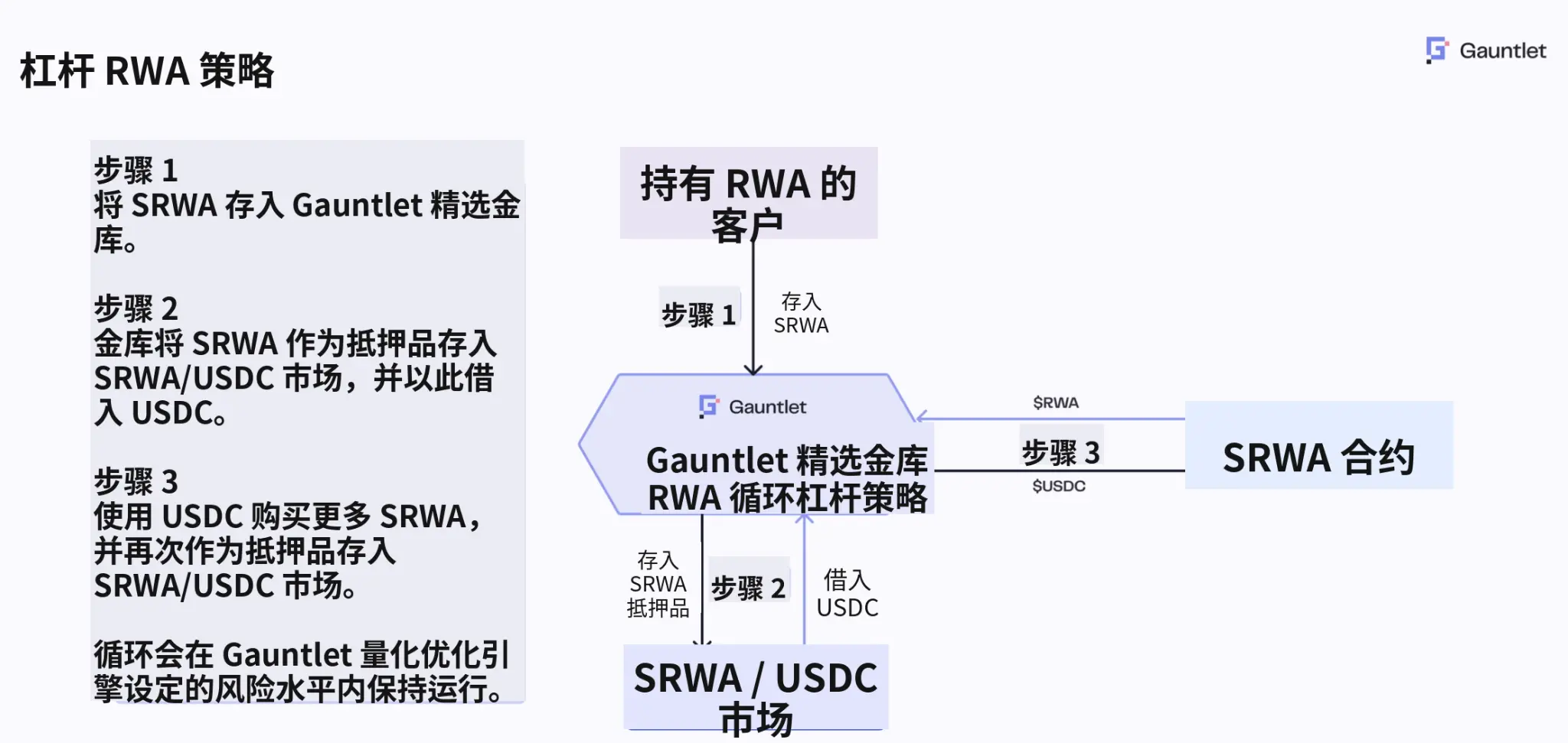
- Strategy Mechanics
Asset Supply
Users first deposit their RWA tokens into the yield vault managed by Gauntlet. The vault will automatically execute subsequent yield optimization strategies under Gauntlet's quantitative risk management framework, without requiring users to manually manage their assets.
Collateralization
The vault will deposit these RWA assets into mainstream lending protocols as collateral and borrow a certain amount of stablecoins against them. This process releases the liquidity of RWA, providing a source of funds for subsequent yield enhancement, while the overall borrowing ratio is strictly controlled by the risk model.
Strategic Leverage
The borrowed stablecoins are not left idle but are used to purchase more RWA assets. The newly purchased RWA will again be used as collateral in the lending protocol, forming a cycle of "collateral → borrowing → buying → re-collateralizing," achieving leveraged asset allocation that amplifies RWA holdings while enhancing overall yield potential.
Dynamic Optimization
The above cycle does not continue indefinitely but is controlled in real-time by Gauntlet's quantitative yield optimization engine. The system continuously monitors the borrowing rates, yields, and funding costs of various DeFi markets and dynamically decides whether to continue increasing leverage or maintain the current position based on market changes, keeping the strategy in an optimal balance of yield and risk.
Automated Risk Management
Gauntlet's risk management engine automatically adjusts leverage multiples, collateral ratios, and asset allocation ratios based on market conditions, promptly responding to interest rate fluctuations, market price changes, and liquidity risks, avoiding the need for users to manually manage positions. Through this automated mechanism, the strategy can pursue more substantial returns while controlling liquidation and market risks within preset limits, achieving more stable and sustainable yield performance.
- Yield Optimization Engine
As a leading risk modeling institution and Vault Curator in the DeFi space, Gauntlet's yield optimization engine provides several core advantages for strategies, helping users continuously improve yield performance while controlling risks.
Data-Driven Approach
Gauntlet adopts a data-driven approach to strategy development. Before formally deploying a strategy, extensive historical data is used for backtesting to validate the feasibility and robustness of the strategy, and model parameters are continuously optimized based on market feedback, allowing the strategy to adapt to the ever-changing market environment.
DeFi & TradFi Market Expertise
Gauntlet possesses expertise in both on-chain finance (DeFi) and traditional finance (TradFi), with a deep understanding of lending mechanisms, asset allocation, and market operation rules. This enables it to leverage the advantages of both types of markets to design more efficient yield enhancement strategies, providing better yield solutions for innovative assets like RWA.
Real-Time Monitoring
To continuously optimize strategy performance, Gauntlet's yield optimization engine conducts real-time monitoring of key market indicators around the clock and dynamically adjusts strategy parameters based on data changes, focusing on monitoring:
Supply APY and Borrow APY: Real-time tracking of deposit yields and borrowing rates to find optimal funding allocation opportunities.
Liquidation Loan-to-Value (LLTV): Monitoring the liquidation loan-to-value ratios of various lending markets to ensure that collateral ratios remain within safe ranges.
Leverage Ratio: Dynamically adjusting the strategy's leverage levels to maintain a balance between yield enhancement and risk control.
Overall Market Health: Continuously assessing market liquidity, fund utilization, and protocol operational status, optimizing positions and asset allocations promptly when market conditions change.
Through the combination of quantitative models, real-time monitoring, and automated reallocation, Gauntlet can continuously seek the best risk-adjusted yield opportunities and ensure that the entire strategy operates within the preset risk control framework.
- Strategy in Action
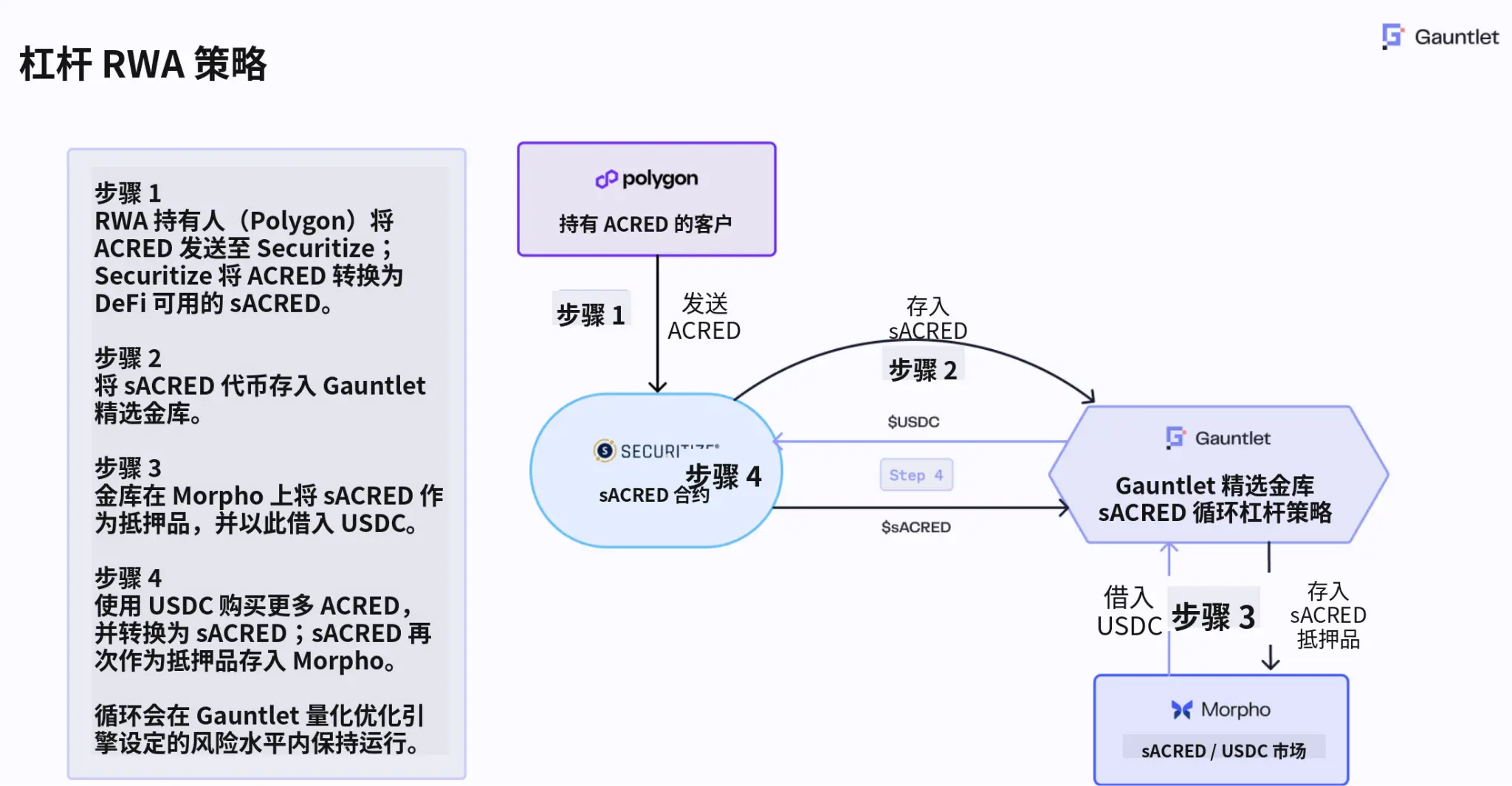
Levered sACRED Strategy (Polygon)
Gauntlet, in collaboration with Securitize, Morpho, and Polygon, has launched a leveraged RWA yield strategy based on Polygon PoS, with the underlying asset being sACRED—tokenized version of a Multi-Asset Credit Fund managed by Apollo.
This collaboration further bridges the connection between traditional finance (TradFi) and decentralized finance (DeFi), allowing on-chain RWA to not only represent real assets but also achieve yield enhancements that are difficult to realize through traditional financial products via DeFi. Eligible sACRED holders can leverage the Gauntlet yield optimization engine, Morpho lending protocol, and Polygon network to achieve higher risk-adjusted returns within a strict risk control framework.
Currently, the first version of this strategy operates on Compound Blue on Polygon PoS (with underlying lending infrastructure provided by Morpho).
Levered FalconX CV Strategy (Ethereum)
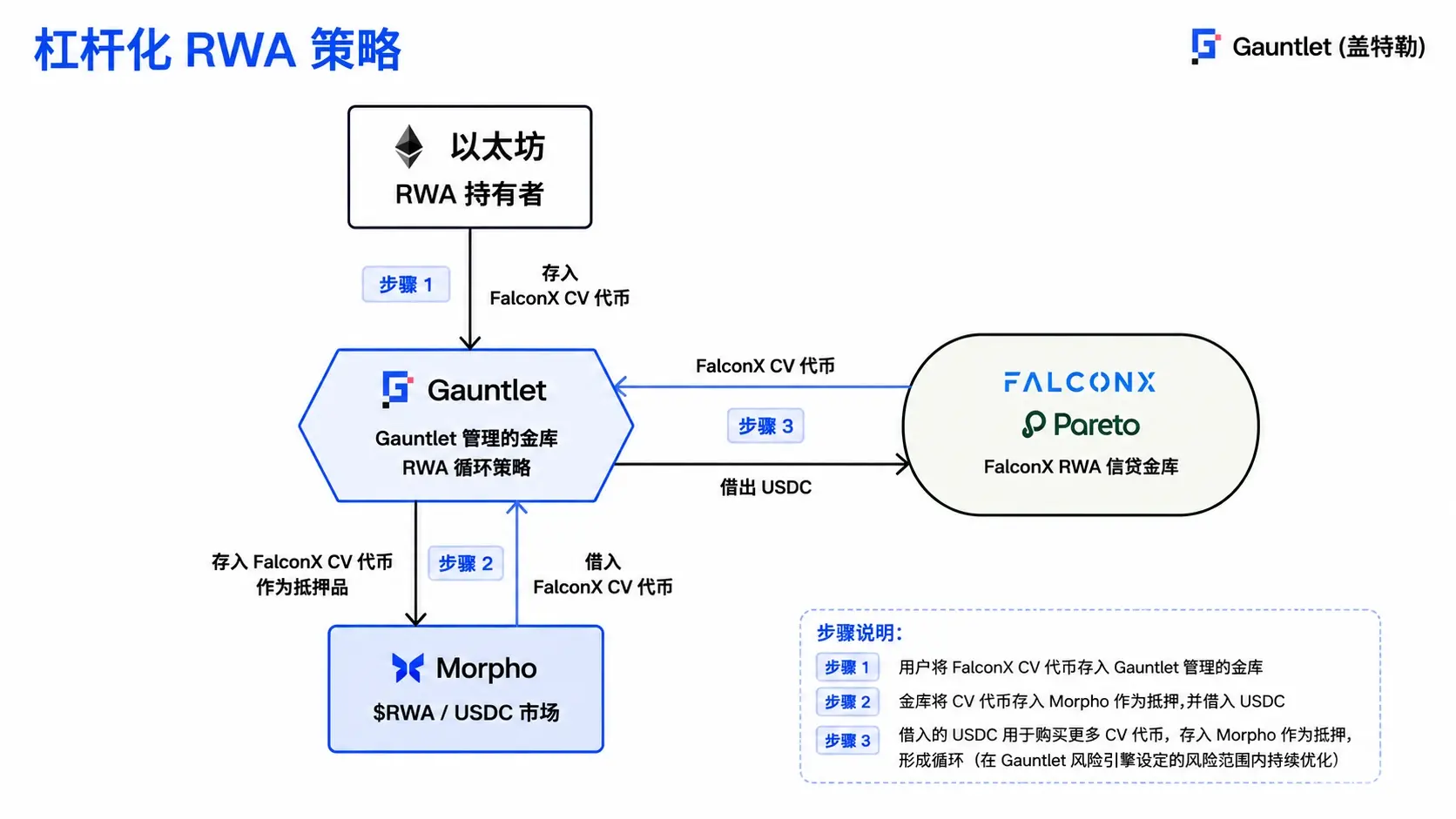
Gauntlet, in partnership with FalconX, Pareto, M11, and Morpho, has launched a leveraged RWA yield strategy based on FalconX CV Token on Ethereum.
This strategy uses FalconX CV Token as collateral, borrows USDC on Morpho, and then uses the borrowed USDC to purchase more CV Tokens, thereby amplifying the overall asset exposure. The entire leverage ratio and risk parameters are dynamically controlled by the Gauntlet yield optimization engine, ensuring that the strategy always operates within the preset risk range.
This solution further validates that RWA can serve as on-chain composable financial assets, helping institutional investors improve capital efficiency while ensuring risk control and achieving higher risk-adjusted returns.
Strategy Workflow
The operational workflow of the Levered FalconX CV Strategy is as follows:
Deposit Assets: Users first deposit FalconX CV Tokens into the yield vault managed by Gauntlet.
Collateralized Lending: The vault deposits CV Tokens into Morpho as collateral and borrows USDC.
Expand Holdings: The borrowed USDC is used to purchase more CV Tokens, which are then deposited back into Morpho as collateral.
Automated Cycle Optimization: The above process continues to operate within the risk range set by the Gauntlet yield optimization engine. The system monitors the supply APY, borrow APY, liquidation loan-to-value ratio (LLTV), leverage ratio, and overall market health in real-time, automatically adjusting strategy parameters based on market changes to enhance returns while continuously controlling risk.
Through this automated mechanism, Gauntlet deeply integrates traditional financial assets with the DeFi lending market, allowing RWA to not only possess on-chain liquidity but also serve as composable assets within institutional portfolios, achieving higher capital efficiency and long-term returns.
Tron Commentary
Gauntlet's advantage lies in its construction of AI-driven DeFi risk management and yield optimization infrastructure, relying on quantitative risk models, automated capital allocation, and real-time monitoring capabilities to provide professional vault curation services for lending protocols such as Morpho and Kamino, as well as RWA yield strategies. Through cross-chain yield optimization, dynamic rebalancing, stress testing, and economic security analysis, it continuously enhances capital efficiency while controlling risk, backed by years of risk management experience and billions of dollars in asset management practice.
The disadvantage is that the effectiveness of its strategies is highly dependent on the security, liquidity, and market environment of the underlying DeFi protocols. When borrowing rates, RWA asset prices, or protocol risks undergo significant changes, yield performance may be affected. Additionally, its yield optimization and leverage strategies involve relatively complex quantitative models and parameter configurations, which may pose a high understanding threshold for ordinary users, and the promotion of institutional-level strategies still relies on the continued development of cooperative protocol ecosystems and the RWA market.
II. Industry Data Analysis
1. Overall Market Performance
1.1. Spot BTC vs ETH Price Trends
BTC
ETH
III. Macroeconomic Data Review and Key Data Release Points for Next Week
I. This Week's Macroeconomic Data Review | 2026/09/07---09/13
September 10: U.S. August PPI—upstream inflation pressure has significantly re-emerged. The final demand PPI for August increased by 0.4% month-on-month, accelerating from July's 0.1%; year-on-year, it further reached 5.4%. Structurally, it is noteworthy that commodity prices surged by 1.1% month-on-month, with energy prices rising by 4.2%, and diesel prices increasing by 24.1% in a single month; excluding food, energy, and trade services, the PPI still rose by 0.3% month-on-month and 4.7% year-on-year. This indicates that the current inflation pressure is not just a terminal consumer price issue; energy costs are being transmitted back to the production side, posing potential resistance to a decline in core inflation in the coming months.
September 11: U.S. August CPI—overall inflation remains high, and core month-on-month growth has accelerated again. The August CPI increased by 0.4% month-on-month and 3.4% year-on-year, unchanged from July; core CPI rose by 0.3% month-on-month and 2.4% year-on-year, with the core month-on-month rate rising from July's 0.2% back to 0.3%. This month's CPI increase was largely driven by energy: energy prices rose by 2.1% month-on-month, gasoline increased by 3.9%, contributing to more than one-third of the overall CPI monthly increase; housing prices accelerated from 0.1% to 0.3% month-on-month. Therefore, the data presents a combination of "core year-on-year slowly declining, but short-term price momentum re-accelerating," indicating that inflation has not formed a sufficiently clear trend of sustained cooling.
This week's core conclusion: Inflation has re-emerged as the most important macroeconomic contradiction in the market. PPI increased by 0.4% month-on-month and 5.4% year-on-year, followed by CPI increasing by 0.4% month-on-month and 3.4% year-on-year, especially with energy prices rising again, significantly enhancing market expectations for the Federal Reserve to maintain a tightening stance. After the CPI announcement, the market pricing for a 25bp rate hike at the September FOMC rose to about 90%, making this week's data combination overall hawkish: the risk of maintaining high short-term rates or further increases poses greater macro volatility pressure on high-valuation tech stocks, gold, and crypto assets.
II. Key Data Release Points for Next Week | 2026/09/14---09/20
The most critical point next week is September 16. The Federal Reserve will hold the FOMC meeting on September 15-16, which is a quarterly meeting with SEP economic forecasts and the dot plot. Given that this week's PPI and CPI both indicate a re-emergence of short-term inflation pressure, the market's focus is not just on "whether to adjust interest rates," but more importantly, how the dot plot adjusts the future interest rate path and how the Federal Reserve evaluates the rise in energy prices and core inflation stickiness. If the Federal Reserve raises rates by 25bp while the dot plot suggests further tightening space, then the dollar and short-term U.S. Treasury yields may continue to be supported, putting pressure on risk assets; conversely, if a dovish statement is made, emphasizing that this action does not represent a continuous rate hike cycle, the market may trade on "bad news priced in."
The second key point is U.S. consumption and real economy data. Retail sales on September 16 will directly test whether U.S. residents' demand can still withstand high interest rates and rising energy prices; subsequently, new housing starts, building permits, and initial jobless claims on September 17, as well as industrial output on September 18, will further assess whether the U.S. economy is in a state of "high inflation + strong growth" or transitioning to "high inflation + cooling growth." If retail sales and industrial output continue to outperform expectations, combined with current inflation data, the Federal Reserve's space for maintaining a hawkish stance will further expand; if growth data significantly weakens, the market will face the policy dilemma of rising inflation pressure coexisting with slowing economic growth.
IV. Regulatory Policies
India
On September 9, India's financial intelligence agency FIU-IND issued formal notices to 15 non-compliant virtual digital asset service providers. This involves platforms such as Weex, Blofin, Bitunix, DigiFinex, Toobit, XT.com, WOO X, etc., with regulatory basis under Article 13 of the Prevention of Money Laundering Act (PMLA). This action indicates that India continues to strengthen AML registration and compliance enforcement for overseas crypto platforms providing services domestically, with a regulatory focus still on anti-money laundering, platform registration, and the regulatory capability of overseas trading service providers.
United Kingdom
On September 7 and September 11, the UK's FCA entered the preparatory phase for businesses before the official implementation of the new crypto regulatory framework. On September 7, the FCA launched special explanations regarding crypto asset admissions and disclosures, as well as the crypto market abuse regime (MARC); on September 11, further regulatory explanations for the issuance of stablecoins in the UK were conducted. The new crypto business license application window in the UK will open on September 30, while the complete new regulatory system is set to take effect on October 25, 2027. The core change this week is not the introduction of new laws, but rather the transition of regulation from rule-making to the license application and execution preparation phase.
South Korea
This week, South Korea continues to advance the revision of rules to incorporate virtual asset exchanges into a broader financial regulatory framework. The Financial Services Commission (FSC) of South Korea is soliciting opinions on the modification of relevant regulations, which explicitly propose to expand the applicable financial institutions and asset scope, and to include virtual asset exchanges as subjects of relevant supervision. Additionally, a new system arrangement is introduced that requires exchanges to sell virtual assets upon request from specific institutions; the opinion collection period ends on September 14. This development indicates that South Korea is further integrating exchanges into the traditional financial regulatory and risk management framework.
United Arab Emirates / Dubai
Around September 7 to 8, a new version of the regulatory rulebook from Dubai's VARA came into effect. The updated rules continue to strengthen the regulatory requirements for virtual asset service providers regarding AML/CFT, client funds, custody, market conduct, and risk management; among them, VARA explicitly applies the United Arab Emirates Federal Anti-Money Laundering, Counter-Terrorism Financing, and Proliferation Financing regulations. The overall direction remains to enhance the market integrity and risk supervision of licensed VASPs rather than relax regulations.
 Risk warning

Popular articles