








Inflation has exceeded expectations, Bitcoin has retraced to the $80,000 mark, is interest rate hike far off?
 Core Viewpoint

 In the last 24 hours, over 170,000 people in the cryptocurrency market have been liquidated. How much inflation risk has this round of correction digested?
Author: Zhou, ChainCatcher
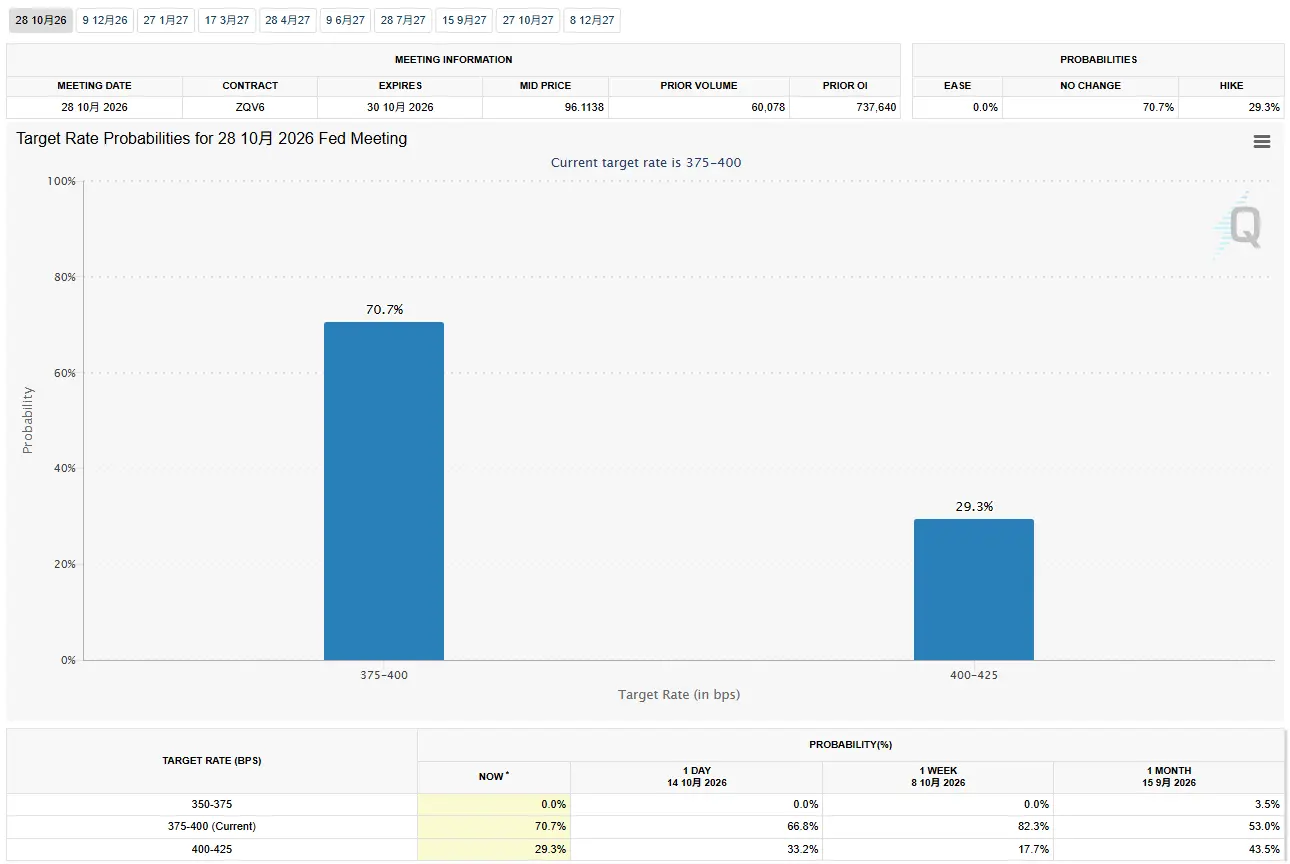
On October 14 and 15, the U.S. Bureau of Labor Statistics released the September CPI and PPI, both of which exceeded market expectations, leading to increased bets on another rate hike by the Federal Reserve in October. According to CME FedWatch data, as of the time of writing, the probability of a rate hike in October is 29.3%, up from just 17.7% a week ago.
Global risk assets faced pressure in succession. On the 14th, U.S. stocks closed lower, with the Nasdaq Composite Index recording its largest single-day drop since July. On the 15th, the Asia-Pacific stock markets continued to decline, with the Nikkei 225 Index closing down 4.90% and the Korean KOSPI Index down 7.56%, triggering a circuit breaker.
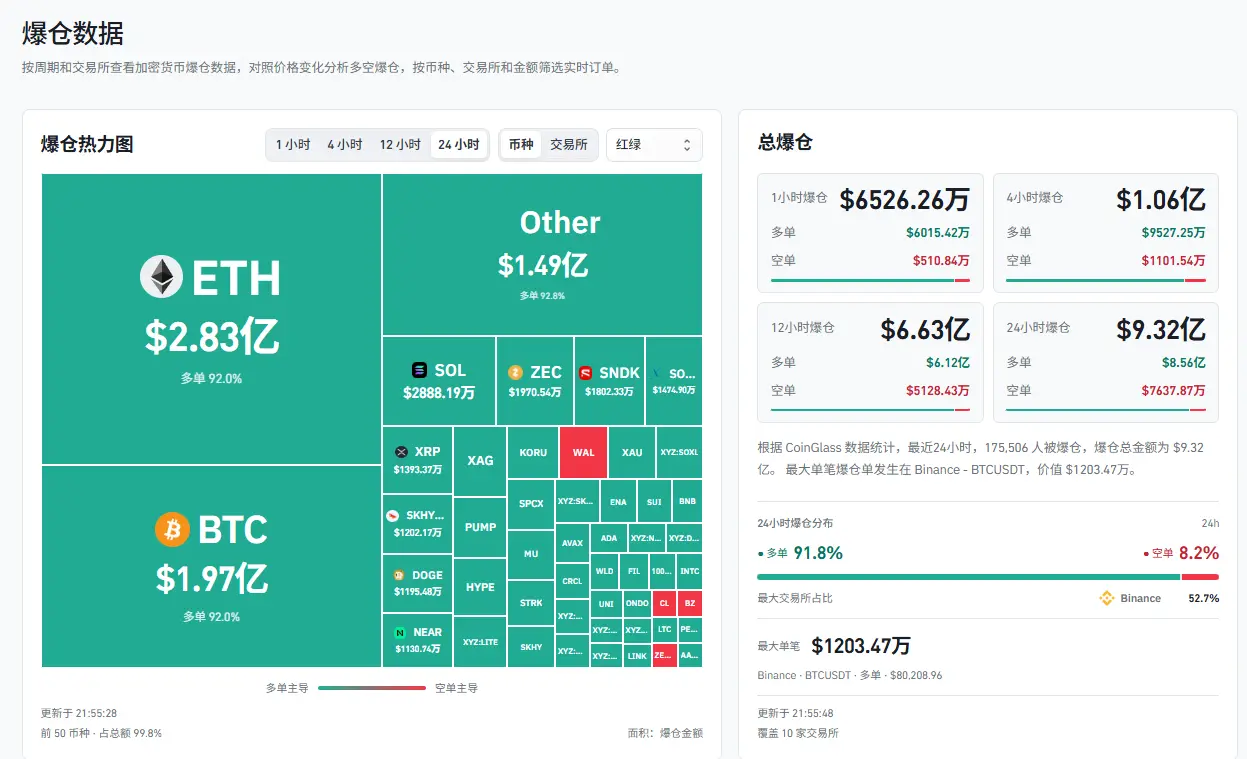
The cryptocurrency market also did not escape unscathed, with Bitcoin briefly falling near the $80,000 mark. According to CoinGlass data, in the last 24 hours, 175,506 people were liquidated, with a total liquidation amount of $932 million, of which long positions accounted for 91.8%.
1. Inflation data continuously exceeds expectations, global risk assets face pressure
On September 16, the Federal Reserve announced a 25 basis point rate hike, raising the target range for the federal funds rate to 3.75% to 4.00%, marking its first rate hike of 2023. Subsequently, the ongoing war in Iran continued to push up energy prices, accumulating inflationary pressure.
Before the CPI was announced, the market generally expected the Federal Reserve to hold steady in October, with the next rate hike postponed until December. At this time, the cryptocurrency market was also in the process of recovery, with Bitcoin down 8.31% year-to-date, still significantly below last October's historical high of approximately $126,000.
On the evening of the 14th Beijing time, the September CPI data was released. The CPI rose 3.7% year-on-year, higher than the market expectation of 3.6% and August's 3.4%, with a month-on-month increase of 0.6%. According to official data, gasoline prices rose 9.1% that month, contributing to more than half of the increase.
Excluding food and energy, the core CPI rose 2.6% year-on-year and 0.3% month-on-month, both above expectations. Sonu Varghese, Chief Macro Strategist at Carson Group, stated that the annualized growth rate of core inflation in September reached 3.7%, indicating that price increases are no longer limited to fuel.
The interest rate market quickly repriced. According to CME FedWatch data, the probability of a rate hike in October rose from 22.1% before the announcement to over 40%. The yields on 10-year and 30-year U.S. Treasury bonds hit 5.365% and 5.733% during trading, both the highest in 24 years.
That evening, U.S. stocks faced pressure and closed lower. The S&P 500 Index fell 1.11%, the Nasdaq Composite Index fell 1.88%, recording its largest single-day drop since July, with AI concept stocks sensitive to financing costs, such as Oracle and CoreWeave, leading the decline.
Cryptocurrency funds also saw simultaneous outflows. According to SoSoValue data, the U.S. Bitcoin spot ETF saw a net outflow of $261 million that day, with Fidelity's FBTC experiencing a net outflow of $153 million. The Ethereum spot ETF saw a net outflow of $130 million, with BlackRock's ETHA experiencing a net outflow of $110 million.
The selling pressure then transmitted to the Asian markets. On the 15th, the Nikkei 225 Index closed down 4.90%, and the Korean KOSPI Index closed down 7.56%, at one point dropping over 9%, triggering the circuit breaker for the tenth time this year.
Chip stocks became heavily impacted, with SK Hynix down 11.06% and Samsung Electronics down 9.48%. The Korean financial regulatory agency held an emergency meeting in the afternoon, and the stock market's decline subsequently narrowed. Under the influence of safe-haven demand, U.S. Treasury yields fell back.
A concentrated liquidation in the cryptocurrency market also occurred during this phase. CoinGlass data showed that as of the time of writing, $616 million was liquidated across the network in the past 12 hours, accounting for about two-thirds of the total amount in 24 hours. During this period, Bitcoin quickly dipped to $80,230, with $484 million liquidated across the network within one hour.
Tokenized U.S. stock contracts on-chain also saw liquidations. CoinGlass's liquidation heatmap showed that the perpetual contract for SK Hynix, SKHY, experienced approximately $11.88 million in liquidations over the past 24 hours, echoing the sharp drop in Korean stocks that day.
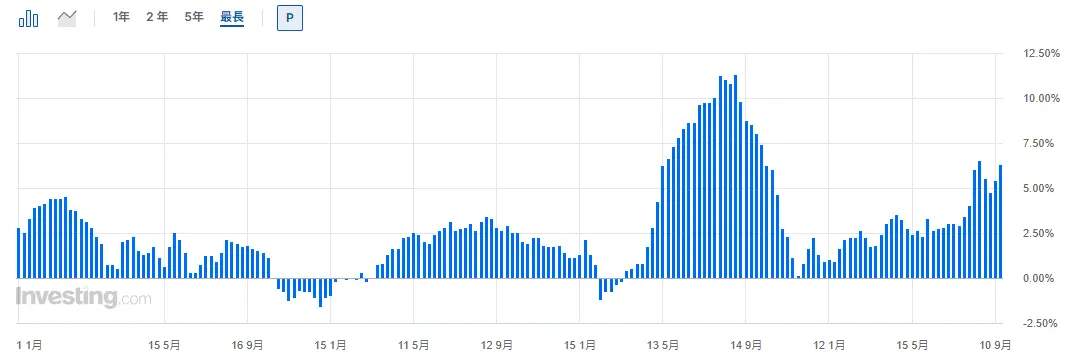
On the evening of the 15th Beijing time, the September PPI was released, again exceeding market expectations. The PPI rose 1.3% month-on-month and 6.3% year-on-year, both significantly higher than the Dow Jones survey expectations of 0.6% and 5.5%. The August data was also revised upward, with the month-on-month figure revised from 0.4% to 0.5% and the year-on-year figure revised from 5.4% to 5.6%.
Excluding food and energy, the core PPI rose 0.7% month-on-month and 5.0% year-on-year. Officials indicated that the final demand energy index surged 10.8% that month, being a major driver of commodity price increases, while service prices also rose by 0.8%.
In the market, after the U.S. stock market opened, tech stocks continued to show weakness, with the Nasdaq down 1.26%, the S&P 500 Index down about 0.5%, while the Dow Jones Industrial Average rose about 0.5%. The reaction in the cryptocurrency market was relatively mild, with approximately $32.46 million liquidated across the network within one hour after the PPI was announced, far lower than the liquidation scale during the Asian session.
2. Long leverage concentrated liquidation, BTC's $80,000 support faces examination
CoinGlass data showed that in the past 24 hours, $280 million in ETH and $191 million in BTC were liquidated. The largest single liquidation across the network occurred in the BTCUSDT trading pair on Binance, amounting to a long position worth $12.0347 million.
In terms of position structure, retail investors' bullish sentiment is significantly higher than that of large holders. Binance data shows that the long-short ratio for ETH accounts is 3.09, while the long-short ratio for large holders is only 1.43; for BTC, the respective figures are 1.80 and 1.45.
Glassnode's report indicated that many individual altcoins are in an overheated leverage state, and once Bitcoin dips to $80,000, these crowded positions are most susceptible to impact. However, the total contract positions across the network only decreased by 1.54% in 24 hours, with most leverage still remaining in the market.
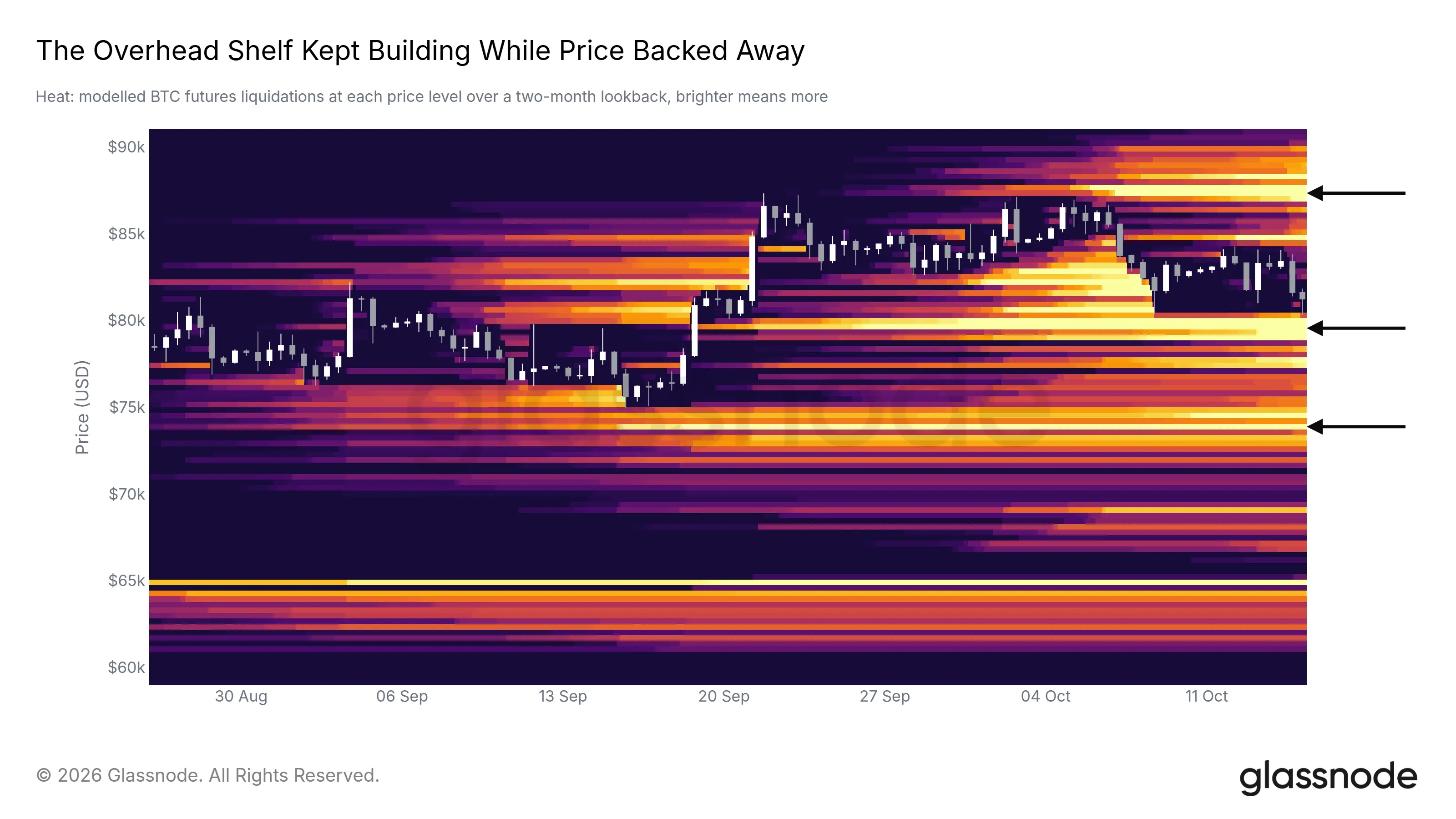
For Bitcoin, the area around $80,000 has become the focal point of the battle between bulls and bears. Glassnode data shows that the average holding cost of the U.S. spot ETF is about $81,500, with the largest buy orders on Binance's spot order book concentrated at $80,000, where on-chain support and order book support overlap.
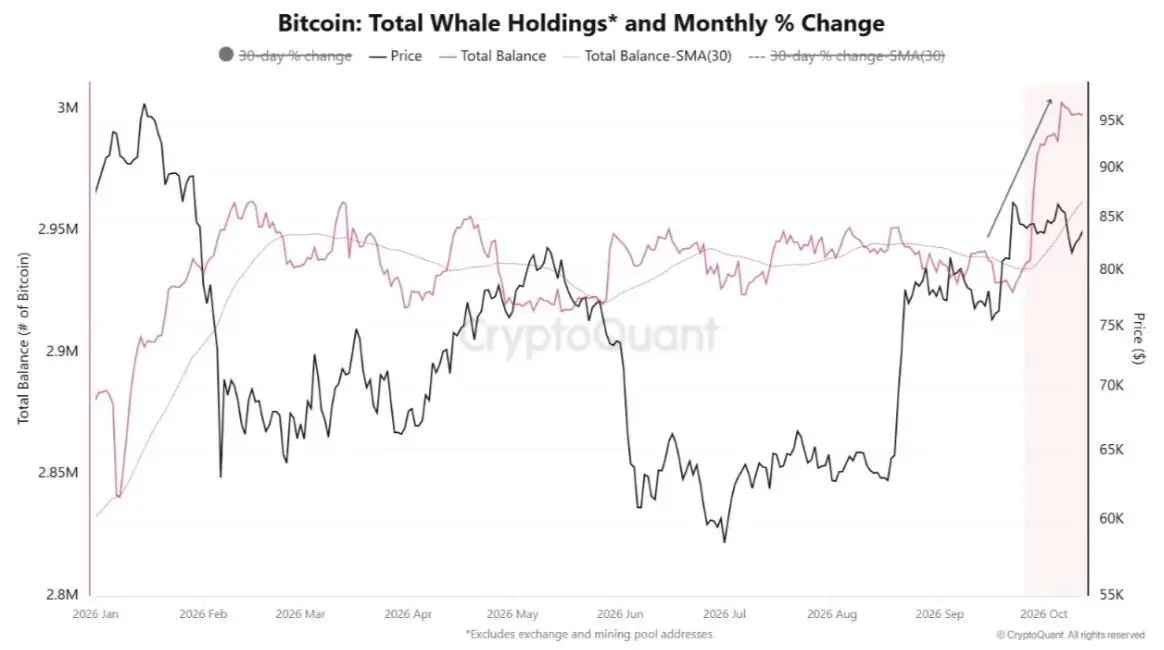
Bitfinex stated that whales have accumulated about 60,000 BTC since late August, with most purchase prices between $80,000 and $86,000, roughly equivalent to the current price. If these holdings continue to be held during this round of correction, the price just above $80,000 will receive support.
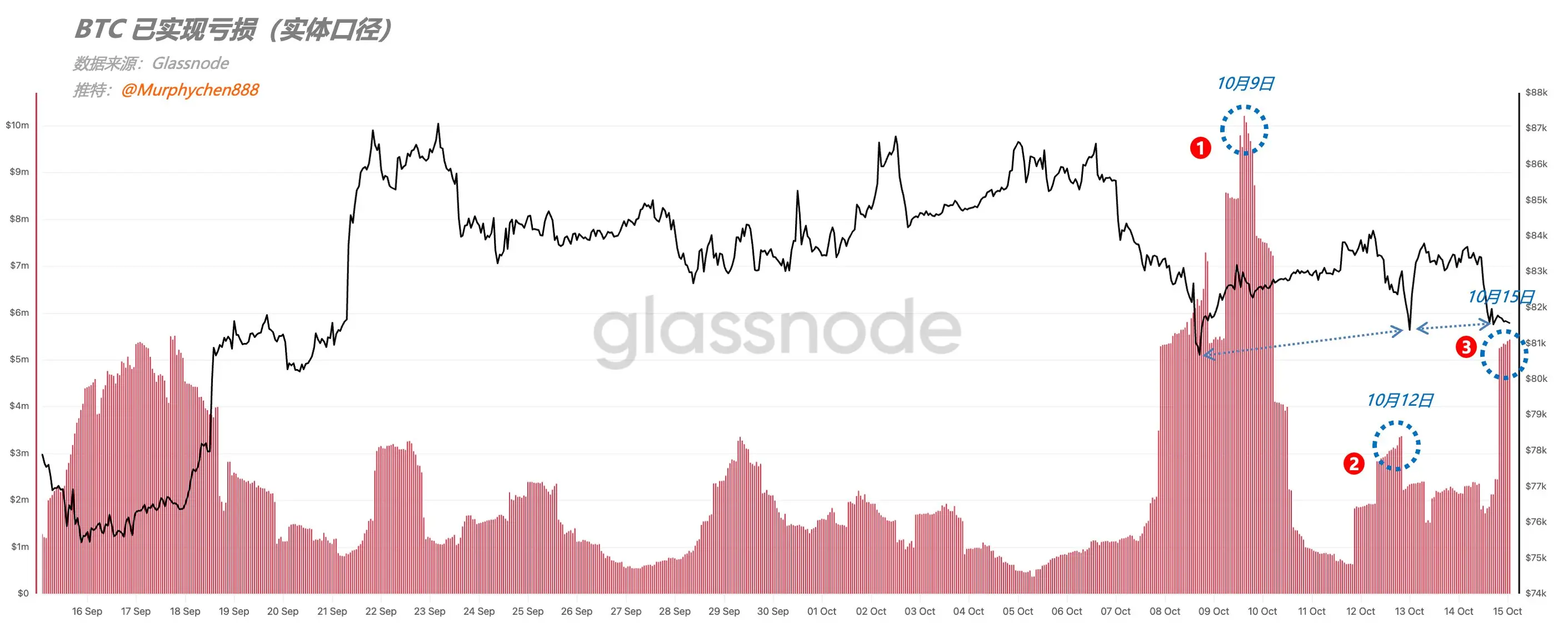
Previously, analyst Murphy pointed out that Bitcoin has fallen to around $81,000 on October 9, 12, and 15. From the on-chain adjusted realized losses, the scale of losses from the three dips has overall decreased, suggesting that the market is closer to clearing out swing positions, and panic selling has not occurred.
Murphy also reminded that the proportion of losses among short-term holders is about 31%, still below the historical average of 42.7%, indicating that the clearing of positions may not be sufficient, and fluctuations may still occur in the future.
If the $80,000 support is lost, the reference points below are relatively clear. Glassnode believes that the next support is around the real market average price of $78,000.
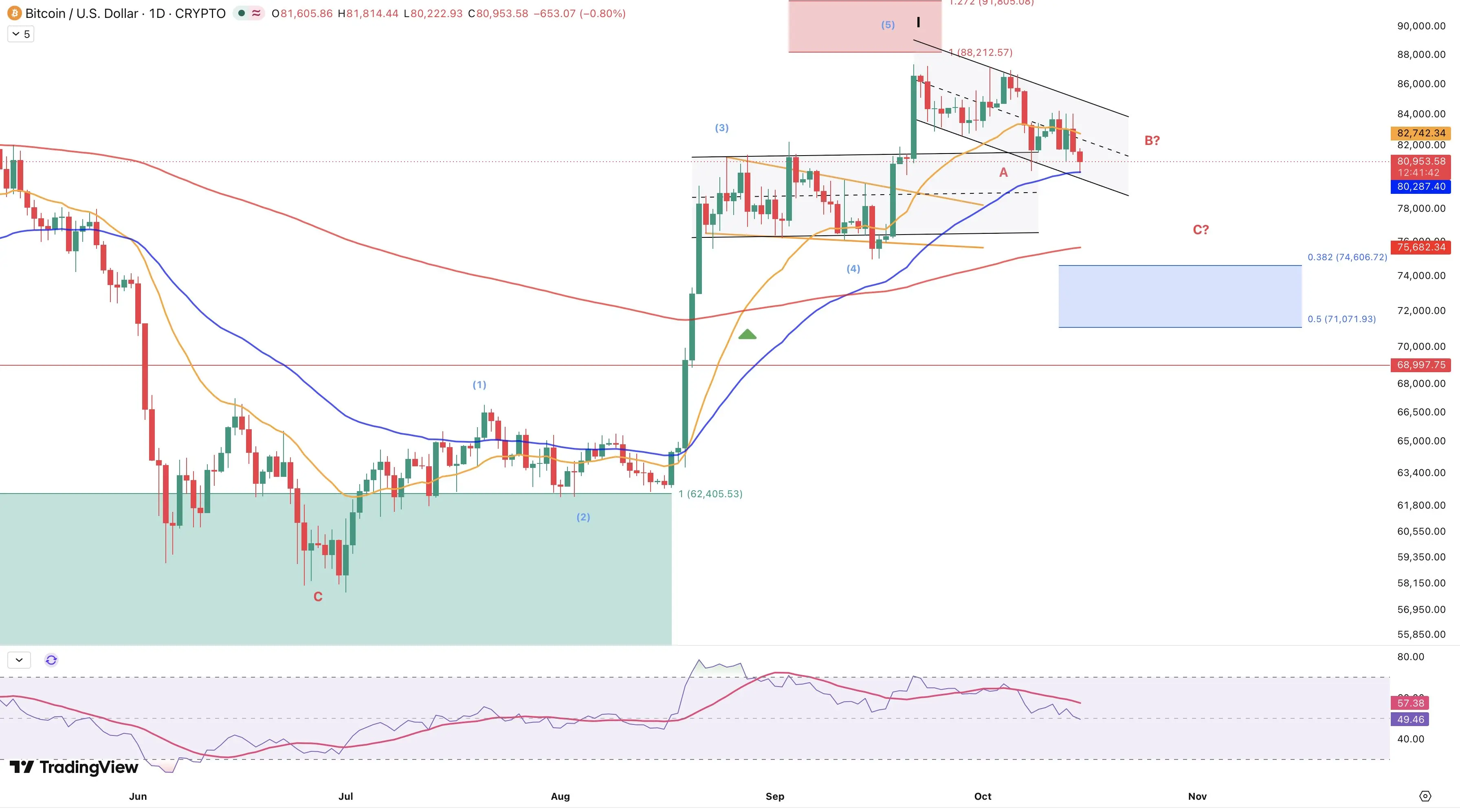
 Cryptocurrency analyst Darkfost believes that Bitcoin may face a second wave of adjustment, potentially dipping to the 0.382 Fibonacci retracement level around $74,600, while the 200-period EMA is around $75,800.
3. Future market depends on the October 28 interest rate meeting, institutional views diverge
As of the time of writing, Polymarket data shows that the market bets on a 74% probability that the Federal Reserve will keep interest rates unchanged on October 28, with a 26% probability of a 25 basis point rate hike.
There is not much disagreement within the Federal Reserve regarding further rate hikes. The minutes from the September meeting indicated that most participants believe another rate hike before the end of the year may be appropriate, with the main controversy centered on the timing.
Some economists believe that both October and December rate hikes have data support. UBS, however, believes that raising rates on the eve of the midterm elections is politically difficult. Historical data shows that it is uncommon for the Federal Reserve to raise rates in October or November before midterm elections.
Next, Federal Reserve officials are expected to enter a pre-meeting quiet period around the 17th, and the market is focused on the statements from Federal Reserve Chairman Kevin Warsh before then. The interest rate decision will be announced on the 28th, followed by the release of September PCE data the next day, and then just a few days later, the midterm elections on November 3.
Regarding the subsequent trends in the cryptocurrency market, institutional views are mixed. The more optimistic side believes that this round of correction has partially digested inflation risks.
Matt Mena, Senior Crypto Research Strategist at 21Shares, believes that Bitcoin's drop below $85,000 last week has already reflected some downside risks, and after macro uncertainty dissipates, Bitcoin is expected to return to $85,000 and push towards $90,000. He found that since 2023, Bitcoin has averaged a 1.21% increase within 7 days after core CPI exceeded expectations.
Mena also expects that ETH will consolidate around $2,500 in the short term, before attempting to rise to $2,800 to $3,000, with a potential target of $130 for SOL by the end of this quarter.
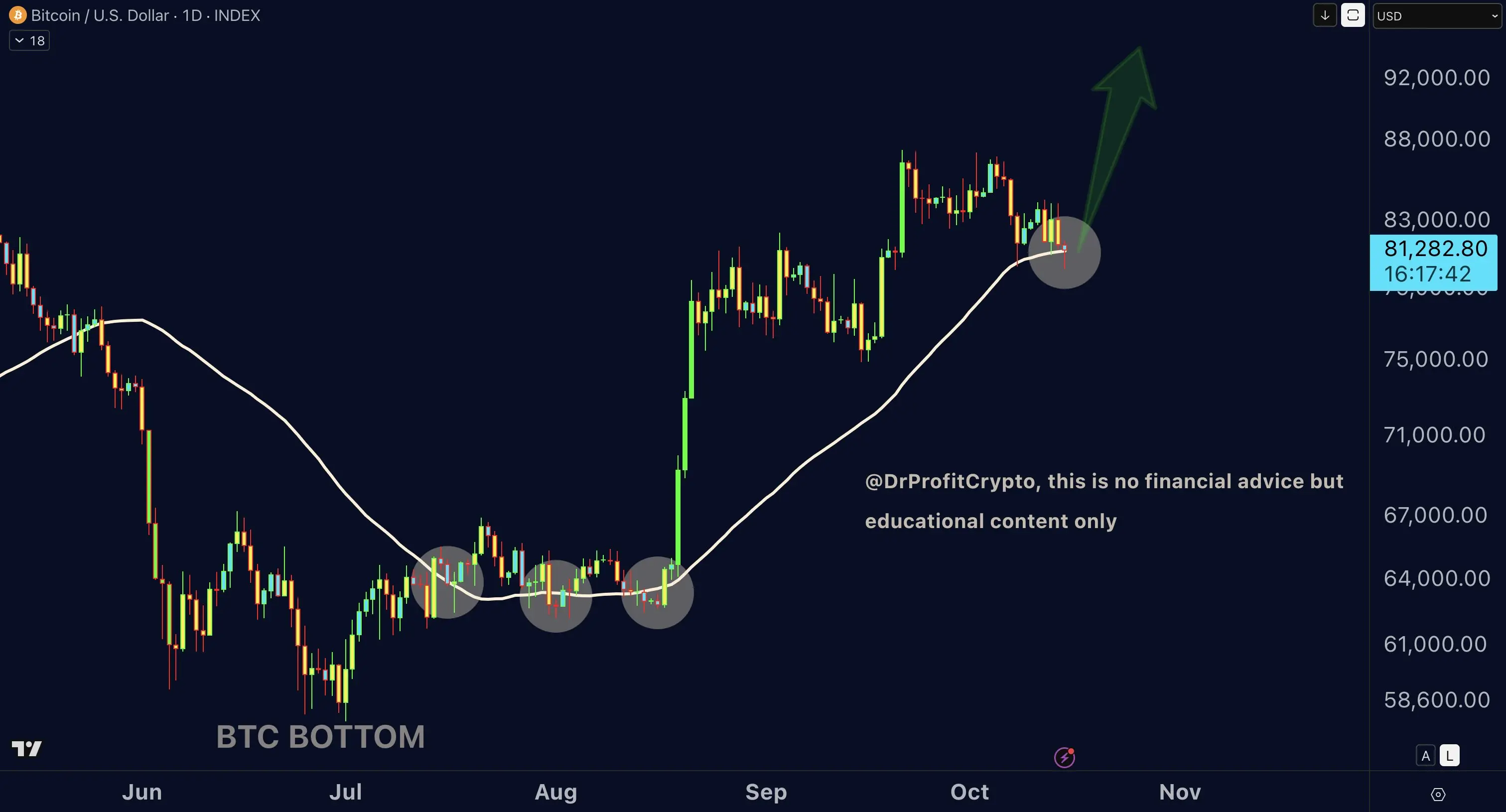
Analyst Darkfost stated that there are currently no worrying signals, and the mid-term trend for Bitcoin remains positive. Well-known trader Doctor Profit believes that after Bitcoin previously surged above the 50-day moving average, it is now testing this position for the first time, and support will hold.
In terms of on-chain data, Glassnode pointed out that the realized losses of long-term holders have decreased by about 85% from the peak in August. Unlike in 2018 and 2022, this bear market has never closed below the realized price, and the cycle seems to be in the early stages of recovery.
The more cautious side is focusing on short-term pressure. Glassnode believes that the cost basis for buyers over the past 6 to 12 months is around $88,000, and whenever the price approaches this level, there is selling pressure from those looking to break even, while the U.S. spot ETF has also returned to net selling.
QCP Capital's baseline scenario for the fourth quarter outlook is that Bitcoin will oscillate in the range of $80,000 to $90,000. The institution stated that if ETF funds do not see a return, they will reduce positions around $88,000 to $90,000.
Regarding incremental funds, Geoffrey Kendrick, the global digital asset research director at Standard Chartered Bank, pointed out that the supply of stablecoins has been hovering between $300 billion and $320 billion over the past 12 months, currently around $309 billion. The bank has pushed back its forecast for the stablecoin market to reach $2 trillion from 2028 to 2030.
For the upcoming trend, Glassnode provided two observation signals. If Bitcoin's daily close recovers $88,000, accompanied by a return of ETF funds, it indicates that demand is digesting the selling pressure above. If it falls below the buy order zone of $80,000 and the ETF cost line, the real market average price of about $78,000 will come into view.

 Risk warning




Popular articles





