Daily Observation of Cryptocurrency Policy: Canada Issues Draft of the Stablecoin Regulation, Establishing a 1:1 Hard Reserve and Central Bank Direct Management Framework

 Released on October 27, 2026. The Canadian government has taken a decisive step in the process of sovereign compliant fiat digitalization. On October 24, the Canadian government officially announced the draft of the Stablecoin Regulations in the Canada Gazette. The draft clearly designates the Bank of Canada as the highest regulatory and enforcement authority, setting stringent 1:1 qualified asset reserve requirements, isolated custody, and mandatory redemption time limits for non-bank stablecoin issuers. The draft is currently open for a 60-day consultation period, aiming to come into effect in the fall of 2027 in conjunction with the previously approved Stablecoin Act.
Regulatory Framework and Implementation Timeline: Central Bank Oversees the Overall Situation
With the penetration of offshore stablecoins into local currency sovereignty, Canada has chosen a strong regulatory path managed directly by the central bank. According to the draft plan, all non-bank stablecoin issuers must complete formal registration with the Bank of Canada before issuing any tokens. The central bank will be fully responsible for subsequent daily supervision, audit acceptance, and enforcement of violations. The consultation period for this regulation will end on December 23 of this year, aiming for seamless integration with the parent law, the Stablecoin Act, which was approved by Parliament in March 2026, and will be fully implemented in the fall of 2027.
Strict Underlying Reserve Requirements: Locking in High Liquidity, Low-Risk Assets
To completely eliminate systemic risks similar to algorithmic stablecoins or high-risk commercial paper defaults, the draft imposes extreme constraints on the "quality" and "quantity" of reserve assets:
1:1 Daily Hard Peg: Issuers must maintain at least a 1:1 ratio of reserve assets during daily ledger settlements;
Asset Whitelist: Reserve assets are strictly limited to four categories of extremely high liquidity assets—demand deposits, government debt with a maturity of no more than three months, overnight reverse repos fully backed by such government debt, and money market funds (MMFs) that only hold the aforementioned qualified assets;
Third-Party Segregated Custody: All underlying reserve assets must be completely separated from the issuer's own funds and must be held in independent segregated accounts at qualified custodial institutions registered in Canada to ensure that users' assets are not subject to liquidation in the event of the issuer's bankruptcy.
User Rights and Qualitative Restrictions: Time-Limited Redemption and Prohibition of Interest Payments
While clarifying the legal payment tool attributes of stablecoins, the draft strips away any disguised "investment" attributes:
Redemption Guarantee: Holders have an unconditional right to redeem at a 1:1 ratio for fiat currency, and the issuer must complete the fiat currency transfer within three working days of the application, with a maximum redemption fee not exceeding 1%;
Prohibition of Interest: To prevent stablecoins from becoming unregistered securities, the regulation explicitly prohibits issuers from paying any interest or financial returns to users simply for "holding" stablecoins (but allows for consumer rewards based on actual payment usage frequency);
Marketing Compliance: Issuers are strictly prohibited from describing stablecoins as national legal tender, insured bank deposits, or backed by government guarantees in any context.
Heavy Penalty Mechanism and a New Era of Stablecoin Compliance in Canada
In light of recent regulatory actions in North America, the draft of the Canadian Stablecoin Regulation demonstrates a sovereign nation's bottom-line thinking towards Web3 payment innovations: embracing the efficiency of blockchain settlement at the technical level while adhering to the stability of central bank currency at the asset level. To ensure that the aforementioned regulations do not become mere empty words, the draft introduces a mandatory monthly certified public accountant audit disclosure system and sets forth highly deterrent penalties—any serious violations or deviations can incur administrative fines of up to 10 million Canadian dollars. The advancement of this framework marks that Canada is accelerating the construction of a sovereign-level on-chain fiat firewall, and the compliant operation of USD and CAD stablecoins on the North American continent will enter a new era of parallel dual-track operation.
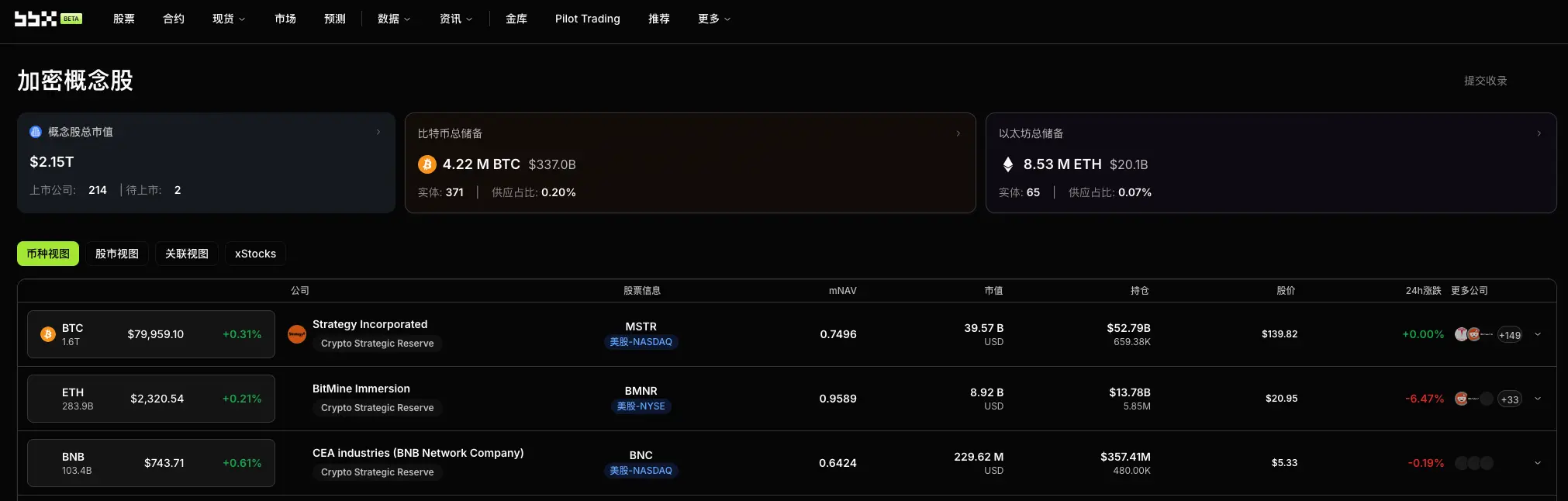
Source: https://bbx.com/ Cryptocurrency Concept Stock Information Database, compiled based on yesterday's announcements from global listed companies and SEC/TSE disclosure documents.
 Risk warning Risk warning