Which assets may benefit in the next 12 months? The Democratic Party controls both houses, and Trump still holds the steering wheel

 U.S. Treasuries, healthcare, AI infrastructure, and crude oil are heading towards four different pricing paths.
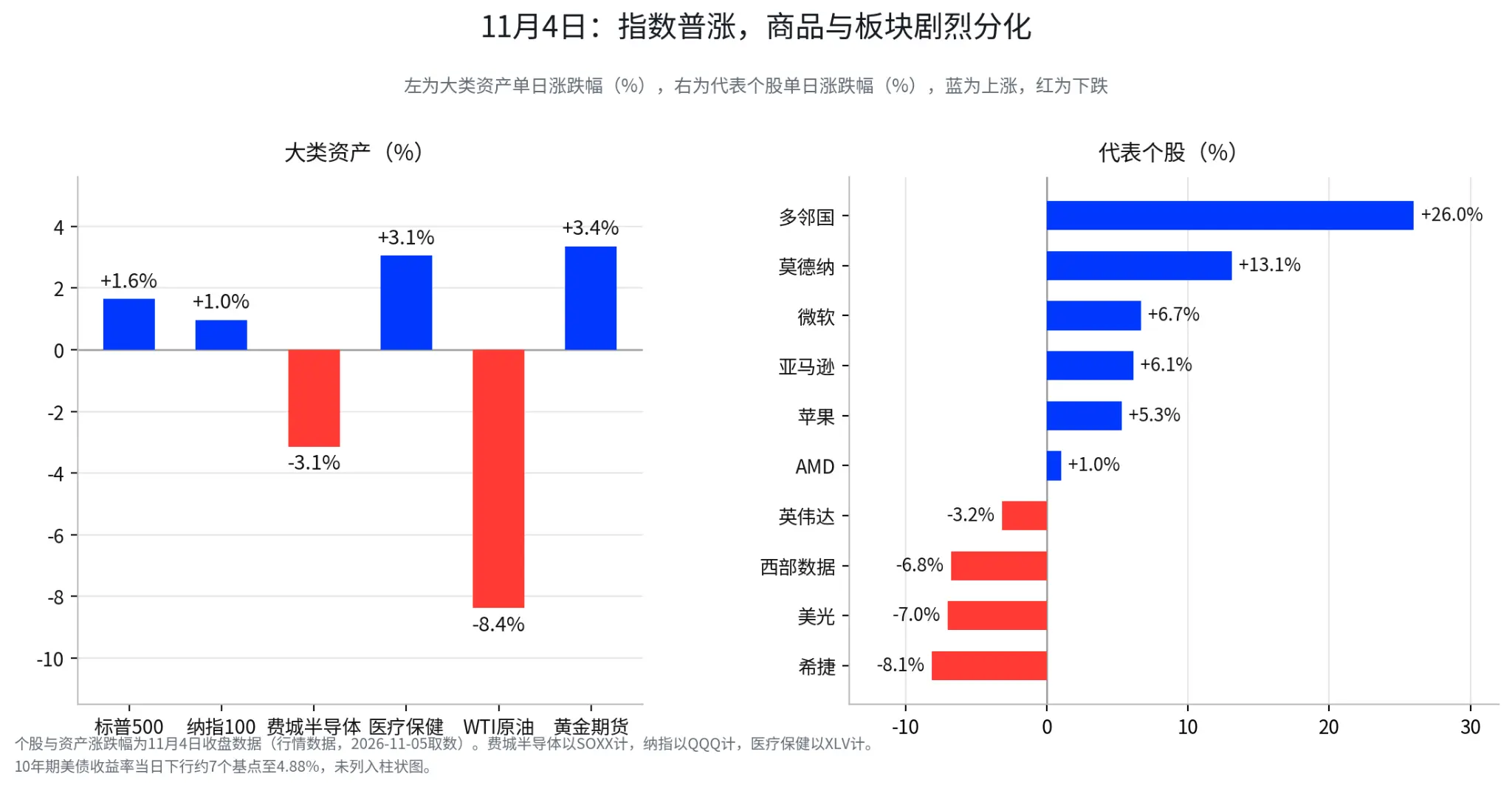
The results of the midterm elections have basically settled. For the market, after the changes in Washington's power structure, which policies can still be pursued, which cannot, and where the president will shift more policy space are questions that deserve more time than the fluctuations of the index on that day. The market on election day only provided a footnote; on the same day that the Dow Jones rose by 3.03% and the S&P 500 rose by 1.65%, the Philadelphia Semiconductor Index fell by 3.14%, and WTI crude oil fell by 8.4%. The seeds of divergence were sown before the election results were announced.
I. Both Houses of Congress Controlled by Democrats, the Steering Wheel Still in Trump's Hands
The Democrats gained control of Congress, truly obtaining the agenda, funding, and oversight
The new Congress will take office on January 3, 2027, at which point the Democrats will decide which bills enter the review process and strengthen oversight of the executive branch through committee investigations and hearings. A Democratic majority in the Senate also means that senior officials and judicial nominees nominated by the president will face stronger confirmation pressures (reported by PuYin International and several foreign media).
The governors of Texas and Georgia have also changed, directly transmitting this change to AI infrastructure. These two states are key areas for data centers and power investments in the U.S., where state governments hold actual decision-making power over land, energy, environmental protection, tax incentives, and project permits. Projects that have already entered the construction phase are less affected, but those that have not secured power supply, permits, and local tax incentives face significantly increased policy uncertainty.
Trump has no Congress, but tariffs and executive power are still in his hands
The Republican Party still controls the White House, and the Democrats' seats in both houses are insufficient to override a veto, meaning that executive powers related to tariffs, immigration enforcement, foreign affairs, and military actions are largely retained (reported by Axios and the Associated Press). Trump has publicly stated he wants to be the "Mr. Veto" (reported by DW). Even if the Democrats control Congress, it will be difficult for them to fully translate their agenda into law.
The Democrats have gained Congress but have not obtained full control over policy direction. Trump has lost Congress but has not lost executive power.
The first hard battle after the election is scheduled for December 11
Before the new Congress takes office, there is a period of lame-duck sessions that is easily overlooked. From November to December, the old Congress will still handle funding issues, with the temporary funding expiring on December 11 being the first hard deadline before the power transition. The old Senate still needs Democratic votes, making the probability of a short-term funding extension to avoid a shutdown relatively high (analysis from J.P. Morgan Asset Management, reported). This also means that issues like healthcare and defense are likely to be packaged into the same negotiation proposal.
II. Congress Cannot Control All Policies, Three Channels Determine Asset Direction
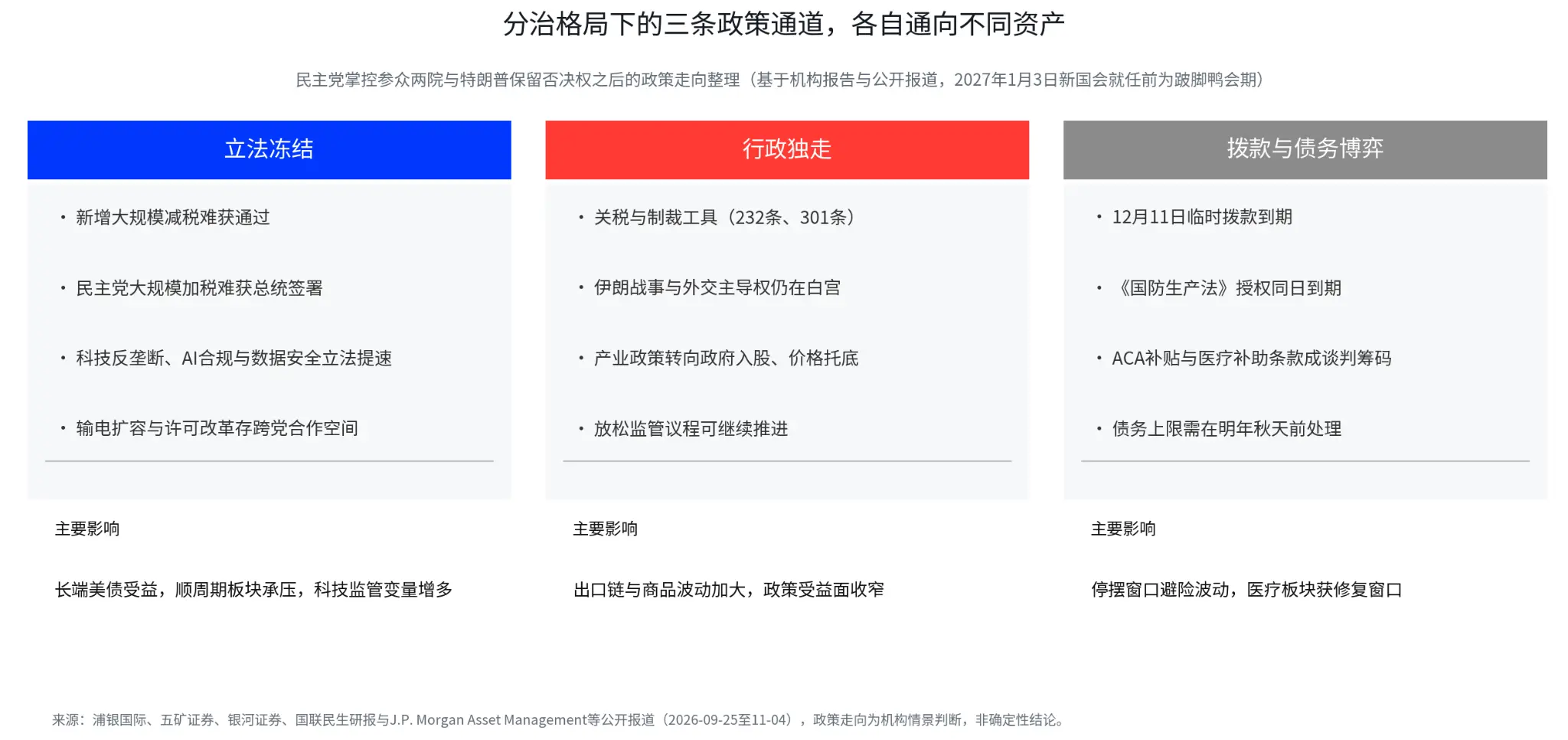
Legislative Freeze: Fiscal Stimulus Hard to Increase, U.S. Treasuries Benefit First
Democratic control of Congress does not mean that tax increases proposed by the Democrats can be implemented, as the president has veto power. Trump’s push for a new round of large-scale tax cuts will also struggle to replicate the efficiency of passage seen during a unified government. Institutions like J.P. Morgan Asset Management point to the same conclusion: the divided governance structure will compress new fiscal expansion space, and existing tax and spending arrangements will continue to be executed (reported). This is relatively beneficial for long-term U.S. Treasuries, as the biggest pressure on U.S. Treasuries in recent years has come from the continuous increase in fiscal deficits and long-term debt supply; after Congress is divided, the space for further expanding the deficit is limited.
Tech regulation is another line on this channel, with the pace of advancing antitrust, AI compliance, and data security possibly accelerating (National Alliance for Life scenarios). What truly needs to be observed is whether specific bills emerge and whether regulation moves from principle discussions to execution. Transmission expansion and permitting reforms may have room for bipartisan cooperation (PuYin International), which is one of the few directions where policy consensus may form for U.S. data centers, where power has become a bottleneck.
Executive Independence: Tariffs and Industrial Policy, Trump Can Still Play His Cards
Based on existing authorizations like Section 232 and Section 301, the White House still has considerable room for tariff adjustments without needing to go through Congress each time. In the coming year, U.S. policy towards China may present seemingly contradictory situations: stronger congressional oversight, yet tariff policies can still be rapidly advanced by the executive branch. PuYin International even suggests that Trump may increase the use of tariff tools after losing control of Congress.
The administrative characteristics of industrial policy are also strengthening. Over the past year, the White House exchanged $8.87 billion in chip act funding for approximately 9.9% of Intel's shares, invested $400 million in preferred stock in MP Materials with a ten-year price floor commitment, and provided a $2.23 billion loan to Lithium Americas (reported by Minmetals Securities). Policy support is increasingly concentrated on a few strategic enterprises, while overall subsidies for the industry are decreasing.
Funding Game: December 11, Healthcare and Defense Become Bargaining Chips
The temporary funding expires on December 11, and on the same day, the price floor authorization under the Defense Production Act faces renewal, with Democrats likely to attach oversight conditions (Minmetals Securities). Enhanced ACA premium tax credits and Medicaid restrictions are the two directions the Democrats most want to include in negotiations (PuYin International); they may not fully restore but could enter the funding bill in the form of temporary extensions, partial adjustments, or accompanying clauses. The debt ceiling is a more distant tail risk that must be addressed before next fall; whether congressional confrontation escalates into a hard risk for financial markets depends on whether both sides genuinely use the debt ceiling as a bargaining tool.
III. Don't Be Scared by 4.9%: 2018 is a More Relevant Script
4.9% Historical Average, Mixed with Recession and Crisis
The combination of a Republican president and a Democratic-controlled Congress has resulted in an average annual increase of about 4.9% for the S&P 500, the lowest among all power combinations (Stock Trader's Almanac, reported by Bloomberg and others). This number cannot be directly used to predict 2027. There are not many historical years that fit this combination, and many of those periods coincided with recessions, financial crises, or cyclical downturns; low returns could stem from political division or from a poor macro environment at the time.
What 2018 Tells Us is That a Drop Followed by a Rise is Also Completely Possible
In 2018, a Republican president faced a Democratic takeover of the House, coinciding with Federal Reserve interest rate hikes and trade frictions. According to statistics from Minmetals Securities, the S&P 500 rose by 11.7% in the 12 months following the election, with a maximum drawdown of 14.7% in the first three months, bottoming out only on December 24. Since 1946, in 20 midterm elections, the S&P 500 has averaged a 14.4% increase in the 12 months following the election (Minmetals Securities statistics), indicating that the market environment after midterm elections is not generally pessimistic.
"Rising in the year after the election" and "significant drawdowns possible in the months following the election" can coexist; history supports a generally bullish stance amid volatility.
IV. U.S. Treasuries and Healthcare: The First Two Asset Classes to Reflect Election Results
U.S. Treasuries: Fiscal Freeze Opens Space, Fed Determines the Ceiling
The core formula for U.S. Treasuries is that fiscal expectations open space, while the Federal Reserve determines how far that space can go. After the election, the yield on the 10-year U.S. Treasury fell from about 4.96% to about 4.88%, as the market began to price in limited fiscal stimulus and declining deficit expansion expectations.
This logic cannot be separated from the Federal Reserve. Before the December 8-9 interest rate meeting, the market was still pricing in about a 77% probability of a rate hike (CME data, reported), with the non-farm payrolls on the evening of November 6 (market expectations of about 50,000 to 65,000) and the CPI in mid-November (3.7% year-on-year in September, core 2.6%) directly influencing this expectation. Weakening employment and falling inflation would lead to a downward yield supported by interest rates. If inflation rises again and the Fed maintains a hawkish stance, the benefits brought by fiscal freeze may be offset by interest rate pressures. An analysis reported by Morningstar also reminds that the government's high borrowing levels will continue, so don’t expect too much downward space for long-term yields.
Healthcare: The Election is Just the First Transaction, December Funding is the Real Test
The Democrats need to use their funding authority to push for ACA subsidies and Medicaid issues, while the Republicans need to avoid a government shutdown, giving both sides a motive to compromise. On November 4, the healthcare sector rose by 3.06%, the biotechnology ETF rose by 2.67%, and Moderna rose by 13.11%.
The gains on election day are just the first layer of pricing; the next phase of catalysts lies in the specific terms of the December funding negotiations. If related subsidies are extended, sectors like health insurance, biotechnology, and healthcare services may continue to benefit. If the final proposal is significantly lower than expected, the gains from November 4 may face pressure to realize. The verification point will be the text of the bill around December 11.
V. The Biggest Variable in AI Hardware Has Shifted from Washington to State Governments
Why AI hardware plummeted: From who buys GPUs to who makes money
On the same day the S&P 500 rose by 1.65%, the Philadelphia Semiconductor Index fell by 3.14%, Nvidia fell by 3.17%, Micron fell by 7.00%, CoreWeave fell by 9.90% to a new low since its listing, and IREN fell by 11.24%. Microsoft, Amazon, and Apple rose by 6.68%, 6.12%, and 5.31%, respectively, while Duolingo rose by 25.99%. The market is no longer simply trading on AI's pros and cons; it is distinguishing between who needs to continue investing heavily in infrastructure and who has already begun to profit from AI investments.
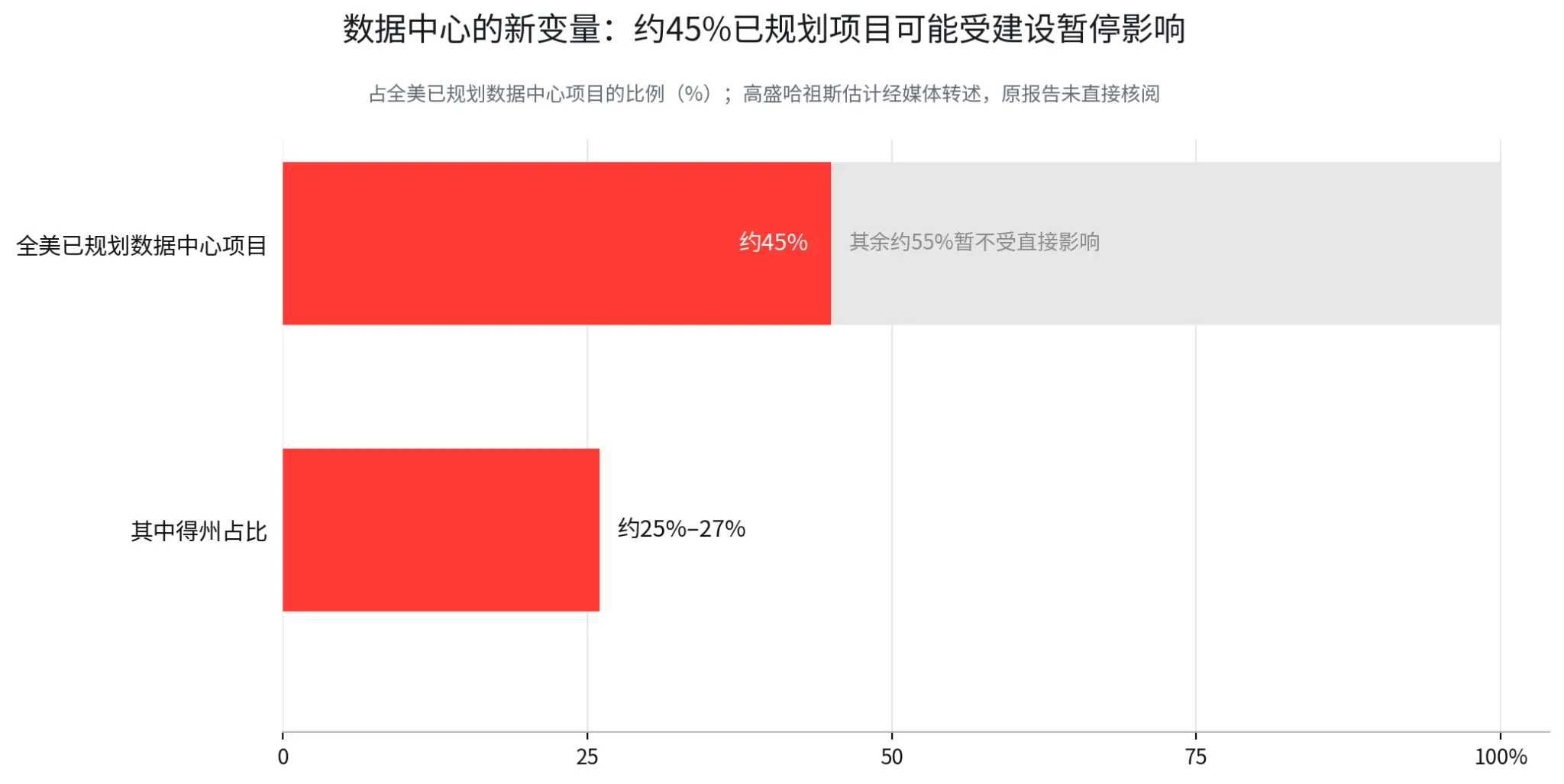
The Next Hurdle for Data Centers: Is There Power, Is There Permitting, Is There Tax Incentives
Whether data centers can obtain power, land, tax incentives, and environmental permits is becoming increasingly important. Estimates from Goldman Sachs' chief economist have been reported by multiple media outlets, suggesting that the results of state and local elections may trigger a pause in data center construction, affecting about 45% of planned projects in the U.S., with Texas alone accounting for about 25% to 27%. Projects that have received permits, secured power supply, and commenced construction are less affected by policy changes, while projects that have not completed these steps face higher risks of delays. PuYin International's judgment aligns with this, indicating that data center projects that have not secured power supply, permits, and tax incentives by 2027 are more likely to be delayed.
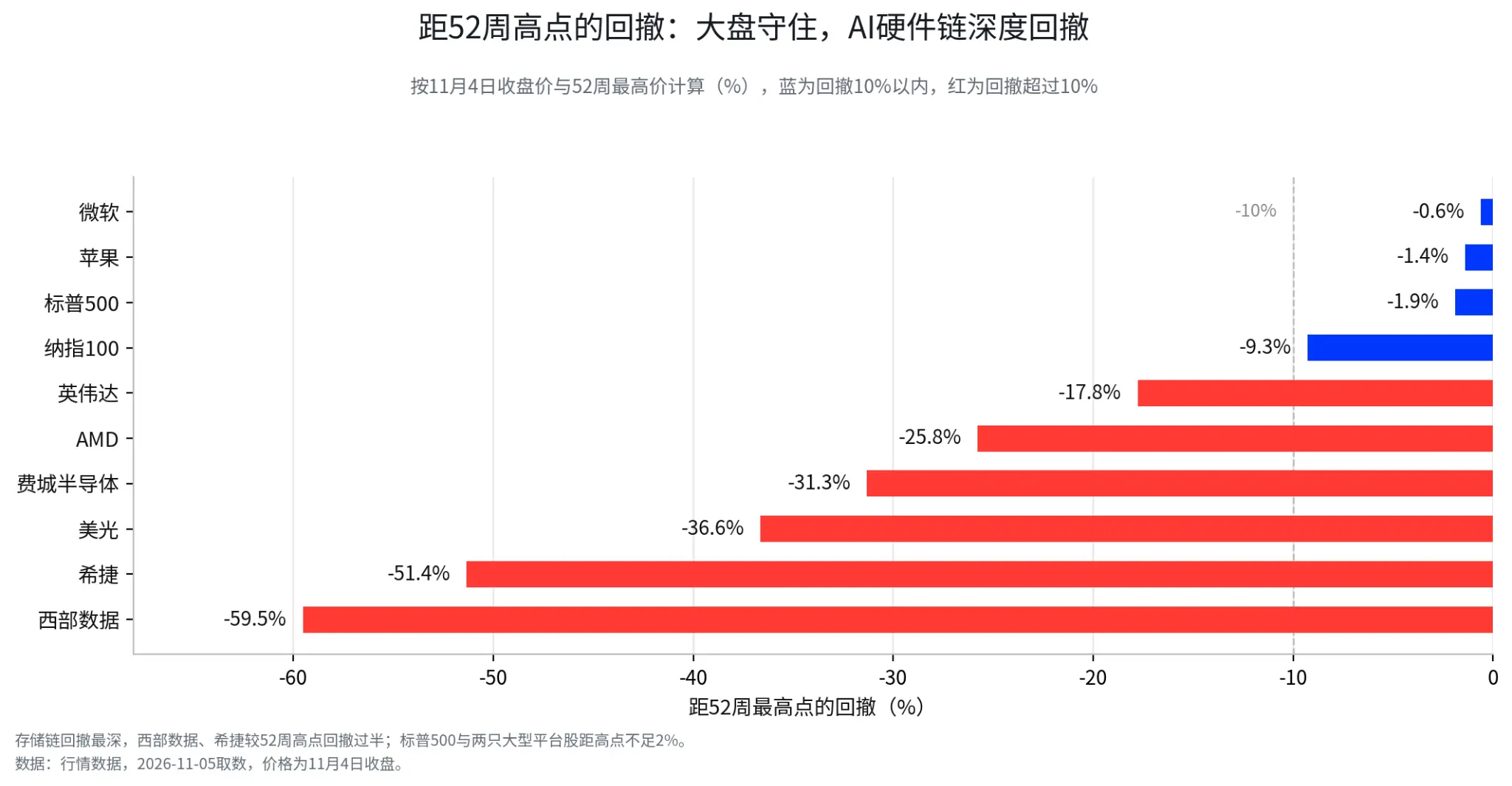
Looking at Nvidia on November 17: The Market Wants More Than Just Revenue Growth
AMD previously reported third-quarter revenue of $13.377 billion, a year-on-year increase of 45%, with data center revenue growing by 97%, and fourth-quarter revenue guidance of about $17 billion, yet the stock price only rose by 1.01% that day. The numbers remain strong, but the stock price reaction indicates that the market's demands have exceeded mere revenue growth, shifting towards whether orders can be sustained, whether capital expenditures can convert into cash flow, and whether infrastructure construction can proceed smoothly.
Evidence on the application side is accumulating on the other side. Duolingo has reduced the cost of a single AI call from about $0.30 to about $0.01, with gross margins rising to about 73%; the cost reduction has already entered corporate profit statements. The market may gradually shift from who buys the most GPUs to who can generate more revenue at a lower cost.
VI. Two Administrative Power Transactions: Oil Looks at Iran, Export Chains Look at Tariffs
Oil: The 8.4% Plunge is Priced in by Iran Cooling
After the Democratic Party took control of Congress, regulatory pressure on traditional oil and gas development may increase. If the situation in Iran continues to cool, the geopolitical risk premium will continue to shrink. These two factors combined explain the 8.4% drop in WTI in a single day. Oil cannot simply be viewed as bearish; diplomatic and military dominance still lies with the White House. A failure in negotiations or an escalation of conflict could lead to a rapid reversal in oil prices. In the coming months, crude oil is more suitable to be tracked as an event-driven asset, acting around the progress of negotiations with Iran and inventory data.
The real energy policy worth paying attention to is in the power grid. There is bipartisan cooperation space for transmission expansion and permitting reform (Puyin International), and traditional energy and grid equipment may receive completely different policy treatments.
Export Chain: November 10, 178 Tariff Exemptions Provide the First Answer
The 178 tariff exemptions on China’s 301 tariffs have been extended to November 10, with renewals, adjustments, or cancellations decided by the White House (Galaxy Securities). Galaxy Securities predicts that after a complete victory for the Democrats, Congress may push to constrain the president's broad tariff powers, but will not be weak on issues of industrial security and forced labor, with enforcement and investigations becoming more institutionalized. The U.S. initiated a public consultation in June on about $30 billion worth of goods for tariff reductions (low-dispute categories), covering chemicals, plastics, industrial components, and textiles. If the list is finalized, the relevant goods' tariffs are expected to return to the most favored nation base level (Galaxy Securities).
For the export chains of Hong Kong stocks and A-shares, the period around November 10 is more worth observing than the election itself. The Hang Seng Tech Index rose 1.77% on November 4, with favorable winds for Asian assets coming from the dollar and U.S. Treasury yields, while risks lie in the administrative use of tariff tools.
Gold and Crypto Assets: Ultimately, It Comes Back to Interest Rates
The decline in expectations for fiscal expansion is favorable for long-term interest rates, with gold prices having returned from $3,898.9 on October 30 to around $4,132 during the Asian session on November 5. As long as inflation and the Federal Reserve remain hawkish, gold is unlikely to form a one-sided trend, and in the future, it is more likely to be driven by macro data for wide-ranging trading.
Crypto assets face dual variables of accelerated regulatory legislation and congressional oversight, ending the election day basically flat. Mining companies transforming into AI computing power have had their target prices cut by Bernstein by as much as 54%. 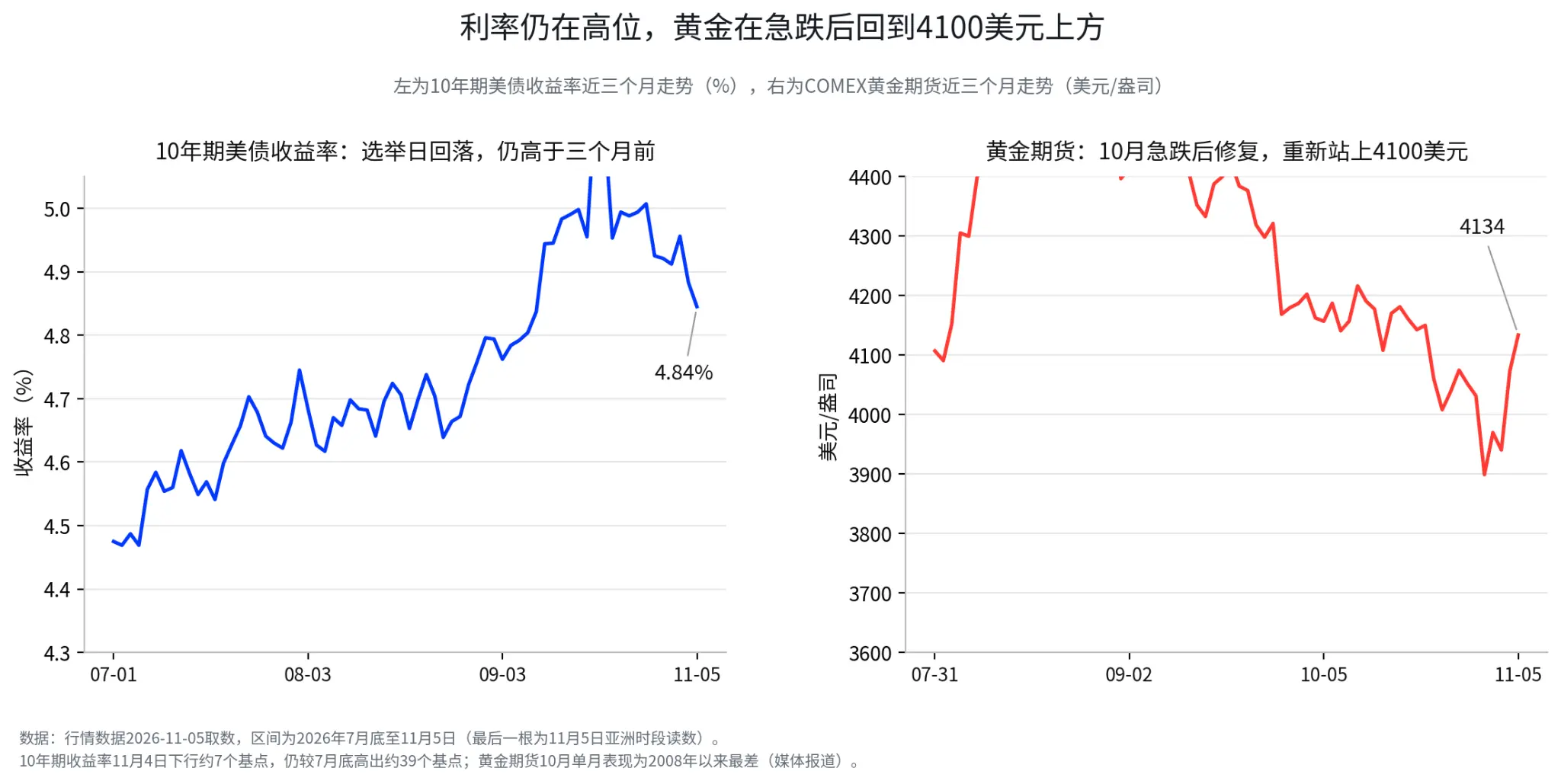
Seven, From November 10 to the Debt Ceiling: Focus on These Key Points in the Next 12 Months
The election is over, and the market's pricing power will quickly shift to several specific time points. 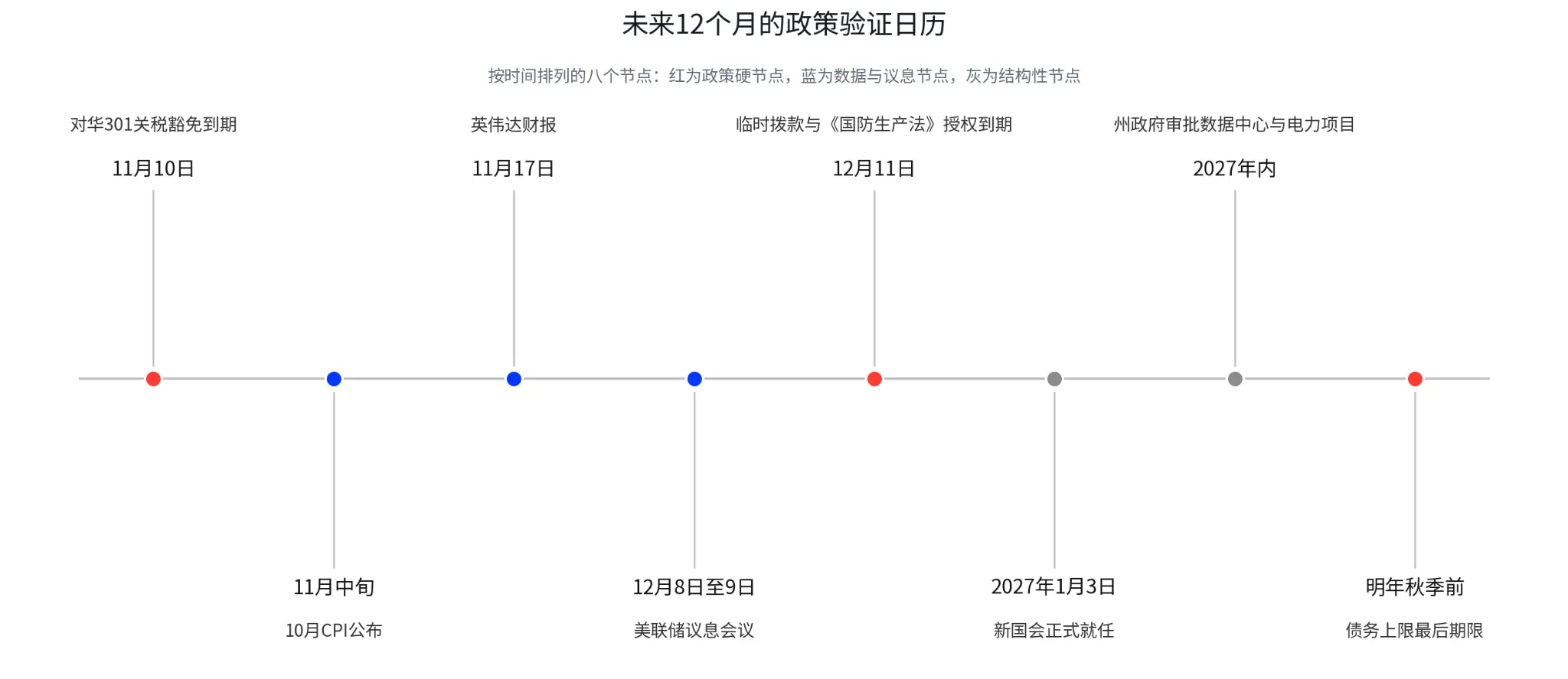
November 10: Tariff exemptions on China’s 301 tariffs. Renewals or cancellations will be decided by the White House, providing the first answer for the export chain, also affecting the dollar and global inflation expectations.
Mid-November: October CPI. Whether inflation can continue to decline will determine if the Federal Reserve has room to maneuver, serving as the most direct macro verification point for U.S. Treasuries and gold.
November 17: NVIDIA earnings report. Focus on data center demand, order visibility, and capital expenditures, unrelated to revenue itself.
December 8-9: Federal Reserve meeting. The overall switch for U.S. Treasuries, gold, the dollar, and growth stock valuations will be determined by employment and inflation data.
December 11: Temporary funding plus authorization under the Defense Production Act. The most important political transaction window in the coming months, with concentrated releases of medical subsidies, defense, and shutdown risks.
January 3, 2027: The new Congress officially takes office. The Democrats will take over the agenda of both houses, with technology regulation, AI compliance, and investigations into the executive branch entering the execution phase.
2027: State governments will decide the next round of supply for AI infrastructure. For computing power, data centers, and power equipment, actual approvals will be more important than verbal statements from Washington.
Before next fall: Debt ceiling. More distant tail risks will determine whether long-term interest rates and risk assets will face a second round of policy shocks.

Conclusion: Don't Trade on Election Optimism, Trade on Policy Implementation
Market focus may shift from the election results themselves to the actual implementation of various policies. Fiscal freezes and interest rate directions like U.S. Treasuries, the December funding text for healthcare, state and local approvals for AI infrastructure, negotiations with Iran regarding crude oil, and the November 10 tariff decisions for the export chain. Each asset has its own policy timetable.
Indices can be biased towards bullish, but do not interpret this bias as a universal rise. The experience of 2018 has already shown that an increase in the 12 months following the election does not contradict a significant pullback in the preceding months. Opportunities in the coming year are more likely to come from differentiation between sectors and assets, rather than a simple rebound after an election.
Disclaimer: The content of this article is for general information and market commentary purposes only, compiled based on publicly available information as of the time mentioned in the text. Relevant market data, expectations, and probabilities may change with market conditions. The views and investment strategies cited from third-party institutions, analysts, or others only represent the views of the relevant third parties at a specific time and do not represent the views or recommendations of BIT. This article does not constitute investment advice, investment research, solicitation, or recommendation for any securities, investment products, or trading strategies, nor should it be the basis for any investment decision. Financial markets carry risks, and securities prices and market performance may fluctuate. Past performance and historical market trends do not represent or guarantee future results. Investors should independently assess the relevant risks based on their own circumstances and seek professional advice when necessary. BIT's Hong Kong stock trading services are not provided to Hong Kong residents or users in other restricted jurisdictions.
 Risk warning Risk warning