Glassnode: Bitcoin has shown capitulation selling, with $62,000 to $66,000 as the key support level
 Core Viewpoint


 The Bitcoin crash has pushed realized losses to historical capitulation levels and significantly cleared leverage. The price has held the recent buyer cost zone of $62,000 to $66,000, but spot demand remains weak, with stablecoins contracting, miners selling, and ETF net outflows. If the daily close is below this range, it may quickly drop to $53,700. Meanwhile, the number of tokenized RWA perpetual contracts and positions is rapidly expanding.
Author: Glassnode, a data, analysis, and research institution for digital assets
Compiled by: Gu Yu, ChainCatcher
The sharp decline in Bitcoin has pushed realized losses to capitulation levels and cleared leverage. The price has remained in the recent buyer concentration zone between $62,000 and $66,000, while the area below $60,000 has seen the largest buy orders since August. Demand for Bitcoin remains weak, while tokenized real-world assets continue to spread throughout the industry.
Executive Summary
This crash has brought about conditions seen in previous local bottoms: realized losses have reached capitulation levels, leverage has been cleared, and the largest buy orders since August have appeared below the price.
The price has held in the recent buyer concentration zone between $62,000 and $66,000, but demand for Bitcoin remains weak. If the daily close falls below this concentration zone, it could trigger a rapid decline, heading straight for the realized price of $53,700.
Major exchanges have now launched perpetual contracts for stocks, commodities, and other real-world assets: increasing from about 190 at the beginning of the year to over 3,200 now. Gate has seen the largest rise in rankings, moving from fifth to second place.
The open interest for these RWA perpetual contracts has grown to about $15 billion, with Gate ranking third, behind Binance and Hyperliquid.
Are you ready to lead the market and sharpen your forward-looking insights? Feel free to try Glassnode. Register or Contact Sales.
Market Compass
Capitulation Sentiment Spreads
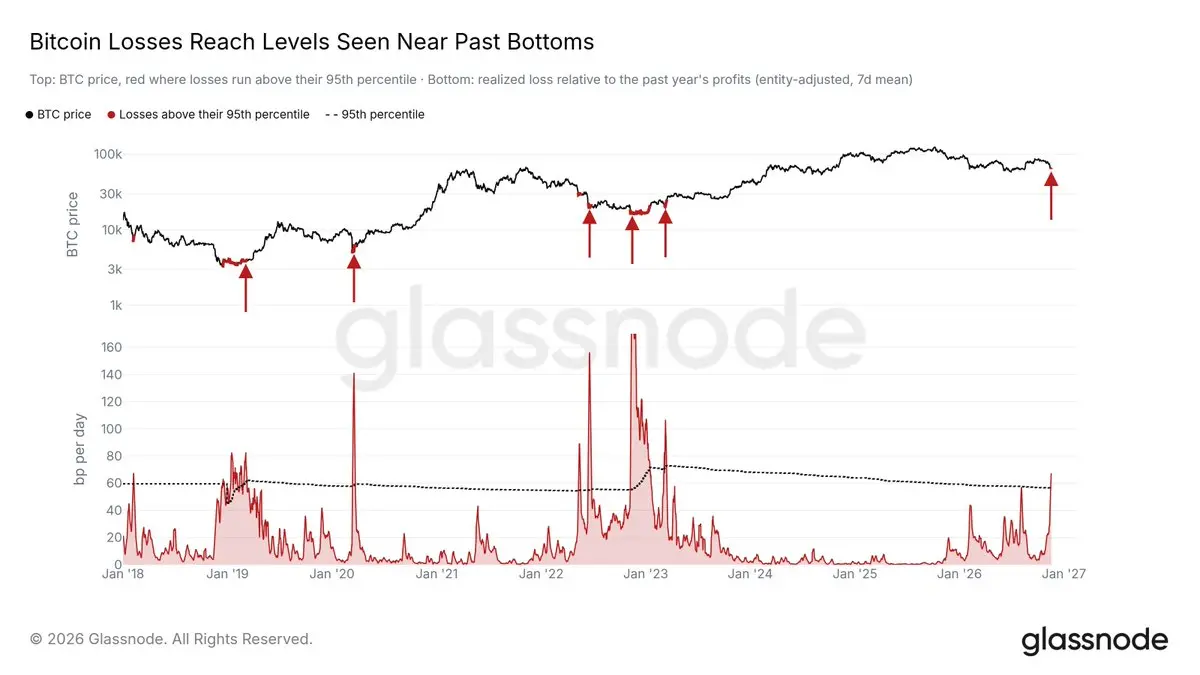
The crash caused Bitcoin to drop to $62,000 on November 15, with investors selling off at an unprecedented scale. To facilitate year-over-year comparisons, this chart compares realized losses (i.e., losses locked in when tokens are sold below the purchase price) with profits made over the past year.
This metric has now reached levels only seen near previous lows in 2018, 2020, 2022, and early 2023, marking the first occurrence since then. Such a surge indicates the occurrence of a capitulation event, where investors who bought at high prices completely give up and sell to anyone willing to take over.
Recent Buyers Give Up Resistance
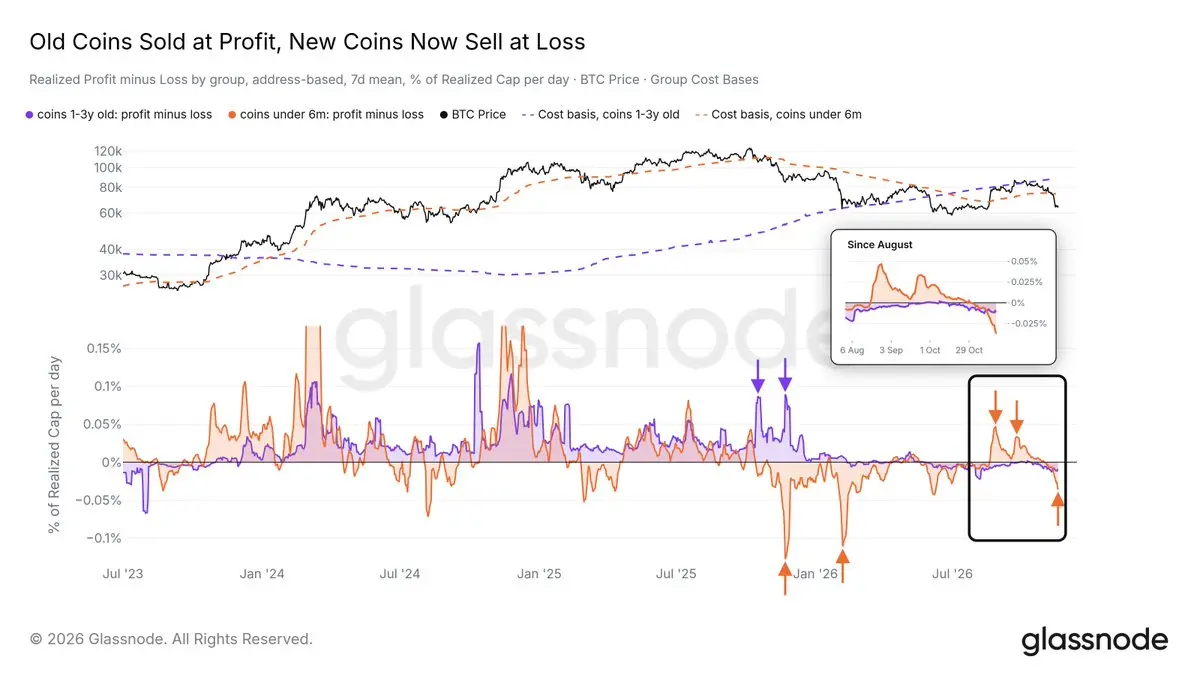
The sell-off is coming from recent buyers. Tokens held for one to three years locked in their last significant profits by the end of 2025 and have remained calm since then. Holders with less than six months of holding experienced severe losses at the beginning of 2026, took profits during the rebounds in September and October, and are now selling at a loss.
Current prices are below the average cost paid by these two groups, as indicated by the dashed line in the chart. As long as prices remain below this level, more recent buyers may choose to sell at a loss rather than continue to wait.
Defending the August Concentration Zone
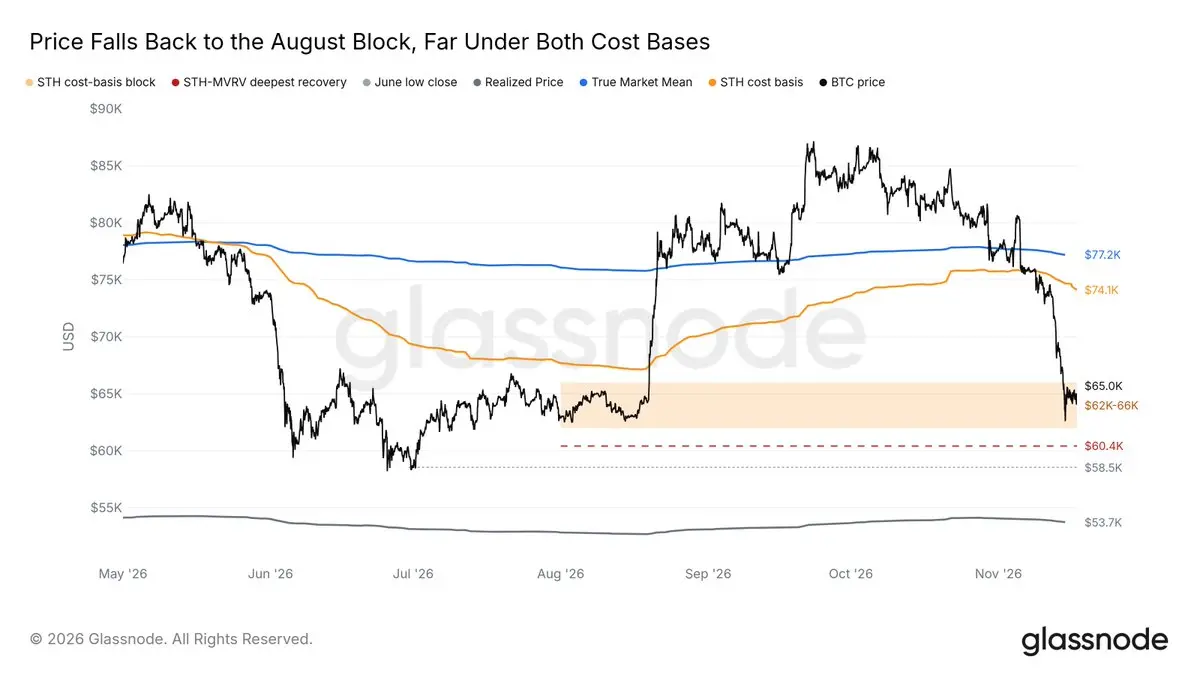
Last week, we pointed out that the concentration zone between $62,000 and $66,000 is the only strong support below the price, and this crash has now reached that area. The cost distribution of short-term holders shows the buying positions of recent buyers. This concentration zone formed around the August low accounts for about one-fifth of their tokens, and during the two days of the most severe sell-off, this area increased by about 6,600 BTC as buyers entered.
This makes it a line that must be defended, and the risks below it are significant. Very few tokens were bought by short-term holders below $62,000, and the largest remaining long liquidation cluster on the map is just below it. If the daily close falls below this concentration zone, it will put August buyers at a loss and simultaneously force leveraged longs to exit, which could turn the breakdown into a rapid crash. The next levels are the June low of $58,500 and the realized price of $53,700, which is the average price at which each token last moved.
Above, the short-term holder cost benchmark of $74,100 marks the breakeven point for recent buyers overall.
Leverage Cleared Completely
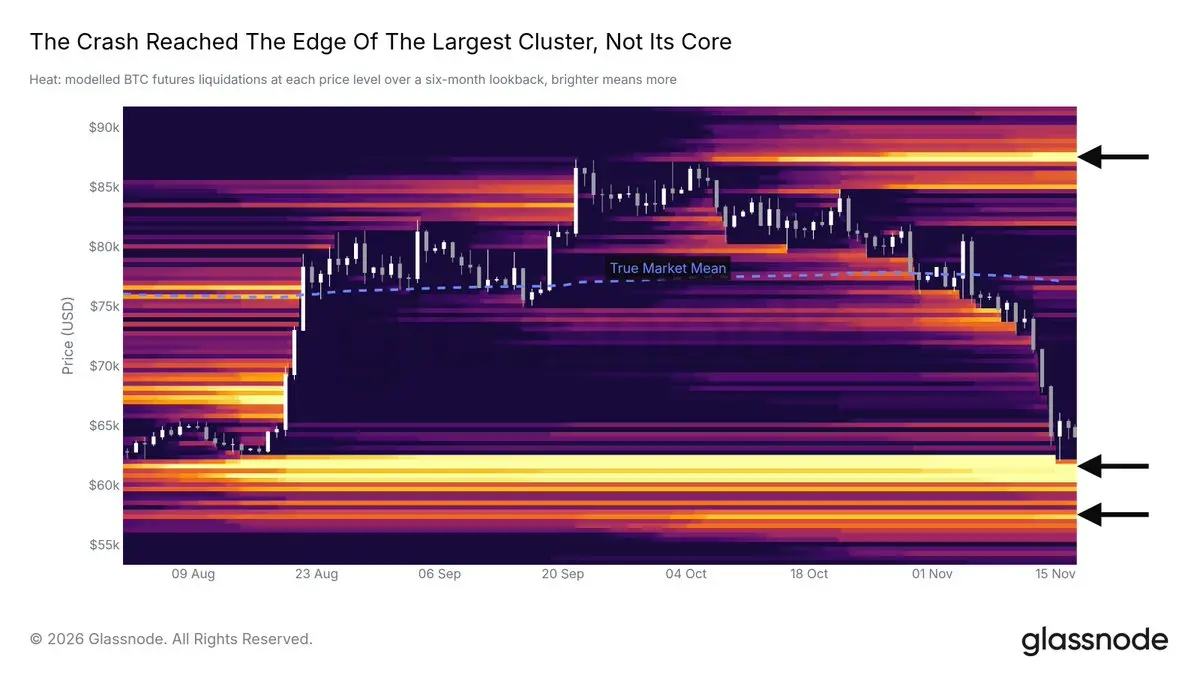
This crash has massively cleared leveraged longs: measured by open interest, November 13 and 14 saw some of the largest long liquidations since 2023. The liquidation heatmap simulates the prices at which leveraged futures positions were forced to close, showing that most longs piled above $62,000 have disappeared. The heatmap from last week appeared very sparse between the current price and the large cluster around $60,000, and this crash directly passed through that vacuum.
The cluster still lies between $59,500 and $62,200 below. The low on November 15 touched its upper edge but remained above its core. If prices dip again, there may be one last wave of cleansing there, although most passive selling above $62,000 has already occurred. The largest short position cluster is far above at around $87,500.
Buy Orders Await Below
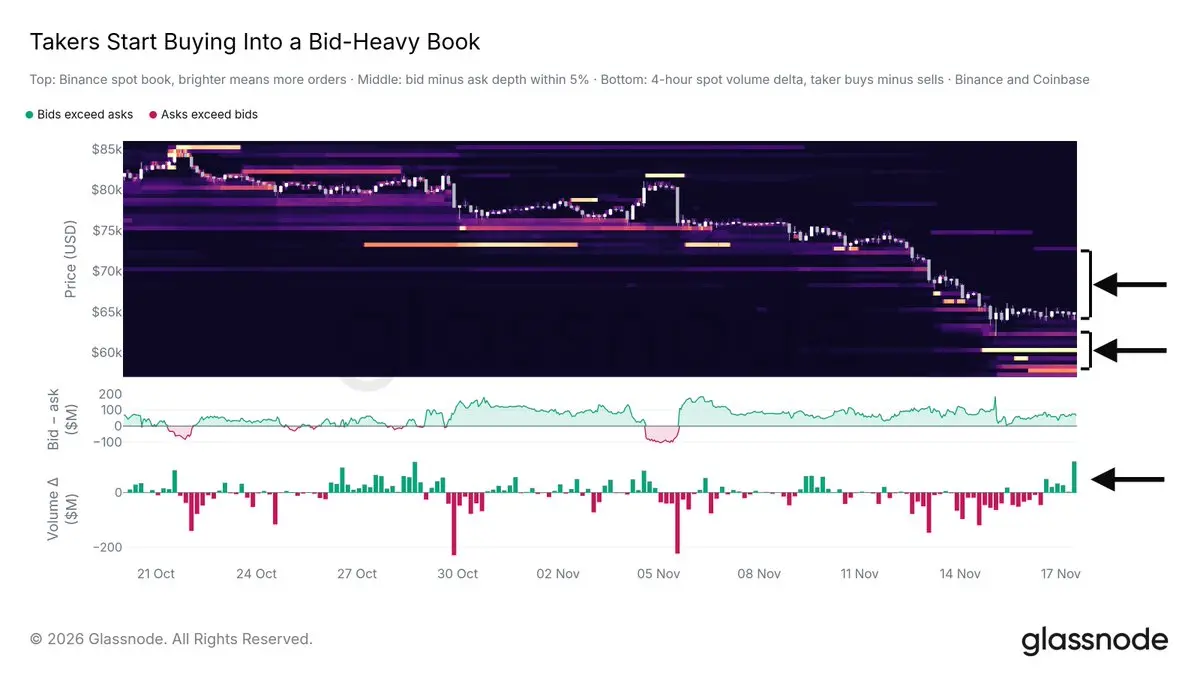
Within a 5% range of the price, the buy orders on Binance and Coinbase are currently about 2.3 times that of sell orders. Since late August, buy orders have generally been only slightly above sell orders. The brightest band on the heatmap near $60,000 represents the largest single buy order price on Binance since August.
As indicated by the red column, the buyers aggressively sold these buy orders during the crash. Over the past day, they have turned to net buying. Buy orders can be canceled at any time, so these buy orders are only most important when they are executed.
Premium at the Low
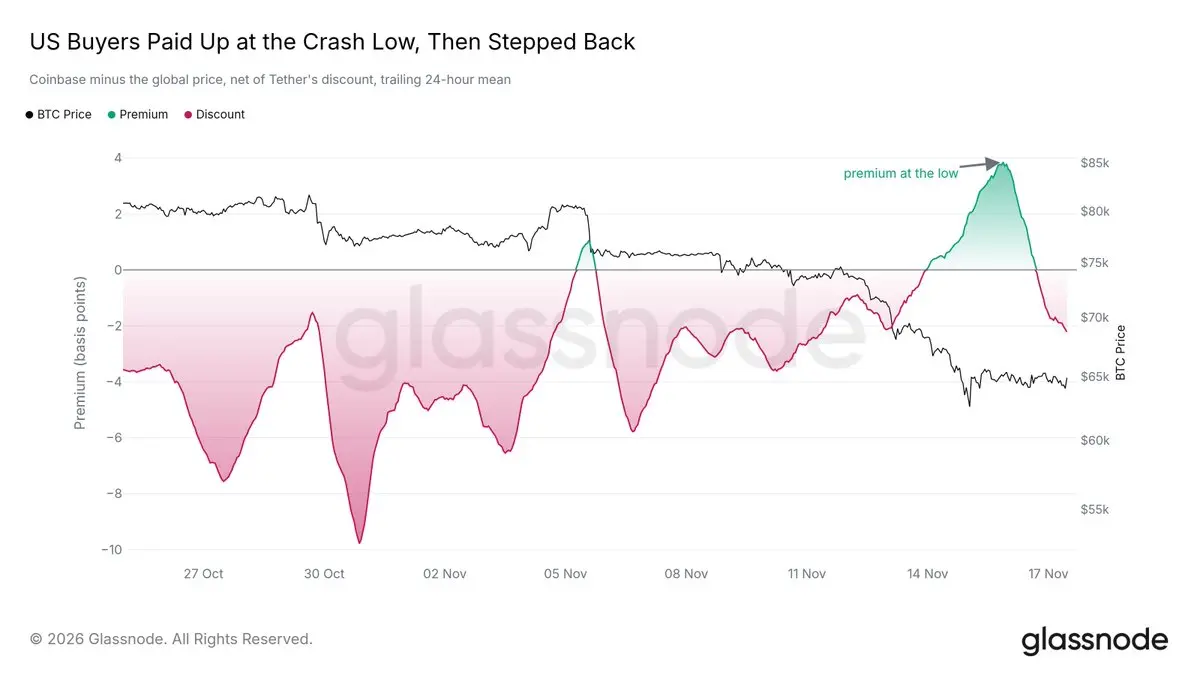
The Coinbase premium compares the price of Bitcoin on Coinbase, the primary trading venue for U.S. investors, with global prices. Since late October, this premium has been negative almost every hour. During the weekend at the low, as U.S. buyers actively bought, this metric turned positive and peaked on the evening of November 15.
Since then, it has fallen back to a slight discount. If the premium can turn positive again and maintain that, it will indicate that demand from the U.S. is truly returning.
Funds Flowing Out to Treasury Bonds
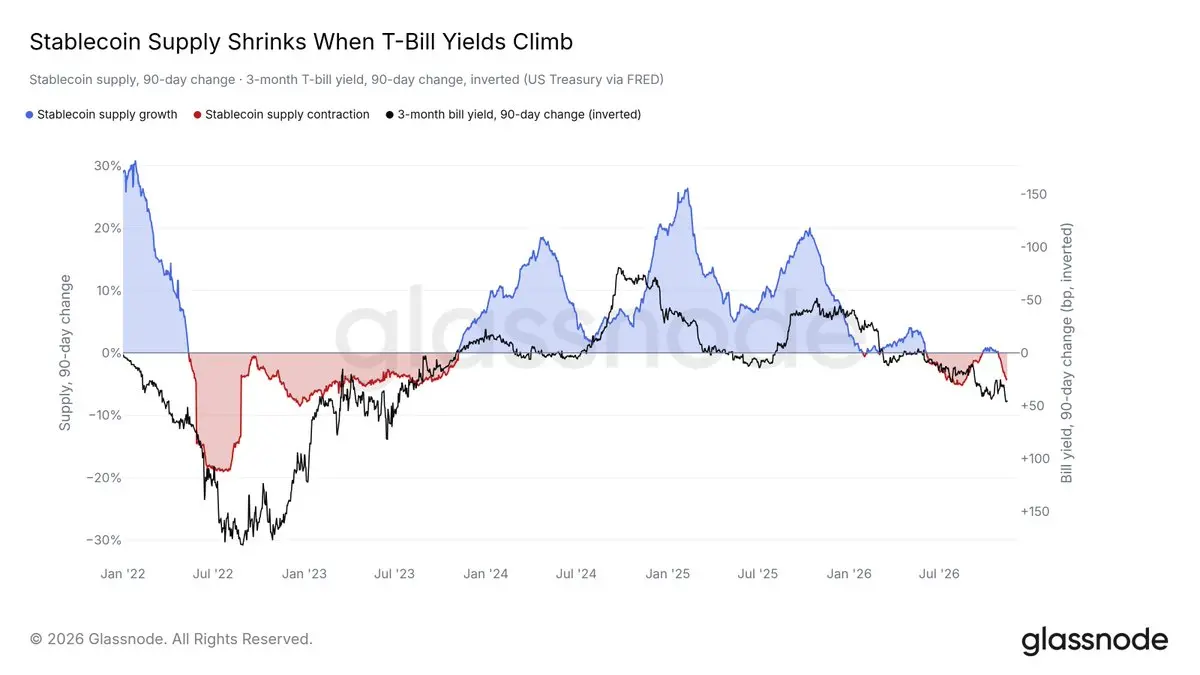
Aside from buying at the low, overall demand remains weak. As the cash of the crypto market, stablecoins have shrunk by 4.2% over the past 90 days.
Since 2022, when short-term Treasury yields rise, the supply of stablecoins tends to contract. Stablecoins do not pay any yield to their holders, while issuers can earn the yield from the Treasury bonds backing them, so when yields rise, holders will exchange stablecoins for Treasury bonds or money market funds. The yield on three-month Treasury bonds has risen by about 45 basis points over the past 90 days, leading to a decline in stablecoin supply. During the fastest rise in yields in 2022, supply fell by nearly one-fifth in three months. If yields stop rising, this pressure to withdraw funds from crypto may ease.
Miners Selling to Fund AI Transformation
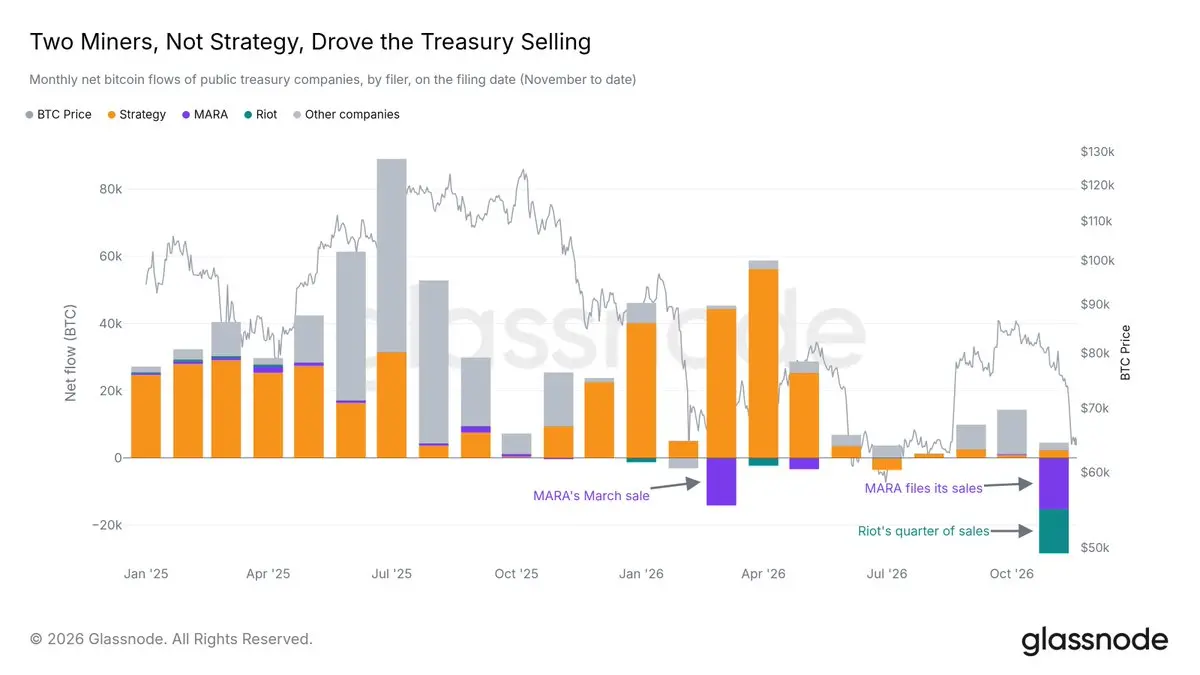
Miners have also been selling off. MARA and Riot reported selling approximately 28,000 BTC this month, while Strategy continued to buy. Both mining companies are venturing into AI and high-performance computing data centers, and selling Bitcoin helps fund this transformation. Apart from these two, treasury reserve companies were net buyers in November.
The U.S. spot ETF has shown a similar lack of interest, with a net outflow of $2.6 billion over ten trading days ending November 13.
Key Future Events
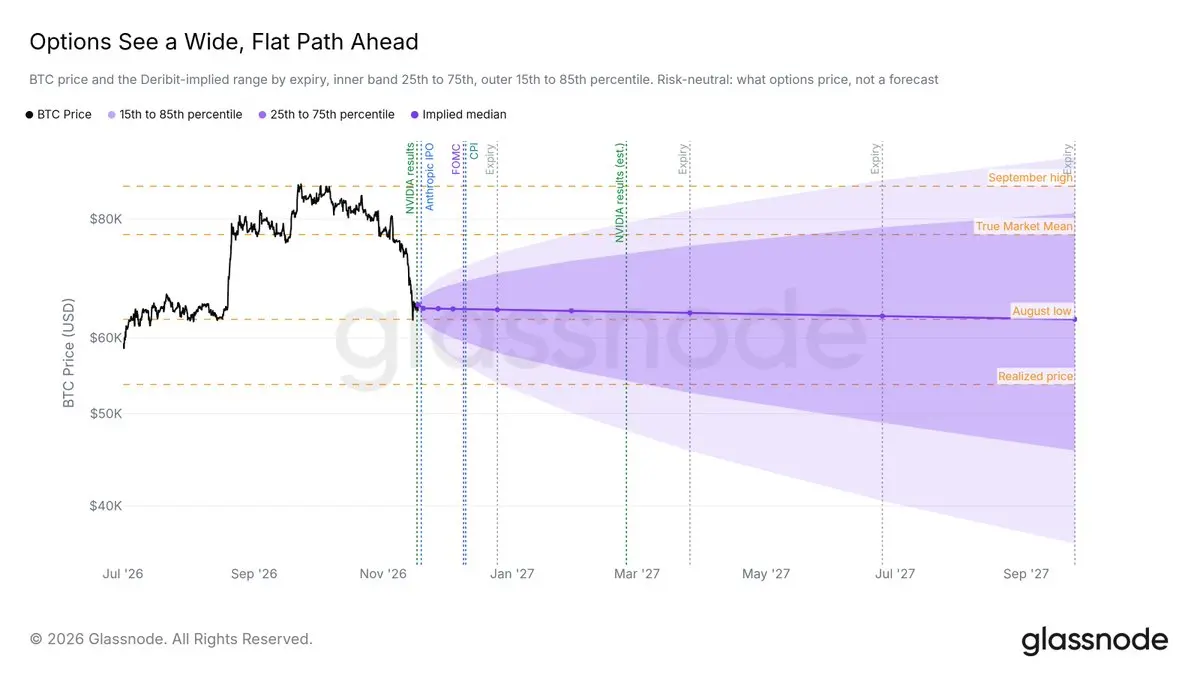
Options reflect the degree of uncertainty that the market is pricing in. The implied price range from Deribit options has steadily widened as we approach 2027, with the median remaining close to current price levels. By the September 2027 expiration, options pricing indicates that the probability of Bitcoin settling below $53,700 is about one-third, while the probability of settling above the September peak is around 20%.
Several events in the coming weeks could change this range. NVIDIA will announce its quarterly results today following the CEO's resignation last week. Anthropic is expected to go public on Nasdaq on November 19. The Federal Reserve will decide on interest rate policy on December 9, the day before the November CPI data is released.
Familiar Altcoin Cleanup
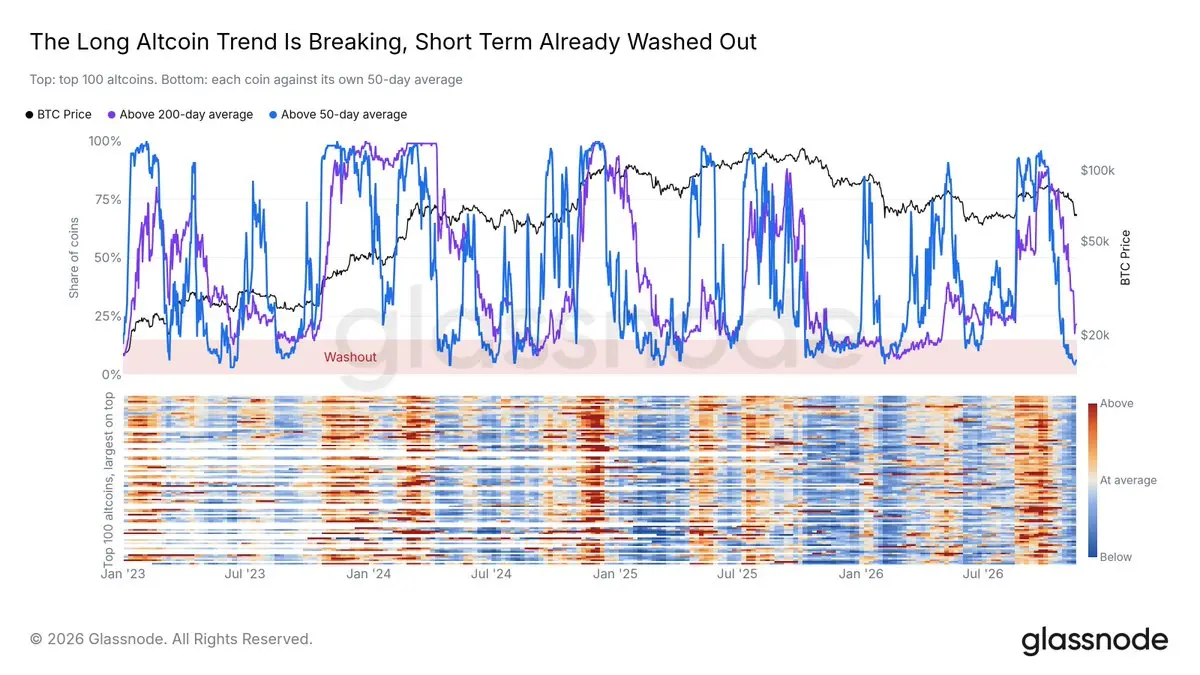
Among the top 100 altcoins, only 6% of trading prices are above the 50-day moving average, having deeply entered the cleanup zone. The proportion above the 200-day moving average has dropped sharply from over one-third to 21% within a week.
In every year since 2023, the most thorough cleanups have occurred within four days of Bitcoin hitting local lows, and each time, Bitcoin's price has risen 60 days later. However, the longer-term trend is still being disrupted: the proportion above the 200-day moving average has not yet reached the bottom levels of previous lows. If the summer low can be established as the cycle bottom, these historical precedents suggest that the altcoin sell-off is nearing exhaustion.
Continued Development in the Crypto Space
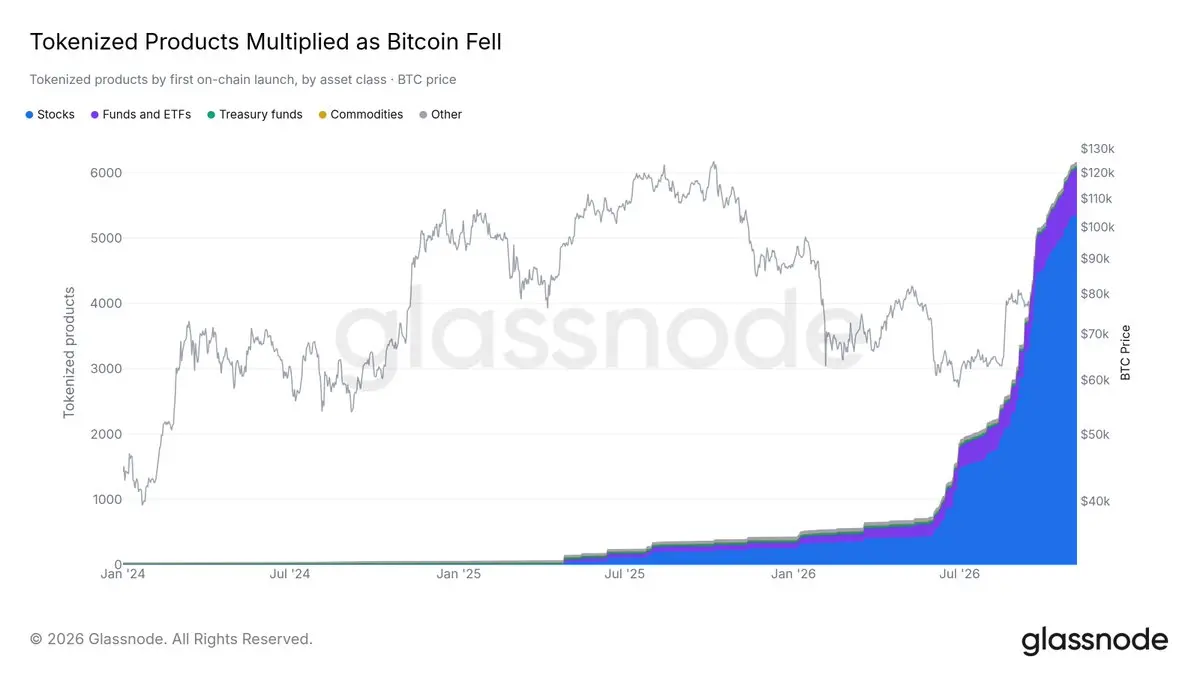
Despite Bitcoin struggling to attract new funds, other parts of the crypto space continue to build. The number of active tokenization products bringing stocks, funds, and other real-world assets onto the blockchain has grown from 428 at the beginning of the year to about 6,200 by early November. During the same period, Bitcoin fell by 15%. Tokenized stocks accounted for most of the growth, with trading extending to major exchanges.
Exchanges Competing to Launch
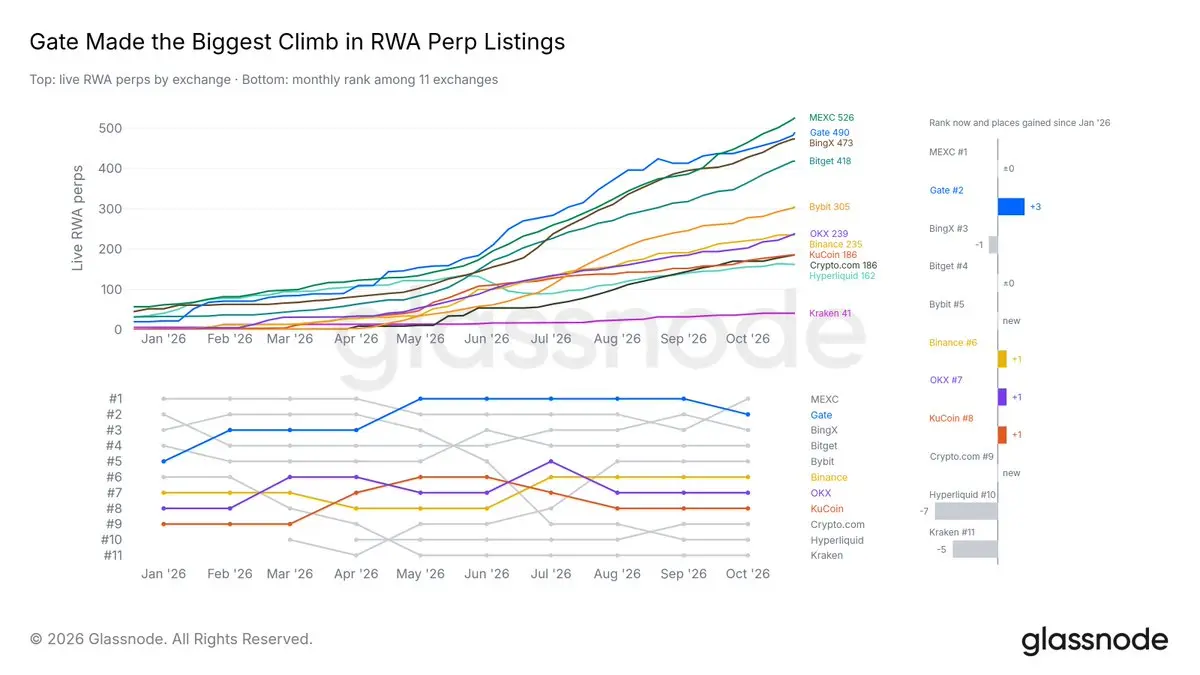
Perpetual contracts are futures contracts without an expiration date. Major exchanges have now launched perpetual contracts covering stocks, ETFs, indices, commodities, and currencies. We refer to these as RWA perpetual contracts, which are based on real-world assets. Among the exchanges we track, the number of tradable contracts has grown from about 190 at the beginning of the year to over 3,200 now.
In terms of the number of launched RWA perpetual contracts, Gate has outpaced any other exchange this year: rising from fifth place in January to second place now, and ranking first from June to September. The platform currently offers 490 varieties, up from 20 at the beginning of the year.
Open Interest Rising Accordingly
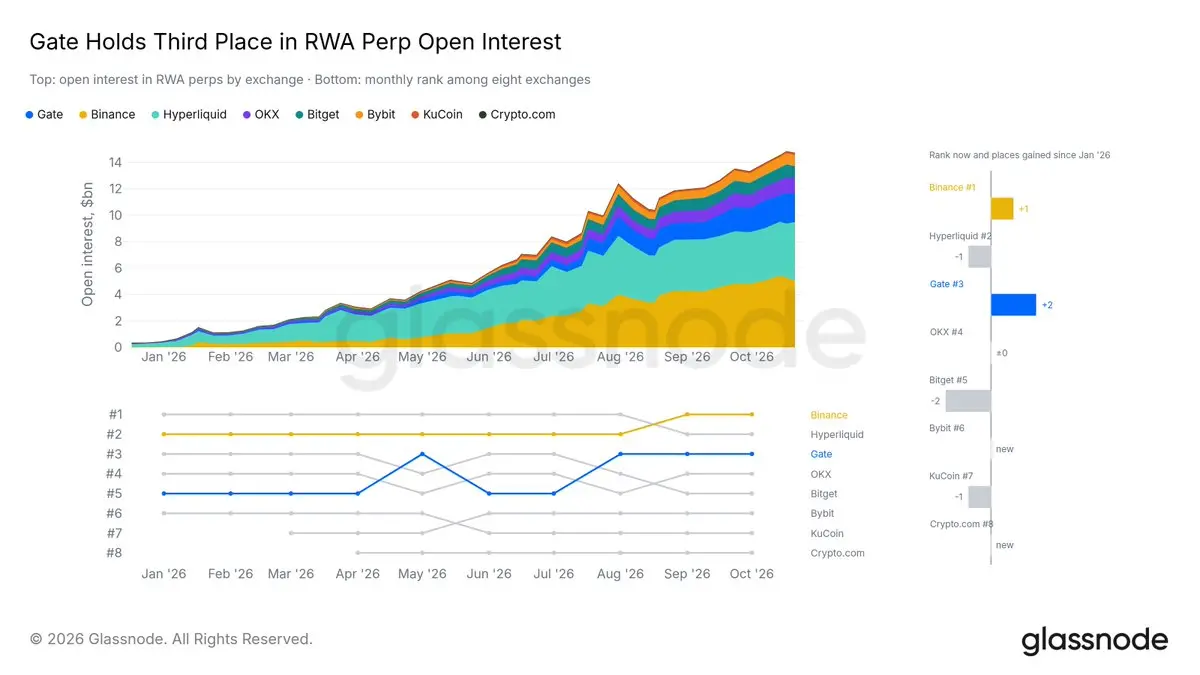
Traders are keeping pace with newly launched varieties. Among the eight exchanges we can track, the open interest size of RWA perpetual contracts (the total value of all open positions) has grown from about $350 million at the beginning of the year to about $15 billion.
Gate accounts for about $2.1 billion of this, more than 20 times its January level, and in every weekly data since late July, it has ranked third behind Binance and Hyperliquid.
Open interest is a way for traders to vote with their feet, indicating where they trust to deposit margin. Following last month's largest hacking incident in crypto history, the trust landscape of platforms has changed. To win traders' trust (a strategy that has proven very successful), Gate released a security proof alongside its proof of reserves to demonstrate how it safeguards these funds. Gate reports that even if all hot wallets were lost, the assets held in cold storage or with independent custodians would still cover 104.58% of user assets. Please note that these are Gate's own disclosed figures, and independent third-party audits are underway. To protect individual accounts, Gate also offers the Gate Guard free program, which can compensate eligible users up to $200,000 each time someone else steals a user's account and transfers funds.
Conclusion
Bitcoin has undergone a cleanup: realized losses have reached capitulation levels, and leverage has been cleared. At the lows, the accumulation zone from August absorbed selling pressure, and buying shifted to the buy side, with U.S. buyers paying a premium on Coinbase. However, broad demand remains lacking, stablecoins are shrinking, miners are selling, and funds are flowing out of ETFs.
The dense area between $62,000 and $66,000 is the current focus. If it can reclaim the short-term holder cost basis of $74,100, it will confirm that a bottom is forming. A daily close below $62,000 would put August buyers at a loss, and with few buyers below and a large accumulation of long liquidations, this would open a downward channel to the June low of $58,500 and the realized price of $53,700.
Data as of November 17, 2026, 13:00 UTC.
 Risk warning Risk warning




Popular articles