On the day of Anthropic's IPO, U.S. stocks plummeted: the S&P fell by 2%, and the hundred billion IPO drained liquidity
 Core Viewpoint


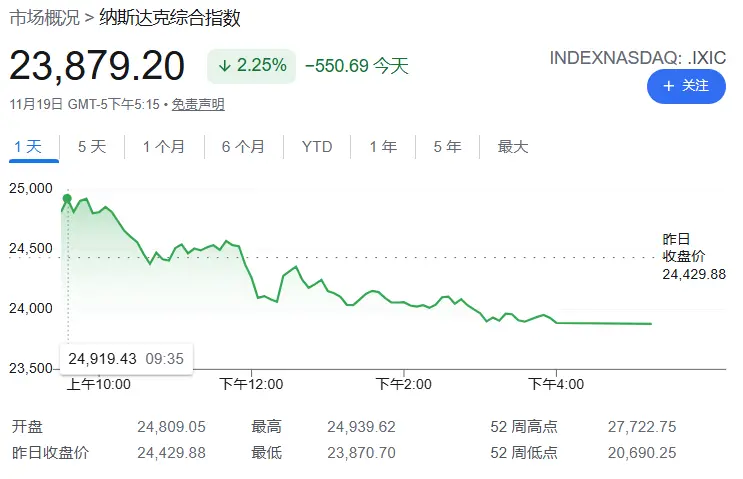
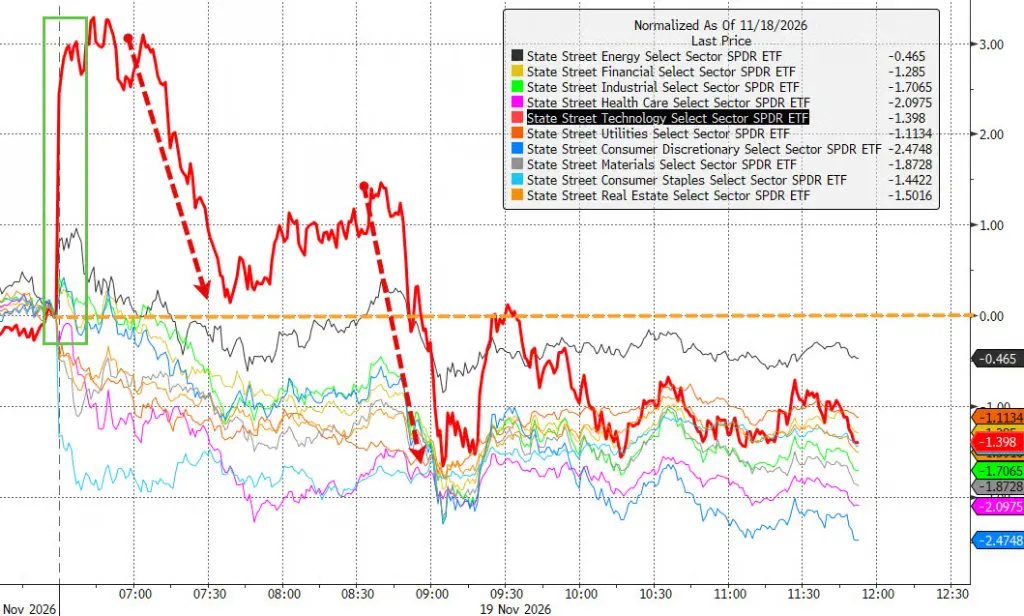
 On its first day of trading, Anthropic opened with a surge of 34% before retreating, closing up 17%; on the same day, U.S. stocks opened high and then fell, with the S&P 500 dropping 2% and the Nasdaq falling 2.25%, evaporating about $1.3 trillion in a single day. Hunterbrook shorted AMD, profited from a $100 billion IPO, and market makers created extreme negative gamma, all of which amplified the decline.
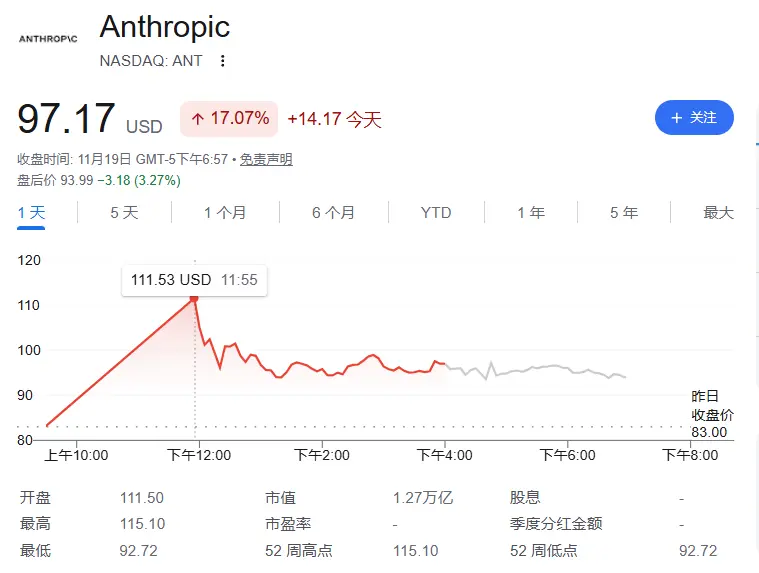
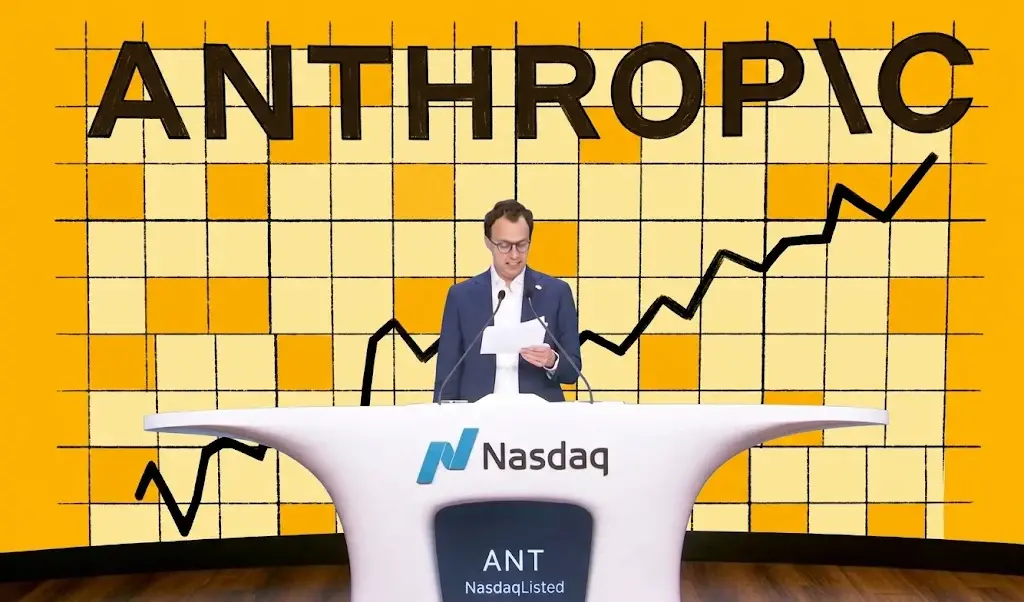
On November 19, Anthropic was priced at $83 for its IPO, soaring to $111.50 at the opening, creating a buzz. However, the opening price turned out to be the peak, as the stock price quickly fell back, closing at $97, with a narrowed increase of 17%.
Meanwhile, the U.S. stock market also experienced a rise and fall—Nasdaq rose over 2% at the opening but closed down 2.25%, with a daily fluctuation exceeding 4 percentage points. The S&P 500 saw a market value evaporation of about $1.3 trillion that day, closely matching the fundraising scale of Anthropic's IPO.
During the trading day, the short-selling firm Hunterbrook released a report shorting AMD, putting pressure on the entire AI sector; the over $100 billion IPO financing scale drained market liquidity, compounded by market makers being in an extreme negative gamma state and monthly options expiration pressure, becoming a core driver of the market's violent fluctuations. The storyline of Anthropic's first day of trading was supposed to be a moment of reinforcement for AI faith but unexpectedly turned into a stress test.
Opening: Everything Looks Great
Before the U.S. stock market opened on Thursday, November 19, an atmosphere of optimism filled the market.
Anthropic listed at an issuance price of $83, above the upper limit of the previous roadshow range, corresponding to a valuation of about $1.1 trillion, setting a record for the highest fundraising scale in IPO history, which boosted overnight U.S. stock futures across the board.
At 9:30 AM Eastern Time, the Nasdaq Composite Index immediately surged over 2%, with the S&P 500 rising in tandem, and market sentiment was momentarily high. At that time, the market generally interpreted this largest tech IPO in history as a strong signal that AI trading remained healthy.
Jake Behan, Head of Capital Markets at Direxion, stated, "The market had been discussing whether AI trading had peaked, so seeing Nvidia exceed expectations and then seeing traders willing to chase Anthropic above the issuance price is a noteworthy signal." "This does not end all valuation controversies, but it strongly indicates that the market is not ready to give up on this trade."
However, the good times did not last long.
Opening at Peak
Shortly after the opening, a report from Bloomberg and other media quickly spread across Wall Street trading desks: "Anthropic's IPO reportedly allocated almost none of the shares to most institutional buyers."
This news instantly alerted the market. ZeroHedge analyzed that there were two interpretations behind this:
· Either the underwriters were extremely confident in demand and deliberately compressed institutional allocations to ensure a price explosion after listing;
· Or, institutions were simply unwilling to take shares at $83, ultimately having to pass the chips to retail investors who were less sensitive to price.
The market seemed to lean towards the latter.
Morning to Noon: AMD Plummets, Chip Sector Suffers
Just as the market was teetering, another "bomb" exploded.
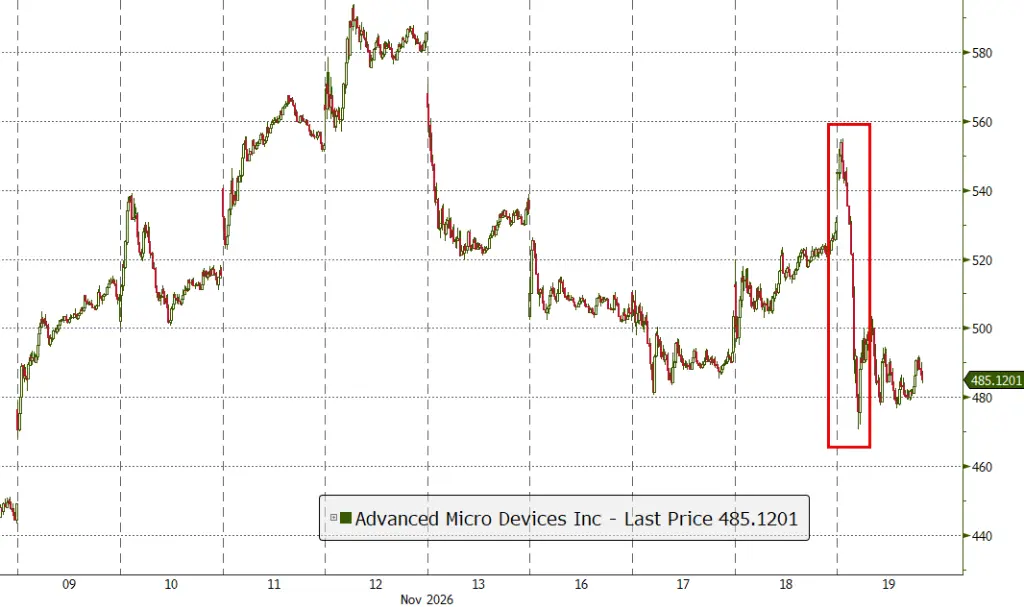
The short-selling firm Hunterbrook released a report disclosing that it had shorted AMD, accusing the company of continuously providing firmware updates to companies blacklisted by the U.S., while also having ties to some companies that previously sparked regulatory controversies for Nvidia.
AMD responded immediately: "These claims distort AMD's business practices and partnerships."
However, the statement did not stop the decline. AMD's stock fell over 9% in a single day, dragging the entire chip and AI sector down.
At Noon, Anthropic Faces Sell-Off Immediately After Opening
At noon Eastern Time, Anthropic officially opened at $111.50, up over 34% from the $83 issuance price.
However, just at the moment of opening, the stock price faced a sell-off—"profit-taking" logic came into play. Meanwhile, the market also nearly simultaneously dropped to its intraday low.
According to The New York Times, this trend mirrored the situation when SpaceX went public in June this year, where a similar pattern of a quick drop after an opening surge occurred, and investors were psychologically prepared for it.
Anthropic ultimately closed at $97 per share, with an increase narrowed to 17%.
Afternoon: Decline Accelerates, Broad Retreat
In the afternoon, the decline further spread.
The Nasdaq reversed from an opening gain of over 2% to close down 2.25%, with a daily fluctuation exceeding 4 percentage points. The S&P 500 closed down 2%, with all 11 sectors in the red, and the market value evaporated by about $1.3 trillion—almost equivalent to Anthropic's valuation scale at listing.
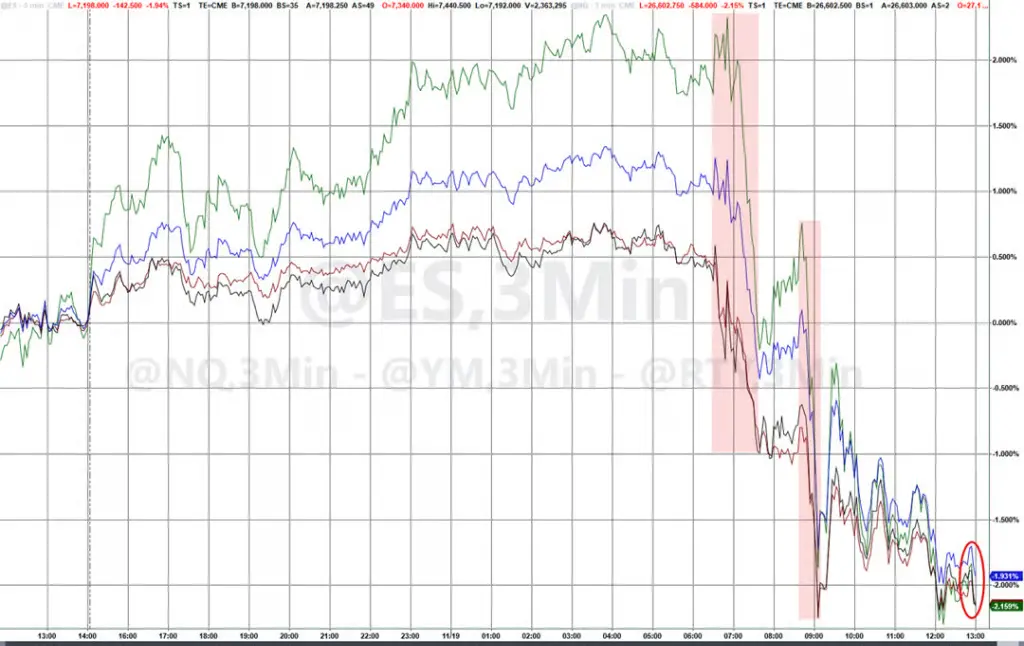
This sell-off was not just a tech stock issue. All components of the S&P 500 consumer discretionary sector fell in the afternoon, led by Williams-Sonoma—whose third-quarter results showed sales fell short of analyst expectations. Strong consumer spending has been a crucial pillar of resilience in the U.S. economy this year, making investors particularly sensitive to signals of a slowdown in consumption.
On that day, the VIX fear index for U.S. stocks rose to nearly 28, VVIX (volatility of volatility) broke 125, and the one-month implied correlation of the S&P 500 rose in tandem—analysts stated that these indicators pointed to a broad de-risking environment rather than isolated sell-offs at the individual stock level.
This marked the sixth consecutive trading day of decline for the S&P 500, the longest losing streak since April 2024.
Hidden Drivers Include Negative Gamma and Liquidity Drain
This sharp decline had multiple hidden clues.
First, the technical structure was extremely fragile.
Nomura Securities strategist Charlie McElligott had previously warned that under the "quadruple risk" of Nvidia's earnings report, Anthropic's listing, and options expiration, market makers' "negative gamma" exposure had risen to its highest level since 2019.
When market makers are in a negative gamma state, they are forced to hedge in the direction of the market—selling when the market falls, further amplifying the decline. A large influx of 0DTE (zero-day-to-expiration) options in the afternoon further crushed longer-term support.
Second, the IPO itself "drained" market liquidity.
This IPO raised a total of $81.3 billion (including $26.7 billion in vendor placement, totaling over $100 billion). Trading desk news indicated that market participants sold gold, copper, cryptocurrencies, and AI proxy assets like Nvidia to raise funds for subscriptions. This claim aligned with market movements: gold fell below $3,800, copper prices dropped about 5%, and cryptocurrencies corrected across the board.
Third, the drag from the consumer sector was more pronounced.
All non-essential consumer stocks in the S&P 500 fell in the afternoon. Strong consumer spending has been a core pillar of resilience in the U.S. economy this year, and this signal heightened investors' concerns about a slowdown in consumption.
Fourth, year-end profit-taking pressure.
Meanwhile, institutional investors also had their calculations. The New York Times pointed out that despite recent market volatility, investors overall enjoyed substantial returns this year. Around Thanksgiving, traders tend to lock in profits, as market liquidity tends to tighten towards year-end, making it more challenging to execute trades at ideal prices.
Optimists Have Not Given Up
Goldman Sachs analyst Rich Privorotsky issued a warning early that day, stating, "Today feels important." He noted that institutions' net positions in tech stocks were about 18%, far below the index's 29% weight, at a low allocation level near a five-year extreme—this means that as long as the market does not decline significantly, it could trigger a short-covering rally.
Direxion also stated that the market overall still held a positive attitude towards Anthropic's IPO, with Nvidia's better-than-expected earnings report and Anthropic's smooth listing jointly providing confidence that "AI trading has not yet ended."
As for what comes next, the market's focus turns to the monthly options expiration date on November 20—when the concentrated expiration of negative gamma positions will be the next key observation window.
 Risk warning Risk warning

Popular articles