BTC $79,377.17 -0.68%
ETH $2,502.71 -0.00%
BNB $742.19 -0.61%
XRP $1.40 -0.22%
SOL $104.27 -1.09%
TRX $0.3345 -0.17%
DOGE $0.0914 +1.59%
ADA $0.2222 +0.31%
BCH $261.47 +1.53%
LINK $12.80 -1.93%
HYPE $85.28 -2.12%
AAVE $132.91 -1.06%
SUI $0.8324 +4.31%
XLM $0.1940 +3.97%
ZEC $1,144.93 -3.65%
BTC $79,377.17 -0.68%
ETH $2,502.71 -0.00%
BNB $742.19 -0.61%
XRP $1.40 -0.22%
SOL $104.27 -1.09%
TRX $0.3345 -0.17%
DOGE $0.0914 +1.59%
ADA $0.2222 +0.31%
BCH $261.47 +1.53%
LINK $12.80 -1.93%
HYPE $85.28 -2.12%
AAVE $132.91 -1.06%
SUI $0.8324 +4.31%
XLM $0.1940 +3.97%
ZEC $1,144.93 -3.65%

aries

All
Article
Flash

Vice Governor of the Central Bank Lu Lei: The boundaries of responsibility for intelligent payment systems cannot be ambiguous, and a self-discipline convention will be released

According to Mobile Payment Network, Lu Lei, a member of the Party Committee and Vice President of the People's Bank of China, stated at the 15th China Payment Clearing Forum that intelligent agent payments must not blur the boundaries of responsibility between consumers, operating institutions, and algorithm systems. Lu Lei believes that the essence of payment is the transfer of fund ownership, which objectively requires that the results of transactions are predictable, responsibilities are definable, and traces are traceable. Large models and autonomous intelligent agents have characteristics such as output randomness and insufficient transparency of logic. If transaction decision-making authority is blindly or excessively granted to intelligent agents, it will affect the trust foundation of fund transactions. The current governance rules of the payment industry and dispute resolution mechanisms are built around "humans as the final decision-makers in transactions." The new model of intelligent agents automatically initiating and assisting in transactions easily blurs the boundaries of responsibility, and the existing governance rules need to be optimized and improved.Regarding the issue of insufficient compatibility of protocol standards in the field of intelligent agent payments, Lu Lei emphasized that the dispute over protocols is essentially a dispute over business rules and technical standards, as well as a struggle for dominance in the era of artificial intelligence. The People's Bank of China continues to strengthen its tracking research on technological innovation, especially intelligent agent payments, guiding the Payment Clearing Association to leverage its advantages in industry self-regulation. Based on extensive soliciting of opinions, they will formulate and publish the "Self-Regulatory Convention for Intelligent Agent Payment Applications," and will continue to work on coordinating protocols and standards, as well as innovating risk governance. Lu Lei proposed three hopes to market institutions: actively respond to and implement the industry self-regulatory convention, with payment security and risk prevention as the bottom line, and consumer rights protection as the focal point; continuously track the trends of cutting-edge technologies such as large models and intelligent agents both domestically and internationally, and build technical reserves and application capabilities; adhere to the principle of rules and standards first, strengthen coordination and compatibility among different protocols and standards, and cooperate with regulatory authorities to promote the construction of a foundational protocol and technical standard system for intelligent agent payments.
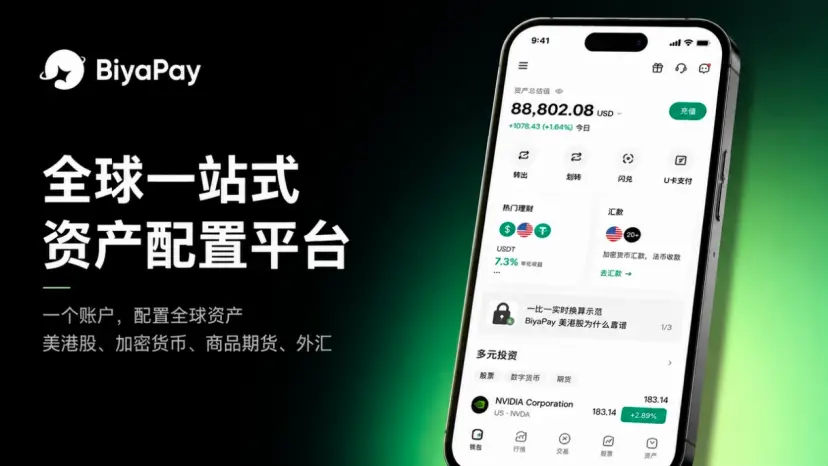
Gate gStocks has been fully upgraded, expanding the boundaries of tokenized securities applications with five major financial functions

Gate gStocks' tokenized securities service has undergone a comprehensive upgrade, officially launching five major financial functions: collateralized borrowing, idle asset management, unified accounts, leveraged trading, and stock dividends, further expanding the integrated application scenarios of stock assets from trading, yield management to liquidity management.Currently, gStocks supports over 58 global tokenized securities, covering various assets such as U.S. stocks, Korean stocks, unlisted equity, and ETFs, and employs a 1:1 native stock reserve mechanism to provide users with a transparent and trustworthy asset holding experience. At the same time, gStocks supports 24/7 trading with a minimum investment of 1 USDT, lowering the participation threshold. After this functional upgrade, users can release liquidity through collateralized borrowing without having to sell their held gStocks assets; idle stock assets can also participate in yield management through idle asset management. In addition, gStocks has deeply integrated into the Gate unified account system, supporting tokenized stock assets as trading collateral and providing features such as leveraged trading, long and short strategies, and stock dividends, further enhancing asset utilization efficiency.

U.S. SEC Chairman: Will promote on-chain capital market reforms and clarify the boundaries of digital asset securities

U.S. SEC Chairman Paul S. Atkins stated during a speech at the 2026 Reagan National Economic Forum that the U.S. Securities and Exchange Commission is advancing the "New Era of the SEC" regulatory reform, focusing on modernizing digital asset regulation, promoting the development of on-chain capital markets, and supporting the U.S. to become a "global crypto hub."Paul Atkins criticized the previous SEC's "regulatory hostility" towards the digital asset industry, stating that a large amount of crypto innovation was forced to move overseas as a result. He mentioned that with the support of the Trump administration, the SEC has launched "Project Crypto" and is collaborating with the U.S. Commodity Futures Trading Commission to promote on-chain market infrastructure and coordinate crypto regulation.The SEC has recently clarified which digital assets are considered securities and which are not, and is advancing an innovative exemption mechanism for "tokenized listed securities," while also studying how on-chain trading systems can fit within the existing regulatory framework.In addition, Paul Atkins emphasized that the SEC will reduce "over-disclosure" and regulatory burdens, promoting the "Make IPOs Great Again" reform, which includes lowering compliance costs for listed companies, increasing IPO flexibility, and formally proposing the repeal of climate disclosure rules introduced during the previous administration. The future of the U.S. capital markets should be built on a foundation of "free markets and innovation-driven" principles, and the role of regulatory agencies should be to provide clear rules and legal certainty, rather than suppressing technological development.

Standard Chartered Bank: It is expected that by the end of 2028, the scale of on-chain tokenized assets will reach $4 trillion, with DeFi protocols being the biggest beneficiaries

According to The Block, Geoffrey Kendrick, the global head of digital asset research at Standard Chartered Bank, stated that the total scale of on-chain tokenized assets is expected to reach $4 trillion by the end of 2028, with stablecoins and real-world assets (RWA) each accounting for $2 trillion. Standard Chartered believes that DeFi protocols with mature risk control systems and scalability will be the main beneficiaries of this trend, while the advancement of the U.S. Clarity Act may become an important catalyst for accelerating the on-chain transition of traditional finance.Kendrick pointed out that the core advantage of DeFi lies in "composability." In an on-chain environment, the same asset can simultaneously earn yields, serve as collateral, and maintain liquidity, which the traditional financial system cannot achieve with similar efficiency. He stated that this structural advantage means "1+1=3." Standard Chartered cited BlackRock's tokenized U.S. Treasury fund BUIDL as an example, noting that the product not only yields about 4% from U.S. Treasuries but can also be converted into sBUIDL for use in lending protocol collateral and serves as a reserve asset for products like Ethena USDtb and Ondo OUSG.The report also noted that the current scale of off-chain assets is still about 1,000 times that of on-chain assets, and the tokenization of institutional-grade assets may become the core source of growth for the next phase of the industry. Regarding institutional adoption, Standard Chartered mentioned that Aave's asset scale once matched that of the 38th largest bank in the U.S., and the current daily trading volume of on-chain stablecoin lending has reached $1.5 billion to $2 billion.At the same time, the Bitcoin lending product developed in collaboration between Coinbase and Morpho currently has a loan scale of about $1.75 billion, covering approximately 22,000 borrowers, indicating that traditional financial institutions are gradually using DeFi as underlying infrastructure.

Figure CEO: Blockchain will reconstruct Wall Street's "financial pipeline," and traditional intermediaries may be massively replaced

According to CoinDesk, Figure Technology Solutions CEO Mike Cagney stated that the company is trying to leverage blockchain to reconstruct the traditional credit market infrastructure and deeply integrate real-world assets (RWA), securitization, and DeFi.Data shows that Figure's loan issuance in March this year exceeded $1 billion for the first time in a single month, with a total lending volume of $2.9 billion in the first quarter, which annualizes to about $12 billion. Cagney stated that the company's goal is to reduce intermediaries in the securitization, lending, and stock lending markets through on-chain processes, lowering costs and enhancing liquidity.Currently, Figure has launched the yield-bearing stablecoin YLDS and has launched on-chain credit vault products on networks like Solana, allowing users to invest in tokenized credit assets or use them as collateral for borrowing. The company also plans to expand into the Ethereum ecosystem and explore stock tokenization and on-chain securities lending.Cagney believes that the true value of blockchain lies not in "putting everything on-chain," but in reconstructing the financial abstraction layer. "Financial assets such as loans, securities, and equity are naturally suited for on-chain processes, and the entire financial infrastructure may be rewritten as a result."
app_icon
ChainCatcher Building the Web3 world with innovations.

