Scan to download
BTC $68,862.24 -2.56%
ETH $2,010.50 -5.39%
BNB $616.21 -3.68%
XRP $1.40 -3.35%
SOL $82.76 -5.53%
TRX $0.2775 -0.46%
DOGE $0.0927 -3.36%
ADA $0.2619 -3.12%
BCH $519.75 -2.81%
LINK $8.52 -4.47%
HYPE $29.66 -7.17%
AAVE $108.77 -4.28%
SUI $0.9205 -4.67%
XLM $0.1569 -2.44%
ZEC $230.40 -4.33%
BTC $68,862.24 -2.56%
ETH $2,010.50 -5.39%
BNB $616.21 -3.68%
XRP $1.40 -3.35%
SOL $82.76 -5.53%
TRX $0.2775 -0.46%
DOGE $0.0927 -3.36%
ADA $0.2619 -3.12%
BCH $519.75 -2.81%
LINK $8.52 -4.47%
HYPE $29.66 -7.17%
AAVE $108.77 -4.28%
SUI $0.9205 -4.67%
XLM $0.1569 -2.44%
ZEC $230.40 -4.33%

l1

Dragonfly Partners: Large tech companies may launch crypto wallets by 2026, while fintech companies find it difficult to successfully build their own L1

The managing partner of the crypto venture firm Dragonfly, Haseeb Qureshi, recently stated that by 2026, a large tech company may integrate or acquire a crypto wallet, while more Fortune 100 companies will attempt to launch their own blockchains. However, he also pointed out that fintech companies trying to combat mainstream public chains by building their own L1 public chains are unlikely to succeed overall.Qureshi posted on the X platform that the next wave of enterprise adoption will mainly come from banks and fintech, with some institutions possibly building more private, permissioned networks based on public chains like Avalanche, while integrating existing tools such as OP Stack, Orbit, and ZK Stack, and maintaining connections with public blockchains. Previously, financial giants like JPMorgan, Bank of America, Goldman Sachs, and IBM have explored private blockchains, but most remain in testing or limited application stages.He also predicted that among the large tech companies dominating the internet ecosystem (such as Google, Meta, or Apple), one may launch or acquire a crypto wallet in 2026, a move that has the potential to bring billions of users into the crypto ecosystem.However, Qureshi is not optimistic about the "public" L1s launched by fintech companies, believing that they will struggle to compete with crypto-native networks like Ethereum and Solana in key metrics such as active addresses, stablecoin liquidity, and RWA. "The best developers will still choose neutral infrastructure chains."On the price front, Qureshi expects Bitcoin to rise above $150,000 by the end of 2026, although market dominance may decline; the stablecoin market size is expected to grow by about 60% in 2026, while USDT's share may drop from around 60% to 55%. He is also optimistic about the continued growth of prediction markets but believes that AI will struggle to form large-scale applications in the crypto space in the short term, except for security scenarios.

Ethereum will迎来 Glamsterdam and Heze-Bogota forks in 2026,推动 L1 scaling, etc

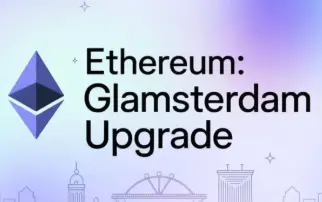
According to Cointelegraph, Ethereum will undergo several major upgrades in 2026, including the Glamsterdam and Heze-Bogota hard forks, aiming to achieve L1 scaling and further application of Web3 technologies.The Glamsterdam hard fork is expected to be launched in mid-2026, focusing on "block access lists" and "built-in proposer-builder separation" (ePBS). The former will enable perfect parallel processing, allowing Ethereum to shift from a single-channel model to a multi-channel model, significantly increasing transaction processing speed; the latter will help improve block generation efficiency and provide more time for the verification of zero-knowledge proofs. Additionally, the Gas limit for Ethereum in 2026 is expected to rise significantly from the current 60 million to 100 million or even 200 million, while the number of data blocks may increase to over 72 per block, further supporting L2 protocols to process hundreds of thousands of transactions per second. It is anticipated that 10% of Ethereum network validators will shift to validating zero-knowledge proofs, paving the way for L1 scaling to 10,000 transactions per second (TPS). The Heze-Bogota hard fork at the end of the year will also focus on enhancing privacy protection and censorship resistance, further optimizing the Ethereum ecosystem. Previously, Ethereum developers named the subsequent upgrade of Glamsterdam "Hegota."

Gate Ventures: Market undervaluation persists, Ethereum L1 scaling and institutional DeFi potential are simultaneously enhanced

According to the latest crypto weekly report released by Gate Ventures, directly applying traditional short-term valuation models (such as short-term price-to-earnings and revenue models) to blockchain networks can lead to systemic pricing errors.Due to the exponential characteristics of curves adopted by the crypto industry, the long-term growth potential of assets like ETH and SOL is still significantly underestimated; market sentiment and linear thinking obscure their true growth potential. Currently, overall market sentiment remains weak, with BTC rising 4.07% and ETH rising 6.82% last week, while the fear and greed index remains in the "extreme fear" range.In terms of ecosystem dynamics, Ethereum has raised the block Gas Limit to 60 million in preparation for the Fusaka upgrade, marking the largest execution layer expansion for Ethereum in nearly four years.Paxos has acquired Fordefi for over $100 million to strengthen its institutional custody services. Meanwhile, DWF Labs has launched a $75 million fund focused on building institutional-grade DeFi infrastructure.In terms of financing, the total amount disclosed last week was $164 million, which represents an 88% decrease compared to the previous period due to tightening market conditions. Infrastructure projects accounted for 62% of all financing, while DeFi recorded the highest financing scale.

app_icon
ChainCatcher Building the Web3 world with innovations.