Scan to download
BTC $66,542.55 -1.22%
ETH $1,945.01 -0.61%
BNB $608.20 -0.85%
XRP $1.36 -0.79%
SOL $78.93 -1.55%
TRX $0.2786 +0.19%
DOGE $0.0926 +1.05%
ADA $0.2623 +1.44%
BCH $511.07 -0.84%
LINK $8.39 +0.07%
HYPE $31.02 +0.92%
AAVE $111.90 +2.64%
SUI $0.9198 +1.48%
XLM $0.1555 -0.31%
ZEC $231.49 -2.78%
BTC $66,542.55 -1.22%
ETH $1,945.01 -0.61%
BNB $608.20 -0.85%
XRP $1.36 -0.79%
SOL $78.93 -1.55%
TRX $0.2786 +0.19%
DOGE $0.0926 +1.05%
ADA $0.2623 +1.44%
BCH $511.07 -0.84%
LINK $8.39 +0.07%
HYPE $31.02 +0.92%
AAVE $111.90 +2.64%
SUI $0.9198 +1.48%
XLM $0.1555 -0.31%
ZEC $231.49 -2.78%

miners

Bitcoin miners enter the "surrender phase": production costs inverted, both hash rate and stock prices under pressure

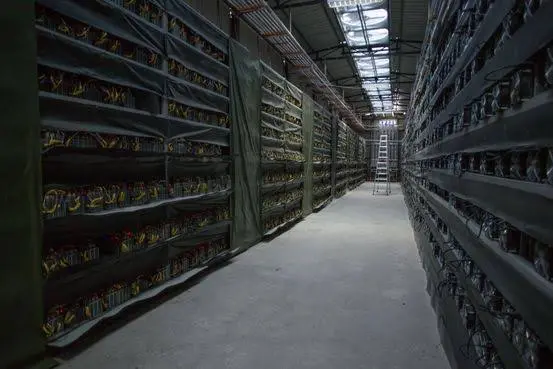
Bitcoin mining has entered a severe phase, with unit hash rate revenue dropping to a historical low of about $35/PH. Affected by a significant market correction, the price of Bitcoin has fallen over 50% from its 2025 peak of $126,000, currently hovering around the $60,000 range. Against this backdrop, the average production cost of a single Bitcoin across the network is approximately $87,000, about 45% higher than the current market price, marking the first large-scale "underwater operation" since the bear market of 2022.CryptoQuant defines the current phase as the "surrender phase," characterized by the accelerated shutdown of old mining machines and a noticeable contraction in overall network hash rate. As a result, the stock prices of listed mining companies such as MARA Holdings and Riot Platforms have dropped over 20% this week, with funds flowing towards more stable traditional assets like gold.Meanwhile, North America's mining hubs (especially Texas) are facing severe winter storms, forcing some mining farms to limit power usage to ensure the stability of the civilian power grid. Coupled with miner exits, the network experienced a historic difficulty adjustment of about 11% on February 9. However, due to the significant drop in coin prices, the profitability recovery effect from the difficulty adjustment is limited.The industry's "Miner Profitability Sustainability Index" has fallen to 21, indicating that, except for a few operators with low electricity costs and high efficiency, most miners have completely compressed profit margins. For companies with electricity prices above $0.05 per kilowatt-hour or those still using older model mining machines, this difficulty adjustment is unlikely to reverse the risk of total shutdown.To cope with the "2026 mining winter," leading companies are accelerating their transition to artificial intelligence (AI) and high-performance computing (HPC). IREN and Core Scientific have redirected some of their data center power capacity to support generative AI businesses to secure more stable long-term contract revenues. Recently, Bitfarms announced a complete exit from Bitcoin mining to focus on its AI strategic transformation.

JPMorgan: The decline in Bitcoin prices, coupled with high electricity costs, has led to selling pressure in the market from high-cost miners

JPMorgan analysts believe that for the recent price trends of Bitcoin, the resilience of Strategy (stock code MSTR) is more important than miner activity. Although the world's largest Bitcoin holder has not yet begun to sell, Bitcoin miners seem to be facing increasing selling pressure.JPMorgan Managing Director Nikolaos Panigirtzoglou and his team noted in a report on Wednesday that the recent pressure on Bitcoin prices is mainly due to two factors: first, the recent decline in Bitcoin network hash rate and mining difficulty; second, the latest developments surrounding Strategy. Analysts stated that the decline in hash rate and mining difficulty reflects the influence of two forces: China's reaffirmation of its ban on Bitcoin mining following a surge in private mining activities, and the low Bitcoin prices combined with high energy costs squeezing profits, leading to the exit of high-cost miners outside of China.Analysts pointed out that while a decline in hash rate typically increases miner revenue, "Bitcoin prices are currently still hovering below their production costs," which brings selling pressure to the Bitcoin market. JPMorgan analysts have currently revised their estimate of Bitcoin's production cost down to $90,000, from $94,000 last month. According to analysts, this update is based on an electricity price assumption of $0.05 per kilowatt-hour, and for high-cost producers, every increase of $0.01 per kilowatt-hour will raise their production costs by $18,000.JPMorgan's report stated: "Against the backdrop of high electricity prices and low Bitcoin prices squeezing profits, some high-cost miners have been forced to sell Bitcoin in recent weeks."
app_icon
ChainCatcher Building the Web3 world with innovations.