BTC $80,680.66 -1.28%
ETH $2,370.79 -1.49%
BNB $734.64 -1.41%
XRP $1.28 -3.30%
SOL $101.97 -2.54%
TRX $0.3296 +0.01%
DOGE $0.0777 -2.89%
ADA $0.2082 -3.71%
BCH $275.97 -4.01%
LINK $11.68 -4.09%
HYPE $76.18 -2.87%
AAVE $141.27 -5.43%
SUI $0.9478 -4.69%
XLM $0.1705 -3.95%
ZEC $1,167.15 -5.15%
AAPL $346.82 +0.16%
AMZN $248.19 -1.17%
GOOGL $320.64 -1.64%
MSFT $523.48 +0.92%
META $642.52 -1.10%
NVDA $211.33 -1.84%
TSLA $371.42 -2.23%
SNDK $1,237.42 -5.80%
INTC $86.39 -1.92%
SPCX $147.30 -1.07%
MU $880.98 -0.44%
AMD $515.83 -0.87%

senator

All
Article
Flash

U.S. Senator investigates Tether's payment of $6.3 million to a company held by a former White House cryptocurrency advisor

U.S. Senator Richard Blumenthal has launched an investigation into the payment of approximately $6.3 million by the stablecoin issuer Tether to the consulting firm Nxum. Nxum was co-founded by former White House cryptocurrency advisor Bo Hines, who holds one-third of the company's shares. On October 22, Blumenthal sent a letter to Tether CEO Paolo Ardoino, requesting the contracts between the two parties, cryptocurrency payment records, wallet addresses, and communication content.Tether is accused of paying Nxum $415,000 per month since May 2025 for strategic communications, lobbying, and public relations services. Blumenthal pointed out that Bo Hines, while serving as the executive director of the White House Digital Assets Advisory Committee, still held shares in Nxum and coordinated affairs with the company through encrypted communication applications. He also questioned whether Tether transferred cryptocurrency through the marketing company Notorious and then allocated funds to Nxum shareholders. Tether began directly contracting with Nxum after August 2025 and hired Bo Hines to oversee the newly established U.S. operations. Blumenthal has requested that Tether, Nxum, and related parties respond by November 6, noting that the relevant allegations have not yet formed a legal determination, and Tether has not publicly responded.

first_img Gemini founder's PAC invested $81,000 in advertising to support Paxton's campaign for Texas Senator

The super political action committee Digital Freedom Fund, initiated by Gemini co-founders Cameron Winklevoss and Tyler Winklevoss in 2025, submitted documents to the Federal Election Commission on Tuesday, reporting for the first time advertising expenses exceeding $81,000 to support Republican candidate Ken Paxton's campaign for the Texas Senate seat, while opposing Democratic candidate James Talarico. Early voting in Texas began on October 19, with Election Day on November 3.As of September 30, the PAC has raised approximately $34 million, and its expenditures are not limited to Texas. Documents show its involvement in the Ohio Senate race between Republican candidate Jon Husted and Democratic candidate Sherrod Brown, bringing its total support for Husted to about $7 million. Another crypto industry PAC, Fairshake, also reported over $13 million in direct mail advertising expenditures this week, with approximately $9 million supporting Husted and over $4 million opposing independent candidate Dan Osborn in the Nebraska Senate election.These expenditures indicate potential support for candidates who favor crypto policies and legislation. Prediction contracts from Kalshi and Polymarket suggest that Democrats are favored to regain majority control of the House and Senate by 2027, and the majority party in both chambers will influence the legislative process for bills like the Digital Asset Market Structure Act, which failed to pass procedural voting in the Senate last month. Paxton previously defeated incumbent Senator John Cornyn in the May Republican primary, receiving over $500,000 in advertising support from the Fellowship PAC, backed by Anchorage Digital and Cantor Fitzgerald, with the funds executed through the Nxum Group co-founded by Bo Hines.

first_img Senator writes to Cantor, inquiring about the relationship with Tether

On October 8, 2026, Senator Richard Blumenthal, the chief member of the minority party of the U.S. Senate Permanent Subcommittee on Investigations, sent a letter to Cantor Fitzgerald Chairman Brandon Lutnick, requesting the preservation of documents and answers regarding the company's relationship with the stablecoin issuer Tether. The deadline for responses to the five-page letter is October 23, 2026. This request comes from the minority party of the subcommittee, is part of an investigative inquiry, and is not a law enforcement order, nor does it constitute a determination against Cantor, nor does it alter the operation or redemption of USDT.The letter states that since President Trump took office again, the valuation of Cantor's 5% stake in Tether has risen from $600 million to an estimated $10 billion, with Cantor earning tens of millions of dollars each year for holding assets on behalf of Tether; former Cantor Chairman and current Secretary of Commerce Howard Lutnick has profited over $250 million during the same period, including a $192 million distribution from Cantor. The page notes that the above content reflects allegations and estimates made by the senator, and does not represent conclusions drawn from this request. Blumenthal also wrote that Tether claims to operate in El Salvador, but the vast majority of its assets are in the U.S., held by Cantor.

first_img Senator Daines introduced the ADAPT Act, which exempts stablecoin payments from capital gains tax and introduces wash sale rules

U.S. Senator Steve Daines (Republican from Montana, member of the Senate Finance Committee) has officially introduced a 56-page digital asset tax bill, named the "Aligning Digital Assets with Tax Principles Act" (ADAPT Act). The bill aims to establish clearer tax rules for scenarios such as stablecoin payments, network fees, staking, and lending, and plans to extend existing tax rules like wash sales and constructive sales to apply to digital assets.The core provisions of the bill state that taxpayers generally do not need to recognize gains or losses when using compliant U.S. dollar stablecoins to purchase goods and services, while exempting brokers from information reporting obligations for qualifying consumer transactions; however, this exemption does not apply to traders and market makers. The bill also extends wash sale rules and constructive sale rules to digital assets, with compliant stablecoins excluded from the constructive sale provisions to limit loss harvesting behavior in crypto assets.Additionally, the bill proposes to exempt digital assets used to pay for network, transaction, or gas fees of $10 or less from gain or loss recognition and allows qualifying digital asset traders and dealers to choose to account for them at fair market value. The bill also stipulates rules for income sources from staking and mining, a non-recognition framework for digital asset lending, a safe harbor for foreign investors' transactions, and definitions for digital asset classifications; most provisions will apply to tax years or transactions after December 31, 2026. Previously, the U.S. House Ways and Means Committee passed its own "Digital Asset Tax Certainty Act" on September 16 by a vote of 38 to 5.

U.S. Republican Senator John Curtis called for an investigation into Donald Trump Jr. and Hunter Biden, involving cryptocurrency business

U.S. Senator John Curtis from Utah, a Republican, wrote to Chuck Grassley, the Chairman of the U.S. Senate Judiciary Committee, and Dick Durbin, the Chief Minority Whip, calling for an investigation into whether Donald Trump Jr. and Hunter Biden exploited their presidential family connections for personal financial gain, and requested subpoenas for both individuals. Curtis pointed out that Donald Trump Jr. had accepted wedding gifts from Russian oligarch Umar Kremlev, actively promoted family-backed cryptocurrency ventures, and served as an advisor for a prediction market platform; the related companies are regulated by the Commodity Futures Trading Commission. Donald Trump stated that his son has returned the relevant funds to Umar Kremlev.Curtis also called for an investigation into Hunter Biden's substantial business dealings with foreign entities, as well as whether the two utilized their relationship with the president to create commercial value. He mentioned that Joe Biden pardoned Hunter Biden in December 2024, who had previously denied involving his father in business transactions. A week prior to this investigation call, Senate Republicans failed to garner enough Democratic support to advance the Digital Asset Market Clear Act. Some Democratic senators opposed the bill, citing reasons including Donald Trump's use of cryptocurrency ventures to gain benefits related to the presidency; Donald Trump disclosed that he earned $1.4 billion from digital asset-related businesses in 2025.

first_img U.S. Senators Discuss Requirement for AI Companies to Fulfill Duty of Care

According to a report by Reuters, U.S. Senate negotiators are discussing legislation that would require artificial intelligence companies to demonstrate that they are taking reasonable precautions to prevent their tools from causing harm. The proposal aims to grant the U.S. Secretary of Commerce the authority to require developers to provide proof of reasonable steps taken to prevent harm, referred to as "duty of care," and to authorize the dispatch of government auditors to test relevant products. Reuters was unable to immediately determine what constitutes "reasonable," and the related legislation is still under discussion.Even if Congress passes the measure, its prospects of becoming law still face significant resistance. U.S. President Donald Trump stated on Monday that existing authorities are sufficient to regulate and prosecute technology companies, suggesting that he would not sign a bill that sets new rules for artificial intelligence. Senate Majority Leader John Thune, Senate Commerce Committee Chairman Ted Cruz, and Democratic Senator Amy Klobuchar, who is involved in the negotiations, are discussing the proposal. Thune told reporters on Monday that Congress could set safeguards against more significant threats without compromising the U.S.'s leading position in the artificial intelligence race.Klobuchar stated in a statement that she is continuing to push for bipartisan legislation to oversee the greatest risks posed by artificial intelligence models, including requiring developers to work with government experts to validate and test models to ensure safety. Senior Democratic member of the Commerce Committee Maria Cantwell is also involved in the discussions. Reuters reported on Friday that negotiators are also discussing the possibility that if the government determines that certain artificial intelligence models are unsafe and wishes to prevent their release, it could be brought to federal court, where companies could challenge that decision. The portion of the measure involving federal courts would also prevent states from enforcing their own laws regarding specific risks associated with artificial intelligence models.

hot_img U.S. Senator demands that Waller disclose his conversations with Trump, questioning the transparency of the Federal Reserve

Nick Timiraos, the chief economic reporter for The Wall Street Journal and known as the "mouthpiece of the Federal Reserve," recently wrote that Federal Reserve Chairman Kevin Warsh is facing intense scrutiny from Congress. On Wednesday local time, four members of the Senate Banking Committee, led by Senator Chris Van Hollen, jointly sent a letter to Warsh, demanding that he publicly disclose all communication details with President Donald Trump.Earlier reports indicated that Warsh had maintained frequent phone contact with Trump since taking office, but the publicly available schedule from the Federal Reserve does not record any related calls during Warsh's early days in office. Lawmakers believe that this "selective transparency" could raise concerns about government interference in monetary policy.Kevin Hassett, the director of the White House Council of Economic Advisers, previously stated that Warsh has long engaged in economic discussions with Trump but claimed that Trump would not pressure the Federal Reserve. Trump later denied the related reports, stating that he had only had a brief conversation with Warsh a few days prior.Currently, the Federal Reserve has stated that it will continue to delay the disclosure of the chairman's schedule according to established rules. The market is watching to see if Warsh will provide additional information and whether this matter will affect public confidence in the independence of the Federal Reserve.

U.S. Senator Warren: Supports cryptocurrency regulatory legislation, but opposes the CLARITY Act

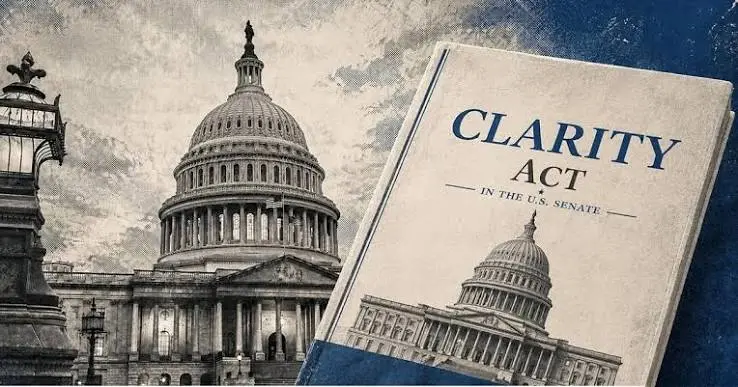
According to CoinDesk, U.S. Senator Elizabeth Warren stated that she supports pushing for cryptocurrency-related legislation but does not support the current CLARITY Act, believing that the bill fails to adequately address key issues such as corruption, consumer protection, national security, and economic risks.Warren pointed out that the crypto industry needs a clear regulatory framework, but the regulatory plan must ensure investor rights and the safety of the financial system. She believes that the CLARITY Act is lacking in preventing conflicts of interest, protecting consumers, and reducing potential systemic risks.The CLARITY Act aims to further clarify the division of regulatory responsibilities for the U.S. digital asset market, establishing a clearer legal framework for cryptocurrency asset trading, issuance, and market participants. Supporters believe that the bill helps enhance industry certainty and promote innovation.However, some Democratic lawmakers, including Warren, have previously expressed concerns about cryptocurrency regulatory legislation, arguing that some proposals could weaken the power of regulatory agencies and create regulatory arbitrage opportunities for large crypto companies.Warren has long taken a cautious stance on crypto assets, focusing on consumer protection, financial stability, and the risks of illegal activities in the crypto market. This statement indicates that U.S. cryptocurrency regulatory legislation still faces a struggle between the two parties and different interest groups.

Senators request the SEC to investigate Trump Meme Coin

Democratic Senators Elizabeth Warren and Richard Blumenthal sent a joint letter to SEC Chairman Paul Atkins on Monday, requesting an investigation into whether the Trump-related Meme coin violates securities laws. The two senators cited reports indicating that since the launch of the Trump Meme coin in January 2025, nearly 1 million crypto wallets have incurred losses totaling approximately $3.81 billion. They accused Trump of potentially being involved in a "Rug pull" and requested the SEC to determine whether there are fraudulent arrangements or violations of securities laws.Warren and Blumenthal stated that despite the token being promoted by Trump's own public statements, its price has significantly declined, and it is necessary for the SEC to investigate whether there is a fraudulent scheme and to prevent the continued extraction of immense value from hundreds of thousands of investors. At the time of this letter, the White House is evaluating the latest ethical compromise regarding conflicts of interest related to Trump's crypto business. This compromise is seen as key to advancing the "Clarity Act" crypto market structure bill. A previous version of the draft, endorsed by Trump, faced Democratic opposition because it only restricted public officials and their spouses from issuing or sponsoring digital assets, did not cover other family members, and was to be enforced by the Department of Justice.The two senators also stated that Trump has a "keen interest" in encouraging supporters to trade his Meme coin and claimed that Trump has earned $636 million from this Meme coin. As the Senate is set to enter its August recess on Friday, with the focus shifting to the November elections, whether the "Clarity Act" can advance in the short term still depends on whether both parties can reach a consensus on the conflicts of interest related to Trump’s crypto dealings.
app_icon
ChainCatcher Building the Web3 world with innovations.