SignalPlus Volatility Column (20240524): The Boot Has Dropped!

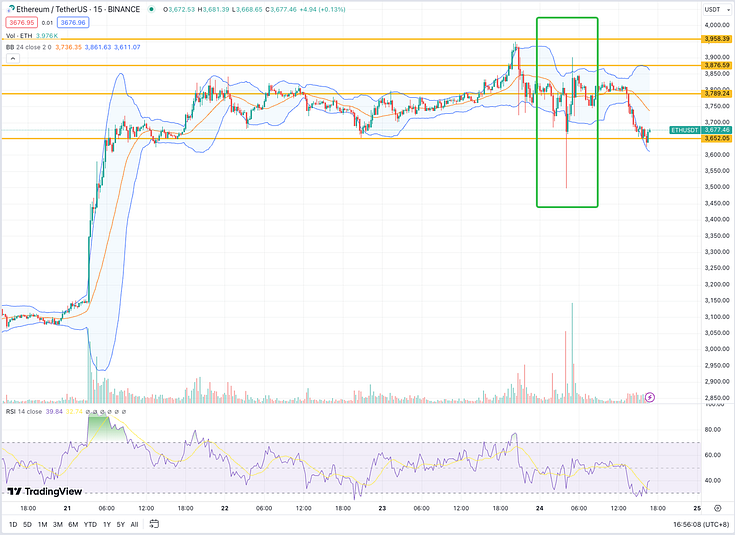
 The official announcement from the U.S. SEC confirmed the approval of the ETH Spot ETF, but the price of ETH plummeted significantly to around $3,500 after the news release.

Last night (MAY 23), the market did not disappoint expectations, buzzing from nine o'clock in the evening until dawn. Before the highly anticipated announcement of the ETH spot ETF, the price of Ethereum rose to challenge the 4000 point high, but quickly retraced all gains from the previous day at the peak, dipping to around 3720 USD. Although the price quickly recovered most of the lost ground, the latest data released by the U.S. at 21:45 (UTC+8) dealt a heavy blow to the risk market. The data showed that the U.S. May S&P Global Composite PMI index recorded 54.4, far exceeding expectations of 51.1 and reaching a new high in the past two years, with both manufacturing and services PMI also surpassing expectations. After the data was released, U.S. Treasury yields surged sharply, with the ten-year yield reaching 4.4980% at one point, and the two-year yield also climbing back above 4.9%. Traders pushed back the expected first rate cut by the Federal Reserve to December, and the futures market reduced the annual rate cut bets to 34 basis points, with all three major indices closing down, while Nvidia rose against the trend, gaining 9.3% to reach a historic high.

Source: SignalPlus, Economic Calendar

Source: Investing, U.S. May S&P Global Composite PMI index far exceeded expectations to a two-year high; ten-year Treasury yield
At four o'clock in the morning, as the highlight of the night, the U.S. SEC officially announced the approval of the ETH Spot ETF, but the price of ETH plummeted significantly to around 3500 USD after the news release, echoing the traditional market saying "Buy the rumor, sell the news." Over the past week, ETH had already risen by 29%, and cryptocurrency commentator Zach Rynes commented on last night's move, saying "everyone who wanted to buy the approval already did." If we delve into the reasons why it did not rise after the positive news, an important point is that this so-called "approval" only granted permission for eight institutions (BlackRock, Fidelity, Grayscale, Bitwise, VanEck, Ark, Invesco Galax, Franklin Templeton) to submit 19 b-4 applications, and actual trading will have to wait for the Form S-1 to be approved, which could take weeks or even months. Moreover, the approval was ostensibly granted by the SEC's Trading & Markets division, not by SEC Chairman Gary Gensler and the other four commissioners. In this regard, Bloomberg's ETF analyst James Seyffart believes that making decisions in this delegated manner is normal; it would be unreasonable for the SEC to require an "official vote" for every decision and document. Regardless of how this detail is speculated, the crypto community has expressed a positive attitude towards this approval, calling it a "historic move."
Source: TradingView
In terms of options, after the ETF news, the overall implied volatility (IV) levels for BTC and ETH quickly fell, with the curve steepening, and the average IV level for ETH returning to around 63%. In trading, the large Top Trade for ETH showed a clear directional trend. We observed a short put of 20,000 ETH at the end of May and June, along with two long call spreads totaling about 12,000 ETH at the end of July. As mentioned above, the approval of the 19 b-4 applications was just a preliminary victory; the S-1 application for the ETH spot ETF still needs several weeks or even months for approval. Until TradFi funds truly flow into the cryptocurrency market, the price rise will have more substantial momentum.

Source: Deribit (as of MAY 24 16:00 UTC+8)

Source: SignalPlus

Data Source: Deribit, overall ETH trading distribution

Data Source: Deribit, overall BTC trading distribution

Source: Deribit Block Trade

Source: Deribit Block Trade

 Risk warning Risk warning