






Arthur Hayes's new article: Will the politicization of the Federal Reserve bring new risks to the market?
 Core Viewpoint

 How will Trump and Bessent achieve market regulation from a political perspective?
Original Author: Arthur Hayes
Compiled by: LenaXin, ChainCatcher
Background
Buffalo Bill Bessent aims to promote the re-industrialization of America, attempting to slow the inevitable decline of "American hegemony" from quasi-empire to pure power nation-state. This plan is not new. The emergency situation during World War II led the Treasury Department to take over the Federal Reserve from 1942 to 1951. Part of the Bessent plan involves reshaping the yield curve, specifically yield curve control. How does the shape of the yield curve during that period compare to today?

The Federal Reserve set the yield cap for short-term Treasury bills at 0.675% and for bonds with maturities of 10 to 25 years at 2.5%. The current yield curve exhibits a dual high characteristic for both short-term and long-term rates, with the key difference being that the slope of the yield curve back then was much steeper than it is today. Before discussing the benefits of the 1951 yield curve shape for various sectors of the U.S. economy, we must first understand how the Federal Reserve uses existing tools to implement such yield curve control.
(Note: The maturity of Treasury bills is less than one year.)
By lowering the Interest on Reserves for Banks (IORB) and the Discount Window (DW) rate, the Federal Reserve can control the yield on short-term Treasury bills, allowing it to anchor short-term yields at target levels. By creating money through the System Open Market Account (SOMA) and purchasing bonds from banks, the Federal Reserve can ensure that yields do not exceed the established caps.
This action will expand the Federal Reserve's balance sheet, and the current toolbox of the Federal Reserve is fully capable of achieving the 1951 yield curve shape. The core question this article aims to explore is: How will Trump and Bessent achieve such a level of market control politically?
Benefits of the 1951 Yield Curve Shape for Various Sectors of the U.S. Economy
The core of the Bessent plan is to transfer the power of credit creation and the resulting economic growth from the Federal Reserve and non-bank financial institutions like private equity firms to small and medium-sized bank loan officers. In a recent op-ed criticizing the Federal Reserve published in the Wall Street Journal, he described it in populist terms as "supporting Main Street rather than Wall Street."
There is no need to overly concern ourselves with the fact that entering its economic "hall of fame" requires the Federal Reserve to print money, a non-democratic tool. Bessent himself is a two-faced Treasury official: he harshly criticized "bad girl" Yellen's policies before taking office, yet faithfully implemented the same policies afterward.
Regional banks need a steep yield curve to create profitable credit. The chart below shows that although overall interest rates were lower from 1942 to 1951, the slope of the yield curve was steeper, making it safer and more profitable to lend to small and medium-sized enterprises. Small and medium-sized enterprises are the lifeblood of the U.S. economy, contributing about 46% of jobs with fewer than500 employees.

Bessent Plan: Yield Curve Control and Power Struggle at the Federal Reserve
However, when the Federal Reserve becomes the primary issuer of credit, these businesses struggle to obtain loans because the liquidity created by printing money flows to large corporations that can access institutional debt capital markets. Additionally, the current yield curve is too flat or even inverted, leading to excessive lending risks for regional banks to such corporations. I discussed this phenomenon in my article “Black and White” and referred to Bessent's monetary policy as "poor people's quantitative easing 4.0."
This addresses the challenges on the industrial side; to placate the loyal American populace reliant on a continuously expanding welfare state, the government must lower its own financing costs. By anchoring long-term bond yields, Bessent could issue an unlimited amount of junk bonds, which the Federal Reserve would faithfully purchase with its printing press. Interest expenditures would plummet, and the federal deficit would collapse.
The value of the dollar relative to other inferior fiat currencies and gold will crash. This would allow American industry to export competitively priced goods to Europe and then to the Global South, competing with China, Japan, and Germany.
Conceptually, it is easy to understand why Bessent wants to control the Federal Reserve and implement yield curve control, but the current Federal Reserve is unwilling to cooperate. Therefore, Trump must place his loyal followers within the Federal Reserve; those who do not submit to "Bill's" will will surely face the consequences. Federal Reserve Governor Lisa Cook is about to experience the 2025 version of the high-pressure water treatment; if you are unaware of what this entails, you might want to look at the suppression tactics used by the authorities during civil rights protests in the 1960s.
The Federal Reserve has two committees that control the key policies necessary for the success of the Bessent plan: the Federal Reserve Board (FRB) indirectly controls the Discount Window rate through the regulation of the IORB, while the Federal Open Market Committee (FOMC) manages the System Open Market Account. How do the voting members of these two committees interact? How are the voting members generated? How can Trump quickly and legally gain control of both committees? Speed is crucial, as there is just over a year until the 2026 midterm elections, and Trump's "red team" Republicans will face fierce competition.
If the Republicans lose control of the Senate and Trump fails to gain a majority voting power in both committees before November 2026, the "blue team" Democrats will veto all his future nominations. The risk of misjudgment increases sharply when entering purely political realms, as human behavior is full of unpredictability. My goal is to point out the most likely paths to success, while my investment portfolio is likely to hold only Bitcoin, altcoins, physical gold bars, and gold mining stocks in the long term.
Guide to the Federal Reserve Committees
Understanding the bureaucratic decision-making mechanism of this institution that controls the power to print money is central to my investment strategy. In exploring the operational mechanisms of the global inferior fiat currency system, I have noticed many operational secrets of various countries' treasuries and central banks.
As a complex adaptive system filled with human decision nodes, these bureaucratic institutions must follow "rules" to achieve their objectives. The non-elected bureaucratic system that governs U.S. monetary policy (the Federal Reserve) is also constrained by specific rules. Therefore, based on how this policy will yield to the will of Trump and Bessent, I will answer the following questions:
- Which institutions have voting rights over various parts of monetary policy?
- How many votes are needed for a proposal to pass?
- Who appoints these committee members?
- When do committee members change?
First, Trump must secure four seats in the seven-member Federal Reserve Board (FRB) to gain a majority. He can then leverage this majority in the FRB to obtain a majority of seven voting rights in the twelve-member Federal Open Market Committee (FOMC). I will explain the monetary policy authority of these two institutions, the member selection mechanisms, and how Trump can achieve control before the first half of 2026.
Analysis of the Federal Reserve Board (FRB) Structure
The Federal Reserve Board (FRB) consists of seven members nominated by the president and confirmed by the Senate. The current list of governors is as follows:

The FRB holds two important powers:
- Setting the Interest on Reserves for Banks (IORB).
- Voting to approve the selection of Federal Reserve Bank presidents for rotating voting seats on the FOMC.
To effectively control short-term interest rates, the FRB must set the IORB within the upper and lower limits of the federal funds rate determined by the FOMC. Therefore, when there is internal coordination, the FRB and FOMC work together, and the IORB will remain within that range.
Political and Bureaucratic Rules Limiting the Federal Reserve
If the FRB supports Trump and believes the monetary policy set by the FOMC is too tight, can the FRB take action to force the FOMC to lower the federal funds rate?
The FRB can set the IORB at a level significantly below the federal funds rate. This would create arbitrage opportunities for member banks of the Federal Reserve, allowing them to borrow at the lower DW rate by providing collateral and then lending at the SOFR rate.
(Note: The technical details of how the Discount Window rate is linked to the IORB are beyond the scope of this article. The rate for borrowing from the Discount Window is determined by the presidents of the various Federal Reserve Banks, while the FRB controls the appointment and dismissal of these positions by approving the nominations made by the boards of directors of each district bank. The Secured Overnight Financing Rate (SOFR) is an alternative benchmark to the London Interbank Offered Rate (LIBOR).)
The Federal Reserve would be the loser, as it is essentially printing money to give to arbitrage banks. To avoid being harvested by financial titans like Jamie Dimon, the FOMC, even if unwilling to cooperate, must lower the federal funds rate to match the IORB level.
(Note: Jamie Dimon is the CEO of JPMorgan Chase and is considered one of the most powerful bankers in the financial empire.
"Trump Derangement Syndrome" (TDS) refers to: if someone opposes a policy simply because Trump supports it, they can be deemed to have this syndrome.)
If Trump holds a four-vote majority in the FRB, he can force the FOMC to quickly lower rates to his desired level. How many governors are loyal to Trump?
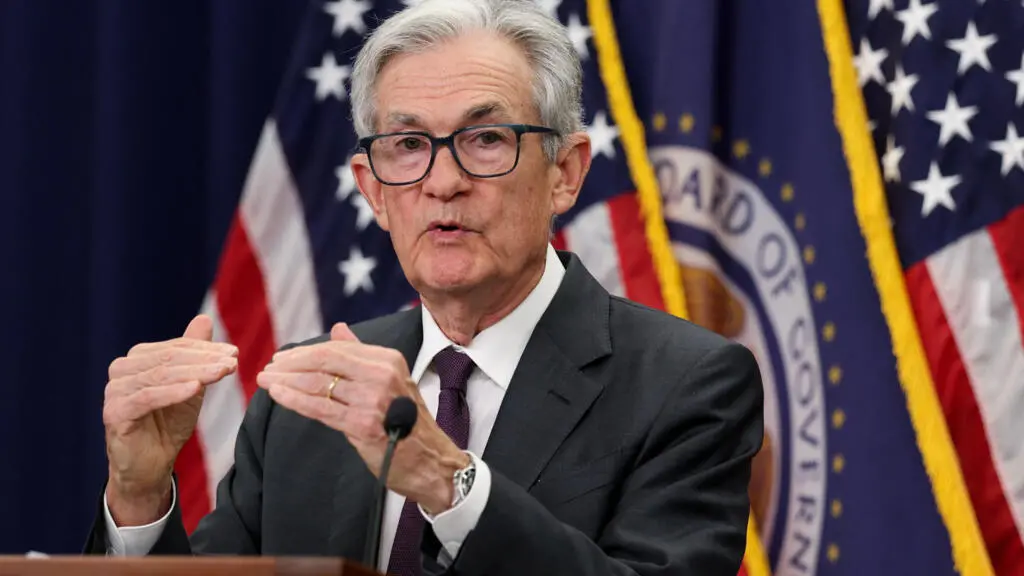
Due to the weak and ineffectual "softie" Jerome Powell's term as Federal Reserve Chairman ending in May 2026, some members of the board are competing for his position. To show loyalty to Trump, they openly discuss the Federal Reserve's policy direction and, on certain occasions, dissent during FOMC meetings, as evidenced by Bowman and Waller voting against in the July 2025 meeting.
(Note: In the latest FOMC meeting in September, although Bowman and Waller did not advocate for a larger 0.5% rate cut like Milan, analysts believe they achieved their policy goals by lowering the neutral rate in the dot plot and adopting a dovish forward guidance.)
Adriana Kugler suddenly resigned from her position this summer, and the Senate has confirmed Trump's nominee Stephen Miran to take over. Rumors suggest Kugler's husband was trading securities during the Federal Reserve's quiet period.
For readers lacking political connections, this behavior could be termed insider trading, and once the Justice Department gets involved, it’s a one-way ticket to prison. Kugler resigned voluntarily before being publicly humiliated by the Trump administration. With Kugler's departure and Miran's appointment, Trump's camp has gained three seats, just one short of the majority target.
Federal Reserve governors can also abuse their power. They engage in insider trading, while Governor Cook has been accused of falsifying mortgage applications. Bill Pulte, the Director of the Federal Housing Finance Agency, has accused Cook of mortgage fraud and called for her resignation, but she has steadfastly refused to step down.
Pulte has referred the case to the Justice Department, and Secretary Pam Bondi is reviewing whether to present the case to a grand jury for bank fraud charges. Grand juries almost always approve indictments, making it easy for the Justice Department to prosecute Cook, so I speculate that her hesitation is merely a negotiation tactic to secure a high-paying government or academic position from the Trump administration. Regardless, she will not remain in her position into early 2026.
Once Trump secures four voting rights, he can instruct the FRB to lower the IORB, quickly locking in the yield cap for short-term Treasury bills. Next, the FRB can lift the absurd regulatory constraints on regional banks, allowing them to lend to small and micro enterprises on Main Street.
The FRB is responsible for the regulatory authority over commercial banks. The final key step is to control the money supply, anchoring long-term yields at lower levels through the System Open Market Account (SOMA). To achieve this goal, Trump needs to control the FOMC.
So how can controlling the FRB help him gain a majority of seven votes in the FOMC?
Federal Reserve Bank Presidents
There are twelve Federal Reserve Banks in the United States. Going back to the agricultural era, the establishment of twelve regional banks was due to the need for different interest rates based on the types of goods and services provided to the national economy throughout the year. Each regional bank's president must receive at least four votes from the FRB to enter the FOMC.
Among the twelve regional bank presidents, only five have voting rights in the FOMC, with the New York Fed president holding a permanent voting seat. Therefore, each year, four different regional bank presidents rotate as voting members of the FOMC. In years ending in 1 or 6, the regional bank presidents must be re-elected by the boards of directors of their respective Federal Reserve districts, with a simple majority vote from Class B and Class C directors (four out of six).
All presidents will face re-election next February. Besides New York, the districts with voting rights include:
- Cleveland
- Minneapolis
- Dallas
- Philadelphia

Have you noticed the professional backgrounds of the majority of these board members?
They are either financiers or industrialists. If the money supply is more abundant and financing costs lower, their personal net worth will increase dramatically. These individuals also possess human weaknesses; when given autonomy, humans typically prioritize their own interests.
While I do not know their political stances, I am confident that even if they suffer from TDS, the wealth effect brought about by asset appreciation is precisely the remedy. In other words, if the district bank boards know that the FRB only approves candidates for FOMC seats who support loose monetary policy, they will naturally make choices that align with both Trump's and their own best interests.
If the district boards do not nominate dovish candidates for FOMC seats, the FRB will veto them. Trump now controls four of the seven votes, placing him in the majority.
Trump only needs to ensure that three of the four new voting members are loyal to him to secure a majority of seven votes in the FOMC. The key is to control the Federal Reserve's printing press, the "System Open Market Account (SOMA)." At that point, Trump's loyalists in the FOMC will initiate printing, purchasing vast amounts of junk debt that Bessent cannot find buyers for.
This is the 2026 version of the "Treasury-Federal Reserve Agreement," complete with a printing press gift package and yield curve control.
In the dirty fiat currency system, a mixed four-seven bottom card is more powerful than a pair of aces.
Bull Market Calculation
If anyone doubts Trump's determination to print money to "revive American hegemony," they should reflect on the historical context that drives elite politicians to push for radical change. American elite politicians have always resorted to any means necessary to maintain the imperial dividends of the ruling class. The relationship between African descendants and European immigrants continues to dominate American political and social discourse.
During the Civil War, Lincoln severely damaged the Southern Confederacy's economy by emancipating the slaves; after the federal victory, the ruling elite allowed the former Confederate states to implement segregation until 1965, when civil rights were formally granted to former slaves. As the cultural level of the former slave population improved and the communist ideology advocating for economic and civil rights spread, the lower-class black community gradually awakened.
The core issue is that the elite class needs these impoverished blacks to fight against communist "Charlie" on the Indochina front, produce export goods in Northern factories, provide domestic services in wealthy households, and work on Southern farms, while they can no longer tolerate their demands for equal rights broadcasted on television.
America also needs to project an image of capitalism superior to Soviet communism to the non-aligned world.
When the Declaration of Independence proclaims that "all men are created equal," yet police dogs bark at girls heading to desegregate schools, this image is clearly undignified. Therefore, Southern Democrat President Lyndon Johnson, facing intense dissatisfaction from his own class, became the banner bearer for the descendants of cotton-picking generations in their struggle for civil rights.
Now, in the face of a more united, prosperous, and militarily powerful Eurasian bloc (Russia, China, India, Iran), America needs to fundamentally change its credit distribution model.
Thus, I dare assert that when it comes to printing money, these white elites are not playing games.
Trump and Bessent view restoring America's global dominance as their mission, which requires rebuilding a solid manufacturing base to produce tangible goods. Chinese President Xi Jinping reached a similar conclusion in 2018 when responding to Trump's trade war against China; he suppressed the rampant growth of financial capital and tech giants to redirect the economy.
Who would have thought that Alibaba CEO Jack Ma would be invited to Zhongnanhai for "tea" and experience a trip to the billionaire prison?
Under Xi's leadership, China's best talents are no longer building inferior apartments and shared bicycle apps but are instead tackling green economy, rare earths, military drones, ballistic missiles, and artificial intelligence. After nearly a decade of development, China can now independently produce all tangible goods necessary to maintain national sovereignty in the 21st century without relying on the United States.
Do not doubt that Trump's team will stop at nothing to print money to meet the funding needs for America's transformation. I want to conduct an experiment: calculate the scale of credit that the Federal Reserve and commercial banking system will create by 2028.

From now until 2028, the Treasury must issue new debt to repay old debt and fill the government deficit. I used the Bloomberg terminal
During the COVID-19 pandemic, the Federal Reserve purchased about 40% of the Treasury bond issuance through SOMA, leading to balance sheet expansion. I believe this purchase ratio will reach 50% or even higher, as more foreign central banks are now aware that Trump will issue bonds recklessly and refuse to buy.
Estimating the growth of bank credit is more challenging. The most convincing method is to refer to data from the pandemic period: during Trump's "poor people's quantitative easing 4.0," bank credit grew by $2.523 trillion. Trump has about three years left to stimulate the market, which, based on this calculation, will generate $7.569 trillion in bank loans.
Do you think Bitcoin will rise to $3.4 million by 2028?
The answer is no. But I firmly believe its price will be significantly higher than the current level of about $115,000. My goal is to accurately grasp the trend direction and be confident that I have backed the fastest horse. The premise is that Trump will indeed print trillions of dollars to achieve his policy goals.
Disclaimer
The content of this article does not represent the views of ChainCatcher. The opinions, data, and conclusions in the text represent the personal stance of the original author or interviewee, and the compiler maintains a neutral position and does not endorse their accuracy. It does not constitute any professional advice or guidance, and readers should exercise caution based on independent judgment. This translation is for knowledge-sharing purposes only; readers should strictly comply with the laws and regulations of their respective regions and refrain from engaging in any illegal financial activities.
 Risk warning
 Risk warning