Morning News | Citibank plans to launch cryptocurrency custody services next year; Pyth Network collaborates with Kalshi

 Overview of Important Market Events on October 13
Organizer: Zhou, ChainCatcher
Important News:
- Citibank plans to launch crypto asset custody service next year
- Pyth Network partners with Kalshi to bring prediction market data on-chain
- China Renaissance is negotiating to establish a $600 million fund to invest in BNB, YZI Labs participating
- Hyperliquid co-founder: Hyperliquid's on-chain clearing is fully transparent and verifiable, CEX clearing data is severely underestimated
- Matrixport: This round of "surrender-style selling" is historically significant and has completely reshaped the crypto market's holding structure
What important events happened in the past 24 hours?
The probability of the Fed cutting rates by 25 basis points in October reaches 98.3%
According to ChainCatcher, as reported by Jin10, CME's "Fed Watch" shows that the probability of the Fed maintaining interest rates in October is 1.7%, while the probability of a 25 basis point cut is 98.3%. The probability of the Fed maintaining rates in December is 0%, with a cumulative probability of a 25 basis point cut at 4.5% and a cumulative 50 basis point cut at 95.5%.
Citibank plans to launch crypto asset custody service next year
According to ChainCatcher, as reported by CNBC, Citibank is planning to launch a crypto asset custody service in 2026, as stated by an executive in an interview.
As Wall Street giants continue to expand their presence in the digital currency space, Citibank's move shows that traditional financial institutions are accelerating their entry into this field. Biswarup Chatterjee, the bank's global head of service collaboration and innovation, stated that the bank has been developing crypto custody services for the past two to three years and has made substantial progress.
Pyth Network partners with Kalshi to bring prediction market data on-chain
According to ChainCatcher, in an official announcement, Pyth Network has established a partnership with the U.S. regulated event trading platform Kalshi to bring prediction market data to over 100 blockchain networks.
This collaboration marks the first large-scale on-chain circulation of regulated event data, providing developers and institutions with real-time event probability data services based on politics, economics, sports, and more.
Kalshi, as a designated contract market regulated by the CFTC, includes data on various markets such as the New York City mayoral election, F1 driver championships, MLB championships, and the number of rate cuts in 2025.
According to ChainCatcher, Garrett Jin, a whale who previously made headlines by selling over $4.23 billion in BTC to switch to ETH, stated that the deeper issue in the crypto industry is that trading platforms offer high leverage on assets lacking intrinsic value to meet user demand and increase profits. This high leverage has traditionally only existed in the forex market, where the underlying assets have value support, lower volatility, and liquidity provided by banks.
If trading platforms continue to offer extremely high leverage, they should at least establish mechanisms similar to stable funds, like those in the U.S. stock market, to provide liquidity support during crises. Only in this way can trust be rebuilt, capital be attracted back, and promote healthy market development.
The crash on October 11 further proved that the market desperately needs liquidity support under extreme volatility. The trading platform that first establishes a stable fund will not only attract capital inflow but also drive the entire industry forward.
Polymarket founder participated in Ethereum ICO during high school
According to ChainCatcher, as reported by Fortune magazine, Kalshi and Polymarket are competing for dominance in the prediction market space. This field has existed for years, but it is only expected to take off in 2024, driven by a more relaxed regulatory environment. Both companies announced new rounds of financing last week, but Polymarket's valuation has reached billions of dollars, causing a bigger stir.
The product differences between the two startups are almost as small as those between Uber and Lyft. Aside from Kalshi being slightly ahead in the regulatory process, the most significant difference is that Polymarket is built on blockchain infrastructure. Kalshi is eager to add crypto features, but catching up with its competitor is not easy—Polymarket has been trading and settling on the Polygon Layer 2 network since its inception, and its founder Shayne Coplan (27 years old) even participated in the Ethereum ICO while in high school.
According to ChainCatcher, Bitfinex Alpha's latest analysis report indicates that Bitcoin fell from above $126,000 to below $103,310 last week, a drop of 18.1%, triggering the largest nominal liquidation event in cryptocurrency history.
However, historically, markets often experience a "mechanical" rebound after liquidation-driven sell-offs. For Bitcoin, if it can recover and maintain above $110,000, it will confirm a stable phase and open up a rebound target around $117,000 to $120,000; conversely, if it fails to do so, it may face a retest of the $100,000 price region.
Strategy spends $27.2 million to purchase 220 Bitcoins, total holdings reach 640,250
According to ChainCatcher, Strategy Company announced it has purchased 220 Bitcoins for approximately $27.2 million.
As of October 12, 2025, the company's total Bitcoin holdings have reached 640,250, with a cumulative investment of about $4.738 billion and an average purchase price of $74,000 per coin. The company's Bitcoin return has reached 25.9% so far in 2025.
According to ChainCatcher, as reported by PRNewswire, Nasdaq-listed Ethereum treasury company BitMine Immersion Technologies disclosed an update on its cryptocurrency holdings. As of Eastern Time, the company holds: 3,032,188 ETH and 192 Bitcoins, in addition to holding $135 million worth of Eightco Holdings shares.
According to ChainCatcher, as reported by Bloomberg, China Renaissance is negotiating with investors to raise about $600 million to establish a special investment vehicle for investing in BNB, with YZI Labs expected to participate in the project.
According to ChainCatcher, benmo.eth wrote an article reviewing the USDe de-pegging event from the perspective of lending and leveraged trading. He pointed out that Binance offered three types of high-leverage products during the event: VIP Loan, Deposit and Loan, and leveraged trading, with the leveraged trading segment being the most affected.
Due to the real-time liquidation mechanism triggering a chain of liquidations, users with 5x revolving loans almost lost all their principal, becoming the main battlefield of this de-pegging event. The article analyzes that the event was ignited by macro news causing a market crash, which in turn triggered the liquidation of BTC and ETH leveraged positions, leading to a massive sell-off of USDe; meanwhile, Binance's ETH hot wallet automatically stopped withdrawals when gas fees were too high, preventing USDe from being redeemed on-chain, blocking the arbitrage channel, and causing the price to plummet to $0.66. Benmo.eth pointed out that Binance's compensation announcement explicitly identified the price anomalies between 5:36 and 6:16 (Beijing time) as non-market behavior and has initiated compensation. He suggested enhancing redemption efficiency through an internal mint-redeem mechanism or adjusting multi-signature limits to prevent similar events from happening again.
According to ChainCatcher, Hyperliquid co-founder Jeff.hl stated on the X platform that all orders, trades, and clearings of Hyperliquid are executed on-chain, and anyone can verify the clearing process and system solvency without permission. This transparency and neutrality make fully on-chain DeFi an ideal form of global financial infrastructure.
He pointed out that some centralized exchanges (CEX) have severely underestimated their clearing data. For example, if Binance has thousands of liquidations in the same second, it will only publicly display one, which could lead to the actual liquidation scale being underestimated by a hundred times. Jeff.hl expressed hope that the industry will regard transparency and neutrality as core features of the new financial system.
According to ChainCatcher, Matrixport released a chart today stating that "Trump's threat to impose 100% tariffs on China triggered a historic collapse in the crypto market, coinciding with a time when market leverage was high and sentiment was extremely optimistic. As prices fell, automatic liquidations on decentralized exchanges (DEX) began to trigger in a chain reaction. Due to insufficient liquidity and low trading volume, these liquidation orders were passively executed, further exacerbating the market sell-off. At one point, Ethereum's funding rate plummeted to -39%, marking one of the most severe corrections in recent years, almost clearing excessive leveraged positions in the market. During this decline, only a few traders benefited.
As volatility gradually subsides, market signs indicate that new long positions are likely to be rebuilt. This historically significant "surrender-style selling" has completely reshaped the holding structure of the entire crypto market.
According to ChainCatcher, ETF Store President Nate Geraci stated on the X platform that once the U.S. government shutdown ends, the approval doors for spot cryptocurrency ETFs may fully open. He pointed out that ironically, the fiscal deficit and political drama that hinder the approval process are precisely the issues that cryptocurrencies aim to solve.
Meme Popularity Rankings
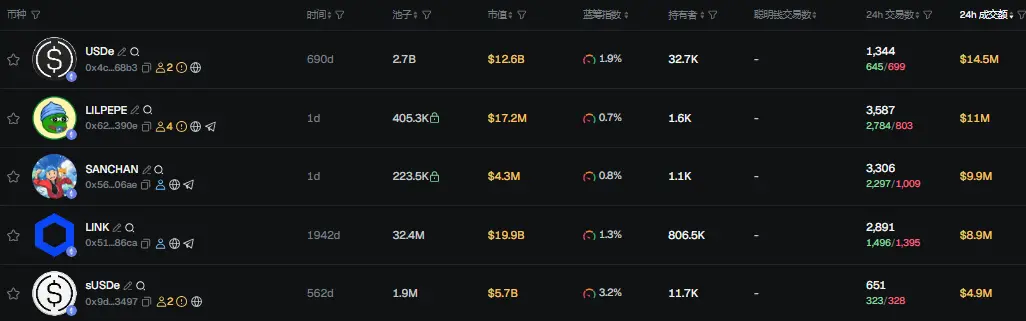
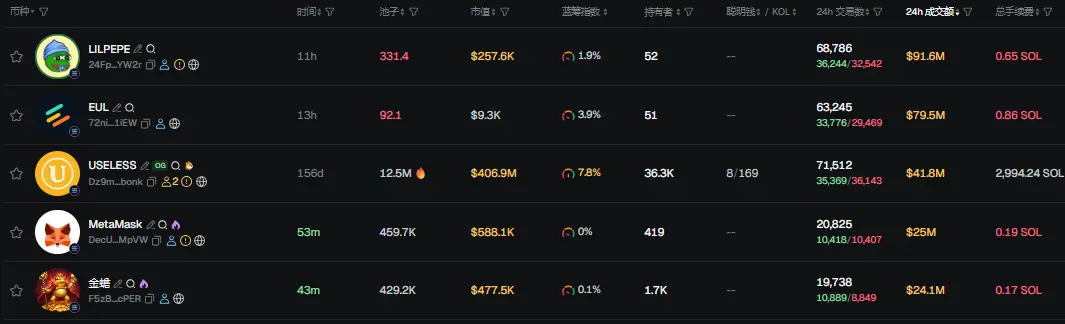
According to meme token tracking and analysis platform GMGN, as of October 14, 08:55,
The top five popular tokens in ETH over the past 24 hours are: USDe, LILPEPE, SANCHAN, LINK, sUSDe
The top five popular tokens in Solana over the past 24 hours are: LILPEPE, EUL, USELESS, MetaMask, Golden Toad
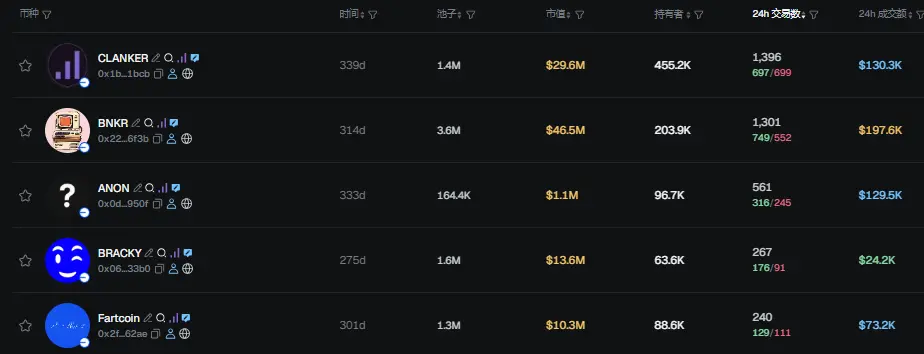
The top five popular tokens in Base over the past 24 hours are: CLANKER, BNKR, ANON, BRACKY, Fartcoin
What are some must-read articles from the past 24 hours?
Decentralized finance (DeFi) has undergone significant structural evolution through multiple market cycles. Although centralized exchanges (CEX) have consistently dominated in trading volume, decentralized exchanges (DEX) have been capturing market share from CEX in each cycle—this time, the competitive gap between the two has narrowed to unprecedented levels.
The core reason for this persistent market share difference is clear: decentralization itself brings fundamental infrastructure limitations. As a new financial infrastructure, blockchain has struggled to match CEX in speed, liquidity, and user experience for most of the past decade.
However, in each cycle, DEX has been making noticeable efforts to close this gap. By 2025, we have reason to ask: Will decentralized exchanges (DEX) ultimately replace centralized exchanges (CEX)?
Was the October 11 crash an organized attack? A detailed analysis of two major doubts
The black swan event from October 10 to 11 led to the largest liquidation in crypto history, amounting to $19.3 billion. Although initial reports attributed the cause to market panic triggered by tariff announcements, a deeper analysis of the data reveals some questionable aspects. Was this a coordinated attack against Binance and USDe holders? Let's examine the evidence.
Rejecting fantasy, the altcoin season may not come
If you are still waiting for the altcoin season, then you have already lost.
It has been nearly three years since Bitcoin's last cycle bottomed between $15,000 and $20,000. In the cryptocurrency space, three years is a long time. During these three years, those who have held positions from the last cycle are still in a state of loss, many of whom have been mentally destroyed. Many tokens have never recovered; narratives have faded; hype has died down; liquidity has dried up.
Most portfolios remain graveyards of dreams. Only a few tokens like Solana and BNB have brought real wealth effects. Ethereum has made some moves, but not enough to save those who entered late. Tokens that were favored in the last cycle, such as DOT and MATIC, are still declining. Gaming tokens are essentially declared dead. Those who believed in the metaverse and gaming narratives have watched their funds devalue month after month. Yet they still hold on and pray, as if religious faith could save them, but it won't.
Understanding Yieldbasis: A leveraged liquidity engine that eliminates impermanent loss
Yieldbasis may be one of the most anticipated DeFi projects of the fourth quarter.
The project, created by Curve Finance founder Michael Egorov, aims to transform constant-product AMM liquidity pools into "arbitrage trading" resistant to impermanent loss (IL), starting with Bitcoin. YieldBasis does not accept the premise that LPs must bear IL, but instead maintains a constant 2x leveraged position in BTC/stablecoin pools, tracking BTC's price at a 1:1 ratio while still earning trading fees.
Curve has provided a $60 million credit line of crvUSD to launch three BTC pools, using the same dynamic fee-sharing and governance mechanisms inspired by Curve's veCRV model.
This article will explore how YieldBasis eliminates impermanent loss, its leveraged liquidity engine and fee design, as well as the recent Legion sale, which raised nearly $200 million in FDV through performance-based allocations.
Black Swan Operator? Who exactly is Garrett Jin?
The market witnessed a black swan event yesterday, marking the largest liquidation day in crypto history, yet someone was able to accurately short the market in advance, opening a short position of over $1.1 billion and profiting over $80 million within 24 hours. Was this foresight or insider knowledge? The true identity of the whale has drawn market attention.
An on-chain detective's Threads revealed the whale's identity, stating that the whale is believed to be a Chinese individual named Garrett Bullish with multiple backgrounds, including serving as the operations director at Huobi (HTX), being the CEO of BitForex, which was embroiled in a trading scandal, and founding multiple crypto projects. Meanwhile, the source of his massive funds seems to have been traced to suspicious origins.
In response to the incident, Zhao Changpeng retweeted a post expressing hope that someone could cross-verify the information. Lookonchain indicated that Liquid Capital founder JackYi might know that the wallet sending ETH to obtain gas, 0x52d3, also transferred 1.31 million USDC to Trend Research's Binance deposit address.
Understanding 12 October planned TGE projects
This year, the overall trend of TGE (Token Generation Event) events in the crypto market has been on the rise. Data shows that the total financing in the first three quarters exceeded $1 billion, with individual project FDVs (Fully Diluted Valuation) reaching as high as $315 million.
Currently, several noteworthy projects have confirmed that they will conduct TGEs in mid to late October, signaling the arrival of a Q4 TGE boom. Below, we will provide detailed introductions to these projects.
 Risk warning
 Risk warning