From Currency to Orbit: Unlocking the True Value of Stablecoins in Corporate Settlements

 Compared to traditional cross-border payment models, stablecoins are gradually becoming a new settlement tool for enterprises due to their advantages of reducing exchange rate losses, transaction transparency, and efficient settlement.
1. Stablecoins are becoming a new tool for corporate settlement
Compared to traditional cross-border payment models, stablecoins are gradually becoming a new settlement tool for enterprises due to their advantages of reducing exchange rate losses, transaction transparency, and efficient settlement. According to a research report by Ernst & Young (EY) published in September 2025 titled "Stablecoins: adoption, optimism and regulatory clarity," 13% of enterprises have begun using stablecoins for cross-border payments, primarily to reduce transaction costs and accelerate payment speed. Among them, 41% of existing users reported that using stablecoins has reduced international transaction costs by at least 10%, while 54% of non-users plan to adopt stablecoin payments within the next year, indicating strong market interest and potential demand.

These data suggest that enterprises focus on payment efficiency, security, and compliance when using stablecoins—meaning that as the practice of using stablecoins increases, the focus has shifted to building a reliable, transparent, and auditable "settlement track." Through this track, enterprises can achieve safe and efficient cross-border fund flows without worrying about underlying currencies or technical details.
2. From "currency competition" to "track construction"
In recent years, competition in the stablecoin market has focused on currency market capitalization and issuance scale, with the fluctuations of USDT and USDC being the core of industry discussions for a long time. However, as enterprise demand deepens, the focus has shifted to "whether it can be used directly, whether it is compliant, and whether issues can be traced," marking the transition of stablecoin competition from "currency rivalry" to the "track construction" stage.
The EY report shows that when using stablecoins, enterprises tend to rely on third parties for technical and compliance support: 79% of financial institutions plan to leverage third-party services, and 73% will obtain licenses through partnerships to address the complexities of stablecoin integration. Most enterprises, for reasons of regulatory clarity and liquidity, immediately convert stablecoins into fiat currency after transactions.
These data further confirm the importance of "track construction" for stablecoins, which involves transforming stablecoins into backend resources and ensuring the reliability, compliance, and auditability of settlements as part of the front-end experience, similar to how mobile payment users like WeChat do not need to focus on the underlying channels. This logic requires dual support from technology and models:
- Technologically, by providing efficient exchange and dedicated payment channels between stablecoins and fiat currencies, addressing potential extra fees and settlement delays in cross-currency transactions;
- On the model level, enterprises not only need to integrate multiple currencies but also require a platform that can manage transactions uniformly, execute compliance audits, and track the flow of funds;
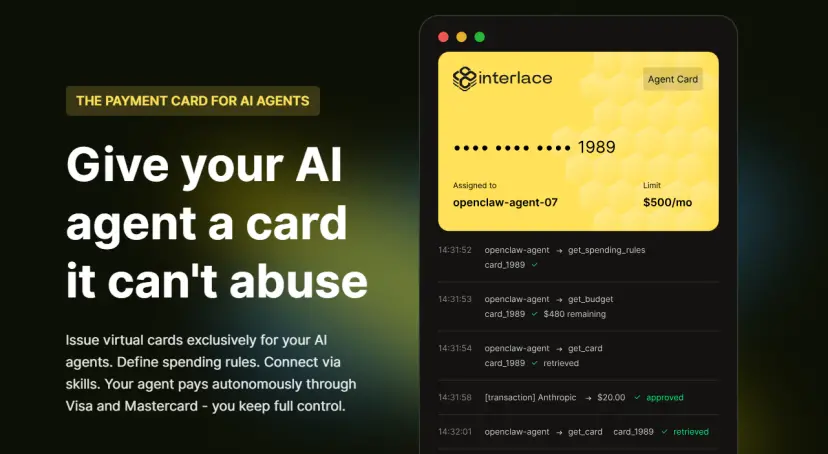
The innovative financial infrastructure platform Interlace, which bridges Web2 and Web3, aligns perfectly with this trend: enterprises can achieve unified management and exchange of fiat and cryptocurrencies through Interlace, and connect real-world scenarios through products like global accounts and the Infinity Card. Enterprises can perform transfers, crypto payments, and online procurement, while finance personnel can view multi-user transaction records in real-time, truly achieving "no need to focus on the underlying, just concentrate on the user experience." This combination of "account + payment tools + technical adaptation" is a typical embodiment of the stablecoin "payment track."
3. Compliance and ecology: the value loop of stablecoin tracks
The core of a high-quality stablecoin payment track lies in compliance, reliability, and auditability. As the global regulatory framework for stablecoins gradually clarifies by 2025—such as the US GENIUS Act requiring a 1:1 reserve pegged to the US dollar with monthly disclosures, the MiCA Act not including algorithmic stablecoins in the regulatory framework, and Hong Kong's "Stablecoin Regulation" implementing a licensing system—compliance has become the "lifeline" of the payment track, and platforms lacking compliance capabilities struggle to survive long-term.
For track builders, compliance capability not only determines coverage but also the credibility of enterprises, requiring a dual approach of "licenses + technology." Currently, Interlace has obtained financial licenses in the US, Hong Kong, Lithuania, Luxembourg, and other regions, forming a cross-regional network; it holds PCI DSS Level-1 security certification and combines non-custodial MPC wallets with on-chain AML, KYC, and KYT systems to achieve full-chain transaction traceability and real-time risk monitoring. This system ensures the safety and auditability of enterprise funds while meeting regulatory requirements across multiple regions. Among the 12,000+ enterprises it serves, including leading institutions like Bitget, its compliance capability is a core factor in gaining market recognition.
On the foundation of a compliant track, ecological construction is key to unlocking the value of stablecoins. According to the survey "Stablecoins: adoption, optimism and regulatory clarity," 56% of enterprises hope that stablecoin payments can be embedded in existing financial systems, and 70% indicated they would be more inclined to adopt stablecoins if they could integrate with ERP systems. This indicates that enterprises are not only concerned about payment settlements but also hope to achieve fund management, value-added services, and multi-scenario payments through the track, and to systematize business processes via embedded APIs and smart contracts.

For instance, through the Interlace CaaS API, enterprises can quickly integrate within 1-2 weeks to issue customized white-label cards, providing over 30 card segments that cover various online and offline consumption scenarios; idle funds can be appreciated through low-risk, high-liquidity US dollar money market fund investment products. In this way, the compliant track and ecology are closely integrated, ensuring payment security while creating sustainable value-added space for enterprises.
5. Conclusion
As enterprises' demands for payment efficiency, fund security, and compliance continue to rise, the true value of stablecoins lies not in the currencies themselves but in the ability to build a reliable, transparent, and auditable "settlement track." On this track, enterprises can not only achieve efficient cross-border fund flows but also establish a flexible ecology covering fund management, value-added services, compliance audits, and multi-scenario payments.
Whoever can build a complete ecosystem on a compliant track will enable enterprises to manage payments and funds more efficiently, securely, and sustainably, thereby truly unlocking the commercial value of stablecoins. The construction of this payment track not only provides enterprises with a new settlement tool but also lays the foundation for future intelligent and systematic enterprise operations, which is worth looking forward to.
 Risk warning Risk warning