Huobi Growth Academy | Macro Research Report on the Crypto Market: AI Bubble, Interest Rate Repricing, and Crypto Cycle Switching

 By the end of 2025, the cryptocurrency market is in a deep oscillation period driven by high macroeconomic factors: Bitcoin is still in the high range of $90,000, but sentiment has fallen to extreme fear levels not seen since the pandemic in 2020. Massive outflows from ETFs, structural turnover by whales, and retail investors cutting losses have collectively formed a typical "reallocation of chips" in the mid-stage of a bull market.
I. Macroeconomic Analysis of the Cryptocurrency Market
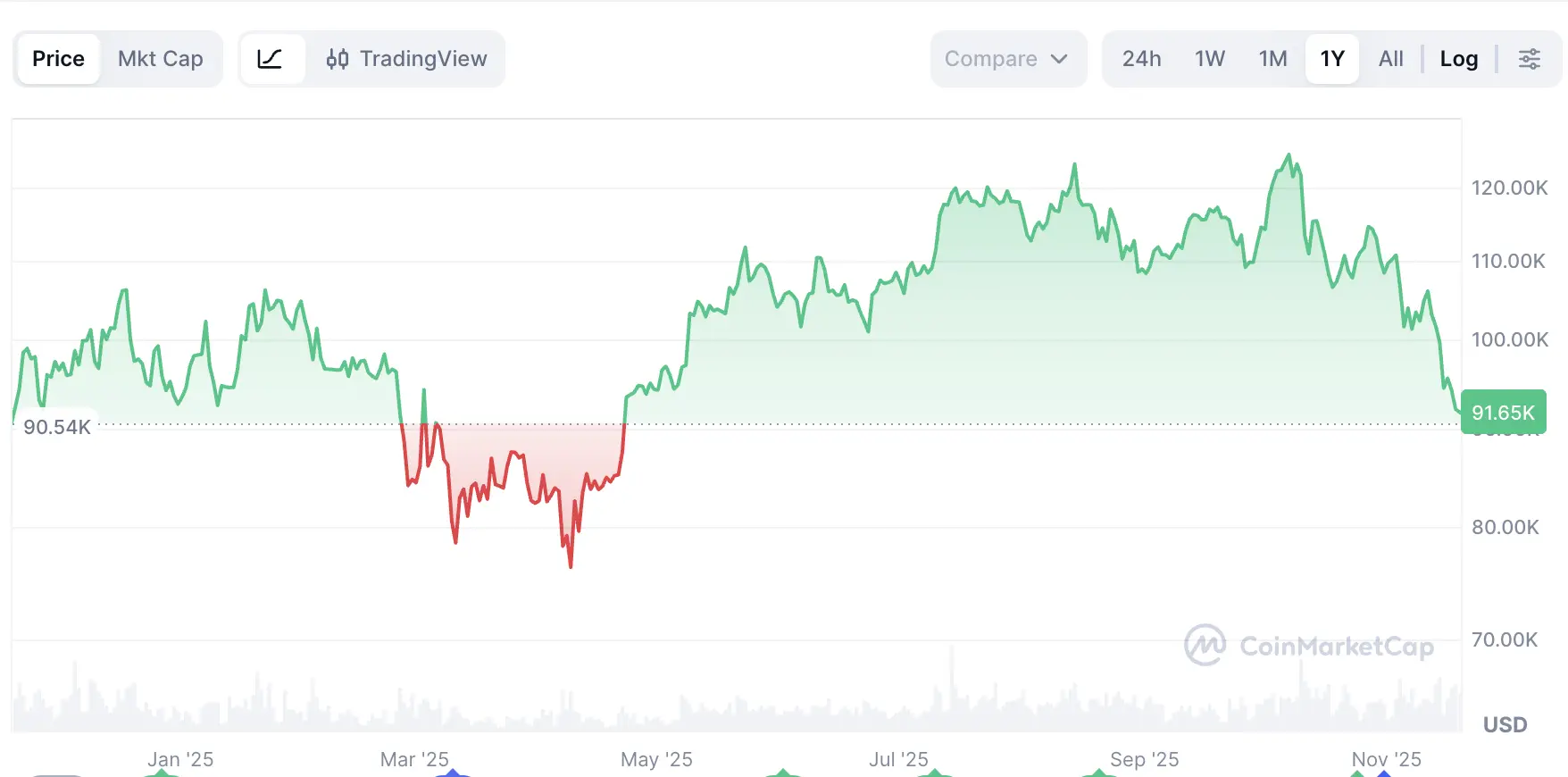
In the past few weeks of market turmoil, Bitcoin's price and sentiment have shown a rare and significant divergence: the price remains firmly above the historical high of $90,000, but market sentiment has plunged into the depths of "extreme fear." The Fear and Greed Index briefly touched 16, the coldest emotional reading since the global pandemic crash in March 2020. Even though there has been a slight recovery recently, it struggles within the range of 12-18. Positive narratives about Bitcoin on social media have also dropped sharply, shifting from previous strong optimism to complaints, anger, and blame-shifting. This misalignment is not coincidental; it often occurs in the later stages of a bull market: early investors have already accumulated significant unrealized profits, and once macro conditions show signs of trouble, they choose to cash out; meanwhile, latecomers who chased the highs are quickly trapped in short-term volatility, amplifying the panic and disappointment in the market. Currently, Bitcoin is around $92,000, nearly flat compared to the beginning of the year (about $90,500), having experienced significant upward surges and deep corrections before returning to near the starting point, presenting a "high-level consolidation" market.
On-chain capital flows provide more direct signals than sentiment. First, the role of spot ETFs has shifted from being the "booster engine" driving the bull market to a short-term "drain." Since November, ETFs have recorded over $2 billion in cumulative net outflows, with a single-day maximum outflow approaching $870 million, setting a new record for the worst performance since their launch. The impact on narratives is far greater than the capital itself: the previous logic of "institutional long-term allocation" was the market's core support, but now this support has turned into a reduction in positions, leaving retail investors feeling insecure with the sentiment of "no adults to back them up." Whale behavior has also shown clear differentiation. Medium-sized whales holding 10-1000 BTC have consistently become net sellers in recent weeks, selling tens of thousands of Bitcoins, clearly cashing out profits as early investors. In contrast, super whales holding over 10,000 BTC have been increasing their holdings, with on-chain data showing that some long-term strategic entities are counter-cyclically accumulating during the downturn, with scales reaching tens of thousands of BTC. Meanwhile, small retail investors (≤10 BTC) are also slowly increasing their net inflows, indicating that while the most emotional novice users may panic and sell, another group of more experienced long-term retail investors is seizing the opportunity to accumulate. The on-chain realized loss metric has also recorded the largest single-day loss in the past six months, with a significant amount of chips being forced to sell at a loss, clearly signaling a typical "surrender-style sell-off." From various on-chain indicators, we see not a complete market exit but a rapid redistribution of chips—from short-term, emotional capital to entities with longer patience and stronger risk tolerance, which is a structural phenomenon that often occurs in the later stages of bull markets. The market is currently in a high-level consolidation phase in the latter half of the bull market—although the market cap has retraced, it remains on a strong platform, while sentiment has significantly cooled, structural differentiation has intensified, quality assets are resilient, but speculative assets continue to be cleared. The overall market cap of the cryptocurrency market is on a downward trend.

If on-chain data and sentiment explain the short-term volatility, the true driver of this market shift is still macro interest rates—Bitcoin's real "market maker" is not institutions or whales, but the Federal Reserve. In the last quarter, the market widely bet that the Federal Reserve would gradually begin a rate-cutting cycle from the second half of 2024 to early 2025. Rate cuts mean a resurgence of liquidity and an increase in the valuation of risk assets, thus becoming a key driving force behind the previous rally. However, a series of recent economic data and statements from officials have led to a strong repricing of these expectations. Although U.S. employment and inflation have slowed, they have not yet reached a level that would support aggressive easing; some officials have even released hawkish signals of "cautious rate cuts," causing the market to worry that high rates may persist longer than previously expected. The cooling of rate cut expectations will directly lower the present value of future cash flows, thereby compressing the valuations of risk assets—high-volatility sectors like technology growth, AI, and crypto are the most affected. Therefore, the recent decline is not due to a lack of new narratives in the crypto industry, but rather a violent adjustment in valuations driven by macro factors that have directly raised the "discount rate" for the entire universe of risk assets.
II. The Deep Impact of the AI Bubble on the Macroeconomics of Crypto
From 2023 to 2025, artificial intelligence has overwhelmingly become the core force in pricing global risk assets, replacing old narratives like "metaverse," "Web3," and "DeFi summer," and becoming the primary driving force behind the expansion of capital market valuations. Whether it’s Nvidia's market cap surpassing $1 trillion, OpenAI's infrastructure ambitions, or the explosive growth of super data centers and sovereign AI projects, the entire market has completed a paradigm shift from "tech growth" to "AI frenzy" in just two years. However, behind this feast lies an increasingly fragile leverage structure, ballooning capital expenditures, and a growing reliance on "internal circulation" in financial engineering. The rapid inflation of AI valuations has made the entire high-risk asset system more fragile, with its volatility being directly and continuously transmitted to the crypto market through risk budgets, interest rate expectations, and liquidity conditions, profoundly affecting the cyclical structure and pricing framework of Bitcoin, Ethereum, and altcoins.
In the institutional asset allocation system, AI leaders have transformed from traditional growth stocks into "super tech factors," becoming the center of high-risk portfolios, even carrying an endogenous leverage effect. When AI rises, risk appetite expands, and institutions naturally increase their allocation to high-risk assets, including Bitcoin; conversely, when AI experiences severe volatility, valuation pressure, or credit concerns, risk budgets are forced to contract, and model-driven and quantitative trading quickly reduce overall risk exposure, with crypto assets—being the most volatile and lacking cash flow support—often becoming the primary targets for reduction. Thus, the tug-of-war and pullback in the later stages of the AI bubble will simultaneously amplify the adjustments in the crypto market on both emotional and structural levels. This was particularly evident in November 2025: when AI-related tech stocks adjusted due to financing pressures, rising credit spreads, and macro uncertainties, Bitcoin and U.S. stocks simultaneously fell below key ranges, forming a typical "cross-asset risk transmission." Beyond risk appetite, the liquidity squeeze effect is the most critical suppressive factor of the AI bubble on the crypto market. In a macro environment of "limited funding pools," this inevitably means that the marginal funds for other high-risk assets are compressed, making cryptocurrencies the most obvious "sacrificial victims."
A deeper impact comes from the competition of narrative systems. In the construction of market sentiment and valuations, the importance of narrative is often as significant as fundamentals. Over the past decade, the crypto industry has gained widespread attention and substantial premiums through narratives like decentralized finance, digital gold, and open financial networks. However, the AI narrative from 2023 to 2025 presents extreme exclusivity, with its grand narrative framework—"the core engine of the Fourth Industrial Revolution," "computing power is the new oil," "data centers are the new industrial real estate," "AI models are the future economic infrastructure"—directly suppressing the narrative space of the crypto industry. At the policy, media, research, and investment levels, almost all attention is focused on AI, and crypto can only regain its voice when global liquidity fully turns loose. This means that even if on-chain data is healthy and the developer ecosystem is active, the crypto industry struggles to regain valuation premiums. However, when the AI bubble enters a stage of bursting or deep adjustment, the fate of crypto assets may not be pessimistic and could even welcome decisive opportunities. If the AI bubble evolves along the path of the 2000 internet bubble—experiencing a 30%-60% valuation correction, with some high-leverage, story-driven companies being cleared out, and tech giants cutting capital expenditures, but the overall credit system remains stable—then the short-term pain in the crypto market will yield significant benefits in the medium term. If the risk evolves into a credit crisis similar to 2008, although the probability is low, the impact would be more severe. The rupture of the tech debt chain, concentrated defaults in data center REITs, and damage to bank balance sheets could trigger "systemic deleveraging," causing cryptocurrencies to experience waterfall declines similar to March 2020. However, such extreme situations often also mean stronger medium- to long-term rebounds, as central banks will be forced to restart QE, cut rates, or even adopt unconventional monetary policies. Cryptocurrencies, as tools to hedge against currency overissuance, will see strong recovery in an environment of abundant liquidity.
In summary, the AI bubble is not the end of the crypto industry but rather a prologue to the next major cycle of crypto. During the bubble's upward phase, AI will squeeze the funding, attention, and narratives of crypto assets; while in the bubble's bursting or digestion phase, AI will release liquidity, risk appetite, and resources back into the market, laying the foundation for the reboot of the crypto industry. For investors, understanding this macro transmission structure is more important than predicting prices; the emotional low is not the endpoint but a key stage in the migration of assets from weak hands to strong hands; real opportunities often arise not in the noise but around the switching of macro narratives and the reversal of liquidity cycles. The next major cycle in the crypto market is likely to officially start after the tide of the AI bubble recedes.
III. Opportunities and Challenges in the Transformation of the Crypto Macroeconomic Market
The global macro environment at the end of 2025 is showing structural changes that are markedly different from previous years. After a two-year tightening cycle, global monetary policy has finally turned in sync, with the Federal Reserve having implemented two rate cuts in the second half of 2025 and confirming the official end of quantitative tightening, halting balance sheet contraction, with the market expecting a new round of rate cuts in the first quarter of 2026. This means that global liquidity is shifting from "withdrawal" to "supply," with M2 growth returning to an expansionary path and the credit environment significantly improving. For all risk assets, such cyclical turning points often indicate that new price anchors are being formed. For the crypto market, the timing of the global entry into a loosening cycle coincides with multiple factors such as internal leverage cleansing, emotional lows, and ETF outflows hitting bottom, forming a foundation for 2026 to potentially become a "reboot point." Global synchronized easing is rare, but the macro landscape of 2025-2026 shows a high degree of consistency. Japan has launched a fiscal stimulus plan exceeding $100 billion, continuing its ultra-loose monetary policy; China is further strengthening both monetary and fiscal easing under economic pressure and structural demand; Europe is beginning to discuss restarting QE on the brink of economic recession. The simultaneous adoption of easing policies by major global economies is a super favorable factor that the crypto assets have not encountered in recent years. The reason is that crypto assets are essentially one of the asset classes most sensitive to global liquidity, especially Bitcoin, whose valuation is highly correlated with the dollar liquidity cycle. When the world simultaneously enters an environment of "easing + weak growth," the attractiveness of traditional assets declines, and liquidity overflow will first seek higher Beta assets, while crypto assets have historically exploded in such macro contexts during the past three cycles.
At the same time, the endogenous structure of the crypto market has gradually regained stability from the turmoil of 2025. Long-term holders (LTH) have not shown significant selling, and on-chain data indicates that chips are shifting from emotional sellers to high-conviction buyers; whales continue to accumulate when prices are deeply adjusted; the large-scale outflows from ETFs primarily stem from retail panic rather than institutional retreat; the funding rate in the futures market has returned to neutral or even negative territory, with leverage completely squeezed out of the market. This combination means that the selling pressure in the market mainly comes from weak hands, while chips are concentrating in strong hands. In other words, the crypto market is in a position similar to Q1 2020: valuations are suppressed, but the risk structure is much healthier than it appears. However, the opportunity comes with challenges. Although the easing cycle is returning, the spillover risks of the AI bubble cannot be ignored. The valuations of tech giants are nearing unsustainable levels, and if the funding chain or profit expectations deviate, tech stocks may experience severe adjustments again, while crypto assets, as high-risk counterparts, will inevitably bear the brunt of "systematic Beta sell-offs." Additionally, Bitcoin lacks decisive new catalysts in the short term. The ETF model for 2024-2025 has been fully priced in by the market, and new mainline narratives need to wait for whether the Federal Reserve will initiate QE, whether large institutions will return to accumulation paths, and whether traditional finance will accelerate the layout of crypto infrastructure. The continued outflow of ETFs reflects extreme fear among retail investors, and the panic index dropping to an extreme of 9 will still require time to complete the "surrender bottom," with the market needing to wait for new incremental signals. Considering the macro environment and market structure, from a temporal perspective, the crypto market will continue to experience fluctuations and bottoming out from Q4 2025 to Q1 2026. The pressures from the AI bubble, ETF outflows, and macro data uncertainties will collectively push the market to maintain a weak oscillating pattern. However, with the acceleration of rate cuts in the first and second quarters of 2026 and the substantial return of liquidity, BTC is expected to regain levels above $100,000, and with the combination of QE expectations, new narratives like DePIN/HPC, and national reserve BTC, a new bull market cycle confirmation may emerge in Q3-Q4 2026. This path indicates that the crypto market is transitioning from the "valuation kill phase" to the "repricing phase," and a true trend reversal requires a resonance of liquidity and narratives.
Investment strategies in this context need to be recalibrated to cope with volatility and capture opportunities. Dollar-cost averaging (DCA) in extreme fear zones statistically yields optimal returns, serving as the best way to hedge against short-term noise and emotional fluctuations. In terms of position structure, the proportion of altcoins should be reduced while increasing the weight of BTC/ETH, as altcoins tend to decline more sharply during risk control compressions, while the ETF accumulation mechanism will continue to strengthen Bitcoin's relative advantage in the medium term. Given that tech stocks may undergo another round of "internet bubble-style" deep adjustments, investors should retain a reasonable amount of emergency funds to obtain the best entry points when macro risk events trigger excessive sell-offs in crypto assets. From a long-term perspective, 2026 will be a key year for the global redistribution of liquidity and a year for the crypto market to return to the main stage after experiencing structural cleansing, with the true winners being those who maintain discipline and patience when sentiment is at its coldest.
IV. Conclusion
In summary, considering on-chain structures, sentiment indicators, capital flows, and global macro cycles, this round of decline resembles a severe turnover in the later stages of a bull market rather than a structural reversal. The repricing of interest rate expectations has led to short-term valuation pressure, but the global entry into a clear easing channel, synchronized stimulus in Japan and China, and the termination of QT mean that 2026 will be a key year for the expansion of liquidity. The AI bubble may continue to bring short-term drag, but its bursting or digestion will instead release the capital and narrative space that has been squeezed, providing new valuation support for scarce assets like Bitcoin. It is expected that from Q4 2025 to Q1 2026, the market will primarily focus on oscillation and bottoming out, while the rate-cutting cycle driven by easing in Q2-Q4 2026 will become a window for trend reversal. Disciplined DCA, increasing BTC/ETH weight, and retaining emergency positions are the optimal strategies to navigate volatility and embrace the new cycle.
 Risk warning Risk warning