Anthropic launches IPO: Business miracle or valuation bubble?
 Core Viewpoint

 The human economy is shifting from a carbon-based drive to a dual-engine drive of carbon-based and silicon-based, which is what is truly happening behind Anthropic's IPO.
Author: Fu Sheng
Previously, we discussed Anthropic's strengths and weaknesses, and shared three records set by Anthropic.
Just this Monday, there was a big stir in the Silicon Valley AI circle, as Anthropic submitted its IPO application secretly, ahead of OpenAI. Morgan Stanley and Goldman Sachs are the joint lead underwriters, with the earliest listing expected in October this year.

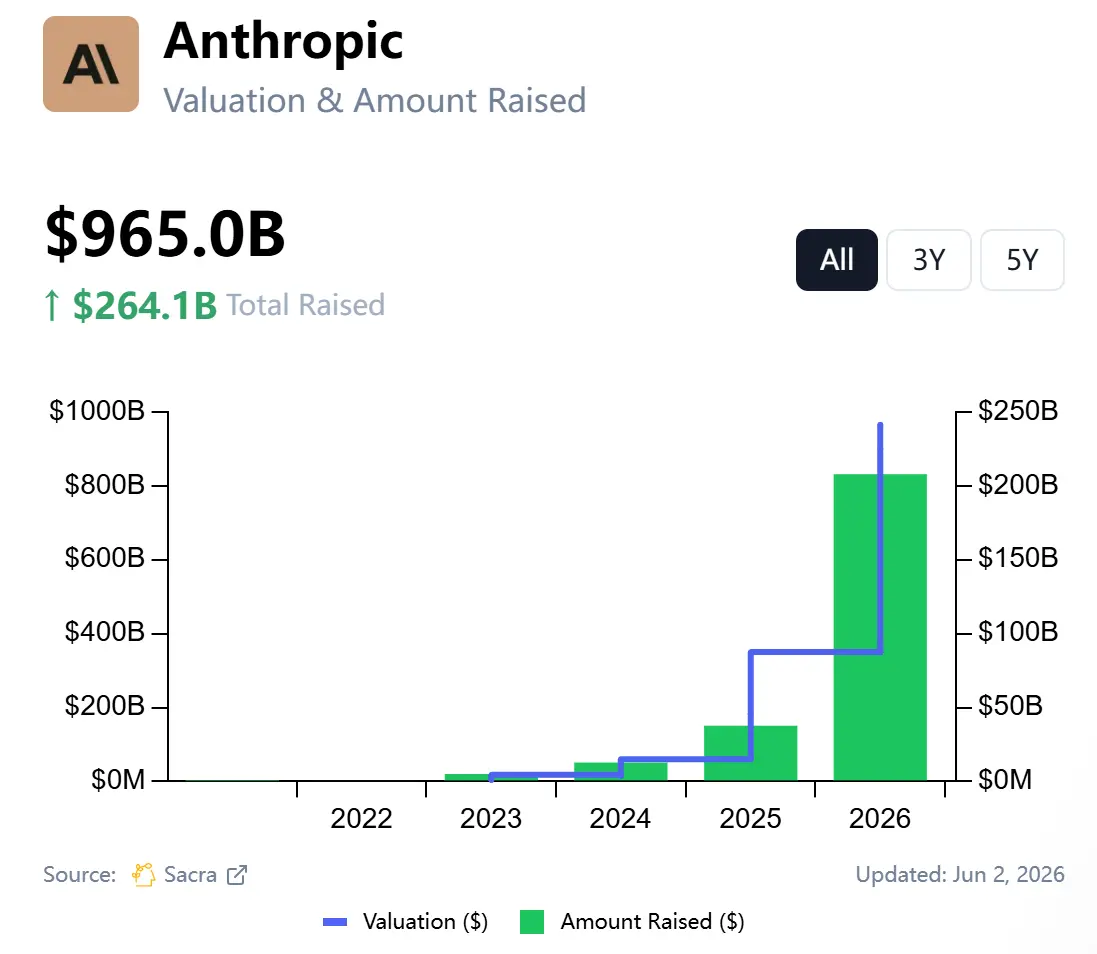
Having just completed a $65 billion Series H funding round, it is valued at $965 billion—just a step away from a trillion.

When it actually goes public, reaching a trillion is inevitable, and even $1.5 trillion to $2 trillion is possible. If it really hits $2 trillion, it will surpass SpaceX, becoming the highest-valued company in the Pre-IPO stage globally.
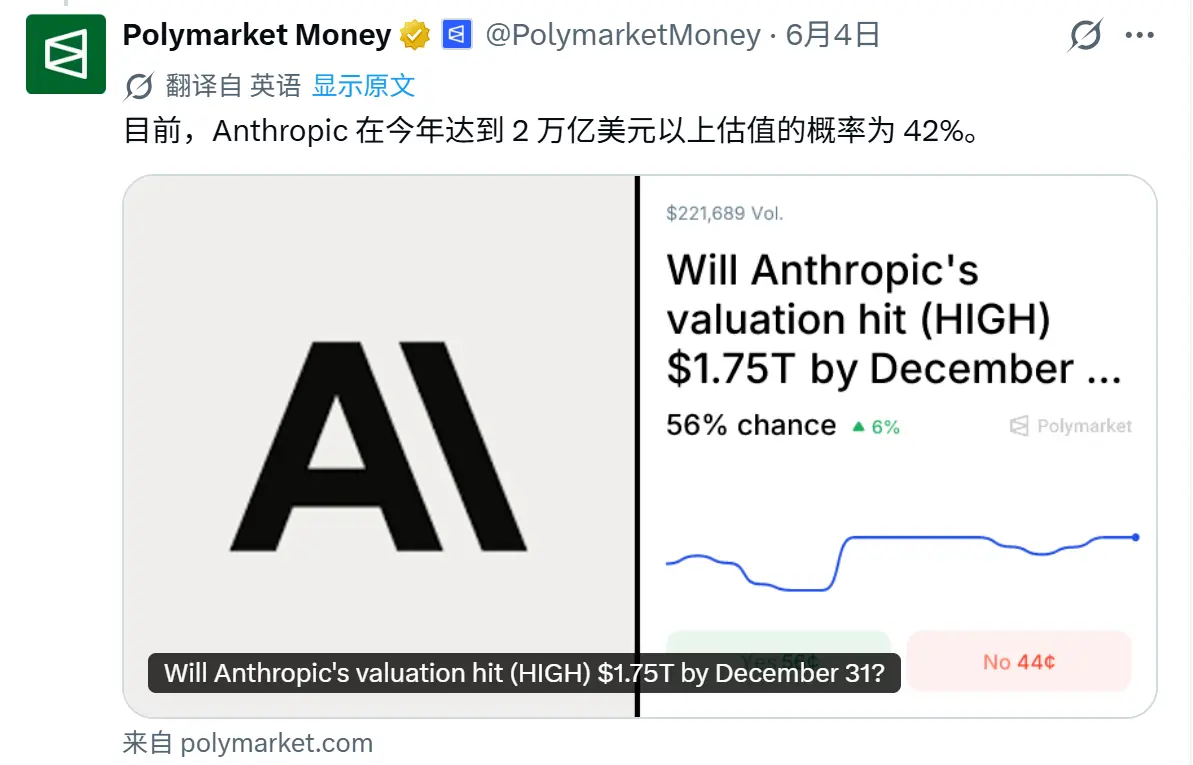
Many friends have left messages saying, "Fu Sheng, aren't you exaggerating?" One entrepreneur even asked me directly: When will this AI bubble burst?
My answer has always been the same: If you understand the situation, you won't think this is a bubble.
Is it really a bubble?
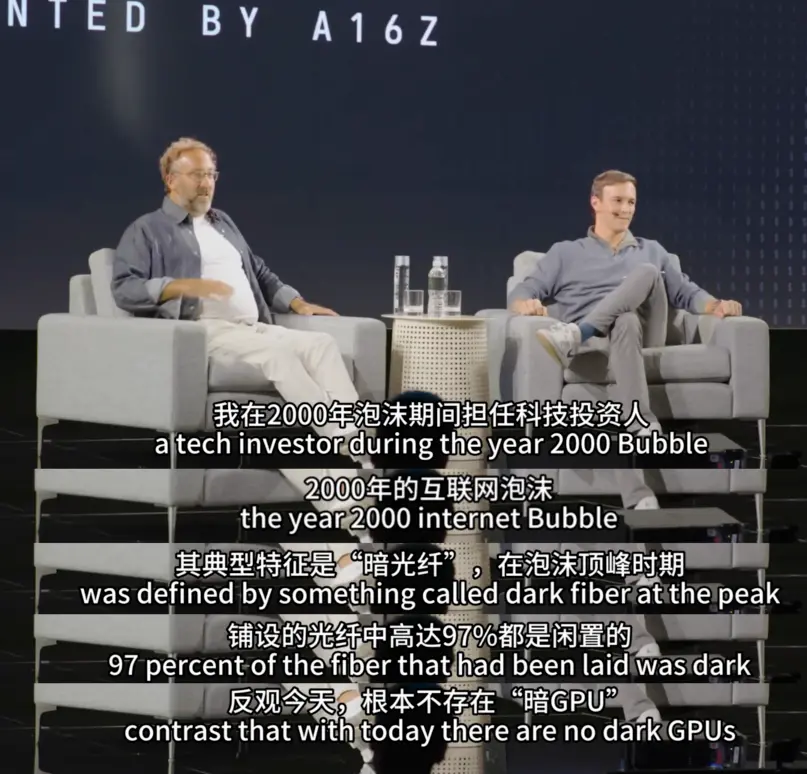
The entrepreneur's logic is very straightforward: How can a company be worth $1 trillion just four or five years after its founding? Didn't the internet bubble of 2000 burst for the same reason?
I said, don't rush to conclusions. The term "bubble" has been thrown around too much, and no one has seriously considered a question: How are the bubbles of 2000 and today similar, and how are they different? If you draw these two lines and compare them, the answer will reveal itself.
Historical similarities do not equal historical repetition
If you say that because the Nasdaq crashed in 2000, there must be a bubble in AI in 2026, then this way of thinking needs to be upgraded.
What is similar? It's the emotions. A new technology emerges, capital floods in, valuations soar, and outsiders shout that they don't understand; this psychological script is indeed reminiscent of back then.
But the differences are the core of judging whether there is a bubble. If you only look at the first half and draw a conclusion, that is called "seeking a sword in a boat."
Telling stories and calculating accounts are two different businesses
What did internet companies in 2000 rely on for their valuations? A domain name, a PPT, a "market dream rate." There were no revenues, no profits, and not even paying customers; stock prices were purely supported by stories and imagination. At that time, analysts discussed "how big this company might be in the future," and this "future" had no revenue data to support it.
Today, what Anthropic relies on is clear.
We have previously discussed that Anthropic is currently the fastest-growing, highest per capita output, and highest valued private company in human history.
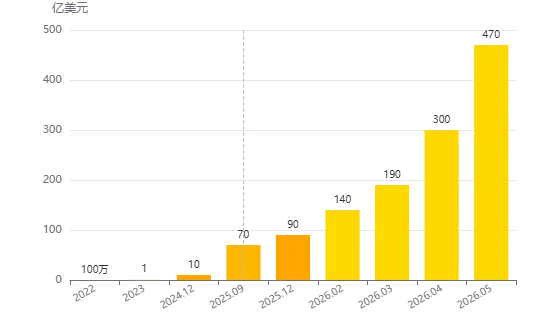
First, let's look at revenue growth. Its ARR was $1 billion at the beginning of 2025. By the end of 2025, it will be $9 billion. By May of this year, it reached $47 billion. Internal documents show that the year-end target is $100 billion—going from $1 billion to $100 billion in less than two years. No other company in business history has achieved this curve.
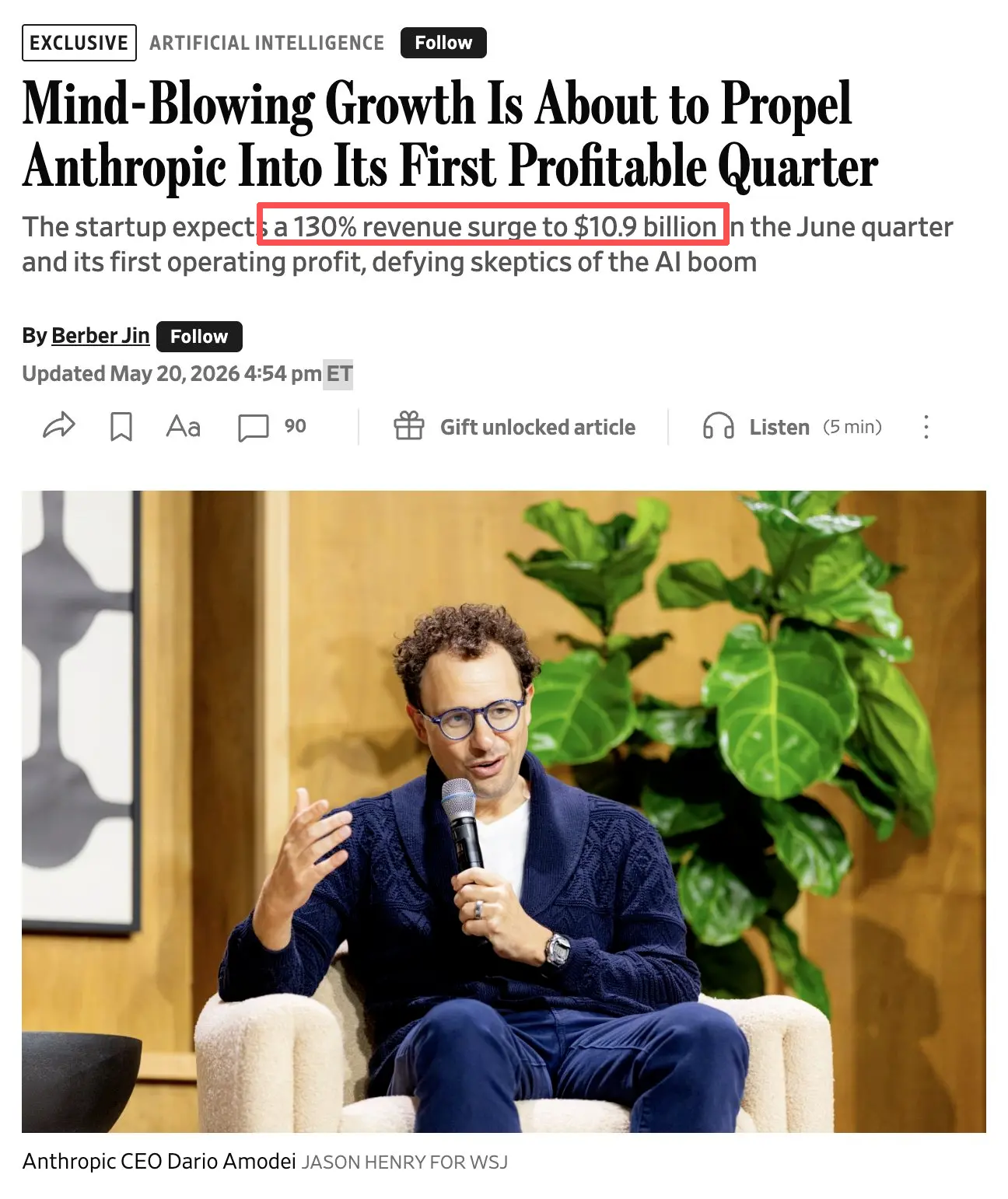
Moreover, this is not a case of burning money to create a false appearance; Anthropic is expected to have a single-quarter revenue of $10.9 billion in the second quarter of this year, achieving operational profit for the first time in history, approximately $560 million, already starting to make money before going public.
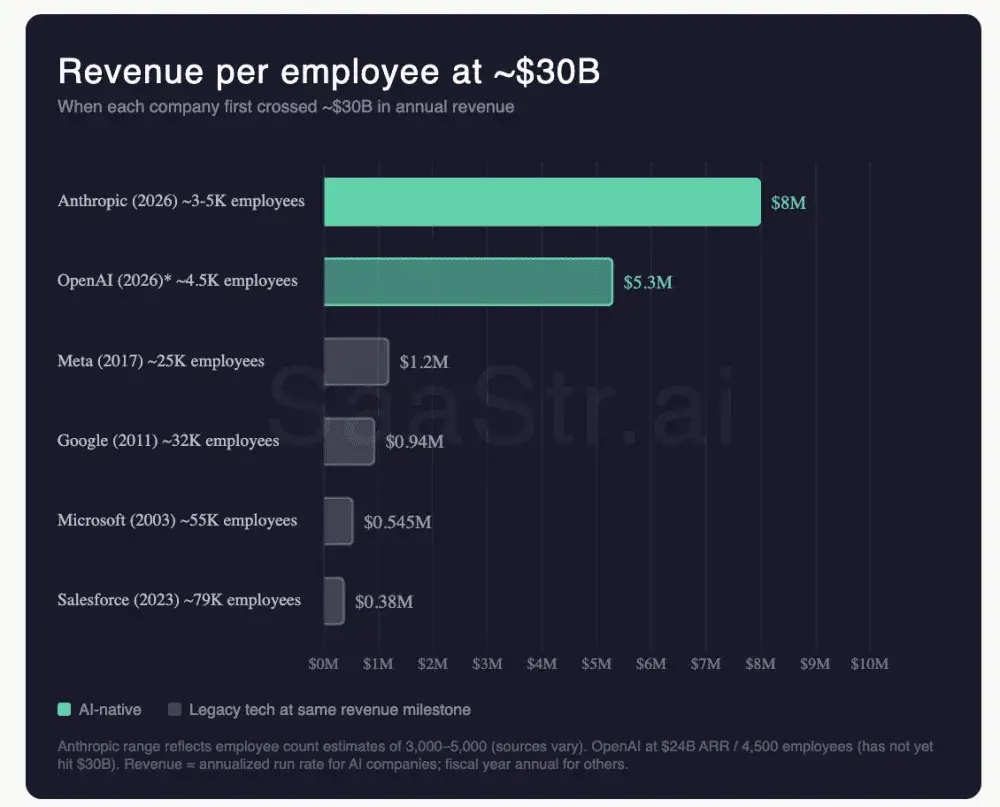
Next, let's look at per capita output. Anthropic currently has about 3,000 employees, and based on an annualized revenue of $47 billion, the per capita output exceeds $10 million.
One programmer equipped with Claude Code can produce work equivalent to that of an entire team. And the Claude Code product, launched less than a year ago, has achieved an annualized revenue of $2.5 billion for a single product, capturing 54% of the AI programming market.
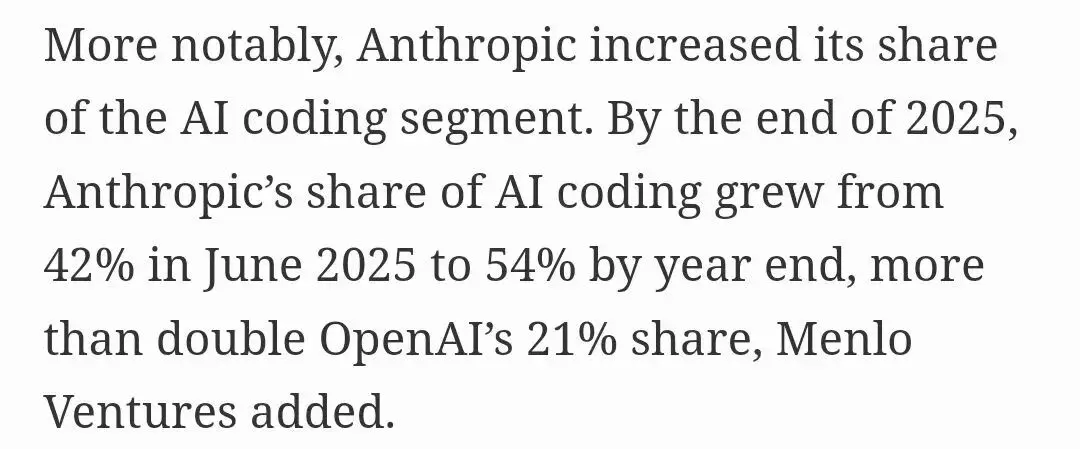
Finally, let's look at the valuation logic. Anthropic's main business is selling API subscriptions to enterprises. If you view it as a traditional SaaS company, there is a classic formula for SaaS company valuation: Price-to-Sales ratio equals market value divided by annualized revenue, multiplied by a multiple. Subscription revenue from enterprise customers is very stable; as long as the renewal rate is above 95%, the capital market generally gives a multiple of 10. If it really achieves $100 billion by the end of the year, a multiple of 10 would mean a market value of $1 trillion.
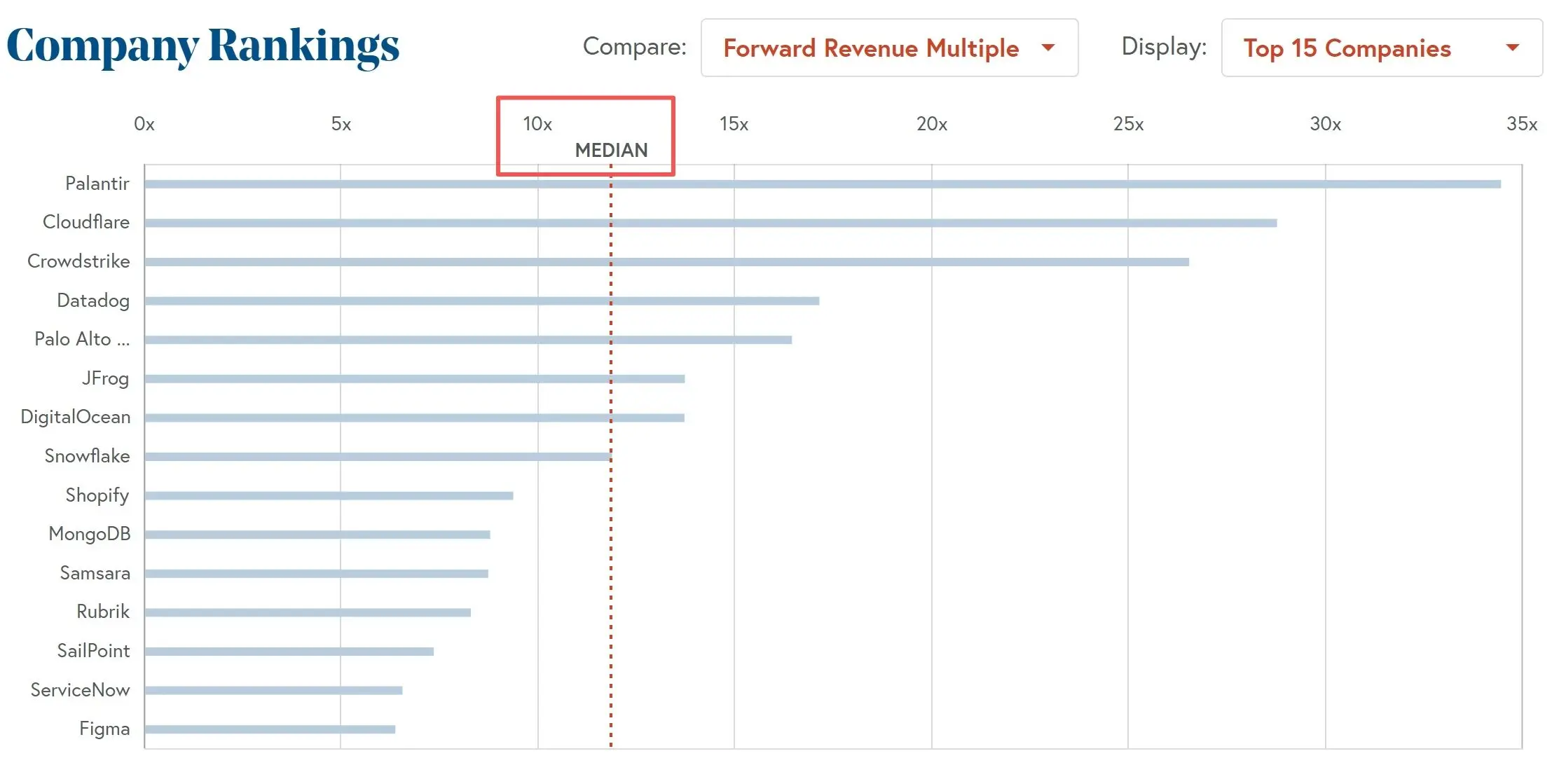
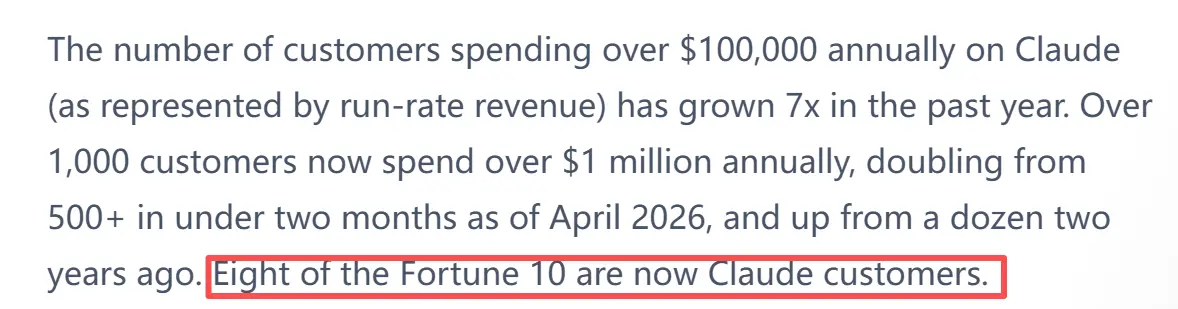
You might say that this valuation model itself is not very reasonable, but you cannot say it lacks a model. During the internet bubble, pricing was purely based on imagination; today, Anthropic's accounts are laid out in front of you. Its client list is also impressive: 8 out of the top 10 Fortune companies are using it, with over 1,000 large enterprises spending more than $1 million annually on Claude. Netflix, Spotify, KPMG, Salesforce—all are on the list.
During the internet bubble, analysts asked, "How big might this company be in the future?" Today, analysts are asking Anthropic, "How much did you earn this quarter, and how much more can you earn next quarter?" This is the essential difference.
From Carbon-Based Economy to Silicon-Based Economy
After discussing these two reasons, I still feel it's not enough. Behind Anthropic's IPO lies a larger, deeper trend: the human economy is transitioning from a carbon-based to a silicon-based economy.
Recently, I mentioned in an internal meeting that we should rename the HR department to IR, changing from Human Resource to Intelligence Resource. A company's intelligence level and competitiveness no longer solely depend on how many people and smart minds it has, but also on how much computing power, how many models, and how much AI capability it has to scale repetitive work.
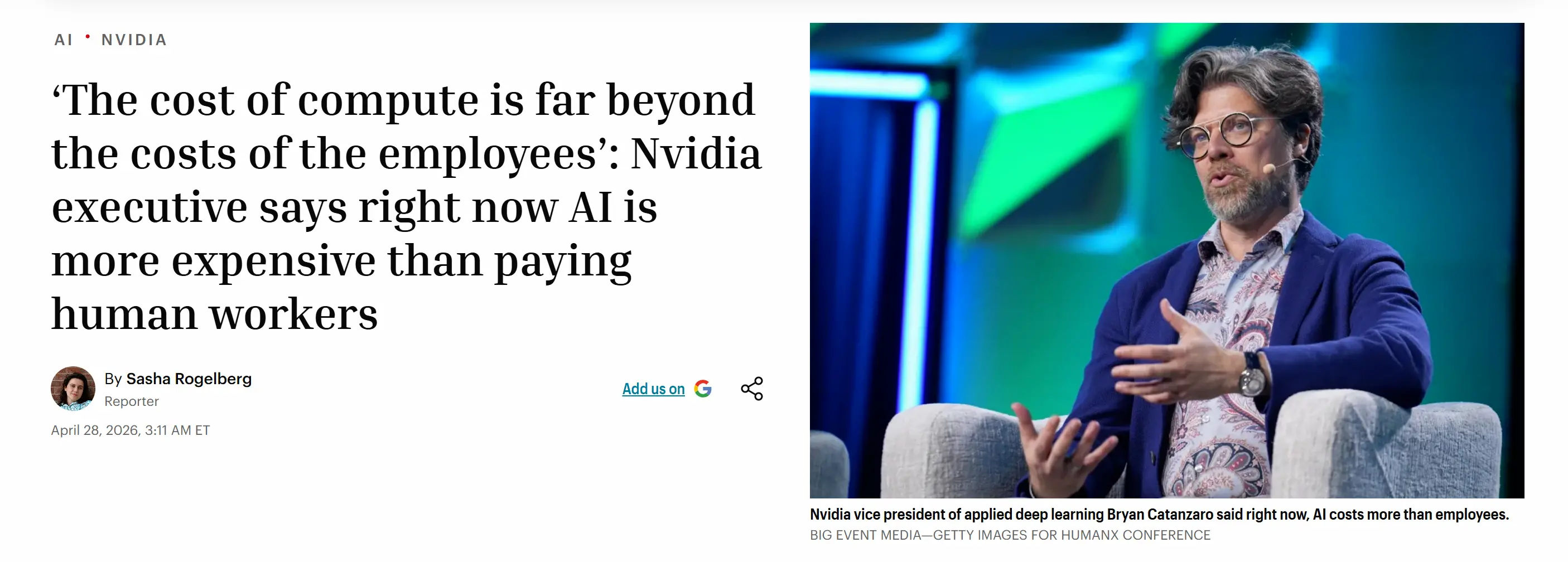
This concept is not something I invented; companies in Silicon Valley have already validated this logic. Bryan Catanzaro, Vice President of Deep Learning Applications at Nvidia, publicly stated two months ago that his research team has entered the stage where "computing power investment surpasses human labor investment," and the cost of computing resources has far exceeded employee salaries.
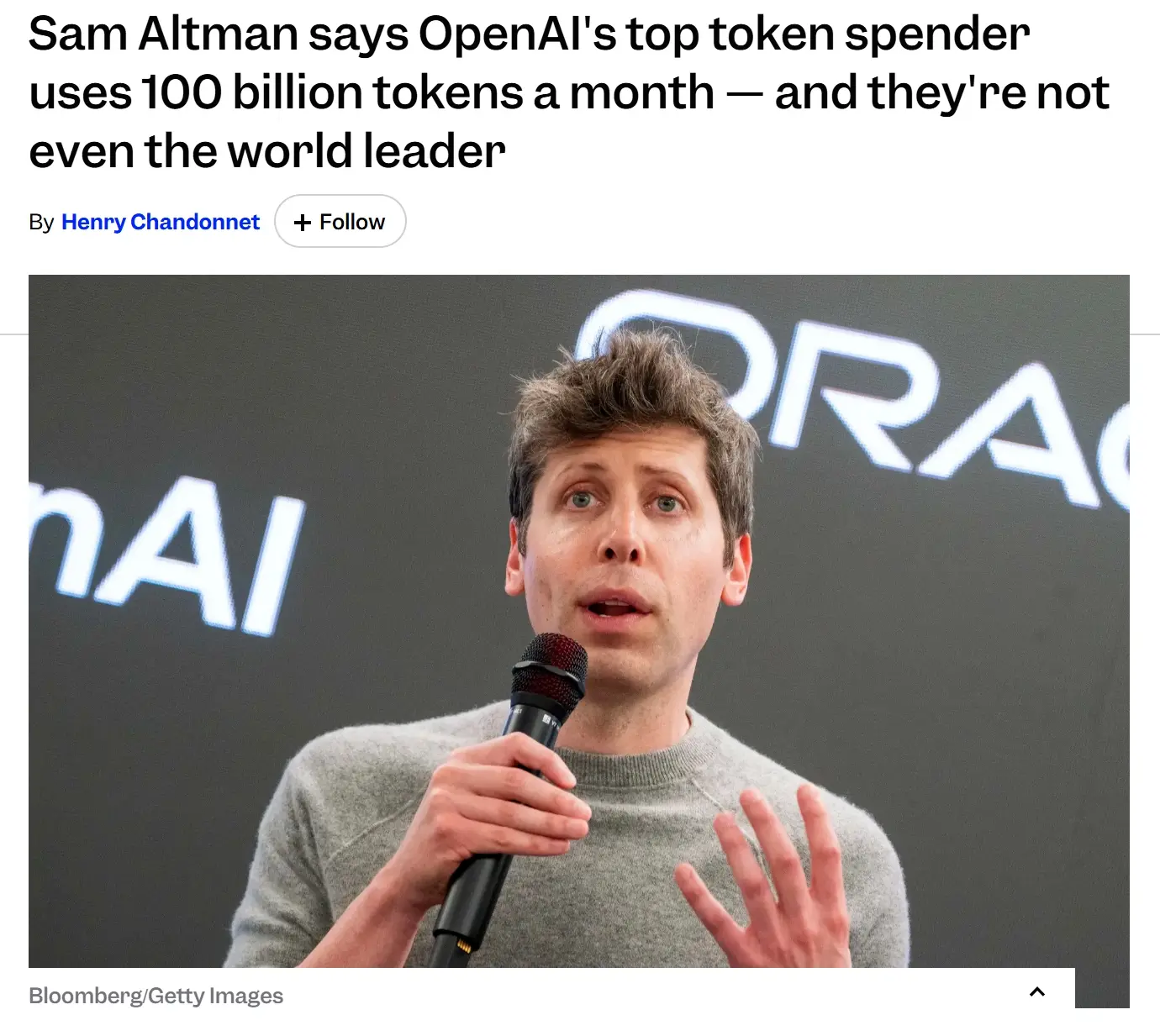
Sam Altman also mentioned an interesting phenomenon recently: many companies exhausted their entire AI budget in Q1 this year. Enterprises have discovered that every penny spent on model capability and computing power directly enhances product competitiveness—development efficiency, customer response speed, data analysis depth—things that used to rely on piling up headcounts are now being scaled by AI.
The human economy is transitioning from a carbon-based drive to a dual-engine drive of carbon-based and silicon-based, which is the real change happening behind Anthropic's IPO. It is not just a company ringing a bell; it is a price anchor point for a new economic paradigm.

 Risk warning