Morning News | Monad mainnet will go live today; Coinbase has completed the migration of BTC and ETH wallets; PORT3 token has been hacked

 Overview of Important Market Events on November 23rd
整理:ChainCatcher
Important News:
- Yi Lihua: Fully invested in ETH around $2700, with positions following the logic of three major tracks: public chains, exchanges, and stablecoins
- Coinbase: BTC and ETH wallet migration completed
- Port3 Network: Hacker exploited BridgeIn vulnerability to mint tokens, team has removed liquidity and is preparing to communicate with the hacker
- Bitwise CEO: Increased Bitcoin holdings again at $85,000
- Monad: Mainnet will launch next Monday
- Besenet: Government shutdown causes a permanent $11 billion hit to U.S. GDP
- Uniswap community passes "Uniswap launch fee switch" temperature check proposal
What important events happened in the past 24 hours?
Yi Lihua: Fully invested in ETH around $2700, with positions following the logic of three major tracks: public chains, exchanges, and stablecoins
According to ChainCatcher, Yi Lihua posted on platform X that he has fully invested in ETH when the price was around $2700. The overall position logic follows three major tracks: public chains mainly with ETH, and allocations in BTC/BCH; exchange tokens as BNB/Aster; and heavy positions in stablecoins like WLFI.
Coinbase: BTC and ETH wallet migration completed
ChainCatcher reports that Coinbase Platform announced on social media that the wallet migration for BTC and ETH has now been completed.
Previously, ChainCatcher reported that Coinbase stated on social media that the wallet migration would begin in 30 minutes. During this period, users may see large on-chain transfers from wallets controlled by Coinbase to new Coinbase wallets. This is a planned operation aimed at helping Coinbase maintain the highest level of security standards in the industry.
During the migration, users can still trade, send, and receive crypto assets normally, as this is just a wallet migration and is not expected to cause downtime for any Coinbase products. The deposit addresses used for recharge will also remain unaffected.
PORT3 token hacked, hacker minted 1 billion tokens and is dumping them on the market
ChainCatcher reports that on-chain data shows that the PORT3 token has been hacked, with the attacker illegally minting 1 billion tokens and is currently dumping them on the market.
ChainCatcher reports that the decentralized AI data network Port3 Network stated on platform X that a hacker exploited a vulnerability in BridgeIn to mint additional tokens. The team has removed liquidity and is preparing to communicate with the hacker.
Port3 Network reminds users not to trade tokens until the issue is resolved.
Market data shows that the PORT3 token has dropped 77.4% in the last 24 hours.
Bitwise CEO: Increased Bitcoin holdings again at $85,000
ChainCatcher reports that Bitwise CEO Hunter Horsley posted on platform X that he "couldn't resist" and increased his Bitcoin holdings again at the $85,000 level, feeling great about it. He had previously disclosed purchasing Bitcoin at the $89,000 level on Monday.
Monad: Mainnet will launch next Monday
ChainCatcher reports that Monad announced on social media that the sale of MON tokens on Coinbase has been completed, with 85,820 participants committing $269 million, and the mainnet will launch on Monday.
Uniswap community passes "Uniswap launch fee switch" temperature check proposal
ChainCatcher reports that according to official page information, the Uniswap community passed the "Uniswap launch fee switch" temperature check proposal with a support rate of 100%.
After this vote passes, a complete on-chain vote will be conducted.
Tether CEO: Rumble wallet will support Lightning Network and U.S. stablecoin USAT
ChainCatcher reports that Tether CEO Paolo Ardoino posted on platform X that the Rumble wallet currently only supports Bitcoin, USDT, and XAUT, and will later support the U.S. market stablecoin USAT, and will soon support the Lightning Network.
The wallet will utilize account abstraction and payment features to reduce friction when sending stablecoins, hiding the complexities of multiple blockchains in the background.
Besenet: Government shutdown causes a permanent $11 billion hit to U.S. GDP
ChainCatcher reports that according to Jinshi, U.S. Treasury Secretary Besenet stated that the government shutdown has caused a permanent $11 billion hit to U.S. GDP.
Michael Saylor posts possibly hinting at continued Bitcoin accumulation
ChainCatcher reports that Strategy founder Michael Saylor posted "I will not yield," possibly hinting at continued Bitcoin accumulation.
Previously, the "Will you HODL this week" poll initiated by Saylor ended with 77.8% not selling.
Binance Alpha to launch Irys (IRYS) on November 25
ChainCatcher reports that according to the official announcement, Binance Alpha will launch Irys (IRYS) on November 25. Eligible users can go to the Alpha event page to claim airdrops using Binance Alpha points after Alpha trading opens. Specific details will be announced separately.
ChainCatcher reports that according to Coinglass data, $295 million was liquidated across the network in the past 24 hours, with $168 million in long liquidations and $127 million in short liquidations. Among them, Bitcoin long liquidations totaled $30.4 million, Bitcoin short liquidations totaled $40.34 million, Ethereum long liquidations totaled $26.0164 million, and Ethereum short liquidations totaled $35.5006 million.
In addition, in the last 24 hours, a total of 155,352 people were liquidated globally, with the largest single liquidation occurring on Binance - ETHUSDT worth $3.0228 million.
Meme Popularity Rankings
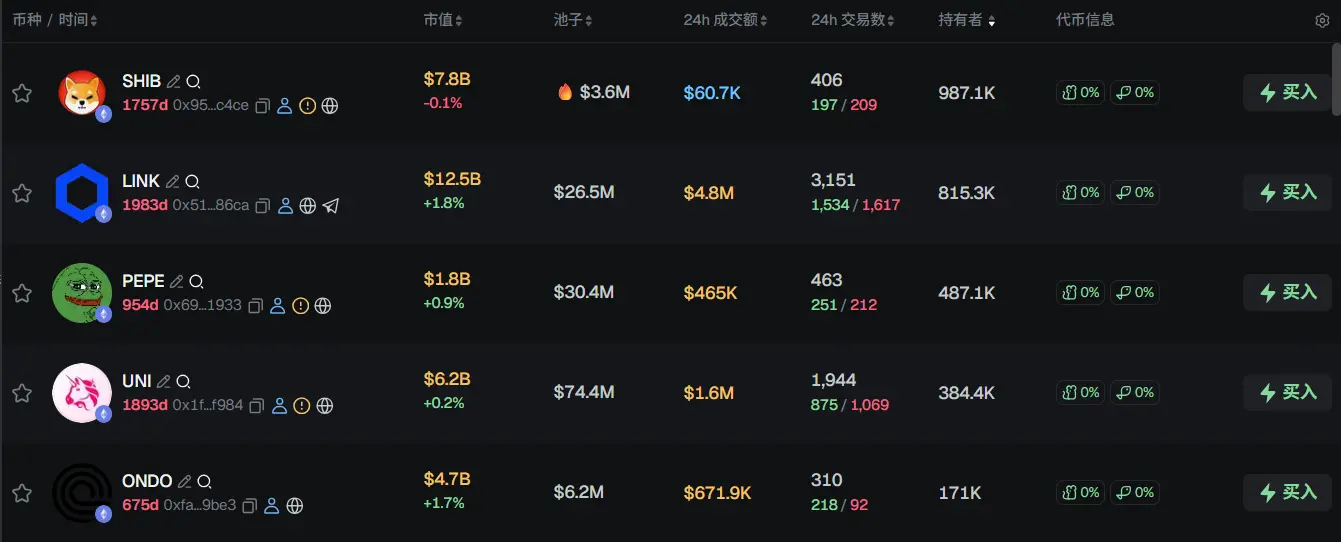
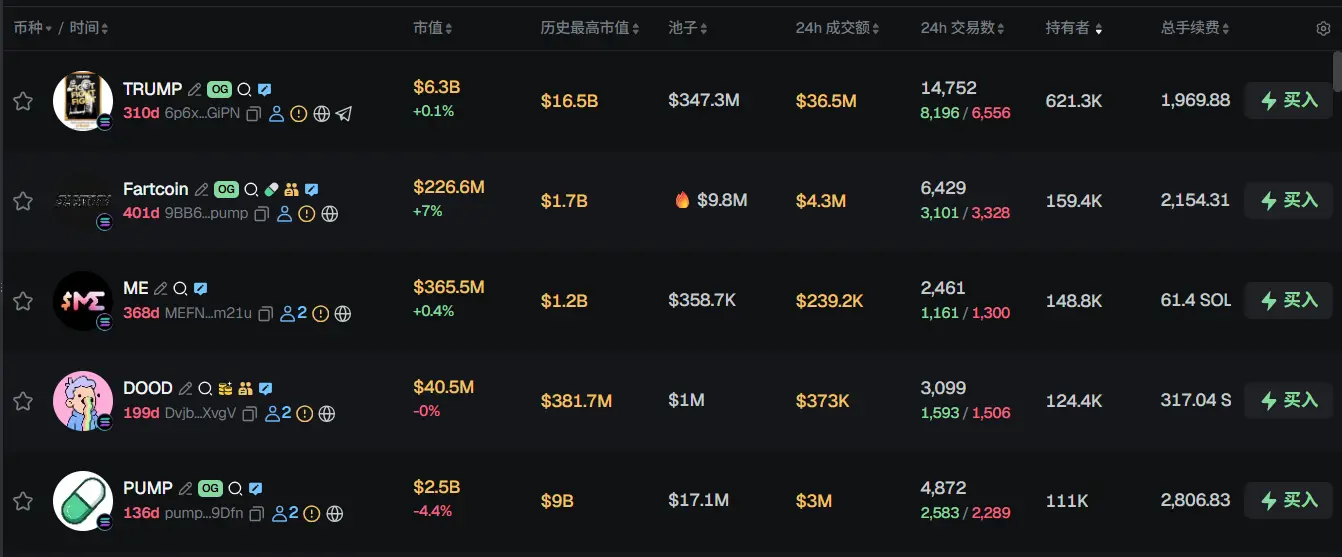
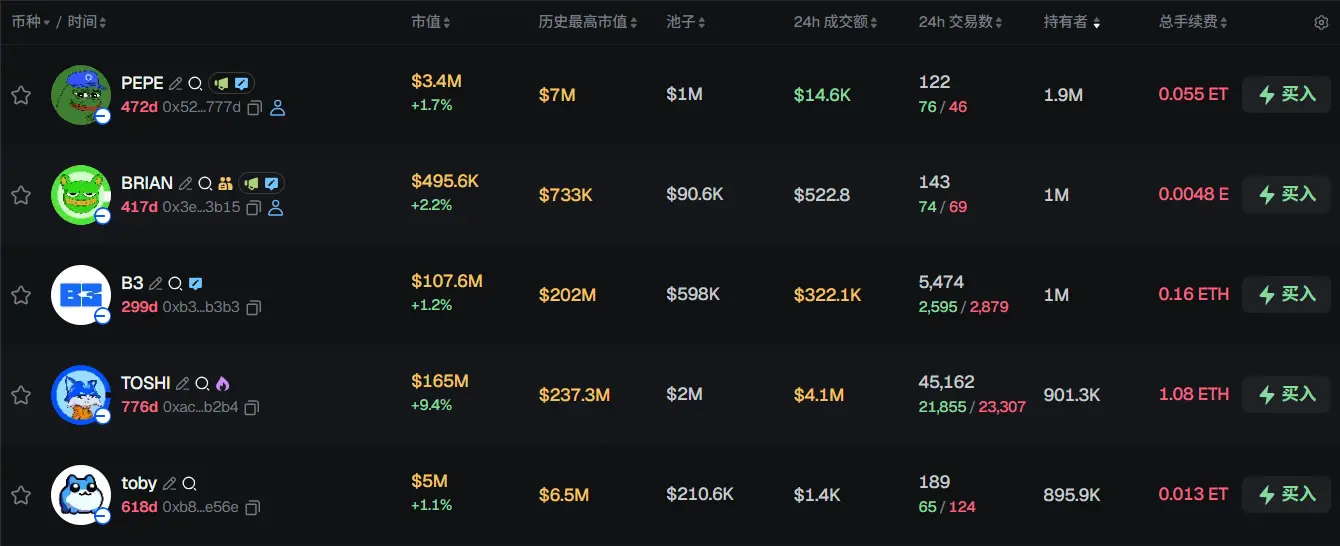
According to the meme token tracking and analysis platform GMGN, as of November 24, 09:00,
The top five popular ETH tokens in the past 24 hours are: SHIB, LINK, PEPE, UNI, ONDO
The top five popular Solana tokens in the past 24 hours are: TRUMP, Fartcoin, ME, DOOD, PUMP
The top five popular Base tokens in the past 24 hours are: PEPE, BRIAN, B3, TOSHI, toby
What are some interesting articles worth reading in the past 24 hours?
After a 1460% increase, re-evaluating the value foundation of ZEC
In just the past two months, Zcash ($ZEC) has become the most dazzling focus in the entire crypto market. From $50 at the end of September to a recent high of $730, the increase reached 1460%, with FDV soaring to an eight-year historical peak of $13B. What further fueled the sentiment was the support from top figures: @naval, @0xMert_, @CryptoHayes, and other heavyweight endorsements acted as catalysts, igniting market FOMO and attracting a large number of KOLs, retail investors, and even some funds to re-evaluate this old chain. Rarely, both Chinese and English crypto communities are fervently discussing ZEC, privacy narratives, and the resurgence of ZK technology, suggesting that Privacy seems to be once again hailed as the "next big trend" in the crypto market.
However, beneath this seemingly hot and perfect narrative backdrop, some key fundamental issues have been consistently overlooked: Can ZEC's miner economic model, network security, and on-chain interaction activity really support an FDV exceeding $10 billion? The Bitget wallet research institute will take you on a journey to explore this in this article.
On November 21, 2025, around 4:40 AM UTC, Bitcoin's price plummeted to $81,600, seemingly just another day of extreme volatility in the cryptocurrency market. In just four hours, leveraged positions worth $2 billion vanished into thin air. Three days prior, BlackRock's Bitcoin ETF set a record for the largest single-day outflow—redemptions reached $523 million. A whale who had held Bitcoin since 2011 liquidated all of its $1.3 billion position. Meanwhile, El Salvador quietly bought $100 million worth of Bitcoin during the crash.
Visa Crypto Head Cuy Sheffield discusses the present and future of stablecoins
In this episode of "Money Code," host Chuk Okpalugo and Raj Parej talk to Visa's head of crypto business, Cuy Sheffield, delving into how stablecoins are transitioning from speculative assets to real-world financial applications: including global dollar availability, debit cards linked to stablecoins, cross-border payment flows, and the next stage of development (on-chain credit and smart agent payments), as well as analyzing the capabilities and infrastructure that banks, fintech companies, and regulators must build in competition.
 Risk warning
 Risk warning